





















































































































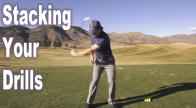






























































Day 2: Hitting Low Shots

Sorry, you need to be a member to access this video.
You Are Just Seconds Away - Become a member here!
Already a member? Log in now


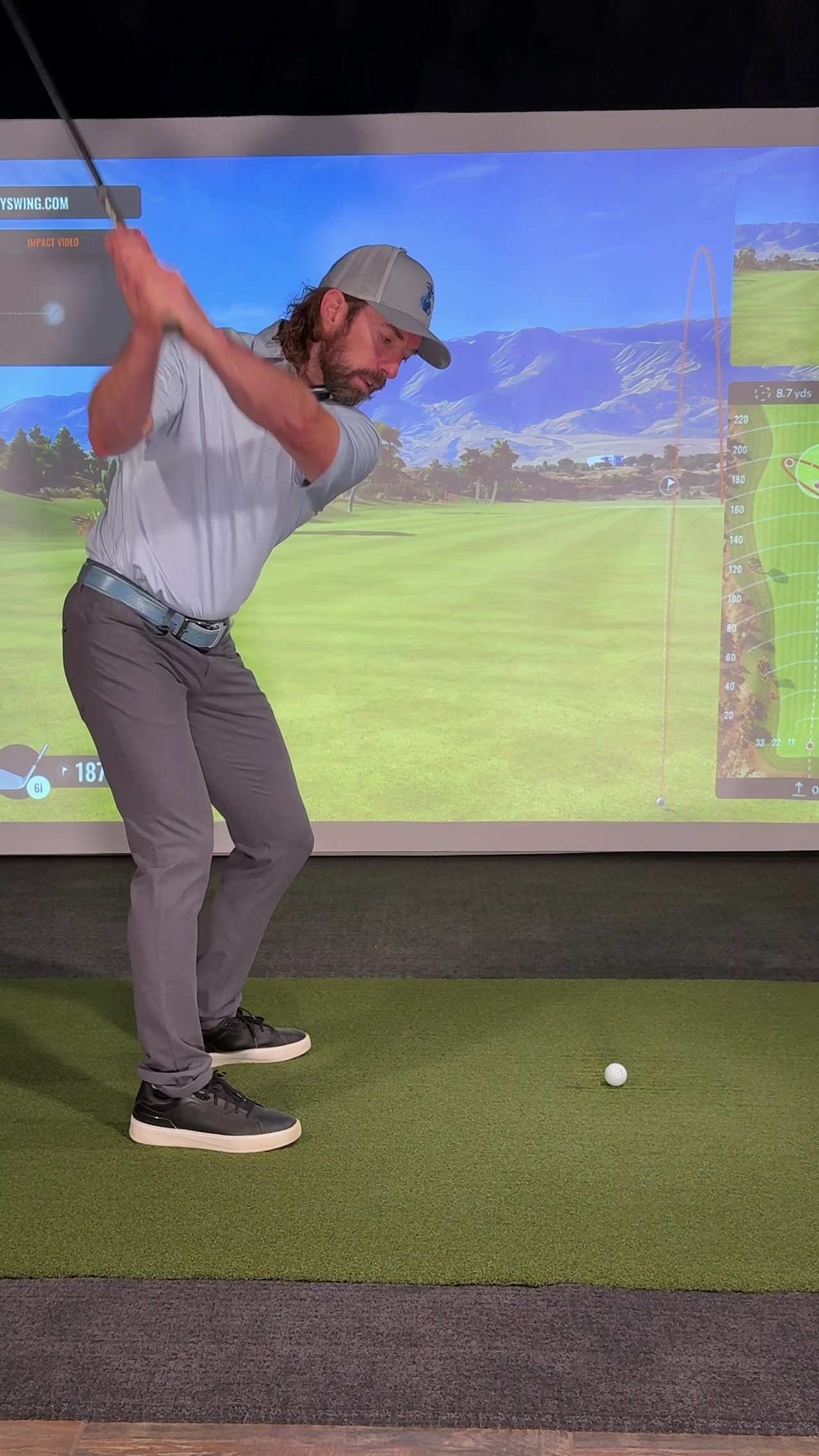
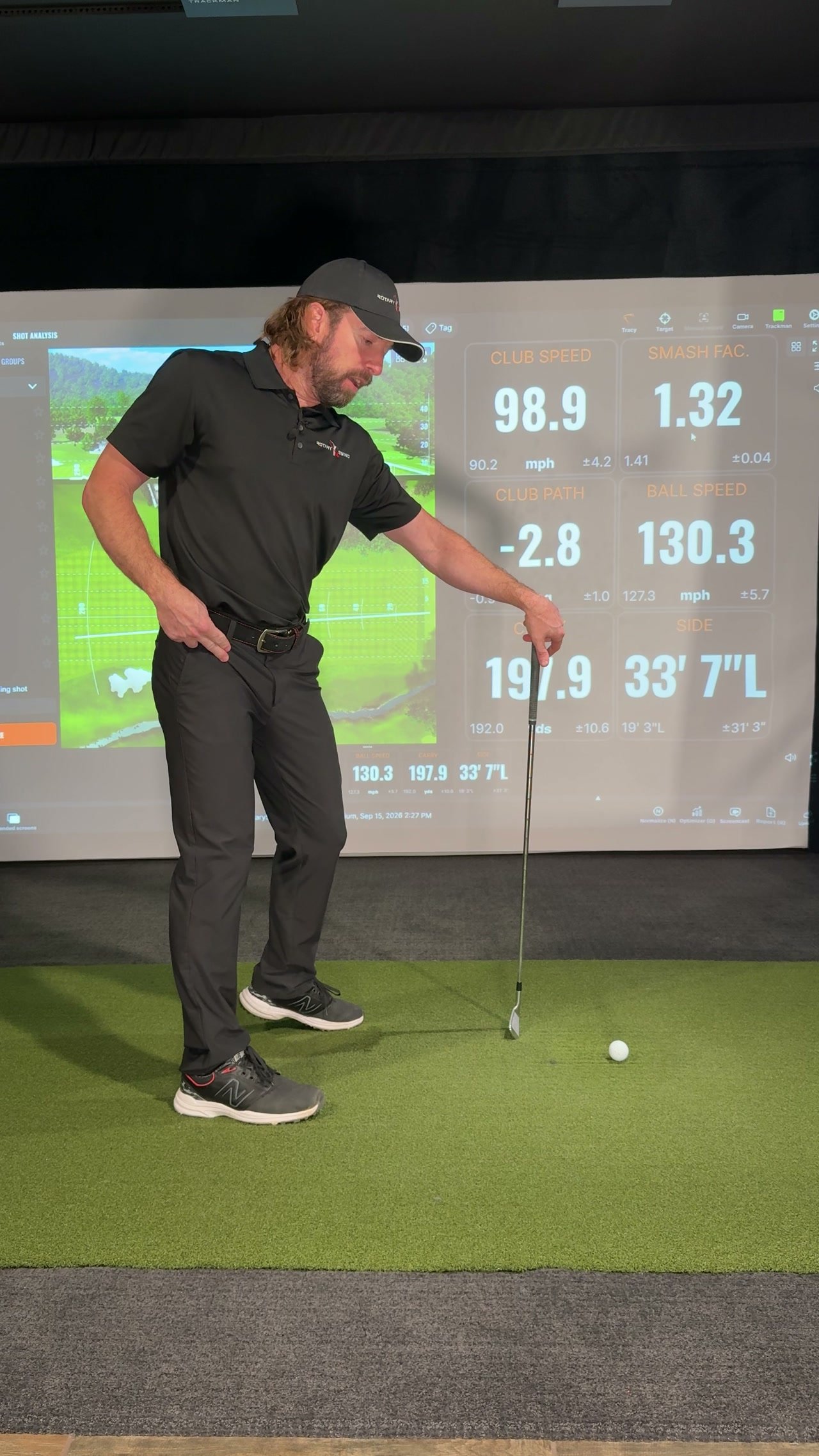
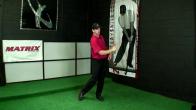
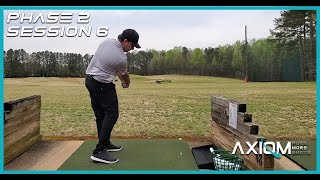
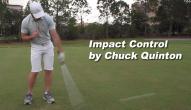
How to master the clubface at impact for low, penetrating shots that will cruise through the wind like a missile. This piece is critical to master as the other shots build on this clubface control.


All right, so on the first day, we talked about starting to work on hitting a little bit of a draw, a little bit of a cut and how you can use that to warm up.

Every day.

To start developing a sensation and feel of what impact feels like on both of those shots because it's critical for taking your game to the next level.

Now in this in today's video what we're going to talk about is hitting the ball low.

Now, hitting the ball low is one of the most critical fundamentals that you're ever going to develop in your golf game.

Because it's going to give you total club face control.

Because you're actually manipulating and even holding off the release while getting your wrist into the proper position.

Now, when you're going to hit release shots where you're really releasing the club with a draw or hitting the ball high, those shots are different.

Because the club is doing a lot of the work for you.

If you just kind of get out of the way and slowly guide it.

Now, when you're going to hit a low shot, it's different.

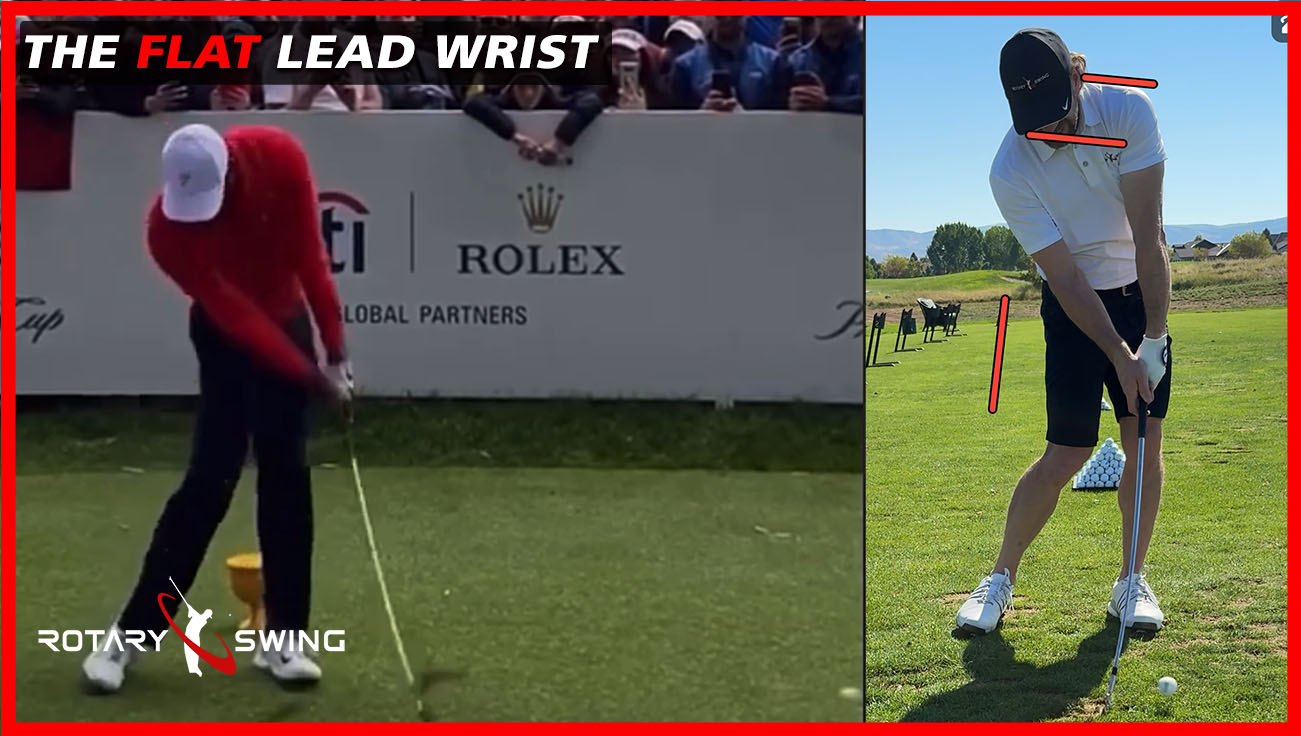
Because we now need to manipulate our wrist into a position to get bowed to help drive the ball low and keep the club face from passing our hands and de -lofted.

So what this is going to look like?

Again?

You can reference the five minutes of Perfect release video because I talk about doing this exact same motion.

So I'm not going to get into all the details about it.

But what I am going to talk about today is a couple little nuances.

That are going to help you with hitting the ball low so that when we start stacking on, hitting low draws, low cuts, high draws, high cuts, all of these fundamentals are going to start being built upon.

One of the most critical mistakes that I see people make all the time.

When they try to hit the ball low is they move the ball back in their stance really far.

It's the worst thing you can do believe it or not because as you move the ball back in your stance, I'm going to put two balls here, one where it would normally be so let's just say that's about where the ball would normally be and one where people tend to put it.

Now there's maybe a ball two balls difference between these two ball positions.

However, if I made a normal swing and I shifted my weight correctly, I would hit this ball very, very thin.

Or maybe even top it.

As the club was still traveling down normally where it should be, that impact.

So also what people are going to do because of that is they're going to start hanging back on their right foot.

Because they sense that if they shifted their weight correctly, they'd top the ball or miss it.

So they their weight shift starts to disappear, so they start losing a ton of power and those the sequencing of their swing goes away.

The trick to hitting it low is not by changing radically the ball position it's changing radically your impact position.

The ball position believe it or not can be in the exact same spot or even move further forward.

That's going to freak you out but yes you can even move the ball further forward to hit the ball low.

Now why would I move the ball further forward hit the ball low?

It seems so counterintuitive.

Again think about what's the primary thing controlling the clubface angle in the golf swing.

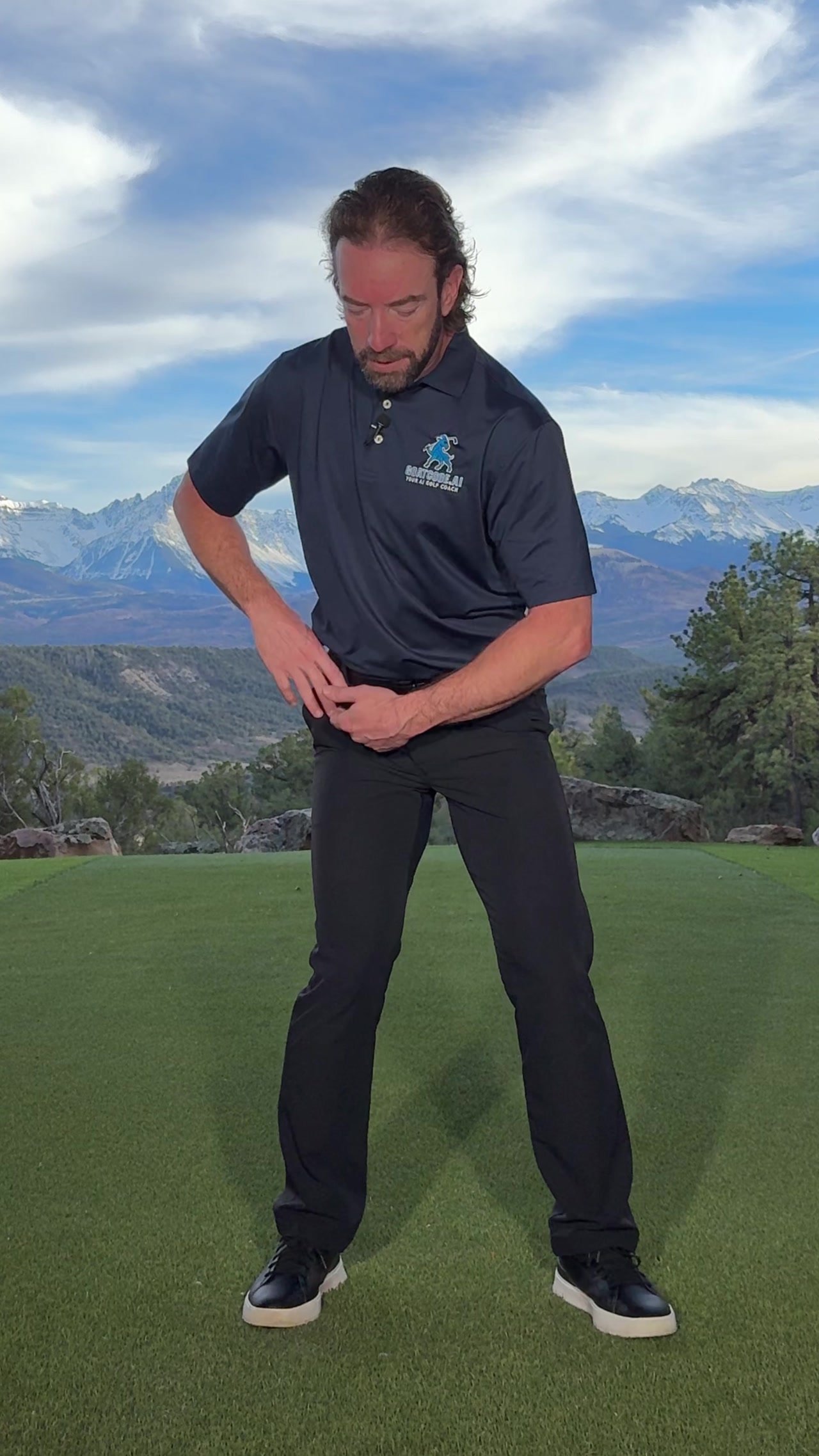
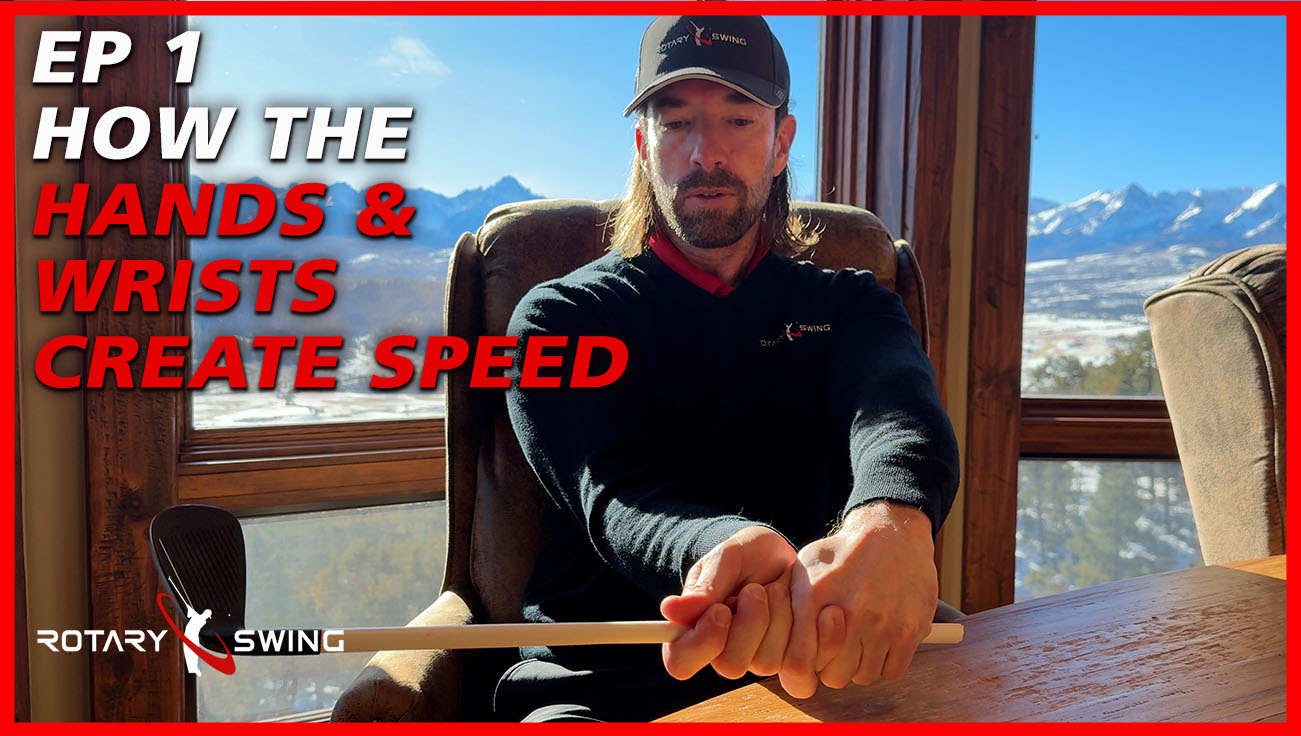
Well by now you should know it's this guy.

There's a reason you have a glove on this hand and not on this one right?

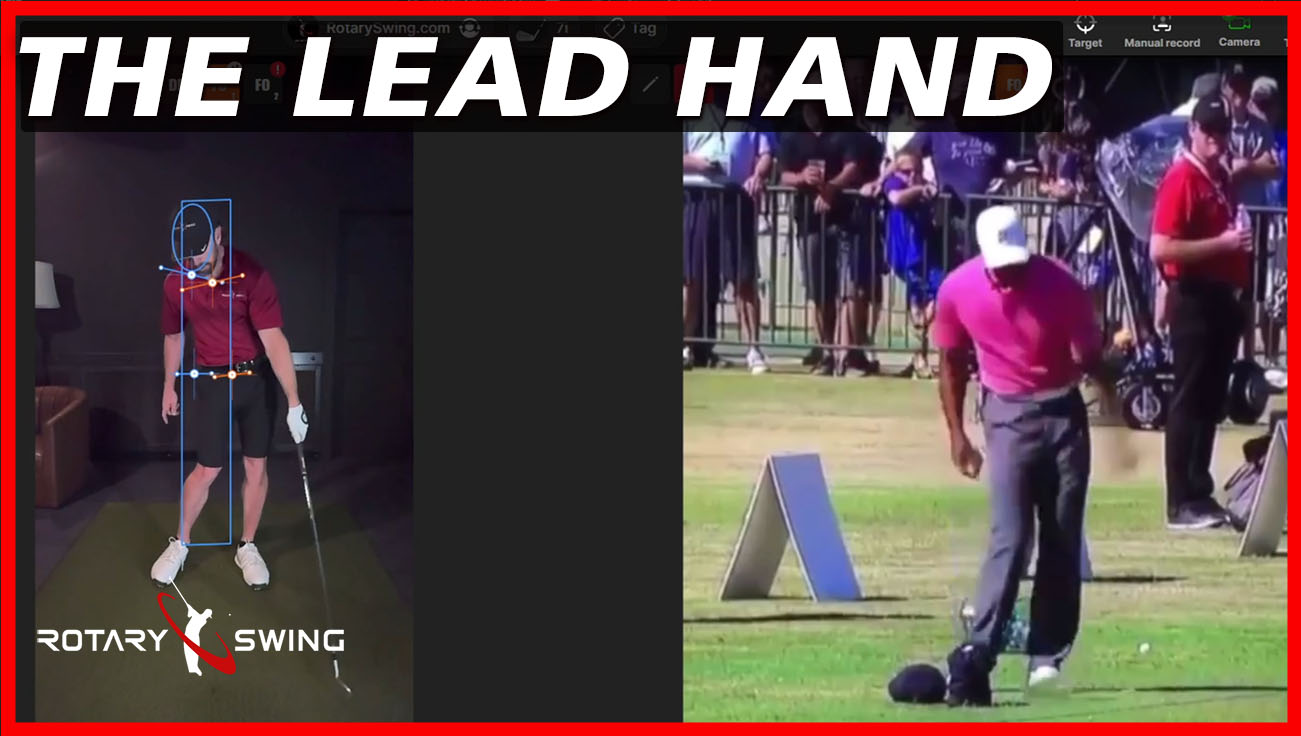
This guy is doing all the heavy lifting in the golf swing.

It's the only thing from a physics perspective that can continue to guide and lead the club head into impact because the right hand can only push.

You always all know all the push versus pull stuff.

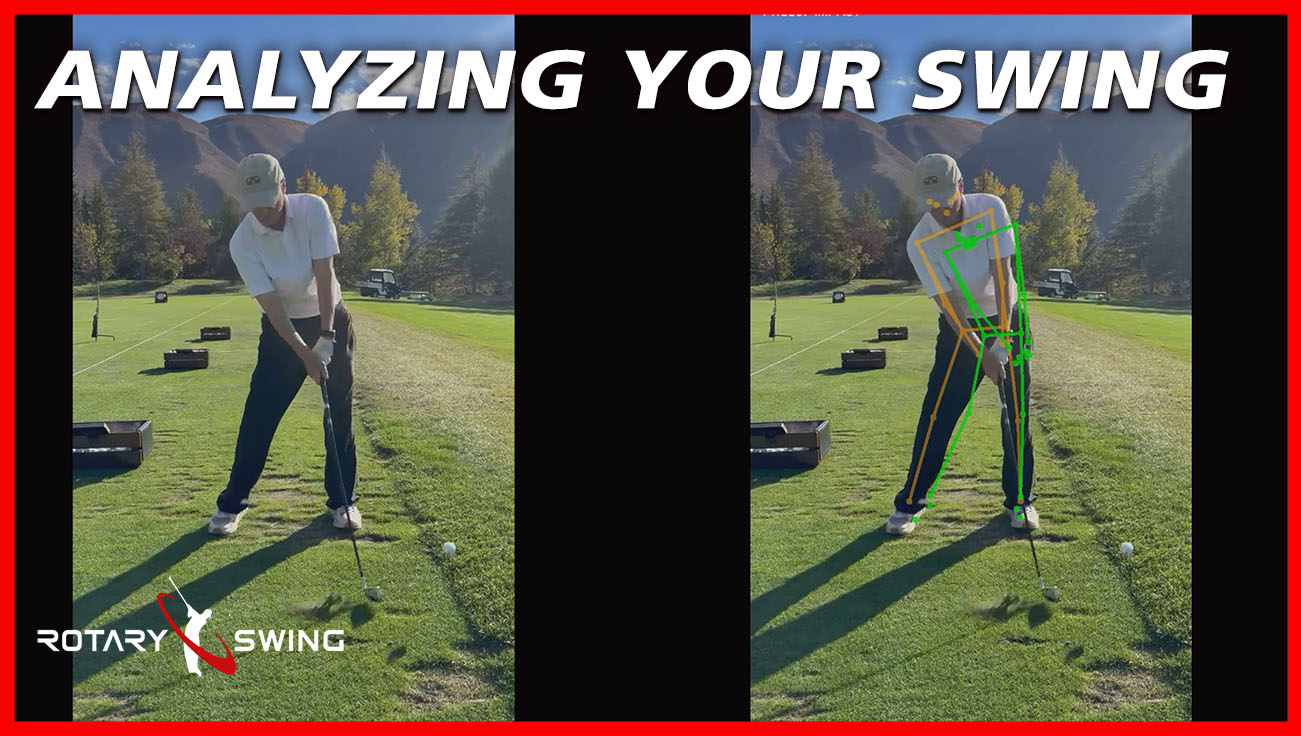
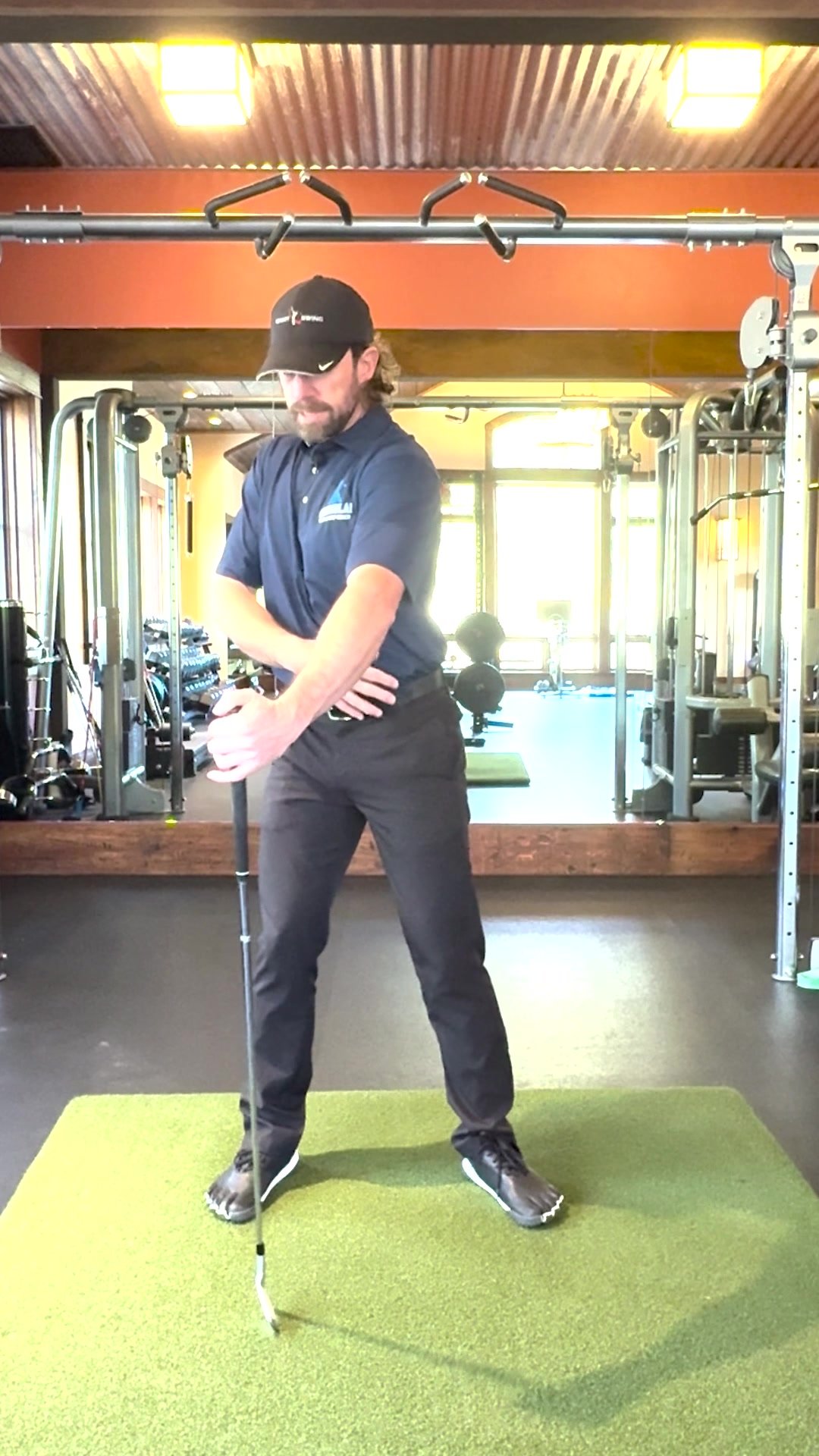
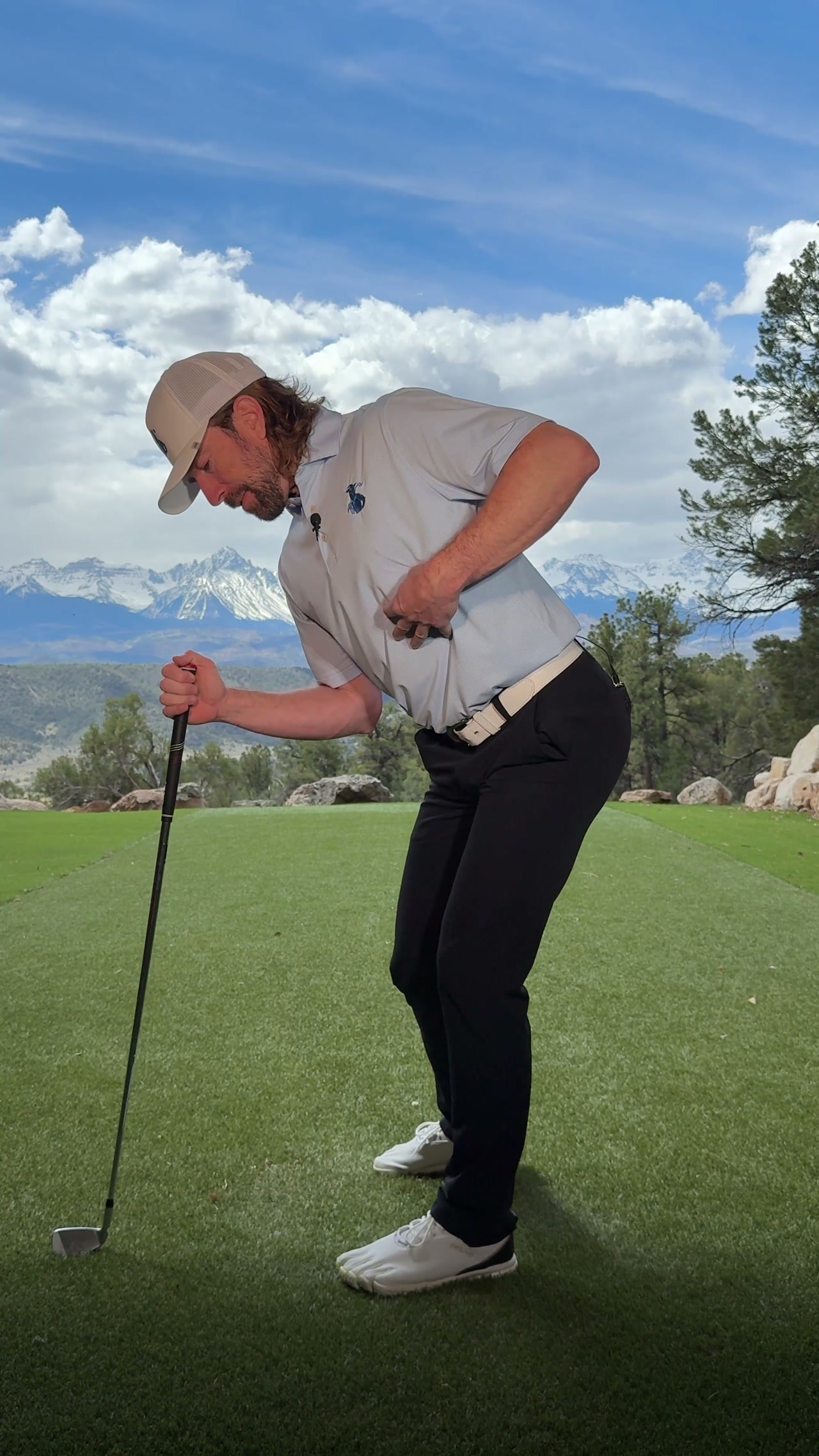
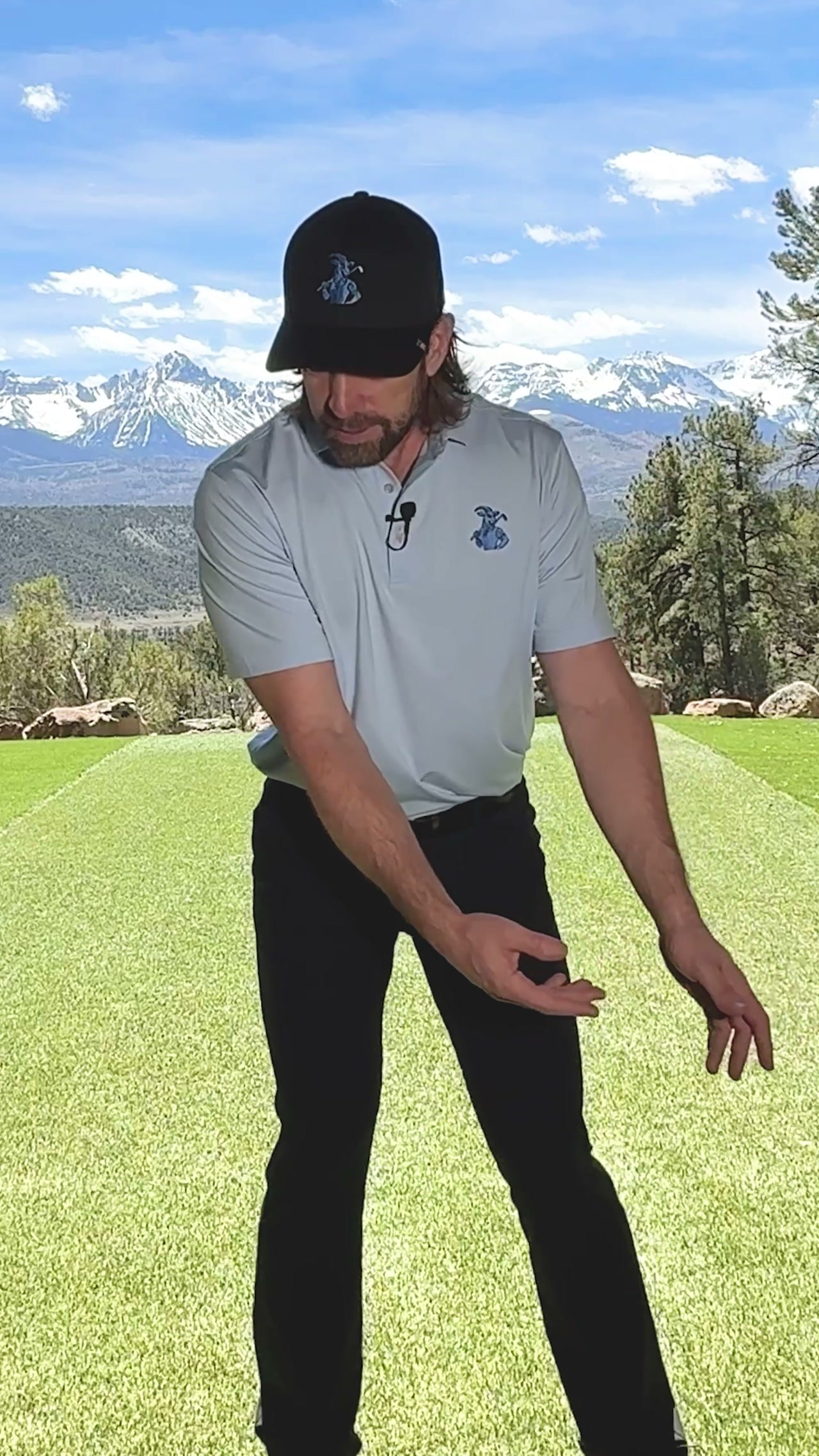
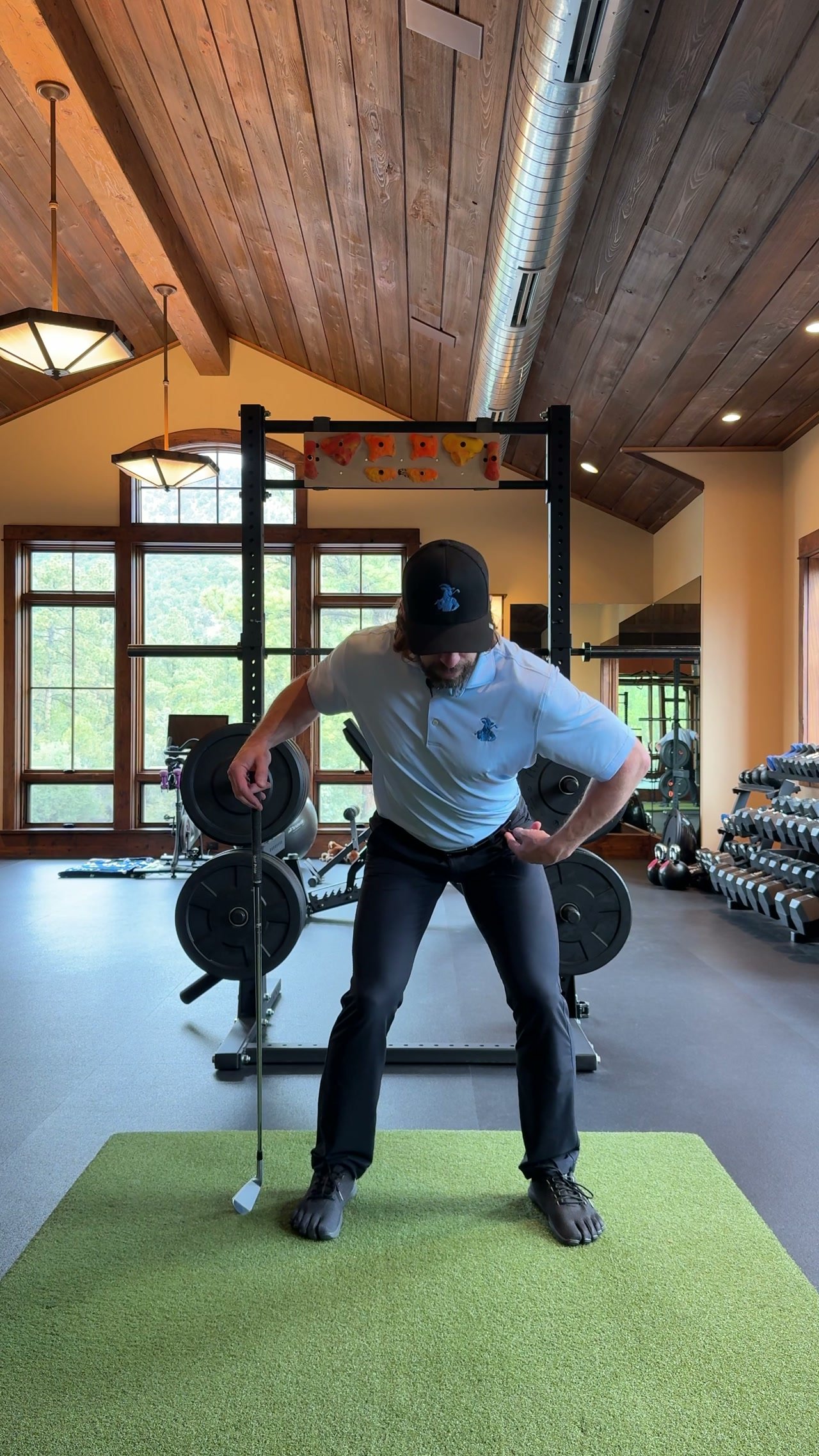
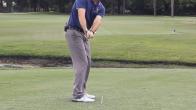
So as my left hand gets into this position where I want to bow it and really deal off the club this is going to be an exaggerated position.

What's the clubface going to be doing?

Well, as I really exaggerate my left wrist to get it super bowed to hit a really low.

Well, now I've taken the seven iron, I've made it almost like a two iron.

This is an extreme low shot but as I'm doing this I'm pulling the club head further ahead because it takes a while to get my left wrist that bowed.

I can't get my left wrist that bowed back here the clubs not at the ground yet.

So as I move it through here and shallow out my angle of attack, another key as I shallow out my angle of attack instead of coming down really steep.

Not only is it building in margin of error, because the shallower my angle of attack is, the less chance I have of hitting the ball.

Fat, which is what most people do when they move it back in their stance.

But as I move my hand forward, the club is also being moved forward because my hand is further forward than it would be normally at impact.

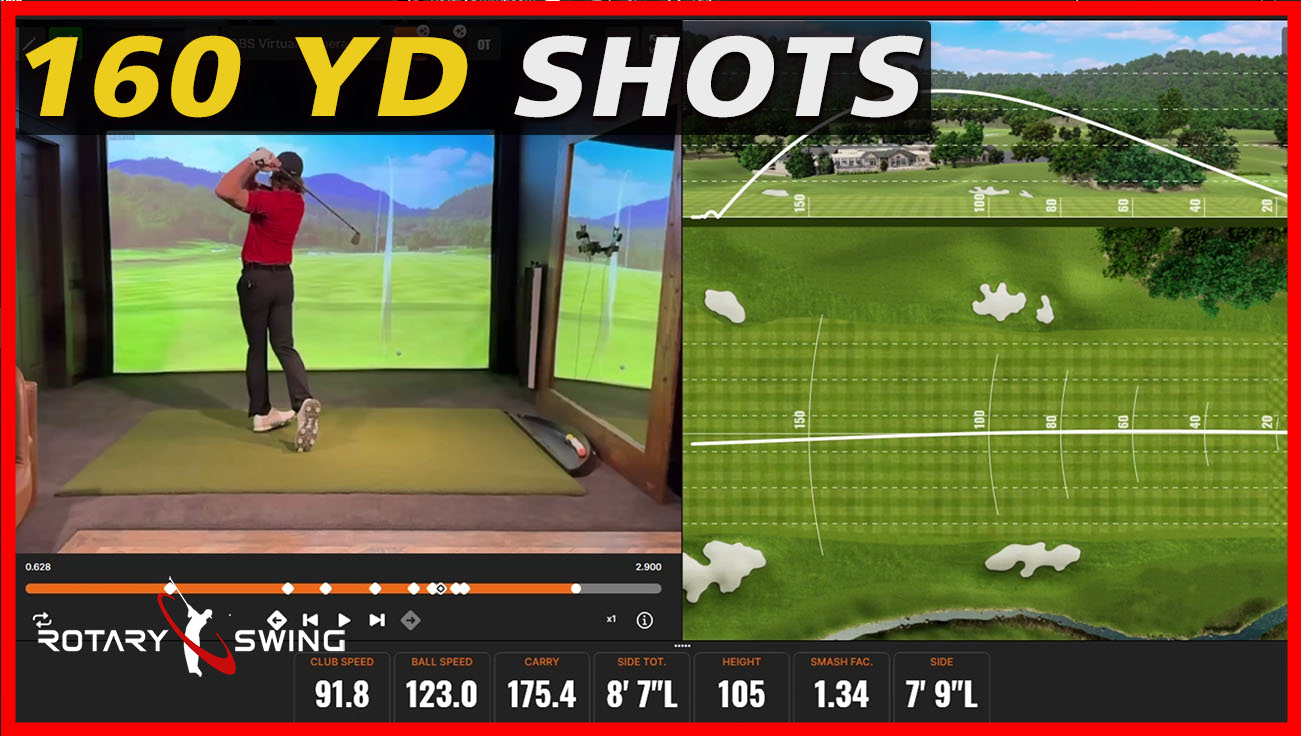
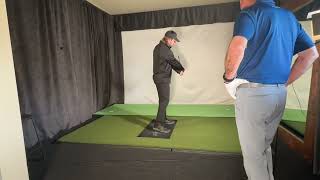
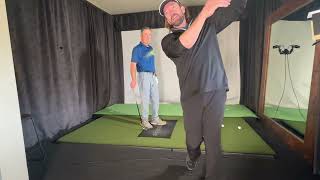
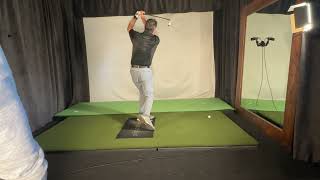
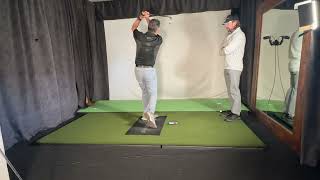
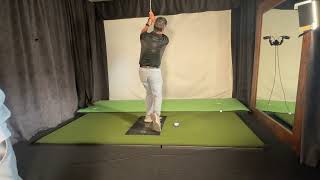
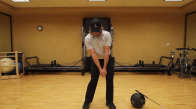
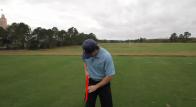
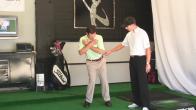
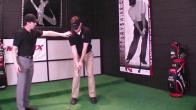
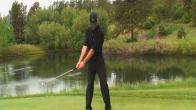
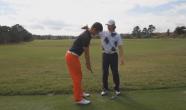
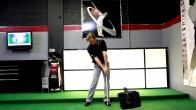
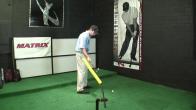
So believe it or not you can actually move the ball forward now at first I tell you just to keep in the same spot and that's not to say that you can't move the ball back in your stance either I'm gonna talk more about that when we start talking about hitting different trajectory draws and cuts because that's when you really want to start moving ball position because that's gonna affect club path right now we're gonna assume the path is the same we don't want to manipulate our path that's crazy because you don't want to try to have 16 different golf swings let's have one golf swing and make one slight change to it so I'll show you a normal impact position might be like this for me so that seven irons got a close to a true loss I'll deal off it a little bit there now I'm gonna get here so as I bow this left wrist the club or the ball excuse me oops chunk that one a little bit on the ball it's gonna be super low so that ball barely got off the ground you can see my hands were much further ahead at impact that's what I'm trying to learn in this drill hitting these balls super short that one went 25 yards the purpose is learning impact I don't care where the ball goes yet other than it goes low now as you start getting more comfortable with this we're gonna start adding some more pieces onto this so I want you to get to the point where you can hit the ball with a seven iron at least a hundred yards and keep it this high off the ground that's maybe a little bit of exaggeration but in your head I want you to visualize that and one of the the best visuals that I used to use with all my students is I would either put something here like a club or something like that or I would tell them to imagine their favorite pet was just in front of them you know I don't want to kill your dog so you've got to get the ball underneath the dog's belly so you really need to concentrate on getting your hands really de-lofted again that ball didn't even leave the ground but still went 20 yards as you start adding more speed to it now that ball went about four feet in the air and flew about a hundred yards again same thing getting my wrist in this position I want you to start out really small and get to the point where you can get comfortable with this wrist being in this position if you've forgotten all the stuff I covered in the impact videos go back and watch that where I talk about kind of visualizing your logo pointing at the ground or a nail going through your hand looking this way those types of things will really help you work on this shot but master both the release shots that you learn in day one and now start getting the ball to go low in day two

Must be Premium Member to Comment

64x64
Tom
A point of confusion for me - I am a left side release guy. When I try to imitate this motion my free-wheeling left side release gets messed up because I am trying to get my hands a little farther forward and still have a square clubface at impact. I also note that when Chuck shows a low shot with a fuller swing he does not appear to let it freely release but instead uses a body release of the club. Fact or fiction??? Thanks for helping me understand this important shot. Tom
June 15, 2021
64x64
Craig (Certified RST Instructor)
Hello Tom. I think the looks of the body release may be a little deceiving. To flatten the wrist (Knuckles Down Video). You want to stay a little more soft, but that doesn't mean the face isn't rotating. From the notes, it sounds like you are increasing tension to force a bow which is delaying face rotation instead of dragging the pain brush handle further ahead.
June 16, 2021
64x64
Tom
Excellent answer. Thank you.
June 16, 2021
64x64
Mark
Why couldn't you just choke down on a stronger club to get the same results?
April 18, 2020
64x64
Craig (Certified RST Instructor)
Hello Mark. You could do that. But, the more you choke down you are giving up some speed and different characteristics of ball flight. A low flighted 8 iron flies much different than a choked 6 iron into a green.
April 20, 2020
64x64
Paul
I had great results today hitting this shot on a windy course hit every green I used it on which made me think why not hit like this with most irons shots elevated greens is the only reason I could come up with not to what am I missing
May 24, 2019
64x64
Craig (Certified RST Instructor)
Hello Paul. Elevated greens and some greens are like concrete where you would need to bring the flight in higher so the ball could land like a butterfly with sore feet.
May 24, 2019
64x64
Kevin
When do you begin to bow the wrist in a full swing without steepening the downswing too much? I’ve watched the square the club early and trace your plane video.
February 21, 2019
64x64
Craig (Certified RST Instructor)
Hello Kevin. The wrist will gradually lose cupping throughout the swing (Using the Wrists in the Golf Swing Video). As you start the transition the lead wrist will start to flatten out more and start bowing. Depending on the severity of the bow, or how low you want to hit the ball. The club starts adding lots/or little bowing entering the trail thigh area.
February 21, 2019
64x64
gordon
On a recent visit to the driving range I spent time experimenting with low running shots. For me reducing the amount of axis tilt brought the better results. However I suspect this may be a blind alley. Should I abandon that approach and try to train bowing of the lead wrist, which is more difficult for me at the moment? Also, when using the bowed wrist should the follow through be kept low and shorter as well? Thanks in advance, Gordon.
May 26, 2018
64x64
Craig (Certified RST Instructor)
Hello Gordon. My preference would be mastering the lead hand control for the low shot. Take a look at Knuckles Down for further help. Also, It will tend to be a little shorter and lower. But, unless you are practicing impact, or extremes. You won't tend to see a big difference.
May 26, 2018
64x64
Mark
Any thoughts on distance control when hitting the ball low in this manner? Is it necessary to take a longer club considering it should roll further (depending on the course, of course)?
January 31, 2018
64x64
Craig (Certified RST Instructor)
Hello Mark. There are many factors that depend on yardage control when hitting it low. Sometimes when you de-loft you will actually hit it further because of better compression/lower loft and effect of the wind on flight. It's something you have to play around with and practice. Working on yardage and trajectory is something pros spend a lot of time working on.
February 1, 2018
64x64
Mark
Thanks Craig. I'm trying to pick the right tactic to use on a particular hole at my course. It's a 165 yard par 3 so I pulled out my 7 iron, hit it clean toward the green, but it just got pushed left by he wind into a parked car. Very embarrassing! If I hit low trajectory I'm worried about hitting it out the back, but if I land it short for the roll the ground is wonky and could go anywhere. Anyway, I tried to counteract the wind on my second from the tee with a fade but the wind didn't hold it up and I lost it right into the green keepers compound!
February 1, 2018
64x64
Craig (Certified RST Instructor)
Hello Mark. It is tough to bank on how much the wind will help, or hurt. Sometimes it dies mid swing. What is your normal 165 club. Do you feel more comfortable in golf being aggressive with the swing, or smooth?
February 5, 2018
64x64
Mark
I prefer to give it a good whack so I don't duff the shot. 165yd for me would be a 7i or 8i under the right conditions. My practice at hitting low shots with 7i mostly result in hooks (but low hooks at least!)
February 6, 2018
64x64
Craig (Certified RST Instructor)
Hello Mark. I would use the video above combined with the Knuckles Down Video using an 8 iron. See how consistent you can make the flight and yardage.
February 6, 2018
64x64
Kevin
Whenever I add a bowed wrist to lower my ball flight I end up over-drawing the ball. Is there a common cause of that? My fades and straight shots always end up very high.
January 18, 2018
64x64
Craig (Certified RST Instructor)
Hello Kevin. Sounds like you are manually turning over the wrist too much instead of it being gradual. Take a look at Fix Your Release practicing a bowed impact. And, then watch Flip vs Release to understand it is a gradual process. Not a quick second flip at impact.
January 19, 2018
64x64
Arnie
Other than hitting into the wind, in what other situation might I need to use this shot?
January 13, 2018
64x64
Craig (Certified RST Instructor)
Hello Arnel. Typically, wind and distance control are the main reasons for lower flighted shots.
January 14, 2018
64x64
Arnie
Thanks. Should I expect more or less spin with this lower shot, compared to my stock shot with the same club?
January 14, 2018
64x64
Craig (Certified RST Instructor)
Hello Arnel. When playing in the wind and lowering the ball flight your goal is to have less spin leading to less lift.
January 14, 2018
64x64
gordon
We are having a mild but very windy winter here in Germany and the wind is playing havoc with my approach shots! I take on board your advice about lowering flight trajectory by bowing the lead wrist at impact and will practice it diligently. Due to lack of talent, however, I need a quick fix for the windy rounds and will have to use the longer club approach. To moderate distance what do you recommend, gripping down?, limited swing (e.g. 3/4) at normal speed? or full swing at reduced speed? Best regards, Gordon.
January 6, 2018
64x64
Craig (Certified RST Instructor)
Hello Gordon. Spin is the killer with wind. I would recommend tighter backswing, more club, and bowed impact. Slight gripping down will help as well.
January 7, 2018
64x64
gordon
Thanks Craig, - what exactly is meant by „tighter backswing“? I should add that in windy conditions I think I am a little too tight!! Best regards, Gordon.
January 7, 2018
64x64
Craig (Certified RST Instructor)
Hello Gordon. Shorter (1/2-3/4 Length). I apologize for the confusion. Not excessive tightness, or tension. More compact.
January 7, 2018
64x64
Dave
So, why not just take a longer club and make a shorter swing? Instead of a 7 iron, take a 5 iron and just make a 3/4 swing, say, or choke down a bit. Not sure when to try delofting and when to just go to a club with less loft.
August 31, 2017
64x64
Craig (Certified RST Instructor)
Hello Dave. That is definitely one way you can play the shot. However, this helps you fly the yardage you need with staying moderately aggressive in the swing. You can add a couple extra yards to your 7 iron quickly versus taking 2 clubs up and trying to find the sweet spot in pace/length dialing down a 5 iron.
August 31, 2017
64x64
David
When is the best time in the swing to create the bowed left wrist. Is it before the club reaches the top of the backswing, during the transition or during the release? For me it seems to be more naturally achievable during the release.
August 30, 2017
64x64
Craig (Certified RST Instructor)
Hello David. All depends on how much you are trying to de-loft. The wrist will be "gradually" rotating and bowing as you transition into the downswing. But, some players don't feel it until the release phase. No worries.
August 30, 2017
64x64
JOEL
Awesome! I didn't think I could do this, then I tried it. Although I haven't mastered it yet, I'm already noticing much better ball compression and consistency with my irons. Taken together with releasing my wrists to hit baby draws, I'd say my game has just gone up a significant notch. Looking forward to the. next 5 days!
August 29, 2017
64x64
Craig (Certified RST Instructor)
Hello Joel. Great. I like that you are enjoying the new series and seeing the results.
August 30, 2017
64x64
Martin L
Thanks for this new series. Could you add or point me to a video on pre-shot routine. I find that I'm thinking too much about all the lessons and need to get them out of head on the course so I can play.
August 27, 2017
64x64
Craig (Certified RST Instructor)
Hello Martin. Take a look at the Trust Line Video.
August 28, 2017
64x64
David
I am struggling to see how it is possible to create the same club head speed with the hand's in front de-lofting the club lie this. For a normal release the club will be passing the hand's earlier with more speed?
August 23, 2017
64x64
Chuck
The club should never pass the hands before hitting the ball, that's the dreaded old flip. As for the speed, we're only talking a few more degrees of forward shaft lean so the speed difference in neglible until you start getting to extremes, at which point you should just grab a longer club! Also keep in mind that speed doesn't matter too much here because we're delofting the club, which adds distance of course without speed. To understand this, go put your 3 iron head on your pitching wedge shaft, it's going to go a lot further than your wedge!
August 24, 2017
64x64
Chuck
The wrist only needs to be slightly bowed so no the right wrist doesn't need to be bent back that much.
August 21, 2017
64x64
Craig (Certified RST Instructor)
Hello Damien. It sounds like you are making more of a sped up flip versus gradual release. Make sure the release is gradual. Take a look at Flip vs Release. You could be maneuvering the club head closed.
January 2, 2017
64x64
Damien
Hello Craig I should have said that my opposite bad shot isn't really a slice it is a big push or push fade/slice. I was reading that this can be caused by coming too far from the inside. Sometimes I feel that my backswing is too flat, I get good leg drive to start my downswing, these can then cause me to come excessively inside/out, correct? Do you have any suggestions for evening these things out?
January 4, 2017
64x64
Craig (Certified RST Instructor)
Hello Damien. Yes, a push or push slice can easily be caused by too flat back and lower leg driver early in the downswing. Pool Noodle Video and 4 Square Drill will help with the flat backswing. Level Shoulders and Trace the Plane to help with the path.
January 4, 2017
64x64
Damien
Hello Craig Thanks for this. I worked on these drills today and also worked on the aggressive leg drive, focusing more on just shifting the weight back into my left heel and glute. So my swing actually feels a lot more easier, and less stressful on the body. I am also still getting some good distance and have stopped the massive hooks and pushes. However, isn't there always a however, I am now pulling a lot of my shots. Generally straight pulls, with some fades as well. Is there any videos or drills that will help here. I did find a link to a video about not pulling your shots left but when I go to the link from a google search it brings up part of the transcript but with a different video. Anyway thanks for you help. Damien
January 5, 2017
64x64
Craig (Certified RST Instructor)
Hello Damien. I would work on your impact position starting with smaller shots. Go to the Perfecting Your Impact Position under the Video Menu - Bonus Series. Start with 1 of 4. This wil give you good face awareness.
January 5, 2017
64x64
Chris (Certified RST Instructor)
Having the clubface closed 45 degrees in the hitting area would not produce any sort of good results. The path and the face to path will dictate the curvature of the ball but can where the ball is struck on the face can also have a big factor in how the ball flies.
July 19, 2016
64x64
richard
Thanks Chris. I remain confused though. Most everyone speaks in terms of having the face closed relative to the path, and the videos speak of overdoing it to get feel. It is just that when i set up to hit a draw, with the face looking closed, do I aim to hit the inside of the back of the ball, or if not, where? Or is it that the face is "closing" through impact, and is not fully closed "at" impact? Thanks again.
July 19, 2016
64x64
Chris (Certified RST Instructor)
No problem Richard. Did you by chance see Chuck's video called: drawing the ball? I personally think trying to aim at hitting a particular spot on the ball away from the center of the face can lead to very inconsistent shot patterns. You can get better more consistent results by focusing on controlling the face angle by training the lead wrist position in the hitting area. I also think that if you have your path and face to path as close to zero'd out as possible, that learning how close the face a subtle amount to hit a tight draw will be more effective. Sorry if I am deviating from your questions at hand...I just know that if your path is in a good spot, then working the ball with good clubface control will teach you how to be more consistent when shaping shots.
July 19, 2016
64x64
Craig (Certified RST Instructor)
Hello John. Take a look at the Driver Launch Angle Video for more understanding of the face rotation and effects on launch. However, the same sequence will apply with an adjustment of ball position.
November 27, 2015
64x64
Craig (Certified RST Instructor)
Hello Marc. You are correct about Trackman and face angle. 85% of initial ball flight is caused by face angle. However, all of ball flight isn't determined by that. We would prefer you adjust a little of the path because it doesn't change your orientation to the target. If you are aimed lets say middle of the green trying to hit a draw. If you don't draw it and hang it out to the right you will be right side of green. Over draw left side of green. However, if you change you body alignment to the right and aim just club at the target. Then, if you don't hit a perfect draw your dispersion can start to get way off. Yes, the path will need to be a little more in to out.
October 23, 2015
64x64
Craig (Certified RST Instructor)
Hello Peter. Club face and path both play a role in ball flight. 85% will be determined by club face and the rest by path. When trying to curve the ball a certain degree you need to change both elements for ultimate control. Initial will be club face. But, swinging left and shutting the face guarantees the ball starts left.
August 13, 2015
64x64
Craig (Certified RST Instructor)
Hello Craig. Make sure the club shallows out first. It sounds like you are rotating the wrists very early and actually letting the trail side steepen the plane. Work the ball right of the stick (helps with shallowing out). Once you can get it right of the stick. The shallow out path to swing right then rotate the wrist hard to close face.
August 12, 2015
64x64
Craig
I think I am very shallow with this new swing. I have been a big divot digger most of my golf playing and now I am barely clipping the ground, I like that as the shots are very crisp and powerful. I have no problem getting it rt of the stick but doubt I am swinging the club far enough from the inside out. I am inside out but maybe not enough, When should the wrist rotation occur and the lag point half way down or sooner or later.
August 12, 2015
64x64
Craig (Certified RST Instructor)
Hello Craig. The wrist will start to rotate aggressively just before reaching the trail thigh. You might feel or have the sensation of it earlier though depending on curvature. If you start trying to close it in front of the trail thigh or after. It will more than likely be too late.
August 12, 2015
64x64
Craig (Certified RST Instructor)
Hello Stuart. Do you have another question?
July 8, 2015
64x64
Chris (Certified RST Instructor)
Hey Stuart, We have the products marked per the manufactures suggested retail price. Unfortunately, we do not have the buying power that some of the big retail stores do, that allow them to net down the cost of the training aids.
July 8, 2015
64x64
R.J. (Certified RST Instructor)
Robert, You can say that. However, the entire RST program, when completely properly, allows us to control the club face so that we need not worry about struggling with any kind of a miss. Put in the work and have confidence, my friend. You'll be able to get it. R.J.
November 7, 2014
64x64
Craig (Certified RST Instructor)
Hello Brent. We try to zero out the plane as much as possible. With that said, error more inside-out, than outside-in.
August 28, 2014
64x64
Craig (Certified RST Instructor)
Hey John. Our method will provide more control. Club face dictates over 85% of what our ball flight does. The typical approach by instructors is from the knowledge base that setup and club face control the shot 50/50. Science has taught us in recent years that is not the case.
July 17, 2014
64x64
matt
Craig; If I have an open face, and a path that is twice as open as the face, I'll hit a draw (trackman). It seems like the timing of setting up square, and swinging out to the right, and rotating the hands to change the face angle is a lot to think about. Why not just close the stance a little, open the face, and swing along your feet line? Note: my normal flight is a straight to a slight draw.
September 18, 2014
64x64
Craig (Certified RST Instructor)
You want to make the swing as simple as possible and not have to change a lot of variables. Technically, you are correct, but would require more of a toe hit. With the club face controlling the big majority of your ball flight. If you keep everything the same with a slightly closed club face. You will hit a draw. Changing setup, club face and path can lead to a lot of inconsistencies. If you have a good stock setup and a zeroed out plane. Then adjusting the face angle through impact slightly can make the ball curve efficiently and off the sweet spot. Unless you need a big right to left draw. The path would need to start more in to out.
September 19, 2014
64x64
Chris (Certified RST Instructor)
The left hand should be the primary controller of the face. The amount of rotation for the shot shape you are trying to achieve should be controlled more from the left side even though the right hand is working with it. A 10ft draw is a good thing for sure though. Better than a 30 yard sweeper that I fought when playing full time
April 21, 2014
GOATY AI Golf Coach
Get a Free AI Golf Lesson — 10 Minutes of Live Coaching Just prop up your phone, start swinging, and GOATY coaches you live with real-time voice feedback. No upload needed.
Try GOATY Free

We're after one thing: Real Results - Real Fast. And that's exactly what our members achieve. And that's why they say the AXIOM is: Mind-blowing. Game changing. Revolutionary.

Check it out ...

Here at RotarySwing, talk is cheap and the proof is always in the pudding. Come see the massive transformations we can achieve together in your swing.

See for yourself ...

From beginner to pro, we have what you need to get you where you want to go.

See how inside ...

RotarySwing was founded out of frustration with the current state of golf instruction. Quinton knew a better way had to exist to learn this game we all love.

Learn more ...