

































































































































































































































































Q-n-A Webinar 17: Mar 4
Sorry, you need to be a member to access this video.
You Are Just Seconds Away - Become a member here!
Already a member? Log in now


Try a free live lesson with GOATY
GOATY, my AI golf coach, watches your swing through your phone camera and coaches every rep. Free, about 20 minutes, no credit card.
Q-n-A with Craig Morrow, seventeenth webinar, March 4th 2026
Howdy, Mark.
Can you hear me?
Maybe?
Somewhat?
I'd have been disappointed if it wasn't you.
Hey, Ray.
Hey, Scott.
David.
All right.
So, looks like things are working.
I don't know.
So, who wins the Masters this year?
It's a good question.
I don't think it's going to be Rory.
I don't think it's going to be him.
All right.
Well, welcome, everybody, to not sure which number webinar.
But thank you for spending your Wednesday evening with me.
Humble golf instructor, or RST instructor, Craig Moore.
So if this is your first time.
I'm going to give the crowd a few minutes to pile in because we have people from all over checking in.
And then once everybody gets in, I'll get started and go through my spiel.
But in the meantime, I'm going to talk to the group, see how everybody's doing.
And we will take it from there.
So I hope everybody's had a good March so far.
Who wins the match?
That's a great question.
I haven't looked at any odds yet.
I mean, I would like for it to be.
Hmm.
That's a toughie.
I'd like a Ricky Fowler type to come out and do something.
That'd be cool.
That'd be cool.
Just one week to start swinging in the club again.
Awesome, right?
Fantastic.
Looking forward to it.
Looking forward to it.
Hey, Chris, Kenneth Mitchell.
What are your thoughts on Anthony Kim's big win?
Thoughts as in how he's swinging or just thoughts in general on it?
Because I can tell you I was around when Anthony was enjoying life, so to speak.
And I still can't believe it.
I mean, to be honest with you, I was in some certain circles because this was at the end of my playing career.
And I can't even believe he's alive, much less what he did.
So to be able to turn that around.
And do it at that high level or professional golf-wise?
Can't believe it.
Because I still don't know how he's dead, to be honest with you.
So more power to him on that.
I still think he's still got a little bit of an edge to him.
But considering kind of where I saw him at one point, it's really unbelievable.
Tom, hello.
Thanks for the quick response to the last review.
Never expect you to get to it tonight.
Oh, is it?
All right.
So I know that.
So that Tom right there is in mind limited.
So I saw he posted a review right before this webinar started and I gave him a little, I'm like, you know, I got a webinar in like 20 minutes and you're posting a review.
So no problem.
I hope it helped.
If you focus on what I was telling you, that will help you out with that excessive slide.
Promise you.
I don't know if it would be what Goatee would tell you, but it's what I told you.
Vegas says Scheffler closely followed by.
But they haven't done anything, Scott.
I mean, Scheffler's always been all over the map.
He's still a little bit all over the map.
And Rory, to me, I mean, he might do it.
Obviously, he's still a great player, hell of a ball striker.
And I'm not saying he's never going to win again.
I repeat.
I'm not saying that.
What I'm saying is, is what I've seen from people in the past in my profession, you know, from a David Duvall, I know he had back injury and stuff like that.
A lot of players, when they set their goal and they hit their goal, like I want to win all four majors and all that, it's really tough to get that fight back.
Now, Tiger wanted to be the best ever and wanted to destroy everybody by 40 if he could.
I don't think Rory has that same mentality, so is he still going to win?
He's still going to put?
Absolutely.
But I don't see that same bite in him anymore because he his.
I don't think he set his bar high enough and I think that happens to a lot of players.
Um, so when they finally do reach some type of pinnacle, it's like, What now?
And Tiger never said, what now?
Tiger said, I want to do it again.
I want to do it again.
I want to do it by more.
And I want you to bleed.
And speaking of bleeding, I don't know if y'all have this problem.
Every time I turn around, I'm like, I don't remember getting cut.
I'm bleeding on my thumb right now.
Right before I turn on the camera, I was like, why am I bleeding?
Every time I do, I just, I'm like, oh, I'm bleeding randomly.
Go figure.
All right.
So it's still.
Filling in.
That would be, Greg, I would be happy for that.
I would love to see Rosie get it.
I mean, he absolutely busts his butt to play at the level he does, his age and all that.
I would love to see Rose come back and get it this year.
That would be really cool.
And he's swinging well.
I'm jealous of his mobile health station.
Because we can obviously tell on the picture of fitness and health, but his mobile trailer that he takes to tournaments with his red light therapy and sauna.
I'm not a big fan of cold dip.
The jury's still out on me on that one.
But his mobile health station is fantastic.
BJ, hey, Craig, great to see you too.
You too, how you be?
Welcome to older age.
Yeah.
I know.
And I got older this week too.
So, you know, so I guess that it's going to happen even more now.
All right.
I'm going to give about one, maybe two more minutes.
Now I'm going to go ahead and for everybody that's already in this group right now, I didn't see a whole lot of questions posted.
All right.
If you don't want a hologram up here of GOATI telling you what to do, you want a live human, you've got to start posing some questions.
Because I should be able to get through this list tonight.
And Mike, I saw you in the group.
I'll talk to you about your question.
I'll get to that one regardless because I'm pretty sure that that question is on everybody's mind.
Mike posted one this morning when I read the question and put it on my sheet.
I'm like, I'm sure he's not the only one asking that.
I don't know how y'all's weather is everywhere.
Atlanta, 75 and sunny, 75.
It's way, way too early to be as warm as it is right now.
I'm sure the March bug will come back because I know at Augusta right now, they're icing everything like crazy because things are popping way too soon.
I should have saved this for the next webinar.
Kind of look like I should be at Augusta.
Kind of look like an azalea right now.
All right, any other things before I get started?
Any other things?
Uh-oh, I popped the top off.
Goaty dings me for swaying my head off the ball at the start.
Can you help with the initial sequence on the takeaway to keep from moving off the ball?
Yeah, I can talk about that.
Liv has three of the top nine betting odds.
I did not know that.
Josh, so the big thing with the head sway, is everybody keeps talking about, you know, you got to get lateral to start with.
You got to start loading and things of that nature.
The head sway nine times out of 10.
It's just this.
It's just this left shoulder pushing.
And so if you watch the last webinar or if you watched trail hip depth and sequencing, not yesterday's video, but a couple of days back.
If I'm standing right here and I don't want you to swing golf this way, but if I were to just go like this, I mean, my head's not going anywhere.
All right.
That's obviously excessively lateral hip slide, but my head's not going anywhere.
So what's going to be the thing that moves the head?
Now, if you've been with RST forever and ever and ever, we always said where the eyes go, the head goes, where the head goes, the chest goes.
Well.
It's always been the same thing with the lead shoulder.
If you push with your left side, where's your head going to go?
If I pull with my trail side, where's my head going to go?
So what I would do first is just get in front of a mirror, and I'm not saying swing this way, but get in front of a mirror and just do a couple just pulling with your right side.
You can do your right shoulder, your core, and that will get you the feel of how to make a centered turn.
Now, if you combine that with shifting, And feeling the right turn, you can see, my head's not going anywhere, it's going down, but it's not going anywhere, it's always comes to this.
But going back to my point, if you watch that video, Chuck, has you sitting here?
Like, getting that tension out here, letting this respond to how you're moving this way?
Head sway, Nine, nine, nine, nine, nine times out of ten is because this is pushing.
So learn how to stay centered first and then do it correctly, Ira, I'll answer this, then get going to the group.
What do you think Anthony Kim's only thought about left shoulder back, right back under the chin?
I think that's a feel and a mantra that works for him.
If you look at the actual motions of what happens, because if I were to grab five players and say, get your left shoulder under your chin, I may see one like this.
The other four are going to be like this.
And I think he's done his swing enough.
I don't care of all his party and all that.
There's still some nervous system, still some movement patterns left in there.
And especially with how much he chokes down and how much he does kind of coil in the backswing, it works for him.
But the right shoulder, I don't mind that as much.
But the left one, I see way too many faults.
Does that need to happen?
Yes.
Is that how it happens?
No.
The left shoulder gets under the chin as a byproduct of other components.
And so that's why that kind of scares me.
But I mean, I've worked with these guys.
I've played with these guys.
Some of these guys think some of the weirdest things.
And it goes back to the feel and real aspect.
Is that it.
For me, perfect example.
I'll leave you at this.
I feel the best in my golf swing when I feel over the top.
Like when I literally get up here and I feel like I'm swinging like this is when my golf swing, I know don't play me today.
Because if my swing feels over the top, everything's syncing up.
Now you put me on camera, you put me on a track, man.
It ain't even close to it.
But that's my field.
And so I'm always trying to come over the top.
I tell that to somebody else, we're in some problems.
I mean, I haven't been over the top since.
I don't think I've ever been over the top.
I found, I'll show you something funny.
I don't know if the camera will pick this up.
So I found my swing from when I was I found a clip.
cutout.
And if I look at my swing on iOS 10, why the hell did I ever change it?
Rebuilt my swing five times.
Who the hell convinced me to change it?
Okay.
So if I'm repeating something, I printed this out, but I think it accidentally did a duplicate from the last one.
Did I answer where's the slot in the downswing?
Is this an important place to get to a certain connection between slot and GDP?
Or was the last question I did talking about the Rory positions?
For anybody that was here last time, apologies.
I just don't want to be repeating something.
Because my printer duplicated.
Nothing?
Crickets, that's not good.
Or that means I've never talked about it, so let's go with it.
All right, so first question on the board.
Where is the slot in the downswing?
Is this an important place to get to?
Is there a certain connection between getting into the slot and GDP?
Absolutely.
Show us how this is done.
Right supination, right shoulder drop, side bend crunch.
It's kind of all of the above.
Now, the problem that I have with slot, okay, is it's a pretty broad term.
So as you all know, I manage the social media for Rotary as well.
And somebody asked this question the other day on social media.
And they said that they.
something to the fact that they're tired of hearing about shallowing and the slot's so important.
Well, if I had a student in front of me and I said, hey, put the club in the slot, what the hell does that mean?
What's the slot?
Now, if I said shallow out the club and I've explained, that's going to help further the conversation.
So the slot essentially, as I start to transition from here and I start to work down, the slot essentially is this window from the top into about lead arm parallel to the ground where the club is shallowing or supinating on plane.
The pitch of the shaft isn't steepening.
We're not pronating too soon.
The slot is basically a little window right here.
And typically, if you've ever done a review for me, that window is going to be somewhere between your shoulder and your right bicep.
If you're anywhere in that phase, you're okay.
If you're starting down, and your club's above your trail shoulder, you're in trouble.
If you're starting down and your club's below your bicep right here this soon, you're in trouble.
So the perennial slot is, as I start to come down right here, is kind of between this window of your shoulder and your bicep right here.
If we're anywhere there, kind of lead arm parallel to the ground, that's the position you're trying to get to.
Because once you get to that position, this is where all the fun happens.
This is where all the magic happens.
So is there a certain connection between getting into the slot and GDP?
Absolutely.
You cannot get to GDP if you're not moving through this position.
Now, I can get up here and I can arm it to GDP.
I can manufacture the position.
But the point is, Is for this downswing right here is to be a byproduct as I'm coming down to bring me here.
So that I would say the vast majority of the players that I work with.
Other than you, Tom, just did his review.
Use their arms too much from the top.
They get up here to the top and they start firing their arms and hands.
That's not how you want to get into GDP.
A, you won't have any angle.
But B, GDP is literally doing nothing with your arms and hands.
And just sequencing.
I'm not moving my arms and hands.
I'm not moving my arms and hands.
Now I'm in GDP right here.
I'm in trail fire ready to go.
Let the club release.
So how should it be done?
Is it supination, right shoulder drop, side bend?
Now here's kind of the little pickle with this.
Some players may need to feel more supination.
Some players may need to feel more trail shoulder drop.
Some people need to feel more side bend.
The problem is that answer can't be universal because I sometimes tell somebody, hey.
You don't get enough secondary tilt.
You're staying too level.
Your right shoulder needs to go down.
And then they immediately start dropping their right shoulder this way.
Now I've got too much secondary tilt.
Now the club's going to be underplaying.
Now I'm going to hold another wall of hurt.
So I don't want to just say it's falling, but it really isn't doing a whole bunch.
As I load and I get up here to the top, to get into the slot, the key is that as I transition and I start to move my pressure back to the lead side, is that my arms essentially go straight down.
Okay?
That's how you get there.
There's no firing.
There's no anything.
Now, some players may need to feel some more supination because they're so used to pronating.
But it's literally this position and letting your arms work straight down.
You will hit the slot every single time if you don't move your arms from the top.
Now.
I'm going to get arguments, not from you guys, because you all are seasoned veterans, but I'm going to get arguments from people.
Chuck says about throwing from the top and Chuck says this, that, that, that, that, that.
I get all that.
And these are the things that actually happen.
But the same thing since I told you guys since day one, what are the arms doing the golf swing?
They do not go left and right.
If anything, they go up and down.
Now, I don't want trail arm lift and picking up the club.
All right.
There's such a thing called shoulder elevation.
So as I'm going this way and I'm rotating, and I'm rotating on spine, momentum and all that is going to start to carry my arms a little bit more vertical right here.
So the feeling is as my pressure gets back before unwinding too soon, it's the arms and hands going straight down right here.
Now, that's not like dropping them from here to here.
They haven't gone up that much, all right?
But to get to the slot, is literally to do nothing.
You've probably seen, speaking of Justin Rose, that is a great drill for a lot of people.
I wish more people, I have players, I'm not naming any names, I have students that fight me on this stuff.
Justin Rose almost won the Masters last year.
In every single swing, what did you see?
Nobody wants to hit it from here.
He doesn't hit it from there.
And I'm like, hey, if it's good enough for runner-up at the Masters to do that on every single swing for almost four years straight, then what are you arguing with me when I ask you to do it for a week?
What is he doing right there?
He's trying to feel his left arm come down his chest where he's not doing anything with his arms and hands, and he's not prematurely firing and spinning.
That's how you get into the slot.
You do nothing.
And that's one of the hardest things for golfers to do is to realize that overworking is usually the problem.
It's that you're trying to do more because you think you need to do more.
Because you've got this weight in your hand and you want to do something with All right.
How did Tiger generate a lot of speed without forcing it?
Where did it come from?
How was it done?
What can we learn?
That's a loaded question.
How did Tiger generate a lot of speed without forcing it?
Well, he did use a little bit of force.
There ain't no denying that.
What did it come from?
How was it done?
Well, Tiger had a combination of a lot of things.
Depending on when you look at his career, Tiger has a little bit of a version of my swing where I get power.
Tiger was always.
A, extremely wide.
So width is a huge free power source.
And with him being sort of tall and lanky, he always had a ton of width and he always had a ton of rotation.
And so let me kind of backtrack.
What are the three power sources in the swing?
We got rotation, we got leverage, we got width.
Those are the three power sources.
Tiger had a ton of wind and rotation with a ton of width.
All right.
Now, Tiger never really had a ton of lag, but he did get power from having a little bit of angle in the downswing.
He never was like a surgery or anything like that.
He prioritized a little bit more width and more rotation.
Now, the big thing with Tiger is that as he started to come down, which he learned really young, which is why I let a lot of my juniors get away with some movements until they start to get older, is that from junior golf, he learned how to snap his legs.
Okay, he learned how to pull leverage from the ground by clearing his hips.
Now going back to Justin Rose, this is a perfect way to explain it.
Justin says that he does that drill because of the boat and skier analogy.
He's the boat and the club head is the skier.
And what all he's trying to do is imagine the boat pulling the skier along.
And then as he starts to get towards impact right here, the boat slamming the skier.
to get that skier to speed up.
That's the centripetal force aspect.
That's what Tiger did really, really well, is that as he got to here and he stretched and he loaded, when he got down to here, he would snap that lead like he would fire his body, but he wouldn't fire essentially his arms and hands, and that would whip him around just like a skier being pulled on a boat.
So if you combine, think about a skier and a boat.
If you combine the width along And now that guy's going and whipping around.
That's where he got a lot of his speed from, is that he rotated with wit.
He got the boat screaming out ahead early.
And because he got it early, this could whip through.
And then throughout his career, he toned it down, got his arms a little bit more connected, got things in sync so that it would cause a little bit less veritability in the face.
But that's how he taught it first.
And going back to my comment earlier about kids, that's why a lot of my kids, I don't clean up a lot of their swings.
Early on, I tell them, hit it hard, hit it far, I will make it pretty later.
I need you to understand how to generate speed, and then I'll kind of straighten you out If you start working on preciseness too soon, you never learn how to develop speed.
But that's essentially, that's where Tiger's all powers come from.
So what can we learn from this?
Well, Tiger was 130 pounds soaking wet.
Is that anybody can have speed if they're not trying to muscle it?
It's all about the sequencing of it.
If you prioritize your rotation, getting proper rotation here, we're just like Chuck talks about getting the fascial sling and stretch.
And then as you come down, you prioritize how to get into a proper post where you're pulling the leverage.
And all the while, you're not lifting.
You're not pushing.
You're letting your arms just go along for the ride.
The club moves fast.
The more you try to make the club move fast, and that's the hardest part about golf.
If you try to make the club move fast, it never will.
It absolutely never will.
And that's the key to speed.
You know, really what he did.
And that's why early on, one of my roommates, 6'3", 6'4", and it drove him nuts that I was longer than him.
All right.
I'm 5'9", barely touching 5'10".
And back then I was much thinner.
But it drove him nuts.
He's like, Craig, it doesn't look like you're doing anything.
Why do you hit it so much further than me?
And it's because I realized for my size and all that.
Trying to speed up the club is the worst thing I could do.
So I prioritized my sequence.
I did the same thing.
Prioritized rotation, width, take advantage of the tools that I do have.
I'm not very tall, but I got insanely long arms for my size.
With the goat sling model in mind, does that make squish the bug less wanted?
Oh, the old squish the bug.
If that's the case, then why, what do we do instead?
I'm not going to say it makes squish the bug less necessary or less wanted.
What I'm going to say is that people take squish the bug and they do it incorrectly and too soon.
What do we not want in the swing?
Or I don't want in the swing.
I don't want to be getting this sling loaded right here.
What's the worst thing that I could do right here?
One of the worst things.
Worst thing I could do is push with my foot.
Because if I push with my foot, now that sling's unloaded, now nothing's going to happen to the golf ball.
And players watch squish the bug, and that's exactly what they see.
Players watch the torque bridge drill, and that's exactly what they see.
Chuck says, and this foot pops It's not because you're pushing it with the foot.
Okay?
This pulling of the leverage from the ground and breaking isn't because I'm trying to get you to push with the foot, like I'm trying to get you here and push this way or push the hip in.
So is squish the bug useful in the sling model?
Yes.
It depends on when you do it.
If you watched the new video yesterday or the video from last week, Chuck was talking about, hey, like when you get here and you get loaded and you start to go this way, the feeling is.
Your foot going this way as you're getting your pressure back to this side so that now you can drive against it.
Now, if you make that motion right there, squish the bug can be very useful.
Now.
Players are having a tendency to get too much of a closed dip slide, but we're working on that.
You load this correctly, that won't happen.
That was kind of, kind of the reason for yesterday's video.
But no, squish the bug is completely perfect.
The problem is just when you do it, players start to feel like, okay, I'm getting loaded, squish the bug.
That's not how it happens.
If you watch, like I've got a junior, real short, hits it a mile.
And if you watch his motion, he squishes the hell out of the bug.
And maybe, depending on what time we get done with this, maybe I'll pop it up.
As he loads and gets to here, As soon as his pressure gets back, he drives, he unloads his slings like this to get power.
That's perfectly fine.
But it can't be from here.
It can't be right from the top.
And that pop-up of that foot is a byproduct of what you're doing in transition.
So what about thinking Swish the Bug as a clockwise rotation with the trail foot giving it a downswing torque?
That's not that bad, Jim.
I don't have a problem with that.
The thing that I want everybody in this group to realize is.
If you push off your foot in the transition, I'm going to kick you if you get up to here and then you push off your foot.
Look at what my hip does, so I'm right here, and if I push off that foot, you see how my hip kicks out and goes forward.
What do you think that is?
That's really extension, and I think that's, I think.
Players watch a drill, or they watch squish the bug and all that.
They kind of see how it's done.
And it's like, Oh, well, that immediately has to happen like that, and that's once your pressure gets back, then you squish the hell out of the bug.
I don't care what you do, um, but that's why some of the videos, you know, get players look at it.
And like, you know, Chuck's saying here, like, get this position and get back like this.
And then he says, like, I'm exaggerating.
But then I get students that I see this and I'm like, you're not, you're never going to get posted up from here.
A you can't squish the bug, but b you've moved too much, so you just have to really pay close attention.
Or get somebody like me or something to look at it so you don't overcook it all right.
Here's a big question for the webinar at the end of the backswing.
According to Chuck, we should try to copy Tiger's trail hip move.
The anchoring of the right hip back and up.
When swinging down at impact, the end position is the lead hip is with the extended locked lead leg.
Don't lock the lead leg ever.
Feels like the exact same position at the end position of the backswing on the trail side.
Okay.
When explaining getting from the top of the backswing to impact are all explaining to first move laterally and then locking the lead leg.
Do not lock the lead leg.
In a real swing, however, this happens so fast I'm not capable of steering this move.
Is it therefore not just a fast move from the trail hip anchoring to locking the lead ahead while the hip is the engine?
If so, it feels like a swivel from the right to left with sternum drop.
Is this what it should feel like?
Yeah, it kind of feels like a swivel.
So essentially what I think Andreas is trying to say is that Chuck says at impact, you want to be here.
You want to be hip extended, glute fired, right in a post-up position.
And that's essentially what he's saying in the back swing, is that when you're up here, you want the hip extended, hip higher, shoulder plane, that.
Yeah, that's exactly what he said.
You could not have said it any better.
So when explaining getting to the top of the backswing to impact, the first move is lateral and then locking the lead leg.
What are the three forces in the downswing?
Lateral, rotational, vertical.
And in that order, I've got to get lateral, rotational, Now vertical.
And I think this is where a lot of players mess this one up.
Is that this position right here, this posting is not a rotational move.
It looks rotational.
It's a misanomer.
Yeah, that word works.
It's not rotational.
It's vertical.
It's pushing my hip back.
So if you can see my hips are square right now, if I'm going.
vertical with that leg, that looks rotational.
And everybody's like, I've got to rotate to get my hips open.
If you try to rotate to get your hips open, you will never open up your hips.
Okay?
It's a lateral, rotational, and vertical.
The clearing of the hips is the vertical motion, not the other stuff.
So in the real swing, it happens so fast you're not capable of steering this move.
Is it therefore not just a fast move from trail hip anchoring to locking lead lead?
It's not a fast move.
There's only one time that I want anything fast, and that's down here.
I don't want it in transition.
This goes into the video that Chuck sent out yesterday.
So as you go from here and you load and you post and you get up to here, this first move, I'm going to be careful, feel versus reel.
As my pressure goes back this way, it's almost like I'm swiveling back to now get back open because what we see far too often is that people do it too soon.
Now, let me give you a way to think about this.
If you watch the trail arm lift video where Chuck was in the backyard talking about trail arm lift, if you can picture that in your mind for your golf swing, you will get the transitional part of this.
If I'm going to skip a stone, I'm going to get into this side.
Now, would I throw a stone by jumping to this leg and then now throwing?
I could.
Is that going to be the most efficient or the fastest?
Not at all.
What would I do?
I would get into this side, and now as I start to step, well, wait a minute.
My pressure's increased on this side, but I haven't jumped my mass over here yet.
that's what's buying you that window for the swings to unload to do the lateral rotational vertical and all that.
I'm getting here and now I'm stepping and now I can squish the bug and do all that, but I'm not jumping my whole mass over there.
That's why, have you ever seen those pressure boards?
You know, they're those little plastic things people buy.
People still break that, like that training aid.
I'm not meaning like.
Physically break it, but they break how pressure and mass work.
Because I've seen a lot of people get on there and they dump everything this way and they're like, Okay, now I'm gonna go.
Which is kind of what a little bit of what it promotes.
But what you're doing is you're getting your whole mass over there too soon, which you can't now get posted.
As soon as this pressure gets back, this train's going.
So the movement, as I load and rotate up here and I start to get that pressure back, I'm going to feel like this stays coiled until my arms start to come down so that now as I move laterally, rotationally, and vertically, my arms are in a position to where my body's driving my arms down, not me just swinging them.
So hopefully that answers the question.
Because it feels like a swivel from right to left.
Yeah, it does.
And it kind of works like a swivel.
That's why the feet and the backswing work this way and then this way.
So the backswing needs to be this way, and then the downswing needs to be this way.
So get that lateral at first with that lead foot heel plant in vertical by pushing it back.
But what is the rotational piece in the middle?
That's your core.
When you start to move from here and you start to go this way and you start to get that lateral back, remember, that's that, if you go to the acceleration, deceleration video, that's this unwinding, that's the core.
Chuck talks about, it was like three weeks ago, where he's showing Tiger in the transition and he's like, hey, look at what Goaty's telling me right here, is that when Tiger gets here in transition, he's done adding active rotation.
Key word in this, active rotation.
But even though as he's moving from there, the velocity is still going to be there in his body.
So that doesn't mean that he got there and actually stopped.
It just means he actively didn't do it.
So when you get here, if you're struggling with the rotational part, go to the acceleration -deceleration video and practice.
Why did my core not stay?
That would be really weird.
That's my lateral rotational part.
Now I'm here.
I'm just post.
I'm done.
So it's the core that's doing that.
Remember, just like with the chipping, core, core.
Just like with no trail arm lift.
My hip and core are going this way.
My hip and core are going this way.
At some point, I don't actively try to rotate through anymore, but that's what I would do is I'd practice that feel.
So just to follow up on this, lateral at first, heel plant, vertical by the end.
But what is the rotational piece in the middle?
So if you didn't have the rotational piece and you're getting here, and I'm exaggerating, you're getting here and then you're posting, I'm imagining you're staying dead square.
Because that would be kind of tough where you're staying.
That'd still be kind of tough.
So essentially what I think is happening to you, Jim, I hadn't seen your swing, so I'm assuming, my wife told me never to assume, is that you're getting here, you're getting this planted, and you think you're getting vertical, but what you're doing is you're more standing up.
I understand that's a vertical motion.
But remember, the vertical motion isn't a, it's not this.
What's the vertical motion?
It's this.
It's this.
I'm pushing back from the ground, not just up.
So as soon as I get here and I get this back, it's back.
I'm looking, I'm pushing that.
I'm not just going up.
Because I've seen a lot of that with players doing this, and then they stand because they start pushing off their right leg and straightening, and they have no butt cheek.
It's because they're not getting here.
They're not pushing back.
All right.
Going through all the videos, including your journey, I'm sorry you had to watch that.
I did not find one single video really explaining the difference between lead side and trail side dominant swing.
What do I focus on doing the one or the other?
Also, looking at drills and explanation videos, should the advice not at first point out which they refer to?
Anything in C4 is going to be lead.
Anything goat is trail.
So anytime you see goat, that's trail.
Anytime you see C4, that's lead.
Anytime you see anything that doesn't have goat in it, it's more than likely lead.
Are drills meant for both swing types?
Now, that's the better question.
Are drills meant for both swing types?
Goaty's trying to get you or.
Ladder part of goat code and goatee is trying to get you to not really think about it in terms of lead versus trail.
It's trying to get you to think of all encompassing that both sides kind of have a role.
But they are two different motions.
This is why goatee gets pissed off at me because I'm still a lead side swinger.
All right.
So the difference in a lead and trail side dominant swing.
In a lead side swing.
You are prioritizing.
leverage, and hip rotation as your main power source.
And the release is very passive.
There's a little bit more face rotation, but you're prioritizing kind of essentially slinging lag, all right, slinging an angle to get power.
In a trail side swing, you're actually, I don't want to say brute force, but in a trail side swing, you're actually focusing more on how you drive, how you use your body muscle to create power with much less change in the face.
So for me, my lead side swing prioritizes a lot of doing nothing and then getting a good post to get that to sling.
Now in a trail side swing, you're focused more on loading and stretching.
We're not to where you just have a whole bunch of that weight, but as you supinate, as you start to come through, the face doesn't really do a whole bunch.
So it kind of depends on how much control or non-control you want out of the golf club.
A lead side swing, you literally give up all control, which is one of the reasons that I love a lead side swing.
I don't have to work to hit it straight ever.
I don't have to practice.
But if you do a lead side swing and you get it down, There's limitations.
I can't hit it as far as I do my trail side swing, but it works for me.
Trail side, you could use more athleticism, more body force, and there's less face going on.
There's more control in your right hand.
A lead side swing, you basically get to here and say, all right, golf gods, I trust you.
Knowing you, Andreas, watching you on the forum and watching you on the community and stuff, I would stick with all goat.
Because a lead side swing does take an insanely long time to learn for players that have no control with this side.
And I've got to be careful with Insanely long.
Because some players do grasp it faster than others, because they may be more dominant in the side in real life.
But that's why I always told players, figure out what you are.
Go out and hit balls right-handed.
Go out and hit balls left-handed.
I could do them both.
But this one kind of felt out of control.
But when I started to get it, I was like, man, I'm not having to do anything.
And my biggest problem was flight.
So I wanted to really start learning how to control my trajectory.
The golf swing is not something you do.
It's something you fail to stop.
A paradigm shift in how we understand mechanics.
Please explain how this is meant to work.
We do a lot in our swing.
Most of it's wrong.
How do we stop doing that?
the whole big thing.
The golf swing is something you do.
It's something you fail to stop.
So this goes into the goat sling or fascial sling.
Why do people cast?
What's the main reason people cast?
We could get into spinning the shoulders.
That's usually the number one that I see.
People get up here and they spin their shoulders.
Now they've got all this centripetal force that turns into a centrifugal force, so P to an F, and it throws their lag angle.
That's probably number one, so that's probably a bad one to use.
But what is one of the main reasons that people cast taking that one out?
It's because they load their wrist too soon and they can't hang on to it.
They've got to release it.
Muscles in our body are meant to work.
They're meant to do things.
But when you tell a muscle to do something, or when you load a muscle, it says, okay, I'm happy that you did this, but I don't want to do this anymore.
So if I stand here like this with my knee bent, I'm going to start to get tired at some point, and my brain's going to say, hey, fire, get on his left leg, relax this.
When you load a muscle, i.
e.
, perfect example is lag, if I load my wrist, I don't want to hold that forever.
Eventually, I want to let it go.
So the golf swing is all about something that you fail to stop if you load correctly.
If you're trying to do something, all right, you're not using loading.
You're not using sequencing.
You're literally trying to do something.
So if you think about the fashion, if I load this glute, what do I want to do now?
This thing's loaded.
It doesn't want to stay here.
I have to force it to kind of stay here as I start to get back, but at some point in time, it wants to unload because it's loaded.
So the golf swing is something you fail to stop because you literally put yourself into a position where you've stretched muscles, you've loaded muscles, and they want to return.
If the muscles don't want to rebound, if they don't want to return, then you are somebody that's requiring you, I've got to do this.
Now, if I go to the top, my back swing, and I get here, and I don't move anything, I'm going to get down to that golf ball, but this is me making my arms come down and release.
It's because I'm actively trying to make something happen versus.
I'm pretty loaded right now.
I don't want to keep this.
I want to let this go.
So that's why the shift in your mindset has to be, if I put my prioritizing on my sequence, if I put my prioritizing on loading and stretching, I have no other choice, just like with my wrist.
If I load my wrist, they're going to fire.
If I load my glute, it's going to fire.
That's why it's a shift.
But I'm going to.
I'm going to play devil's advocate on this one.
It's not really a paradigm shift.
For those of you that have been around the site for a long, long time, long, long time, even before dead drill, we can go all the way back to the five minutes.
If you looked at the hierarchy on our site, what was right after setup?
Back in 20.
12.
Right after setup, it was work on your weight shift.
Now, why is that?
Because if you didn't shift your weight, if you didn't start to load, if you didn't do anything, nothing good was going to happen in the golf swing.
Now, we started talking about it more advanced when we got the RST five step and then we got the dead drill and stuff.
And maybe the message didn't get as cross as well as it could have.
Prioritized like this is why you're doing this.
But what was it?
Take?
Dead drill was the first thing.
Shift and rotate, now I'm loaded, I'm stretched.
What wants to happen now if I don't shift?
If I stay on my left leg and I push with my left shoulder, now I have no load here, my shoulder.
Well, I'm gonna have to work a whole lot, so that's just the mindset that you have to think about.
Everything I'm trying to do is to think about this bow, and I'm just trying to get this back and the arrow is going to shoot.
If I don't get this back, then there has no chance without me pushing it.
And that's why we're prioritizing step one, or loading, or stretching, or fascial sling, all that.
So much because so many people struggle to get to the proper impact and use their legs correctly and do all these things.
For those that have taken reviews with me, I've always said when you look at the swing and you look at the problem, the problem is usually not what you're looking at.
The problem is usually back over here.
It's a few frames earlier is where it started.
It's the same thing with the downswing.
If I don't load, I don't sequence correctly going back, I can still make a good downswing.
I can still make a good downswing, but I have to provide a whole lot of effort.
The mindset has to be, Make it easy.
How can we combine Axiom's feeling of clockwise and the right foot with counterclockwise?
Okay, goodbye Axiom question mark.
I'm going to get to you after I do the next one because Mike asked somewhat of a similar question where I can answer that.
Or I'm going to answer that.
So I've noticed a wholesale shift back to lead arm controlling the swing and trail arm as the passenger.
When I asked Godi about pitching and chipping, the responses suggest lead arm and hand control to guide everything.
I know both sides are working in the swing, but can you explain why there's a shift back to lead arm dominance?
Not that the trail side isn't important, and the lead arm is different from the lead side.
More of a curiosity for research.
Should I be doing anything with my trail hand and arm other than holding the supination?
Well, you don't really want to hold the supination.
Creating the supination, you're that, you're moving through that, just like you've seen me get up here and, you know, spin the club, you know this supination, you never want to hold it.
I'm supinating.
I'm just kind of letting this happen now.
It's not about a shift back to lead arm dominance, it's about the data, and it's about what we see on our end.
I'll get to.
It's about what we see on our end.
The lead arm has to maintain its structure to get stretched.
Now, what we started seeing on our end is that players said, oh, it's trail side dominant, so I'm just going to use my right arm.
And their lead side didn't maintain anything.
Now, in the short game and working through here, it's very easy.
But as soon as we start getting up here, that's where kind of all bets were off.
So, yes, both sides are working in the swing.
Lead side, trail side, both sides have a job to do.
That's the first thing, okay?
Now, lead arm and hand control to guide everything.
Some players need more.
Some players need less.
Let me kind of explain that.
On a case-by-case basis, I might have a player that has struggled flighting it low because their right hand is so dominant that all their left wrist does is cup at impact, all right?
I've got an unlimited student right now that we're working on 9-3, and we almost have everything down.
And the big thing is when he gets to impact, he's like this.
And so we've been working on getting more like this.
So what I've been teaching him is a little bit more lead side dominance because he keeps trying to get this and it's not doing it.
And as soon as I gave him a little bit of, hey, I want you to feel like at impact, there's a hole through your hand and you can see that hole through your hand at impact.
As soon as I gave him a little bit of that, he started to get a little bit of shaft.
He started to get a little bit of flexion here at impact.
So what Godey's trying to tell you is that maybe one side's working more than the other too much.
And in his case, his trail side was working more too much.
So it's not really a shift.
And you have to think of goading more as a whole.
Okay, it's a whole.
Not just one side or this side.
So there's not really a shift back.
It's just what we're seeing is this person's getting too dominant with this side and we need a little bit of balance.
I'm a big balance person in my moderation.
Feng shui, right?
And if I didn't have feng shui, then I would have probably burned down the haircut studio today, but that's another story.
So depending on what Goaty's telling you, it's not really a switching back.
It's that you need some balance.
This one isn't doing enough.
This one's doing too much.
All right.
That's how I would look at that.
The lead arm glove do help you.
Control a little bit of the face to help you flight it low.
So you need a little bit of balance.
So I'm going to get crazy.
Thanks for all you do.
I appreciate that.
I really do, especially these days and age.
All right, Mike, here you go.
I'm going to see if I can do that.
I should have read this question, Mike.
I just saw a little bit of it.
Regarding screwing your trail leg into the ground for right-hand golfers.
I must say I'm confused on this, okay?
For the most recent video, Chuck saying the fixed trail foot torque instead of turning your chest or lifting the club, I want you to feel like you're twisting your trail foot in the ground, okay?
Counterclockwise for right-handed golfers, correct?
So the feeling is this, for right-handed golfers.
From my perspective, looking down, 12 o 'clock is right here, 6 o'clock is back here.
I'm taking my toes, turning them from 12 o'clock to 11 o'clock, 10 o 'clock.
All the Axiom stuff says keep everything clockwise, feet, legs, hips, arms, hands.
I do it clockwise.
This puts pressure on my heel of my trail foot, driving my trail hip back and lowering my sternum.
If I do the pressure move counterclockwise, it drives my trail hip towards the golf ball.
I understand fascial sling theory, but I get this stretch and rotate my trail foot clockwise.
I must say before making the backswing move, I do put counterclockwise pressure in the trail foot.
Clockwise pressure in the lead foot at address to grip the ground, but the start of the backswing, I'm using clockwise rotation and pressure.
Just trying to be more athletic versus technical.
Now, that's why everybody needs to go watch his new video because he does explain a little bit of that paradigm right there.
Now, I used to use in my reviews a lot of Justin Rose's pressure mapping because he's got really good pressure mapping to show axiom and how pressure is going.
This is the problem with thinking torque is the same as pressure.
And thinking it's the same as movement.
These are all different animals.
If I'm feeling on the backswing, my foot resisting as I'm torquing this way, where do you think my pressure is going?
And this is the really hard part.
This is the hard part to see.
If I'm feeling my foot go this way, I actually move my pressure this way.
Think about it.
If I'm actually rotating my foot, like actually rotating my foot and hip, then obviously I don't want to do that.
But if I'm loading as I'm feeling this, I do the old axiom move.
Now, if I can get my.
Let's do it.
Let's see if we can do it.
Y'all got a couple minutes to hang out with me?
Carver, yes.
People need to check out that video.
Y'all got a couple minutes?
Let's see if I can get this going.
Uh, let me know if you can see my screen here in a second, I'm going to try everything.
Okay, can you see my screen?
Maybe?
don't know?
Yes, Okay.
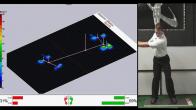
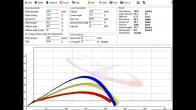
So what you should be seeing on my screen is swing catalyst right now.
Now I can't tell if you can see swing.
All right.
I'm going to go back to the other screen.
You let me know if you see swing catalyst.
Okay.
Cause I don't want to be sitting here talking into the wind.
All right.
So let's do this.
Let's go to keyboard doesn't work.
Cool.
Okay, this is his trail foot right here.
Now, y'all are just going to have to believe me on where he is in the golf zone.
Now, if you watch as he goes back, I don't know if you can see this in his foot right here, but you can see, let me try to get way in here like this.
Watch this portion of his pant and ankle.
Okay, watch that first.
You see that?
You see that kind of inward right there?
So watch what happens.
This goes inward, all right?
Kind of like you would think, like clockwise.
But now, as he's doing that, look at how his feet are shifting.
You see how his heel's kind of going around?
So when you're talking about that athletic portion, that's what I'm imagining that you're feeling.
But watch his pressure map on this side.
Watch the dot.
You see how the dot goes to the outside of the foot, back to the heel?
So this is his right foot right here, okay, watch how his right foot it goes to the outside and back.
That's the clockwise pressure, okay, but you can see at this point in time right here, as he's starting to get towards the top.
This heel is kicking out this way, see that right there, you can see it right there, and his prayers kicking out that way.
You can kind of see it a little bit on the pressure map.
But what I'm really trying to get to you from this, because this is a very tough question.
I think that Chuck's video is doing a way better job than I'm explaining it right now.
His pressure, you can see right here, is going clockwise.
That's axiom, right?
That's a perfect to a T axiom right there, going back around, now getting to the post, now going on back through, okay?
That's axiom to a T right there.
Make it full screen.
Is it not full screen?
I can only get that because I don't think you'll be able to see it if I zoom out.
But my point behind this being is the pressure in his foot is going this way to that way, which is exactly what you're talking about, Mike.
Axiom's not dead, period.
Maxim is a lot of the precursor to this.
The pressure is going this way.
But if I rotate in the same direction as my pressure, where am I going to move?
So if I'm trying to get my pressure to go clockwise, and I rotate in the same direction as that clockwise, where am I going to go?
If I'm feeling that I'm rotating against, I'm using my core and hip are going this way, and I'm feeling my foot going this way, Where does my pressure now go?
My pressure now goes to the outside as I'm feeling that to where now I get the switch of my foot going this way.
So axiom isn't dead.
It's just in how you're feeling it.
If I go up here to the top and I'm feeling going this way, remember golf's usually a lot of the opposites, and I'm torquing into this and I start to load, my pressure's going on the outside of my foot right here.
It's not staying on the inside.
It's going to the outside and back.
Now once I start to get back here, now my foot goes this way.
So this is what I'm saying is I think one of the big issues is it's taking the terminology or taking the feel, and we're saying torque, and you're like, but Axiom says my pressure goes this way.
I'm not saying your pressure doesn't go that way.
The pressure does exactly that right there.
So going back to the other question to blend into this, how do we combine Axiom's clockwise feeling motion with the right foot and counterclockwise?
That's exactly how I'm saying it right here.
All right.
Exactly how I'm saying it right here.
Is it still Axiom?
I just want you to hit it further.
You're still making.
So when I first did Axiom, for anybody that took, I think Mikey may have taken one.
For anybody that took a live lesson with me on Axiom when we first loaded, what was one of the first things I had you do?
I had you just kind of stand here.
And then feel kind of going around your foot in a clockwise manner.
All right now.
If I do that, look at my hip goes back and forth, and I'm making this big clockwise now if I have the same feeling of rotating against my foot.
Going this way, making that same motion now start to feel how much your glute gets loaded, now, start to feel how you start to torque your leg as you're making that same motion.
So If I'm doing axiom, but now I start to feel my foot rotate against it this way, I'm still making that same pressure shift.
But I'm now getting that better internal femur rotation where now I'm able to get my glute loaded.
So all it is, it's about trying to get the load and the torque.
Axiom's still happening, but I'm trying to torque while I'm doing it.
And that's kind of the little missing link with the axiom piece that's missing.
All right.
Hopefully that answers your question, Mike.
If not, I can go more on it, but I think that answers it.
So I think that's it.
Is it?
Yeah.
802, I'm on it.
All right.
Well, ladies and gentlemen, I appreciate you for spending your time with me tonight.
It's always a pleasure to have you.
I hope I'm worth your time for the little time that I have you.
That was my last question on the community.
So I need people to ask if you want me to do it again.
I need some questions.
All right.
So with that being said, I'm going to stay here.
If you've got some questions, fire them up.
All right.
I'm going to this is for those of you that the first time I go live at the end of the questions.
All right.
So I'll spend about 10 to 15 minutes doing this.
Rick, I appreciate it, but I also don't want to get fired.
So I'm not repeating that.
But thank you for that.
He's nipping at my heels over here.
This is going to be a hologram at some point.
Ira, thank you.
Rick, I appreciate it.
Chris, appreciate it.
Charles, thank you.
Stan, I appreciate it.
Thank you.
Jim, is goatee trail or is it neither and more ground-based torque?
That's the good way to look at it, Jim.
Goatee is neither trail nor lead-side based.
It's more about.
Ground forces, torque, leverage.
It's not really about being one or the other, even though my swing, no, we won't get on that.
Check my question above, Kenneth.
Okay.
So I'm going to start with Kenneth's, and then I'll come back to you, Manny.
Gerald, I'm back catching up.
Thanks as always.
Well, thank you, Gerald.
Good to hear from you, my friend.
Kenneth, at 75 years young and losing more flexibility every year, I feel I will need to rely more on hands and wrists to maintain power.
What are your thoughts?
How does that relate to the goat swing, what we're trying to learn?
Well, Kenneth, that's a really good question.
All right.
Now, I would have made it giving you a different answer at a different time in my life.
As we get older.
unfortunately, we do lose a little bit of flexibility and movement.
I think it depends on how much you can move.
Let me phrase it to you this way.
If you still have good mobility in your hip, if you still have some mobility to get some stretch, then there's no problem with going with goatee.
Now, I have players It's not about them having a new hip or a new shoulder or anything.
It's about life, where they've got a lot of roundness in the thoracic spine.
They've got a lot of vertical pelvic tilt this way, where they're basically neutral or almost pointed forward.
And they have compressed L3, 4s, 5s, or even fused.
And so they can't really separate anything.
All right, so their their hips and upper half kind of work as one.
And if I were to get to them and start pushing their hip this way, they're like, Ow, like that.
That doesn't work for me.
Craig like, I can't like getting that stretch in that hamstring right there and getting all right.
That doesn't work for me because my body moves more like this.
More is like a unit, because that happens to people in life.
Then a hundred percent hands and wrist.
Because if you think about it, like I've said on this podcast before, is that, you know, this lever is a very powerful lever.
It's it's part of the reason why my current swing will last till I'm, you know, not that I play golf, but however long I want to play golf because I'm literally just getting here.
I've got this lever and hip.
I mean, I can do this for the next 40 years with no problem.
And it's because I've got leverage in my wrist to get snapped.
Now it is limiting because I can't add a ton for my body and stuff.
But if you're a player that you are like this, everybody's got to be in one.
You can't get hip depth and lengthening and extension of this hip.
Like this is a hard position to get into.
Then the priority, I would.
If you're in front of me in an in-person lesson, the priority would be like, hey, this is about all that we got right here.
So I'm going to put some priority.
On getting you a little bit more lag and leverage, because you can probably do this, and if I can get you doing that, I can get you some speed.
So I think you really have to test yourself.
If you can get a little bit of load and a little bit of stretch, I'd give it a shot.
If you're like, Look, Craig, I'm that guy that I'm, that board that you're talking about.
Then you may need to prioritize a little bit more of a lead side, so to speak.
Swing, where You start to delete rotation and you put a little bit more emphasis on leverage because that's very easy to create.
I think that's a personal thing.
I could tell you if you're in front of me, but get in front of a mirror.
The best training aid money can buy.
This was free.
I stole this from my house.
It's steel.
They didn't want it.
But I get in front of a mirror and say, okay, well, All Chuck's trying to get me to do in the backswing is put a little weight on this leg.
So I get into this hip and then really start to extend my hip back to where I feel some load right here and I start to feel some tension.
If you can physically do that, there's not going to be any problem with this.
But if you're like, Craig, I can get my weight over here, but if I push, I can't, this doesn't move like I can't do it, let me have a talk.
I haven't found anybody yet that I haven't been able to do it.
Does that mean they're not out there?
Okay, now I've lost my place.
Kyle, I have hamstring and can't practice much.
Well, you know what?
I mean, that may be something for you to test before I get to you, Jim.
That may be something to test.
It's not necessarily to practice much because I'm not a big believer in practicing for 10 hours a day.
I did that and I realized how much time and how much I blew out my body and how much it wasted.
I'm a big believer in efficiency.
I screwed that up.
And since I screwed that up, I make sure that my students don't do It's kind of what a lot of our jobs is.
I've screwed up enough times that I can tell you, hey, don't do that.
It doesn't work.
I've tried it.
I've stuck my hand in the fire before, and then I did it again, and then I did it again.
I promise you it doesn't work.
If you don't have much time to practice and you don't have a whole bunch of flexibility, you need to see how much you have.
You don't need a ton of practice time to get it, but you've got to see how much you have.
If you don't, If you're like, Craig, I just can't do that, then your priority may be a little bit more lag and release-based swing.
There's nothing wrong with it.
I had a guy reach out, I think it was two months ago, and he was big on, because of age and flexibility-wise, and he watched, I think he watched, I don't want to say it was the J release, but he watched one of the videos, and he's like, I really love the swing.
you know we're chuck sitting here like this What about now?
Okay.
See?
I'm like NASA up here.
That's why we always double up.
Now, I have no idea why that just died, but.
Okay.
Silverback.
Lost you when you were hitting the bag with the right hand.
Okay, thank you, Gerald.
I appreciate that.
So, what I was trying to say.
I got to go back up here to these questions.
I'm going to lose where that is.
What I was trying to say is that, yeah, I had somebody reach out to me for a lesson last month or wanted to come out and see me because he watched, I think it might've been the J release or something like that.
And he was like, I'm really interested in that swing because I see Chuck literally just winding back and creating a ton of speed without any effort.
Like he doesn't look like he's really doing anything with his body and he's creating a ton of speed.
And that is an okay way to swing.
There's nothing wrong with that.
That's one way to swing.
And that doesn't put a whole lot on the body at all.
It doesn't maximize what you can.
But I mean, you can tell right here, as I'm going this way, this isn't really me.
I'm doing it kind of 50% right here.
That's a lot of speed.
Dog's probably having a duck right now.
That is one, because I can use that leverage.
So leverage combined with the rotation of the club, as in the toe rotates around the heel 8 to 10 miles an hour faster in a properly released club, which means the center of the face is 6 to 8 miles an hour.
So 6 to 8 miles an hour of free rotation plus that leverage right there, that's a great way to swing for players that just physically can't get stuff.
And that's okay.
That doesn't make it wrong.
Goatee isn't going to like that.
Because God is going to say, hey, I need you to get some more stretch.
I need you to.
But that doesn't mean that that doesn't work.
Doesn't mean that that isn't a good way to play.
I tell, you know, anybody that takes an in-person lesson with me, like a playing lesson or something, I tell them all the time.
Typically, if I'm going to hit some shots because I never play golf or anything like that, I first start out basically just a little bit of arms and quiet body.
And I basically do that swing because I know I can hit straight all day long.
And then once my body gets going.
then it's like, okay, now I'm going to start to load and stretch and fire a little bit more with that and start to put some mustard into it.
It doesn't make it wrong.
It's just a different way to do it.
Does where your club end up in post swing mean anything?
Sometimes I find it only gets to around vertical rather than back over the right shoulder.
Yes and no.
Truly, if you're letting the fascial slings rebound, That's why Chuck put a lot of emphasis on, if you're going from here, that it should rebound this way, if you're really doing it.
But you know, my swing's always been, you know, the Unfinished Symphony of Roy McAvoy.
So, and sometimes when I'm working on speed with players, I'll hold a club like right here.
So, like, I won't let them release past then, because I want them to make sure they get done with everything right here in an ideal scenario.
As you're going through here, you want it to wrap around because that means that you truly let everything sling through without helping anything or prematurely stopping anything.
Do I think that if you get to here and you finish more like this versus I'd be willing to take that bet you'd be okay.
Ed, to start the downswing, should I keep turning counterclockwise into my trail leg?
and it'll happen without trying.
Essentially, so if I'm here, and I'm loading into this side, and I'm getting here, and I'm feeling that counterclockwise, at some point, this torque and load, it can't really go anymore.
So what starts to happen?
I've kind of maxed out, so now I actually start even sitting back more in my trail leg right here, and look at what's happening.
This isn't me trying to go this way.
This is me feeling this way.
And torquing into this leg, and now that I'm here, I can't.
It's it's so loaded, it has no.
If I keep turning it, it's got to go this way.
And that goes back to Andreas's question, where it kind of feels like a swivel that happens on its own.
If I keep torquing it, it's like loading this muscle, it's got to go somewhere at some point.
It has to Greg, great call.
Thank you.
No audio, no audio, no audio.
I mean, guys, you know, one or two would have done it.
Ladies and gentlemen, my apologies.
Somebody wave at him.
I don't know sign language.
I don't either.
All right.
Greg, in regards to Kenneth, I found the combination with pure ball and turf contact.
The 3 o'clock, 9 o'clock drill, the ball goes pretty straight and far enough, really good golf game.
Absolutely.
If I had, it's tough because I can't see everybody.
You can build a great game going just from here to here.
Now, you may not be able to play the blues or the whites.
You may have to move up to the yellows or the four tees or up.
But I think that's one thing that really, I don't know if it's more, I'm assuming it is an ego thing.
I much rather enjoy a round of golf at this day and age versus beating myself up every time I go play or something like that.
Everybody's like, oh, tip it out the longest.
I get the competition.
The thing that I miss most about golf is the competition, period.
And I can still go.
But it's not enjoyable me swinging out of my shoes all day long.
I'm playing 8, 200 yards, that's not back in the day.
Yes, me right now.
31 fractures, three concussions later.
With a desk job that's not enjoyable to me, I'd much rather have an enjoy I'm.
The game is supposed to be about fun, supposed to be.
So you can build a great swing, shorter swing.
Just as he's saying right there, you can build a nine to three, in fact, You can build a 9-to-3 swing with lag, where if you're like, this is as much mobility as I have, where I get to here and you work on the change of direction, where you're.
I don't know if you can hear that, but there's a hell of a lot of speed in it.
And I don't really move that much.
If I turn like that, Craig, I would get no pass on Goody.
Turn like what?
Depends on what you're talking about.
Kikoa, I actually did your review today.
Chuck's recent video talked about screwing the trail foot in the ground clockwise.
Is that meant to help power the backswing, initiate the backswing pressure shift?
Is it mainly there to brace the trail hip though?
Also, none of the above might be.
It's actually almost all of the above.
The clockwise is to start loading and torquing in the backswing.
So you start this motion.
You're resisting against it to start to build torque.
So as you start to shift and you're feeling this as you're getting your hip depth, this is the start to build torque to stretch and load that power to be ready to be used in the downswing.
But it also kind of also creates the transition for you.
But for you, this is the problem of my brain.
I remember this guy's swing from this morning.
But for you, keep the club in front.
get that torque, and get this out, and you're going to be golden.
You've got a really good golf swing, like you were talking about, getting and playing in some tournaments.
You've got a great swing.
There's no reason you shouldn't.
If you get what we're talking about today with getting that club in front and you do a little bit of that torque without that push, you're in a great position, bud.
This is why I don't sleep at night because I think about you all 24-7.
Jim, working the goat drill on goatee, getting irons much better but lost on driver.
Okay, so I answered that one.
You heard that one, right, Jim?
Or did I lose my mind that I answered that?
I thought I answered that.
No, it was no.
Oh, okay.
Perfect.
Well, this will be good for everybody else then.
So, Gerald, I had that.
All right.
Okay.
So, getting good results with 5-iron on goatee.
But when it comes to driver, it's a mess.
This is what I usually see on a daily basis.
Can't tell you a goatee because I'm not looking at that behind the scenes, so I don't know.
But this is what I typically see when somebody comes to a review after this.
What's the difference between a driver and a 5-iron?
Swing-wise.
Nothing.
There's no difference between a driver and a five iron swing loss.
So when you're going from the five iron to the driver, all this is is a setup adjustment where I have a little bit wider stance.
I've got a little bit more axis tilt.
I may close down just the tiniest bit.
My ball position is more forward.
But the biggest problem I see is that you get up here and you make all these five iron swings.
They're right where you want.
And then you get to the driver.
You make your setup adjustment.
Now I've got to do something different.
The ball's more forward.
I've got more tilt.
My stance is wider.
I've got to go out and get it.
Or I've got to try to create launch.
Or it's a driver.
I have to hit the crap out of it.
So I've got to spin harder.
Chuck's swing looks the same with the five iron as it does with a driver.
So the biggest difference when you start nailing your five iron in your goatee and all of a sudden grab a driver and you're like, what the hell's going on?
It's because A, you're not making the same swing.
B, you're overthinking it.
You're trying to make the driver into something that it's not.
The driver is already longer.
It already has the loft adjusted for you to hit it further.
Make your setup adjustment and realize, well, here's my five iron.
Well, if I make my five iron swing and I go from here to here to here to here to here to here, well, that would be where I want to catch my driver.
All my driver is.
Is I'm just catching it at a different time and what I see every single day?
Somebody gets a driver and they're like, I got to go get it now because of the setup position, or I've got to get loft on it because I only have a nine degree driver.
It's about the fact, here's my five iron swing.
now I make my setup adjustment to make the same five iron.
I'm catching it at a different time.
I'm letting the ball get in the way of the same swing that I just made.
I already made all the adjustments I need to make.
That's what I see forever about getting wrong with the driver.
One is on a tee, which should make it easier.
If I could have played on the tee back in the day or this, whatever this is, I can tell you, right, you will never, if I ever have to play on a turn, you will never catch me doing whatever this stuff is.
I'm like this, shoulder height.
Normal.
I don't know what the hell that stuff is.
Sorry.
I'm old school.
I might not be that old.
I'm not young, I can tell you that.
But I'm a traditionalist when it comes to this stuff.
Lynn, sorry I came in late when you were talking about loading around the tariff leg.
I feel that looks right and you're creating a lot of speed.
And I'm also hitting the ball further, but I can't pass the hip depth.
I'd have to see it, Lynn.
Typically, when people aren't passing the hip depth, well, in what I've seen, is that they're getting this hip depth right here, and they're like, hey, I got hip depth.
Goody's telling me I don't have any hip depth.
But they're effectively shortening this sling.
So watch from this side.
So I don't know if you'll agree or not, but.
I've got hip depth now.
Okay.
But what I'm seeing on my end is that people are getting hip depth and they're doing it with this working into it like this.
So now that sling is actually pretty darn short.
I'm trying to get stretch with it.
So this hip is getting away from this hip.
My sternum is going back.
I'm trying to get stretch.
So you may actually be hitting hip depth, but you're not getting any stretch because there really isn't any depth.
That was literally just kind of rotating, going back.
So what I would check is that you're actually getting back with this hip, not following it so much.
Because think about it.
This right here, that's not really hip depth.
I'm not creating any stretch or depth.
I've got to get this wider, deeper stretched out away from it to get to said position.
So that's what I would check.
But I'm no rocket science.
Craig, what about on sand shots?
Would you use the same technique?
Same technique as in goat sling?
I'll answer that.
Lynn, that's exactly what I'm feeling.
Thank you.
Oh, great.
I did something right.
Goaty can't yell at me now.
Got to create that stress.
That's why, to the earlier question about the lead arm, we're not switching to lead arm dominance, but what we kept seeing is people are getting hip depth this way.
and then they're pushing their lead arm this way.
Well, now there's nothing to load.
There's no stretch there.
This has to maintain its structure.
Is this getting deep so I can get this stretch?
So now I've got hip depth relative to what my lead side's doing.
Gerald, for years I heard about getting the hip back and turning with the core.
Thanks to you and Chuck for finally explaining how to.
No problem, Gerald.
No problem, my friend.
For those of you that don't know Gerald, I've known him for a little bit on the site.
A little bit.
He's a really good guy.
Same hip depth stretch and foot torque in sand.
Okay, so in the sand, how to place.
All right, so I'm not going to reference how to place sand shots in the goat swing.
It's essentially the same thing.
I'm just going to say sand shots in general because the math of it doesn't change.
Even if you take the old you know, Chuck video hitting out of the bunker.
How to hit sand shots like a pro, it may feel different where the movement's coming from.
Okay, um, so, with that being said, if I'm hitting a sand shot and I'm getting, the parameters of this shouldn't change.
So I'm going to widen my base a little bit more.
I'm going to sit down a little bit more, so my My hands can lay down so I can try to, let me get back this way, so I can lay down the club so I can get down and I've got a good sturdy base.
Now, the only difference that I could say between goat coat and the how to hit a sand shot like a pro is just where you're feeling it from.
You don't need, in a sand shot, the ability to hit it 200 yards.
It's not a power shot.
Is there power involved in speed?
Absolutely.
But I don't want to get in a bunker and then have a big post up.
That's going to change where my angle of my attack is.
It's going to change where I'm bottoming out of the sand.
I want stability.
So what I would say with the sand shot, if you go to the how to hit a sand shot like a pro and you get into the setup positioning, you can still feel the same just like goat code chipping and pitching.
I'm using my core to wind me back and letting my wrist set.
And now I'm doing the same thing.
I'm letting my core drive me down to snap the club.
I don't want a big post up.
I don't want a big push off.
That's the worst thing that you can do in the sand.
I want stability here.
I want this to set up, plop it up out of the sand.
So you can still feel the core, but the sand shot is basically a pitch shot for the setup parameters here.
And now hit me a chunk.
I got two Greggs now.
Yeah, I mean, hip depth, it's relative.
It's not just about getting this, all right?
That is hip depth.
I'm not going to bite you on that.
But what we're looking for, or what Goatee's looking for, is I'm trying to load.
This effectively rotating at the same rate, there's nothing there.
There's nothing here.
That's not very powerful.
Now, if I.
you know, take my spinach and grow like pie pie and I push this back and now I get some stretch.
Yep, now I'm loaded.
That's creating depth.
You said early on that 99% of excessive head movement is lead shoulder pushing across.
When you get hip depth the way you just explained, does that make the shoulders steeper?
Absolutely.
I want the shoulders going steeper.
Okay?
So if I'm getting hip depth the way that.
Just watch me right here.
So if I.
I'm sorry.
It's probably going to hit the microphone.
So if I'm right here and I'm getting my.
What are my shoulders doing?
That's what's getting my shoulders steeper.
Because the more I go this way, what is that doing to my chest?
This is lead shoulder push.
What does lead shoulder push tend to do?
I can tell you from the 90 million years I've been doing this, I never see lead shoulder push do this except about one out of every 10,000 clients.
And I can literally say that with how many swing reviews I've done.
Every time I see lead shoulder push, it's always.
flat and head.
I never see lead shoulder push go like that.
It does happen.
It's just the absolute rarity.
Michael, glad I hung around.
The last 20 minutes were more than in line.
Oh, thank you, Michael.
I appreciate that.
I don't know what the hell I'm doing up here.
I'm glad y'all like it.
Having a real tough time.
Wed shots at 75%.
Any help on how to move properly?
I hit a 58 degree 100 yards and need a 75 yard shot.
We have an 80-yard wet shot on the site, right?
It's literally called the 80-yard wet shot.
Can you show the proper movement with the body should be and when and if you should hinge your wrist?
The wrists are still going to be pretty quiet in an 80-yard little wet shot.
So for me, this positioning is going to be pretty much in neutral right here.
So I'm not.
Overly wide or anything pretty much in neutral right here.
I'm going to favor just a little bit of my lead side at this position.
But for me, an 80 yard shot.
Because I'm taking this core.
And I'm going to let a little bit of the weight of the club set as I get to the top.
But that's about as much risk set as I have an 80 yard shot.
So you can see, from setup to here, that's not really a whole bunch.
So I'm going to have a little bit of weight into my trail side here.
And then literally all I'm going to feel is my pressure get back into my lead side.
I don't want a ton of lateral drive.
Do I have to get over there?
Absolutely.
But I don't want to be sliding like this.
That's what I see way too much on the side.
So as I get here, my core is going this way.
My pressure is going this way.
I'm literally just taking my core and going through.
So an 80 yard shot is essentially like a giant chip shot.
This is my chip shot where I'm getting my core, core.
Well, now let me get the stance here, make the same motion, which is going to move a little bit more weight because my stance is wider now.
And as I maintain this wide arc, a little bit of the weight of the club is going to set here.
My pressure gets back.
My hip's already there because my stance isn't too wide.
Now I'm just taking my core and whipping it through.
No problem, Scott.
Jim, no problem.
Gotcha.
So still moving like the goat.
Yeah, but think about an 80-yard shot.
You're still moving like the goat sling.
Just remember, you're not trying to get so torqued up that you're like, I want to, I want to, you're not trying to do that in an 80-yard shot.
That's why for me, I feel it more like a big chip shot.
I'm here and I'm getting my core, core, core.
Like I want my legs to respond to a little bit more of what my core is doing.
Thank you, Bob.
Thank you, Ryan.
All right.
I will give one more question and then I will get out of here because I got swing reviews to do.
Hopefully I'll have some community posts to do.
I don't think I have any shipping things to do.
I'm sure Goaty's got a couple messages in my inbox telling me I need to do something.
Charles, thanks again.
As noted earlier, always thank you.
I appreciate that.
Tulsa, hopefully I'm saying that correctly.
Thank you, David.
Thank you.
Thank you, David.
All right.
That was good.
Thank you.
I appreciate that, Mary.
Many thanks.
All right.
Well, I'm going to get back to work.
Nobody needs me.
Remember, if you don't use me tonight, go ahead and use Goaty.
He's there 24-7.
But if you need me tonight, I'll be doing reviews.
It's 8.
30 Eastern right now.
I'll probably be doing reviews to about 10, 10, 15 if you need me.
After that, I'm going to have an adult beverage.
So thank you again.
I appreciate you all for hanging out with me.
Sorry for going overtime.
But for the students that know me or don't know me or whatever, This is my life.
This is my love.
I love my students.
I just want you all to be better.
I will jump through a plate.
I will jump through a mirror for you.
All right?
You need me?
Come find me.
You know how to find us.
All right?
Keep me posted, and I will see you all next.
And go get some questions in there.
If you all don't do that, I'm just going to be standing up here like this.
Or maybe I'll put something up on the community.
There's not half the groups dropped out.
Maybe I'll put something up on the community.
Maybe the next webinar will just be a live one for like Masters.
Because the next one will be right at the end of March, beginning of April.
Maybe it'll just be like a golf talk live or something.
I don't know.
Maybe I'll think of something for that.
So glad I got here tonight.
My wife came down to the basement of the night and wondered who I was fighting.
Yeah.
I've heard that one.
All right, everyone.
Have a good evening.
I will see you all in the trenches.
Try a free live lesson with GOATY
GOATY, my AI golf coach, watches your swing through your phone camera and coaches every rep. Free, about 20 minutes, no credit card.