










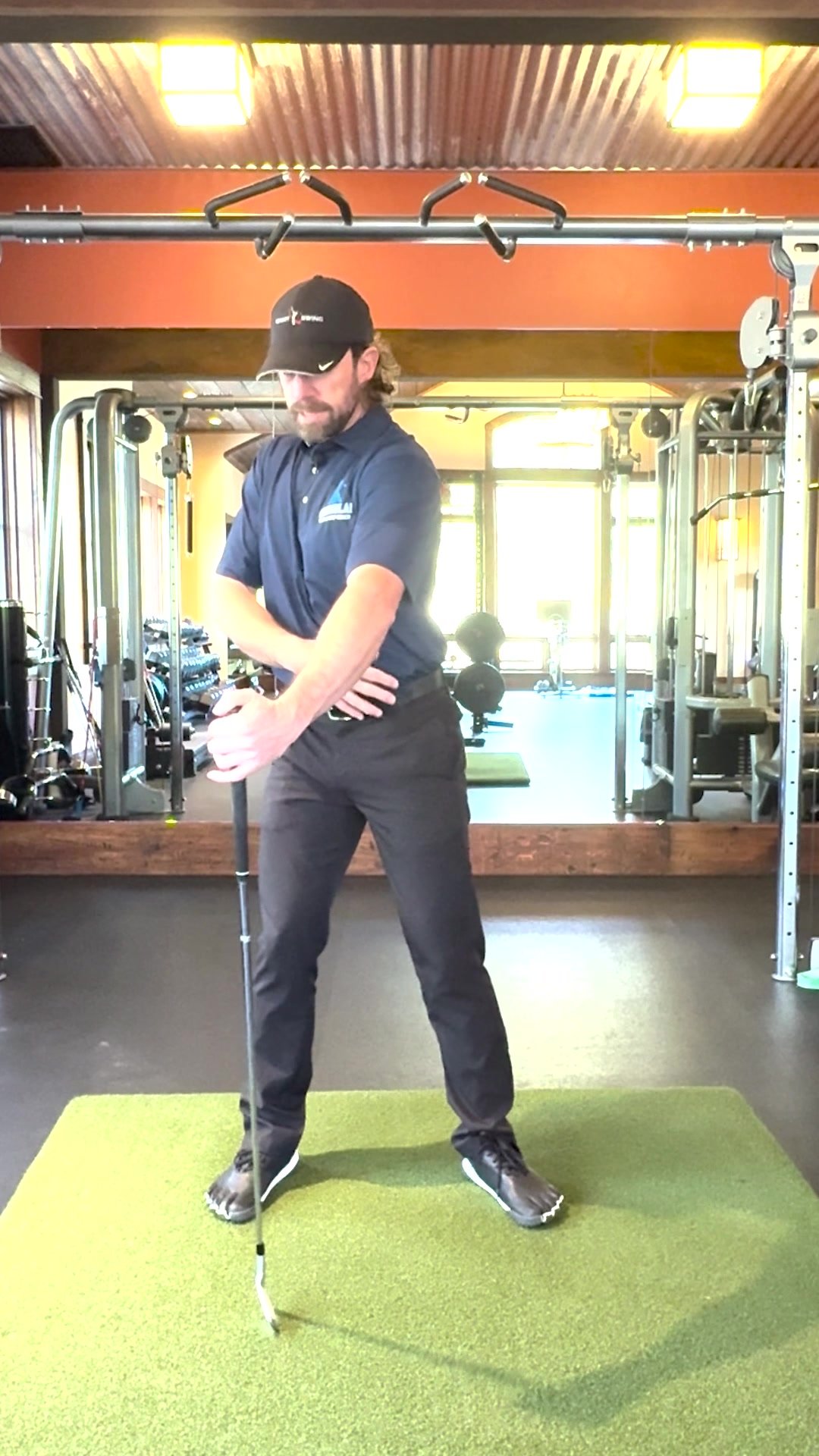
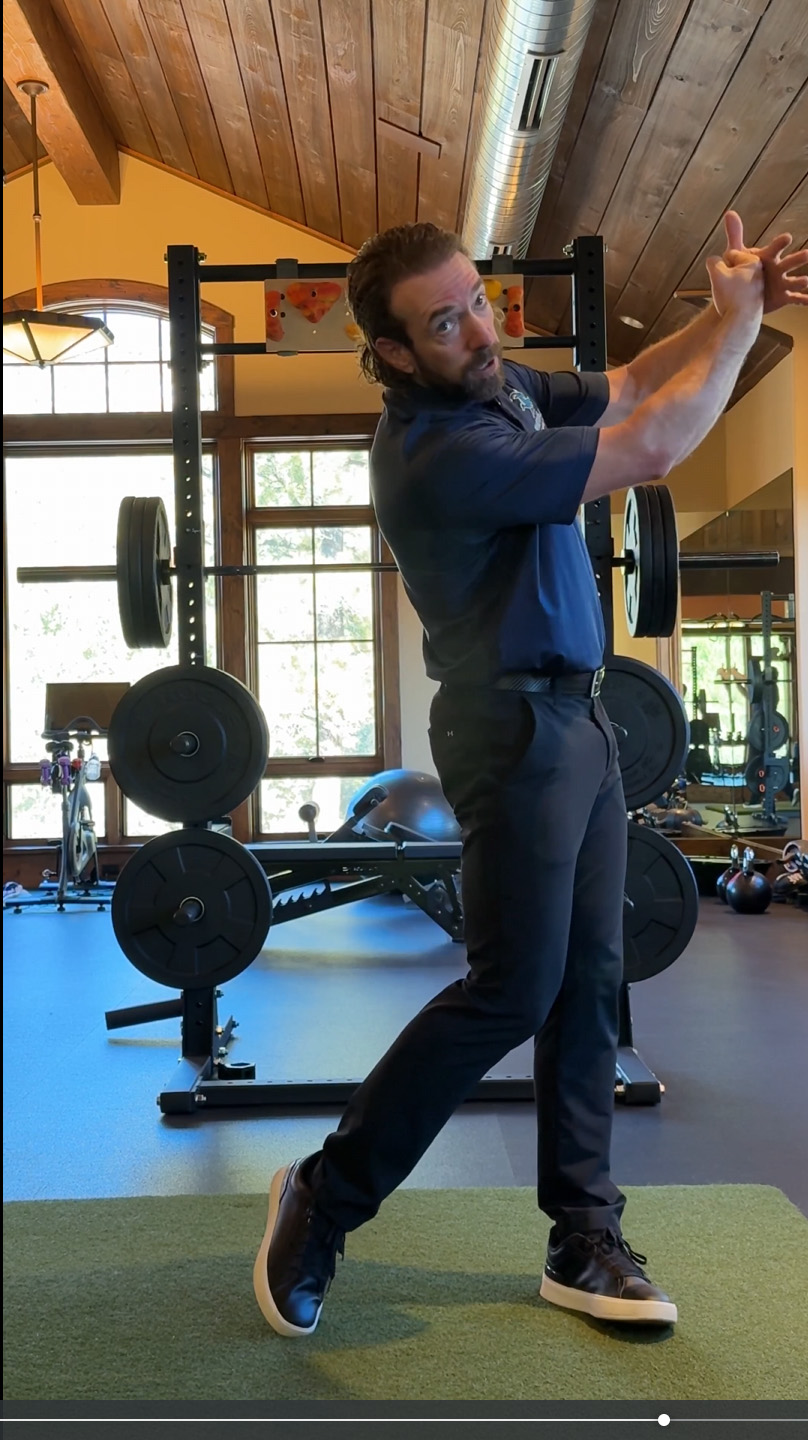
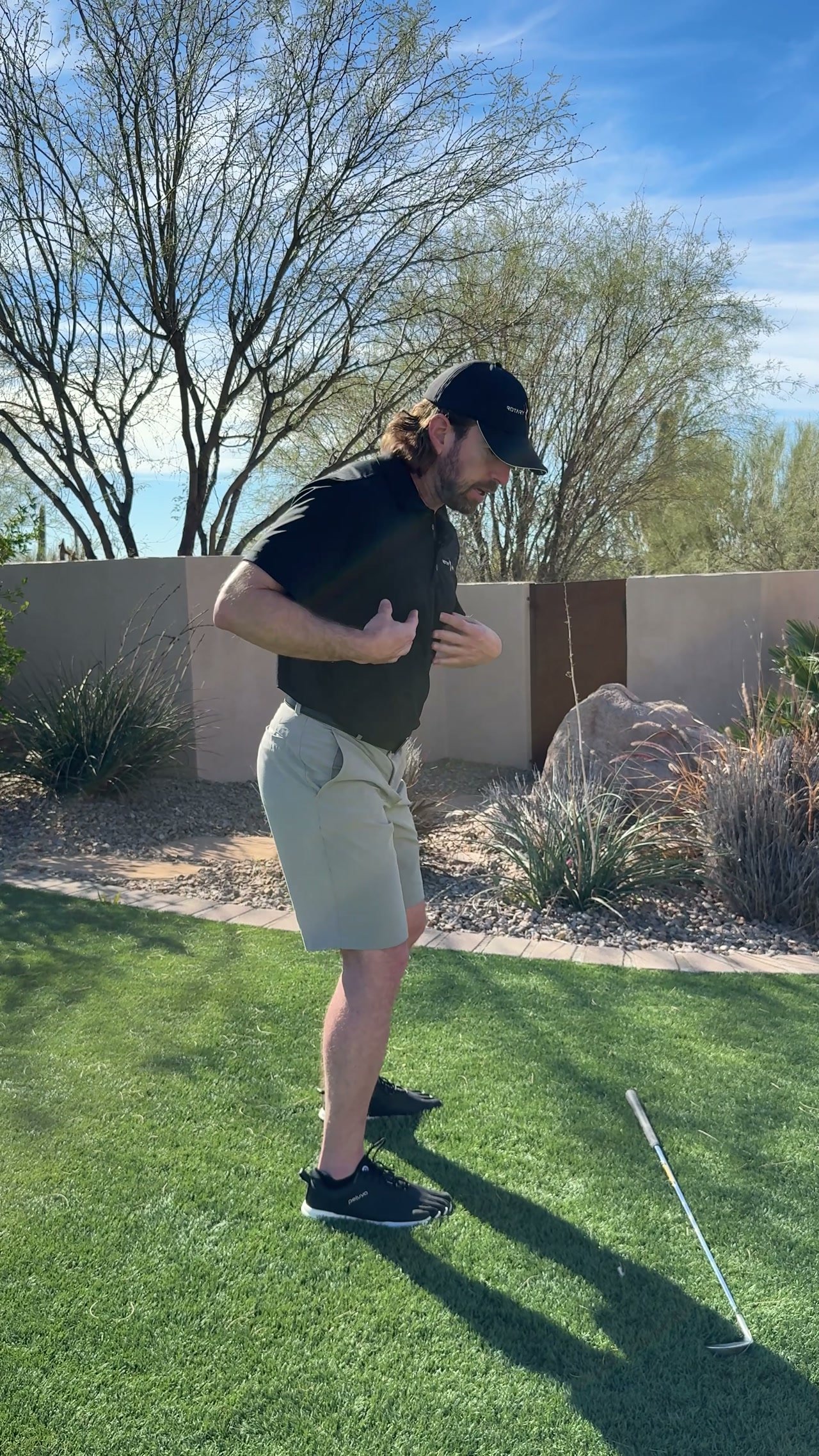
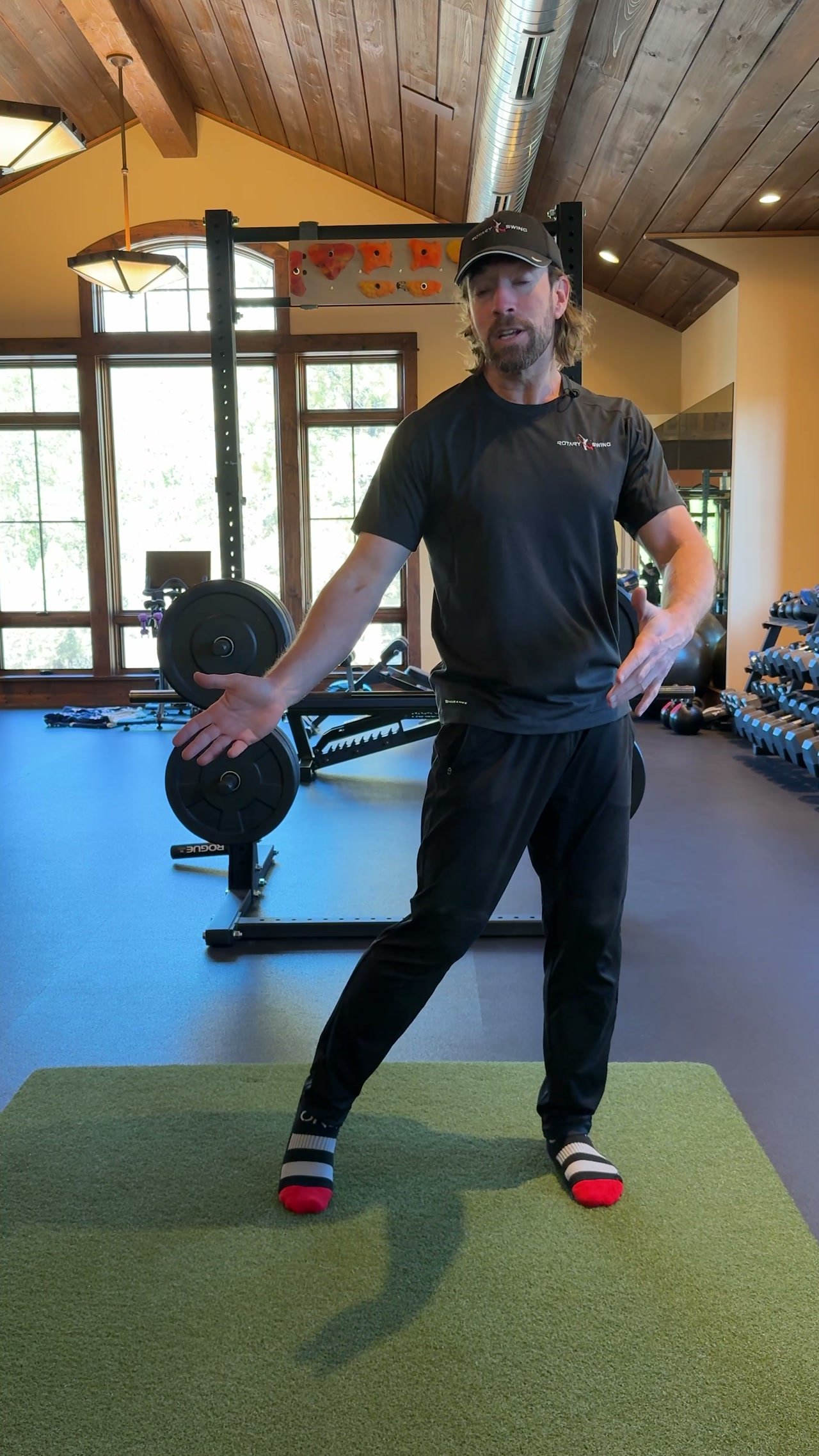
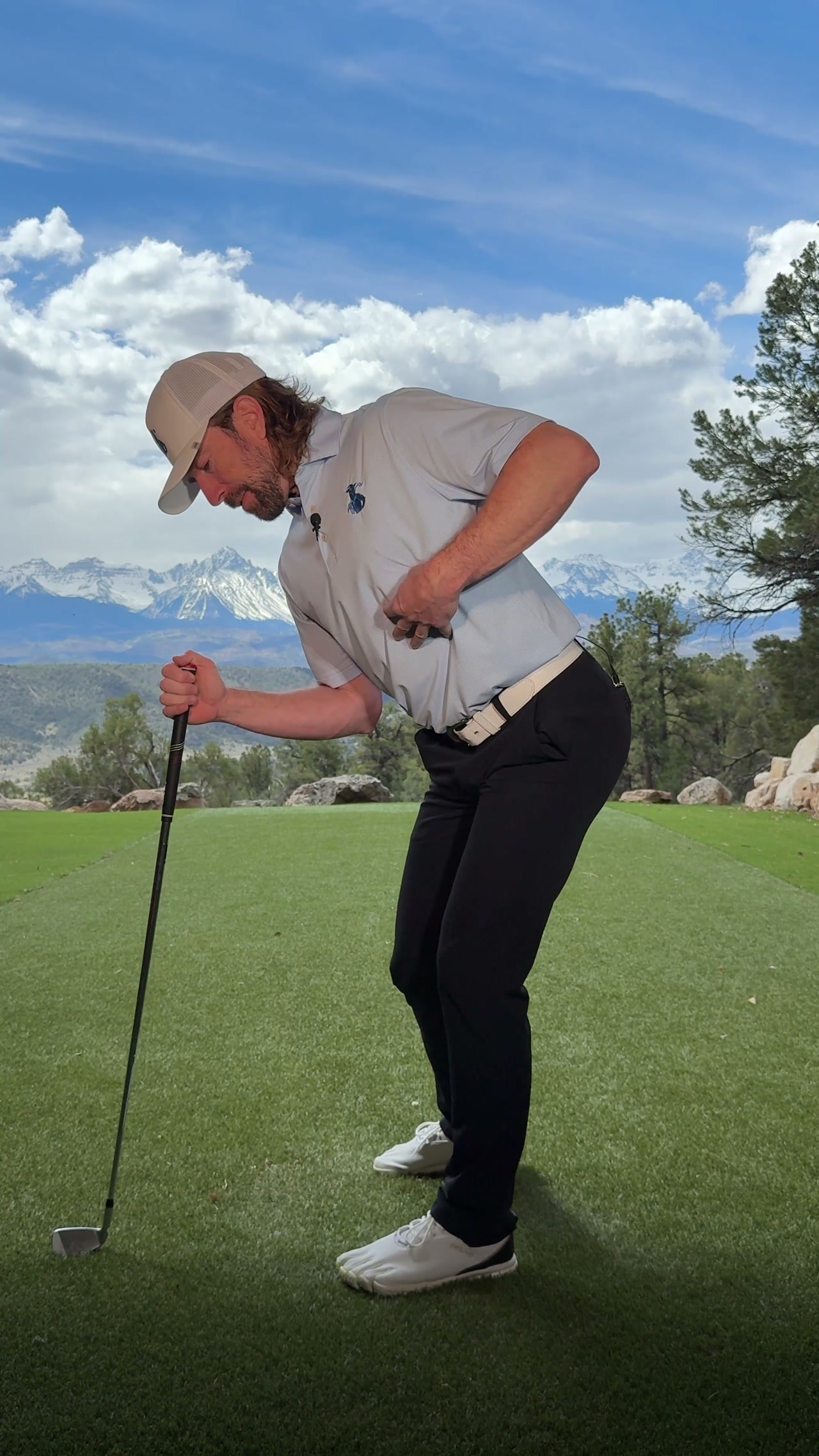
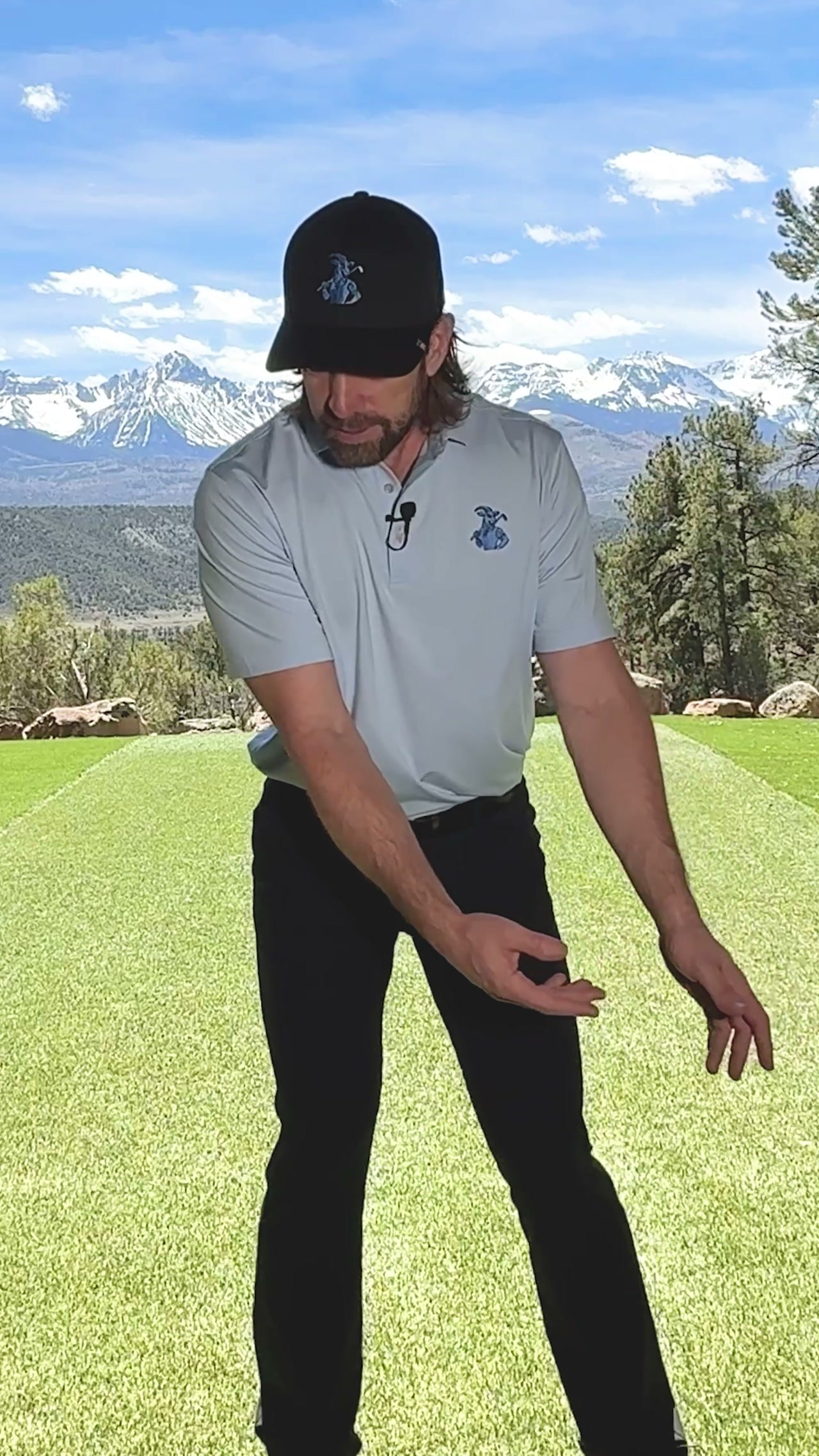
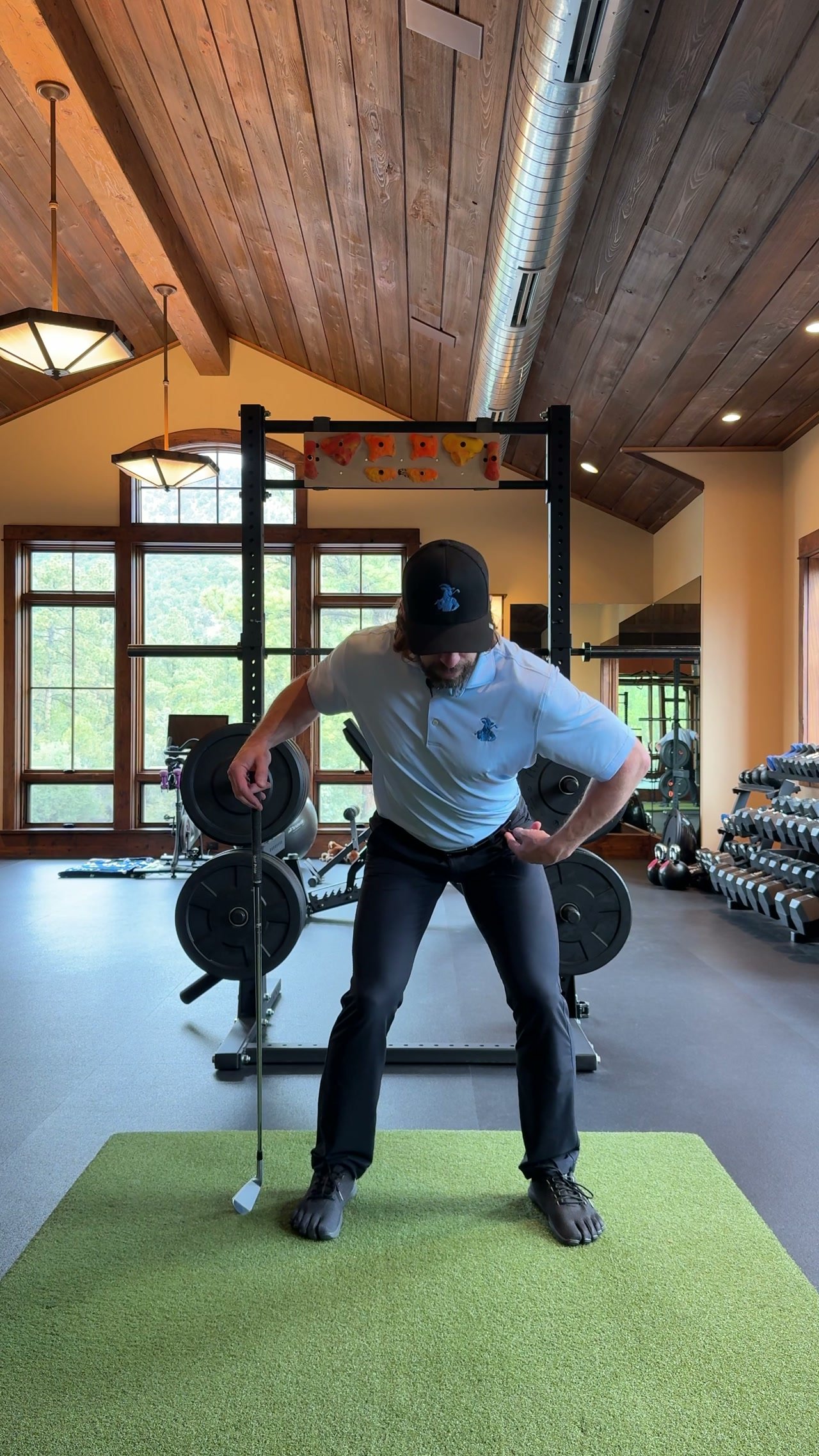
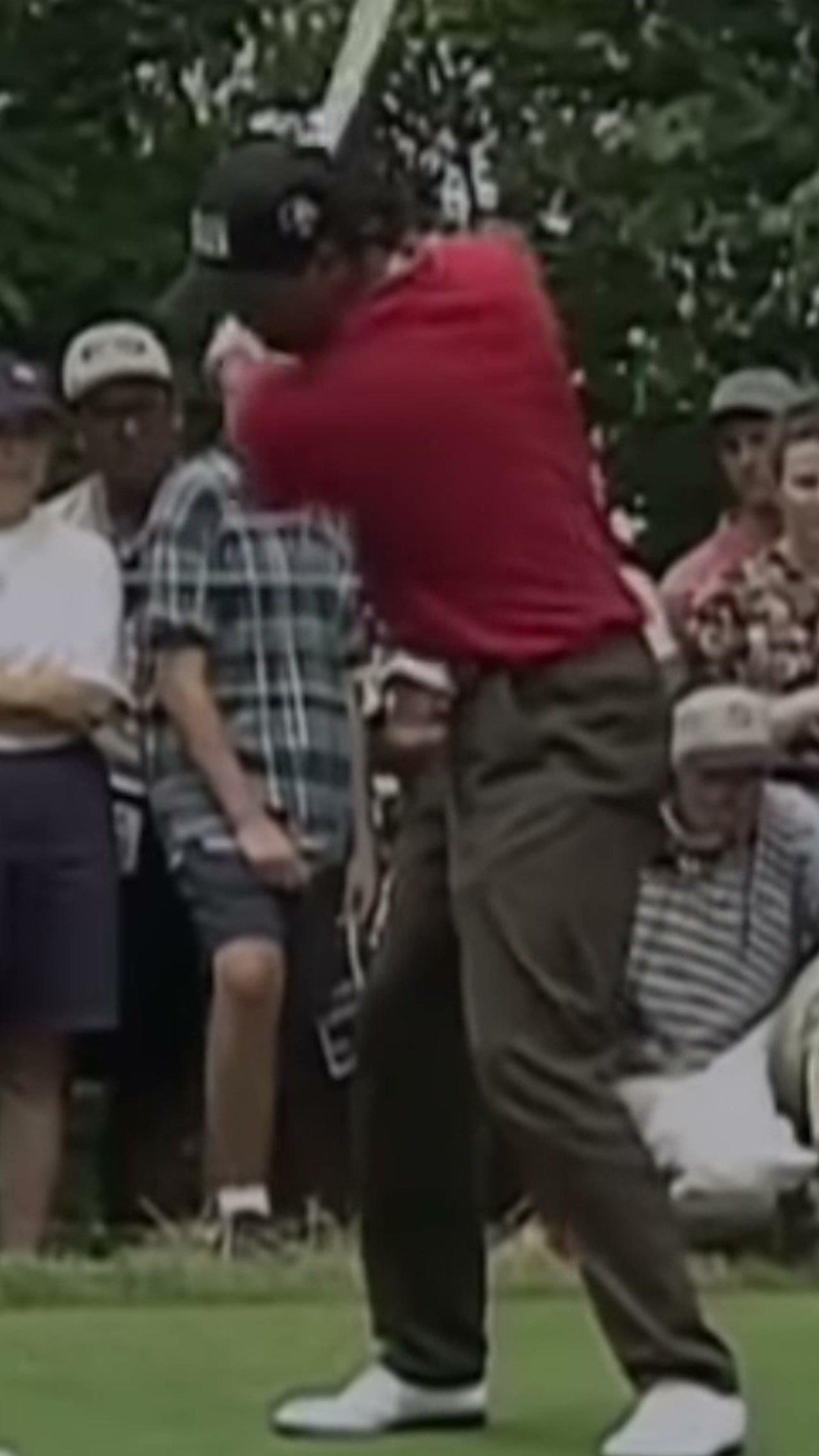
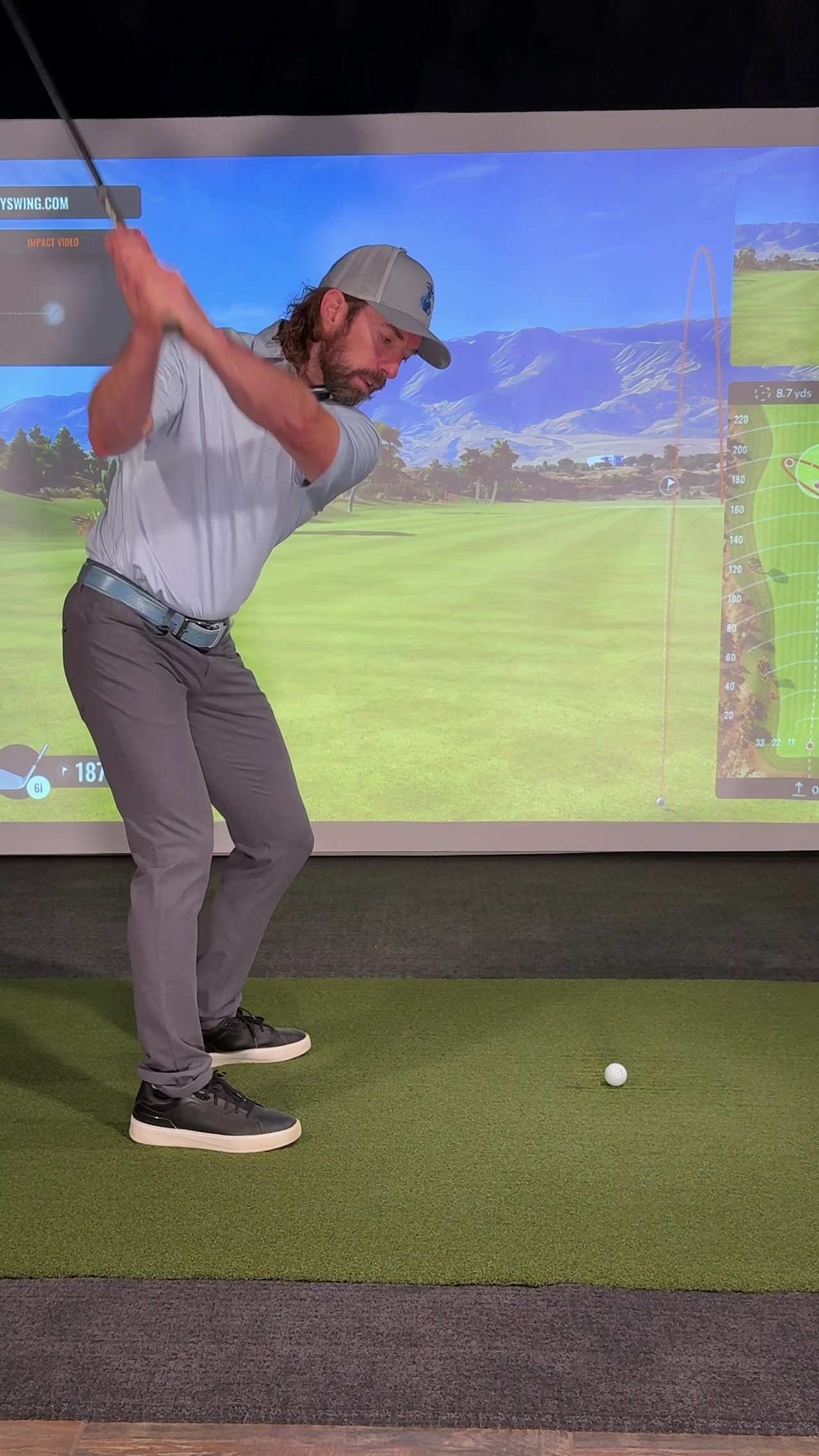
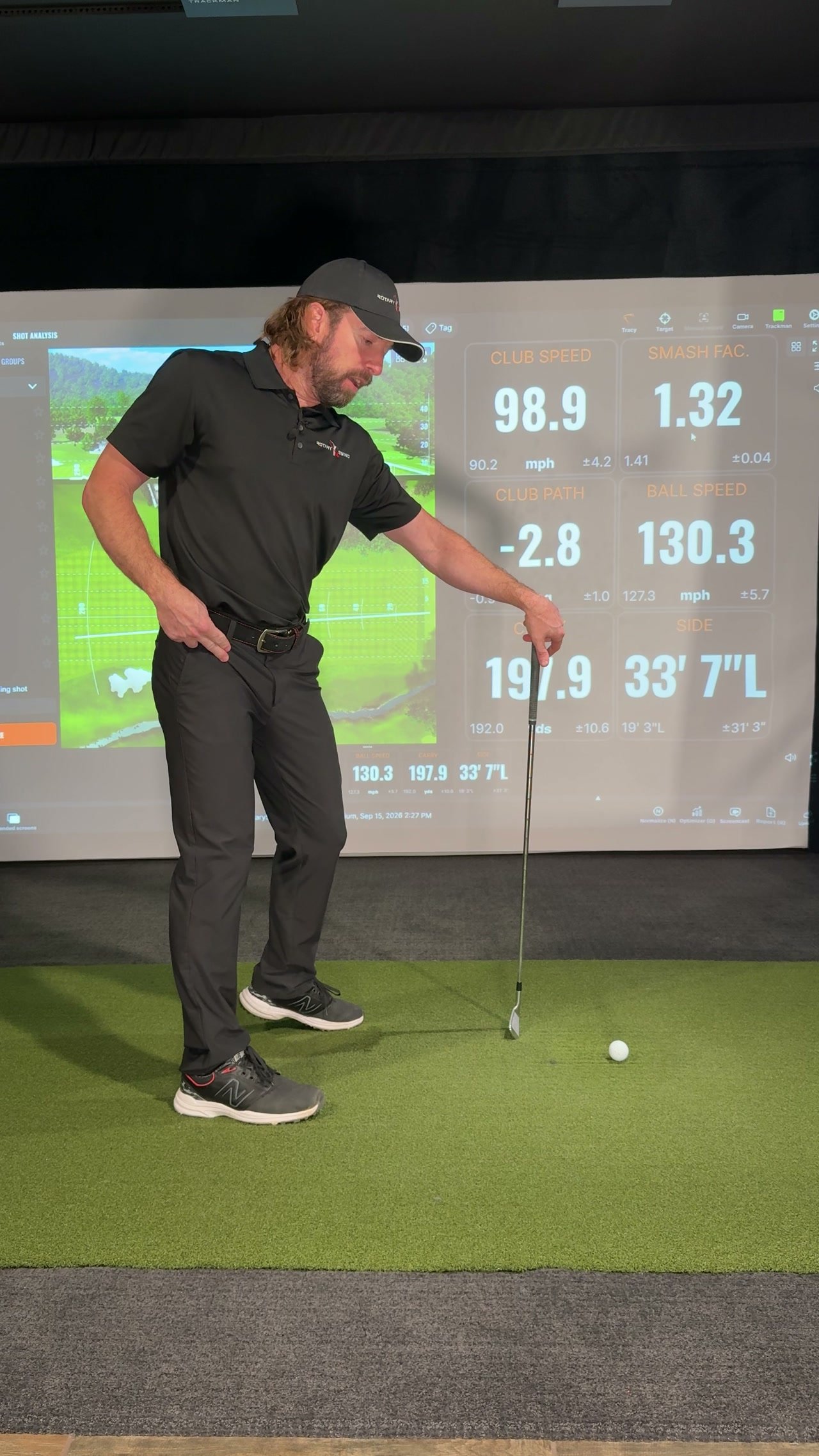









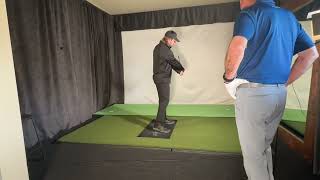


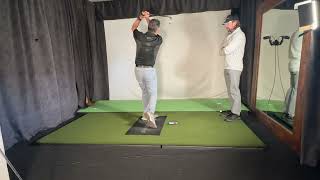












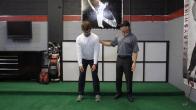

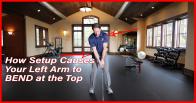



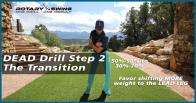
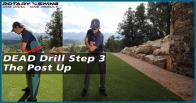












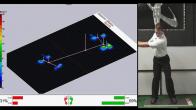










































































































































































Q-n-A Webinar 19: May 6
Sorry, you need to be a member to access this video.
You Are Just Seconds Away - Become a member here!
Already a member? Log in now


Try a free live lesson with GOATY
GOATY, my AI golf coach, watches your swing through your phone camera and coaches every rep. Free, about 20 minutes, no credit card.
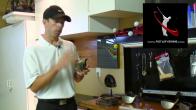
Q-n-A with Craig Morrow, nineteenth webinar, May 6th 2026
I'm waiting for Mark.
Hey, Mark, can you hear me?
You can't see me yet, but can you see anything?
Loud and clear.
Fantastic.
All right.
Good visual.
Yeah, not me in front of the camera.
Good visual in the background.
Copy that, not All right.
Hello, Scott.
Let's see.
What do I got floating around here?
All right.
Well, welcome to webinar or something.
I'm not sure the number at this point.
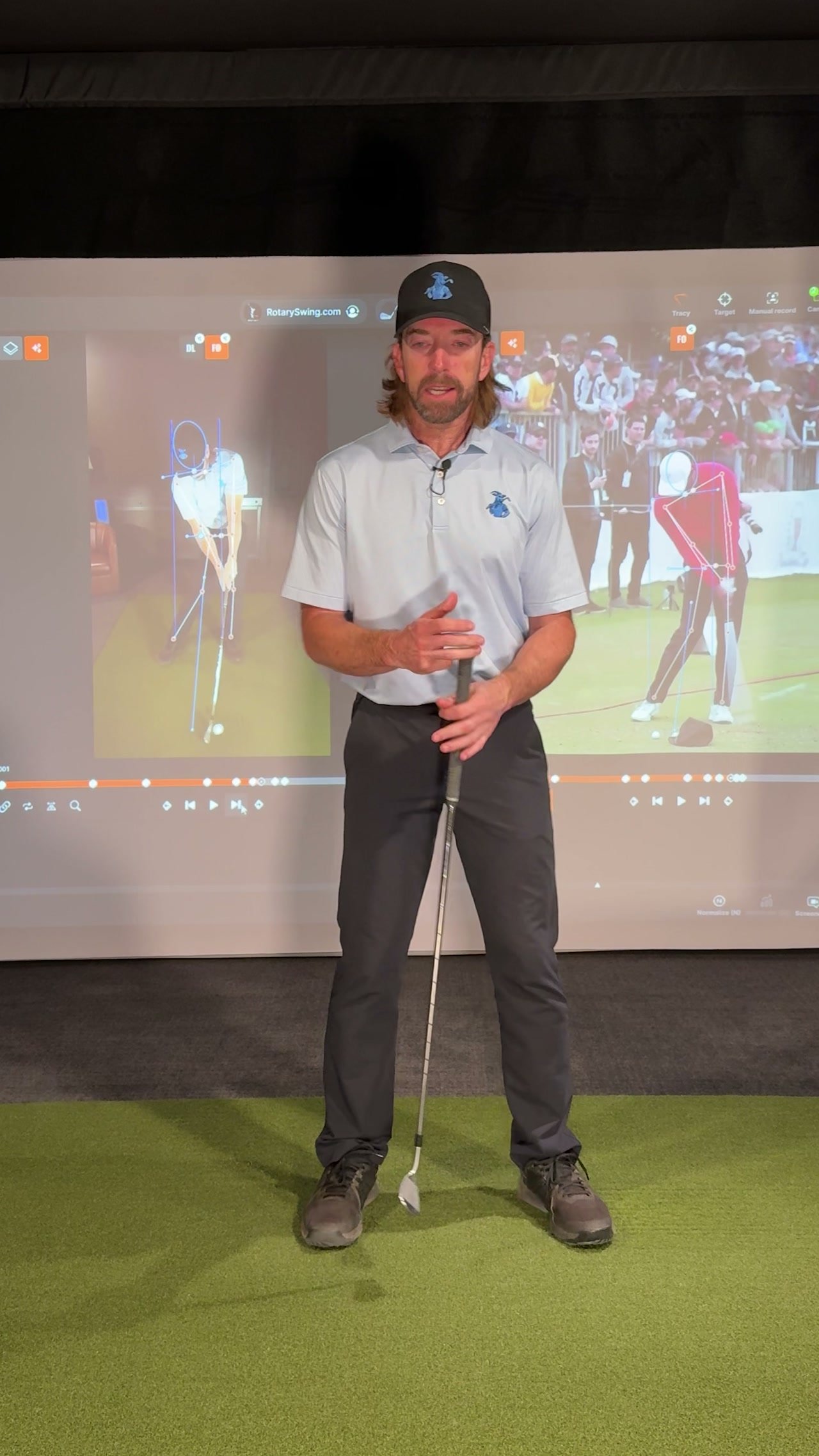
I will be your humble RST instructor, Craig Morrow up here.
I appreciate for newcomers or newcomers for showing up.
And I'm glad y'all are still enjoying these sessions.
I have no problem doing it.
Y'all want me to keep doing it.
I'll keep firing away.
But as our usual protocol for new timers or newcomers, I'm going to give the class a couple minutes to kind of file in because I've got a chart on my end where I can see.
People are logging in and signing up.
So I'm going to let everybody kind of file in right now.
And then once that happens, without further ado, I will get to the questions at hand.
And at the end.
I'll open up the forum for some comments, and we'll have a chit-chat.
So thank you for coming by today, and I'm just going to sit here and have a little chit-chat while people get in here.
Let's see.
Mark, what do you think of your golf tour?
Your golf tour.
I don't know much about it, Mark.
In fact, I just saw it the other day.
For, like, a blip.
But I've been so chaotic the last few days, I don't.
I don't even know what's going on in the world, much less the internet world.
Um, so I'll probably have more opinion on that at that point in time, but I can say I've always been a big um.
I've got my own beef with the PGA, so I don't mind a little competition here and there.
That doesn't bother me.
Hey, Ray.
How are you doing tonight?
What are we going to talk about tonight?
I don't know because I just got this thing printed.
And by the way, I know I'm wearing black on black.
My apologies.
I got a little mat right there I can pull over if I do anything.
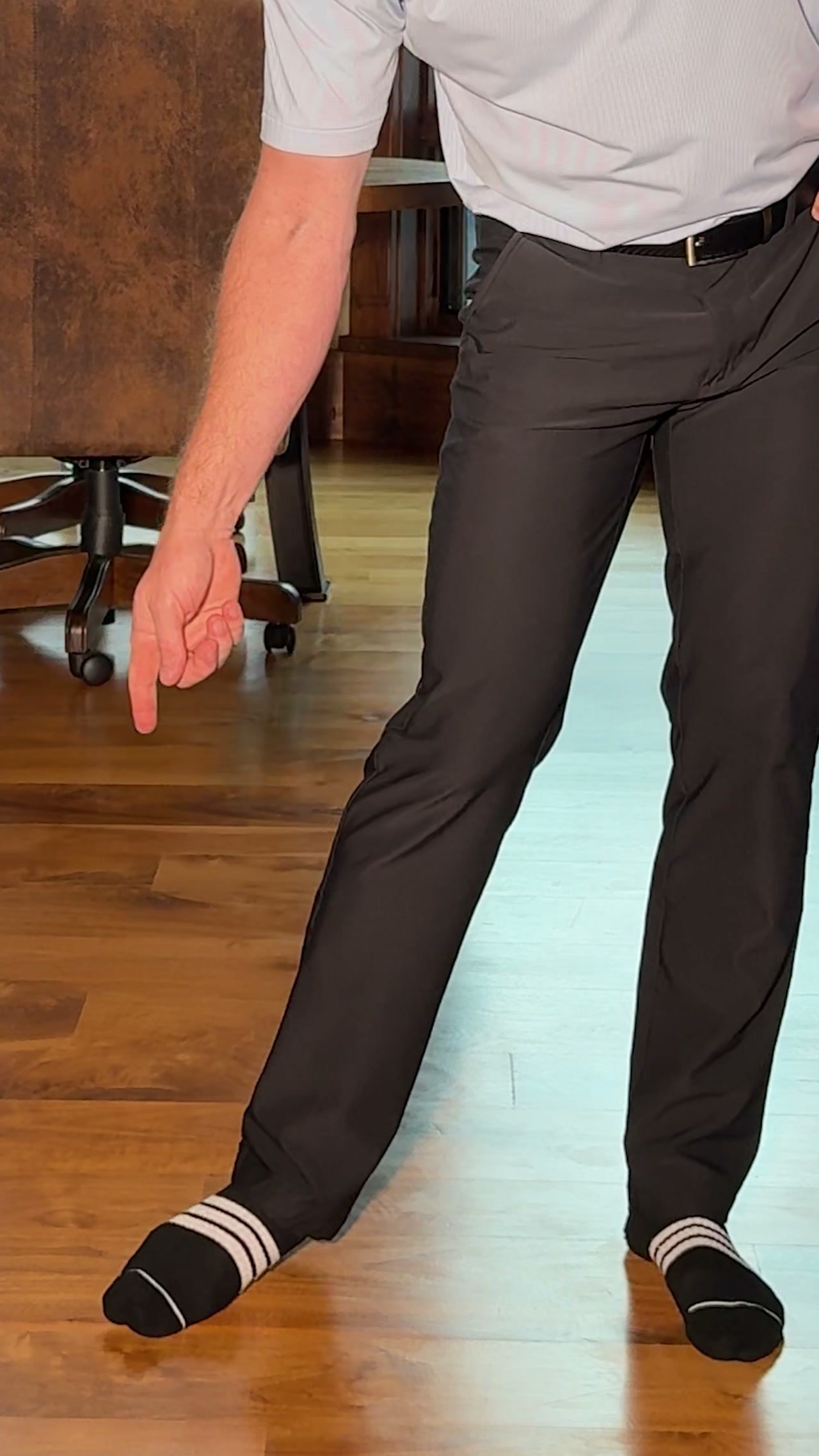
If there are any questions with feet, I have no idea.
But I got a little bit stuck.
Forgot my clothes.
It's just.
It's been a day, but if I do anything where I have to show the bottom of my feet or anything, I'll either take off my shoes or I got a little mat right there that's blue so we can kind of see what's going on foot-wise.
So any thoughts, any questions?
What's going on?
I almost got the Masters right if Rose had a mental game.
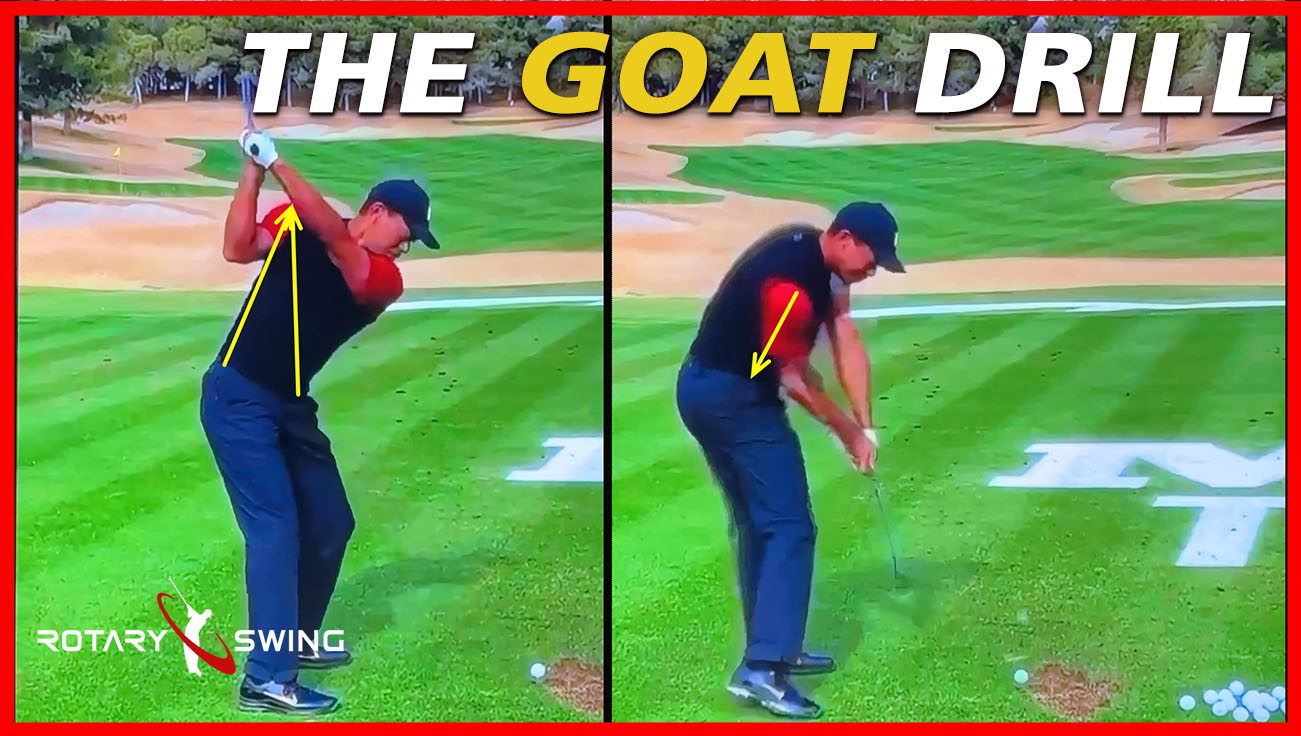
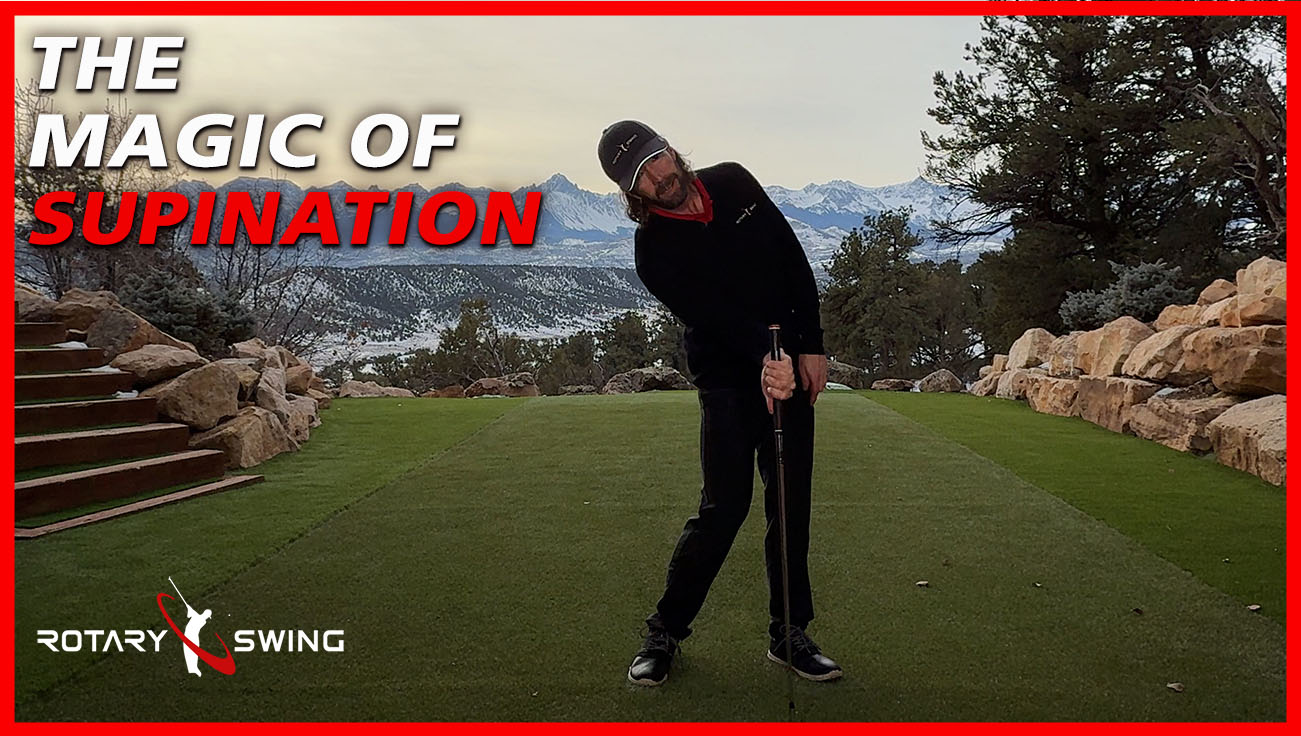
Mark, I think that supination at the downswing is important.
Absolutely.
So I think that players, since he said this, I think that players get too caught up on shallow.
Don't get me wrong.
Shallow is very important.
But I think that players get so caught up on shallow that they kind of miss.
Supination allows you to maintain the proper radial deviation as you shallow.
And I think some players are trying to just get this club down here.
So much that they forget that the actual action of supination is what's taking care of the shallowing, but it's also taking care of the wrist position at the same time.
So supination is of the utmost importance because I couldn't sit here and do this without supination.
It would look like this.
And that's definitely not what I want my golf swing to look like.
Not that I play golf.
Hey, Vijay.
Hey, Jeff.
How are we doing today?
Not talked much about anymore.
Well, supination is still there.
That is a place where I get my speed.
100%.
Supination is still there.
But right now, with Chuck talking about the stretching and fascial lines, that's still there.
And like I was showing with the impact bag and all that, getting the speed going through the supination deviation and pronation of the wrist is still there.
As I'm getting my hips and I'm getting loaded and all that, all this stuff, With the supination and throwing, it's still happening.
Chuck's big thing is right now, just the fact that we're not seeing, well, we were, players were literally just not moving, which you can kind of do that for a point in time, but if you want to get that free bigly speed, you've got to get that body involved.
Howard.
Hello, Howard.
How are we doing tonight?
A couple more minutes and then I'll get started.
Any other thing anybody want to talk about, what's going on?
We're about to get a much needed rainstorm.
Well, that's what they keep saying.
Had a visitor from the UK for a lesson.
Oh, see, that just hurts, Like I said, the number one thing that I would tell y'all is don't get old.
That is the number one golf tip.
Jeff, I re-watched the video on scapular and the combination of it and supination.
How important is it?
It's very important.
I mean, the big thing is, and I always tell my students, and I always have, so to speak, core is the engine of the swing, right?
You've got to get this core going.
The core is going to kind of direct what's going on with the hip.
But remember, this scapular retraction, if you don't have the retraction, okay, and you don't have the blade start to move down and towards the spine, then it's just like throwing a ball up here.
You can't add any force from core rotational speed if you don't get that proper scapular retraction.
So as I'm loading and building and my scap starts to retract so I can get that extra turnance, Drops into place against the spine here, you can't add speed unless you have that.
I mean, this is why when you watch, and this is super exaggerated, but that's why when you watch players that get up here and they have massive over the tops.
You'll see that blade right here starts to protract, and when that protracts, all of the any juice that they're going to have is all just going to be hands and arms.
And as we know, it takes 32 pounds of muscle to create 100 mile an hour club head speed.
And at least for me, I don't have that in my forearms.
If I don't supinate, I lose at least 10 yards.
Yeah, because when you supinate, that's doing a couple things for you.
One, you're taking advantage of kind of physics right here.
But when you don't supinate, what's the opposite of it?
Pronate.
So if you're pronating, typically, you're going to start adding ulnar deviation too soon.
You're losing lag, angle, and you're getting to it early.
Supination is delaying it.
What do I tell you guys?
Amateurs are always getting to the top, trying to get down to the ball as fast as possible.
Professionals are always trying to stay away from that golf ball as long as humanly possible.
Because we never want to, A, be moving in the same direction as the golf club.
B, we want everything to have this crescendo.
And the last thing to happen is the snap of the club.
But most amateurs, never all the players, what they're trying to do to get speed, the first thing that starts going is they start throwing this club.
Well, that's great if I want speed right here.
But I want speed out here.
I mean, that's where I want my speed.
Not with that.
For me, it would be more like this, being a lead sider.
All right.
No more questions?
Nothing?
Howard, too late for me.
What time is it where you are?
All right.
I'll answer Jeff, then I'll get going.
How much upper trail, arm and upper PEC is connected during the backswing?
It's kind of variable, Jeff.
I mean, when you first think about elevation, elevation is variable.
Okay, so elevation is a variable in the golf swing.
So you can be a little bit lower, you can be a little bit higher.
The big thing is, as you're getting up here, you just don't want to have your arm and scapula in a position that you're either going to have to have a massive manipulation from, or you have no break.
And you're like, Craig, what the hell do you mean by break?
As I'm rotating, if my scapula is moving in the correct direction of my arm, is staying with me in front of me right here, I'm going to have a natural break to the top of my swing.
It's like I tell you guys when we do the two-inch hand drill, we're working on our core.
I can't.
Everybody always asks me, Craig, how do you keep your.
I can't go any more than this.
Because right now my scap is pressing against my spine and I'm at full max rotation.
But as soon as I start getting too much of this and too much of this, well, now once I get here, if I were to let that go, well, now I can do whatever I want.
But if I keep that, I can go here.
I'm exaggerating.
I can go here.
I'm really.
Ripping that, but I can't go any further because it's a natural break for me.
Oh, they're getting old, Howard.
Yeah.
It kind of sneaks up on us.
But Andy and Josh, or Josh, I will get back to you at the end of it.
I want to get to the questions, but I will come back to this.
I found myself early extending on my 40 -yard chips today without seeing my swing.
Any thoughts on what might be the cause?
Andy, I'll go ahead and answer that one as I pull this out.
Josh, I'll come back to you.
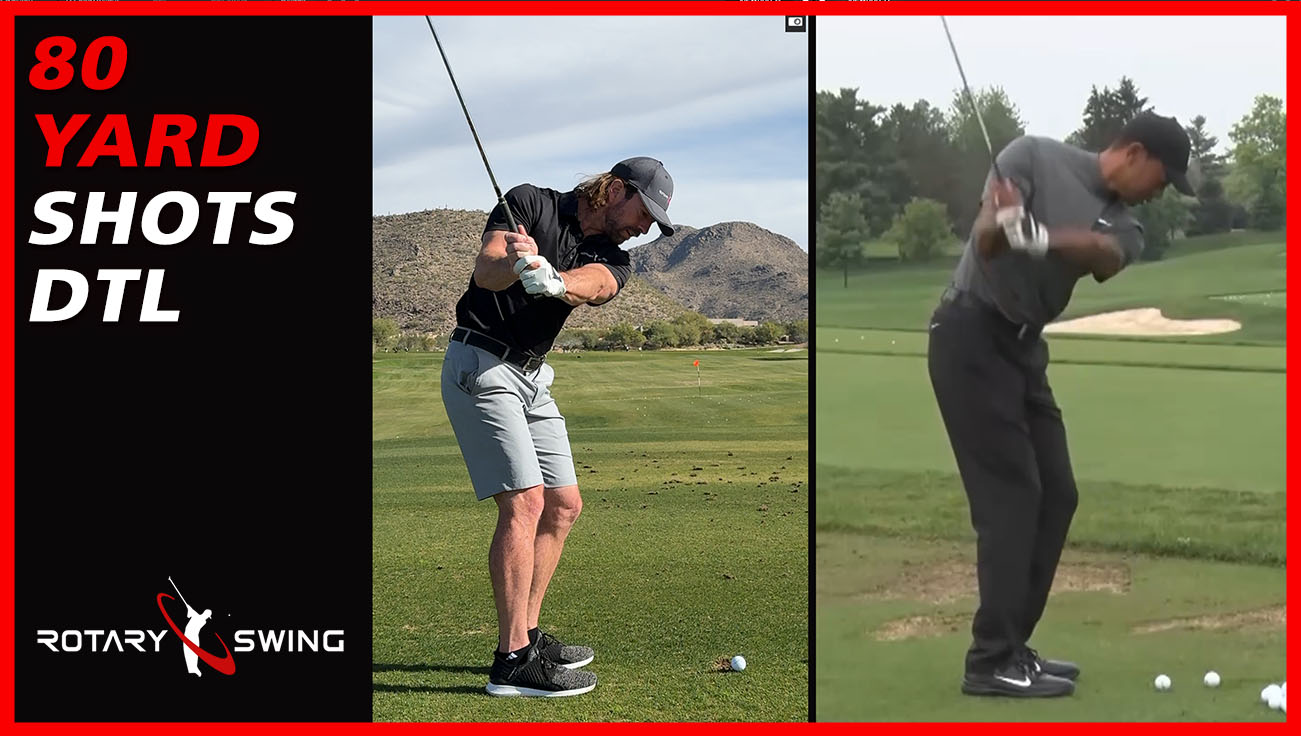
If you're early extending on a 40-yard shot, so if we're pre-setting up a little bit on our lead side, our stance is very narrow right here.
We don't have a ton of weight shift here.
Why would you be early extending?
The main thing that I see still comes back to the full swing with that.
It's not about the hip depth, at least in the 40-yard swing, but what I see players trying to do is that they start pushing everything to try to flight down the wedge, to hit a 40-yard flighted wedge, versus what I'm trying to do is I'm still playing the waiting game until my arms get down here, then let my core get me through, which gives me the delofting.
But what I see is that players get here and they think like, oh, I've got to get my sternum out ahead of the ball.
I've got to be in front of the golf ball.
And so what they do immediately is they start driving from that right hip and right shoulder.
And they just start doing this, trying to get out ahead of it.
That's really not how you get out ahead of it in a wedge shot to flight it.
But that's what I normally see.
All right.
Let me get to the questions.
I looked at the number.
I should be able to finish.
Not just on time, but with a couple minutes.
So I promise you, I will get back to everybody.
And if there is an issue with the feet and the shoes, let me know.
I'll bring a mat over here or I got white socks on, I think.
I'll take off my shoes.
But I can't let y'all see how tall I really am at this massive 5'4".
I'm not 5 '4".
I always kid around with Chuck.
Okay.
Question number uno.
Please clarify the notion of pivoting around the lead leg versus weight shift.
I assume this is not the old stack and tilt where they promoted staying on the front side the whole time.
No, we will not teach stack and tilt and we are not stack and tilt.
In fact, we were one of the biggest people fighting stack and tilt when they were up and coming, so to speak.
So also please clarify this front leg focus versus being trail side dominant.
Don't think about it as a different side dominance.
I think that players have gotten way too much in the weeds of lead side dominance, trail side dominance, lead hip pivot, trail hip pivot.
The reason why the whole lead leg came about about organizing the structure and the backswing is because we kept seeing everybody trying to take their hip and trying to load it like this.
And so now they didn't have any hip depth.
They're moving too much off the golf ball and they can't get their weight back to the lead side and nobody's passing any gates or anything like that.
Versus if I'm right here and I think y 'all have seen me do this enough and I will continue to do this and I will continue to tell you, just like I showed my, had a guy come from the UK this week.
He doesn't need me anymore.
All right.
Cause I showed him how he can fix his swing.
So again, putting myself out of business.
If you think about swinging a kettle or swinging a weight, what happens when I'm swinging a weight or a kettle?
I don't take the weight and then blow through my hip and get over here.
I use my lead side to start to help me organize how I'm structuring my turn.
Now, do I look like I'm staying on my lead side right now?
Do I look like I don't have weight on this side?
The core is still the engine.
The hips still have their job to do.
The hips still getting deep.
I'm still shifting weight.
My pressure is still moving back over here.
Think about it as more as just what's kind of getting the motion going.
Because we started seeing, at least I did, players trying to organize around their right hip.
Well, immediately they take their knee like this and they take their right hip like this.
That's not what we're saying.
In fact, we have a video where we want you to turn your foot in this way and feel a spiral coil up.
But if you originate that motion by getting your lead side going, kind of like the old leg kick in or anything like that, this structure organizes itself.
So I thought about this for a second when I saw that, when I printed the sheet.
If you do the exact opposite of what you think you should do, you're probably going to be closer to right in the golf swing.
I've said that for two decades.
If you're trying to get to your right side, typically when players try to get to their right side, they don't get to their right side correctly.
They do everything they shouldn't do.
But when they think about using their lead side to get to their right side and letting that create the structure, it's kind of like, it's like the release.
Forever and ever and ever and ever and ever and ever and ever and ever and ever.
Everybody said.
Hold on to it.
Spin your body through all that fun stuff.
And then they're like, oh, no.
Well, the club has to release.
Well, that's a hook.
No, it's not.
It's a release.
Look at every single player on tour.
It's the opposite of what you think should happen because somebody told you a long time ago that face rotation yields hook, which it does not.
So don't get caught up in trail side, lead side, this side, that side.
The structure of the organization is all still the same.
It's just in the way that you're trying to make it happen.
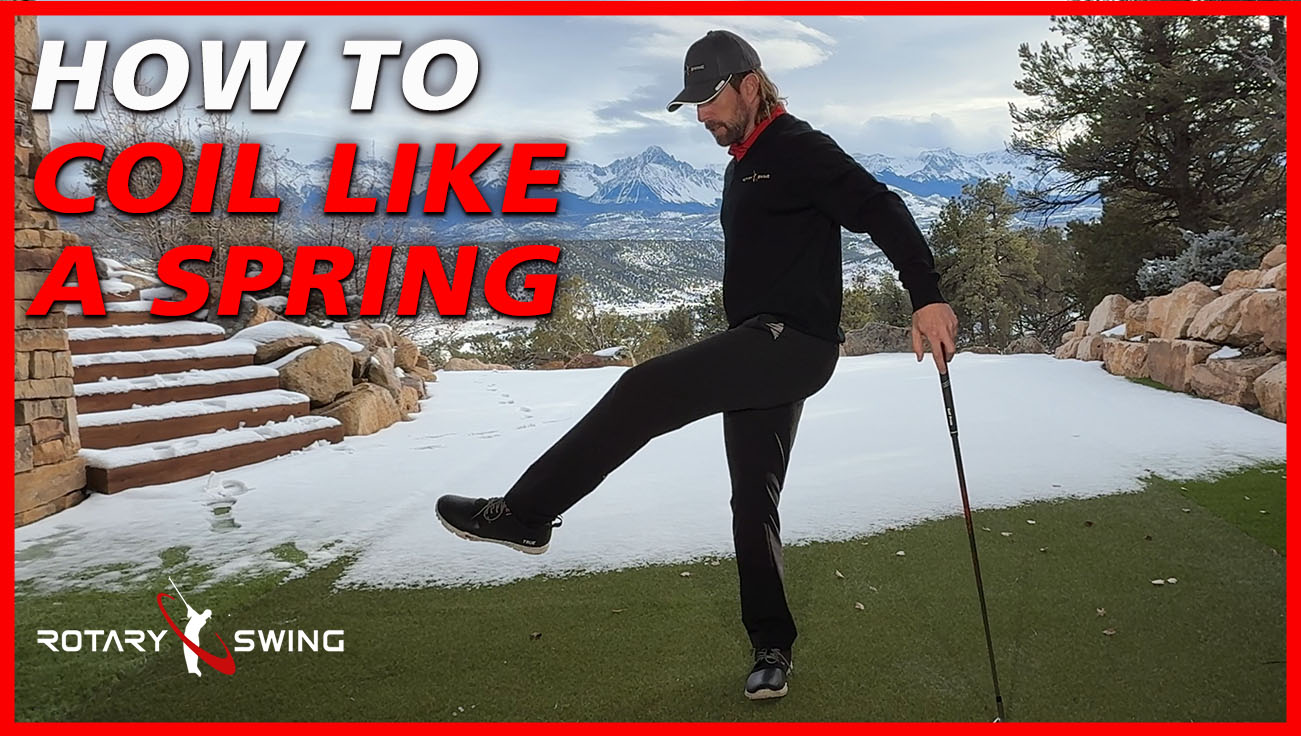
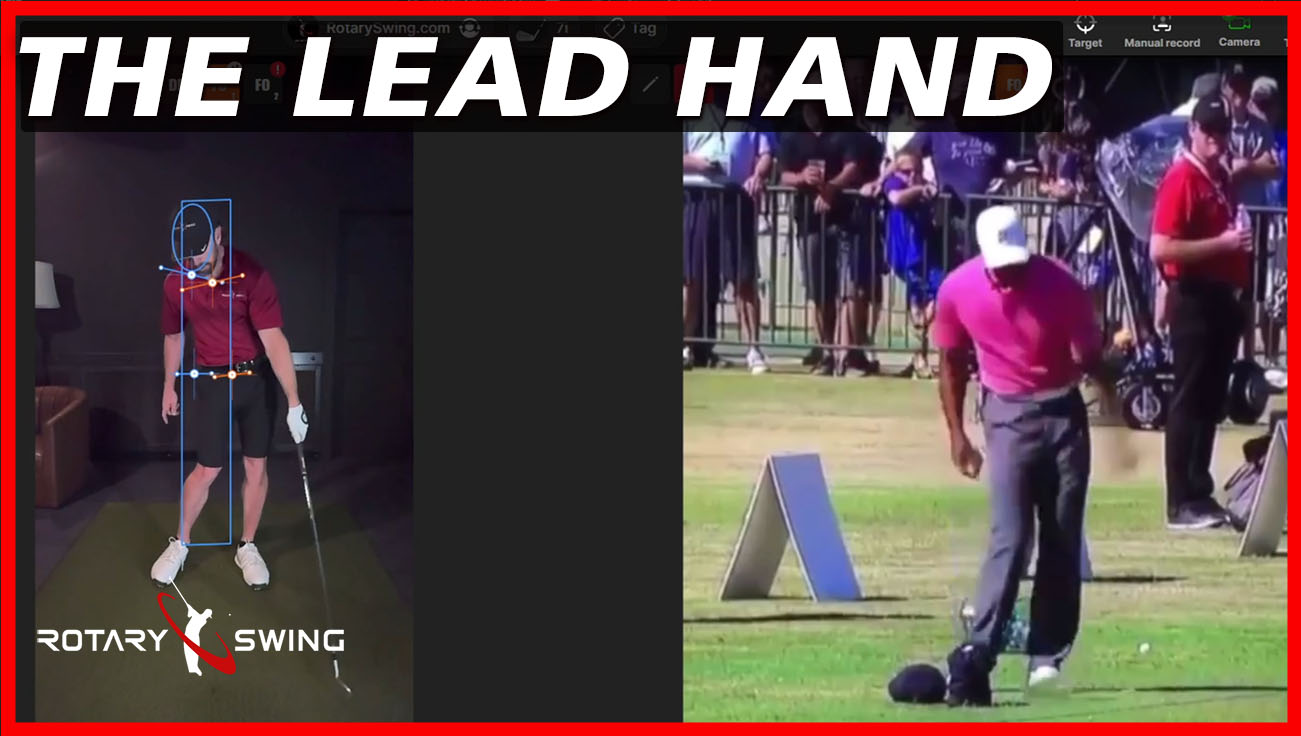
I've showed you all my lifting the feet drill.
I can't dance, but I can lift my feet.
Well, if I lift my right foot and I start to plan it, or if I lift my left foot and I start to plan it, I'm kind of using the other side to make this happen to get the organization.
That's really all that's going on.
So don't overthink that.
I'm not trying to get you to do anything.
We're trying to figure out the cues.
What is the feeling?
Is this little kickstart getting this?
Okay, that's already starting to move my hip a little bit for me.
And that's already starting to get my core without going like this or this or this.
Because I'm letting my opposite side kind of organize it for me.
Okay?
That's really what that's about.
So don't get crazy.
Can you please go over coiling around the trail side?
Oh, I just did that.
And around the lead side.
Are they both for the sling method?
They're both the same thing.
They're still the sling method.
When I'm using my lead side to coil, I'm not leaving my weight here and doing the old stack and tilt.
Not doing that.
When I'm coiling around and using and think about, I'm using my lead side to help me.
Start to wind to get this stretch, so that this starts it, and now I can feel the stretch with my trail hip getting deep and getting rotated right here.
I'm not going like this.
It's just the fact that this motion of letting this kind of say, hey, get this side going back over here.
So my lead side is helping tell my trail side this is what I'm looking for because I'm trying to get back to this lead leg.
Remember, I'm not just trying to go here and then hit the ball.
I'm trying to have a feeling where, okay, this is letting it organize.
I'm getting the stretch, and now I'm trying to get back on it.
I didn't stay here the whole time.
It's also telling my brain what's next.
So I'm just letting it organize it.
I know that sometimes Chuck says something or a video says something that kind of gets people lost because it's like, oh, well, today you're saying trail side, and today you're saying lead side with coiling and all that.
But the markers and the objectives haven't really changed with getting hip depth, getting load, shifting your pressure, you know, wherever your arms are.
So it's just a cue.
So it seems like you lift your lead heel when spiraling around the lead hip, you may lose tension.
Okay, now that's a very valid question.
All right.
If I go to here, and as I start to.
Kind of coil getting my hip depth.
If I start to lift this foot too much, yeah, you're going to see I kind of have a unibody turn and I start to lose some valuable stretch that I have.
So all within means.
All right.
You saw Jack.
He lifted his foot.
Even Tiger at some point in time had a little bit of lift of the foot right there.
I want to have this lead side starting and getting this going.
But I still want to have good stretch.
If I kick it this way, now I can feel that I lost that tension.
It's okay for it to have a little lift, but think about why it's lifting.
Okay?
Think about why it's lifting.
I know this has nothing to do with the subject, but this might be the way for you to understand it.
If I shift my weight back to the lead side, what happens with my trail foot?
Am I trying to push off my trail foot to lift it?
Or is it happening?
As a byproduct of getting into this side and getting this glute to fire and getting my hips back to square, this is popping up.
It's not because I'm sitting here trying to push off of it, which is going to create early extension and a whole ton of problems.
Same thing with this foot.
If this foot is lifting, it's not because I'm trying to get here and then just make it happen like this.
It should be because the lead side's organizing it.
And I'm coiling and it starts to come up because I'm really stretching and it's getting moved by my coil, then it's fine.
I didn't make it move.
Same thing as in the right foot doing the opposite on the downspin.
It's a byproduct.
It's happening as of consequence.
I'll answer all the questions at the end, Joe.
All right.
Please demonstrate how the fascia stretch release creates the sternum drop.
I get feedback that my sternum drop is zero out of 100 because there's not enough stretch lengthening of fascia to create the sling to pull my sternum down.
I'll also explain how the sternum drop movement doesn't lead to crashing the club in behind the ball.
Okay, so we'll kind of take that one backwards.
The sternum drop and the crashing into the ball.
What am I doing on the downswing?
Well, A, I'm moving laterally.
B, I'm moving rotationally.
C, I'm moving vertically.
My pivot point and where this club bottoms out has been moved because I've moved.
Now, if I had sternum drop and I stayed on my trail leg, yes, I'd bottom out.
Okay.
But remember, as I go to here and I start to come back, where am I going?
I'm moving laterally.
I'm clearing space to drive my arms and hands forward to get up here.
Now, if I got here and I had sternum drop, that's going to be what happens.
But it's because I'm pivoting.
Now I bottom out out there.
So if I were to stay in a static position or not shift my weight, yeah.
That's why when you look at short game shots, what do you do on the short game?
You may.
Do you see anybody with a 40, 60, 80-yard wedge set up like this on their right leg and hit their wedge shot like this?
No.
It would be absolutely ludicrous.
What do you do?
You typically put a little bit more weight forward.
You don't have a ton of weight transfer back to your trail side because you want to make sure you stay out ahead of it, which is going to help keep the hands out ahead of The blow being this way versus back here.
But wandering our way back, Cernum drops because of not enough stretch and lengthening to create the sling.
Okay.
Trying to think of the best visual.
Okay.
I'm going from here.
It may look like I'm rotating because of my swing.
If I go from here and I just swing my arms, all right, so you can literally still see my right shoulder right now.
What's going to typically happen on the downswing?
The only thing I've done right now is load my arms and hands, all right?
So the typical thing is going to be that my arms and hands are going to be the only thing that fire coming down.
Now, when my arms and hands fire, what's going to be going on with my sternum right here?
I loaded my arms and hands, my arms and hands fire, and typically when the arms and hands fire, everything works in the horizontal plane.
You don't have any sternum drop, you have over the top, you have casting, you have a whole list of problems.
But when you just load your arms, your arms are going to fire.
Your body's not going to engage.
So you don't have enough stretch lengthening to get sternum drop.
How does that create it?
If I get here and I start to wind my body, so I start to get my hip depth and my core and my scap starting to retract right here, and I've wound me.
And now my sequence, not from the top, but now I've lengthened and stretched the fascia to here.
Well, if I'm starting to swing correctly from the ground up without spinning my shoulders and doing this, what's the first thing that happens?
I have that little torque bridge where I get into this tiny bit of closed hip slide where my goes this way.
So what does that do?
Kind of keeps me shut.
And without my head and everything driving this way with this wind implant, where does my sternum go?
Just watch my microphone when I do that.
My sternum is going this way.
Now, if I were to get stretching here and go like that, where's?
where's my microphone?
You can see it's going up.
So as I get this stretch, and Chuck talked about the structure of structure of the arm, getting the stretch, the hip depth.
Well, now as I come down and I start to pivot back to this lead side, my trail knee is going to come in.
I'm going to start to plant into this glute right here.
And as I do that, because I'm not trying to do anything.
On my shoulders, the core, lumbar right here is my feel, if that's what's moving, and not my shoulders.
Look at, look at my mic, you can literally see it.
There's a door frame reflecting in this window right here, window mirror.
It's been a week, this mirror right here.
So look at my sternum, I'm going to go over here and you can kind of see it behind me in the mirror.
I'm going to go to here wanting to get my stretch Now, I'm going to make that dynamic.
What do you see with my sternum?
Because it's my core and my glute that's firing, not my upper half.
And look at that.
You can literally see it's dropping to the height of the camera.
So when you don't wind, when you don't load your body, your body doesn't want to unload from the ground up moving this way.
When you load your arms, it wants to go this way.
Where did that go?
So you have to.
Coil correctly to have an automatic sternum drop.
But what I would suggest, whoever asked this question, what I would suggest is that first make sure that you're rotating.
The second thing that I would check is make sure that your force of movement isn't starting from the top.
If your force of movement is starting from your shoulders or your upper half, you will never have sternum drop, ever.
I'm coiling here up.
Think about me holding that kettlebell weight.
What's the first thing that happens?
This plants, this doesn't spin.
If it spins, there's no drop.
In fact, it goes this way.
Craig, can you recommend some drills to help with sequencing through the downswing?
Through Unlimited, you have me working on some one-handed swings to make sure I get the weight shift and letting the arms drop before rotating through, which is helping.
That's good.
But it's a bit inconsistent.
Anything else I can add to help with sequence and consistency?
Well, that's kind of a loaded question for me because it kind of depends on what you're doing.
I don't know if y'all watched.
I would imagine most did.
If you watched Chuck's new video on getting the glutes activated, hip tap, things of that nature.
The big thing when it comes to me with downswing sequencing is I load and rotate and get up here towards the top.
And what I'm reading from this student is that I had him doing a couple one arms where he was getting the weight, Letting the arm drop so the club arm and hand starts to have that gravity feeling while getting the weight.
And then really getting that hip to kind of sling the club into impact.
It's tricky.
Because if you break it into too many chunks, too many pieces, you kind of break it.
Like if you break the downswing into five different chunks, you'll never do it correctly.
So with the sequence wise, I still like the foot issue, but I kind of want you to think about it, how Chuck was talking about it.
If I get up here towards the top, I tell my students, if you don't use your upper half, you got to use your lower half.
If you don't use your lower half, you're going to use your upper half.
If you don't use your legs, you're going to use your arms.
Get a feeling of what you're trying to use.
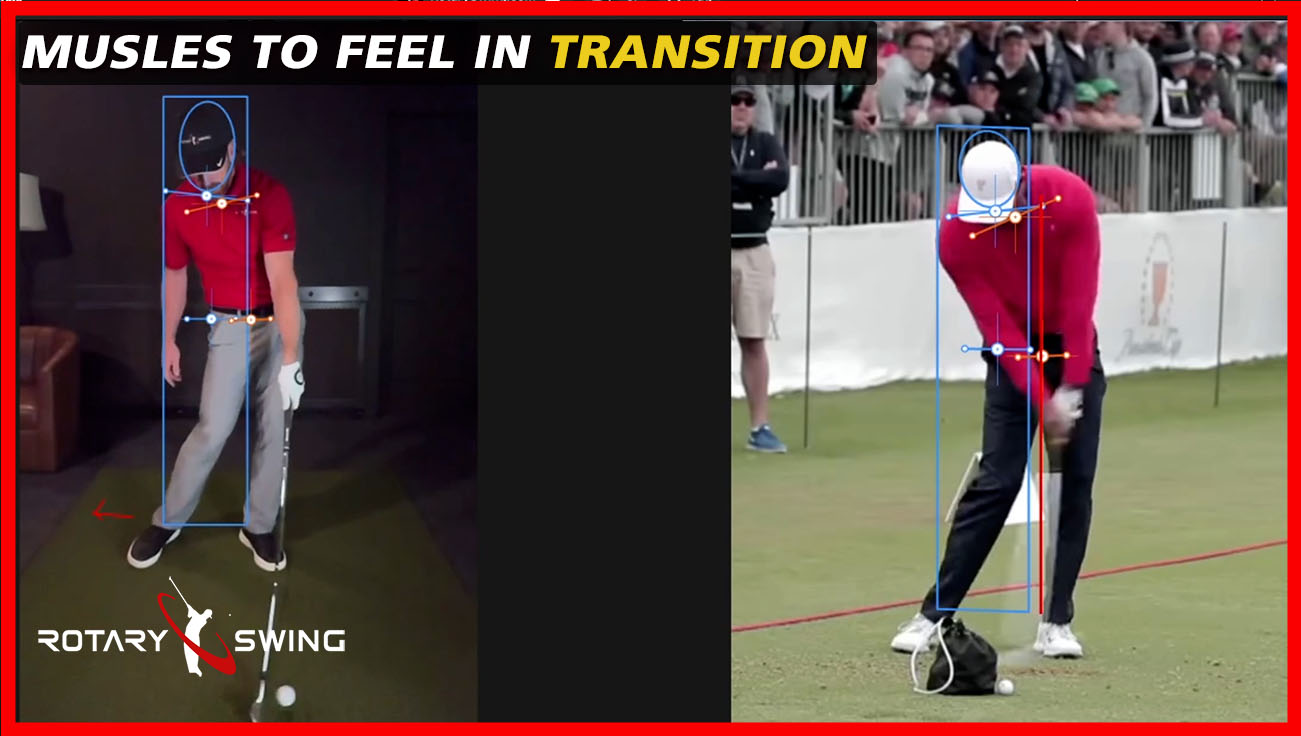
Get a feeling of the muscles you're trying to activate.
I've talked to you all about me working on weight shift and things of that nature.
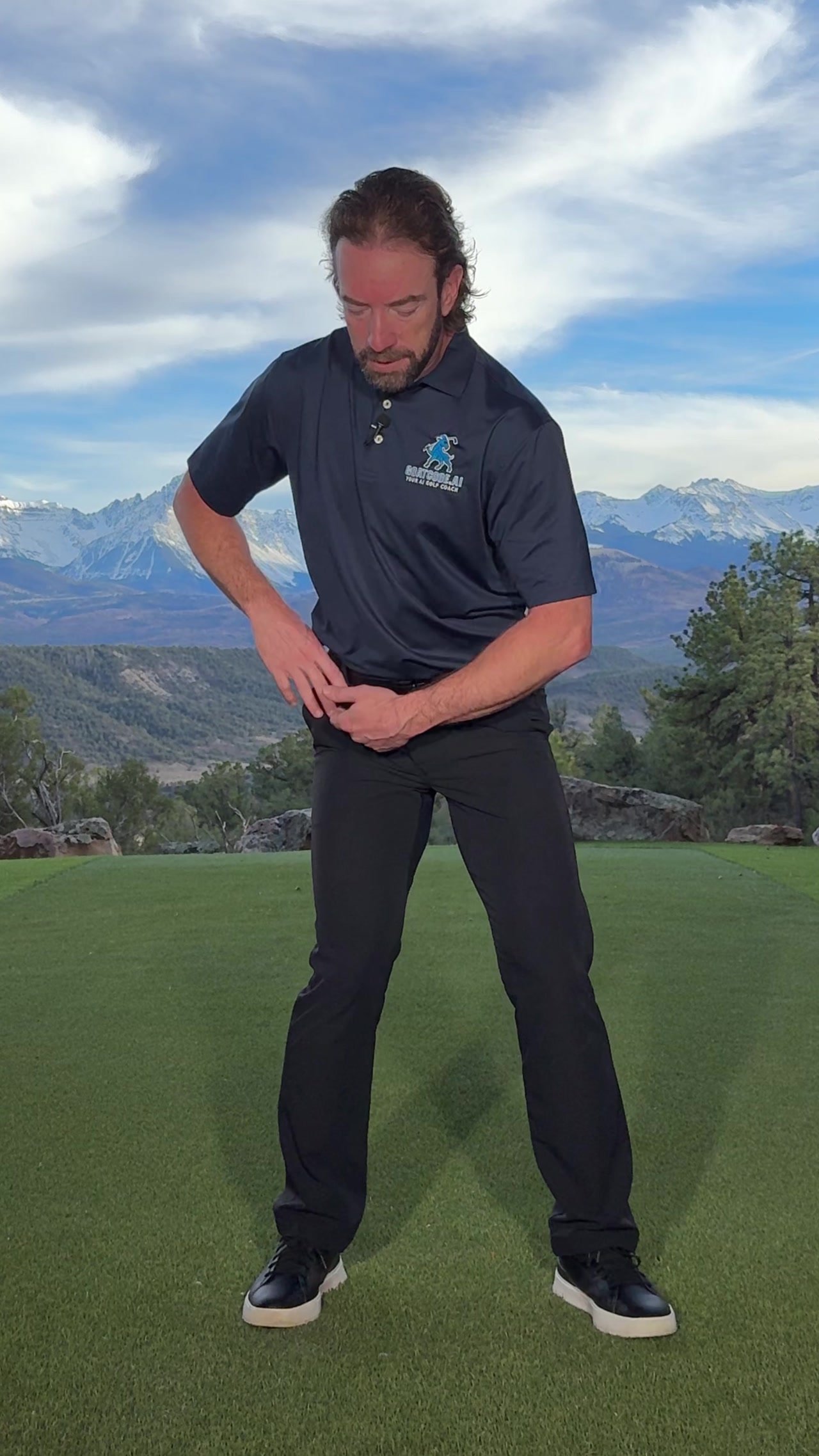
If I wind and I get here and I just solely focus on doing nothing with my upper half right here and getting into, okay, now I can feel my glute right now.
And as Chuck says, just hang out there for a second.
Get awareness of what muscle you're trying to activate.
The biggest thing that I always see in players downswing, taking into account they got a decent backswing when it comes to sequencing the downswing, it's that their first move is wanting to do something with their arms and shoulders first.
Well, be dynamic about it.
And what I mean by that is get up here and get into your butt.
Sit too much.
Move too much.
Get too much leverage into the ground where you actually have a big drop.
But get the muscles to fire.
It's the biggest problem that I see is that players get up here and they want power, so they start spinning, throwing arms and hands.
But if you want to change it, then force it to fire.
That's my biggest thing is to start getting the downswing sequence.
Get up here to the top.
And forced that glute to fire.
The very first time I worked on shifting my weight, I went back to the hotel room.
I woke up the next morning and I told Chuck, I don't know if I can do the lesson today.
He kind of looked at me funny, and I said, You know, pardon my language.
Golf's four letter word said, Because my ass is sore.
I've played hundreds of tournament golf rounds, hit millions of golf balls.
And just one day, I couldn't sit down on my butt because I overworked getting that glute to fire.
But I knew that I was changing something because I finally felt something was different.
So to get this downstream sequencing, don't just go through the motions.
Okay, I got my arm and hand up here.
I'm getting some weight.
Let my arm drop, getting a little hip.
Like that's great.
At a slow pace, force yourself to actually work.
Get up here.
Overcook it for a second.
I can feel this firing.
That's what I'm trying to use.
And now I can use it and extend it as I go to here.
So you can do the lift the feet.
You can chunk it up into GDP.
You can start in GDP.
And you can pivot things through.
But I'm a big proponent.
Feel what's supposed to work.
Feel what you have to use.
All right?
Just like when you get the core or anything.
feel the muscle that you actually need to fire.
We've had videos on the site a long time ago talking about how you use the adductors to pull weight over.
Feel what you're actually using, and then you don't have to think about that stupid club, because it is pretty stupid.
He doesn't do anything on his own.
Chuck, myself, used to do that in the clinics all the time.
He'd be like, all right, swing yourself, bud.
Go hit a ball.
Club is stupid.
He doesn't know how to do that.
So you activate the muscles that you need to activate and learn how to feel them.
I want you to wake up the next day and be like, man, I did something different in a good way.
Craig, during the April 1st webinar, you addressed a trail side lead side question that got me thinking about my confusion level between what I should be using.
I know you use both.
Yes.
But can you help clarify what I should be using more of and when?
If that's a thing.
I just, I don't want you to think about as being one or the other.
like, to the death, if that makes any sense.
Right now, I'm more comfortable with my trail hand, all short game situations, putting, chipping, pitching, and my lead hand and hand are adding structure.
But as I get into longer wedge shots and full shots, the lead arm and hand takes over, and the trail arm hand is just for structure.
I may add a little trail hand for more oomph at times.
I heard you guys talk about one swing for all clubs, and I don't think overall my body mechanics change, only which hand takes over depending on the shot.
So based on GOAT code teachings, is what I'm doing counterproductive to getting me better?
Meaning going back and forth?
No.
What do you suggest I'm missing?
It seems like the early days of goat codes, the majority of trail hand focus, even full swing stuff, but it may be completely missing understanding it.
No, and it's still trail side focus.
If you watch any of Chuck's videos or any of his newer stuff, he still talks about how the goat release or anything like that works like this.
All right, still with this trail hand focus and all that.
Now, when we're talking about the lead hand, it is about the structure of it.
All right?
You're going to get feel from both sides.
What we notice on our end, if we tell somebody to go full-blown trail, trail arm, or that, as they start graduating from short game, they start getting to about here, and now their trail hand's going like this, and their lead hand's like this, and they're not even close to the golf ball yet because they forget that this lead hand still has some feel, but it's reacting to the trail hand motion.
So to answer your question, both arms have a role.
Switching back and forth, I don't think that's really drawing a line back in the sand.
I think that's what you need at that time.
Trail arm is a great governor of width.
If you saw the video, I think it was last week on Instagram where Chuck was talking about maintaining the structure with the right arm and getting up here to have this load, and how the left arm was just going along for the ride.
In most of the goat code teachings, that's going to be what it should feel like.
So if you feel like you're reverting back to doing more left arm to try to control the right arm, that's really not how it works.
The right arm is your governor of width in a lead side swing and a trail side swing.
Because as you're going this way, you're not rotating with this shoulder.
Okay, can it push?
Can it have some protraction to help create a little bit more rotation?
Absolutely.
So what I would say is your short game sounds like it's on par with goat code.
But as it gets bigger, I would try so that you can have this kind of one swing structure with all shots.
I think you're going to have to put a little bit more emphasis on your trail arm to do it.
It doesn't mean this guy isn't doing anything.
It doesn't mean this guy doesn't create structure.
It doesn't mean that in the goat sling video when Chuck's like, hey, get your left arm here, or in the other video where he's like, get here and swing your lead up.
That doesn't mean anything like that.
It's just feels.
We're all trying to get stretched, all trying to have the same thing.
But I do think it'd be easier for you if you're doing this with your chipping, then all of a sudden as you get bigger, you're like, well, I've got to focus a little bit more on this.
Well, that's not necessarily a bad thing.
This guy might need a little bit more focus.
But why is this guy misbehaving?
It's because of this guy.
So it might be that you actually need to put twice the amount of focus on this one.
All in all, with that being said, the arms, they're just the units.
They're just the conduits.
They're just maintaining structure.
The arms don't do S-H-I-T in the swing.
All right.
They're conduits.
They maintain structure.
They help with stretch.
You're never trying to swing your arms anywhere.
The arms only move like this as you're going this way and this way.
And it's about having a balance, making sure one guy isn't breaking down the chain by working at 130%.
So I know that doesn't quite answer your question.
If your arms are overworking, check this first.
If your lead arm's misbehaving, check your trail arm first.
If your trail arm's misbehaving, check your lead arm.
Kind of goes back to what I said earlier.
Look at the opposite side of the equation.
But if your arms are misbehaving, 99% of the time, it's because you're not.
And so when you get through the short game and you're down here and you're doing chipping and pitching, you're like, oh, this is great.
As soon as it starts to swing up, I guarantee you something's stopping, which is why you feel like, oh, I need to put more left arm in it to get this stretch.
But this guy still isn't moving.
So that's what I would check.
Watching the guys at the Masters.
Justin Rose hit a draw out of the woods around the trees under the green.
It seemed his clubface head address was square.
Number one, when I want to draw the ball, my clubface needs to be closed at impact.
Theoretically speaking, I mean, we can get on like gear effect and stuff, but yes, you want your clubface closed at impact.
Try to come for more from the inside, but could not draw the ball.
Please explain how to move the body to draw even wedge shots, same for fade.
Why are you trying to hook and draw wedge shots?
Now, you'll see players on TV flight it and they're trying to put different spins on it because they want it to go this way and that way.
The big thing when it comes to maneuvering the ball is what's the most important thing when it comes to maneuvering the ball is going to be clubface angle.
All right.
85% of initial ball flight is clubface angle.
All right.
Now, as we did, I think, in webinar two or three, maybe.
We had a whole section on maneuvering the golf ball, like left to right.
It can kind of vary depending on how much you need to move it.
I am not a big proponent of aiming off target and then trying to bring it back because of percentages.
So if this is my line, dead square right here.
what you're going to see me do is you're going to see me aim where I'm trying to get that ball to go.
And then you're going to probably see me close down a little bit if I'm trying to hit a little bit more of a draw.
But I'm going to keep my club on my target line.
And then I'm just going to swing along my body line and bring it back down here.
My chest might stay a little bit more closed.
My hips might be a little bit more quiet because I'm trying to get this to square up sooner.
But what I see more often than not is that players take this line, and they're like, okay, I'm going to hit a draw.
And then they aim their club to the right, and then they shut down their body to where now they're aiming 20 yards of the target.
Now the ball's starting over here, and unless they do some massive manipulation to get it to curve 40 yards, you can't get it back on target.
When maneuvering the ball, it should still have an opportunity for a proper shot.
So I wouldn't overthink this too much if you're trying to do this.
And take the same advice for wedges, all right?
The slower your chest, the slower the body is, the more that the club's going to come down in and have a chance to square up, promoting more of a right to left.
Same thing where it's the opposite.
The more my body stays out ahead and the more open I get, the more it's going to delay the club face rotation, promoting more of a left to right.
Now, when you're trying to maneuver the golf ball, Just as you were saying with Justin right there, his club face was square.
I would get at your target.
This is where I'm trying to go.
If I hit the dreaded straight shot, it's still going right at my target.
Now I'm going to pre-set up my position.
Now I'm going to swing.
Now there's.
Multiple ways to do this.
Can I set up square and hook, shut my face?
Can that create?
Absolutely.
For me, if you see me hit a draw and fade, if I'm going to hit a 10-15 yard draw, 10-yard, 15 fade, and this is my target, this is me.
All right, here's my 15-yard draw.
Here's my 15-yard fade.
Because for me.
I'm going to focus a little bit more on my sequence, all right?
I'm going to get here and I'm going to feel my body, my chest and all that slow down so I can feel that face rotate a little bit more through.
Conversely, the same thing with my body.
But don't overthink maneuvering the golf ball.
Unless it's an extreme situation, like you've got to hit a 50-yard hook, you may need to.
preset this.
But when you're trying to maneuver it left and right, left and right, keep it on the target, change your body position, and keep the same swing.
But that's the toughest part.
Toughest part is keeping the same swing.
How many of you, you can raise your hands if you want.
I won't call you.
How many of you have the problem of committing to it?
And this is what I mean.
I aim the club here.
Oh, I close down my body, but instead of making the same swing, as soon as I close down my body and my club's aimed there, I start doing something else to it.
Like, oh, instead of trusting it and swinging along my body line and making the same swing what I have for my setup, you don't commit to it.
It's like, well, this feels weird.
It's the same thing with an iron and a driver.
The only difference in an iron and driver is when you're catching the golf ball.
Yes, a driver with slightly wider stance, a little bit more axis tilt.
You want to be swinging it a little bit more out to the right.
Lo and behold, you know what's cool?
When you set up with the wider stance and you have more axis tilt and you laterally shift, what does that do?
It promotes more of an inside to outside path, which takes care of that problem for you.
The same thing when players have an iron and driver swing.
If I'm hitting an iron, I'm set up here.
I make ball here.
Now I set up, I get my setup with my driver.
I make the exact same swing, but I'm just catching it here.
The swing hasn't changed at all.
The only thing that changed was setup.
The ball position is a little bit more forward.
I've got a little bit more tilt, not because I added it.
It's because the extra width in the stance gave me the lateral motion to get more tilt right here.
but I'm just catching it at a different time.
And that's why maneuvering the ball is really tough for people.
It's because of the commitment to it.
They're not making the same move.
They feel awkward, uncomfortable.
They do something else.
Same thing goes for iron and driver.
Chip shots and pitch shots less than 50 yards.
I perfectly perform on the range, but when I go to the course, I often hit it fat, either not shifting weight or throwing your trail arm too hard.
This is utmost frustrating.
What do you suggest and how to cope with it?
How to train better, perform better on the course?
One of the things about performing better on the course is when you're changing something, go play a practice round, go play by yourself, and just take one thing that you're working on.
and hit shots, but only try to get one component down versus seven components down, because you're never going to get it if you're thinking seven components.
Now, with this fat shot 50 yards out on the course, to me, it sounds like as you're getting back here and you start to come down, you're trying to hit You're trying to make it go the 50 yards.
If I'm getting up here, If my hip and weight are going this way, and I'm leading the club, so to speak, with my body as I'm coming down, and my arms are literally connected to me right now because I'd have two hands on the club, it's going to be pretty darn hard to hit it fat if I'm getting out ahead of the golf ball.
Now, I may leave the face open.
I may actually thin it, but it's going to be pretty darn hard to get it fat.
So my two suggestions to you out on the course.
Number one, make sure that you're getting back to this lead side.
You have to do that.
Number two, as you're coming down and you're getting back to this lead side, what it sounds like is this guy is firing too hard.
All right?
Now let's think about what the difference is in that 50-yard shot and a chip.
I'm waiting on my lead side right here.
I'm making my little trail arm only chip, and I can get this bottoming out.
Now let me just make the stance a little bit bigger and make that same motion.
that'll really give you a good feel for how this shallows out and stays with the body and works on the way through, is actually just turn your chip into your 50 -yard pitch and feel how you need to move.
Because if you go here and you're doing a trail arm only and you start firing it, oh, wait a minute, that bottom about back here, that's not what I need to do.
I need to let this move with me as I'm going through.
Let's see.
Trying to get more driver's speed by training with a speed stick, like the new speed sticks or the OG speed stick, like this guy.
Also trying to build up more muscles, increase swing speed with weights, Chuck training's plans.
My actual speed, though, did not increase after months of training.
I wonder if I cannot transfer power into speed because power and speed are two different things.
What do you suggest I really do to increase driver speed?
Is it faster straightening the lead leg?
You may need that.
Is it to train to faster open the hips?
Probably not that.
Is it better activation of fascial slings?
Well, better fascial slings and maybe a quicker straightening of the lead leg will do it.
Without seeing your swing, it's kind of tough, knowing what you're doing.
What I see, I'm just going to pick my number one, what I see, when players are trying to get more speed with their driver, is they turn on the power button.
I've had talks with this with long drivers before, my long drivers that are students.
Most players, when they're trying to build up speed, they think it's about having power.
So even if they get a good fascial load system going back right here, when they get up here towards the top, They think it's about getting it harder from the top.
Everything, the hip, the shoulders, the head, it's about doing it as hard as I can.
Think about what I said earlier about pros versus amateurs, how we wait.
We wait as long as we possibly can.
There was a video, I think it was two weeks ago, where Chuck was talking about tension and getting back to the lead side.
What I want you to think about as you're trying to build speed with the driver, and everybody else can do this too, I want you to think about that as you're getting here and you're building tension, I want you to build more tension.
Most players that I see do not have driver speed.
It's because they're trying to hit it hard with power, and so when they build tension, they release the tension immediately.
And they're like, I'm not hitting that far.
And then when they go back to their real swing where they're just kind of nonchalant, they keep a little bit more tension.
So they have a little bit more whip.
I want you to build the tension and keep the tension.
Feel like your tension actually increases in transition from what you built going back so that I'm going tension, tension.
Not just going here, here.
That's stock.
But watch how I'm building some tension.
Keeping some tension so that the club moves fast when I need it to move fast.
All right?
So I would focus on your tension levels, personally.
Because to me, it sounds like if you're having to work harder to straighten your lead leg, if you're having to work to straighten your lead leg, something's wrong.
But I don't think it's about getting faster open.
In fact, look at Fast Eddie.
Y'all probably saw those videos of fast working with Chuck.
You ever seen him hit a seven iron?
Ever seen Bryson hit a seven iron?
Look at Fast Eddie's hips at impact.
200 plus minor ball speed.
His hips are here, here.
It's not about getting here.
It's about getting proper leverage, getting through your force vectors correctly.
So what I would do is I would get here.
try to keep that tension as long as I can until I literally can't contain it anymore to now use that vertical force to snap this puppy down.
How to load the right side and do the backswing from the ground up and not pick up the club with the arms.
Well, I mean, that was literally Chuck's new video.
If you're here, And you're trying to get this glute activated by sitting into this side and starting to extend from the hip.
All right, so let me show you from this view.
I'm trying to extend from the hip.
It almost feels like I'm kind of shifting and posting this direction.
I'm trying to extend from that hip.
Now, if I just let my arms hang here and I make that same motion, With my hip and then I allow my core to rotate as I'm doing that, I haven't done anything with my arms yet.
It's like swinging a big weight, it means literally it's like, I'm right here with this.
And I don't move my arms and hands, don't move them, and I just start moving my body.
Have I lifted anything yet?
My arms aren't lifting.
the momentum.
's moving my arms.
I'm not lifting my arms, my rotation, And my hips are moving my arms right now.
That's what's making this swing.
Not me making them swing.
So I would get you moving and start to feel your arms just kind of go along for the ride right here.
You can make it really big and you can pick up the feet, but start to feel how your arms are just the connecting points.
That's what I would do.
There's lots of things I would do that y 'all would probably not do.
Okay, I'm going to do this last one, and then I'm going to yell at y'all.
In Chuck's latest video, how to get the hips deep, when he moves his pressure back to the lead side, sitting into his lead glute, do the hips square to the target line during that move, and do the shoulders stay perpendicular to the target line?
They will move a little bit.
They have to.
So I don't want you making that hip deep motion, getting this back, and then doing it like this.
That would be leaving my shoulders.
I'm way too shut right here.
This foot isn't going to pick up properly.
Lateral rotational vertical in the downswing.
All right, those are the three kind of forces right there.
The first two kind of happened a little bit on the fast side.
As I get here, I already start moving lateral as I'm finishing.
And as I start to get that plant, You can see when I'm doing that, like my hips are already starting to square.
This is picking up, which is bringing this knee in.
Now I'm not getting here and spinning it.
It's just the fact that as I'm getting that, these are going to open up a little bit.
I don't want you to try to get here and do it.
I've seen this already.
I don't want you to try to get like this.
You're not activating the right things.
It's going to go here.
It's going to square a little bit as I'm doing that.
But there's a difference in active rotation versus the rotation happening because of what I'm doing, getting that glute activated.
Lastly, would the arms be falling during this move at speed or waiting for the leg transition to finish?
Arms are going to be coming down.
So I don't want you getting here, getting into this side and planning this.
As you can see, I'm trying to do it right now.
I'm planning this and leaving this here because what's going to happen, is this going to?
Now?
My arms are way too far back over here, so my arms watch how I'll do it here.
I'm going to exaggerate just for a second, so I'm getting into this side, I'm extending.
My arms are going to be falling during that phase.
That's why when you once you get that now, it's just, Hey, let's have some fun vertical and snap.
Now.
If I got here and I left them here as I did that, could I create more stretch?
Absolutely, but most players that practice it that way will all diminishing returns.
They're going to get disconnected.
So I'm here, here, here now.
It doesn't mean I'm doing this or doing this, I'm just letting them go with me.
I don't want you to sit there and never let them move because I see that too.
Players get here and they just don't let anything move and they're like, Okay, Craig, I got my post, or I got my glute activated and I got my post Where the hell are your arms?
The club's never going to get down there at that point in time.
Watch how I do it right here, nice and chilled.
See how they're going with me?
I'm letting my arms react to my motion instead of me forcing them to go somewhere.
All right?
So with that being said, I think that we'll cover it, and I will open up to the forum for questions.
So if you.
can't stay around or you're not going to stay around, thank you for joining me today.
Remember, as always, if you have questions, go to the community, not Circles community, RSTCREP on Rotary Swing site.
Go to the community.
Put your questions up.
I'll answer them here to the best of my ability.
If you have any questions, put them up now.
I'll stay around for a couple minutes.
And as always, thank you, thank you, thank you for attending and giving me an opportunity to help you all.
And so with that being said, I'm going to go back to the screen.
I'll give you all a couple minutes.
If there's some good questions, I'll answer them.
If there's some dumb questions, I'll still answer them, but I'll tell you it's a dumb question.
All right.
Let's see.
I got to scroll back.
Okay.
I remember talking to Andy.
All right.
Josh, been really working on getting into the glutes and struggling to transfer from trail glute to lead glute.
Any advice?
Struggling from trail glute to lead glute.
Are you sure you're loading the trail glute?
A lot of this stuff is very reactionary or as of consequence.
Okay.
If you're struggling to get back to this lead glute, the very first thing, I know it sounds dumb, the very first thing is make sure you get into your trail glute.
Now, the deeper, don't be careful of my words, the deeper I do this, if I were to take my trail foot and kind of rotate it inwards a little bit, it was at 12 o 'clock, now it's at 11 o'clock.
I was about to say a trailside golfer, a right-handed golfer.
And I get here, and I fire into that glute, and I keep firing.
I fire that as hard as I can as my core is rotating.
What do you notice my hips having to do?
If I keep going, if I keep going, I get to a point to where my body's like, hey, Craig, we don't want to load this anymore.
Let's start shifting, and it feels like my lumbar spine is actually going back towards the target right here, which has automatically shifted my weight for me to start making the motion coming back down.
Now, this is a tiny bit exaggerated.
But what I would do is I'd actually take your trail foot like this.
I would load into it hard, and you'll feel like, okay, as I get that deeper, my hips want to go.
I don't want to stay there anymore.
Because I want you to make that natural.
I want you to make that loading back and getting back to that lead side as a consequence.
I don't want you to have to work on so much like me of like trying to get over there.
Well, if I get here and I load and swinging a kettle, if you take a big old weight and you swing the weight up towards the top, I guarantee you're not going to go like this and not go back to your left side.
You're going to get up here to the top.
And as soon as that weight gets there, you're going to naturally plant back on this side because you've got to support it somehow.
Greg.
I'm Greg.
Greg.
A few weeks ago, Chuck's huge focus was on internal rotation of the lead hip to organize the back swing.
Not really hearing about it now and said it's all about trail hip depth.
Still the same thing.
The trail hip's moving deep.
The lead side is still organizing it, as I talked about in that one question.
So the focus didn't go away.
Remember, On our end, at least my end.
Don't want to speak for Chuck on this, but same thing with him.
Remember, like with grip pressure, I can tell you my grip pressure is a 2.
But to you, my 2 may be a 5 for you if we actually measured it out.
So trying to get the lead side to organize and getting trail hip depth, which was still there in the lead side organization, it's trying to find the cues.
It's trying to find the phrase.
It's trying to find the feel.
It's trying to find what is going to click with this student.
Now, I've had lessons before where I'm throwing everything in the kitchen sink at them to do the exact same thing, but what is going to click?
What's going to trigger that light bulb moment?
What's going to really make all this happen all at once?
Okay.
And so sometimes when you hear like, let the lead organize or the trail organize or this or that, the mechanics of goatee really haven't changed that much, if at all, especially with all these fashion swings and stuff.
But it's the way of how you go about triggering this mechanism to feel it.
We told everybody to use their trail side.
It's what we felt.
That's what did it for us.
That's what worked for a lot of students.
But then a lot of students started taking that and going out of bounds with it.
What we're actually feeling is the lead side kind of organizing.
So let's get the lead side organizing the same thing that we're doing that way.
It's trying to find the cues that will work for everybody.
What is the getting it down?
When we used to do the clinics, Chuck always used to say like, hey, we're taking this view from a 30,000 foot view and then trying to get it down to its smallest thing.
That's what we're trying to do.
To get it down to the one thing that if you do this, this of consequence has to happen.
And nobody can screw this up.
All right?
Just tough to kind of get to that point.
It's still the same motion.
Don't get crazy on that.
Joe.
Please address scapular retraction of trail shoulder and keeping the trail pointed towards the sky, or worse, should it be oriented?
Pointed towards the sky, Joe.
I think players, yet again, take this to the nth degree.
I'm taking my setup right here.
I've got my goat grip and goat arm.
I've got my.
Middle finger in the proper position.
I got my trail hand V going to the right position.
My elbow pit pointed away right here.
If I rotate, you can see my elbow pit's still facing away and facing up and keeping that retraction right there.
Now, as soon as I start to allow for too much of this, now my elbow pit's pointed literally this way, and my scap has now gone up.
So I used to tell people just.
Think about it if you're like a sprinkler, if I'm a sprinkler right here, right?
So my elbow pits pointed out away.
I'm shaking hands with somebody right here.
It's not like this, not like this, it's just pointed away all right in my goat grip right here.
Think about it like a sprinkler.
Well, the sprinkler spins.
It's about I.
just the sprinkler just broke.
I'm going to keep that sprinkler.
I'm the head that's pivoting around The more I get this, the easier this stays.
Now I can keep going.
Now I've got scapular retraction.
And if you have a stomach like me, you see it kind of poking out as you do this because your abs and obliques are engaged too.
All right.
Make sure you move you and don't let this guy go all over the place.
I got scapular retraction.
I didn't even have to do anything.
So it still comes back down to rotation.
All right.
It's when you start taking your arm and you're.
I'm gonna start the lawnmower now, you can't do it.
It's the fact move, I'm exaggerating, but kind of not move you now I'm there.
Is there a drill to use the lead leg to start the coil around the trail leg?
I've been trying to push my trail hip pocket back, but it's a very static move.
That's why, if I don't really have a drill right now, off the top of my head, per se.
Kind of be tough with goatee, but just do it, and then you can kind of fix it later, you know, just on your own.
Just start a little bit into your – just move a little into your lead side.
Just kind of kickstart yourself a little bit.
Just move – just rock a little bit into your lead side, and you'll naturally be like, oh, I want to get off my lead side and back into my trail side.
So just think about if I'm sitting here just kind of la, la, la, la, la, la, okay, I'm into my lead, get into my trail.
Like that's a great way to kind of get your brain out of it and move.
Because that's, if I had to say one thing, don't, if it's number one advice is don't get old, number two advice, don't let your brain get too involved.
Josh, I caddied for my 10-year in his first golf tournament Sunday.
Awesome.
Advice, any advice on the path to help him develop depends.
I mean, I've got one of my 10-year-olds right now is beating me at 45.
I think the big thing is, especially when young, all right, I know this is going to sound crazy.
Short game, let them work on short game, good fundamentals with the setup, and to hit the shit out of it.
Unfortunately, golf is all about distance nowadays.
Until they do something about it, which they need to, which I don't see it happening, but it's all about distance, okay?
Where I would tell him, and the same thing, like one of my German kids, I got a hold of him when he was like eight and a half.
His father was asking me, he's like, what do I need to do with him?
I said, for the next year, I want him to learn.
I want him to hit it as hard as he possibly can.
I will fix his swing later, I promise you.
But have him start to develop the feel of doing it hard and trying to connect, to get these things firing.
And it's crazy.
And all of a sudden, his swing started using fascial swings without me telling him because that's what kids do.
Don't really surprise you.
But I think the big thing is, is if you can get the setup and foundation, if you get the good grip, good setup, so they're not making any compensations from that.
Short game, make it fun.
Kids, you got to make it fun.
You can't burn them out.
But the big thing is right now, have him just work on hitting it hard.
He's got to learn how to develop.
You're moving his body fast.
Tiger said the same thing about Charlie.
They said, why does Charlie's swing not look like Tiger's?
What fundamentals are you working on?
And Tiger said the same thing.
He said, I'm not working on that with his swing right now.
I want him to learn how to hit it hard, fast.
Then I'll make it pretty.
And he did.
His swing is pretty.
But that's what I would say.
To develop, set up, grip, short game, no problems there.
but learn how to hit it hard.
It's too much of a distance sport these days.
And at that age, that's the best time to learn it.
Jeff, at impact, where is your head at impact?
My head stays pretty much in the same place during the swing, but at impact, I see my head drops to the trail side, not excessively though.
That's, I mean.
Don't get crazy about that.
I mean, you're going to see on Roy, you'll see on Tiger, depending on what they're hitting and how hard they're hitting it, you'll see that as they go from here, you'll see some of them go like this.
You'll see as they're getting the hands up here and this hip's clearing, you'll see a little bit more secondary tilt and you'll see their head kind of going this way.
You'll see it a lot on long drivers where you really see their head get back this way.
Unless you're doing something excessive, I really wouldn't worry about it.
My head in my golf swing moves about an inch and a half to the right as I go this way and moves about two inches going back this way.
So like if you were to draw a line on my head, like by the time I get to impact, that line would be at my ear instead of like here.
It would be kind of like at my ear because I have a lot of lateral motion in my swing.
But the natural dropping of the head because you're pivoting and really getting the hips and you're trying to create width.
A little bit like, that's not now.
If you're going from here and this is where it's starting and you're like, Okay, I'm up to here and now it's going, that's bad.
Now.
If I shift and as I start to post, that's giving me a little bit more tilt, creating a little bit more secondary tilt and side bend.
As I'm driving here, nothing wrong with that, that's not going to cause any problems.
I can show you 100 different golf swings where people do that.
It's just if your spine is excessively changing.
But it is a power move, and I think I might be able to get it.
It worked last time.
Let's see.
What's the worst that can happen?
It blows up.
All right.
If it blows up, my apologies.
All right.
So you should see my screen right here.
All right.
And if you can see my screen, you see my screen maybe somewhat.
All right.
So I don't know if you can see my screen after I do this, but let's see.
I'm just coming back to here to make sure there's nothing going on.
Okay.
Let's see.
You can even see the same thing with Rory right here.
If I zoom in on him, you'll see right here as he goes back and through, you'll see a little bit of head this way.
And now you'll see as he starts to come down, head goes this way.
Nope, now it's going the other way.
So a little bit right there as you're trying to create a maximum extension point, no problem with it.
It's not going to kill you.
Even on that video that.
Uh, Chuck uses a lot of tiger.
You'll see right here if I go here and here, and I'll zoom in a little bit.
So watch what happens with his head right here, you'll see.
It goes back, moves about an inch lowering.
Now it starts to get back towards that line, I don't know why it's freezing up on me, but it gets back towards that line now.
Watch what happens here, see how up, ever so slightly moving back right now.
So nothing wrong with that.
Tim I'm Craig.
Um, no problem, Jeff.
All right.
Any other questions before I get out of here Now, if it was April 1st, that would be fine.
Any other questions for me before I go?
Well done.
Hey, thanks, Mark.
I appreciate that.
Nobody ever really gives me any compliments anymore, so I appreciate that.
My only thing for my ego is this group.
That's it.
I had a student the other day that was literally hitting it 20 yards further than he ever had in his life.
I got nothing.
It was crickets.
It's like, come on, man.
You got to give me something.
Let's see.
Kevin, great stuff.
No problem.
Thank you.
I appreciate it.
No other questions before I head out?
Scott, thanks.
Appreciate your time.
No problem.
Happy to do it.
Please post questions in the community if you have anything.
The more questions you post, the more of these I'll do.
I've kind of worked out a deal with that.
If you post a lot of questions, I'll do more.
Thank you, Bob.
Thank you, Jay.
No other questions?
Nothing?
All right.
Now, for the newcomers, if you're still here, because my counter, for some reason, is still up.
Typically, I've lost about a fourth or half of the group, I know.
For those newcomers, I've got like 20 of these things.
Go back and watch the other ones.
You get bored.
No other questions?
All right.
Well, I'm going to go eat some dinner and do some swing reviews.
Kind of my thing.
Rich, thank you.
No problem, my friend.
Greg, thank you.
Thank you.
I will see you all in the trenches, and I will be back.
Go post some questions.
And I hope you have a good start to your month.
Let's keep getting this golf thing.
It's time to shine.
Remember, I know we've got some member guests coming up, so let's see some good stuff.
Thank you, Mitchell.
Appreciate it.
Try a free live lesson with GOATY
GOATY, my AI golf coach, watches your swing through your phone camera and coaches every rep. Free, about 20 minutes, no credit card.