
































































































































































































Q-n-A Webinar 13: Nov 5
Sorry, you need to be a member to access this video.
You Are Just Seconds Away - Become a member here!
Already a member? Log in now


Try a free live lesson with GOATY
GOATY, my AI golf coach, watches your swing through your phone camera and coaches every rep. Free, about 20 minutes, no credit card.
Q-n-A with Craig Morrow, thirteenth webinar, November 5th 2025
All right.
Hello, everyone.
Can you hear Mark, you're always the first, so let me know.
Can you hear me?
All right.
Scott, awesome.
Good internet.
Good.
Yes.
Well, hey, David.
How are we doing today?
Welcome to webinar.
I'm not sure what the number is.
But I am here.
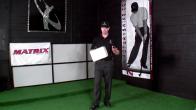
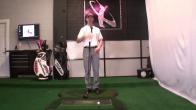
As usual, I'm Greg Morrow.
I will be your host for this evening's Q&A.
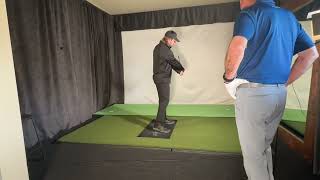
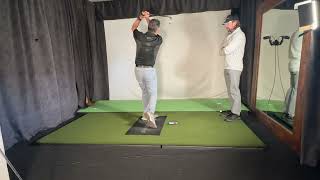
As you can tell, a little different scenario right here.
I got as much lighting as I possibly could.
This was as good as I could do.
I think it was two webinars ago I told you my office flooded.
And that's now in demo.
So I had to kind of scramble to find a place to shoot this where I could still swing and not have anything in the background, so to speak.
But that doesn't mean that I'm going to stay here.
I'm going to go back to mirror room because the mirror is your best friend when it comes to working on your golf swing.
I can't tell you how many people I yelled at about that today.
Just saying.
If you're not using a mirror, what are you doing?
Mirror or camera if you want to, but you need to watch yourself.
And I'm starting off on a rant because I had to put this together and I was answering a couple questions.
And if you're not looking at yourself, what are you doing?
Like literally, what are you doing?
I just got done yelling at somebody and as soon as they got, or as soon as this player gets in the mirror and they see what they're doing, They're going to have completely different feels.
Can't tell you how important it is.
Hey, Charles.
Hey, Dennis.
So as usual, per room rules, I'm going to sit up here for a couple minutes, let everybody fill in because I can see the ticker on my screen right here.
If I had a real fireplace and, you know.
The drink table or something.
I would have done a Phil Fireside chat, but this was thrown together at the last minute.
I'm still trying to figure out how I move that couch myself.
I'm really going to be paying the price for that tomorrow.
Hey Manny Ray, Michael.
Hey, hadn't seen Michael in a bit, Jeffrey, what is the best timing or method for hinging on the backswing?
It depends on if you're using the hinging part correctly.
Are you meaning when the trail wrist goes into extension?
Is that what you're meaning?
And the only reason I say that is because I had a student, this was like a month ago, he kept saying hinge, and I kept telling him the answer, and he's like, no, no, my hinging.
And I'm like, this is the hinge.
And what he was actually meaning was his radial and ulnar deviation, the cocking goes to the wrist.
So let me know, Jeffrey, and I'll answer that for you while we let everybody pile in there.
Wrists hinging at the initiation of the swing.
Well, at the initiation of the swing, you really don't want a whole bunch.
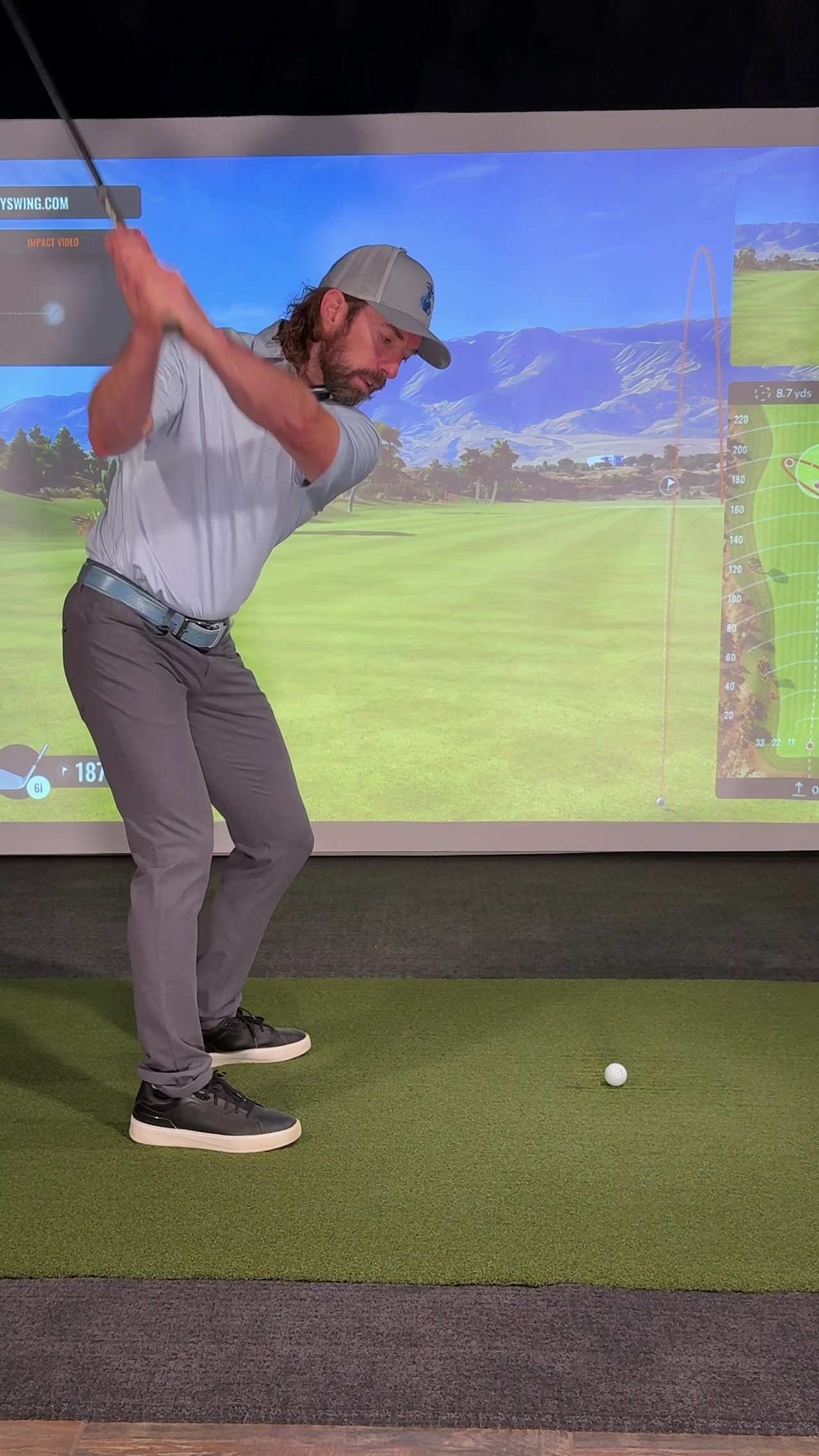
I mean, as I start to go back from right here, as I start to stretch and load into my trail side, my trail wrist is fairly neutral, doing nothing.
My lead wrist is staying in extension.
My trail wrist is in almost flexion over here.
And until I get to about right here, around lead arm parallel to the ground, I'm not going to really start to see some hinge.
Now, some players that lack some mobility and all that, you'll start to see their trail arm start to fold a little bit earlier or hinge start a little bit sooner just because of mobility.
But my wrist, I can show you right now.
As I'm going, I don't have my screen, so I've got this little tiny thing to look at.
So hopefully you can see me.
So as I'm going from here towards the top, you can see my trail wrist is doing relatively nothing.
And then I get to about lead arm parallel to the ground.
Now is where you're going to see that kind of flipping the coin over the shoulder look.
It really doesn't happen until right there at the top.
Because what you don't want is to get this early, because then you're going to load that trail wrist too soon.
You can see it's really shutting down my club face, which is going to typically lead to lifting and closing.
And then on the way down, you're going to do this or you're going to hang on for dear life and hopefully not hook it.
80-year-olds.
80 years young.
Manny, I was looking at my swing on camera today.
I noticed I was releasing the wrist and flipping as my hands passed my trail leg rather than my leg leg.
No forward shaft lane.
Make sure you're pivoting through, Manny.
I'll ask the class, what is the number one reason for the flip?
I've answered this three times today in swing reviews.
What is the number one reason for the flip?
I'll give you a hint.
What's the number one reason people flip it and don't release it?
He gave you the hint.
No answers?
Come on.
Y'all got to know this.
Some of you in this group, I know I yell at you on a daily basis.
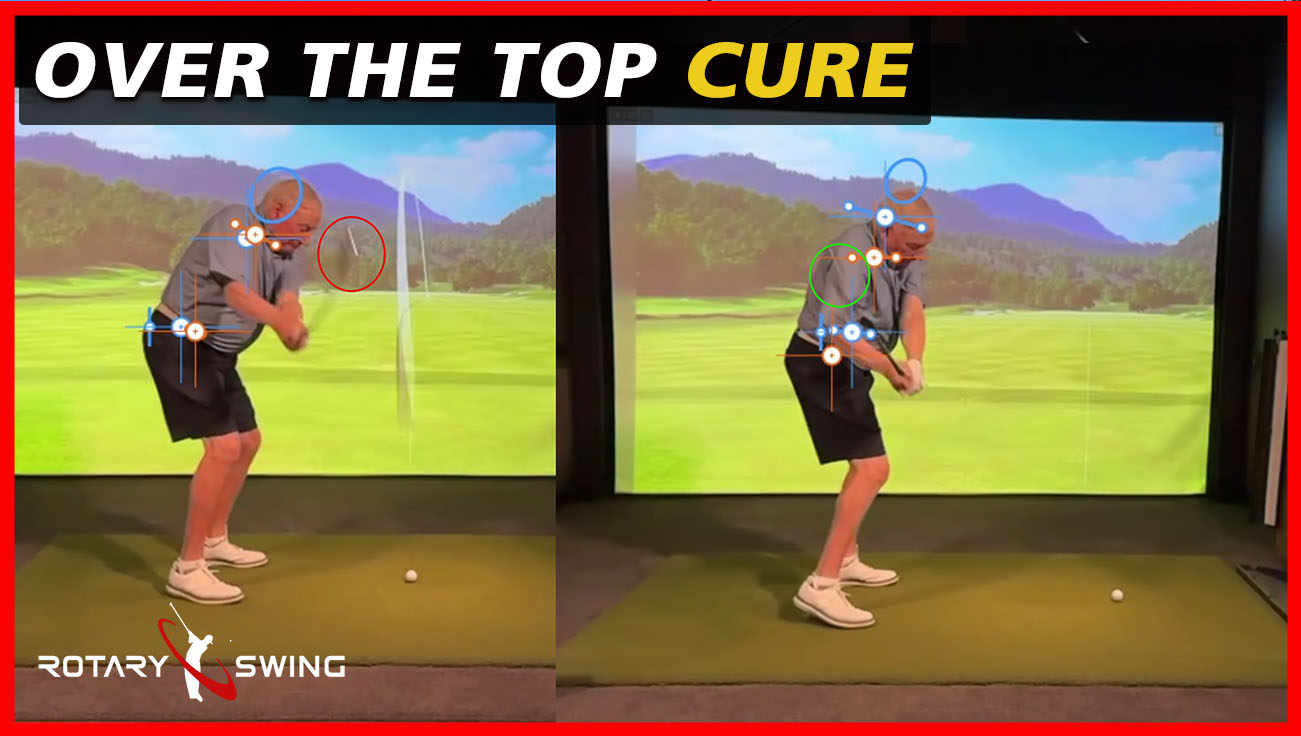
Manny, not opening body, shoulders, not rotating hips, body stops.
Okay.
So we got some great answers right there.
It's when the rotation stops.
All right.
So the number one reason why people flip is because they quit rotating.
Think about it.
If I start to go down.
And my body stalls.
All that energy is going to go somewhere, it's typically going to be me throwing my hands.
Now if I'm right here and think about if I'm supinating and I'm pivoting, how would that club be like this?
But if I right here and I stop, that energy is going to go somewhere.
So we got some smart, got some smart ones in the class today.
So what do All right, I'm going to give everybody one more minute and then we are going to get started.
Let me find my questions.
Got my questions right here.
Should have picked a different belt.
This one isn't working.
So I'm going to kind of have that Jim Furyk thing today, you know, where he's always like this so he doesn't mark up his pants.
Get a little fuel.
Still looking for that sponsorship.
I mean, at the rate that we're going, I mean, webinars are going to be hosted by Goaty here in the next month or two.
The smartest Goaty's getting with voice and all that.
Well, ticker's slowing down, so let's get going.
Huh?
Did that pop up?
What are your thoughts on Goaty?
My replacement?
I'll leave that at the end.
All right.
November, Wednesday night webinar.
Let's do it.
First question.
From GDP position on the downswing, the pit of the elbow pointing perpendicular to the target line of the club.
And so right here, everybody doesn't know GDP, right elbow pit face away, palm face away, in front of trail hip and the downswing club parallel to the ground.
What action delivers the club head to the ball?
What action delivers this to the ball?
Well, it was the argument that I had with the student today.
The trail side swing, for some reason, and it's probably our fault, they think it's a push.
All right.
So a lot of players actually think it's a pushing motion of your arm.
But remember, even a trail side swing, this is just a conduit.
Of transferring that energy.
I'm not trying to create the force by pushing my arm, so once I get down into this position right here, same thing as lead.
What's really triggering the release of this club right here, it's this spiral.
Coil up.
As you start to post, you're starting to pull the leverage from the ground.
The post up is what's triggering the snap of this club.
Okay, now this actually ties into the flip question earlier.
I see a lot of players flip because when they get to GDP, they start pushing instead of posting.
Now, especially if you've watched a lot of Chuck's current swings, you can kind of see how his core is really rotating through.
Players kind of took that a little bit out of bounds, and we all lived on different spectrums.
We work on our golf swings.
But the trigger is think about it this way.
I'm up.
I'm down.
And now as my core starts to go through, I'm posting up, pulling that leverage from the ground to get this to snap.
So don't try to push with your arm.
Push with your shoulder right here.
Get this puppy.
posted.
And that's why even if you look at long drivers, long drivers, you'll see they almost have this look where they bounce up and back.
They're getting into here and they're almost going this way because they're trying to get all that leverage, get the hip moving backwards to get that kind of spiral coil working up towards their core to snap that even harder.
So the trigger from GDP is getting that post.
Okay.
And I just saw that question, Ronald.
I think it's a week away for lefties.
Lefties won't be left out.
Don't worry.
The southpaws will rise again.
All right, so hopefully that answers your question.
You've got to post.
Kind of long-winded answer, but I wanted to cover all the bases.
Okay.
The posting up on the lead side leg.
that swings the head down or the release on the supinated trail form or should the lead side leg be posted at GDP so it all can release?
I'm thinking that might have been tied into the prior question, but it wasn't in that question.
So the posting up of the lead leg is what's going to trigger the release.
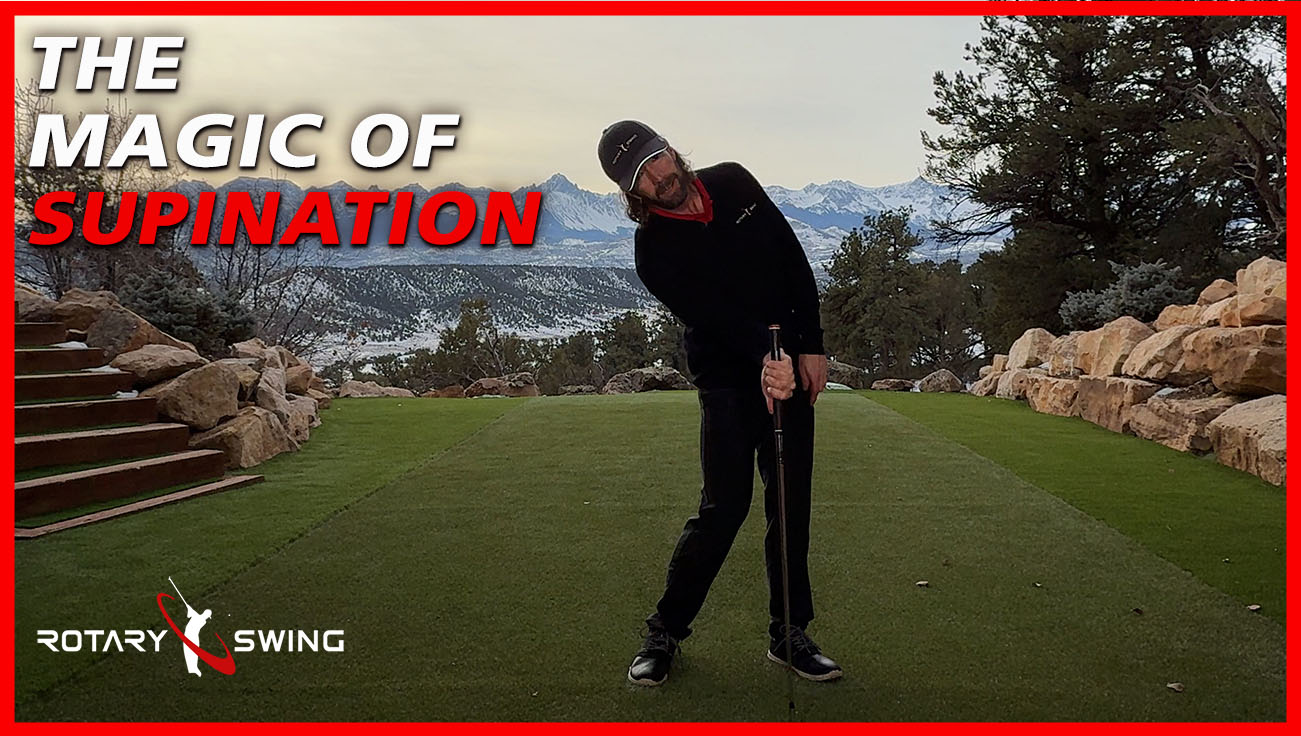
Now, when you think of the supination, you're going to get to a point where you can't do it anymore.
Okay.
It's the same thing like I showed in the last webinar and a couple other webinars.
I'm sitting here supinating like this.
I'm going to get to a point where this club is going to have to rotate back over.
Okay.
And that's going to kind of be the snap of the club.
And so what I'm trying to do is feel this supination.
All right.
It's a little bit on the extreme side, but some of y'all need to feel this.
And so I'm trying to feel that supination with the post.
So I'm supinating and I'm driving my core.
And you can see how as I'm doing that, I'm feeling this, that I'm driving my core.
You can see how much snap kind of whip that creates.
All right.
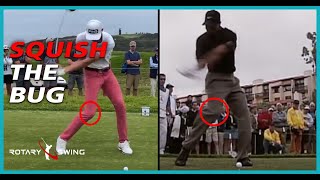
I think the throwing analogy, you know how Chuck talks about how, especially like when he's driving, he feels like he's throwing it this way as he's kind of squishing the bug right here.
That doesn't mean that we want you to cast.
That doesn't mean that I want you to try to put all the power in your hands.
There is some snap and you can add a little bit more force from there.
But what you're trying to do is feel this, okay, as I'm doing this.
And it's actually technically like this.
But I'm trying to feel this and posting and that's what's triggering.
The snap of the club.
That's going to be where we get all that release and all that fun stuff.
Is it a fact that better players normally have a flatter swing plane than high handicappers?
Why?
In what way do they swing differently or better?
I wouldn't say it's necessarily a fact about the flat swing.
There was a thing a long, long time ago saying that shorter golfers are better than taller golfers because they had a flatter swing plane.
They could swing more around their body.
It led to a lot of repeatability because there's not a whole bunch of elevation in the swing, but I wouldn't necessarily say it's a fact.
I mean, if you take a Fred Couples versus who's a shorter, an Ian Woosnam, 92 Masters, you've got a flatter round swing versus up and vertical, a little bit more J -releases.
There's pros and cons to both.
The flat swing, if you think about it, kind of like a wedge.
If I'm going to rotate here and I'm going to make a flat swing and rotate around my body, that can create a lot of consistency.
Think about like with a little wedge.
You don't have a whole lot of face rotation or anything, and you're just kind of letting your body dictate it, this little flat plane back and forth.
That creates a heck of a lot of consistency.
It just doesn't create that much juice.
it's the trade-off.
Higher, a little bit more elevation as you're loading in here.
You can make this a little bit more dynamic right here.
But when you start to get flattened a little bit around, well, A, you got to wait for the club to get back out in front.
B, You typically can't add a ton of face rotation or a ton of release because you have to wait for it to get back out in front.
Or you're going to be really fighting a two-way miss.
I wouldn't say it's necessarily a fact.
It's just easier because flatter swing planes tended to make the swing more rotational, more body release, but it takes away juice.
I've done every version of the golf swing.
Some of you all know me in this room, but I've rebuilt my swing five times.
I've literally done every version of the golf swing.
Even if you take RS1 before RST, That was a flatter, more around your body swing.
We had a little bit more depth.
We were a little bit flatter, a little bit more around the body, more kind of single plane-ish, but it's limiting.
Correct.
What is a good way to learn and train my lower half to lead the swing instead of my upper half and not heaving my upper half at the ball and beyond?
Yeah, that's tough.
There's a million different ways to do that, but it depends on which one clicks.
As us teachers, a lot of the times we're teaching kind of the same drill or the same problem, but it may be the ninth way that I've said it that clicks with the student.
So that can get a little dicey because what I say sometimes doesn't click.
So I try to use and rotate my core through the swing, and I end up finishing with my weight front and center, even on my front lead side.
Okay, so this is for y'all at home.
If I try to use and rotate my core, I end up finishing with my weight in the front center or even on the front of my lead side.
Now let's think about this logistically.
What is the only, if I'm sitting here rotating my core right now, how could I be on my front toe?
I mean, this is just my core rotating back and forth.
How could I be on my front toe?
I couldn't unless I wanted to fall over.
The only way you're ending up there is as you're trying to rotate your core, you're pushing from this side.
So you're more than likely activating the trail shoulder.
We're activating a little bit of early extension right here.
So you're pushing your trail hip towards the ball or you're pushing your trail shoulder.
That's what's going on by where you're finishing.
I need the best drill to engage the right move.
Well, I mean, the lift the foot drill, the weight shift drill where you're allowing your feet to lift so you can feel planting is really good.
The kettlebell swings, the medicine ball swings.
reading this note or this specific case, it sounds like you're using your core, but it also sounds like you're pushing.
And so when we think about not wanting to end up this way, players get caught up thinking that the right hip still has to be back.
And so they end up going this way.
And so this is what I mean.
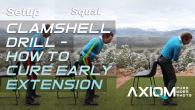
If we think about the old clamshell drill, or you think about the goat nine to three, where Chuck has you take the pylon and put it behind your left hip.
To me, that's still one of the best because it does two things for us.
All right.
And I'm going to see if I can find.
I'm going to grab this chair.
Give me two seconds.
Off camera.
Okay.
So players often mistake.
Come on.
Players often mistake.
how the hips work.
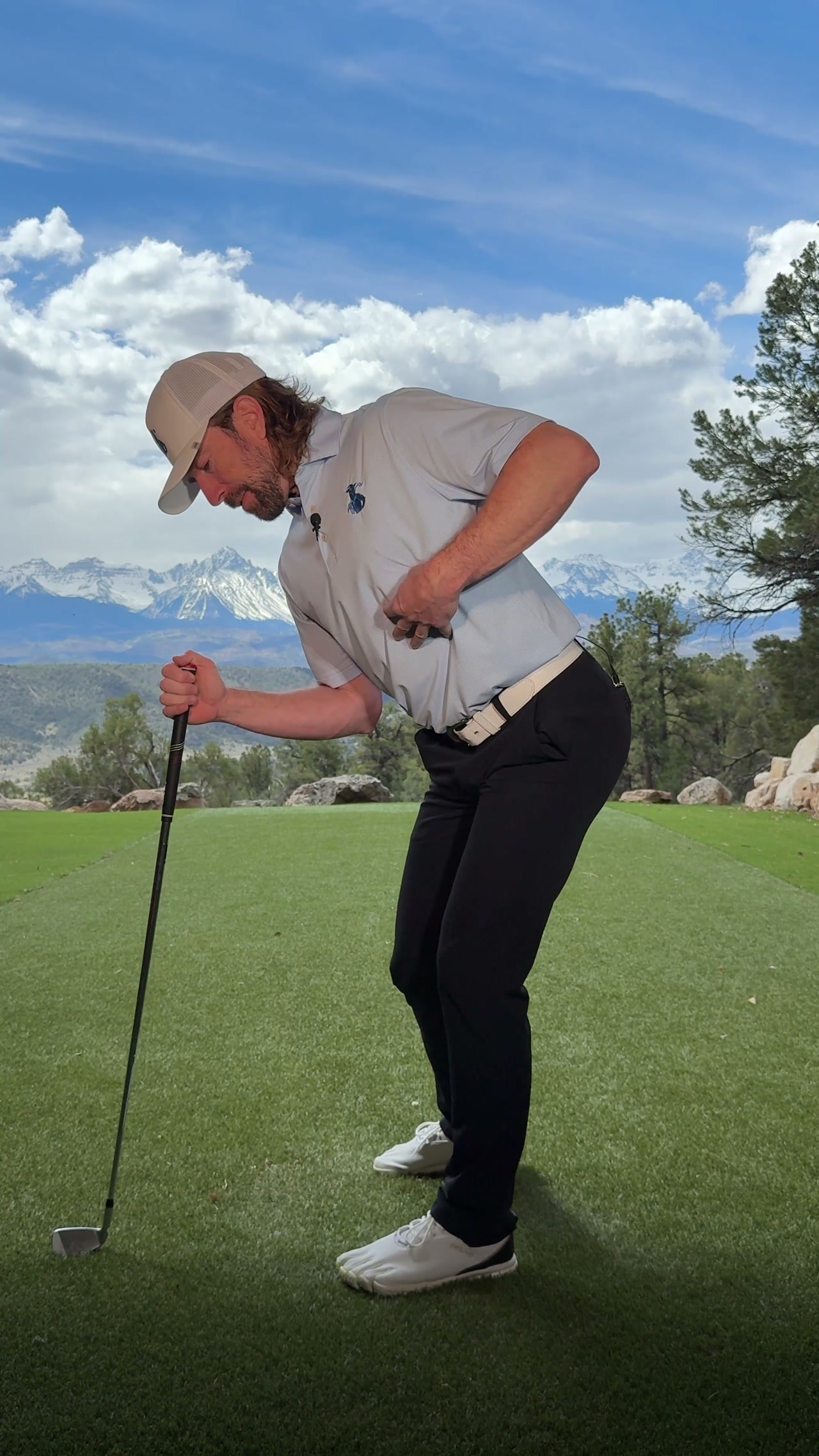
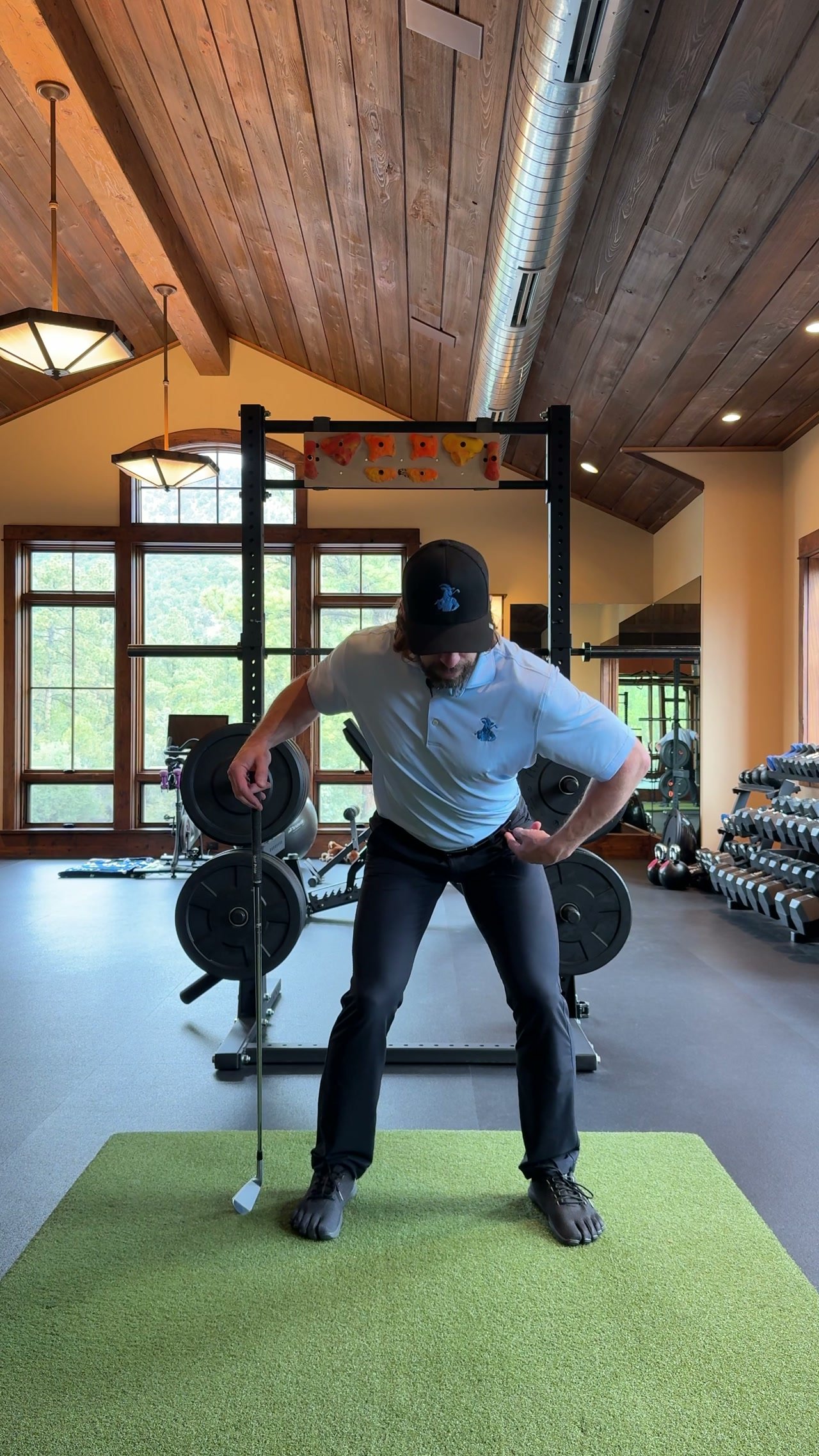
And so as I go back and I start to coil, my hip's going to get deeper.
My shoulder plane's going to rotate around, which is going to feel steeper for most players.
And I'm really going to start to open up this side and really get this kind of fascial stretch that Chuck talks about.
Now, once I start to trigger getting my pressure back and moving this way, players get so caught up in not really extending, that they typically start pushing and they just slide because they think that this hip can't come away.
Well, this left hip slash lead hip has to go that way.
So if I go here, here, where's my trail hip right now?
It's still not against this.
So the thing that I do more often than not for a player that's struggling with that is A, Get a foam roller, a chair, anything that gives you feedback.
Now my suggestion is put it that hand width apart right here.
Don't rest your butt on it.
That's the number one error I see when people are trying to fix their tush line.
They rest their butt on it and it's just gliding against it.
And so as soon as they get away from it and they're not gliding against it, they're still doing that.
Force yourself to.
Get it back.
Force yourself to get it back.
You've been hearing a lot with goatee and sternum drop and spine angles and all these things.
Force yourself to get it back.
Get it back.
For me, what I would do if I were you, I'd take your trail arm in hand.
I'd get one of these.
I'd go up here towards the top.
I'd start to shift my pressure back towards the lead side.
I'd feel my trail shoulder go straight down.
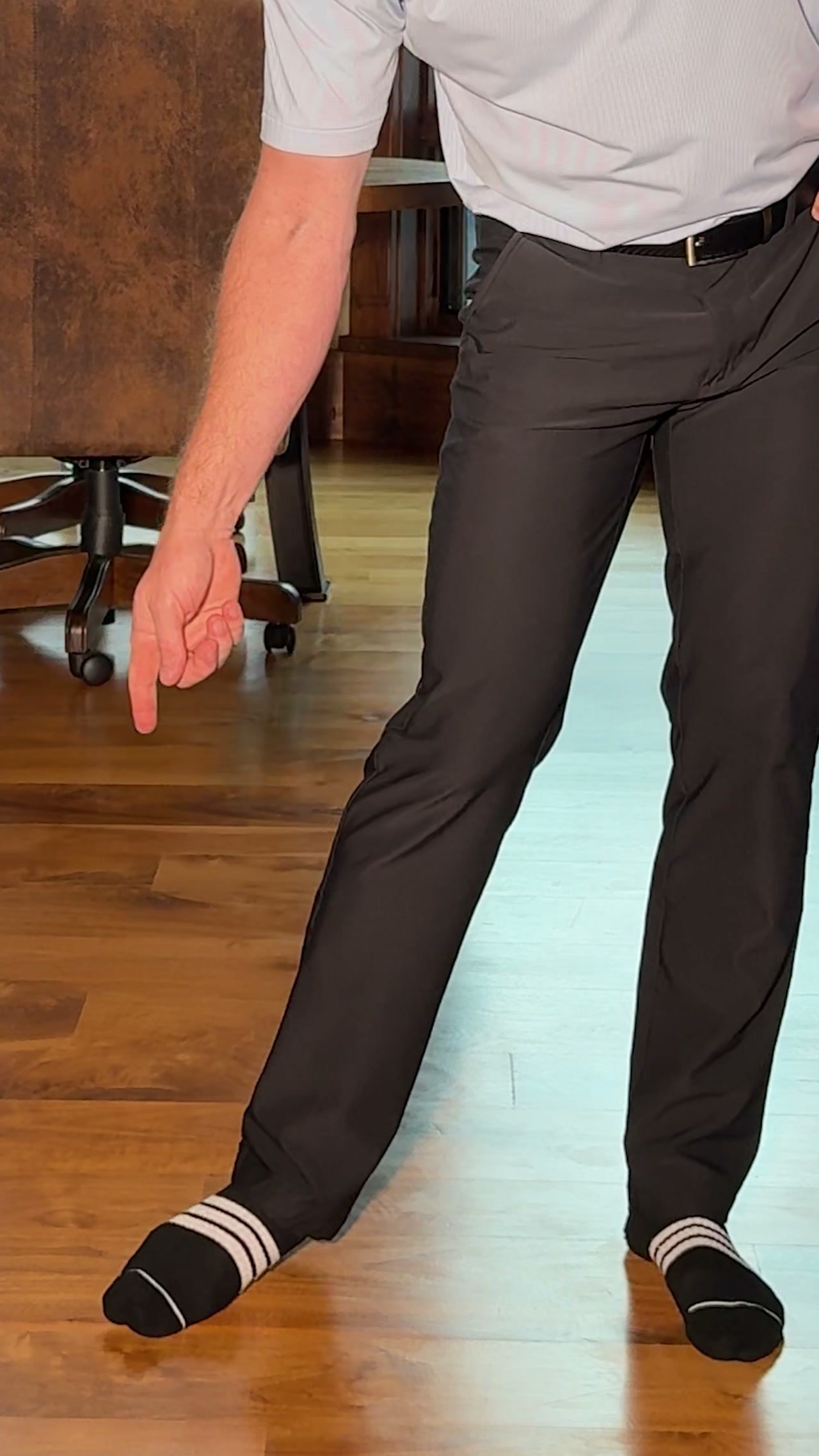
Towards my trail hip, and I drive my left hip right behind me, how, how?
I mean, even if you look at my foot right now, like, I can wiggle my left toe right now, or the front of my feet.
That's my best, at least for reading your case point of what I would do to get that fixed.
Because as soon as you start getting that left hip to work, It's going to be very odd to get this.
And then combine it with shoulder spin.
Why?
If I go up here and I start pushing from my trail side and I'm getting my increase in spine angle, and I'm getting my tush line.
And I try to spin at the same time, what's going to happen?
I'm going to fall over.
So the better you get that working, the more you're going to turn off your push.
All right.
I saw something on YouTube that made sense to me.
That's a bold statement.
But one it confirmed.
It has with the setup position of the right elbow.
In my case, I would say that the right elbow is pointing away from the left side of my body.
It's a more or less pronated position.
In this video, he wanted us to, especially if we come over the top, to have the right elbow pit pointing more towards the body, supinated.
It looked like starting from GDP, and that sounded like good advice.
I have not heard this specific advice before.
Maybe it helps go like downswing, starting set up, start of the backswing.
What do you say?
It's exactly the way that we set up.
Players tend to jump to lag videos or jump straight into chipping or jump straight into J release.
This position at setup, what he's referring to right here, with the elbow pit pointed away and the V, getting the pressure point in the right hand correctly, I can't tell you how important it is.
This is always.
You can see it's facing away from me, facing away from me, facing away from me, start to supinate, still facing away from me right here.
I never let this go here.
Now there is a little bit of a use case that as I start to let my trail shoulder rise a little bit in the backswing.
That a little bit of letting this elbow kind of fly out, a little bit's okay.
Which somebody might see that as being a little bit internal rotation instead of external rotation.
Because you don't want to lock it down and in like this, where it's kind of inverted because then you can't get the scap drop.
But that's why this point is so important.
Watch my elbow pit right here as I start to go here, see how.
It's always facing away from me now, it's facing up now as I start to come down.
Still facing away, still facing away, still facing away, still facing away.
It never goes this way.
That is the kiss of death in golf.
As soon as you start going this way, as soon as you do that, that's the kiss of death.
It raises the scapula, takes it away from the spine.
Now not only do you not have a conduit to transfer power from your spine through your arm, but you're also just going to use your arm.
Nothing you do with your body at that point is going to add any speed to the swing.
So it is vital to get that.
Now, having said that, I have seen a couple people on the forum and a couple people in the swing reviews where they've been taking this trail arm in this goat arm position, and they've been going like this.
And they've been taking their grip like this, where I'm so externally rotated right here that I'm locked out.
You can see how it's kind of like raising my shoulder right there.
And I can feel it right here.
Where it's kind of that old Hogan.
Like the rubber band's right here, but you're going like this.
Where you're squeezing the lifeblood to get your elbows so close together.
Now the scapula can't move correctly.
Not only is it uncomfortable, but the scapula can't move correctly.
Elbow pit facing away.
Not so externally rotated that you're jammed.
but not internally rotated where your elbow pit's pointing down the target line, okay?
So hopefully that should answer that.
I'm fighting a little bit of something, so I'm just trying to keep my throat hydrated a little bit.
I've been talking a lot lately.
Okay.
From the top.
Spinning the right arm down without losing the right wrist.
Aiming to match the arm speed with the body so we can maintain pressure on the shaft together, with face pressure and right wrist pressure controlling the ball flight.
Explain what's going on here in a more understandable way.
Even I'm confused right now.
Spinning the right arm down.
So I'm going to assume that means you're supinating, all right?
Spinning, and the reason I say this is the typical term for spinning the shaft on the way down is actually steepening So this would technically be spinning the shaft on the way down.
And that's what you want to do if you're a lead side player and you're under plane.
You want to try to spin the shaft on the way down to help zero out your plane a little bit.
So I'm going to take this as he's supinating without losing the right wrist.
Well, this is one thing that's very important.
The supination does what to the right wrist when it comes to losing the right wrist?
Well, you can see if I'm supinating, my extension's increasing, but it's also helping me take care of my radial deviation.
I think that's when we think about the lag and the angles that we need to have, the supinating.
As I'm moving laterally, even though if I'm trying to throw it from the top, the supinating is what's helping me maintain my radial deviation.
So what's going on here in a more understandable way?
Well, I'm supinating right here.
I'm starting to pivot.
My hand speed is still going to be initially higher at the start right here than down at the bottom.
Everything's not really working at the same rate in the golf swing.
I'm not trying to get my arm speed and my body speed the exact same.
I don't want my club head speed tied to the fact of how fast I can rotate.
I don't want that.
I want my club to be able to snap.
That's working.
essentially independently of me.
So I'm not really trying to tie that all together.
What I'm trying to do is I'm trying to feel the supination.
So it puts the pressure on that middle finger right there.
I can feel that little spot right there.
Okay.
And as I'm supinating, I can feel the pressure on that as I'm trying to pivot and drive my hips so that I can sling this into the ball.
Now that may seem like it's timing based or way out of control, But if you watch as I'm doing that, my club face really isn't doing a whole bunch.
Through this phase, the back is actually staying pretty darn square, it doesn't really snap until after.
So I'm guessing that's the only thing I got for that question.
Um, because you're not, you're not trying to make this like one.
And everything doesn't rotate or move at the same rate, Craig, can you please explain away what appears to be a major contradiction?
Uh -oh, I should have read these questions beforehand.
As I see in the whole GOAT code instruction template, I have heard it said many times by you and Chuck that the arms are not supposed to do anything.
The arms are not supposed to do anything.
But the whole system is predicated on first learning to use your right arm to swing the club.
Then there's the whole idea of supinating the club with the arms, hands, and wrist, something that's also dependent on the arms, at least to some extent.
So how then is it the arms don't do anything?
I just don't understand this contention.
Can you please address this for me?
Okay, so if you go from the putting, as you start to engage your core, and you're learning the putting stroke, all right, Right there, you're going to feel a little swing from your right arm as your core is directing it.
And then as we move into chipping right here, what you're trying to do, and I think that maybe this is a better way of thinking, you're not trying to use the arm for force.
Maybe that's a better context to put it in.
The arm isn't creating any speed.
The arm isn't creating any power.
What you're trying to do is get a link.
You have to have a link to something.
You don't want to just swing your arms and hands.
This is not what we want to do.
You need it to be linked to something so that you don't have to use it.
Like right now, this to me isn't using my right arm.
All right.
Because I'm not trying to apply any force.
I'm not trying to do anything with it.
So the whole system is predicated on first learning to use your right arm to swing the club.
And then there's the whole idea of supinating the club.
With the arms, hands and wrists, that's also dependent on the arms to some extent.
Yes, if you move in sequence correctly, a lot of this stuff does happen as a byproduct.
But using your arms, okay, wrist supinating, feeling the pressure right here.
What we're saying is that this is the conduit I might have to feel some supination to shallow out the club, all right?
But what I'm trying to do is I'm trying to minimize as much arm movement as possible.
And what I'm looking for is that when I'm pivoting my body and I'm coming down into here, I'm not trying to do something with I understand why you're saying this is because you're like, hey, you say don't do anything with my arms.
This is my interpretation of not doing anything with your arms.
I'm going to take my setup, and I'm not going to do anything with my arms.
That's literally a no-arm swing.
I'm literally not doing anything.
Now, that's still almost a pretty decent golf swing.
The wrist has to support the weight of the clubs.
The arms as I'm going up, as I'm making a scapula, has to support this plane working up.
So don't think about it as I'm trying to create the golf swing with my arms.
I'm trying to get my core and my engine to direct the motions.
Yes, I might have to feel a little supination.
Yes, I might have to feel a little bit of release of the club on the way through when I'm getting that snap.
You're just not trying to create force with the arms.
You're not trying to create power with the arms.
You're not trying to create positions with the arms.
This is allowing you, especially even the supination right here, is to follow the physics.
Now, does this really look like I'm using my arm?
Like right now, I'm literally just letting the weight of the club go this way.
All right, now I can push the button and make this a little bit more forceful with my hand.
What we're trying to do is to get you to focus on the big thing.
And the big thing is this.
The big thing is the engine.
Players don't use their body correctly, which forces them to overwork their arms in the swing.
Everybody overworks their arms.
And so what we're trying to do is say, hey, put all your focus on getting this stuff moving, and your arms and hands do very little.
So do they do absolutely nothing?
No.
But do they do this on a scale to this?
When you do it correctly?
Yes.
But the problem I see all day long is this.
Or I see.
Or I see this.
And that's because at some point in time, somebody starts trying to manufacture with their arms.
And what we're trying to do is get you to focus on what's actually moving so that the arms can do as little as humanly possible.
That's why even when Chuck says his feeling is this combined with this, that really isn't anything but suit.
I mean, I know that seems really, but I'm not really.
I'm kind of exaggerating silly right now, but I'm not trying to do something with them.
Okay.
So yes, the arms and hands have a role, but they're here on the scale of this for everything else.
And that's kind of the problem because everybody's focusing on where this club head is.
What am I doing with this?
What am I doing with this?
What I'm doing this, this, this, this, and their body isn't doing a darn thing.
versus a couple of you players know, I've got a few kids in my unlimited group.
I have one kid that the club is too heavy for him.
It's too heavy for him.
But he's about yay high, and he hits it 240, 230, 225.
He's not even double digits.
The club's too heavy for him.
He moves his head too much off the ball.
The club gets a little shot at the top.
But as soon as he gets there, he's not firing his arms.
He's not doing anything with him.
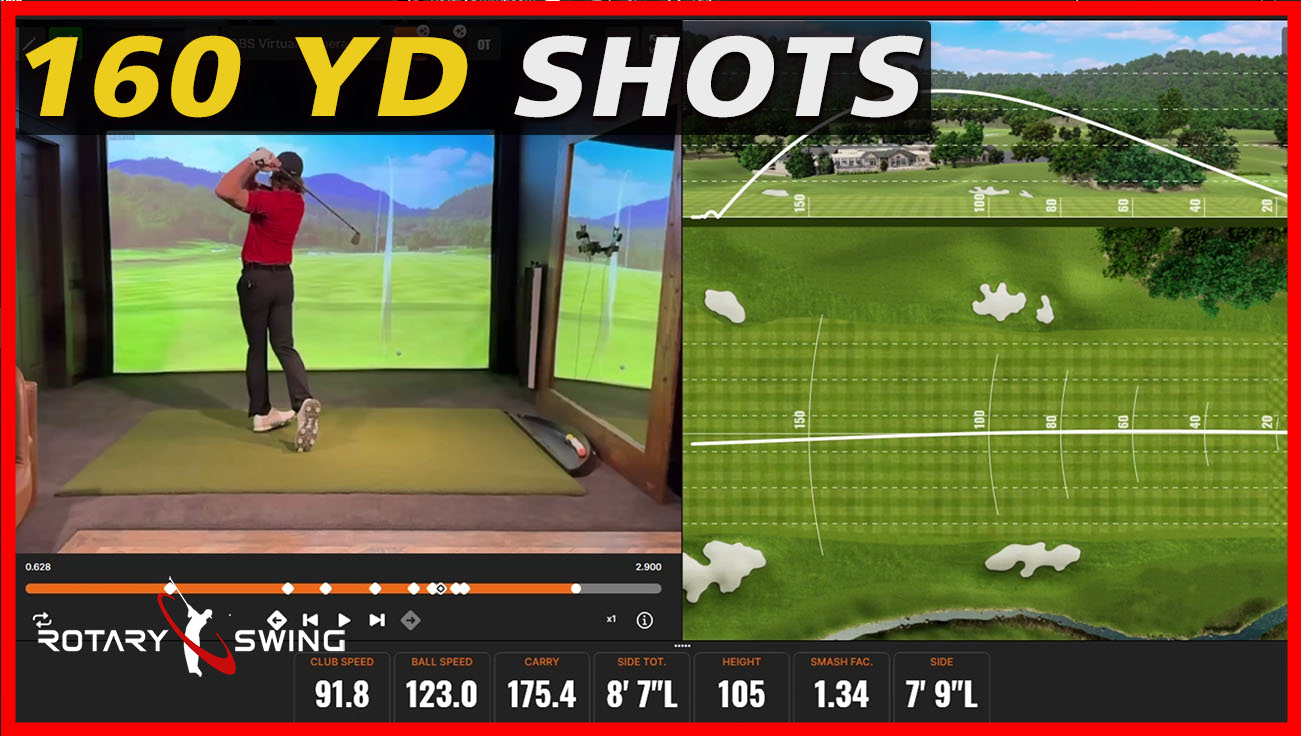
He gets here, and he does the 160 sequence video to a T, where he gets here, he pivots into here, he drives his trail side into this with his core, and snaps the hell out of the club.
He's not using his arms.
He's using his body, his core, his engine to generate all that speed.
That's what we're really saying, is stop trying to generate things with your arms.
Of course they have to do something, all right?
Hopefully that answers it.
And I know that people take things black and white.
I get it.
I'm not going to fault you on taking it black and white.
The arms aren't dead, but you're trying to get to the last possible, smallest inkling of them doing anything.
And the only way you can do that is by focusing on moving these.
Uh-oh.
I have a question about squishing the bug and using the trail leg to pivot.
I showed this technique to a local instructor recently, and he cautioned me about it because he said that it would lead to early extension.
Can you please address how does one squish the bug and not early extent?
Where direction are you squishing the bug?
If I'm going up here and I start driving my trail hip towards the ball, that's creating early extension.
If I'm driving my trail leg and trail knee squishing the bug this way, where's my hip go?
It's because of the direction that you're pushing.
This kind of push yields early extension, all right?
And that's why you won't see Chuck's foot or Tiger's foot.
They're not like this.
What direction are they?
I'm going this way.
I'm going this way.
So when I squish the bug, I'm driving this way.
Now, if you watch my trail hip right here as I do that, and I squish the bug, where's my left hip going?
Now, if I early extend, that's not squishing the bug.
That's an improper push.
When do you hold off the wrist arm rotation after impact, kind of hit it and hold?
I know like a 40, 50-yard shot when you need more accuracy, but what about shots from roughs in various distances?
I mean, you kind of answer your own question right there.
Typically, you're going to have more body release when you're trying to control spin for more accuracy, which is typically going to be in short shots.
Now, shots from roughs in various distances, that's going to kind of vary.
If you've got really thick rough, You may have to hack it out to get some pop on it.
But also, if you think about really thick rough from the U.
S.
Open, you might need to hold it a little bit to keep that toe or to keep that hosel from twisting on you down there.
So that's going to kind of be a use case scenario.
What situation are you in?
What about a 100-yard shot with a pitching wedge or a 9-iron?
Knock down shots into the wind.
Absolutely.
So when you're trying.
Let's just say to flight it.
What's the number one enemy when it comes to playing in the wind?
What's the number one enemy?
The number one enemy is spin.
The more spin you have, the more you're saying, all right, golf gods, be kind on me today.
Please be gentle.
So when you're trying to delete spin, yeah, using more.
Of holding this off, like you'll see in like the short game videos and all.
That will help you kind of control your spin better, because it'll help you control your trajectory better by knocking it down.
So that's kind of where I would put that.
If you need to control your spin, a knock down wedge, a knock down nine iron, knock down seven iron, you don't want to be getting down here and screaming a big snap release.
A big snap release and a squish the bug and all that is for juice.
Well, when I need to hit it about this high off the ground, and I got to fly at about 130 yards because I'm hitting into a 22-mile-an-hour wind, I don't want to be sitting here snapping my wrist and trying to fly over the wind.
Tried it.
Can't fly over the wind.
Doesn't work.
I want to get here, and I want to keep that nice, flat lead wrist.
And rotate and pivot my body through so I can knock it down and keep the spin off of it.
So the knockdown, I mean, it's essentially when you're trying to knock down the spin on it.
Gruff is going to be dependent, because if it's wispy and wiry as hell, you're going to probably need to put a little.
But sometimes you got to get in there and you've really got to throw the crap out of that club to pop it out of there, Craig, thanks for the recent webinars.
No problem.
My pleasure.
Hope you get something out of it.
Some questions for this week.
Last Wednesday, you spoke about your takeaway, getting your right hip back and shifting weight.
Very helpful because I don't think I ever loaded into the hip.
Can you go on from there to describe the rest of the takeaway towards the top with what's going on with the body?
As I start to stretch and load right here, so as I start to get deep right here in my shoulders and I get my little weight and I start to coil with my sternum turning this way, as I start to get just kind of beyond this parallel to the ground, what happens is I create this big line of tension right here.
And so as I start to get here, I get this big line of tension and you can see how my hips right now are already starting to shift towards the target because I can't pivot anymore.
I've already kind of maxed out.
And so what's happening is my sacrum back here and my pressure is already starting to get back into the lead side.
And this is what allows me to start to pivot quickly in my transition because I'm not waiting so long to get back to the lead side.
One of my biggest pet peeves is I'll watch players working on weight shift and they get here, get here, get here, get here.
And then they shift weight at the top.
Well, as soon as you shift weight at the top of your backswing, you're never going to get back in the downswing.
This has to be into it early.
As I start to load and stretch, I'm going to max out.
Then my pressure can easily shift back into the side to where now I can lead with my core driving down.
In addition, could you come closer to the camera and show all the wrist positions, supination, extension?
I know they would all make perfect sense, but when you don't know them, it takes a while to learn.
All right.
So the easiest way to think about it, all right, see if I can, I don't have my screen in here.
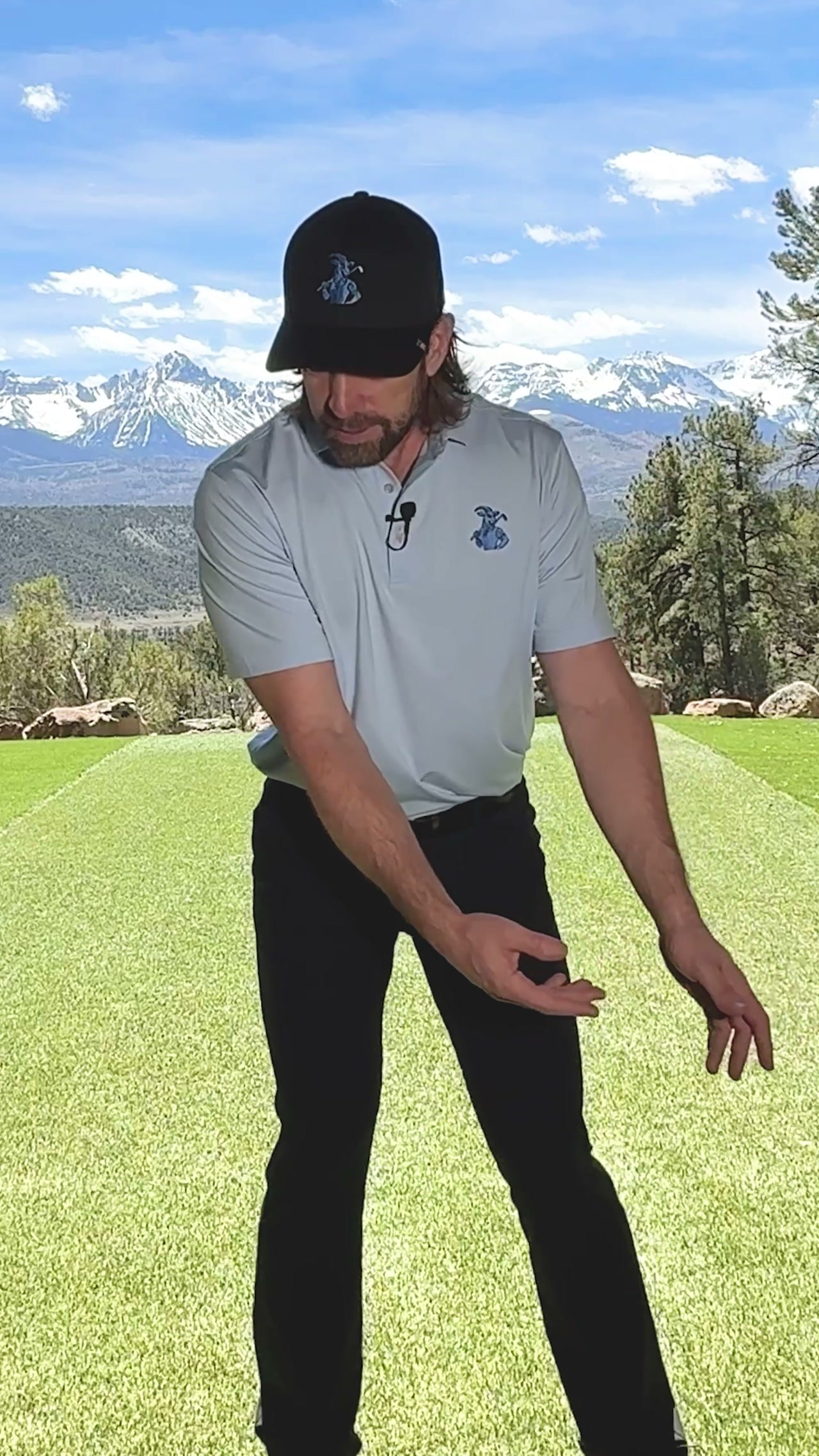
So extension, all right, is going to be cupping of the wrist.
All right.
So anytime you see cupping, hinging like this, this is extension.
Anytime you see bowing, this is going to be flexion.
Okay.
Flexion, flexion, extension, extension.
Supination.
For the trail-handed, trail-handed, right -handed golfer is going to be the clockwise motion.
So you'll see this is externally rotating, and it's kind of like the palms opening up towards the sky.
If I was the left-handed, it would be the same thing.
See how?
But that's counterclockwise.
So it's that external rotation palm going up towards the sky.
Owner deviation, radial deviation.
Okay.
Owner.
In addition, would you show how the clubface relates to each phase of the places in the takeaway?
Show how the clubface relates to each of the places.
The clubface does hardly anything in the takeaway.
So as I'm making my takeaway right here, and think about it, this is kind of an easy way to think about it.
What are my wrists doing in the takeaway?
Hardly anything.
So as I'm making my takeaway right here, And I'm starting to load and rotate.
The club face is literally doing nothing, all right, so by the time I'm right here, my hands are inside, essentially my club head's outside.
But since my wrist positions haven't changed, if I were to start to do this early, do this early.
Anything I do with my wrist.
Early on right here is going to change the relationship of my club face, which I don't want to do early on, I want that.
It's super quiet in here.
That's why sometimes players will say, like, feel it facing the golf ball so it keeps them from over-activating their wrist or anything like that.
But the big thing is the wrists do nothing right here, matching the spine angle as I start to load and rotate.
So you really shouldn't see a whole lot of change in anything in that club face.
When you get it to the top, I have trouble relating to what is closed or open.
It makes sense once you're in GDP, but it's hard for me to relate.
Okay, so that, I mean, this one's fairly simple.
My club, oh, I got a wall there.
So my club face right now is what?
My club face is closed, all right?
Because I'm in extension of my trail wrist, it's facing the sky.
This would be square, that would be open.
So if you have the one or two degrees of extension in your wrist, because you're going to lose a little bit as you get towards the top, the easiest way to think about it is this club face.
If it's kind of in this 45 degree angle of the face, that's square.
That's closed.
That's open.
So it's all about balancing this wrist right here.
Closed, square, open.
So hopefully that helps.
When doing depth, drop, extend, and pivot.
I'm not sure about the extend part.
How straight can it be?
Well, how straight?
Oh, okay.
So when I'm doing the drop and extend and pivot, I'm dropping and I'm extending.
So you can see my trail arm is straight, but it's not, I haven't pushed it out to where I'm, you know, kind of hyperextended right here.
Remember, as I move into the strike, I'm going to have to have some extension in this wrist and there's still going to be just a little bit in that right elbow.
So as I'm dropping and extending, it's just straight.
Just think about it like being naturally straight right here in the GDP.
Like that's the amount of angle that you want.
You don't want to get here, drop.
And extend where?
Now I've let go of everything and I don't have any angle, so you don't.
It's not pushed out, hyper extended, it's just naturally straight to where you have your angle right here, just don't go into hyper extension.
You can see that's not that much change.
Because as I do that and I drop, extend and pivot, I move into this position.
My spine angle is going to be increasing right here, so I'm going to have some bend right there.
So it's not perfectly like locked out straight.
Otherwise, is it recommended that the right arm is bent even at impact?
There's going to be a little bit.
If your right wrist has already lost all its extension and your right arm's straight before impact, you've already given up on all the potential speed you can have because you've already fired it.
There's not any way to transfer that.
Could it be completely straight as we pivot?
Or is it better to have a little bend?
Yeah, you have to have a little bit of bend.
So as you go from here, so as I'm going from GDP right here, dropping and extending, you can see my trail arm's pretty straight.
Now that would be dead straight.
That's a little bit of bend.
I need to have a little bit in there to be able to transfer that force.
If I've already gone like that into my pivot, I won't be able to transfer any force.
That doesn't happen until right after it.
Right after impact is where it's going to get that.
Craig, I see that rotary swing follows athletic motion golf on Instagram.
We talked to Mike and Sean.
All of us in the golf business, depending on where you are, but they delve into some stuff.
Is everything they say true about the golf swing or how much stock can we put in what they say?
Well, I don't know everything that they say.
They do have some good stuff.
They do really good with backing it by data.
You look at gears and you look at a lot of things they do.
So do they have some quality information?
Yes.
Would I say stick with rotary?
Yes.
If you have any questions on something they're doing there, if you want to see if you want to apply it to your swing, put it in the community and I'll tell you.
It sounded like they basically say that you should not supinate in the downswing, which I know contradicts what Rotary says.
More specifically, they say not to move the right elbow in at all in the downswing, which is part of the supination.
They say it should move straight down.
Kind of just talked about this drop.
Say it should move straight down and not be in front of the right hip but on the side.
Seems again contradictory to rotary swing.
Now this is an optical illusion.
So what I'm thinking that you're saying is what they talk about on the video is don't try to ever get your right arm in front of your right hip.
That's what I'm thinking that you're saying.
And we're not saying get your right arm across center line right here either.
When we're saying supination and get into this position right here, I'm not saying shove this across your chest to get it in front over here.
My arms and hands are in front of me right here, and I'm dropping, extending, and pivoting.
You can see they're still in front of me.
So as I'm dropping, extending, and pivoting, I'm right here in GDP.
Now, the supination portion, most players go like this.
If I move laterally and I start to throw from the top, I can show you Tiger.
I can show you every single player on the planet.
This shaft has to go down like this.
Nobody goes like this.
And so the feel of that is supination, the throwing pattern, whatever you want to call it.
So I don't know the exact video or what they're talking about in terms of that.
But do you want to get up here and loop your club under?
You don't want to do that.
But if this whole thing is a unit right here as I'm doing that, because what we're trying to do and what we're trying to say is never come down and try to go like this.
You should never be trying to square it.
But they're also saying the same thing, is that when you get up here, the arms and hands drop like this.
Well, am I supinated right now?
I look pretty darn supinated.
So it's all kind of tomato-tomato of how you're saying it, how you're interpreting information, how you're feeling it.
They also say when you shift your pressure over in the downswing that you don't do it by pushing with your right foot to get it over, which again is what I understand you're supposed to do based on rotary swing videos.
No, it's exactly what I showed you.
As I'm sitting here loading and stretching and coiling, I'm going to get to a point of max where this pressure is automatically shifting.
I'm not trying to get here and push my pressure over with my foot this way.
I think a lot of people thought that from squish the bug.
All right.
I'm driving with my core and trail side.
So as I'm making this backswing motion right here, this motion back into the lead side isn't because I'm trying to get here and now push my pressure over.
My pressure is going to already be there because think about the old four pressure shifts video that we have on the side.
I'm exaggerating.
Here, I go into extension.
Where's my pressure right now?
I can tell you right now, it ain't on my right leg.
I'm using my trail side and core to speed up my hips.
I'm not using any push to try to shift my pressure over there.
Okay.
And this is kind of, you know, just where things get kind of mixed up on the lines.
I'm not trying to push my pressure over to this side.
I'm trying to get my coil.
To where?
Now?
See how I'm not having to think about this.
So it's not me trying to get here and then launch and push off this side to shift my pressure.
So they have the same force plate data we have, we all see the same thing.
Is it okay to add a little late hit through impact?
If so, what is the proper movement?
Does it feel like a slap through the ball, trail wrist flexion, or add a little pro flip to rotate?
You can.
I'm not saying do it on everyone and single your shots.
But, I mean, if you're working down here, you can add a little bit of manual.
If you're doing all this other stuff.
You can snap it a little bit more down there if you want.
I'm not saying do it, but you can.
It's just going to, you're bringing in, now you're bringing in a little bit of timing because now you're manually adding a little bit of pushing force down there.
So can you add a little bit of late hit down there?
Yeah.
I'm not going to say I've never done that.
I'm not saying I do it on every single shot.
I want, for me, I'm a lazy man golfer.
I'm gonna just hit it kind of, I mean, I already do, kind of.
Just hit it straight and boring.
that's what I want to do.
I just want to hit it straight and boring.
Let the club release itself.
I've got to add a little bit of something to it then.
Yeah, you can add a little bit, but you got to be better.
Know what you're doing when you do that, but that's the same thing as what you know.
Like, when Chuck talks about, okay, so he's hitting the button and he's throwing it away from when he's driving and as he works down.
Letting this thing snap, coming through the snap, should be more of a byproduct than a.
And you having to force that.
But it's the same thing like throwing a ball.
I can get here and I can release it.
Or I can get here and I can add just that tiniest little bit at the end right there.
Now I've lost my position.
But I never learned to read.
So we're doing pretty good.
I was wondering if you could talk about pace and tempo as it relates to increasing for distance.
For instance, Chuck says in the 160-yard shots with an 8-iron, Chuck increases distance by swinging faster, but he maintains a sequence.
I'm assuming here that the tempo is faster.
Is there a thought process to make sure things don't break down, or is it a matter of having clean technique than practice, practice, practice?
It's both.
All right.
Chuck put out a video on Instagram today where he's hitting a five iron, and it literally looks like he's in molasses.
Like, it literally looks like.
But the club's screaming, and that's just because the swing's just much more efficient, all right?
Because the way he's stretching and how everything's snapping, it doesn't look like he's doing a whole lot, but the club is screaming, and he looks kind of boring.
It looks like he's swinging and serve.
But to that point.
I still think this is kind of like the snapping analogy.
Okay, let me get this.
Now that I can do this, and I'm doing it without thought and it's not breaking down, it's happening every single time.
So I can get here and I can move through, I can stretch my fascia, get short stretch, all the mechanical stuff.
Let's take that out.
All right, I got my swing efficient.
So let's go 160.
I'm right here.
I got my hip driving my core.
So I'm right here driving my core and I'm getting good snap.
Or I can get, like I can move through.
I can make this pace faster.
I can stretch these and get them to react faster.
So it is, A, about getting it correctly done first, your sequence, your movement.
And then it's about speeding them up, making them a little bit more dynamic.
And then once you get really good at actually feeling how you're stretching and rebound, They didn't kind of go even a little bit more to the chuck territory now, to where?
Now you can feel how these things kind of snap on their own.
So they really look like they're not doing anything as the club that's screaming.
So, yeah, it's practice, clean technique, then do It's kind of like for me.
I hit the crap out of the golf ball, but I couldn't hit a fairway.
Okay.
Let's learn how to hit fairway.
Then we'll put some speed back in it.
I want to ask about tension.
Where in your body do you feel tension?
Mostly in my brain.
Where shouldn't you feel tension?
Well, I think one of the big things, like, you know, we can go all the way back to, like, the homoculus model and talk about, like, where your sensitivities and all that are.
But the big thing that you're looking for right here.
I'm going to have the feel and the pressure in my hands.
I'm giving my brain a little feedback of what's going on.
I need that right here.
And what I'm trying to do is I'm trying to kind of be ready right here.
My core is engaged, but I'm not trying to start my golf swing.
I'm trying to make sure that my core is ready to work.
And so what I'm going to feel as I start to go back, I'm going to feel my core stretching.
I'm going to feel my quads, my glutes, everything stretching in here.
I typically.
If we think about the old RST model, this is kind of where my tension is.
I really don't have a whole lot of tension in my shoulders.
I don't want it there.
I typically don't have a whole lot of tension other than in this box area right here.
My core and quads and glutes right here.
That's typically where I have my tension.
I really don't want it anywhere else.
I've got my hands in there.
I don't really want it in my neck.
I really don't want it in my shoulders because I really want this.
directing it.
I want my core and my body directing it.
So I'm getting here and I'm getting ready to stretch and load that.
If you start feeling tension, like a ton of tension in your shoulders and in your neck and your arms, that's bad.
If you're feeling a lot of tension in those areas, we need to have a chitchat.
I know I'm running out of time, but I only have two more questions.
So let's fire them out.
When you grip the club and apply pressure, To your middle trail hand finger.
Does that put pressure on the lead hand thumb?
because that's what I feel?
does that put pressure on the lead hand thumb?
Not, not for me.
I've got my trail hand right here, I've gotten my goat grip right here.
my my lead thumb's pretty loose.
I mean, I feel this kind of, you know, covering right here, if you're if you're getting that, what I just by experimenting with this right here.
I'm not saying this is the answer.
I'm trying to feel what you're feeling.
Just by doing what I did right there, if I get the goat grip and I start to push this down on it, that puts me too much pressure.
But when I take my goat grip, my trail arm and hand's like this, my elbow pit's pointed away, and I'm kind of curling under right there and getting that pressure.
So I really don't feel it's in that kind of cradle.
I really don't feel a ton of pressure on my thumb as I'm doing that.
So that might be that when you're turning it like this.
When you get it on, you might be pushing down on it like this.
That's putting a ton more pressure on your thumb than it needs to be.
Please provide a brief review of the similarities and differences between goat, putting, chipping, pitching, and full swing, such as arms do nothing, core driven, wrist hinge prep.
That's a loaded question.
A brief review of the similarities between goat, putting, chipping, pitching, and full swing.
Well, first thing is the core is involved in all of them.
So I'm putting, my core is engaged so I can get this to swing correctly.
Same thing with chipping, same thing with pitching, same thing with nine to three full swing is that I'm trying to get this.
To be the director of the show.
The arms still kind of do nothing in that.
It is supporting the weight of the club.
And I get to a full swing.
I may have to feel a little bit of supination.
But on all of them, on all of them, whether it be putting, chipping, pitching, I'm never trying to make this happen with my arm.
If I'm chipping, I'm keeping the face stable, I'm keeping some pressure in my hand.
As it gets a little bigger and I want to get a little bit more snap, I'm still feeling the same thing.
And because I'm driving, now I'm allowing this snap to happen.
So I'm letting it snap.
I'm not forcing it.
Wrist hinge, pressure shift.
There's more wrist hinge than a pitch because of what you're trying to create.
But the pitch is kind of the anomaly of the bunch.
There's not really that much wrist hinge in the golf swing.
Okay, there's not that much going on.
But the pitching is the only one where you start to add a little bit more.
Because you've got to get the club working vertically.
And you want that to match your spine angle a little bit more going back.
So minus pitching, the hinge really, there's not really a whole bunch going on right there.
Pressure shift.
You're not doing anything on your trail leg, everything's got to be going this way.
I mean, because that's, you know, when you're chipping right here.
You don't want a big weight shift this, you don't want a ton of extra lateral motion this way.
When you're pitching, you want a little bit more of the hip going this way, but you don't.
You're not really getting deep into your trail side.
So, Maybe a better way of thinking about that is as your stance gets wider and you start to hit it further and you want to make bigger swings, you're going to start getting deeper into your trail side because the more you start using dynamic pressure shifting is going to be for power.
And in short game, you don't need power.
So they're all into the same.
Differences between goat putting.
I think that kind of covers it.
I think that kind of covers it.
I mean, think about simplicity.
I'll leave you with this, and I'll come to the screen for a second.
Think about simplicity.
What we're trying to do from the putting to the chipping to the pitching to the 9 -3 to the 9-3 with a little release to the full swing.
We're trying to get this being the driver to your car and the trail.
Arm and hand.
Doing as little as possible, and with as little as needs to be.
With the face changing squareness and jumping in and out of positions and planes.
So you're literally just learning how to get this being a unit with your body, then making it a little bit more dynamic, a little bit bigger, a little bit more dynamic.
As you can see, it's not really changing.
And now I'm already at a full swing.
I haven't really done anything.
I've just made it a little bit more dynamic, dynamic, and then I start to support a little bit of the weight of the club.
So hopefully that answers a little bit of what's going on there.
So I know we're over time.
My apologies.
No, I'm not in focus right now.
My apologies, but I want to thank you for spending Wednesday night webinar with me.
As we head into the fall, if you want, I'm going to put on the screen right now.
As we head into the fall, I do this every year.
I'm going to do another half off my unlimited.
If you want to join, get in there.
Half off this month, I'll probably do this one and the next one.
I try to do it in the fall because that's when people really start working on their golf swing.
I'd love to have you in my group if you want to come join.
If you like to yell that, I'm the perfect person.
So I'm going to put that on the screen right now.
Thank you.
For everybody that joined, I'm going to come answer a couple of questions as I typically do for people that are new to this webinar.
Typically at the end, last five, 10 minutes, I try to answer a couple of questions as much as I can before I have to go.
So I'm going to go do that right now.
And I appreciate it.
I hope you learned something.
I hope you get something out of this.
I hope the lighting was okay.
My screen's a little dark right here, so I can't tell.
So hopefully the lighting was okay.
And thanks for stopping by.
We will do this again.
Please.
If you have questions, go to the community and put them in.
If I don't get any questions, like this time I had a, that's why we ran over time, because I had a whole boatload of questions.
Throw them in there.
Ask me before you ask Godie, all right?
Because, you know, Godie's going to be telling you all sorts of things.
All right.
You're welcome, Mary, Tim.
Standing, writing is fine.
Gracias.
Thank you, Peter.
I appreciate it.
I appreciate everybody giving me a chance.
I really do.
I mean, this is.
Golf is golf is tough.
So I know you all want the answers and all of that, Kevin.
And I can't say that.
You know that, Kevin.
David, you're welcome.
All right.
So does anybody have any questions?
I'm going to go back, Steve.
You're welcome.
It really means the world to me.
Mark, I'll come back.
I know there's a couple ones up here.
All right.
Hey, Mark, I'm going to come back to you.
I'm going to try to get these four real fast.
Tom Lord, in the Goat Code Speed webinar, Chuck says, to initiate the downswing, you squish the bug.
In the 4-8 goat power sequence, he says, initiate with a lateral shift to the target, which is correct, both.
The speed webinar, when you're going for stinking, nasty speed, you've got to get those hips going.
So that movement's going to be pretty fast.
So as I'm doing that in the squish the bug, that movement that he's talking about, that's, but I still got to move laterally right here.
I'm not doing that off my back foot.
I've already moved my pressure right here where I'm driving hard from this side.
So think about squish the bug is for juice.
Both are the same in essence.
Squish the bug should give the lateral.
You're already going to be shifting over there.
So yes, Miles.
Can you show the sternum drop in the downswing so we can explode up into impact?
Goaty has me confused.
Goaty has me confused all the time.
Sternum drop.
Essentially, as I'm going from here and I.
I'm lowering.
I'm not diving my head towards the golf ball.
Think about it.
As I load into my lead side, what's happening to my spine angle?
It's dropping.
So look at my.
Watch.
This isn't my sternum, but it's close enough.
Watch my microphone right here.
Where's it going?
It's dropping.
Sternum drop right here.
My spine is increasing.
All right.
I forgot to put that link on the screen, so let me throw it up there right there.
All right.
Lee, they literally said that the elbow is always to the right of the hip marker.
Yeah, and so that's why when we talk about that, Lee, with that right elbow getting up there, it's okay and go as the trail shoulder goes this way to have your right this way.
But when you start to pivot and move.
This is, think about GDP right here.
This is why this is kind of an optical illusion.
We're not saying be in GDP dead square and have your arm in front of this.
That's not the positioning.
The positioning is as I get here, look at how I pivoted.
So my arm, if I were to wind back right now and get back to square, where's my arm?
Exactly where they say it is, on the side.
But I'm not square at this position.
My arm is still in front of me, right?
This is the same RST that you know, and this is the same thing that they say, all right?
When they look at the gears and all that, everybody has different levels of this.
My arm is still on my side right here.
Look at where I'm pivoted here.
If I were square, that's what you're saying.
That's what you're saying.
But when I'm at GDP, I'm not perfectly square.
Chuck has also said in the video that we use pressure on the inside of the right foot to help get it.
You can.
Not that it pushes it over there on its own.
However, they said that you shouldn't use it at all.
That's when you're trying to get power.
Don't think of it.
You're not trying to use your foot.
As I think of old Axiom.
Axiom, I'm going around the foot, and as my pressure goes to my heel of my foot, where does my pressure go?
It goes to the inside of my foot, which now my pressure is now back on the lead side.
Now, I can speed up that pressure shift by squishing the bug or driving my trail foot.
Don't try to use this to shift your weight.
It's still coming from that force of movement from the trail side right there.
Steve, what is the best way to stop overswinging?
I literally have a great top position than go too far.
Lift lead foot, shaft gets parallel.
What's a good thought or feel to limit this?
You got to coil correctly.
Two things that I would do, Steve.
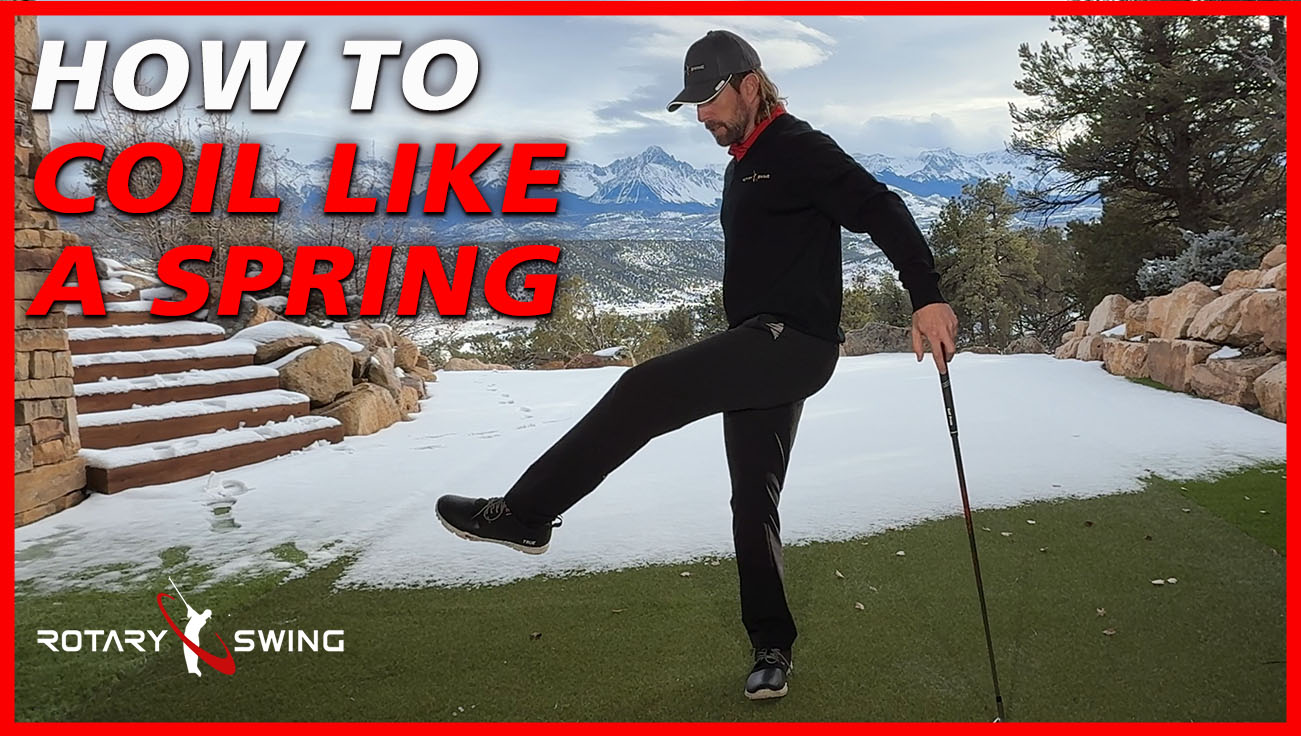
Go to the how to coil around trail leg to start feeling the stretch and getting deep and feeling loaded and coiled.
Get the body feel first.
Then you can go to the stop overswing video and you can combine that same thing with the straight trail orb.
You'll never over-sweak.
You physically won't be able to move.
Thank you, Charles.
I appreciate that if you're still in here.
Mark.
All right, Mark, I'm back at you.
How is it possible that my right hand doesn't apply any pressure to my left thumb?
I'm not saying that it doesn't.
but the way that the notes sounded sounded like you're applying like so much pressure that it was making the thumb want to do something.
When I'm in that cradle right there, there's pressure right there for sure.
The way I was reading the question is that it's putting excess pressure that it's making it do something you don't want it to do.
So when it's right here, there is pressure there, but it's not giving it directives or making it not want to do how the thumb works.
That's how I read that question, so if that's not what it was, my apologies.
Michael, every time I understand more, that's awesome, bud.
You did really good in that last review.
Let's keep that going.
Just watching your body movement, hand and wrist movements is very important.
Well, thank you, Tom.
I appreciate that.
The one thing that I always get in human lessons and everything, and I think I said this in the last webinar, is always my feet.
I don't know why, but I can't dance.
But it's always my feet.
They're like, Craig, your feet are always looking like you're just ready.
So you can make things kind of happen.
And I think players have a tendency to get boom, boom, where they're wearing these like lead boots and they're like, ugh, ugh.
And I'm always like, you know, float like a butterfly, sting like a bee.
It might be all the caffeine.
But I'm ready to go.
If I want to throw a punch, I'm ready.
I need these things to go.
I never want to get stagnant.
I never want to get quiet.
If we think of Beth Page, not the Ryder Cup, Sergio, when he was milking the cow with his grip, and he was just stuck and stuck and stuck, I'd be like, all right, let me just shake it out, get it moving, go.
Like, pull the trigger.
Like, always kind of be alive, be ready.
Let's see.
Any drill to stop lifting my head during the backswing?
Why are you lifting your head during the backswing?
There's a lot of different reasons, and that's tough.
There's a lot of different reasons why you could be lifting your head.
So you could be lifting your head because you're not coiling correctly.
So your trail leg straightening and you're not getting coiled into this glute.
So you're not getting stretched and deep.
Because if anything, if I start to get deeper, think about it this way.
If my trail hip gets deeper, where's my head going?
It's going down.
Another thing is, is when you get here, if you stop rotating and heave up your arms, your shoulders are going to raise your head and cause you to come up.
There's a lot of different other ones too.
So this is what I would say.
The first thing that I would focus on, I'd go, just as I told the other gentlemen, go to the how to coil around the trail leg and start feeling getting really deep into your right hip or your trail hip if you're left.
Get deep into your trail hip, all right?
You'll start to feel this engaged.
If anything, you're going to maintain the spine and then start to get the arms to behave as you really get this good.
kind of deep stretch right there.
I'd focus on that first.
If it's not that, and you're like, Craig, I'm doing this, but then I'm lifting, then as you're going into extension, you're trying to do it with your arms versus the coil.
So you're trying to lift your arms, which is putting your spine into extension, lifting your head, putting too much tension in the shoulders, upper half.
Mark, I'll make a video for you.
You know I'll answer it.
I just got to make sure I know what I'm talking about.
I got to not know what I'm talking about, but know the question.
Stanley, thanks.
Another very educational session.
I appreciate that.
David, thank you.
You're always welcome.
All right, is that it?
Nobody's got anything else?
Nothing else?
Nothing?
Nothing for the.
The not goat?
I mean, December's webinar might be hosted by Goaty.
You never know.
I'm getting too old.
Anybody been playing any golf lately?
I know I haven't.
Shane.
Gerald, thanks at always.
Yeah, you too, my friend.
I hope all is well.
Can you talk about ripping the towel feel with your lower body in the backswing and then in the downswing?
I'm confused as which direction I'm ripping this towel is recommended to me in my review.
Anthony, are you in here?
I don't know if Anthony's in here.
I'd have to direct that to Anthony because the ripping the towel feel with the lower half.
I could take that a couple different ways.
I didn't do that review.
Ripping the towel.
I'm confused which direction I'm ripping the towel.
Well, let me see if I can answer that, even though I'm not exactly sure where Anthony's going with that.
As I'm coiling in the backswing, it's internal femur rotation right here.
what players tend to do wrong is they get externally rotated.
So they start to rotate this way, which really isn't loading the hip and it's causing the hip to rotate this way.
And so I'm not really kind of creating any torque right here.
And what I want to feel is almost as if it's this internal femur.
So it's almost like it's rotating inwards this way.
Okay.
I don't want to rotate outwards.
So I'm not going this way.
It's more this is going internally.
So it feels like my trail leg is going this way as my hips going that way.
All right.
So it's kind of confusing.
We actually are going to have a really good video talking about loading and coiling it right there.
But hopefully that anything I'm preventing psoas strain.
Let me get back to you on that, Steve.
Let me think about that one.
To me, the video of how the goats use the hands is the best understanding how to coil and stretch the fat.
Yeah.
I mean, that's kind of my light on the feet thing.
I'm not going to disagree with you on that.
Because if you were to get to here and you're just like, okay, I can create whip like that.
How would I get more?
Well, let me.
Stretch a little bit.
Let me get a little bit more wine with it.
Okay, now I feel how I can rebound a little bit with this and snap.
So, yeah, I agree.
The release is what changed my life.
Lee, I'll finish off with this one.
If done to where the towel under the arms drill has the towel very high in the armpit, is that a good drill?
Or not one we should ever be doing?
I mean, I'm going to tell you my opinion.
I hate the towel drill.
The towel drill to me goes back to the question earlier.
All right.
Now, is there a place in time for it?
Yes.
There's nothing wrong with the towel drill if you understand what you're trying to achieve with it.
But the towel, it goes to what Tom was just saying right there about understanding the hands and the stretching of the fascia.
What I see more often than not is that players get this tucked here and then they leave their arms like the T-Rex and never let them go anywhere.
But nobody, you need elevation in the swing.
If you want to have power, all right, you need a little bit of elevation can help, especially as we get older.
Having it a little bit tucked up under here, that's not going to hurt you.
But what I see more often than not is that people glue their bicep because they sense that.
So a tiny bit, right, that's not the worst thing in the world, but I don't, I just, every time I've seen a player to do it.
Because remember, I kind of have to go off my own experiences.
Every time I've seen a player do it, they've broken it.
Like they've done something and I'm like, I don't really like that.
So can you technically?
Yes, you can.
Do I recommend it?
Not really, unless it's a case scenario where somebody's moving perfectly.
And they've just got this arm and they can't stop it and everything's perfect.
It's just so ingrained that they need something as a friendly reminder to try to keep their arm a little bit more in front of them.
But even look at me right there, so I don't know if anybody likes my backswing, but this is my backswing.
All right, all right.
I couldn't, I couldn't keep anything right there, I couldn't do it.
Like, if that would, I don't want to be there.
I wouldn't be able to keep that there.
So that's my long-winded answer on that.
Very niche.
Very niche.
Like me, very niche.
Okay, everybody, I appreciate you stopping by.
I've got to sign off.
Make sure the dogs are okay.
If anybody's done a swing review with me, you know that they're really doing the work behind the scenes, not me.
So I'm going to head off and we will do this again.
Please, please, please put your questions in the community.
I don't care what it is.
It's a repeat question for like the seventh time.
I'll still do it.
You can give me something new.
All right.
So thanks again.
Hope you all enjoyed and I will see y'all in the trenches.
Wouldn't the towel drill be best used for pitches?
Yeah, you could use it for pitches.
I still wouldn't.
Try a free live lesson with GOATY
GOATY, my AI golf coach, watches your swing through your phone camera and coaches every rep. Free, about 20 minutes, no credit card.



Kevin
Craig (Certified RST Instructor)
Asle
Craig (Certified RST Instructor)