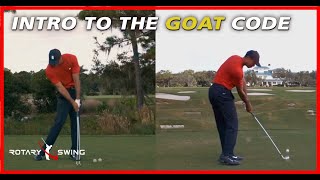
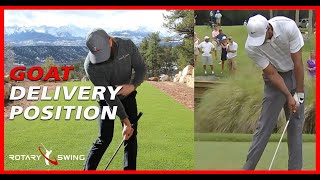
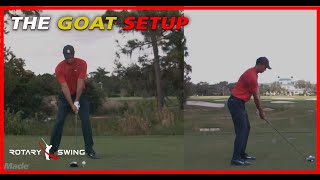


































































How the GOATs Use their Glutes
Sorry, you need to be a member to access this video.
You Are Just Seconds Away - Become a member here!
Already a member? Log in now

Try a free live lesson with GOATY
GOATY, my AI golf coach, watches your swing through your phone camera and coaches every rep. Free, about 20 minutes, no credit card.
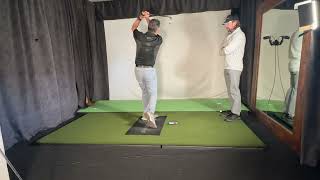
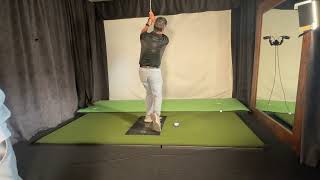
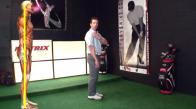
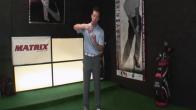
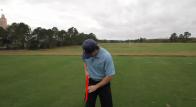
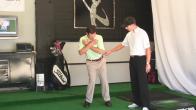
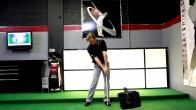
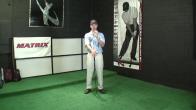
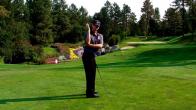
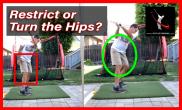
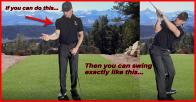
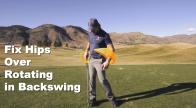
How to use your glutes in the golf swing like the GOATs. This video covers the exact sequence of movement and what you should feel to begin using your most powerful muscles in the golf swing - your glutes.
Do you want to know the secret to swinging like that?
It's all in your glutes.
Believe it or not, the golf swing is really centered around the center of your body, your core and your butt.
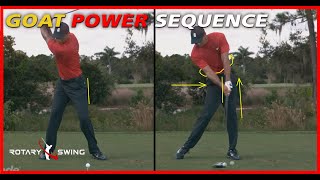
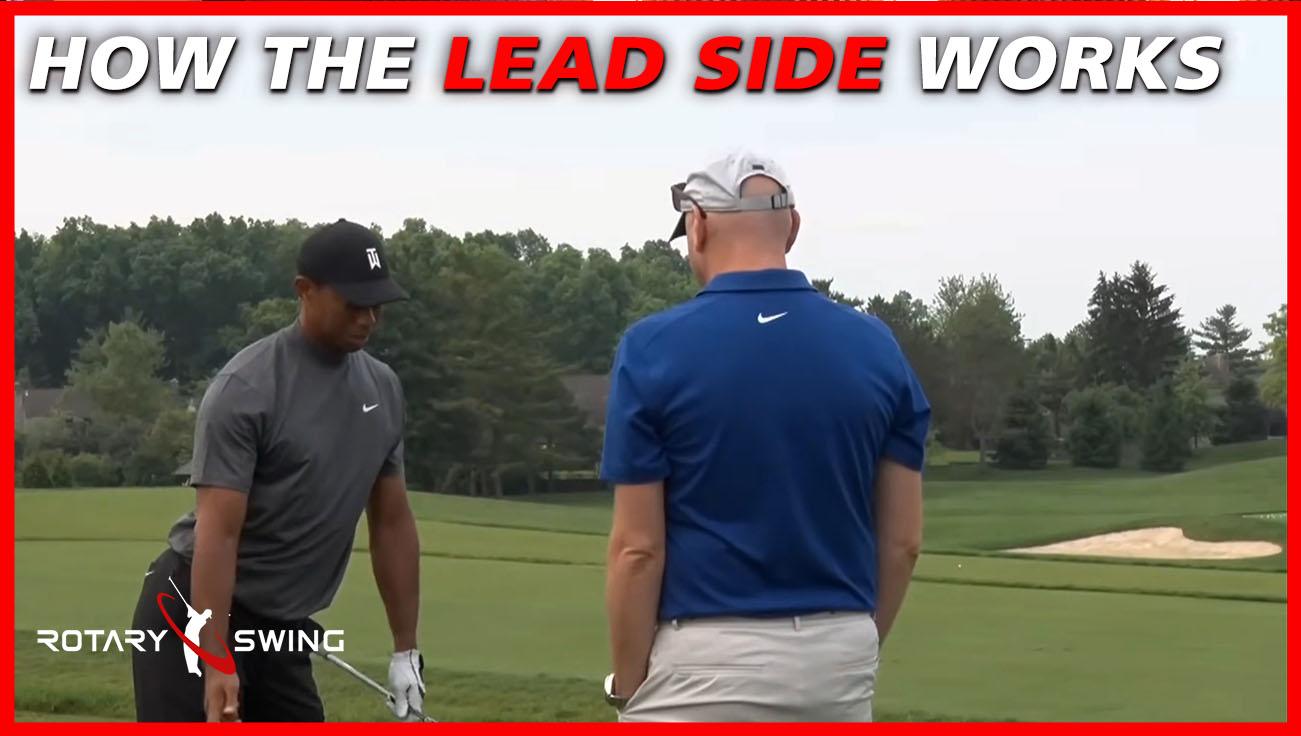
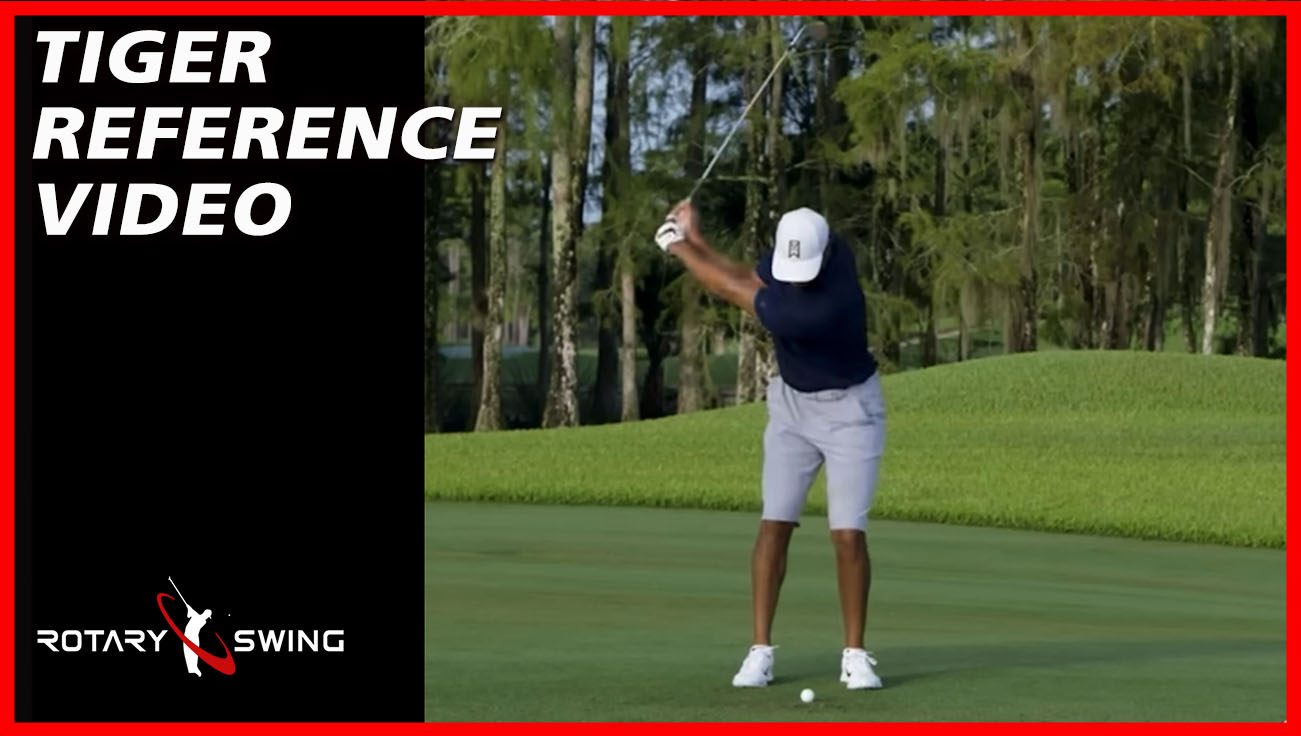
And Tiger's actually talked about this.
In fact, I think in 2015, he actually withdrew from a tournament citing that he couldn't engage his glutes.
What does that mean?
In this video, I'm going to explain to you not only how critical this is, but exactly how to do it exactly like the goat.
because if you can't engage your glutes, you're going to likely hurt your lower back.
And that's actually what Tiger was citing when he couldn't get his glutes to fire.
All the swing pressures were going into his lower back.
And this is extremely common.
I see this in injuries all the time.
And when Goaty is talking about you not getting enough trail hip depth, this is exactly what he's talking about in trying to prevent you from getting injured, but also how to sequence the swing properly.
It all starts at the very beginning of the swing.
If you do not get this trail hip deep early enough, everything else will fall apart.
In fact, if you were to get one thing right in your entire golf swing, this would be it during the start of the swing.
Now, why is this so important?
Let me explain.
I'm going to break down the entire swing in just a few seconds.
To show you exactly how simple the entire thing really is when you have it unified through your fascial system.
If you're trying to group together a bunch of bucket of parts and positions and mechanics, that stuff doesn't work.
You have to think of the swing as one holistic movement, everything in your body working together synergistically.
If you don't have your glutes engaged, you're missing the most important building block of the swing.
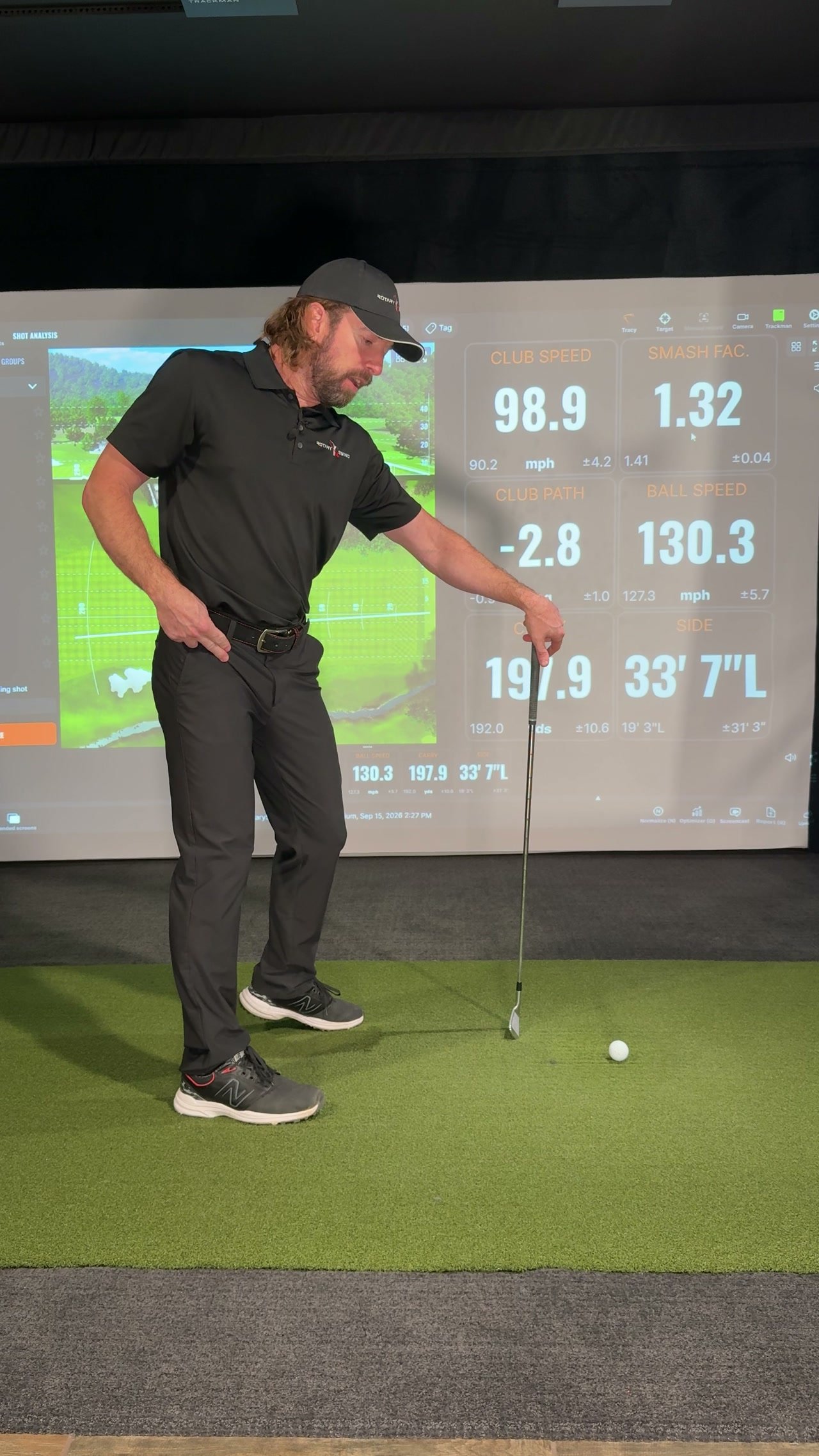
So the first thing that you've got to start to feel is that as you start to load, what you're trying to do is get your trail hip to move away from that ball.
Now, A lot of times, people don't really think about what their trail hip is doing at all because they're so fixed on the arms or the shoulders.
Or what have you.
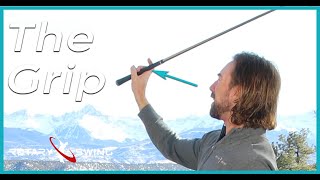
But what I want you to focus on is take your normal grip and then just focus on shifting slightly into your trail hip, just so you can feel a little bit of pressure.
I want you to feel it engage back here.
Feel it tighten up and then feel it go back away.
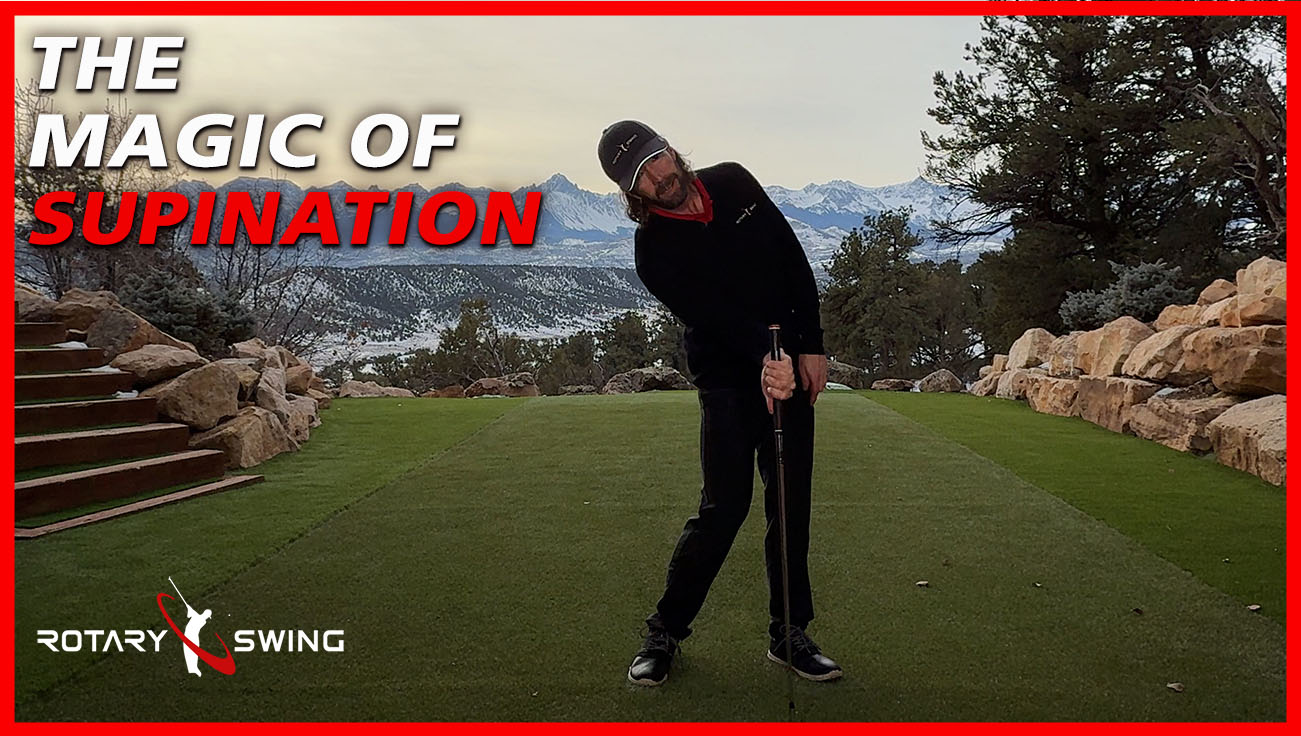
So you're going to feel that your pelvis is going to tilt on an angle.
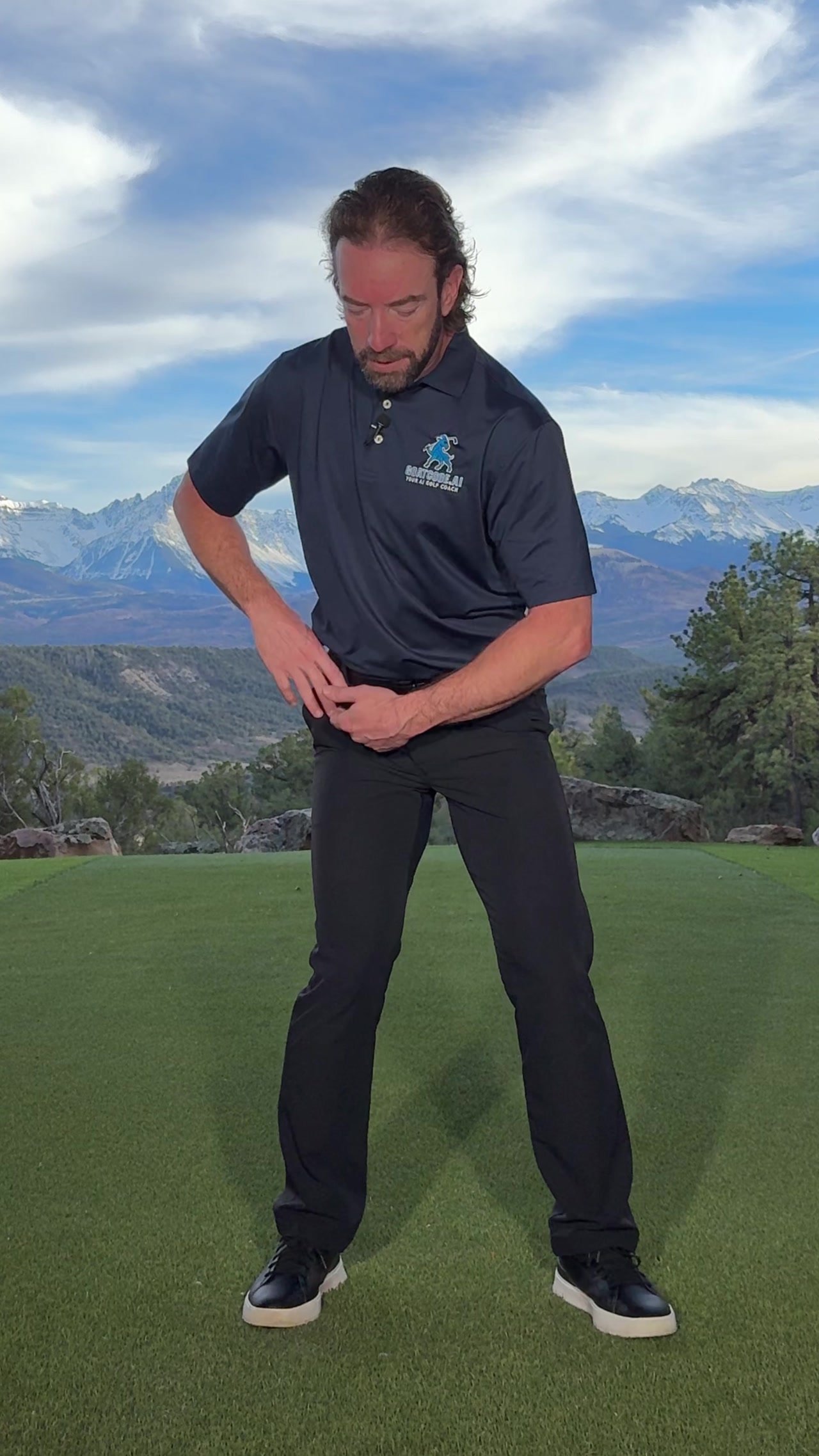
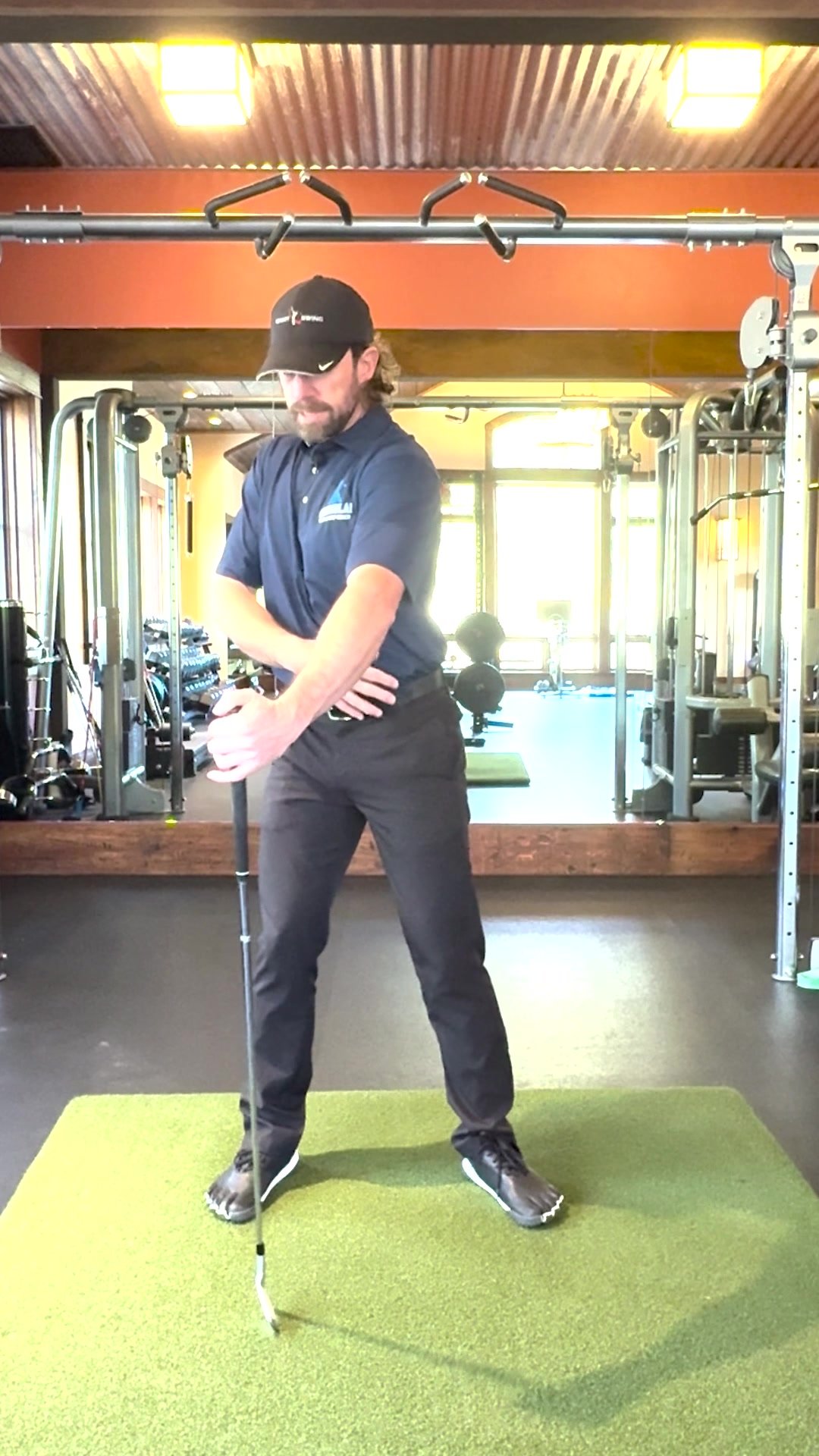
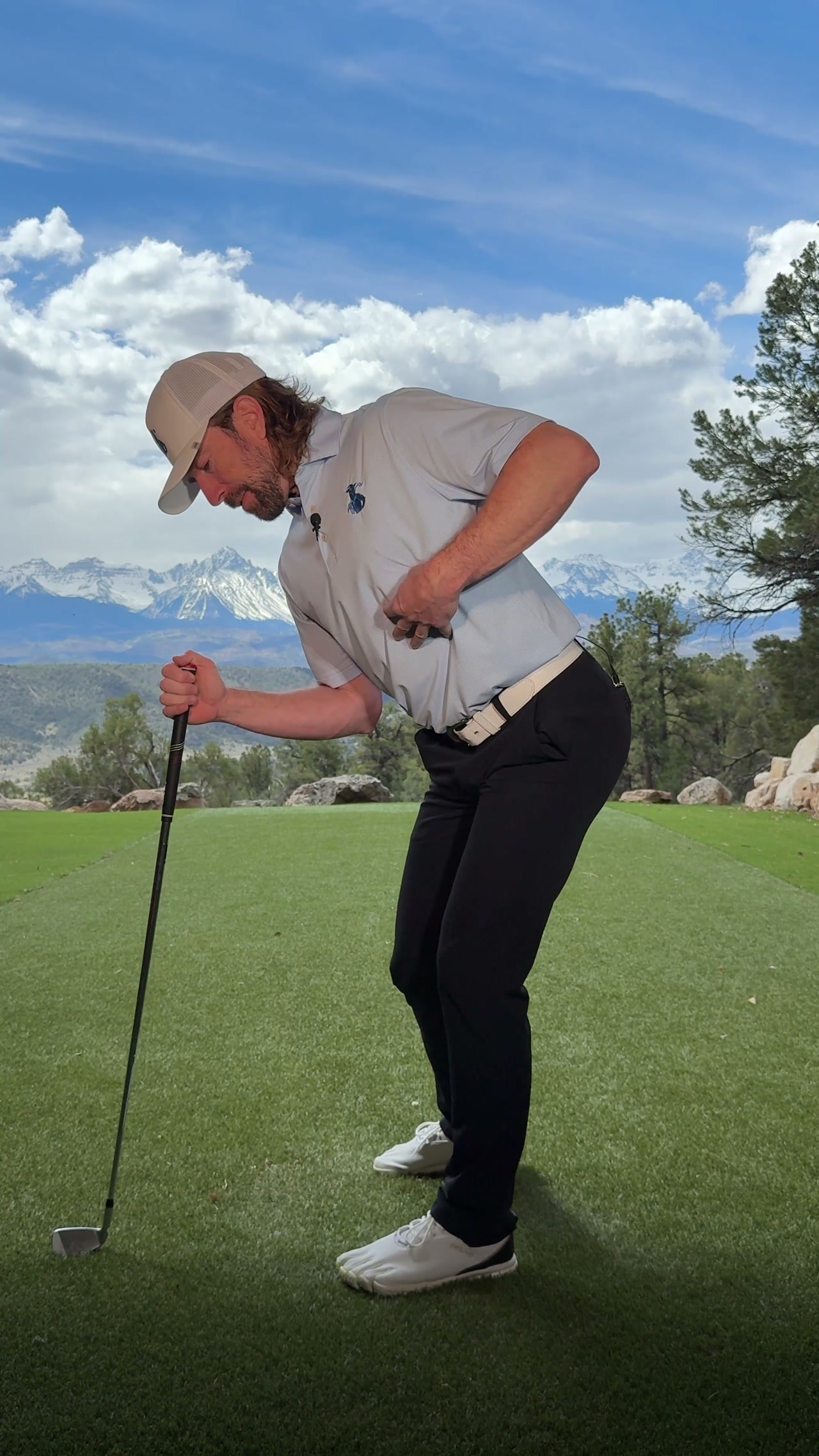
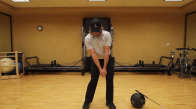
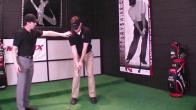
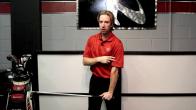
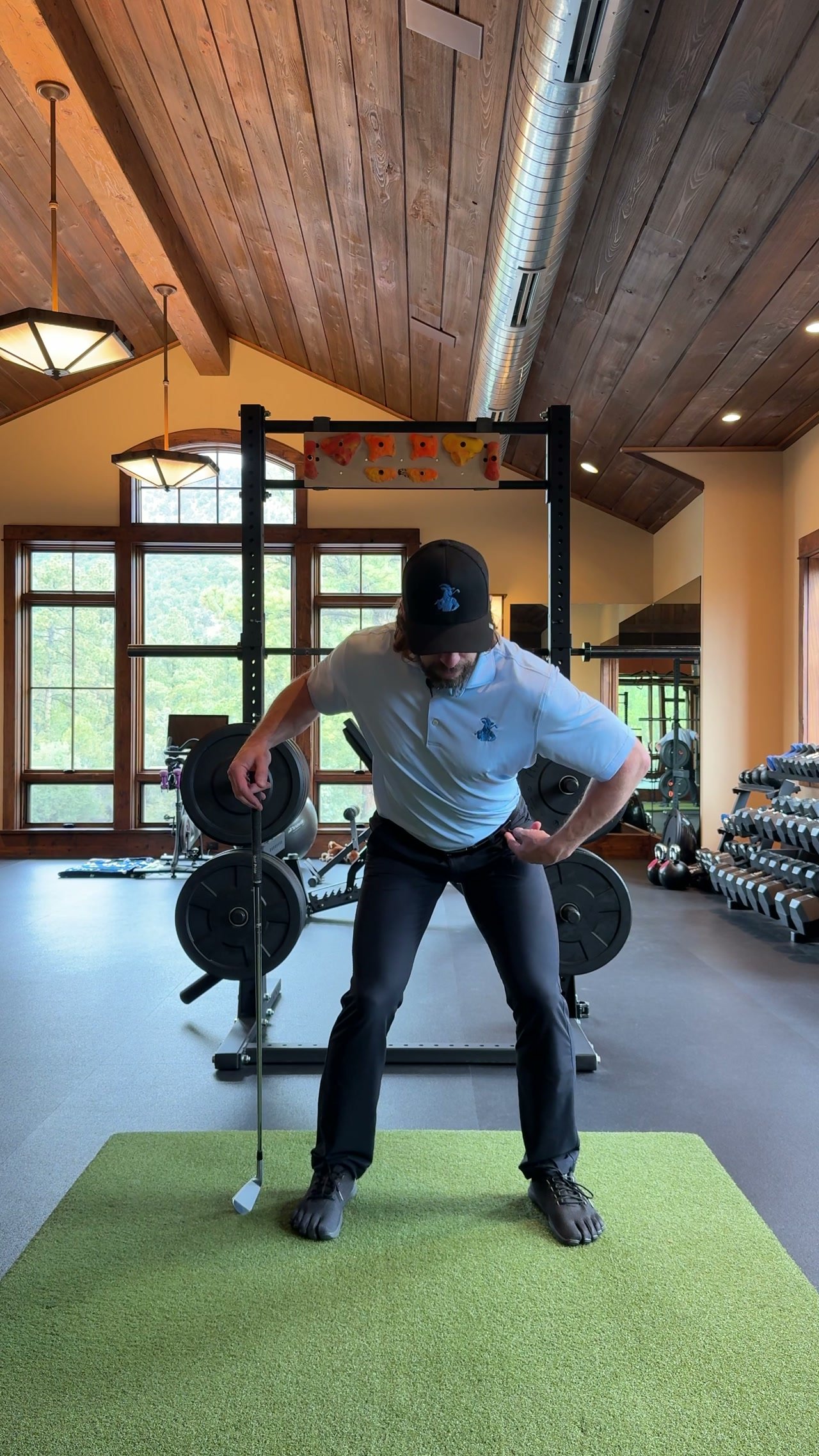
So if I put this club on here right on top of my belt and I start moving my hip back, it looks like my pelvis is tilted very steeply toward the ground.
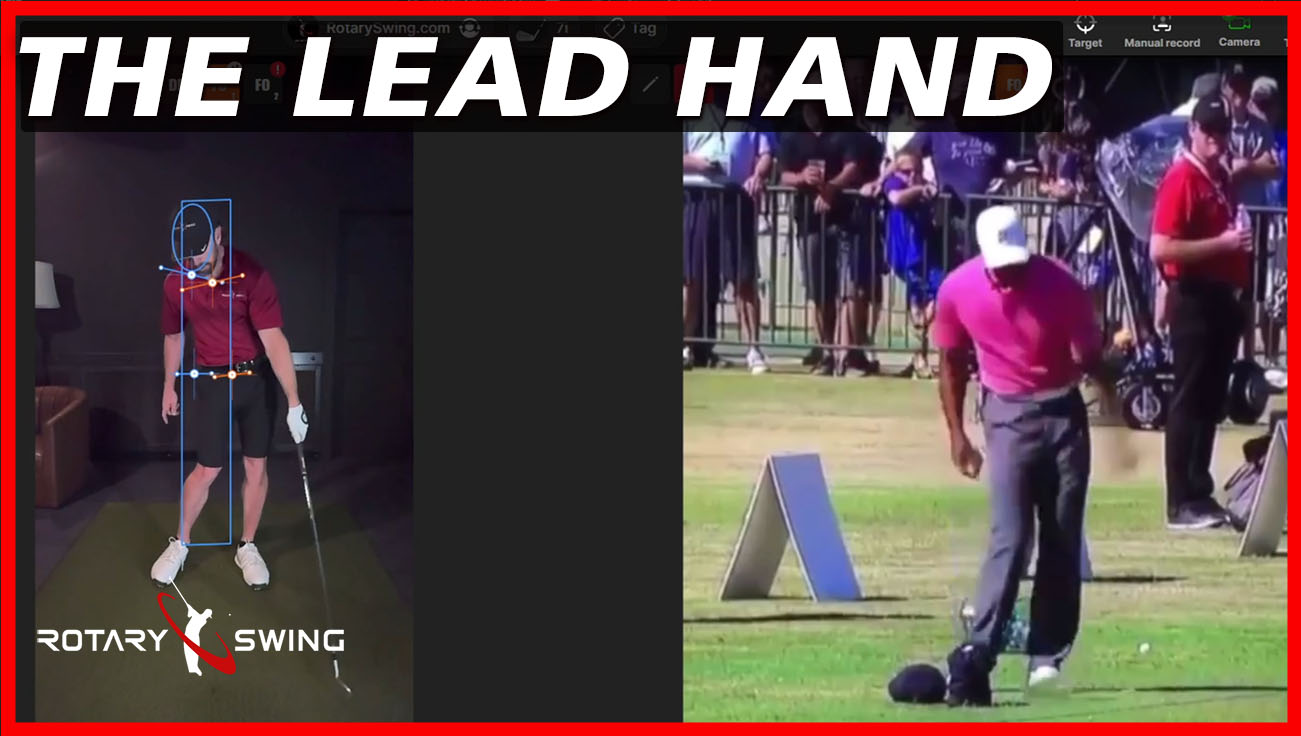
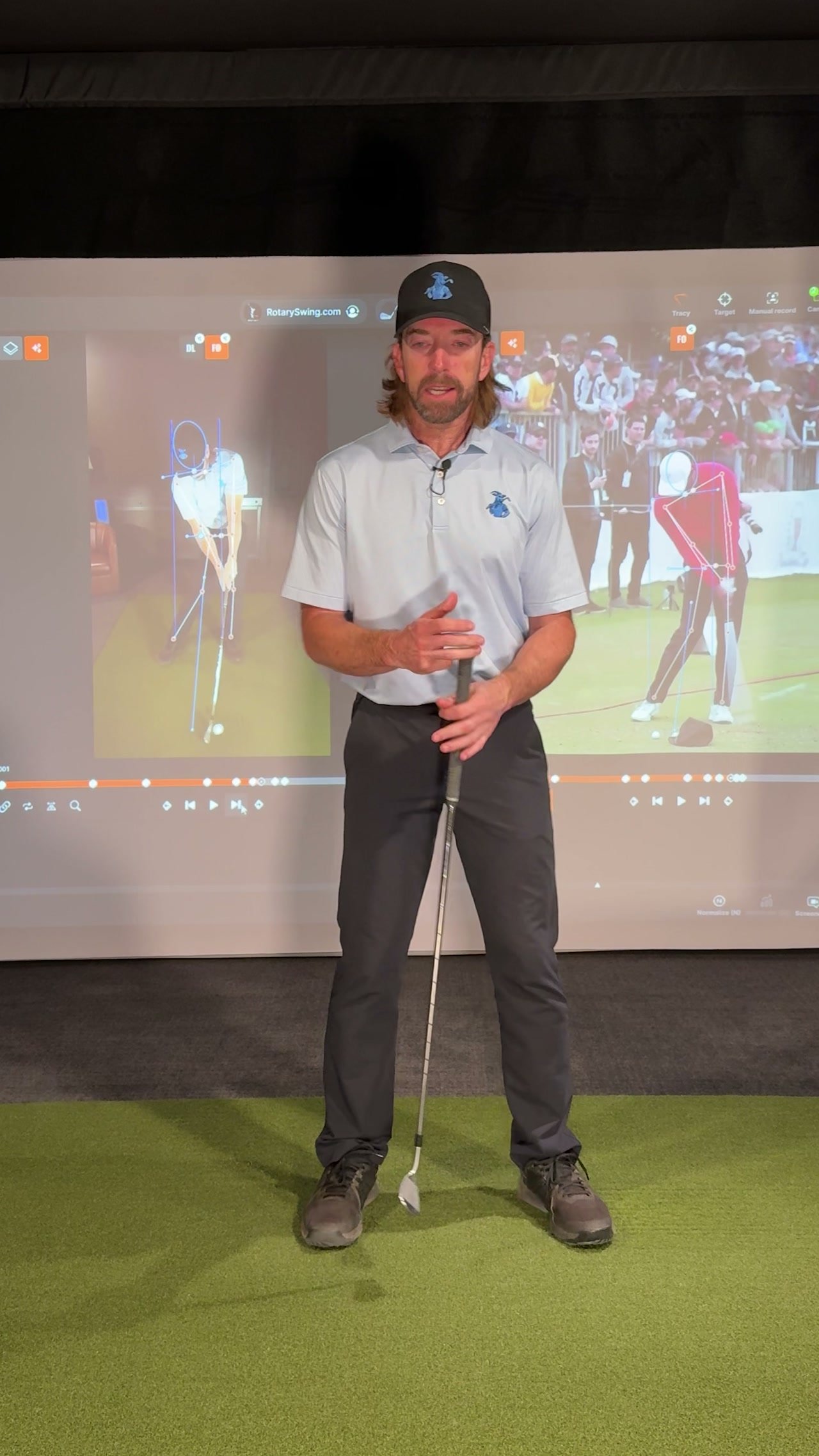
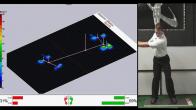
This is something that Goaty specifically measures.
He's measuring how much your lead hip drops and how much your trail hip moves away.
This is what all the greats do.
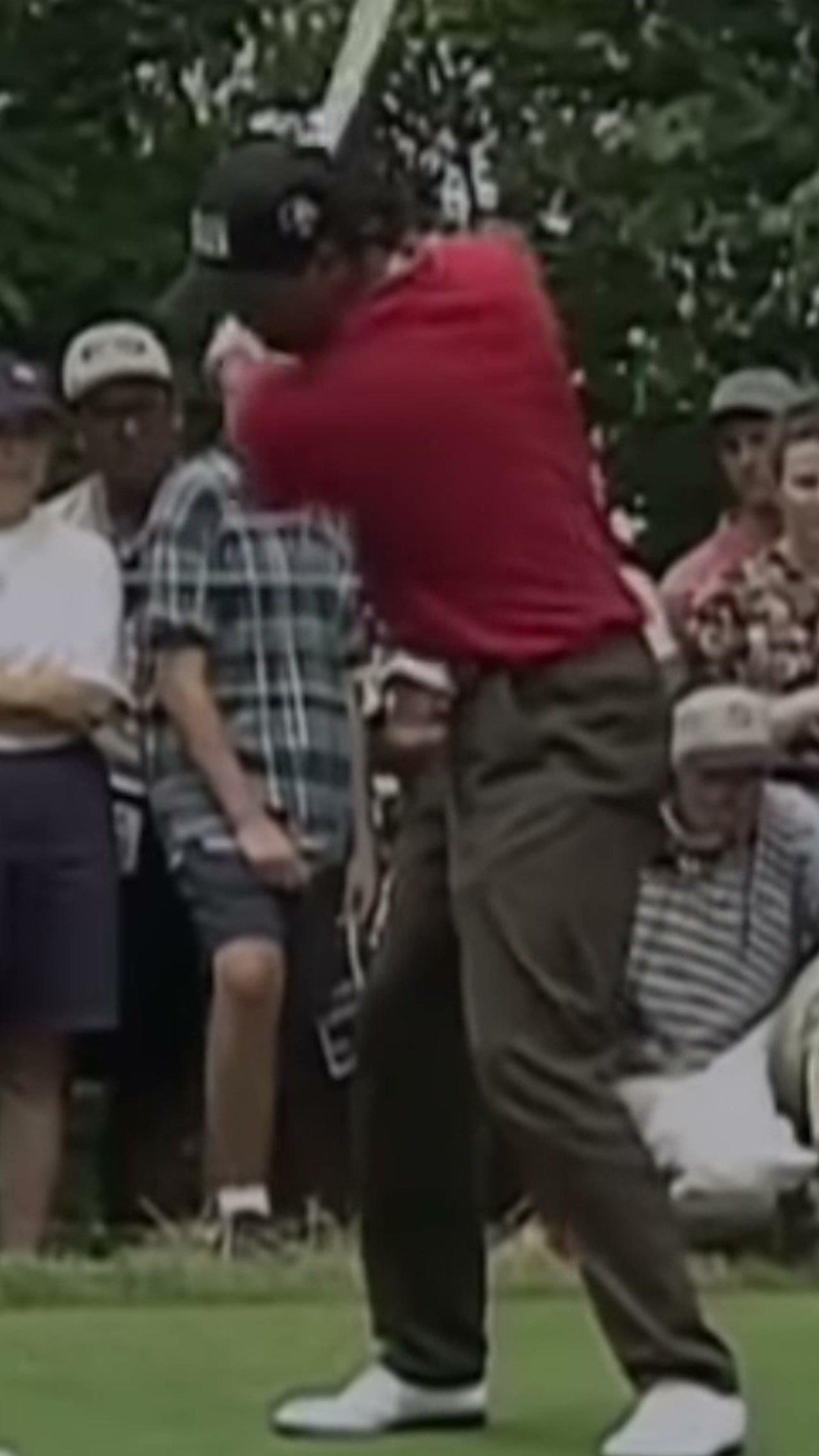
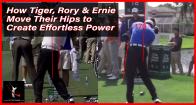
You look at John Daly, Jack Nicklaus, Tiger Woods.
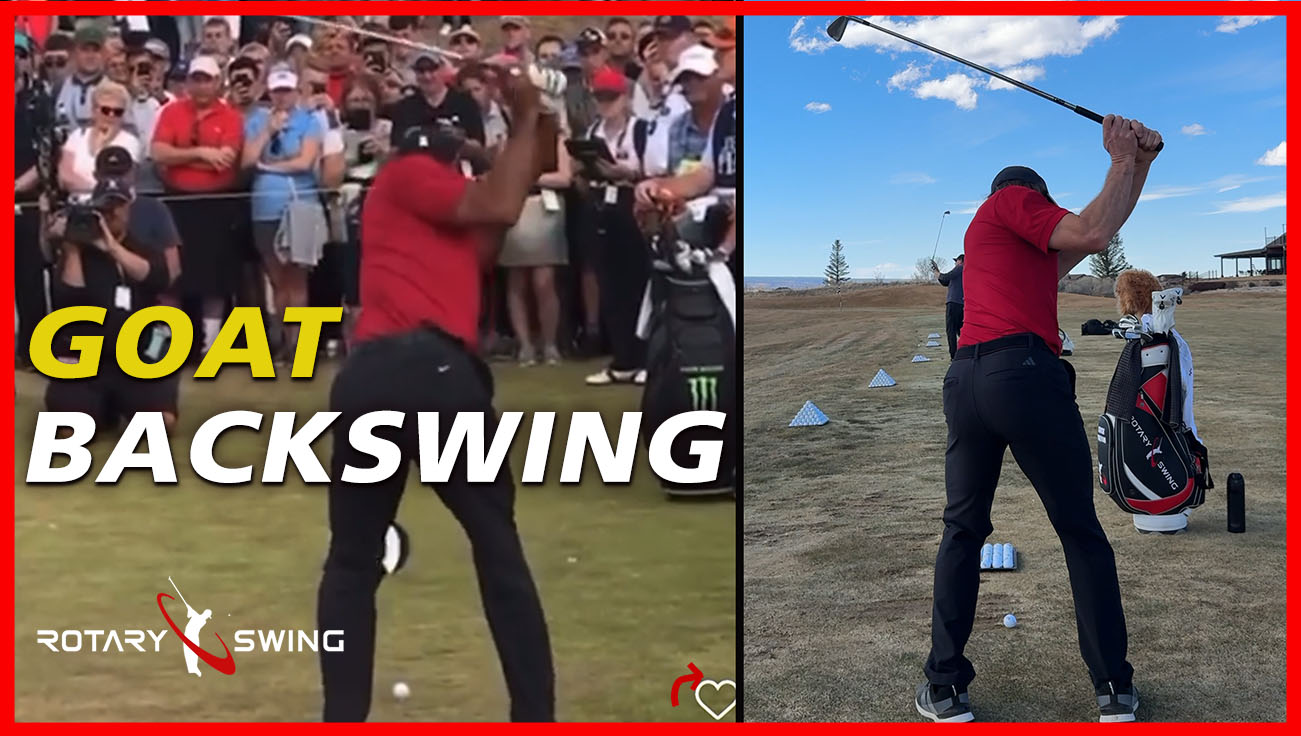
They got their hips moved deep and loaded powerfully in the backswing.
And most amateurs do the exact opposite because they're so fixated on moving your arms.
You have to load this properly.
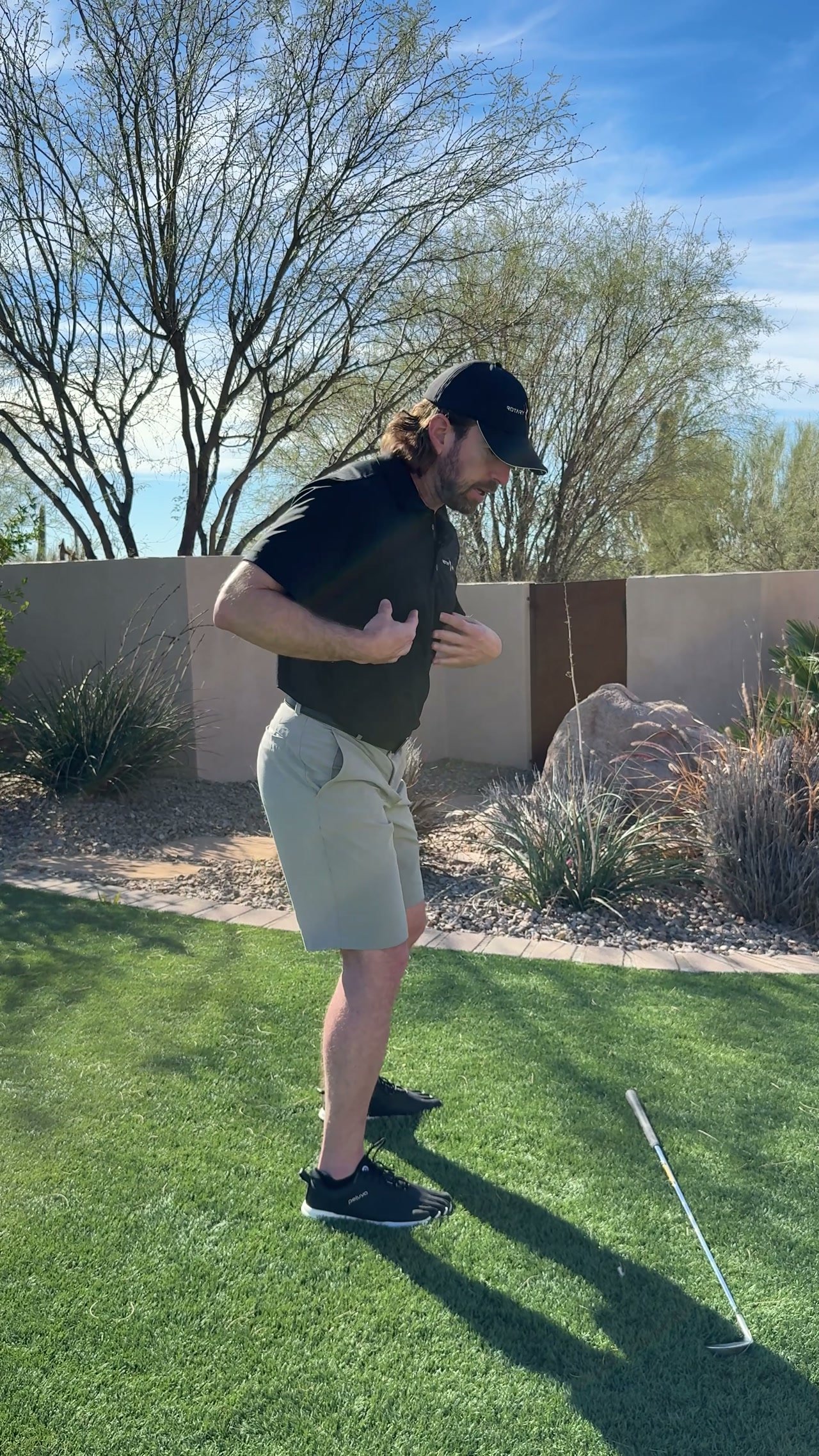
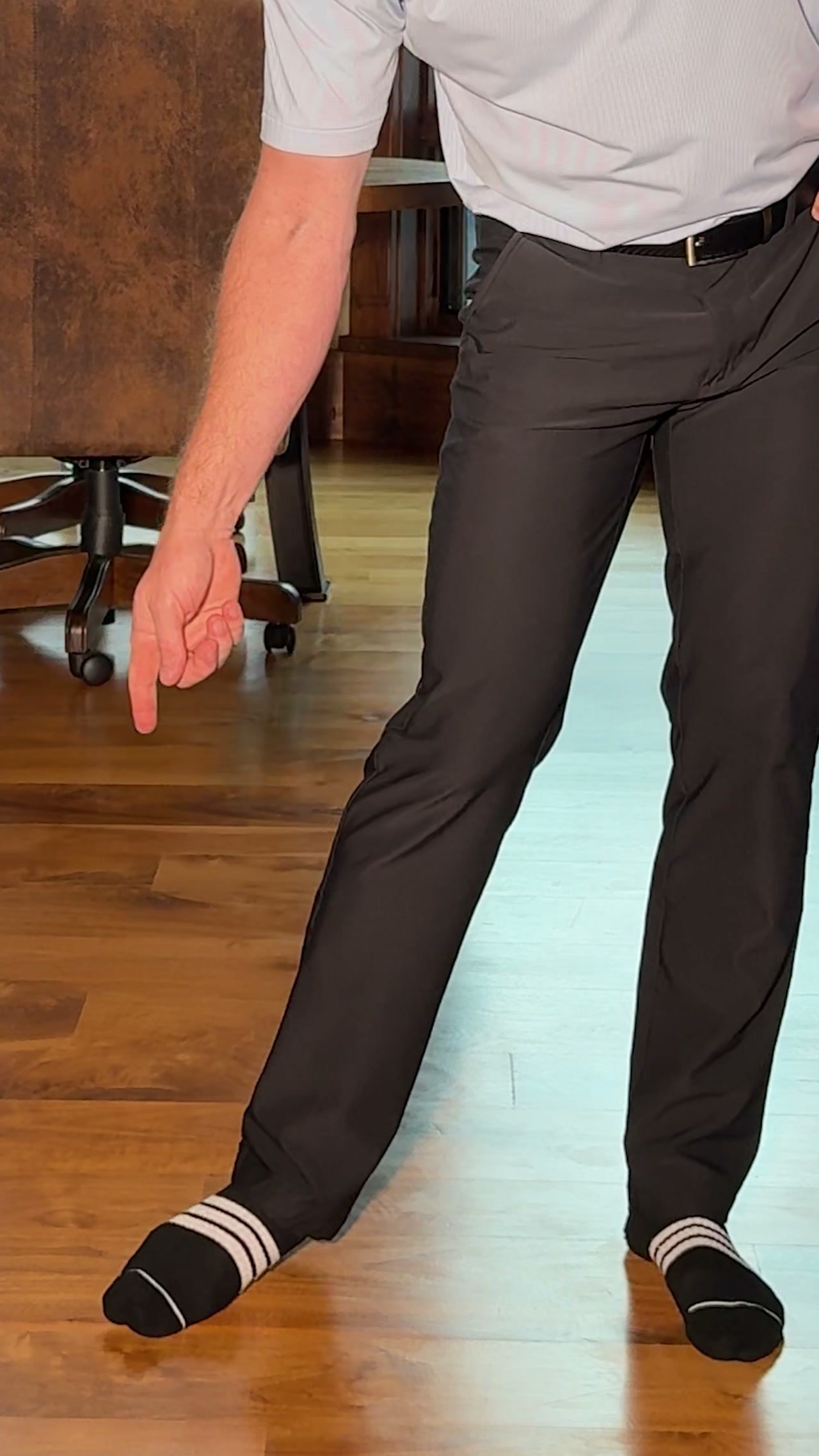
So, take that trail hip, feel it going back away, and start feeling like you're sitting down, but not bending your knee to sit.
What I want you to feel is that you're sitting and your upper body is inclining slightly more.
We're going to exaggerate these things so they're easy to see, but as you're going back, I'm getting my hip deep and feeling it lengthen, and I'm coiling around it.
So now I feel this thing loaded, but my leg is not bent down like this.
I've maintained a little bit of flexion, but what I'm trying to do is get this hip deep.
You can see it moving further away from the ball and that moves my spine slightly further down.
This movement is what's starting to move the arms and club.
I'm not trying to move the arms and club with my.
With my arms and hands and shoulders, I'm moving my hip.
That's moving the club and giving some momentum.
And then as I go back, what want to do is keep this thing exactly where it is.
But at this point, if you don't feel a lot of tension inside this hip, on the hip socket, inside your glute, the glute itself, everything kind of wound up, then you don't have this feeling.
And so what I want you to do is try and feel.
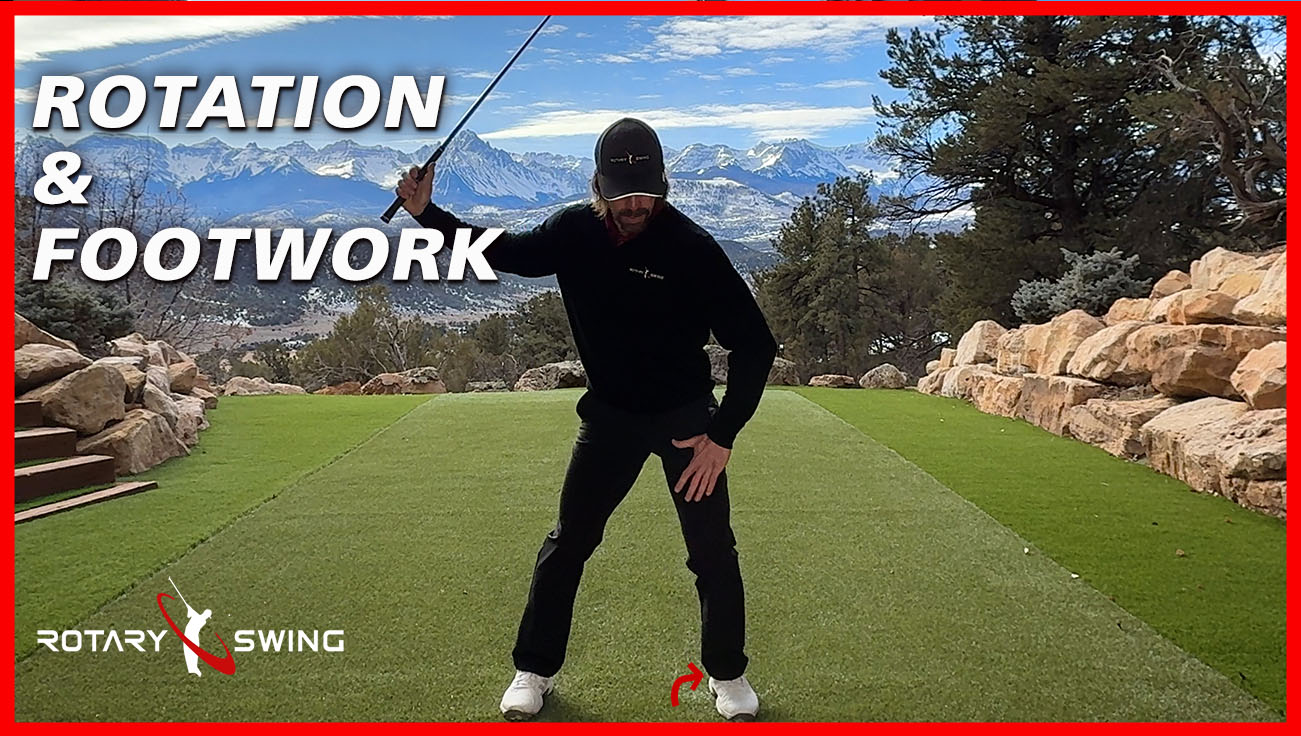
Pushing your big toe into the ground pretty aggressively while also driving this hip back.
This will help you start to feel the connection from the ground and from your feet and from your big toe to your glute, and feel this thing engage.
Now from here, all I'm gonna do is keep this wound for a second.
Now one of the things Goaty measures when you're doing a live lesson is containment.
And what he's really looking at is, do your arms fire first, or does your body have a chance to start to sequence first?
The trick to sequencing is not pushing off your trail side to shift laterally.
That's gonna happen completely automatically.
You should never try and shove off of your trail foot.
Watch what's going to happen.
If I coil into this trail hips, I'm moving it deep, and this is going to tilt.
Because it keeps coiling, keeps coiling, keeps getting deeper, it looks like my hips are shifting over here.
But I'm not pushing off of here.
I'm coiling.
And so now as I'm coiled up, pushing my big toe into the ground, my heel into the ground, glute feels really loaded.
It feels really tight.
Now I'm going to keep it back there and I'm going to stay contained, which means don't start opening up.
If you start pushing off your trail side, you're going to goat hump.
You're going to start early extending and then everything else is out of sequence.
Wait just a second and let that lead hip, lead big toe plant.
Feel your big toe.
This is why I use these Paluva shoes because they allow you to feel your big toe and glute connection, which is very important for all athletic sports.
And you want to feel that big toe push into the ground for just a second because it's resisting.
So that you're really coiled up and not trying to unwind too early.
So push that big toe into the ground so your glutes start to engage on the lead side and drive it back.
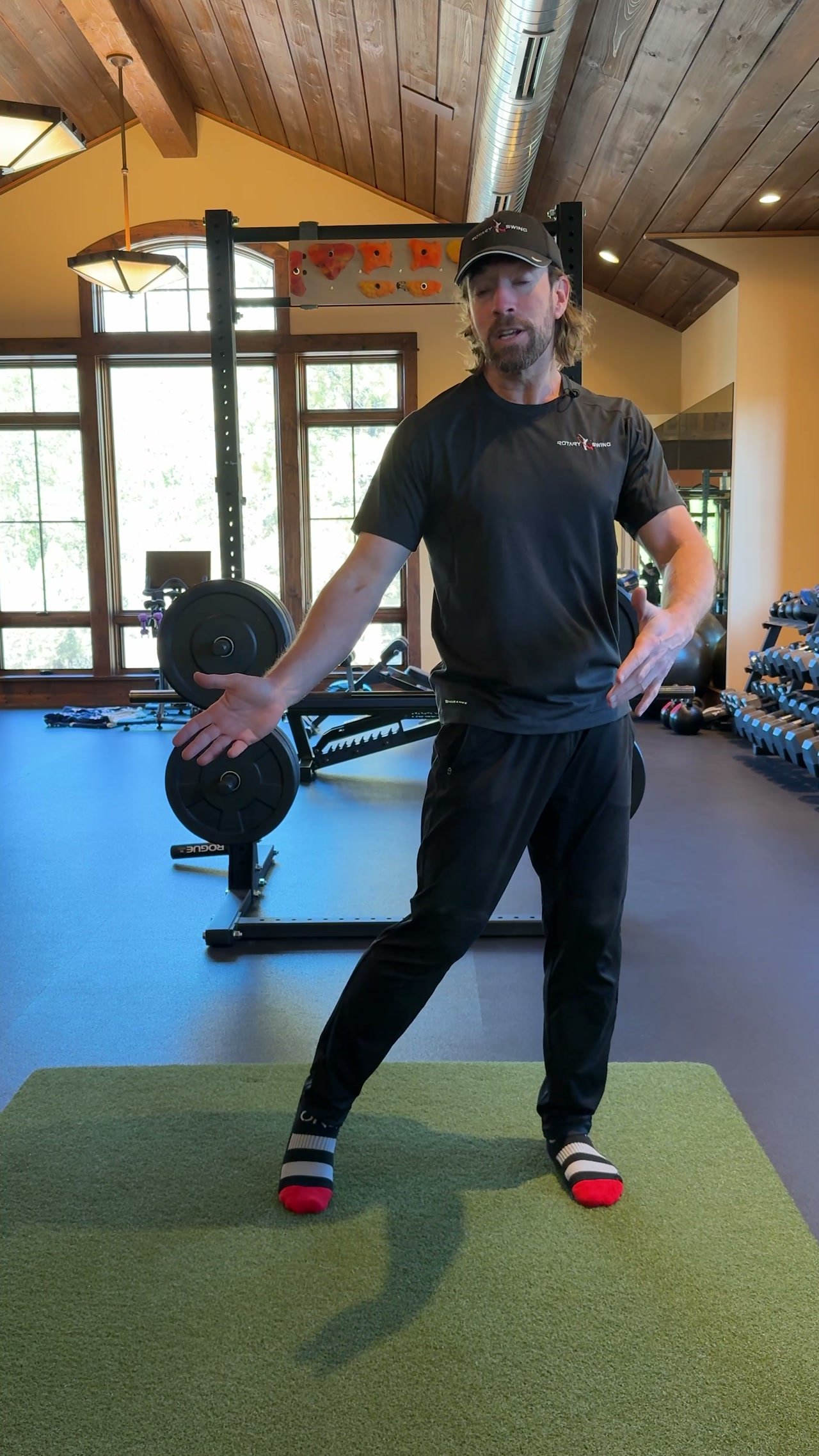
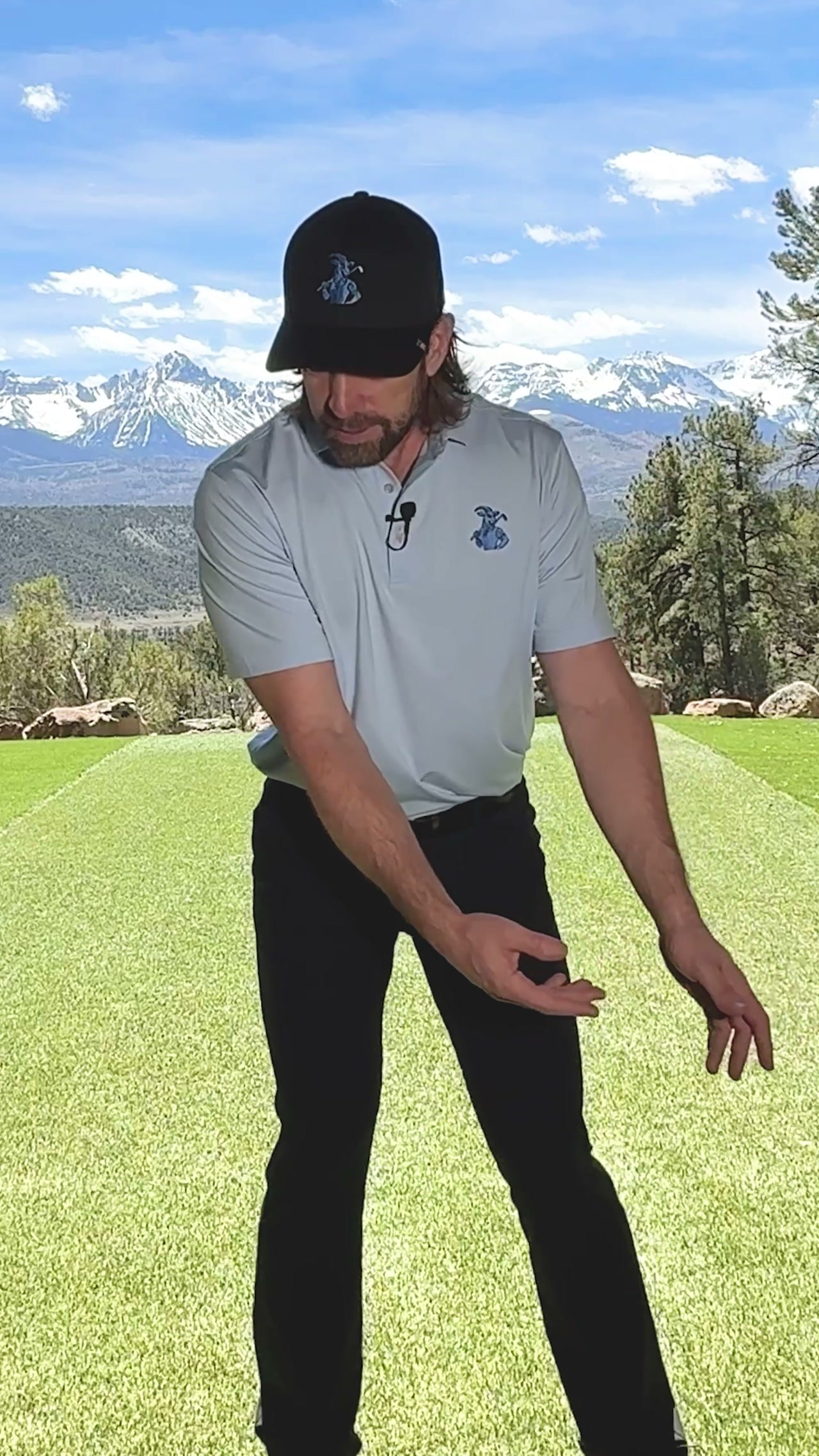
So now you should feel like you went like this.
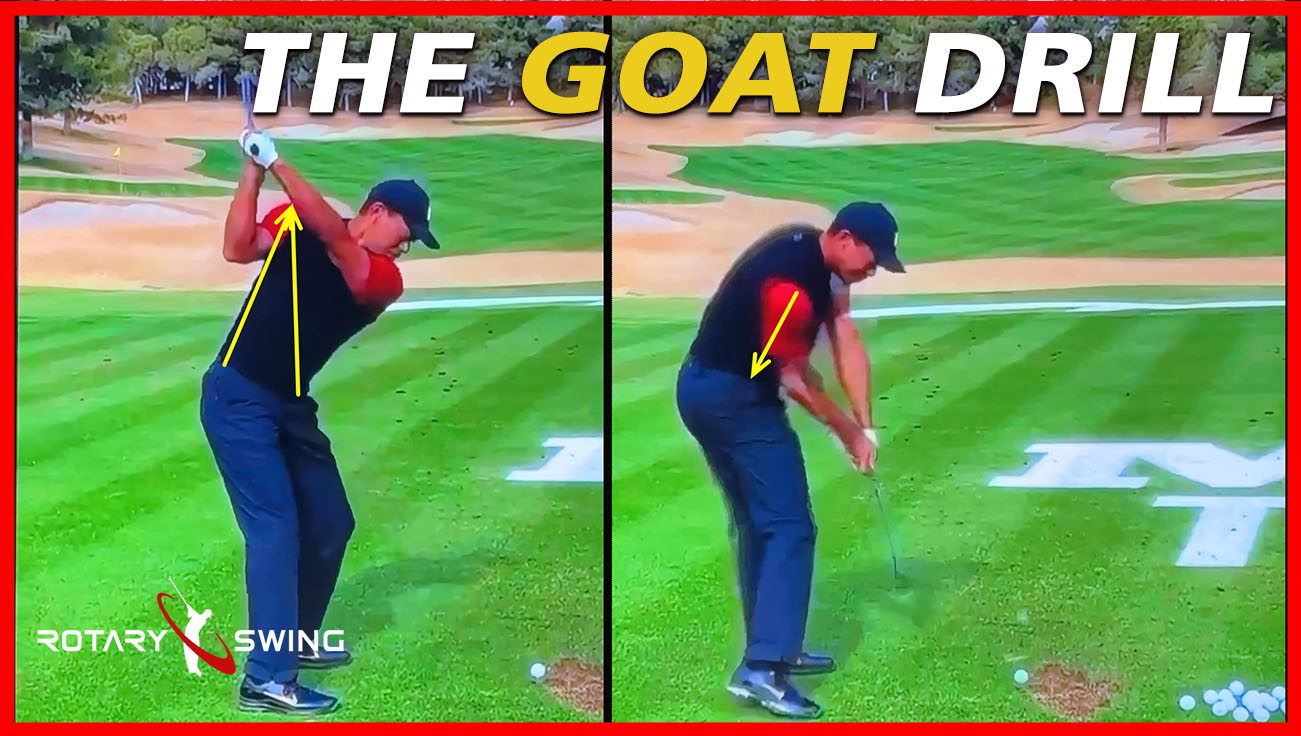
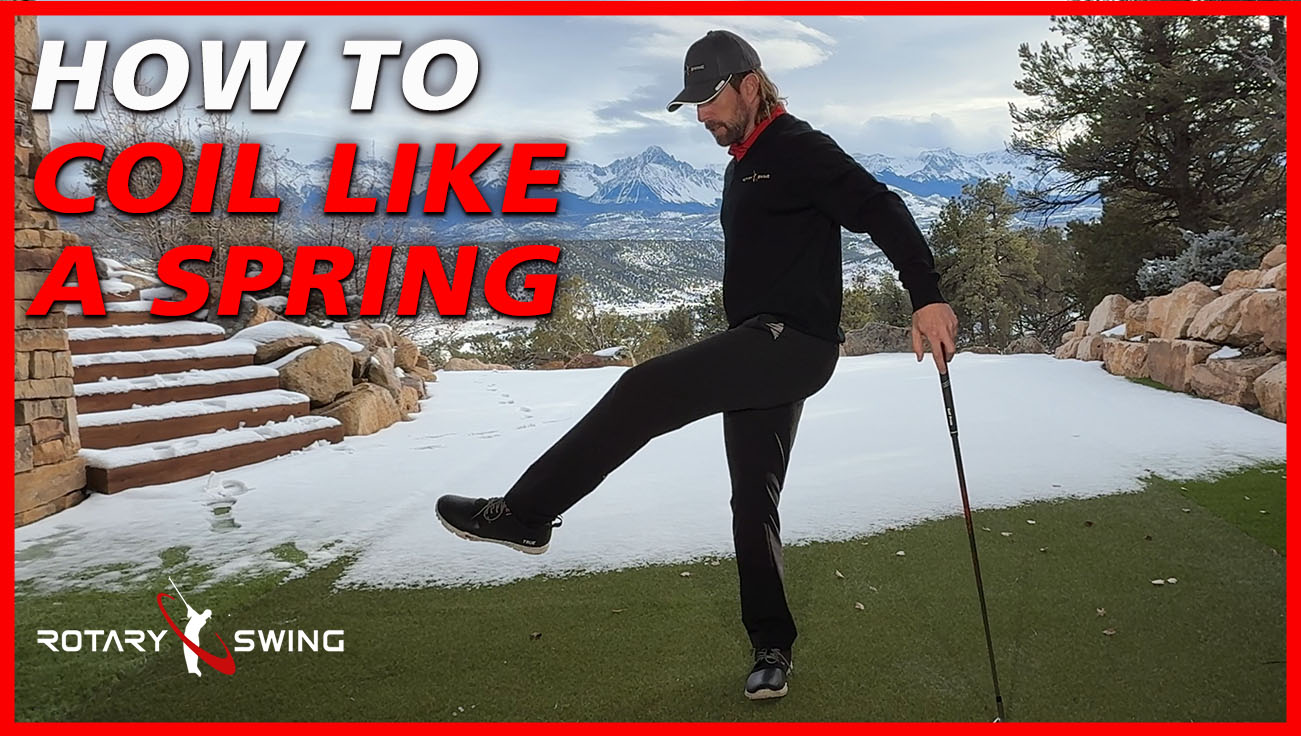
That's going to feel really strange at first, but you've seen Tiger doing these goofy looking drills all the time because he's trying to get his glutes to coil, to load, to lengthen, to stretch, to then be able to fire.
If you don't have that, it's all going to come from up here.
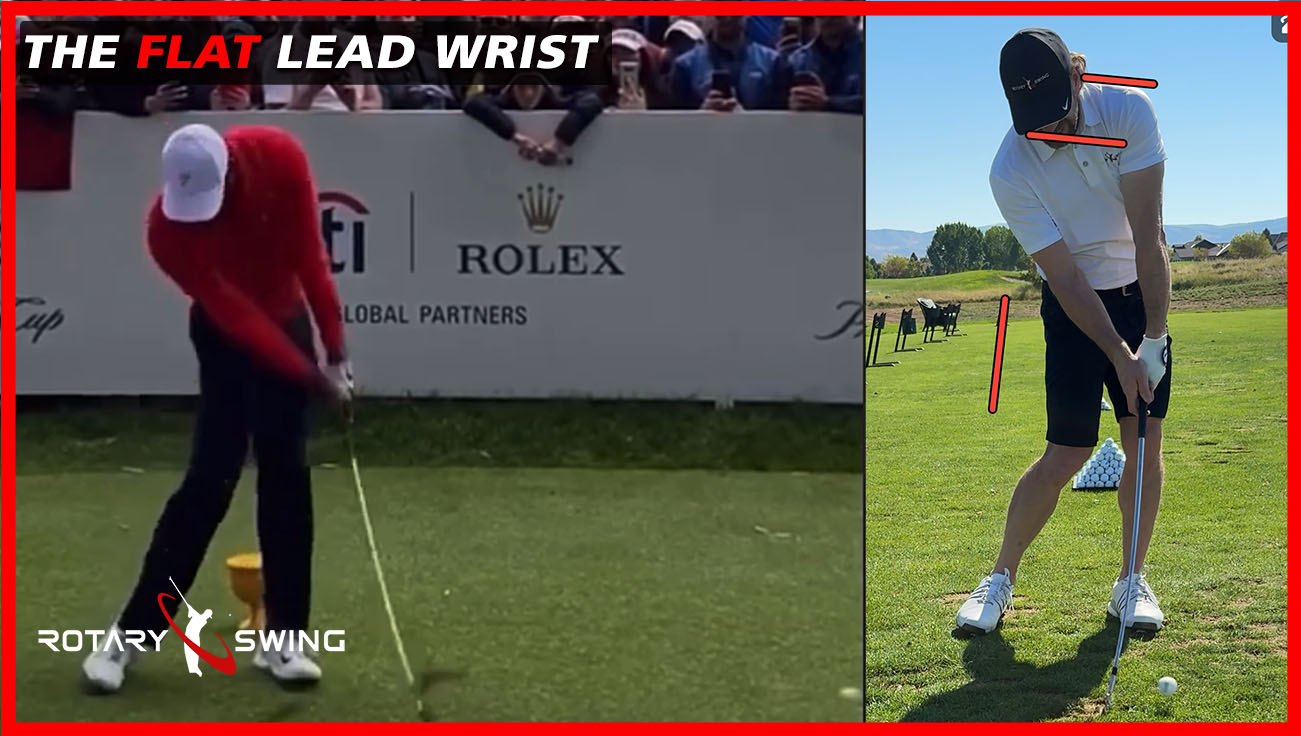
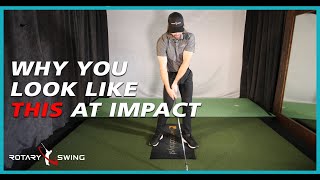
If you look like this at impact, your glutes are not firing, you're not loading them.
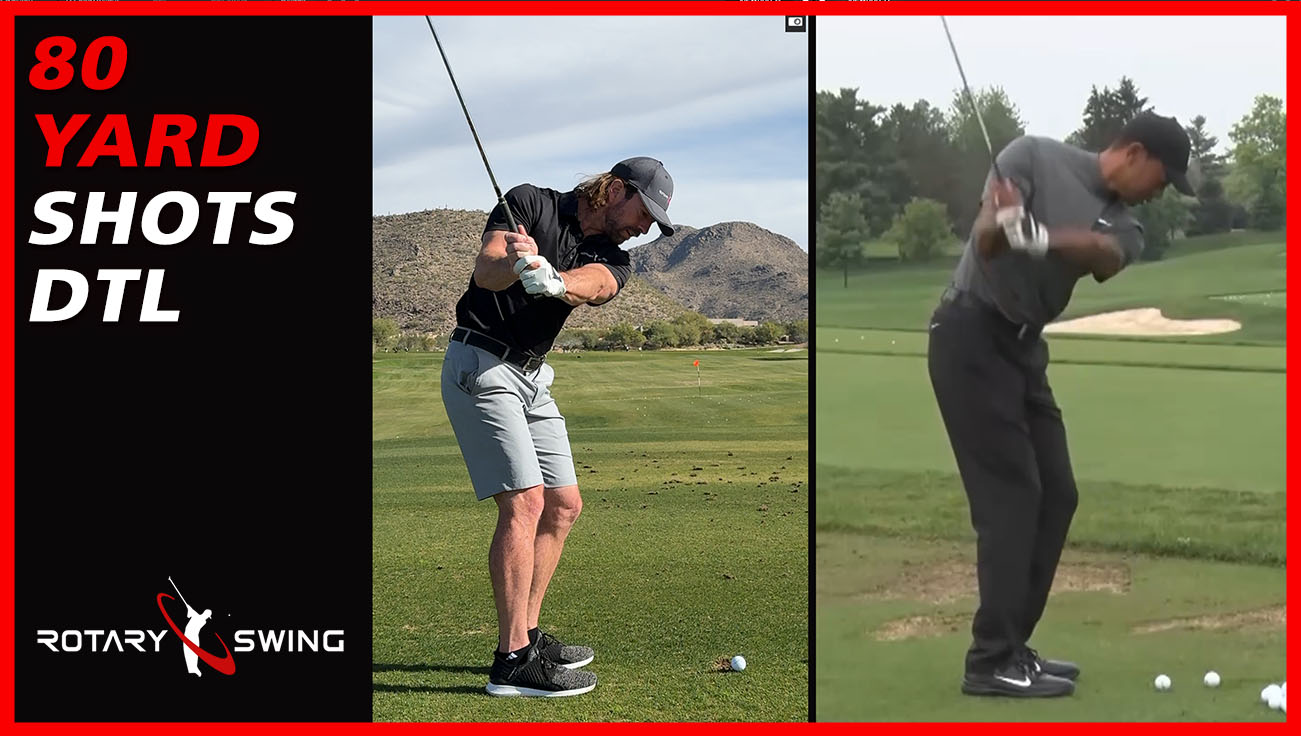
So trail hip back, loaded, lead big toe, lead hip, and now both hips are squatted.
And so that's now my whole body feels like it is tilted forward.
My upper body is tilted forward because my hips are staying back.
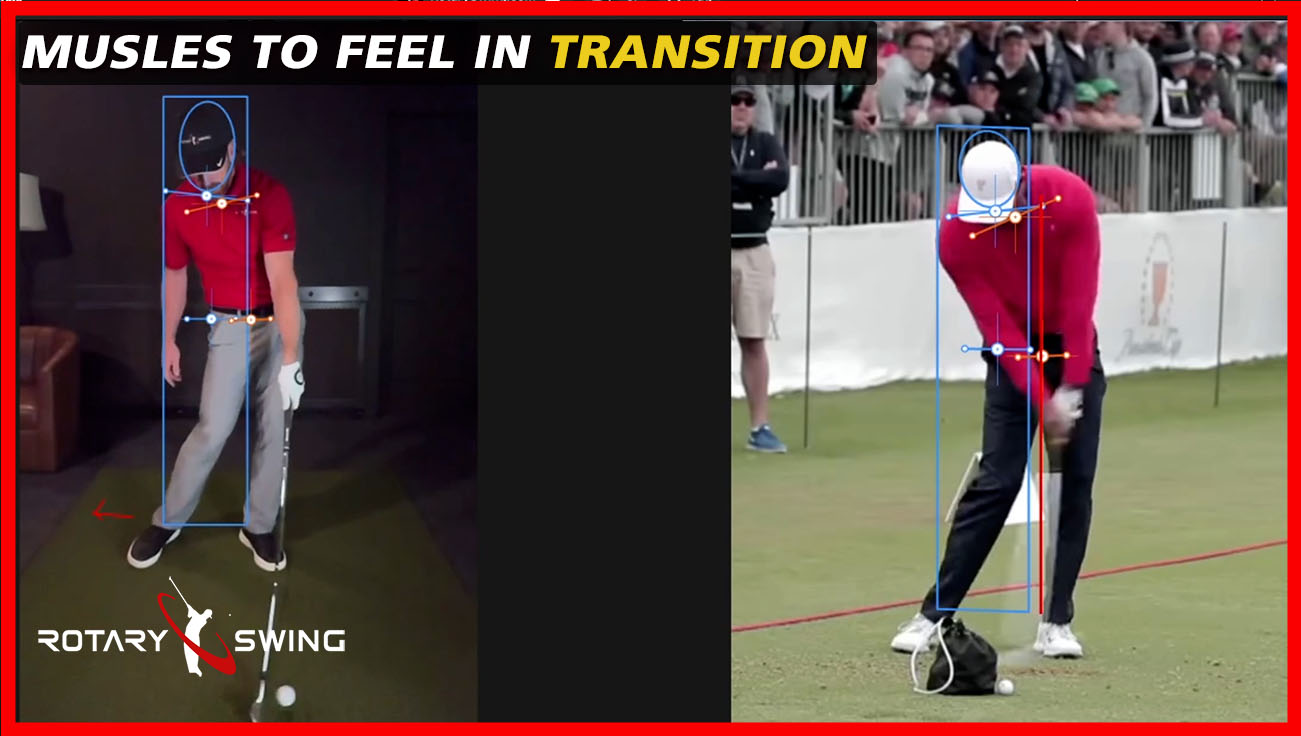
And this is something Tiger's talked about a lot.
He's trying to keep the right hip back, trail hip back, and then the lead hip to go back and stay there.
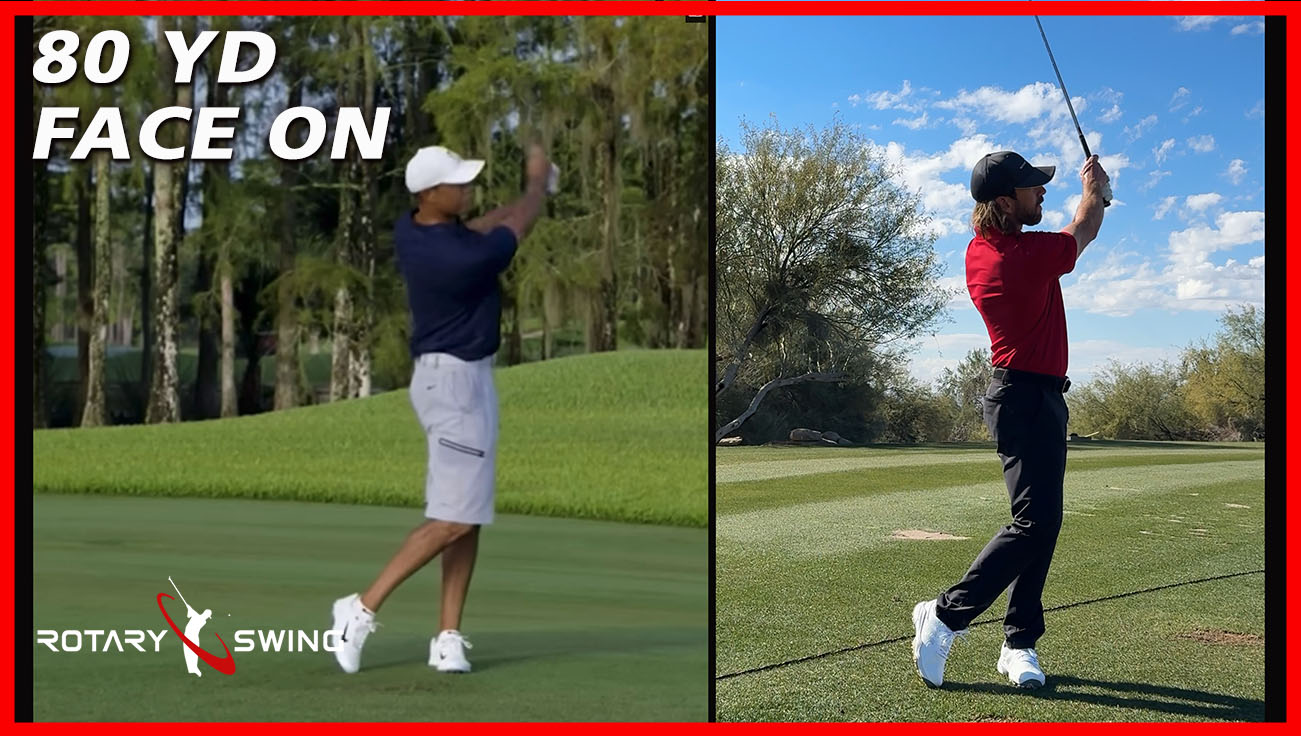
And then from here, as this all begins to, now you've given it permission to unwind, this leg is going to resist and push up and back, and that's going to move the whole thing, everything.
Watch, let me show you.
So I'm going to go really slow at first.
So I'm going to just a little bump.
You see, I kind of rock back into it.
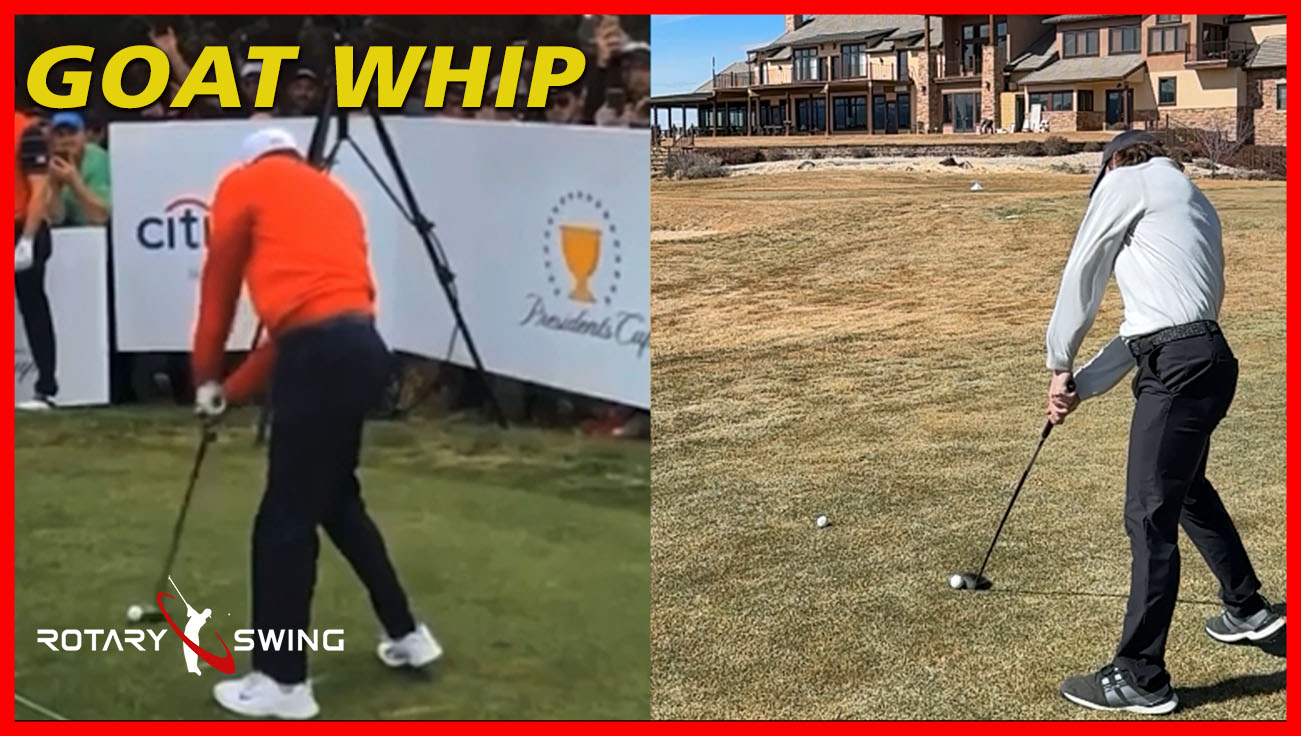
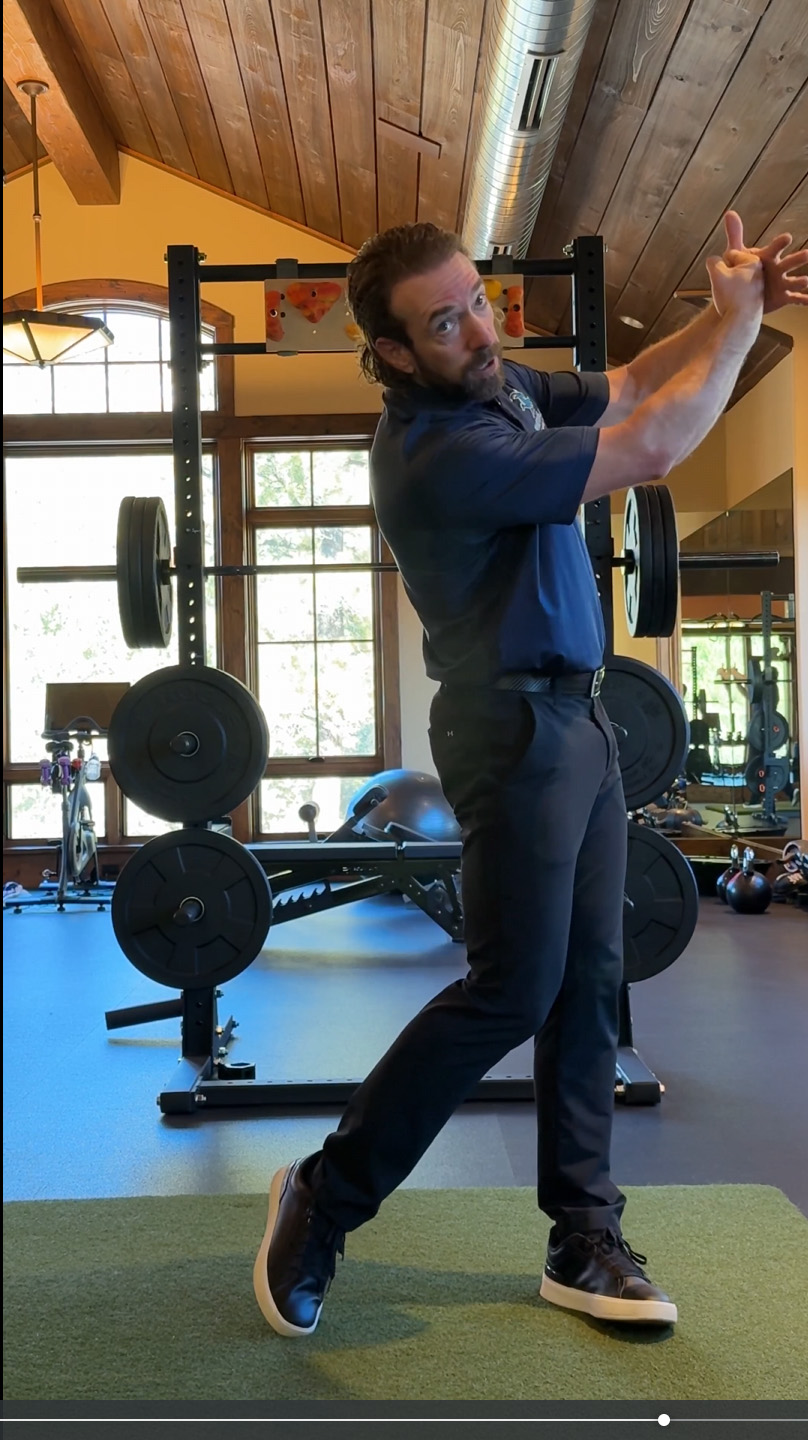
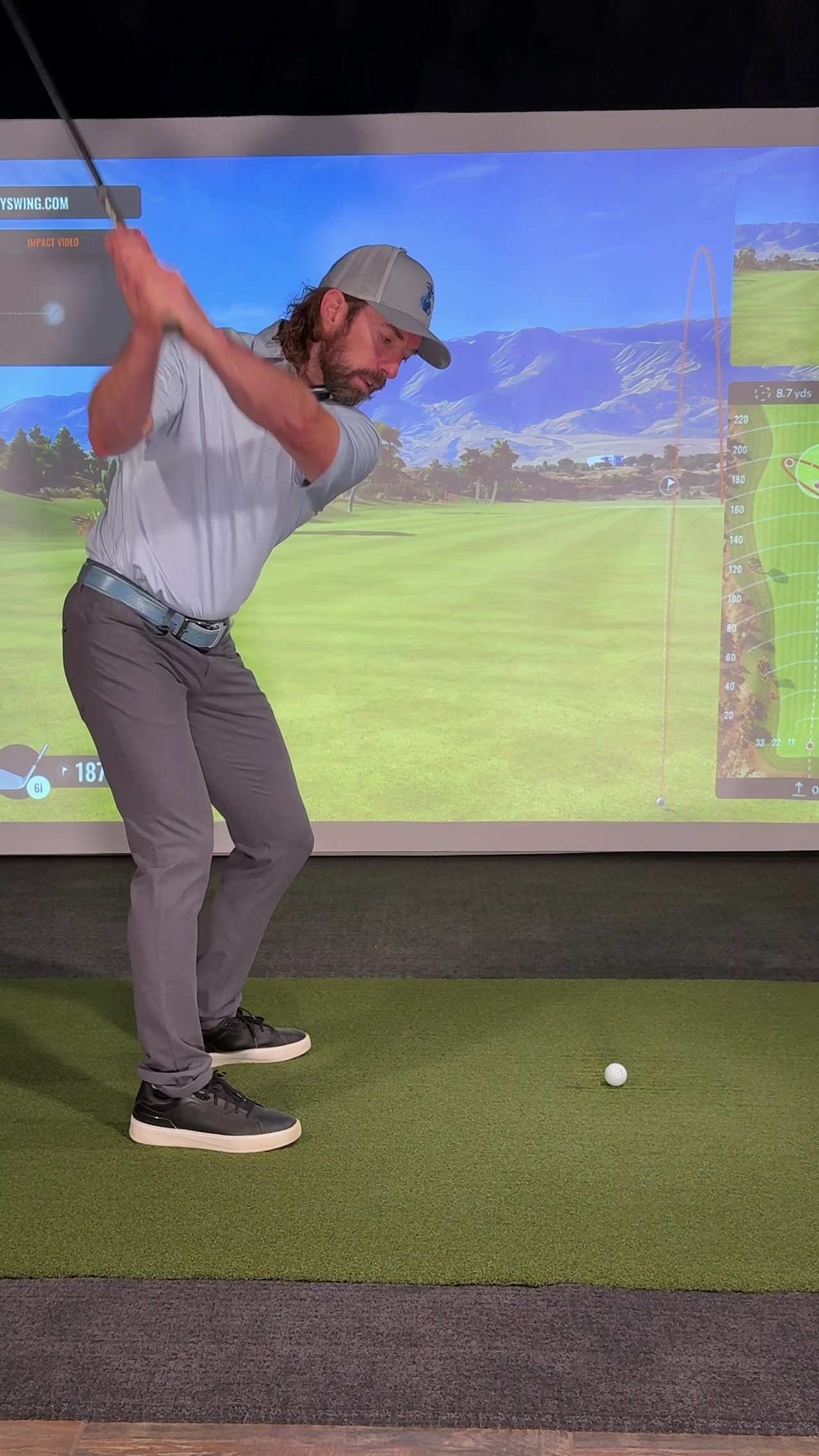
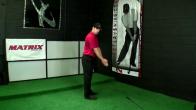
I don't want to sway to the outside but i'm just getting myself to where this glute starts to get loaded coiling now this my big left big toe heel and outside of foot glutes now engage on the lead side driving it back and now look where my arms are my arms got moved here really just by focusing on what my two glutes are doing what my two hips are doing and if you start putting this together you'll see that you naturally end up in the proper impact position without trying to do anything with the club arms hands no shallowing none of that stuff i'm never trying to go up here manipulate the club i'm literally focused on glute movement engage coil loaded now my lead hip's going to fire everything's coming down that's the whole swing in a nutshell and all you need to do when you're working with goatee is make sure you start loading that right away then the lead hip does the same thing you can see as the lead hip goes back my head and sternum drop and then start adding speed to that and letting your arms be whipped through this is key you do not turn your shoulders from the top you not turn your upper body from the top you do not fire your arms from the top you let your glutes do all the work and then you'll start finding that as you start putting this together you can start putting real speed into it but my arms and hands are just along for the ride
Try a free live lesson with GOATY
GOATY, my AI golf coach, watches your swing through your phone camera and coaches every rep. Free, about 20 minutes, no credit card.



Michael
Craig (Certified RST Instructor)
Anthony
Craig (Certified RST Instructor)
KALEB
GOATY
Anthony