



























































































How the Hips Work Together in the Golf Swing
Sorry, you need to be a member to access this video.
You Are Just Seconds Away - Become a member here!
Already a member? Log in now

Try a free live lesson with GOATY
GOATY, my AI golf coach, watches your swing through your phone camera and coaches every rep. Free, about 20 minutes, no credit card.
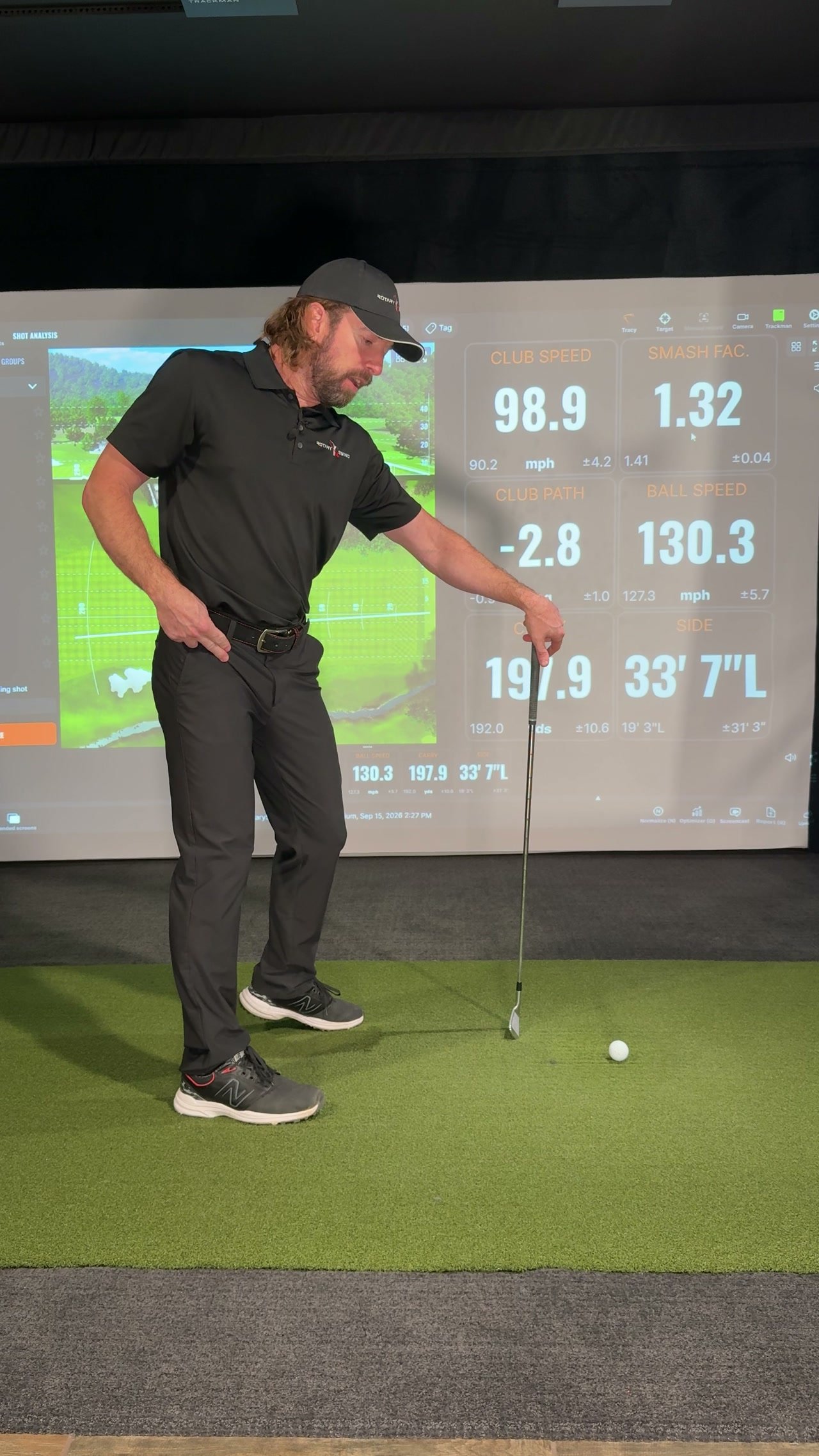
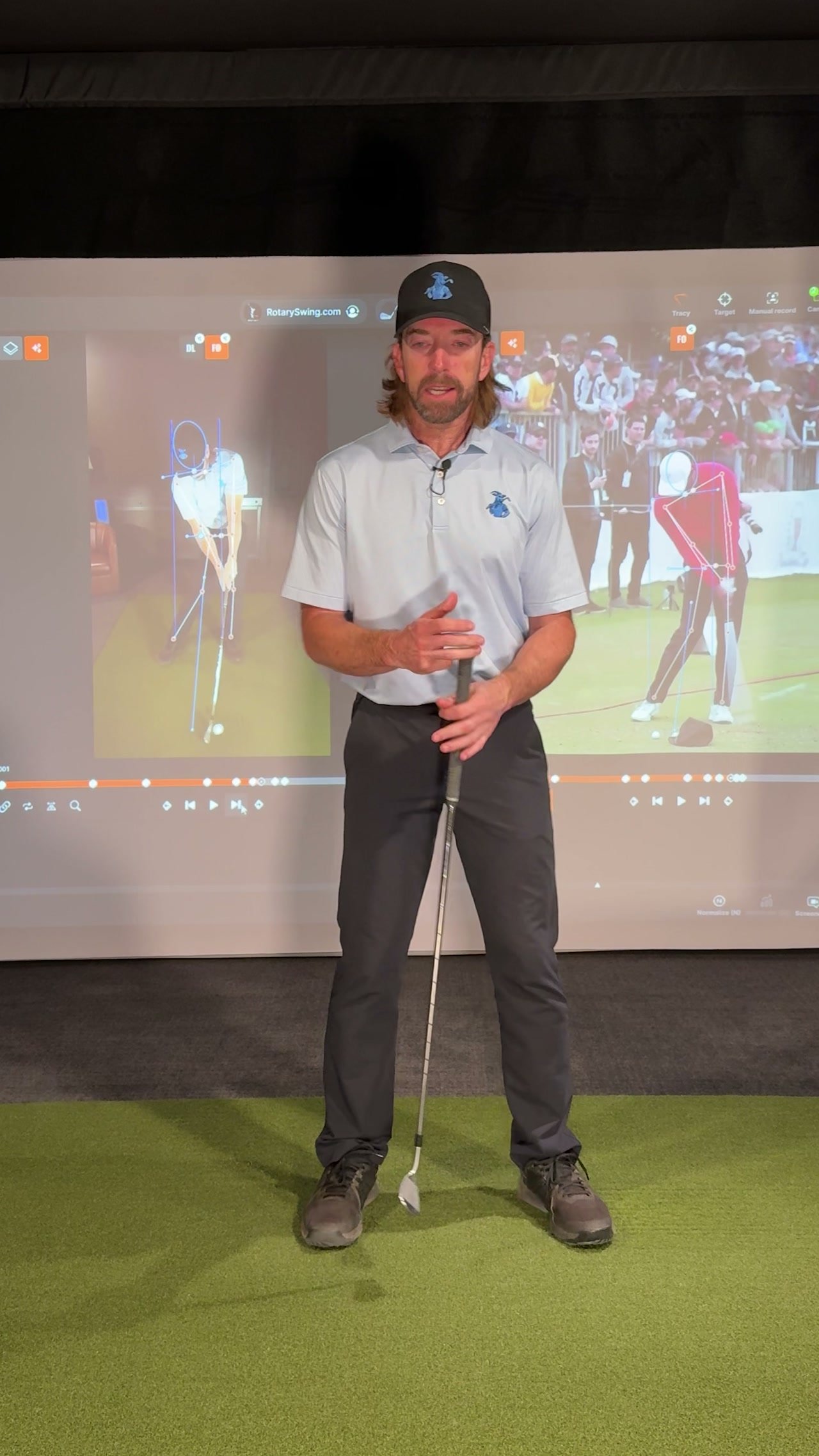
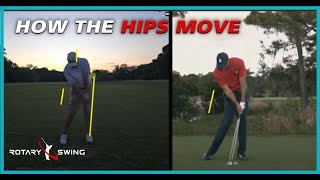
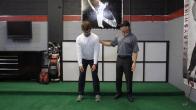
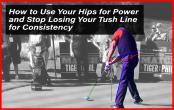
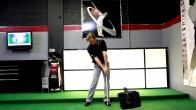
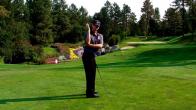
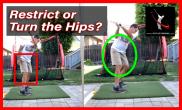
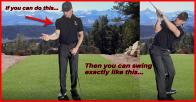
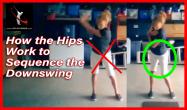
Both hips have to work in the golf swing, some golfers need to focus more on one vs the other, this video aims to reconcile both actions so you can learn to move them together rather than focusing on just one or the other.
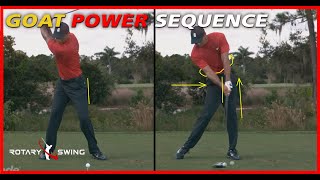
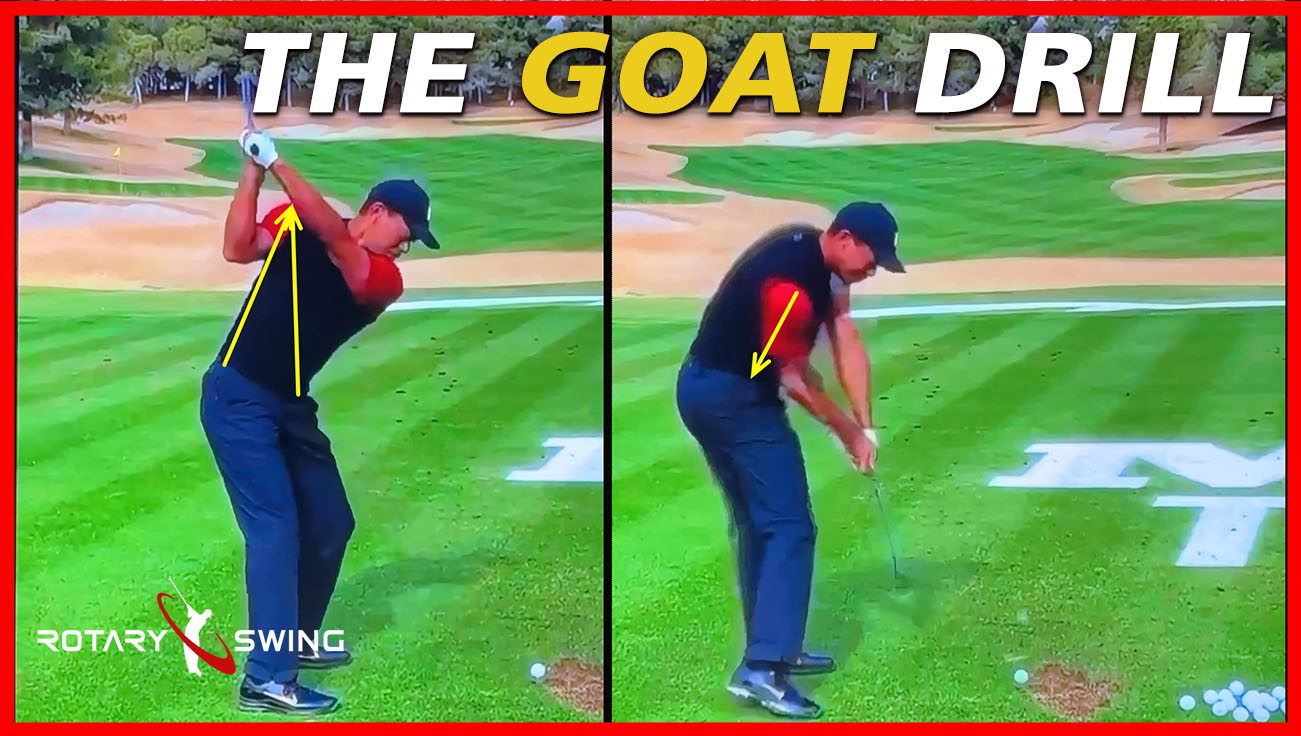
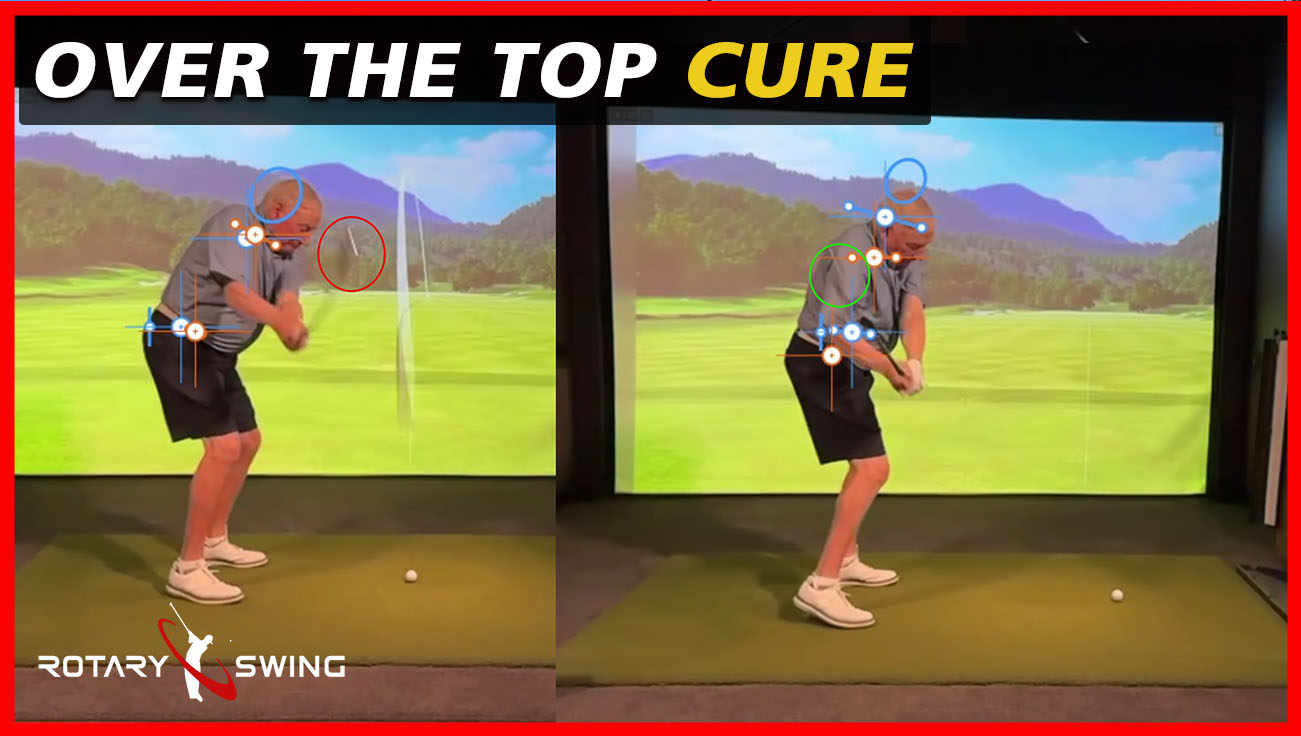
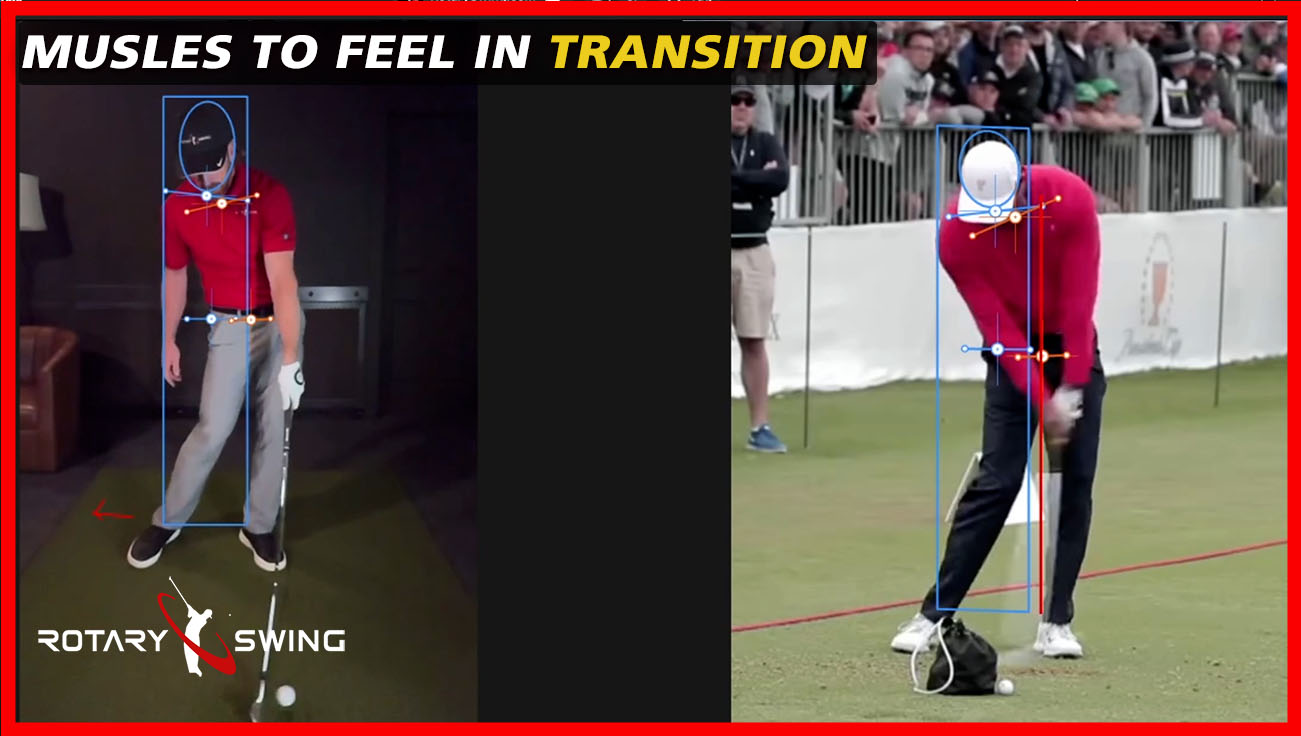
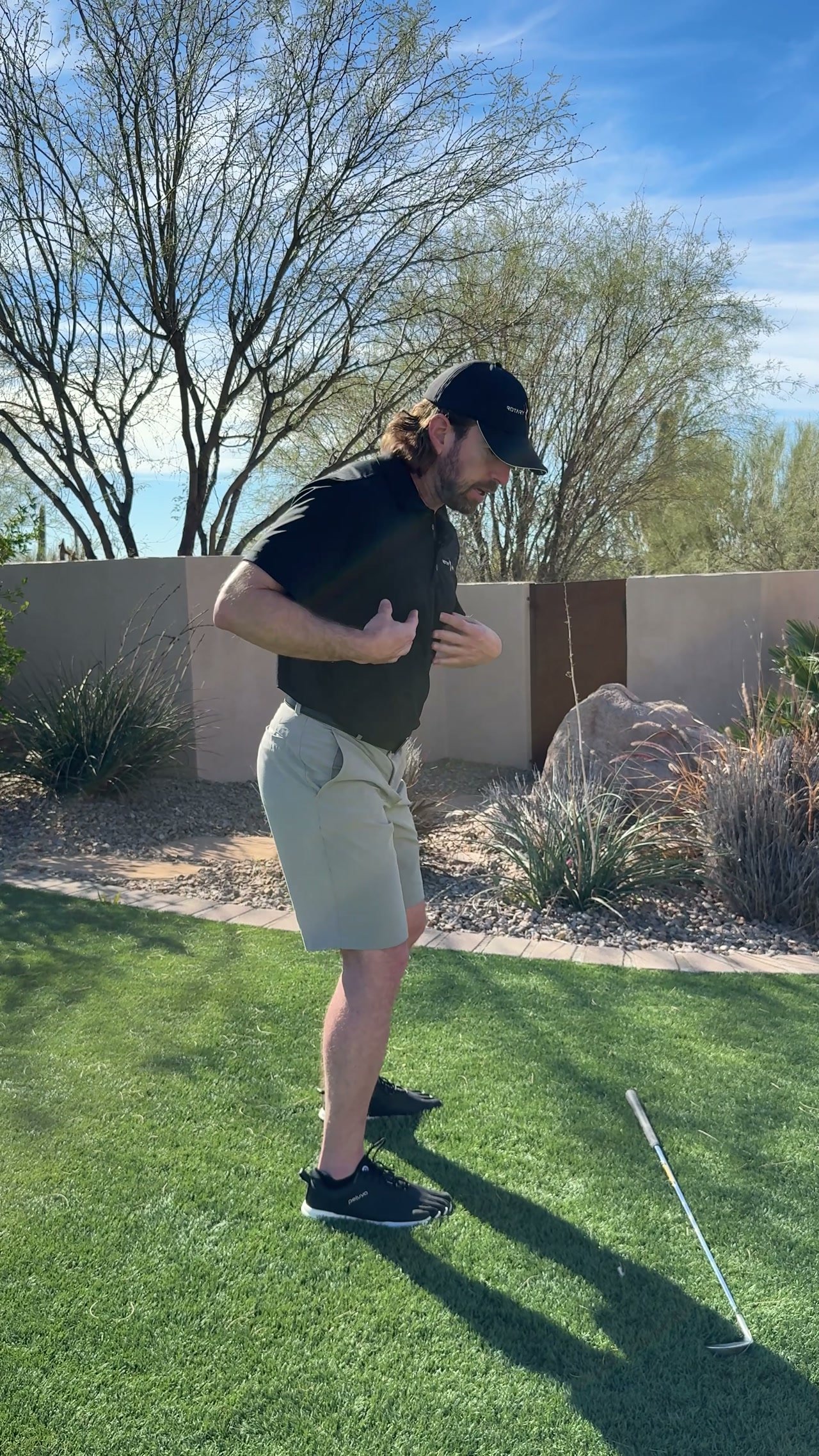
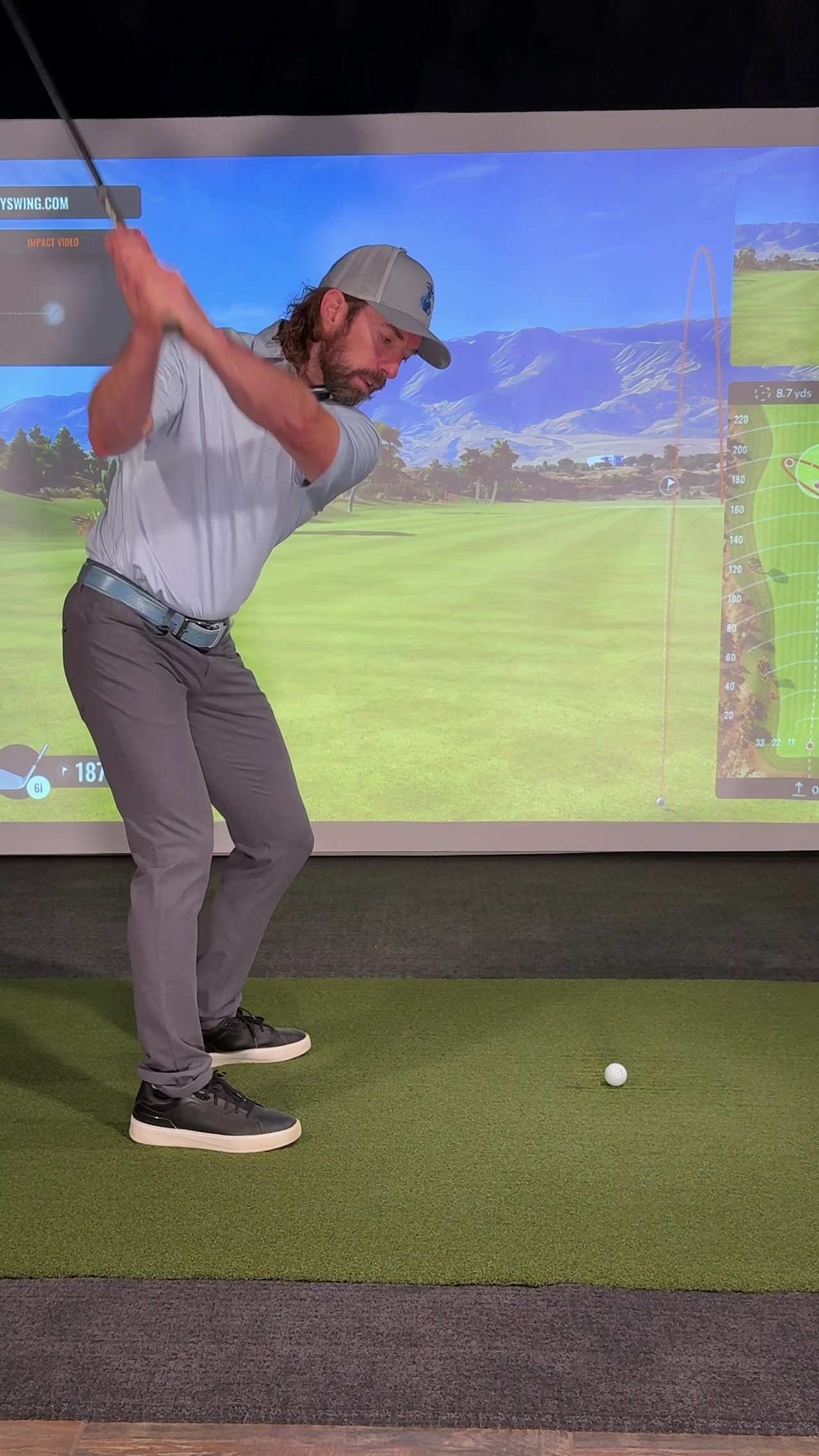
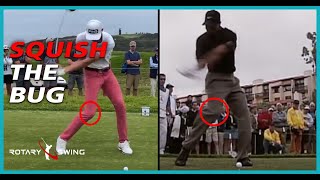
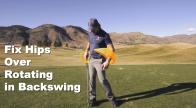
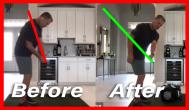
When you're losing your spine angle coming down into impact, it's usually because this trail hip is moving into the ball or your arms are firing down before your hips have had a chance to clear.
What does that mean exactly and how do we do that?
It's going to be very simple and very quick.
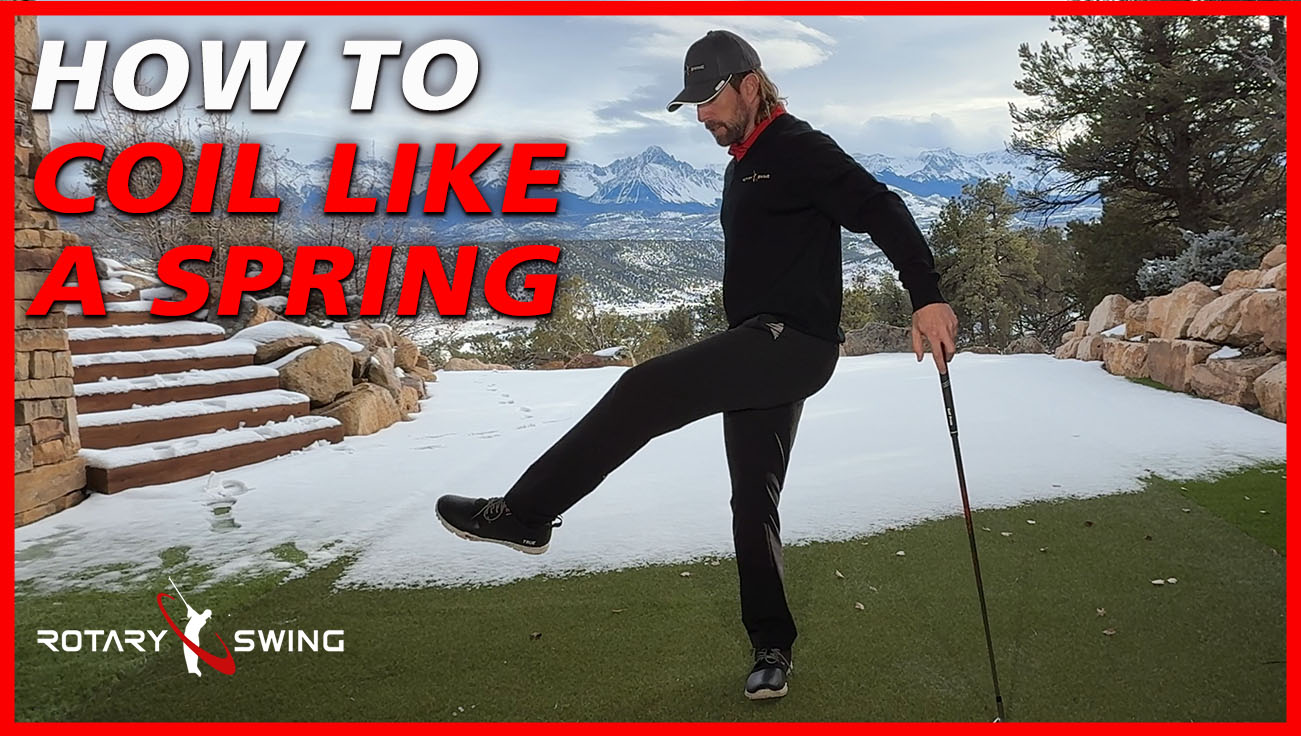
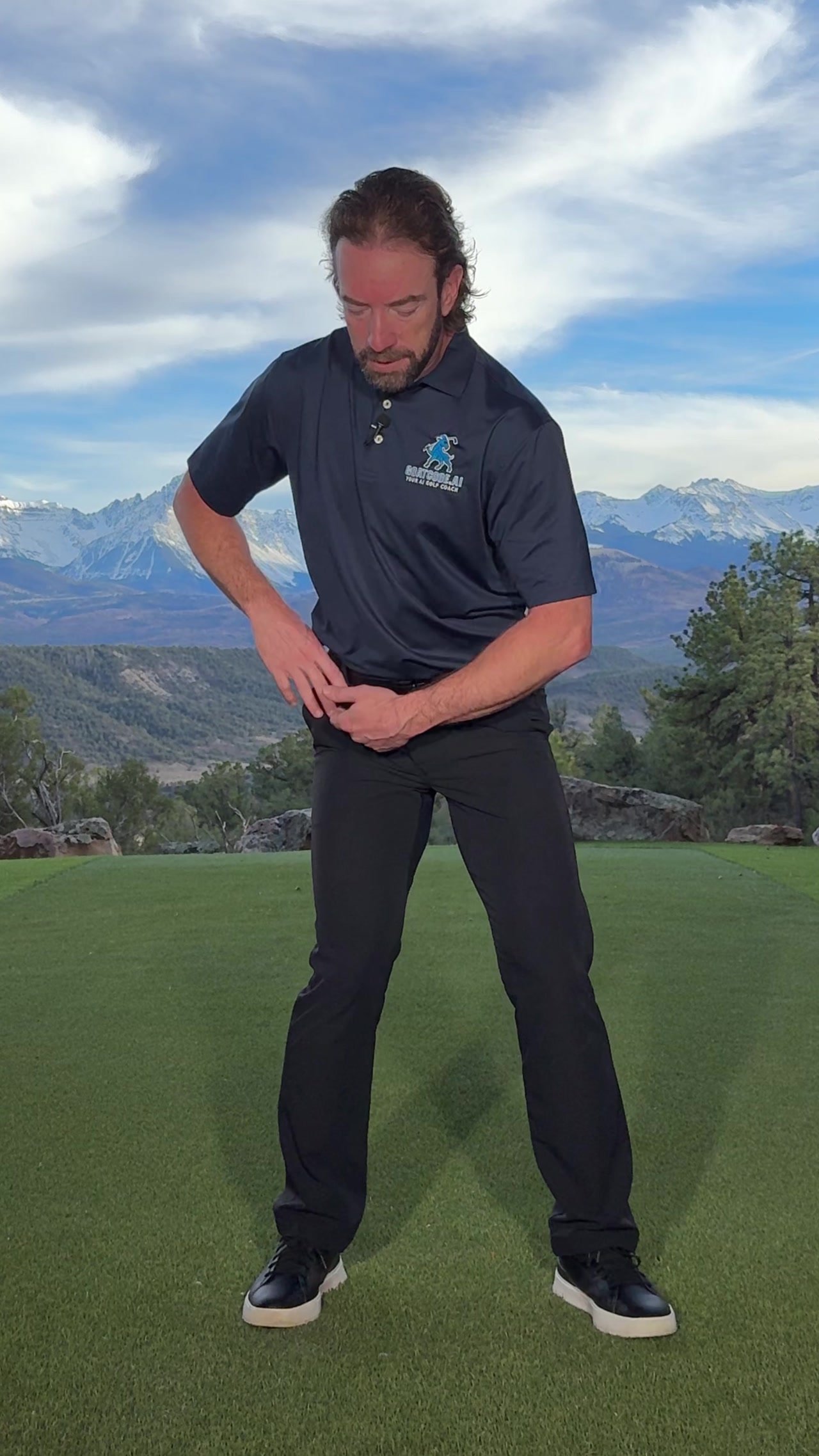
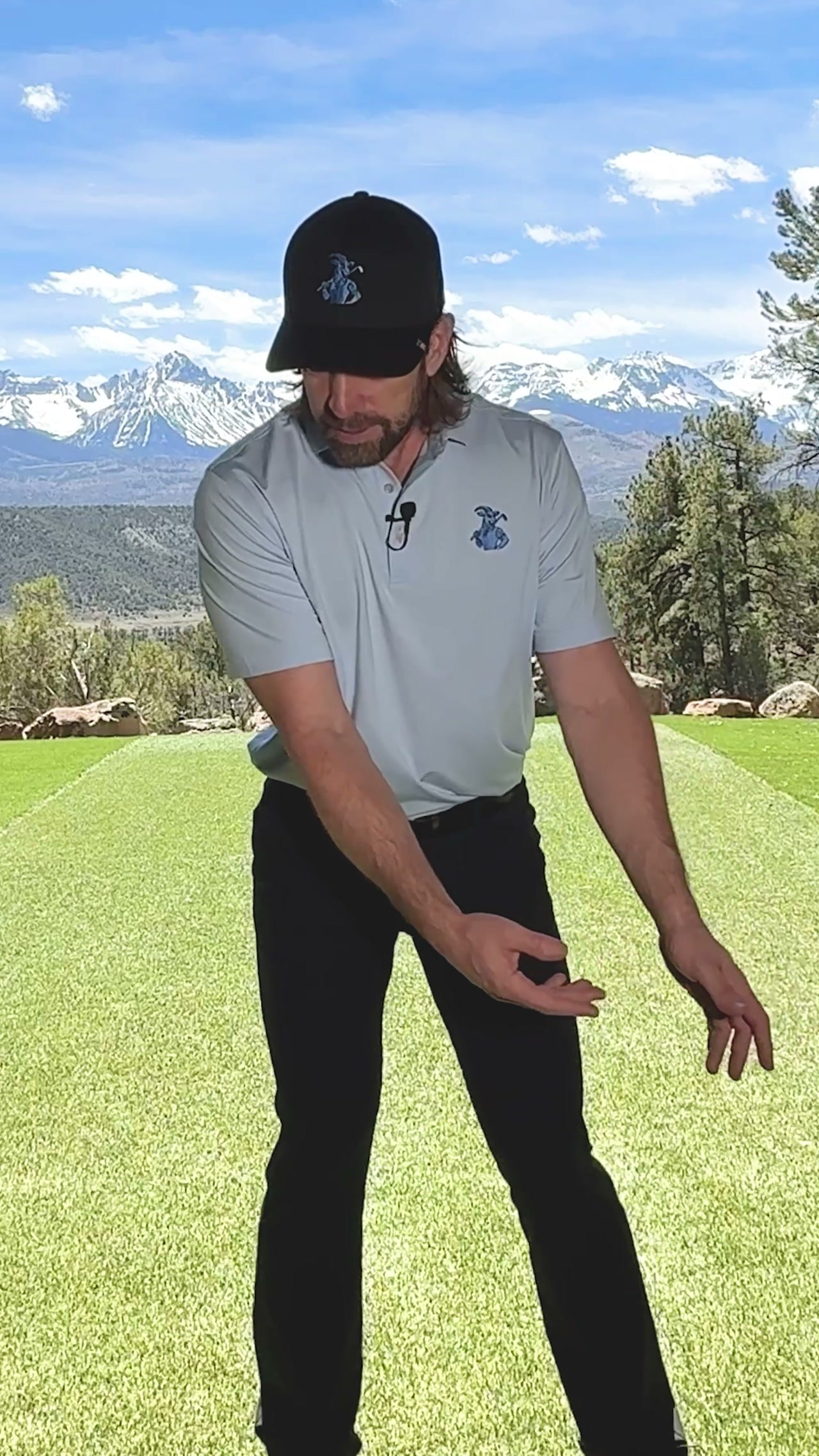
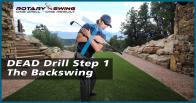
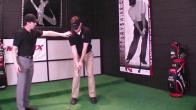
As you know, going back, the first thing you do is get into this trail side and it starts to act like a post, like a brace that you coil around.
If you saw my other video with a TheraBand how to coil around this trail leg, that's the first thing that happens in the swing.
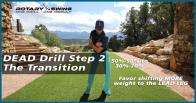
And as you keep coiling, you start falling back into this lead side, because, remember, your lead hip is going down.
It's very important that it goes down to start loading into the ground.
And you should feel stretching on the outside of your trail hip as this hip goes down because it's starting to lengthen these muscles.
And as this happens, as you start falling back into this lead side, because everything is starting to shift back over.
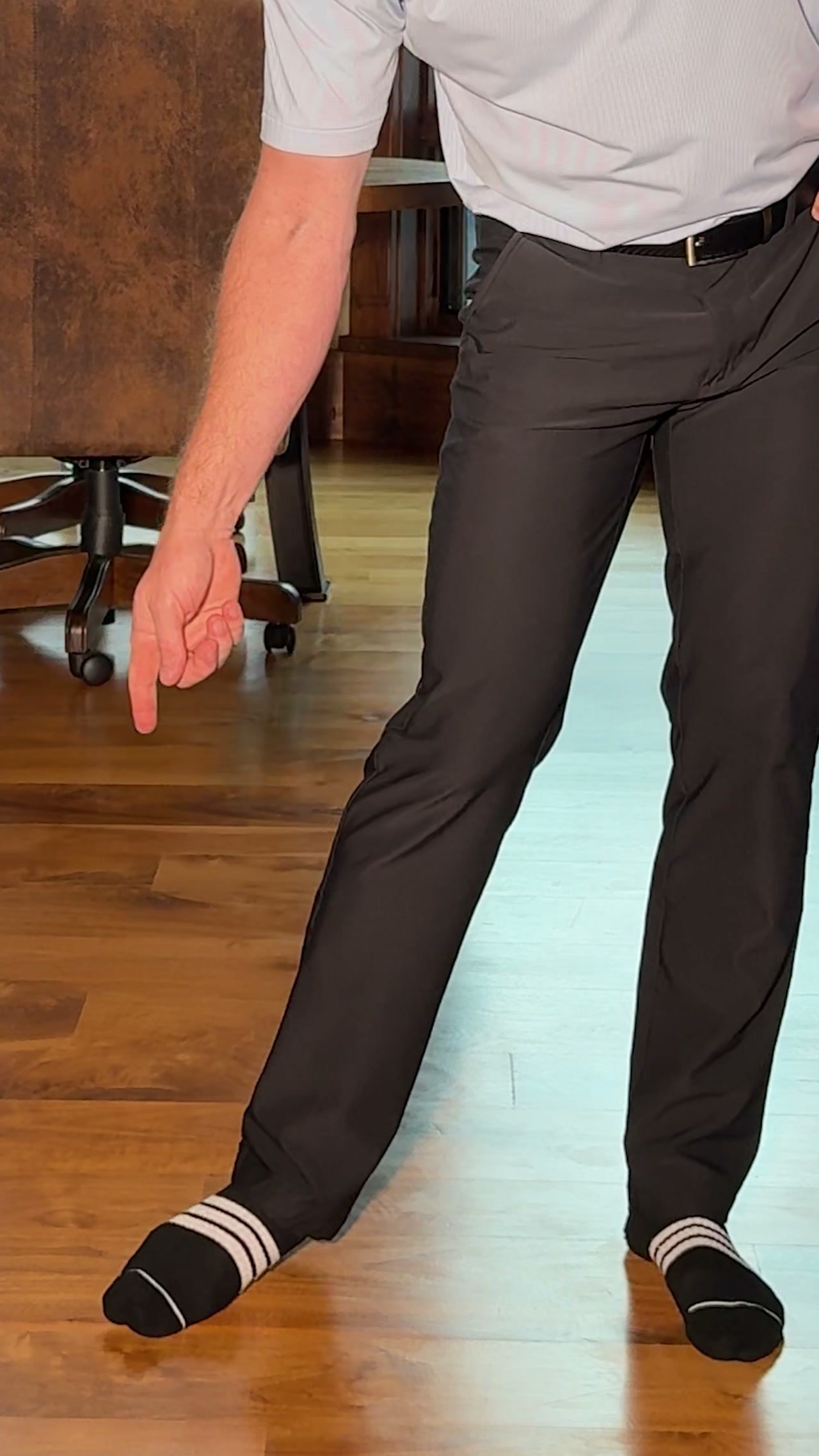
What happens is this foot starts to get light and I'm wearing socks with stripes on them for a second.
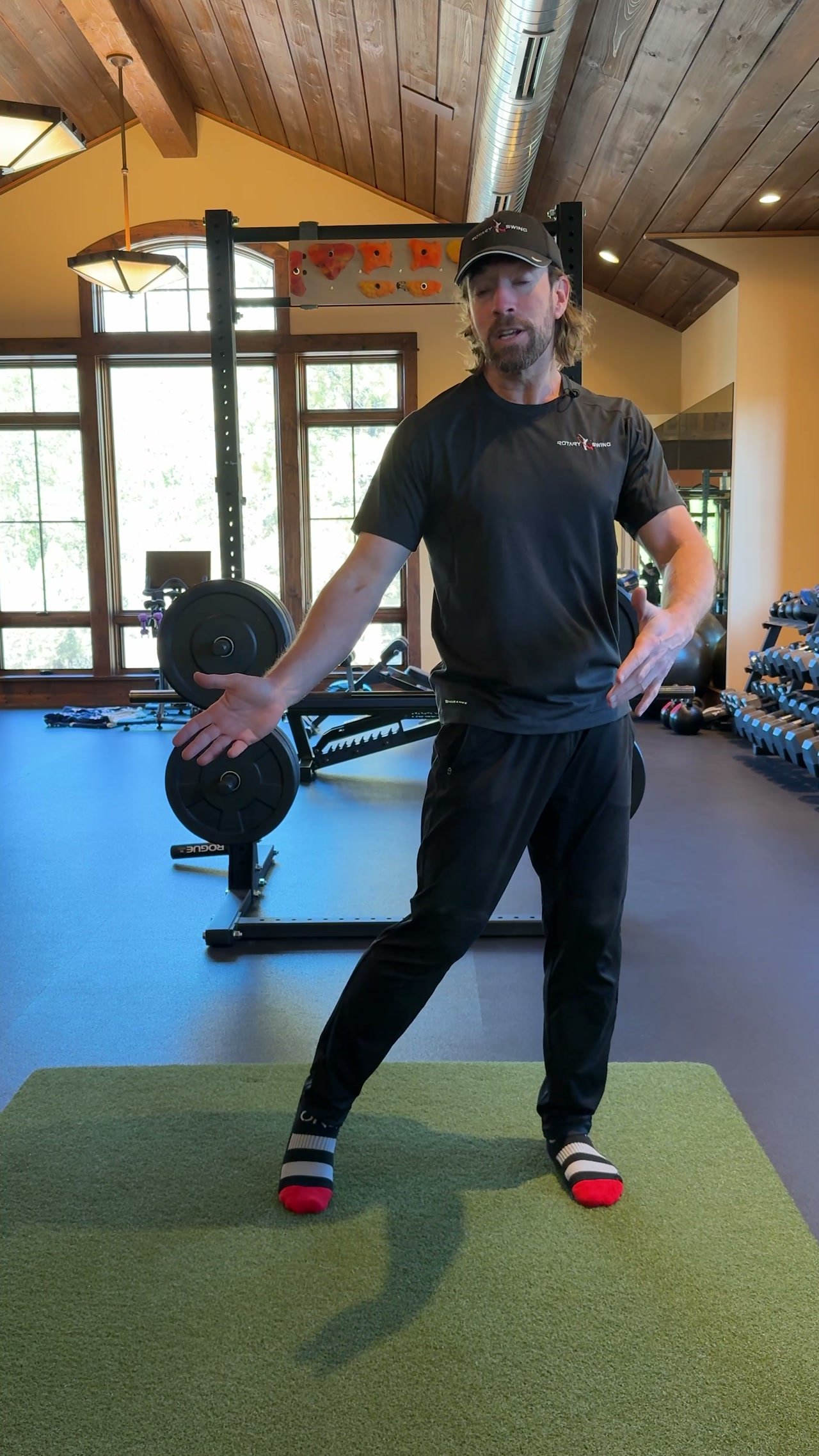
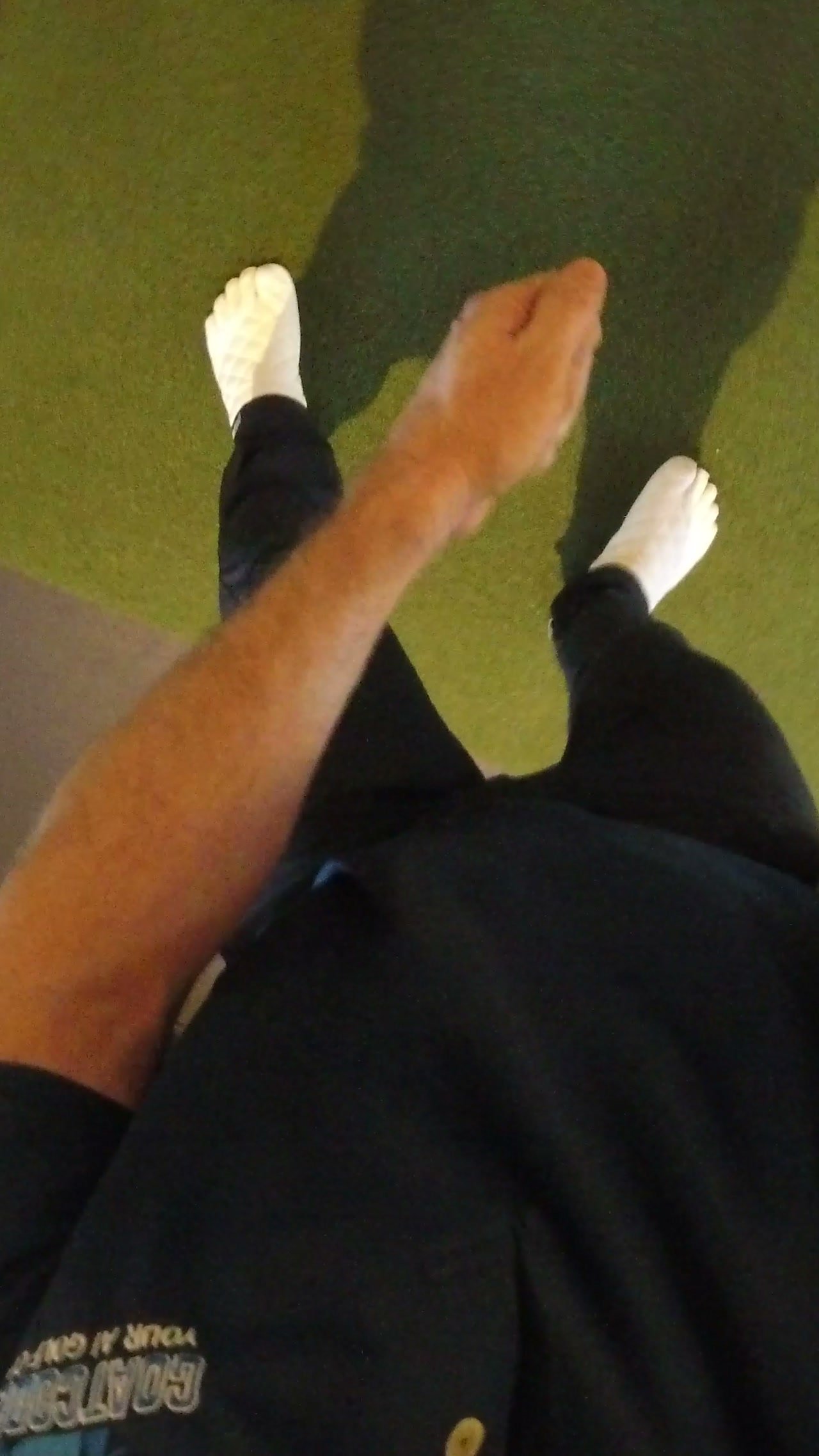
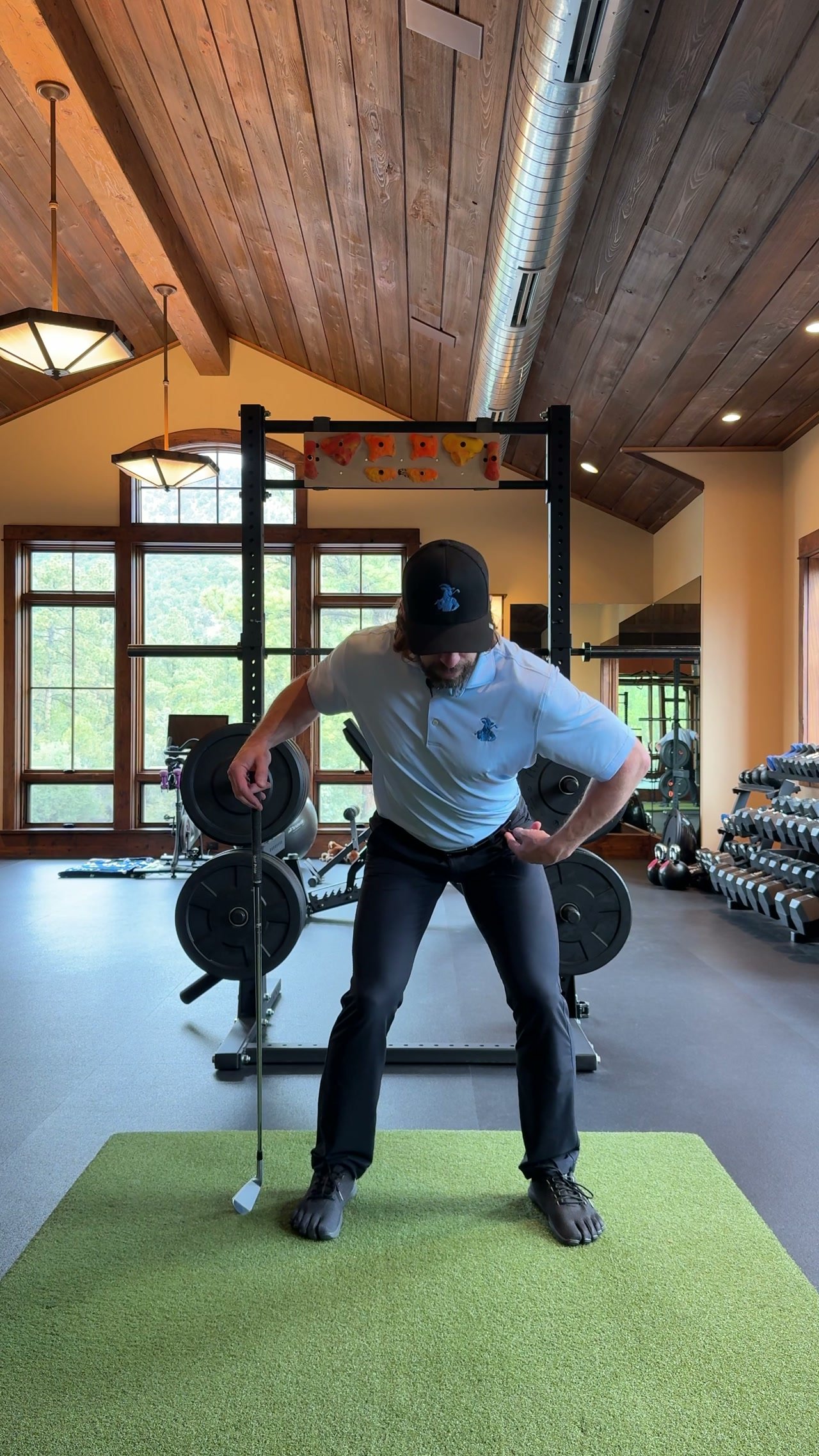
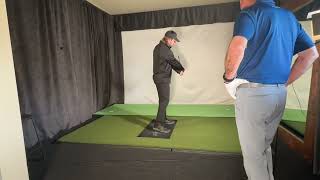
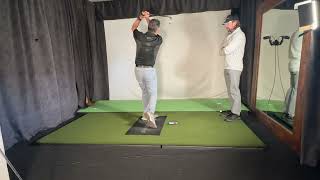
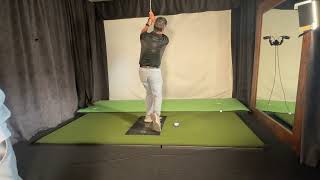
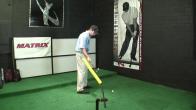
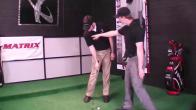
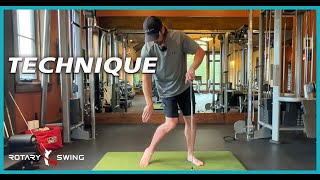
I'm going to show you I want you to practice this in your socks, on a smooth floor like this, where your feet can slide.
Because when you do this correctly, it's an instant tell if you're doing it right or not.
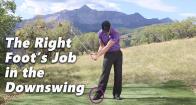
So what happens most of the time when people lose their postures, their feet does this, their right foot, your trail foot starts going like this, your hip goes into the ball, you stand up because you have to.
And what we want is the opposite.
So I get into my trail side.
And then as I'm getting back into my lead side, because again, my hip is lower.
So gravity is helping me get over here.
The rotation is helping me get over here.
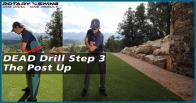
And then once I'm here, I let my trail foot pop up because it's light.
It's unweighted as my trail hip begins to, you know, let myself transfer pressure back over to the lead side and starts to uncoil because we've coiled the whole body up around this trail leg.
This hip now has got all the weight.
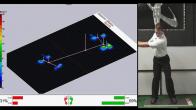
And you know this from force plate studies that all the pressure moves over to the lead side very early.
So you're only on this trail side for just a tiny amount of time.
It's not that you shift over here and then shove off of it, you're here and then immediately getting off of it onto this lead side.
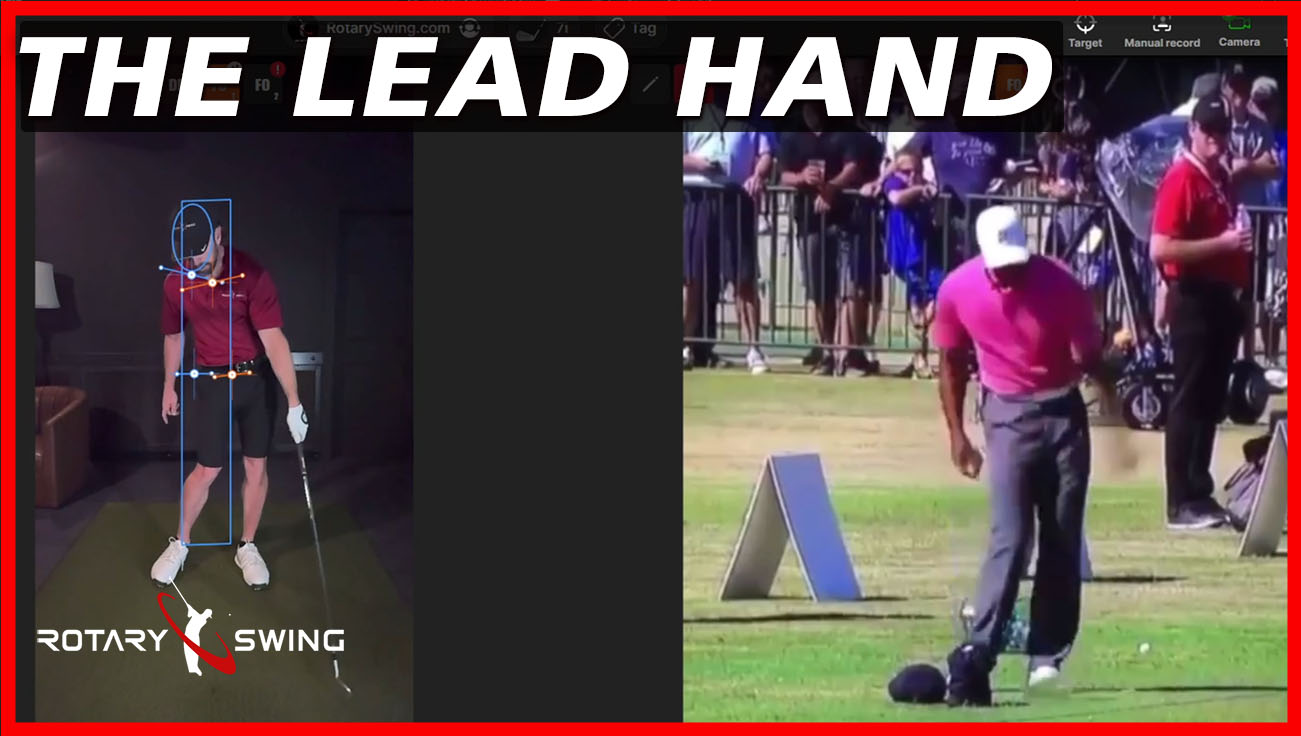
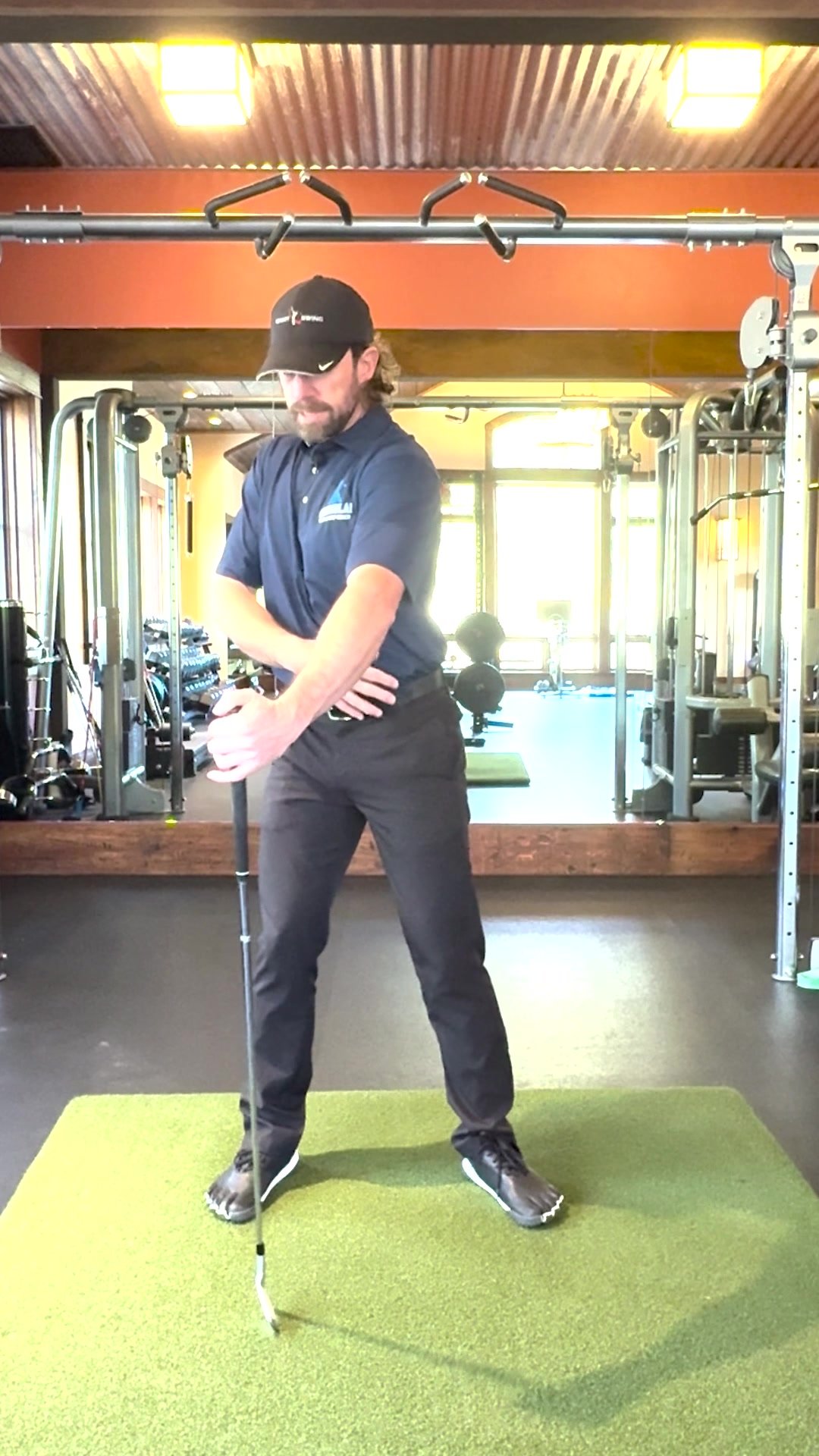
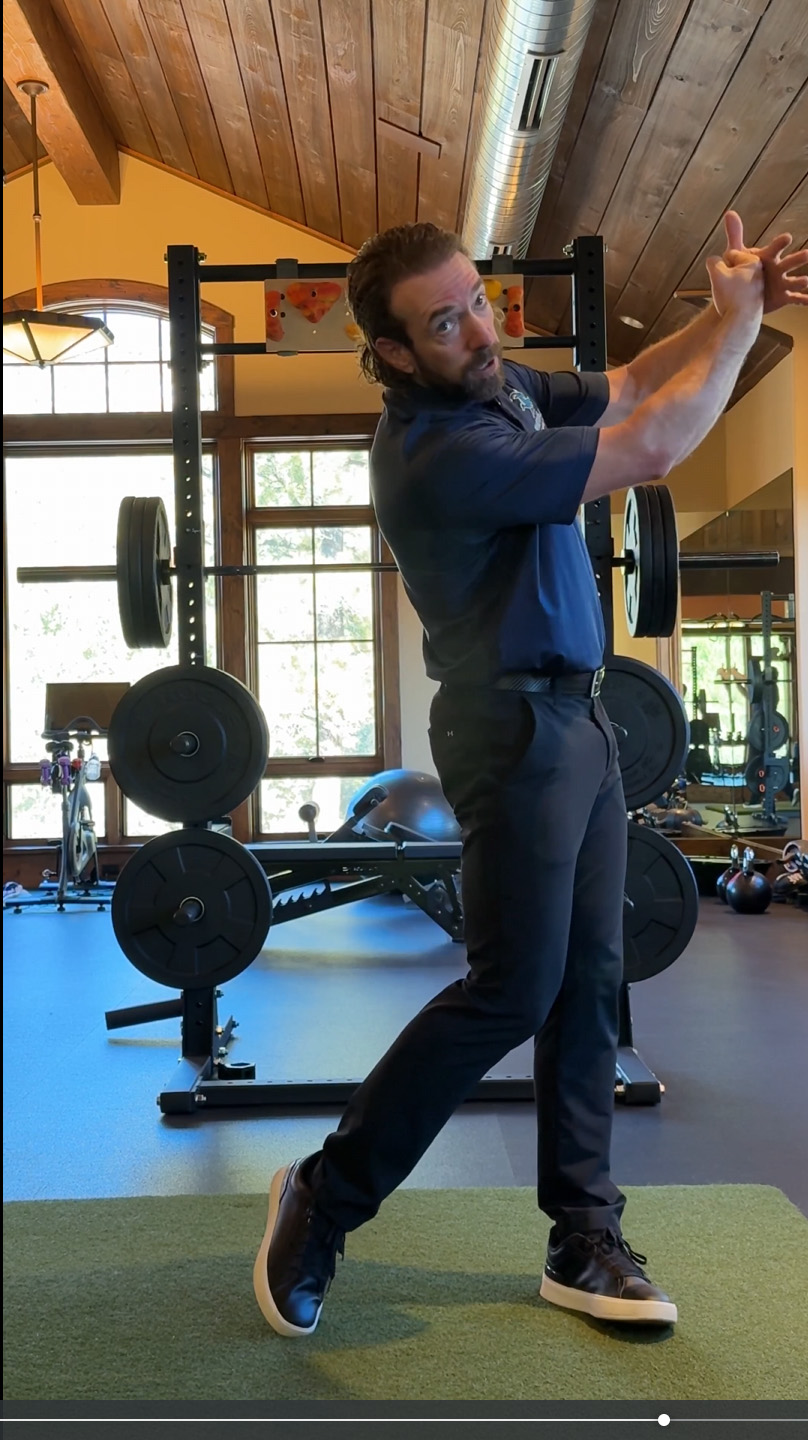
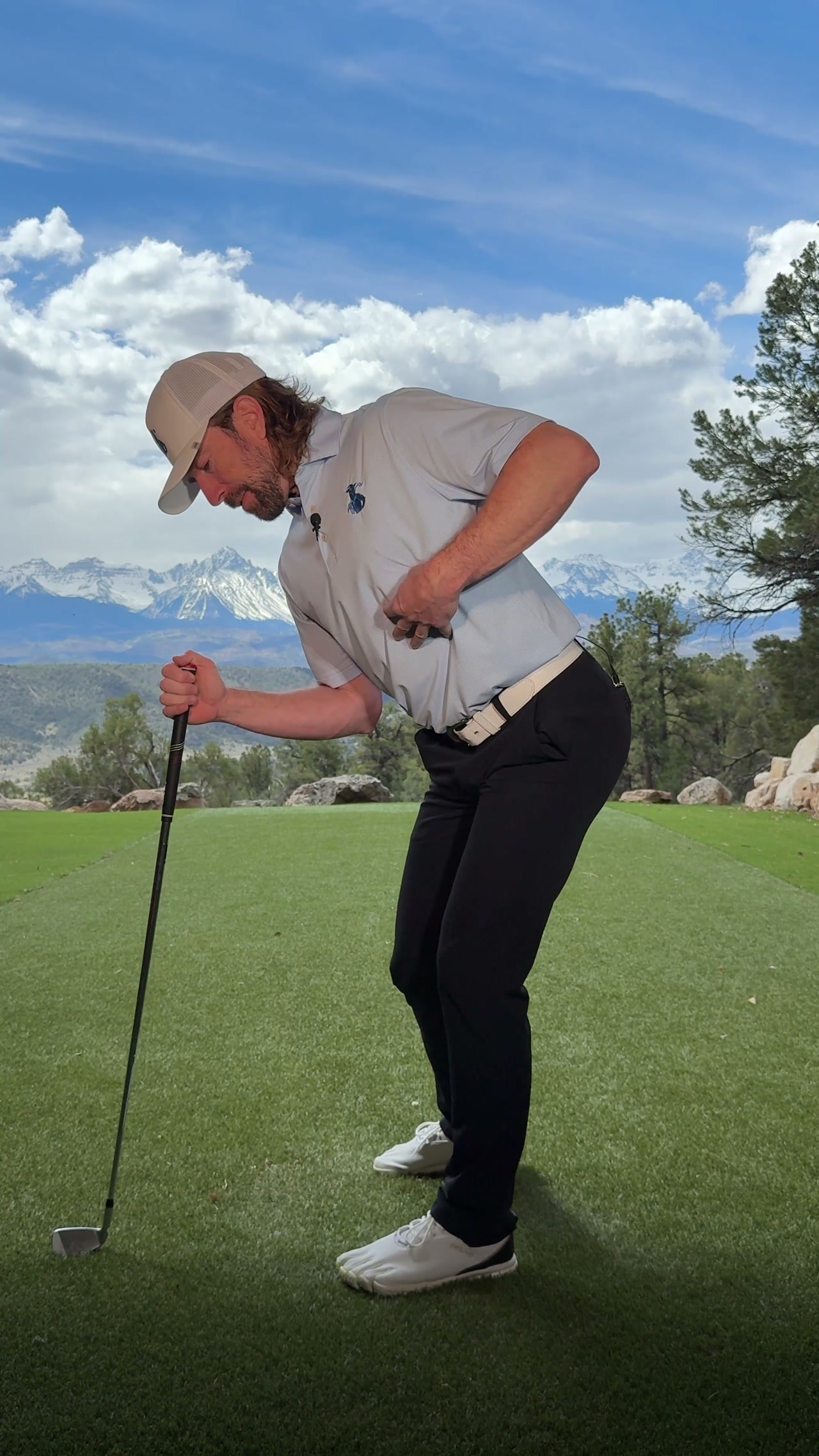
And then as both hips begin to work back, this is the key to maintaining posture, your lead hip has got to drive back.
So from up the line, you're going to see this and you'll see that.
That makes room for my spine to stay down.
When you're doing the opposite, your spine's coming up and Goadie's telling you you keep losing your spine angle.
It's because this is not getting out of the way.
This is what makes room for my arms to come down so I can hit hard with my trail hand.
And so what you've got to feel is not just coiling into this trail side.
This is the first thing that happens.
And then as you're getting back over here and this side begins to unwind, this side begins to take over and drive it back.
So you've got to get over here first, you can't and you can't shove yourself over here because that changes the entire dynamics of the swing you're falling into this.
And that's why that lead hips got to go down.
And then as you get all your pressure over, you want to feel your right foot, your trail foot just come up onto the ball of your foot and your big toe.
It's not you're shoving off of it, that's going to get you standing up and losing your hip, your tush line again.
So as you're doing this, my foot's just basically unweighted and my hip is going back.
I'm out over my lead or over my lead foot with my hip.
Not way back here, I've got to get on it so I can pivot and move that hip back.
So now here's what you should see in your feet when you're practicing this.
As I go back, watch my lead foot.
And again, these are exaggerations.
And this happens super, super fast in the swing.
But if you go slow at first, you can start to feel the big picture movement.
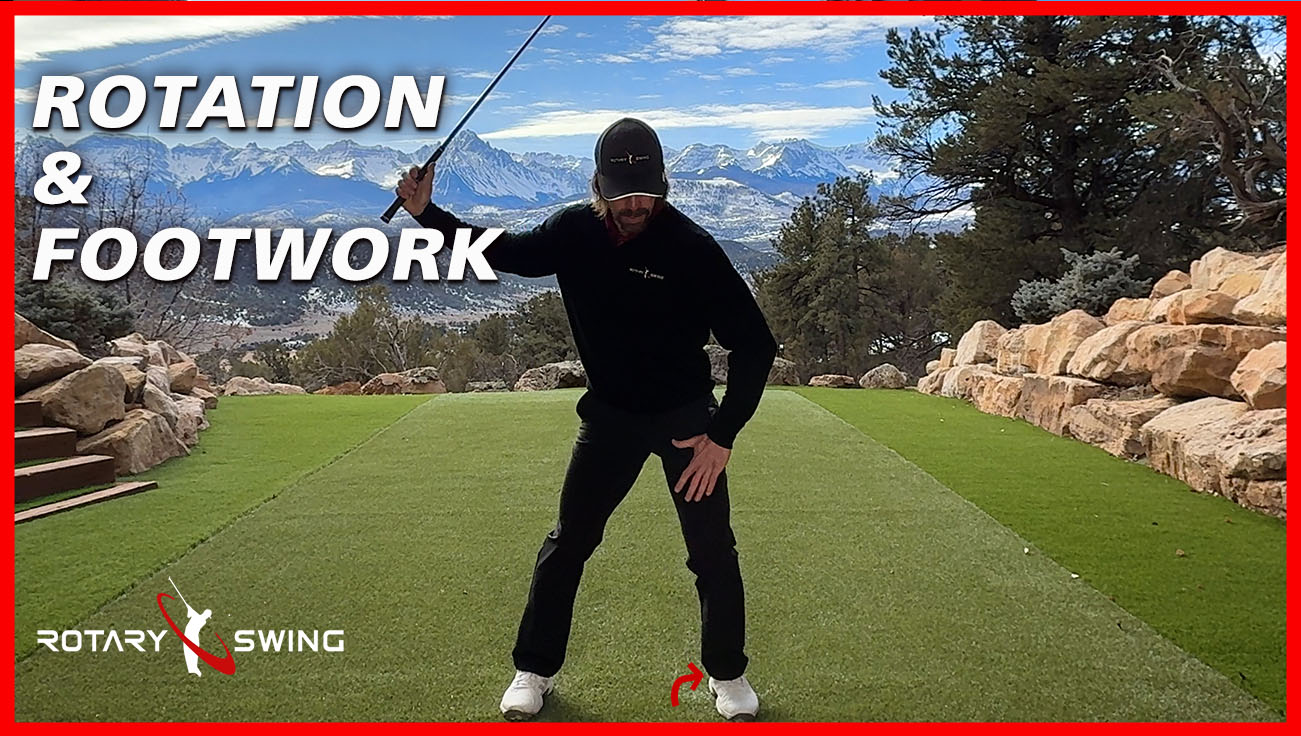
So as I go back, this foot goes this way.
And I see all the time if you start firing with your upper body like this.
you'll see your lead heel go like this.
Your lead hill goes toward the target just slightly.
And again, these are very subtle, but this is a big picture exaggeration to get the feel.
And then as I start to take over with my lead hip as my trail hips uncoiled, now my trail foot gets pulled in this way.
So my heel is not going like this.
Once my lead hip begins to drive back and my pressure shifting over, it's pulling my heel, other heel in.
So both heels do this during the transition in first part of the downswing, not this.
If you do that, you're pushing and that's going to produce no power.
So let your foot settle.
This one pops up.
And again, you're not going to pop up like this onto your toes like this when you're hitting a wedge shot, but when you want power and when you're trying to learn the movement, it's perfectly fine.
And then as this heel goes back, then that makes room and this knee just moves straight down the line this way, and then your heel starts to come up.
But you don't want it going like this.
So if you practice on a smooth surface like this, you can get the feeling of as I coil, my heel naturally wants to go that way.
And then this one, you'll see it pops in just a little bit and then as the heel goes back.
The last big key.
When you start to get this right and you're really starting to add some forced to it.
Watch my right foot, watch it again.
Do you see how it's turning like this and then sliding back?
Because as the glutes begin to engage, as my trail hip begins to fire, it pulls my foot back as the lead hip is also driving back.
And that is the feeling, because then you've got some resistance to be able to throw and hit hard at the bottom with your trail hand.
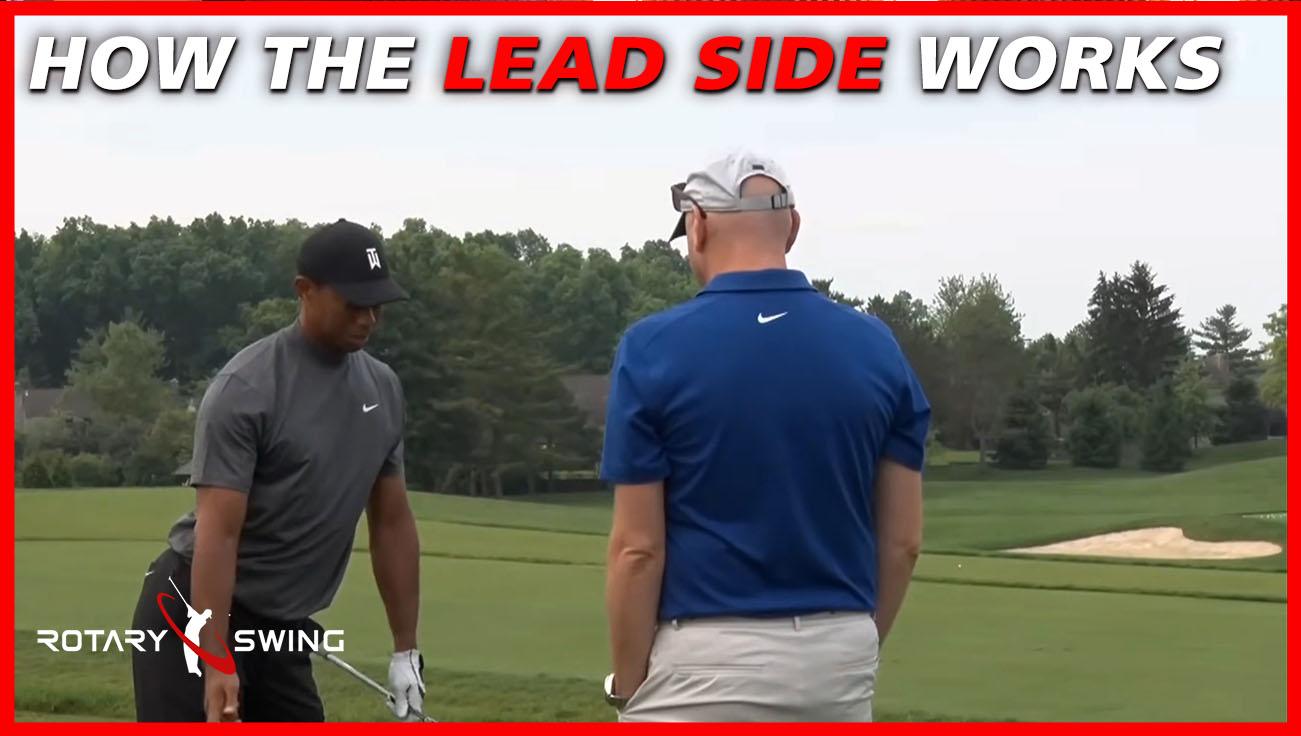
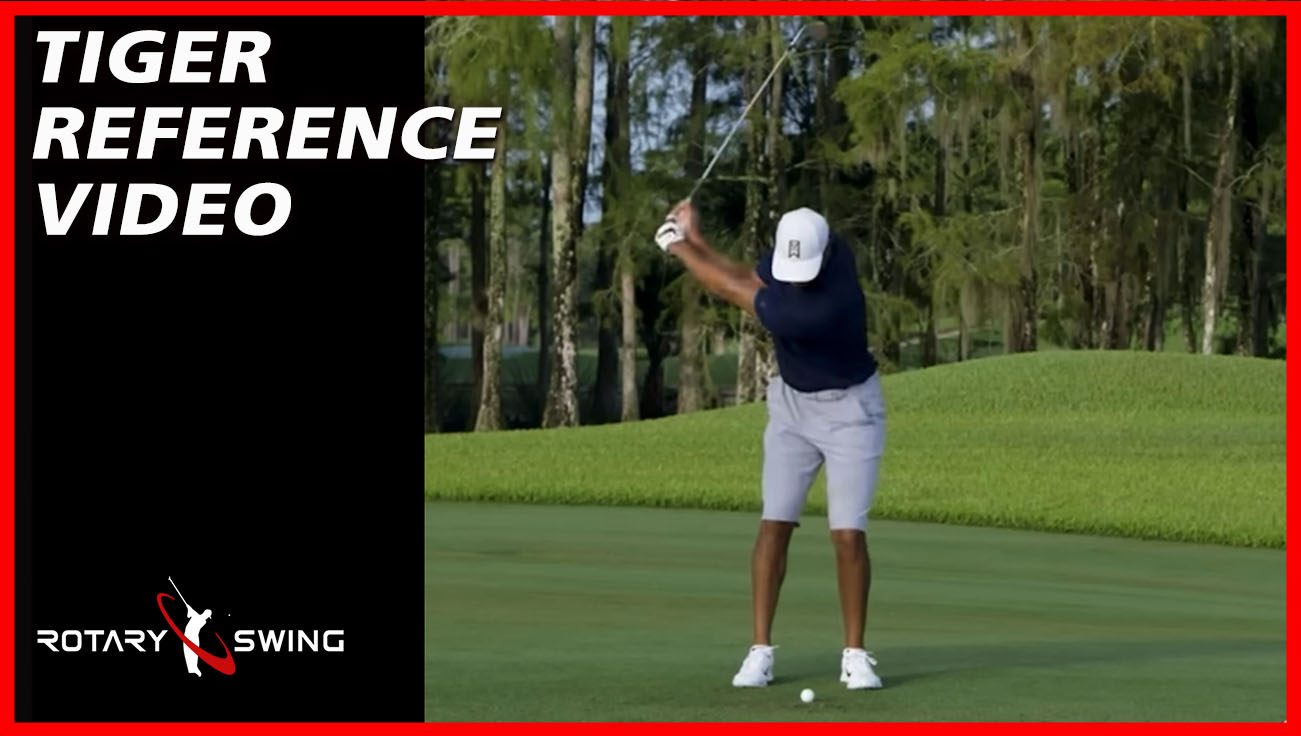
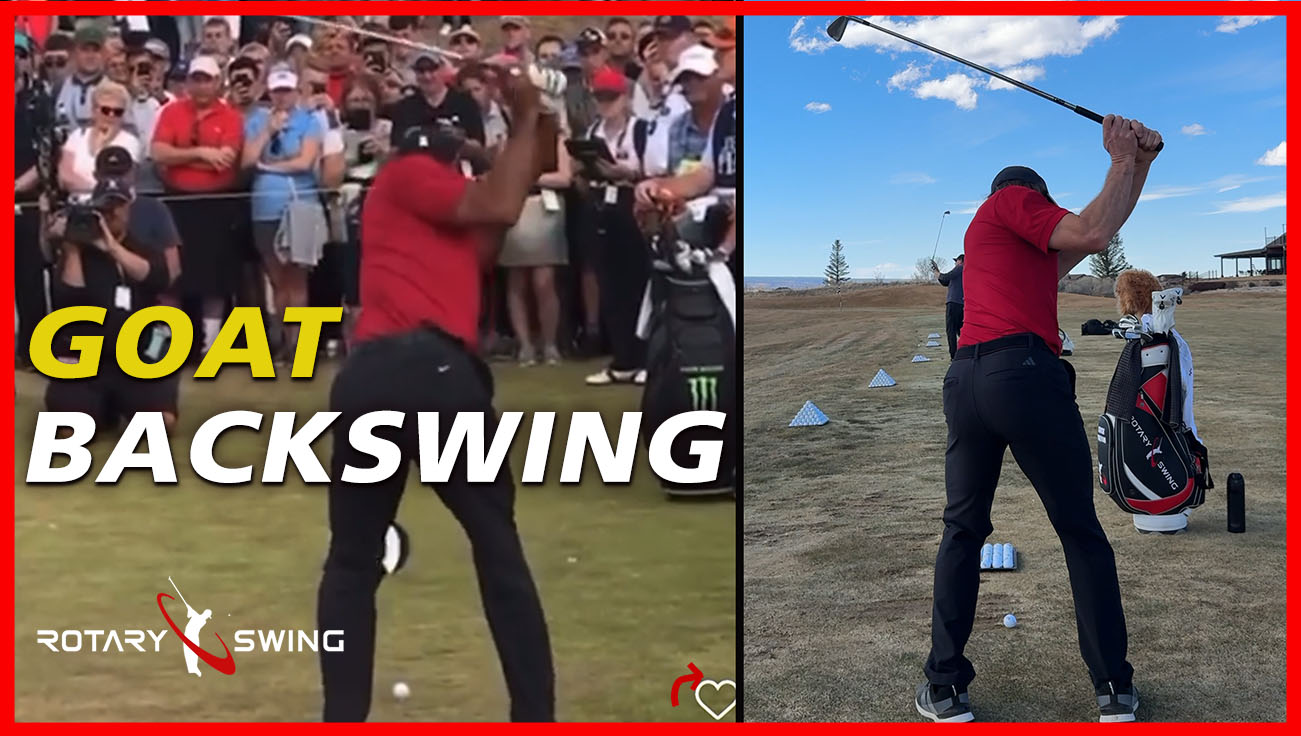
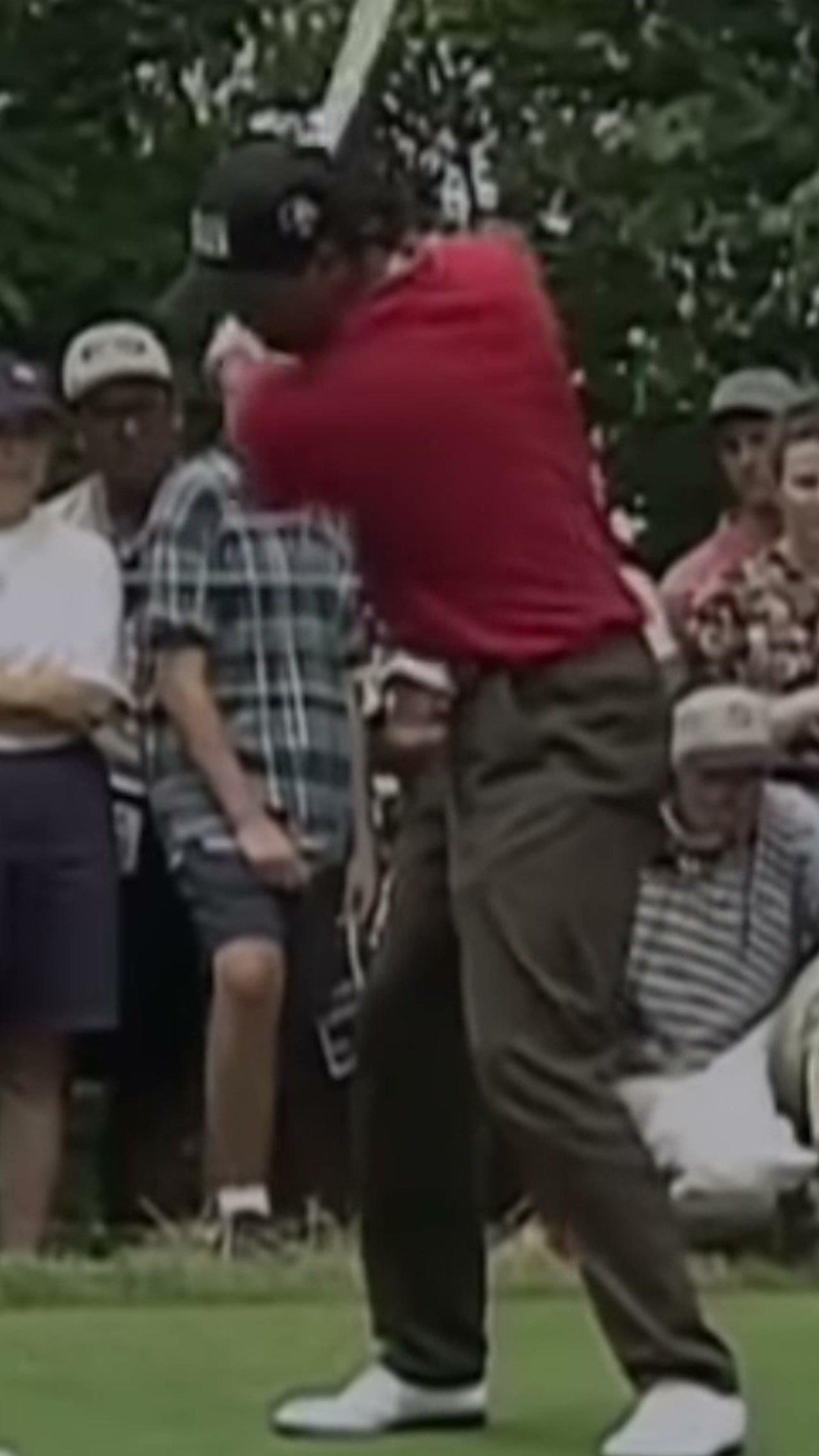
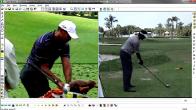
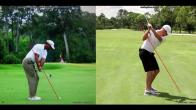
And here's a quick clip of Tiger talking about basically these exact same moves.
She could brace that right leg a little bit better on the way back, she can then drive the right knee more, more in towards the golf ball instead of kind of out, sort of more in for the target line instead of out.
Like she has it.
Use that right thigh, brace that right thigh, get into the right hip, but not let it roll outside, like, get into it, use it.
And then, as you push forward, make sure that your butt stays back.
Which gives you all the room in the world to swing left or down the line, or push out to the right, whatever shot pattern you want.
If that stays back, you get all the room in the world.
You don't have to use your hands at all.
Try and pull with that left hip, mm-hmm.
keep the right shoulder back for a little bit now.
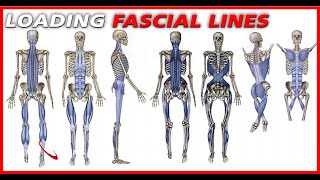
In a previous video, I talked about how using the lead arm and spiraling around this trail leg gets the whole body loaded and stretched.
But there's fascial lines on both sides of the body, of course, and then the trails are in the lead hip side.
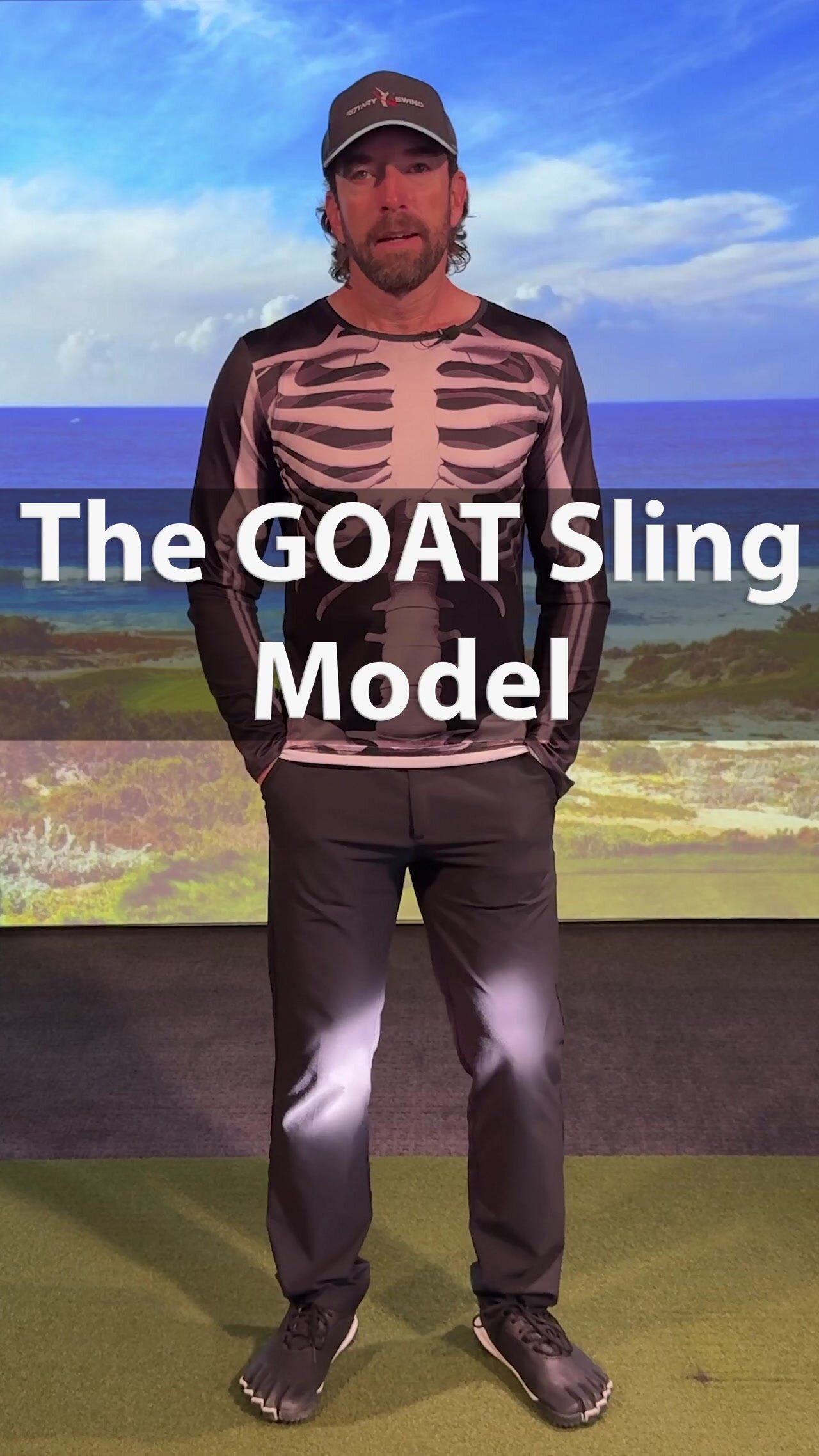
what we're focusing on is this lead hips going back, it's making room, but it's also stretching this fascial lines called an anterior oblique sling.
And so if you imagine this, I'll make a really simple, quick explanation.
And you can feel this at home.
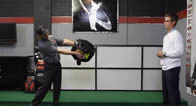
If you're practicing with these guys, you just wrap it around.
Oops, I went the wrong way.
I usually go inside of my foot like that, like this.
And now imagine that you have this big rubber band attached to your pelvis, going up through your core, up to your trail shoulder and even to your trail hand.
As I'm clearing this lead hip and my hands are floating and waiting for just a second.
Because they've got to allow a stretch to build.
You don't want your arms coming down straight away.
Look what happens to the rubber band.
I lose all that elastic energy.
But if I go first with my hip as I'm shifting over and then this lead hip begins to drive back, this is staying stretched.
Do you see that?
It's not this.
I don't, it's why I don't want to push.
I'm not pushing with my trail leg.
I'm not pushing with my trail arm.
I'm letting this come around, pull me around.
And so now once I'm here, I feel stretched on the inside of my arm, all the way across my chest.
And when you're doing this fast, it really becomes exaggerated where these arms are hanging back and you feel like you've got so much load to be able to throw and hit hard at the bottom that's what you want to feel so if you imagine what you're trying to do it's not just one spiral fascia line it's the whole body working as one so that you can get your whole body into every shot
Try a free live lesson with GOATY
GOATY, my AI golf coach, watches your swing through your phone camera and coaches every rep. Free, about 20 minutes, no credit card.



KALEB
Craig (Certified RST Instructor)
Ken
GOATY