























































































































































































































































Q-n-A Webinar 18: Apr 1
Sorry, you need to be a member to access this video.
You Are Just Seconds Away - Become a member here!
Already a member? Log in now


Try a free live lesson with GOATY
GOATY, my AI golf coach, watches your swing through your phone camera and coaches every rep. Free, about 20 minutes, no credit card.
Q-n-A with Craig Morrow, eighteenth webinar, April 1st 2026
Hey, Mark.
As usual, I'd be disappointed if I didn't see you.
Can you hear me?
All right.
Well, two for two.
Hey, Tom.
How are you doing today?
Sorry to kind of help you out so much on that community question today.
If I can see the move, I'll help you out a little bit more.
It says a side note.
Hey, Jonathan, Howard, Stan, Charles, Mitchell, Josh.
All right, oh, Mark I, I did they do something I don't know about Mark because I know both of them.
I know George very well, I've got my own opinions on George.
All right, well, before we get started on that.
And I have a heart attack.
Um, so I know this has nothing to do with anything, but I just came down the street and a whole thing of water was coming from my mother's house.
So I just, I literally just turned off the water and then now I'm here doing this.
I'll figure it out after the webinar.
So how's everybody today?
If this is your first time, welcome to the webinar session.
I will be your humble RST host, Craig Morrow.
And if this is your returning time, you know the drill.
What I do is I'm going to let people get in the room, pile in for the first couple minutes, and then I'll get started on tonight's Q&A session.
And as usual, I'll give a little bit of time to the end to some questions to the crowd.
And if you have any questions or anything, make sure you put them up in the community now.
With that being said, all right, with that being said.
A lot of people wait until today to get their questions in.
Now, I know some people are procrastinators, you know, late studiers, so to speak, you know, wait until right at the end to give the teacher the.
But, so I may not get to you.
So I'm going to see if I can do another session, you know, a little bit tighter window if I don't get all the questions answered today.
But I'm just telling you procrastinators, I have them.
I just don't know if I'm going to get to them because.
We do have a healthy list tonight.
I am toast.
Hey, Scott.
Hey, Ray.
Hey, Michael.
Is George like his on video?
Oh, well.
I'm going to say that he's grown up.
How's that?
He's grown up.
I wouldn't say he's exactly like he is on video, but he's a lot closer to the way he is on video than he was in his younger years.
I think him and Wesley have made a great career out of YouTube and doing what they do.
I think that playing mini tour golf like George was doing, that's tough on anybody.
It's just brutal.
And George kind of wears his emotions on his sleeve, as do I.
But he wears his emotions on his sleeves, especially back in the day.
I think after he got married and ETC, I think that he grew a lot, and so I don't hold anything against him.
I wouldn't say he's exactly like video, but he's closer today than he was in his earlier years.
Noah's father teaches in Columbia, South Carolina.
The thing is, what's funny is George has always been better than Wesley.
Just as a side note, back in the day, they're both great players.
But George, you could tell that George was the one, the better player.
And I think that was a little bit hard on him because he was kind of.
Than the chosen one, so to speak.
So I don't hold anything against them, but I'm definitely happy for their success and what they've done in the golf and YouTube world.
Because they definitely, they bring people in, and that's my whole thing at the end of the day.
It's why I quote, unquote, don't like the PGA because their motto is grow the game and they do everything the exact opposite.
So, um?
And that's what they do.
They help bring people in.
That's what we need.
All right.
Yeah, yeah.
Man, he's a hell of a ball striker, Mark.
Really is.
And like I said, nothing against him.
I think he really came into his own once he started focusing more on that side of golf.
Back from North Myrtle Beach.
It was a successful trip.
Hit the ball well.
All right, Tom.
And for those of you that don't know, Tom.
If I'm thinking of the right top, he's in my unlimited group, so he just got back from a golf trip in North Myrtle, so we were trying to get things buttoned up before he went down there.
Played a couple of my old stomping grounds when I lived in North Myrtle.
Bill.
Bill.
Hi, Bill.
All right, I'm going to give about a minute or two, then I'm going to get started.
And I apologize if you see me sweating profusely, because I am.
Oh, hey, Bill.
All right, so I'm going to give two minutes.
So any other topics anybody wants to talk about before we get started?
Because my counter is still going up right there.
Howdy.
Hey, Bill.
That's my line.
I'm always the one, and I'm like, howdy.
Hopefully, everybody's got some good plans for Masters Week coming up here in the great state of Georgia.
Haven't seen you in a while.
You look so young.
Me?
All I've been doing is putting on weight, Tim.
Cortisol stress, and Goaty chasing me down over here, just stressing me up, putting on.
Giving me more of a spare tire around here.
The reason I look young is because you don't see me with a hat in my face.
Like, that's I've got, I've got a auto, I've got an autoimmune thing going on right now.
Um, and so I had to cut my hair, had to shave my face, and I'm kind of going through some stuff with that.
So that's why I look different for everybody.
It's like, Wait a minute, you look kind of funky, believe me, I don't like looking like a baby.
I think I had a mustache or a five All right, I will do these two and then get started.
GerAld Just watch the Uh, Artemis Moon launch and wondering why that is easier than fixing my swing.
You want to know why?
Gerald?
I can explain that because there's a formula for that, There's a math for that.
Golf, there might be a formula, might be sequence of events and all that, but you got to throw in that old field and you got to throw in the brain.
You plug 0-1-1 -0-1 into a computer, it does that.
You plug 0-1-1-0-1 into this computer, it's like, I don't compute.
What are you talking about?
Is there, I'll do this one and get going.
Is there lag?
between pushing the trail leg into the ground and starting to rotate the core?
Is there lag between?
I mean, I still think about it as ground up.
So what I've been seeing in answer to that question too much is players starting from here and then trying to rotate and throw their hip back, and their arms are right here.
And they have no way at getting to the top now other than trail, arm lift and picking up their arms.
So it still kind of starts from the ground up because you start moving that pressure into this hip and this hip starts going.
But you, for most players, you want to feel how this coil with the core is really aiding and abetting this motion.
But I don't.
I don't like to split it up too much.
If you think about moving dynamically, like, all right, I'm starting on my lead side right here and I move into my trail side.
You can see my core's going and my pressure's changing in my feet and I'm coiling into that hip.
So some players need one or the other a little bit more.
I see players just going like this, like trying.
I'm like, you can't.
It's got to be a blend into this.
The core and the hip are winding deep to get that stretch.
You can't, you can't separate two.
And I see other players that are just rotating their core, they're not letting their hip move.
So I like to think about it as kind of from the ground up.
I start pushing into the ground and I let my core and hip start working deep right there.
Goaty is working me through getting deeper in the right hip and the backswing.
Analogy was a woman holding a baby and videos a tiger on the range going deep into his hip.
Craig mentioned it should be the same deep hip and the backswing.
And also deep hip and the follow through on the left side.
Can you expand on how the hip would go deep on the follow through?
They're just reverse order, Josh.
I mean, that's why if you think about the golf swing, for those that saw Chuck's podcast, you know, that he was like, well, my feeling is this and this.
Because what ends up happening, if I'm going from here.
And I'm extending this hip, going back and I'm loading into this side.
That's all the same thing I'm doing over here, getting back to this side and now I'm posting and extending that hip.
What you can see is pulling my chest down right here, so hip deep, shift, hip deep, and that's all that is is that's.
That's why the golf swing, the feeling is, the backswing is like this, coiling into that, and then the downswing is Like that.
It's not a perfect mirror image, but if you go that way, it's that way.
That kind of looked like an Elaine dance move.
Okay, so to the tape.
Or to the questions.
Hopefully that helped, Josh.
There might be something in here that talks about that.
All right.
First question.
Thanks again for the explanations in the last webinar.
No problem.
My pleasure.
Here's another tricky question.
At impact, the lead hip should be open, correct?
Showing towards the target.
Now, what do you mean by showing towards the target?
Rory's hips are very open.
I guess more than 45 degrees.
They're open, but they're not as open as you think they are.
Even when I think I do okay, my hip is merely open 30 degrees or less.
And this is only possible when I actively get my lead shoulder out of the way and back.
So what you're doing is you're effectively rotating your chest and hip at the same time right here, which is not exactly what you're looking for.
I literally push my lead shoulder back, resulting in my lead arm retracting to help me in opening my hips.
What do my shoulders have to do with opening up my hips?
Some tour pros I watch seem to do it deliberately and do that to the extreme.
Yeah, there's some players that actually do do that.
Is there a way you'd recommend to get my hip more open?
Is there a better way?
Anything I'd recommend to get your hip more open.
It depends on why your hip's not opening.
What's the number one reason why people's hips don't open?
Number one reason why people's hips don't open is because they fire their arms from the top.
And when they fire their arms from the top, it tells their brain, tell their legs to slam on the brakes.
So the first thing that I would check to see is to make sure that you're not firing your arms.
Because that will impede that.
The second thing is, is don't think about it as being so rotational.
It's kind of a misnomer.
Getting your hip open right here isn't because I'm trying to get my belt buckle facing this way.
This is a vertical motion.
This is me pushing up the hip back and away.
Look at how much butt cheek I have right here.
I didn't try to rotate at all.
This was me just pushing my hip back and straightening my leg.
So without seeing the motion, what I would say is two things.
One, make sure you're not firing your arms.
Two, I had a student do this the other day, which really clicked for him because he was throwing his hands so much that he couldn't get his hip open.
Not that this is correct or anything.
I'm trying to give you the feel of things.
Put yourself in GDP and get the impact without moving your arms.
All right.
So if you're in GDP right here.
Can't do that, get to GDP without moving your arms or get to impact.
Well, obviously, that's not going to work.
So the only way I can do this is if I take this hip and my core, rotate it out of the way.
Now, you can see how open my hip is now.
It looks like my shoulders are wide open right now because I didn't do anything other than that.
But you can actually see from down the line, they're really not.
But you need to get the feeling of how the hips bring you into this position.
Because I would be willing to bet you're firing your arms.
And then also, I still love the torque bridge type feel.
Like I still like the feel of getting here, getting this deep.
I can feel my glute right now.
I can feel it.
It's flexed.
If I stay here, it's going to hurt.
And I can feel how when I get to here, I can get from this glute.
Now I can activate that glute.
Now I can pull that.
I can engage that.
Like I'm like my glutes on fire right now.
This is one of those things where if you haven't done it right before, start to learn the feel of what muscles you're trying to use.
I know it sounds kind of crazy for golf, but really like, especially with the glutes, like we used to have an old video called squeeze the cheeks, you know, it was about impact getting both glutes to fire so you can snap the club.
But get a feel for how these work.
Like right now, like I'm literally only feeling my glutes right now.
I'm not focusing on my obliques.
I'm literally extending this glute, extending that glute.
Like you would think I would have buns of steel by now.
I don't.
But that's all I'm firing is I'm feeling that muscle group.
So I have no reason to not work my hips because I'm firing the muscles that are actually working these guys.
So that's what I'd say.
When starting the downswing, would it be efficient or counterproductive when I try to hold the club back with my trail hand?
I read it how it's written.
On the top of the backswing, while the hip is moving towards the target.
It feels like this additional stretch is excellent for whip, but it's also quite exhausting.
Nevertheless, it seems like the video of some tour pros actually do that.
What is your opinion?
Okay, so I'm going to take this as you're going to the top.
and you're holding this, and then while the hip is moving towards the target, you're trying to get additional stretch.
You can't fake the short stretch cycle, and that's essentially what you're doing, okay?
You know, you see some tour pros that may look like that, but then if you look at the vast majority of them, the vast majority of them are sitting here like Justin Rose all day.
They're sitting here like, okay, let me get my arms down.
They're not trying to get here.
And you'll see, can the camera see me over here?
Yeah.
You'll see players, they'll do this.
Like they'll set up against the wall and they'll be like, okay, how can I restrict my shoulders and get, like that's good for muscle activation and feeling separation and feeling the hips lead and all that.
But you can't fake it.
If you think about up here, okay, I'm going to try to force more stretch now.
You're going to activate tension somewhere else that's not going to allow this recoil to happen as much as it should.
Are there little baby things with like some protraction and stuff?
Yes.
But the main thing at the end of the day is this coil and rebound and this stretch has to be dynamic.
And it's because I'm going this way and this way, not because I'm getting up here and now I'm trying to create the stretch.
That's going to be a timing recipe for disaster.
So ideally, I wouldn't do that.
In your last webinar, you were explaining the corridor in which the arms should stay during the backswing and downswing.
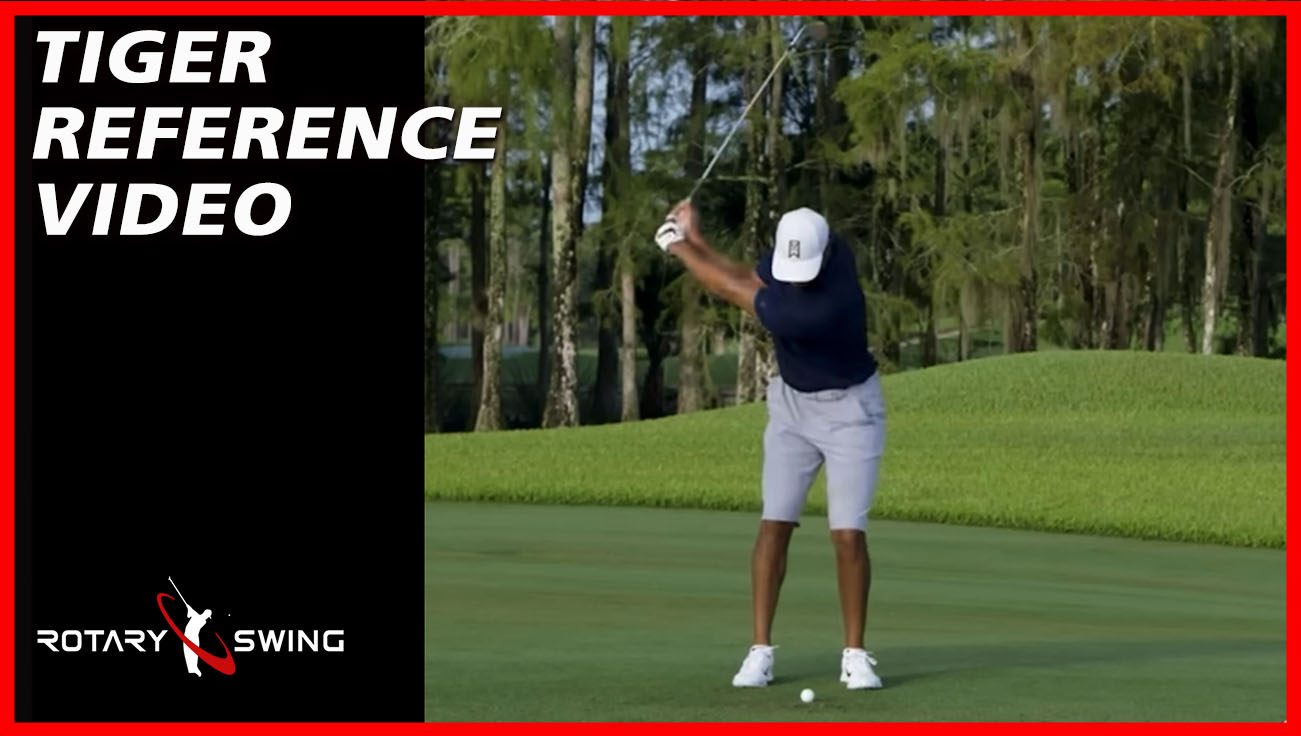
Looking at tour pros, however, especially Tiger from down the line, the shaft of the club is much steeper.
Just behind the head, he lifts the club up very high.
He's pretty much in the exact same corridor I do.
So the hands are higher than his head, yeah?
Trying this actually gives me more speed.
We have more elevation, potential for more leverage from that.
But in order to get that steep and high, I think you're conflating steep with elevation.
During the back swing, I cannot tug my lead upper arm against my breast.
It has to be loose and pressing against my chin.
For me, this leads to lack of control.
Nevertheless, I would like to swing steeper for more speed and get my hands higher.
When Jon Rahm doesn't get his hands higher and he hits the crap out of the ball.
What do you recommend?
And is it okay for the lead upper arm to go across the chin or should it stay below the chin?
Well, I'm going to kind of work this backwards.
Is it okay for the lead upper arm to go across the chin or stay below the chin?
Well, if I'm right here and I'm setting up to this position.
As soon as my arm starts doing this, like you're going to see people kind of scraping it right here.
I really don't want it covering my mouth.
A little bit right there is okay, but ideally, if you start covering your chin right here, what's going to probably start happening?
This arm is going to start to get too internally rotated, and your shoulder plane is going to start to plan out, and you're going to end up pushing with this arm.
That's why when we think about how the arms work, the arms are always still kind of staying in front as I'm getting this depth.
If you want to get higher, so to speak, I don't really want it kind of going across your mouth, and I really want it to do that.
You can add some extra protraction, but I'd be a little bit careful with adding more of this.
Like that gives me a little caution for concern.
But, and I hate to break it to you, some of this is genetics.
You know, my width and my height and my swing, that's due to my mom.
All right?
If I got my dad's genetics, I'd be a little bit bigger.
But I got a little bit of blood in my mom's genetics, and she's about this big.
So I can only go as much as my body is going to kind of allow me to because I'm going to have to nip and tuck.
And I don't want to have to nip and tuck.
For me, if I go from here.
I start getting into the back, swinging, I get up here towards the top.
That's about the max I can go.
Now, could I get these higher?
Yes, but what would that do?
All right, so if I, I don't even know, I'm stretching right now.
If I get my hands higher like this, what do I got to do?
At some point in time, I got to wait for my arms to get back down.
That's adding an element of timing for me, and now I'm trying to get more distance with the sacrifice of consistency.
That's why we always kind of shot for a neutral.
You know, when we talk about shoulder elevation and stuff like that, we always kind of shot base of pectoral because for everybody about right here is where you're in a good spot.
And that's actually where Tiger is.
Tiger might be a tiny bit higher and a tiny bit more over here, but it ain't much.
He's not like this.
His elbow is not in line with his chin like this when he's up here at the top.
He's down like this and about right.
He's about right there.
So if you want more height, make sure that you're not going beyond what you should, genetic-wise.
You're born with all the width you're ever going to have.
It's in your right arm.
And I would check to make sure that you're just staying in front.
So if I have this line right here, I've got this window right here, my club's going down, and I'm shifting and posting, I can get a little bit higher right there.
But see, to me, that's a little bit out of control for me.
That's why this club's starting to lay off a little bit.
Because it's starting to get a little bit unsupported for me.
But my question would be, where are you trying to get out of it?
I don't want you getting too disconnected.
Here, here, that's not going to give you that much more speed.
At the end of the day, it's really not going to do a whole bunch of anything.
So what I would shoot for is base here, but I'd have to kind of see what you're doing first to know if you're kind of maxing out.
But it's a give and take situation.
If you want higher hands, all right, then you're going to have to make up for that factor.
Think of daily and couples.
They take the longest out of any player on tour other than Bubba.
To get back to the golf ball, because as soon as they get here and they disconnect, they've got a.
That's why, Freddie, you know, when you look at his swing, you know that's why some of his smoothness that he has, he has to.
He can't swing at the rate that Tiger swings.
Because when he gets to here and he gets to here and just, he's got to wait on that to get back down.
Okay, now I'm back connected, now I can start firing.
But if he got up here and he's dynamic with his legs, his arm and hand would be so far.
Back here, there wouldn't be any whip.
And he'd end up just pushing with his right hand all day, or trail hands.
So every time you add a component, you're going to have to have a makeup move somewhere.
I just don't like that.
I'd rather just leave the elevation right here, kind of base effectorals, and then everybody can just work together.
Especially when I'm getting tired, my lead arm is bending during the backswing.
What do you suggest in order to keep the lead arm straight?
Keep your trail arm straight.
When you get tired, your lead arm is bending during the backswing.
So if your lead arm is bending during the backswing when you get tired, then you're quitting rotation.
All right.
So you're starting to get here.
And when you get tired, you're like, I don't feel like rotating anymore.
So your trail arm is starting to take over, which is causing your lead arm to bend.
Okay.
Because if you're still rotating, I mean, I can do this all day long.
My arms are chill.
It's because I have a lot of rotation.
So when you start to get tired, don't try to keep the lead arm straight.
Like don't sit here and I'm going to grab this straight.
That's not going to serve anybody any good purpose.
What I would do is I would start allowing myself to turn.
Now, what do I mean by turn?
If I'm going from here and I'm getting tired and my arms are bending, just start allowing for a little bit more hip turn.
If you allow for a little bit more hip turn, you can still get this glute to fire and all that, but it's going to help you rotate.
So as your arms go this way, They don't have to do anything.
I mean, you can see how loosey-goosey I am right now.
All they have to do is kind of support the weight of the club, but it's because I'm rotating.
As soon as I have a lot of rotation right here, keeping my arms straight is easy-peasy.
If I'm getting tired because I'm working the whole round trying to keep that straight, because I'm not rotating, yeah, you're going to get exhausted.
But I would actually just.
Just open yourself up a little bit.
Just say, okay, well, I'm getting this torque and getting that, but I'm getting tired, you know, walking or my abs are hurting or my glute.
Okay, well, let me, I'm just going to kind of just let myself just have a little bit more hip turn.
Just let that kind of just get a little deeper, a little bit more turn.
Maybe let my left foot pick up a little bit just so it's easier for me to whine.
Therefore, it's easier for you to keep your arms straight.
At impact, I always try to look straight at the ball.
Sometimes I forget, and it results in a lack of speed.
This I do not understand.
Why is that, and how do you recommend a train looking at the golf ball?
Train looking at the golf ball?
And why is that?
Well, when you're not looking at the golf ball, the problem is where the eyes go, the head goes, the head goes, the chest goes.
So as soon as your head starts going like that, your body starts prematurely opening.
So you end up kind of dragging the club right here so you don't get an effective whip.
And so that's why when you look at Tiger or Jack or even me, like when you watch my head, as I start to come down, You'll almost even see my head, like, going back this way instead of this way.
Because I'm trying to create the opposite effect, because I'm trying to get whip in there, trying to get speed.
And when my eyes and head start going this way, it starts to prematurely open and I get the drag of the club.
So the training of that, to be honest with you, I've never really thought about that for my own swing.
But what I've done with players before is take a marker or a sharpie and mark the ball.
So that when you're sitting here doing this and you're looking at that spot on the ball, you have to see yourself hit that spot.
And that'll be long enough for the club to release.
For you to get through, or just pick a logo.
Like, if you're hitting a tailor-made ball, put the tailor-made right there on the range.
And be like, All right.
I've got to see myself swing through that tailor-made before.
I can let this head go so I can stay in the shot and let the arms extend, you know, relative to the body right here.
Um, another thing, uh, one of our other other instructors he used to have when working on release, the two ball method.
Which I only have one.
But what he used to do is put a ball right here and then.
Trying to find something Makeup.
So I don't know if we can see that on camera, let me go back this way Okay, so imagine this eyelash curl is a golf ball But what you're doing is you're staring at this outside golf ball the whole time.
You're hitting this one.
You're set up to hitting this one.
But you're staring at that one the whole time to make sure that you release through the ball right there.
But sometimes when you're not just death staring the ball and you're focusing on that, it helps out with that as well.
I'll get to that at the end, Stephen.
Roy is extremely looking straight at the ball at impact, actually looking from front on.
You can see the lead side of his face showing towards the camera.
How does he do this?
Can you help copy this?
Well, it's more of a reaction.
So Roy's eyes and head as he's doing that is the same.
I didn't train to look this way.
What happened is I had an impact bag, and I'm working on trying to develop speed.
And I'm looking at my numbers, trying to see what's going on.
And so when I start to sequence through here, I realize that.
Okay, if I keep my head back, I can get this to snap more down here.
But when I get my eyes going, this delays the release for me.
So this goes back to the question of the keeping this like forcing the stretch in the downswing.
This is reactionary, You can't really train a reactionary force.
You can.
You can sit here and practice like getting to here and then look back this way.
And that's one way to do it.
I wouldn't advise it, but you can.
Even Chuck talked about like, you know, if you think about like when you're skiing or snowboarding high of the head, you're always kind of going in the opposite direction of which way you're going, how your eyes kind of play with that.
But the big thing that I would do.
Is just work on speed, keeping your head here, and the better that this goes, and the better you keep your head here.
As you're doing that, the more you'll start to naturally develop.
Oh, I'm going to keep it that way.
So that's that's a little more reactionary, and it's.
I'm not a big fan of just copying somebody to copy them or training something just because they do it.
Why are Roy's eyes doing this?
His eyes are doing that because he's trying to get, he's cleared his hips, he's done everything he's done, and he's trying to get the club to work independently of him.
So the harder he starts swinging, the more his brain's telling him, stay away from that darn golf ball.
The same thing like long drives.
When they get here, and then they're like, they don't.
They don't train to do that.
It's because that's the force of the motion that's getting them to do that.
It's the way that they're sequencing their core and their legs.
So just be a little careful with that.
At the end of the day, that's not going to change anything for you.
I mean, keep your head down and let the club release.
Making your head stay back more this way, I wouldn't worry about it too much, personally.
Um, after impact, the trail hand should immediately flip over the lead hand.
Right now, like flip, but it covers it.
I mean, we don't, we don't use flipping golf, don't ever say the flip word.
That's like the S word I'm not talking about, you know, the S word, and we're not even talking about the S word.
It's the first rule of S word, we don't talk about S word.
When focusing on supination of the trail, hand at impact, more or less trying to force supination as long as possible, there is a point to release supination.
How do you do that?
When's the ideal time?
You can't force that.
It goes back to when you've seen me up here spinning the club.
So in the downswing, there's obviously, we've got supination, deviation, and then we get.
Pronation right here, you can't make that happen.
That is a hundred percent of byproduct.
If you start making this happen where you actually do, start flipping and doing this now, we're going to be into trouble.
So that's why all I would do is I'd get here and I'd just spin this puppy.
And you'll get a feel for where the bottoming out is.
You want the club and all this to square itself.
I promise you that the club is much smarter at squaring up that club than you are, than I am, than Chuck is, than Tiger You've got, it's the club that's squaring itself.
I'm sequencing, I am sequencing me where I've got here, I'm feeling the supination, deviation, rotation.
It's getting to the bottom of the arc where this is maxed out.
It has no other place it can go.
Other than this one, because I can't, that's not going to work.
At some point, it gets, it has to snap over, so I get this feeling combined with a little body.
I don't know if you can hear that, but there's some speed in that.
And it's not really me forcing anything.
It's me taking advantage of the fact that the club is designed to do this.
That's why you get here and it's like, all right, I got this now, let me sequence some body.
That's what I would do is.
I would actually take the timing mechanism out of it and I would get comfortable with feeling how that bottoms out.
Let the release happen on its own.
And to that point, I want to say one thing about that.
That's one thing why a lot of players ask me all the time why I hit it so straight.
It's because I'm not trying to hit it straight.
I'm not trying to time a release.
I'm not that much talented than anybody in this room.
It has nothing to do with that.
It's because I'm trying to get here, and I'm like, all right, club, do whatever the hell you want to do.
And when I do do that, go straight because it wants to do what it wants to do, and it will square up automatically.
Breathing, big topic.
From an athletic point of view, I should out-breath during the downswing and at impact.
Please correct me if you see it differently.
In reality, I often find myself holding my breath at impact.
What is I do, and how would you suggest that?
I've even asked Chuck this comment, and even Chuck and I have always been on this.
We've always been on the same page on this.
We don't think about that that much.
But think about how the breath is reactionary, right?
So this is how I would think about training it.
If I'm going from here and I'm coiling, what does that do to your lungs?
It starts to, you really start to get tight in your lungs right here, right?
So you start to get that compression.
And then what do you see Tiger do and all these players do in the downswing?
Or their cheeks get really big because now they're going from tight to, and they're starting to really compress and fire these guys.
I've never really thought about my breathing.
But what I would say is as we're going here and we're winding up our core and we're going this way, all right, you're going to start to feel some tightness and some compression.
And so you're going to really kind of suck everything out right there.
So as that's happening, and then as you start to get back, like that's as you start to compress, like that's why you get that big.
Tiger cheek or whatever you want to call it in the downswing.
It's funny.
The first time I asked Chuck about that, and this was years ago, the only time I ever heard about breathing is playing in money matches where you're on 18 and you've got a four -footer, and then somebody's like, do you breathe in or out when you putt?
You said you'd been working on getting your weight to the front foot for like a year.
Yeah, that's because from a past teacher, I got stuck on this side and spinning off of this foot like this.
So a lot of my triggers, players tend to have their problems, but there's usually like one or two like, man, I've got to, like this is my Achilles.
Like I've got to work on this.
So yes, I had to work on getting here.
And getting my pressure, or getting my weight back into this side because I trained for literally two years to not shift my weight.
Um, that was a my brain had no idea what was going on.
Uh, what was your issue and how'd you work on it?
I stayed on that trail side.
And so, I mean, I even have some of these old videos where I'd literally I'd go to the range.
Shift my weight now go up here, shift my weight now, go.
And that's literally how I did that.
And then as soon as I got comfortable with getting my weight over here and getting my glute to fire, then I'd start blending it.
And that's why I still like that foot drill to this day.
I'd be like, okay, well, I'm just going to lift my lead foot just a little bit right here, just enough to get it off the ground.
So it forces over here.
And then I'm going to push it into the ground.
I'm going to make this lead leg work a little bit.
So I first trained it kind of independently.
Here, get the feeling, go.
Then to start blending it, I let my lead foot lift a little bit and then go into whatever, you know, what Goaty's telling everybody right now is getting, all right, Now I'm going to stretch and work back into that so I can make it a little bit more fluid without picking up my feet.
So I can get a little bit more SSC.
Let's see.
I have an issue.
Pushing too hard with the right side from the top and sliding into the golf ball.
So you're going from here and then pushing too hard and then sliding into With my weight falling back.
Great when the timing is on, not so much when it's off.
But is that really a weight transfer issue?
I see the chat popping up.
I just want to make sure.
Okay.
I have an issue pushing too hard from the right side from the top and sliding into the golf ball with my weight falling back.
So you go from here, you push, and then go that way?
That's kind of how I'm picturing it.
If you're pushing hard with your right side from the top and you're sliding into it, your weight's going to be on this side.
So if your weight's falling back, oh, okay, so now, yeah, so you're posting and you're falling back this way because you're so far out ahead right there.
Yeah, I don't think my drill would be the best for that.
I think that the foot drill would be good for you on that, but I'm going to counter you with this.
Instead of pushing with your right side, why don't you use your right side?
Now, there's a big debate.
On what people are working on with Goatee and things of this nature because of how things get said sometimes.
So you still have to go into the right, you still shift your weight, you don't just stay on your lead leg like this.
And then, I mean, that's stack and tilt, we're not doing that.
Um, but the trail hip loading from the ground up video where Chuck's talking about, Okay, and this is kind of how I give it to people.
As you get into your trail side and this hip starts to get deep, instead of loading this hip and pushing off of it, push it even deeper.
And so what I mean is get here, get into this hip, and then push it deeper as you start to transition.
Notice how if I'm obviously in my trail side, right?
I'm not going to do anything except I'm literally going to take both of my hands and start pushing my hip deeper, all right?
What's going on right now?
I'm starting to move back to this side because if I'm deep into this hip coiled correctly and now I start to push it deeper, that's automatically getting me to go that way.
So I want to think about it as trying to stop a push or something like that.
It's still one of my big things that I tell people all the time when I teach.
I just can't tell you not to do something.
I can't give you something to do or give something to work.
So what I would do is I would get into this hip and then feel like you sit even deeper into it when you transition.
That way, by the time you get to here, that automatically gets it over here.
Oh, well, now just doink.
So that's how I would think about getting around that.
Also, uh-oh, Goaty told me part of my issue is getting the sling all the way to my left shoulder might be limited thoracic mobility.
Is there a way to test for that?
Probably.
If there's any orthopedics or physical therapists in the chat, if you would like to post a link right now on any limited thoracic mobility exercises or tests, I have no problem with that.
So getting the sling all the way to my left shoulder might be limited thoracic mobility.
I only have like one or two students that have limited right there, you know, getting into that position.
I mean, I'd rather see it before I give you anything crazy with that.
But going to, since this is the follow-up to the pushing question.
So your issue is pushing hard and sliding into it.
All right.
Now you're probably pushing hard because you don't feel any stretch.
So this uncoil right here isn't very natural.
So you kind of, if you were to put this question first, it would actually have been better for the prior question that you put.
Because you're pushing because you don't feel any other way to create any juice.
Okay.
So that's why you're probably doing that.
I don't think if you have limited thoracic mobility, you still should be able to get.
I'm trying to.
I'm going to.
Don't copy my setup right here.
Yeah, you still should be able to get even though about right here, even with the limited.
And right now I feel.
Like I want to start going this way without pushing.
Put your swing in the community.
I have no problem taking a look at it.
But what I would do for the first issue is I would get into this side and do that.
If this is really limiting your ability to turn and do that, I still think we've got to check this.
I still think we've got to make sure this is deep and deeper.
Because that's going to give you enough stretch to get that sling loaded going back this way.
So that would be my thoughts.
Charles, I like that concept.
I don't know what I said, but I appreciate it.
Is it okay to start the swing as if in GDP?
Or is it better to do the supination from the top?
What's the easiest way to do it?
If I were to choose.
Does this even matter if the rebound effect from the top isn't there in the downswing?
Is it okay to start the swing from GDP?
Like if you're going to like make a golf swing?
I mean, technically you can.
That's a lot better.
He said it.
I mean, technically you can do that.
Or is it better to do the supination from the top?
What is the easiest?
I like them both.
And so if you're talking about like drilling, and working on the swing.
I like both.
I've got one player right now where I have him literally, like I was showing you earlier, I have him literally setting up in GDP right here, getting just a little bit of momentum.
He's not allowed to do anything.
He's just here, a little bit of momentum, hit.
Because he's got to start to get the feeling of how this fires and brings him into impact right there.
That's a good thing to do right there.
If you want to add a little bit more wind, you can.
Going through the whole supination where you get up here and you're getting the feeling of, okay, well, I'm going to feel this as I get, I mean, I don't think there's a pro and con to working on either one.
But the third part of the question, does this even matter if the rebound effect from the top isn't there in the downswing?
That's kind of the real thing.
You need to train what it feels like.
to move into impact correctly, to feel supination.
The goal is to get everybody to work as a unit and rebound.
But it goes back to the question when somebody was talking about the left side weight shift.
If I don't know what it feels like to have this glute activated, how am I going to use it?
Now, I understand if I coil, this will all, you know, rebound automatically for me.
But devil's advocate on this.
When I'm working down into this position and I want to start to get faster, I need to get that glute to engage more.
What the heck's my glute?
Well, for me, that's what gave me the feeling of getting that feeling and understanding that pressure like that.
So training GDP or training feeling supination, all that, there's definitely a place for it.
We want things to happen automatic because if you coil in sequence and do that, but you still need to feel these things.
It's kind of like a lifelong over -the-topper.
Your brain, your movement patterns have overridden the system.
There's nothing wrong with overriding.
You've been overriding the system.
So there's nothing wrong with training like, okay, I need to feel some extra supination here because I've overridden this so much.
The goal is, is if you load the muscles correctly, they will rebound correctly.
But you, I mean, I don't know if you watch any of Chuck's videos on Instagram or social media or anything, but you'll see him.
He'll be up here at the top and he'll be, I think that this one was titled like Whip It.
He's sitting here and you'll see where he's, Mike's sitting here, and he's got lines because he's trying to feel where this is.
And there's nothing wrong with kind of separating and feeling like, oh, how much is supination?
What is GDP?
The goal is to try to make it all rebound by itself.
Okay.
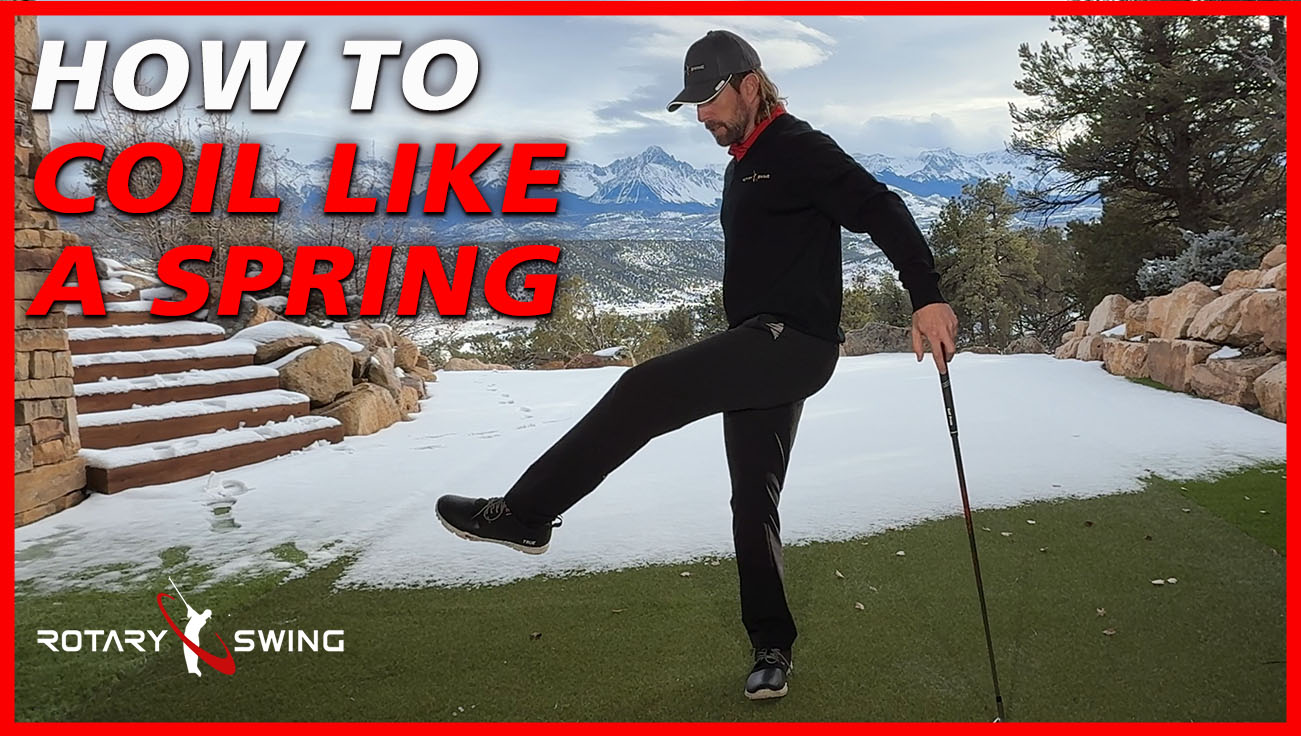
As you begin your backswing, Focus on winding your lead hip.
The lead hip coil into the socket like a spring, which creates a rotational loading effect.
During this process, your lead leg will extend slightly while your trail knee softens.
This action drops the trail side, allowing pressure to flow naturally into your trail foot.
Can you show and explain for us to understand how this is possible?
I might leave that one to go to you.
So during this process, your lead leg will extend slightly while your trail knee softens.
This action drops the trail side.
So I think about this a little bit differently.
I think.
I think we're not supposed to do it.
The lead hip should coil under the socket like a spring.
This is where it kind of goes back to the last webinar.
If I think about.
kind of starting from the lead side right here.
So if I kind of put myself a little bit, you know, a little baby post up right here, got a little weight on the side, a little open right here.
Now, as I start to coil into this side and I'm using this kind of, I'm rotating my core and this starts to soften, I can start to feel how this starts to coil and this starts to coil.
And this is just really tough.
Now, if I'm here and I get that feeling of that coil, you can see as I'm doing that, Like I'm not really, I'm still getting into this side, but I'm not moving that much.
And that's a really hard thing to feel with.
That's why when I was showing you this earlier, like if you kind of feel both kind of internal like this.
So if I'm right here and I kind of almost feel like an internal internal.
So when I get internal internal like that, that's what gives me that stretch.
But like I said, some of that stuff, that one I'm going to have to leave.
To the boss.
Because, yeah, I'm the way I think about things and fuel things, so as I'm going this way, if this is my pivot point.
I like that kind of little pre -start right here.
So where it starts to get me into this side.
And now I'm trying to feel getting that trail hit there and that starts to.
You can see how it's kind of dropping me right there.
And it's just because I'm not allowing this side to kind of go like this.
I'm allowing it to feel everything deeper, so that's giving me that feeling right here.
Can you tell us something about grip pressure left versus right hand, and chipping, pitching, wedges and full swings?
Does a trail side dominant player have more grip pressure in his right hand versus his left hand?
Can you give a percentage?
Can I give a percentage?
Taking trail side and lead side out of it, the typical mark of the pro was a 2 to an 8.
Taking whatever side grip pressure increases from a 2 to an 8 in the typical tour pro, regardless of whether trail side dominant, lead side dominant, on a scale of 1 to 10.
Now for you, I don't know what a 2 or a 10 is for you or a 2 or an 8 is for you.
Because my 2 may be your 4.
In chipping, you must feel the club head.
If you feel the club head with your trail hand, should your anchor swing still be the left leg?
Yeah, so when you're chipping right here, your trail hand's right at your core.
You're still pivoting around this lead hip right here.
You're not pivoting around the trail hip socket right here.
Okay?
So yeah, you're still, the lead leg is still of the utmost importance.
It's just a very core driven move.
This is still the kind of pivot point right here is it's a core driven move.
Ask Chuck to make a video about this issue.
I will.
Now, can you tell us something about grip pressure right hand versus left hand and chipping pitches, wedges, and full swing?
And chipping pitches and wedges, it's going to feel very right hand controlled.
Now, as we talk about, the lead hand is still a very good guide because it's still going to – I mean, it's got the glove on it.
It's doing something.
So that, you know, as even Tiger talks about it, the left hand is guide, but this is the guy that's kind of doing everything.
This is providing a little bit of structure to it.
So in chipping, pitching, and wedges for a trail side player, you're going to feel pretty firm in this trail hand.
You don't want it too weak because if it's too weak, the club's going to be too loose.
You need to give your brain a little feedback of what you're trying to do with your core and stuff.
So this is going to be pretty firm, all right?
Like it can still move.
But what I've been seeing a lot on my end is that players doing this, they're taking like a two, and they're getting really floppy with it and going like that because they're too loose in their grip.
So the trail hand in the short game is going to be pretty firm, and even the same thing in the full swing where this trail hand, when you think about your pivot point with that middle finger right there, it's not death grip, but it's firm.
because you want to be able to apply that force.
You know, Togan talked about three right hands.
You want to be able to apply that force as you're doing that when you're posting up right here.
So I'm not going to give you an exact percentage because I don't think that's fair based on feel, but I will say firm with the right hand and all of that.
And in the left hand, the left hand is just kind of a guide and a passenger in the short game version of trail side.
where it's kind of reacting to it.
So my lead wrist right here is moving into extension right here, or excuse me, flexion, because of what my trail wrist is doing right here.
And so I can still feel it, and I'm keeping it just a little bit as a guide right here, just making sure that it stays kind of ahead for delofting.
But as you get into the full swing, you know, Chuck talks about the three S's, you know, this lead has to maintain its structure right there.
It's not going to maintain structure.
If it's like this, so I'm not saying death.
Grip it, but you have to have enough presence of mind with the grip pressure right here to maintain your wrist angles.
And that's kind of how I'm going to answer that question is have enough pressure to where this isn't loose and floppy, but you're impeding it from ever doing anything.
It's got to be enough pressure where you can maintain restructure, but as you maintain restructure, You can still have some whip in there.
Because kind of like if I was going to snap, if I was going to snap the towel or whatever, I wouldn't be here and just be loosey-goosey.
I'd have it enough firm.
When I do snap back, I can't snap it back.
Middle of the road, balanced young Padawan.
I don't even watch Star Wars.
Let's see what time is it.
Oh, a little bit later than I thought.
Yeah, so this is what I'm going to do because, like I was talking about earlier, yeah, I've got another page and a half.
I'm going to try to sneak one in on a little bit of the Sooner side so I can get to these other questions.
So if you have some, get them posted in the community because I'll try to turn one over a little faster.
Maybe I'll do it after Master's Week.
So instead of not next week but the following week to get to these.
I'll see what I can do about that.
Remember, I'm not upper management, so I don't have control over things.
So with that being said, I will get to those for those that didn't answer.
Hopefully the ones that did answered your question.
I'm going to answer.
I'm going to stay here about five or ten minutes, answer some extra questions if you've got to go.
I truly appreciate you joining me tonight.
As I always say, without you guys, I'm not here.
So I truly appreciate you giving me the opportunity to help teach you all and keep guiding you through this swing journey and swing process.
I'm going to try to get the next one on the Sooner side just so I can get to the rest of those questions.
If not, I'm still going to get to them.
And I hope everybody has some great master's plans.
And if you want to stick around and ask me some live questions right now, this is the time.
I'm going to go to the tail of the tape.
In the meantime, I hope you did enjoy the session if you have to go.
I truly thank you for that.
Tim, I'm Craig, but I appreciate it.
Mark, thank you, thank you.
Let's see.
I'm going to wind back right here, here.
All right, Stephen said, How much weight is on the lead foot as one completes the backswing?
Don't think of, remember, weight and pressure are two different things.
So you're still, as you're going from here, you're still getting, you know, 70 to 80 right here.
I already start shifting by the time I get to the top, so my pressure is already starting to increase on this side.
So, like, even if you looked at me, you'll see with like, my nine iron.
Like, by the time I get to here, I've already got about 50 of my pressure back on this side.
By the time I finish the top, it does vary between club to club.
But this is, this is, this is my warning, don't get up here and have all your weight on this side.
You will never get posted up.
Make sure that you get into this side before that pressure starts going that way.
All right, so don't really shoot for a number.
Make sure that you get to this before you get over there because I've seen too much of, and this is never going to work.
I'm going 70, 80 from here.
And as I'm getting here, that natural already starts to get me to about 50, 50.
By the time that my lead arm's right here, I'm already 70% back in that position.
Looking forward to Mountain Dew coming back in original formula.
Having issue hitting all my approach shots left.
I've been taught to have my stance a bit closed and face closed at a dress with a strong grip.
Coming in to out, swing to the right, trying to learn the fade to correct.
Any suggestions?
I mean, you can learn a fade to correct that problem, but I'd just correct the setup first.
I mean, if you're already setting up with a closed stance and a closed face, now if you set up square, I have to kind of see that one.
That one's kind of tricky.
If I've always set up closed and I've got closed, like I said, I'm having to do this without seeing it.
If I always set up closed and I'm closed, then I was taught to swing even more out this way.
I wouldn't go to the extreme of open, open, and then just start trying to – you're going to get double-crossed so fast it's not going to be funny.
What I would do is I would get neutral first.
I'd weaken the grip.
I'd get the grip a little bit more neutral.
I'd get square.
I wouldn't even worry about the inside-out path.
And then I'd start to pick the target dead straight where you're lined up square and start to see if you're naturally.
Adjust just a little bit of that first.
Without seeing it, that one's a little – that's what I would do.
How do you train daily to feel all the pieces of sequence?
How do you start slow and then move up into speed where it matches the speed of our regular speed?
I think it depends on what you're working on, Tim.
Because with my students or players, the ones that know me, what we tend to do is we tend to kind of break things up a little bit sometimes to kind of get it manual.
But then I push them to start, okay, blending things in order to where they start feeling, how they're moving their hips, or how they're shift.
I start trying to get them to feel the dynamics of moving through these pieces.
So I kind of like to give them the feel of what they're trying to do, the positions they're trying to get to.
So they they know, they know the agenda, they know the destination with it, And then have them start trying to say, okay, well, Now, let's start slowing down the mechanical thought and let's start focusing on the sequence.
And see if we can kind of feel moving through the same positions by adding a little speed, but doing it with their feet, doing it with their hips.
How do we begin to own all these pieces?
You make it look so easy.
I don't know if I make it look easy.
I mean, obviously, you know, Goaty's going to have his thoughts on this and, you know, Goat Code will have his thoughts on this and all this.
I'm going to give you my thoughts on it.
The way I did it is I just did it how I learned anything.
All right.
You know, if I'm trying to get good at throwing, I didn't just start throwing Hail Marys.
Like I wasn't just trying to throw it as far as hard as I could because my mechanics would be crap.
I might learn how to throw a Hail Mary, but everything else was crap.
I always just did things in smaller components and things that I could tackle.
Like, you know, if my focus today is weight shift, we're getting my hip deep.
That's all I'm going to do today.
Just focus on getting my hip deep.
Whatever happens, whatever happens.
But let me just focus on these pieces at a time and then stack them together.
it's like three or four webinars back then, maybe the Christmas webinar, is I try to get, I get a component and then I try to stack as many as I can without them breaking down.
And then I grind those out.
If I combine getting the hip deep, getting deeper, getting the pressure back and combining soup, like I try to stack and stack and stack to push myself.
So I don't just get working on one thing.
I try to start.
pushing myself to be like, how many can I kind of do at once?
Okay, if I'm a little Icarus and I'm like, okay, I've added too much, I know to back back down and get that down before I add the next component.
That's how I kind of get there faster.
And I make it look so easy because that's why.
And because Chuck beat me and just feed me every now and then, put me in a cage.
Throw some meat at me every now and then.
But that would be, as he famously said, go home to me one time.
You're done practicing for the day.
With chipping move, you're feeling a lot of tension.
And pressure in the arms and the lats to keep that body structure.
I want to say I'm feeling excess tension.
I still like to have a little bit of feel with it.
So I'm not getting here and like, super depressing the lats or anything like that.
Pretty relaxed.
Right here, I've got my setup, I'm right here.
I want my core to be in control, but I'm not overly like trying to.
I don't, I don't, that doesn't, I don't see players swing that way.
The most common thing I always hear is what Tim just said a second ago.
Why do pros make it look so easy?
It looks like they're doing nothing.
That's because, to me, I don't see them sitting here with their lats.
They're ready to work.
They're ready to move.
Just like if I'm throwing a pitch, like I'm getting ready to do something.
That's going to be when things fire, not overly controlling them throughout the entire motion.
When do you break your wrist?
At club parallel?
In the backswing?
Downswing?
So I really don't have a whole lot of wrists.
I mean, there's a tiny bit right here.
But when I'm roughly lead arm parallel to the ground right here, here's my club.
I'm not full 90.
I'm not dead.
I'm enough with my grip right here to support the weight of the club.
So there's, I'd say.
By the time lead arms parallel to the ground, I have about that much for a set.
Yeah, that's about right.
No, I haven't hit a golf ball in years, but roughly.
Thank you, Scott.
Thank you, Vijay.
The new look is cool.
I don't know how I feel about it, Vijay.
Mark, I'll say hello to George next time I see him.
I don't know about that one, Mark.
Let's see.
Much appreciated.
Thanks, Kevin.
Michael, thanks.
Good luck with your mom's house.
Well, thank you, Michael.
I appreciate that.
I don't know what the heck's going on.
All I know is when I drove past, it was one of those things where, like I see.
Like a river going down the street.
And I'm like, man, I got a bad feeling I know where that's coming from because it's completely dry up there.
And I'm like, please don't.
And it just was.
At least it's not in the house.
So let's see.
Gerald also had someone teach pitch shots with a closed face, but it was because.
In his experience, most students tended to leave the face open to impact.
It worked great, but he told me if they started going consistently left to square it more at setup.
Yeah, and that still goes back to part of my issue with the PGA and stuff, is people teach.
They're like, okay, players are slicing, so we've got to get them to swing inside to out.
So let's have them set up with their everything closed right here and have them do this.
They're not fixing the problem.
They're fixing a symptom.
And so it kind of, I'm like, in my opinion, I'm like, wait a minute.
This is kind of like, you know, Doc, this is what's wrong with me.
What do I need to do?
And it's like, well, let's just kind of, this will get you through the hump.
Because it's insanely tough.
It's insanely tough.
Let's say you're a new golfer.
And I'm going through the swing and I'm moving through the positions.
Somebody's like, okay, you're over the top and you're hitting slices.
So let's shut down your stance.
Let's give you a really strong grip.
And then let's get your club face closed so you can start getting the feeling for hitting more of a toe draw or something.
And you start doing that.
And you start swinging from there and you're like, oh, and it's like, because your movement pattern was so dominant this way that you're actually coming down on plane, even though you feel like you're super under plane.
And you get excited.
And so you start practicing more and you're like, hey, this is the greatest thing since sliced bread.
Then two months go by and now you're swinging super inside with a super shot club face and a super strong grip.
And you're hooking everything.
And you don't know how to get out of it.
Then you go back to the teacher and he's like, hey, well, you're doing that too much.
Well, let's now open you up a little bit and let's work on working it this way right now.
That doesn't work for me.
I mean.
It just doesn't because you're just bouncing back and forth training an incorrect movement.
Doc, just give it to me straight.
I'm coming over the top.
What do I need to do to fix this?
Well, you've got to start shifting your weight and shallowing out the club and stop diving your head towards the golf ball.
Okay.
Well, let me just, I'd rather fix it the right way the first time.
And I know so many golfers, obviously, for what I do for a living.
that have these cockamamie setups where they're like this and they've got these super, you know, they're like, okay, well, one guy, you know, I was doing this, so he's got my wrist or he doesn't want any bend right here.
My grip's strong like this.
And then when I go back, like he wants me to feel it going this way.
And, you know, they're up here at the top.
You can see my frustration with that.
You're not fixing the problem.
You're giving them another problem.
And I get so frustrated because you guys work your tails off.
I say it in my reviews all the time.
I can tell you everything I know about the golf swing, but if you don't work on it, you don't get better.
And you guys work your tails off.
That's why you're here.
So when other teachers have gotten players into that, I'm like, you just wasted all their time and all their effort.
And that's.
Reminds me of another story, not to get on a soapbox right here.
Had a lesson a while back where I'm like, I wish I would have been this guy because he paid this instructor an insane amount of money.
And when I mean insane amount of money, think about coming to take a lesson with me twice a week for two years.
No, it wasn't me, Aaron.
I wish it was.
But that wouldn't be the case.
And after two lessons, he'd be like, okay, I need to go work on it per month.
And he goes, Greg, all we did was work on grip.
For almost a straight year, all he did was work on grip.
Every time I'd go Tuesday, Thursday, and be like, oh, your grip's going, you got to get this.
And once you get that right grip, everything's just going to start to sink And I'm like, you paid this guy how much to just continually tell you that you're in a poor setup or poor grip?
I don't tell a lot of people I'm a golf instructor out in public.
What's your take on shaft flex and weight?
Are we better off feeling more shaft flex?
Stiffer board shaft I know we can get fitted and the numbers will show, but there are so many different shaft variations these days.
Kick points tipping Don't ever worry about getting your shaft pure.
That's a waste of money, in my opinion.
Um, I think there are some things to that, but I think a lot of people have really started charging insane amounts.
Oh, let me pure your shaft.
Um, so, uh.
See, this is going to be where there's going to be a little bit of difference in feel, Josh.
So for me, I like a heavy, stiffer 3-wood because I like having a little bit of options.
I like a heavier, stiffer 3-wood because I like to hit it hard, but I also like to know that I can get through things and I kind of play it like a driver sometimes.
But I like having a little bit more feel in that 3-wood head because a little bit more weight helps.
keep my tempo better.
In my driver, I'm kind of the exact opposite.
I like a very light shaft with a little bit more kick to it because I can feel it load a little bit more, and it's just because of what I've done for so long.
I know how to time that to get a little bit more snap out of it.
My thoughts on this, since I'm not a club guy, I've got a great club guy, but I'm not a club guy, is players often You go to either end of the spectrum.
Oh, I swing fast.
I need to get heavy super stuff.
Well, okay.
But you're not making it easier on yourself.
And then vice versa.
Like I need game improvement.
Well, now you've gotten so weak and it's so light that you have no feel for the head.
So you're not getting any feedback.
I would just say when it comes to this stuff, it is a very big feel component and keep your ego out of it.
To me, that is the two biggest things when it comes to it.
And so I've got, I mean, I know club fitters, you know, all around.
And when I talk to them or ones that have done mine in the past, like one of my guys, you know, one of my old roommates is still like way up here in the PGA Superstore, you know, branch.
I mean, like he's, so he's been doing this for 20 something years.
And the biggest thing that players, Players get too locked in.
I want to have, like this right here.
Like this is an X100 shaft, and this, I don't know what this is, three iron right here.
My iron shafts are X100s, but they're also soft-stepped instead of hard-stepped, all right, because the way I like my irons, they kick and feel.
Now, I know, and I've seen this, I know some players have been like, oh, well, Craig plays X100s.
I'm going to go put them in my club because they must be the best.
That doesn't mean that's for you.
I would say the biggest thing with it is you've got to check your ego at the door.
Who cares?
I care about score at the end of the day.
That's it.
I don't care how I do it.
I don't care if I'm using a shovel.
They don't ask how you do it.
They just ask what you shot.
That's all that matters at the end of the day.
is whatever you choose, make sure you can feel this.
I think that's one of the biggest problems that's happened in club manufacturing, golf, you name it, is that the balances and the weights and all that have taken so much feel away from the head that there's nothing to respond to.
I mean, it's like right here, like I'm just swinging this.
I don't know if it's open, closed, where it is or anything like that.
There's no feedback.
It's not giving your brain something.
When I pick up a weight and I start swinging a weight, like my brain says, start going the other way, Craig, because we don't want seven years of bad luck.
And it's because my brain feels this weight.
And it's like, Craig, this weight's pulling you that way.
Start going this way.
That's all this thing is, is a weight.
So when things start to get too light and too non-feedback-ish, you're not telling your brain, oh, okay, it's starting to get way back there.
Let's start thinking about kind of going the other way.
Your brain's a lot smarter than you give it credit for.
Mine's not.
So that's kind of my thoughts on it.
Thanks, Bob.
Josh, no problem.
I'll answer these two, and then I got to.
figure out what's going on and make sure that Noah's Ark's not in front of my mother's house.
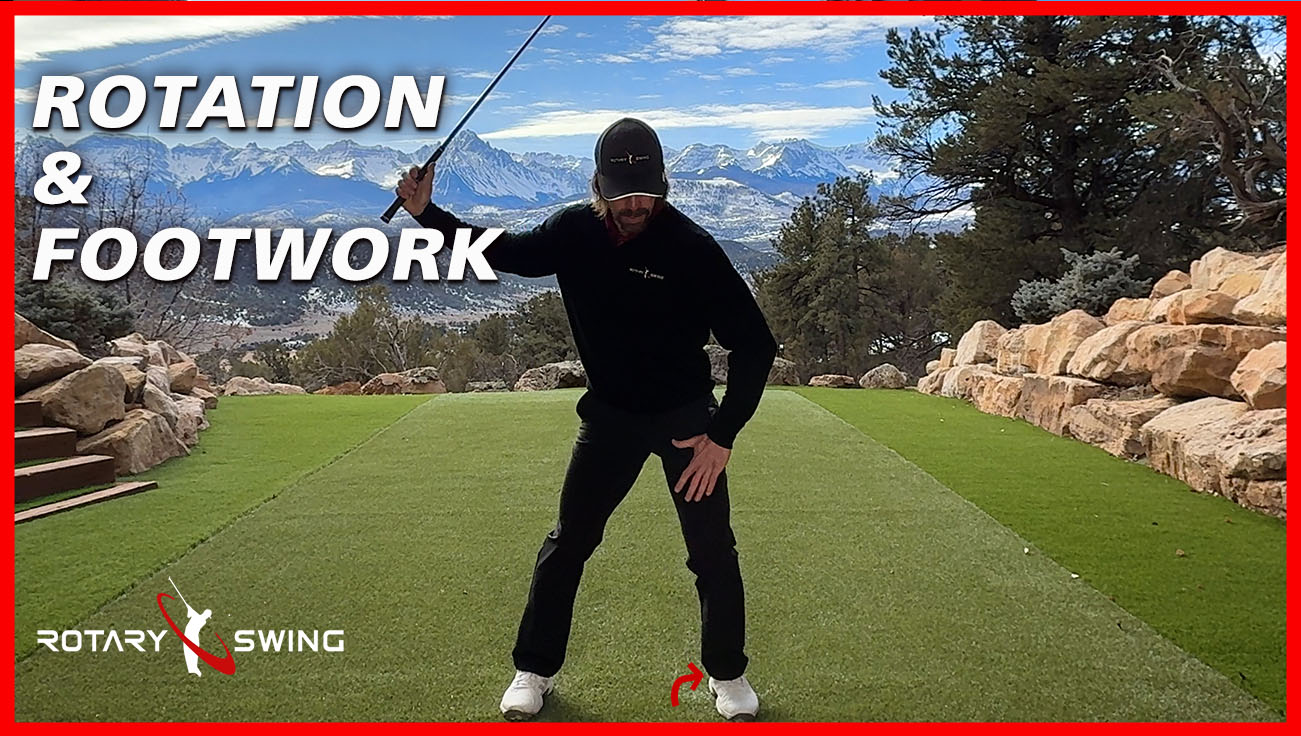
What's the order of footwork for moving into backswing?
What?
Chuck in one video goes from left foot toe to right foot heel in reverse ending on the left heel.
Yeah.
It's not, I want to say it's exactly the same as the dead, but it's pretty much Steven.
I mean, Your your pressure is still going.
But as I'm going this way, my pressure is still going towards my right heel and towards kind of my left toe.
Right here, ball of my foot right here, and then as I get here, this order switches to where as I'm going back this way.
It goes ball of foot and this jumps to ball of foot on this side as that jumps to heel, so it's still.
It works like a rudder system, it's not the best answer, but it still works like this, all right, Wing, wong, wing, wong.
Now it obviously rolls, but it still goes trail heel, lead toe, lead heel, trail toe.
So it still works like a rudder system.
Manny, my irons are super heavy.
And that's okay.
I mean, I'm a little guy.
Well, not here, but.
For me, I don't like super heavy irons because I feel like I'm having to overwork to swing them, and I lose a little bit of feel of the head.
I like to have a balance to where, okay, this isn't a chore.
I can move it fast, but I haven't lost feel of what that club head is.
Kind of like it's in my office.
Anybody seen my little pendulum spinny thing?
I'm going to do a nunchuck.
It's like a nunchuck.
Like, I'm sitting here spinning.
Like, I want to still have this thing doing what it's doing, but I still kind of want to know where it's at.
I still want some feedback with it.
That helps.
All right.
Good.
All right, everybody.
I appreciate you stopping by.
I'm going to leave it as that.
I'm going to try to do a session on the sooner side, if you'll want.
And maybe right after the Masters, we'll talk some Masters.
We'll do some more questions.
And we'll keep this thing rocking and rolling.
So I appreciate you stopping by.
And if you have any questions, please, please, please put them in the community.
I'll add them to this list, but I'll make sure that this list gets done on that one.
Peter, much appreciated.
Still Craig, but much appreciated.
Don't do it, Eugene.
Don't do it.
I see what's going on.
I catch on pretty fast.
I know it's April 1st.
You know, so, all right.
You got Christina, Craig, and Chuck.
All start with C.
So, I mean, at least you're in the ballpark.
Your name doesn't start with C.
You're kind of in trouble.
All right, everybody.
Y'all have a good one.
I appreciate it.
Keep me alive.
Keep me in business.
Keep me working.
Try a free live lesson with GOATY
GOATY, my AI golf coach, watches your swing through your phone camera and coaches every rep. Free, about 20 minutes, no credit card.



THOMAS J
Craig (Certified RST Instructor)