




















































Refining the Backswing
Sorry, you need to be a member to access this video. You Are Just Seconds Away!

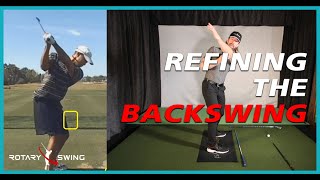
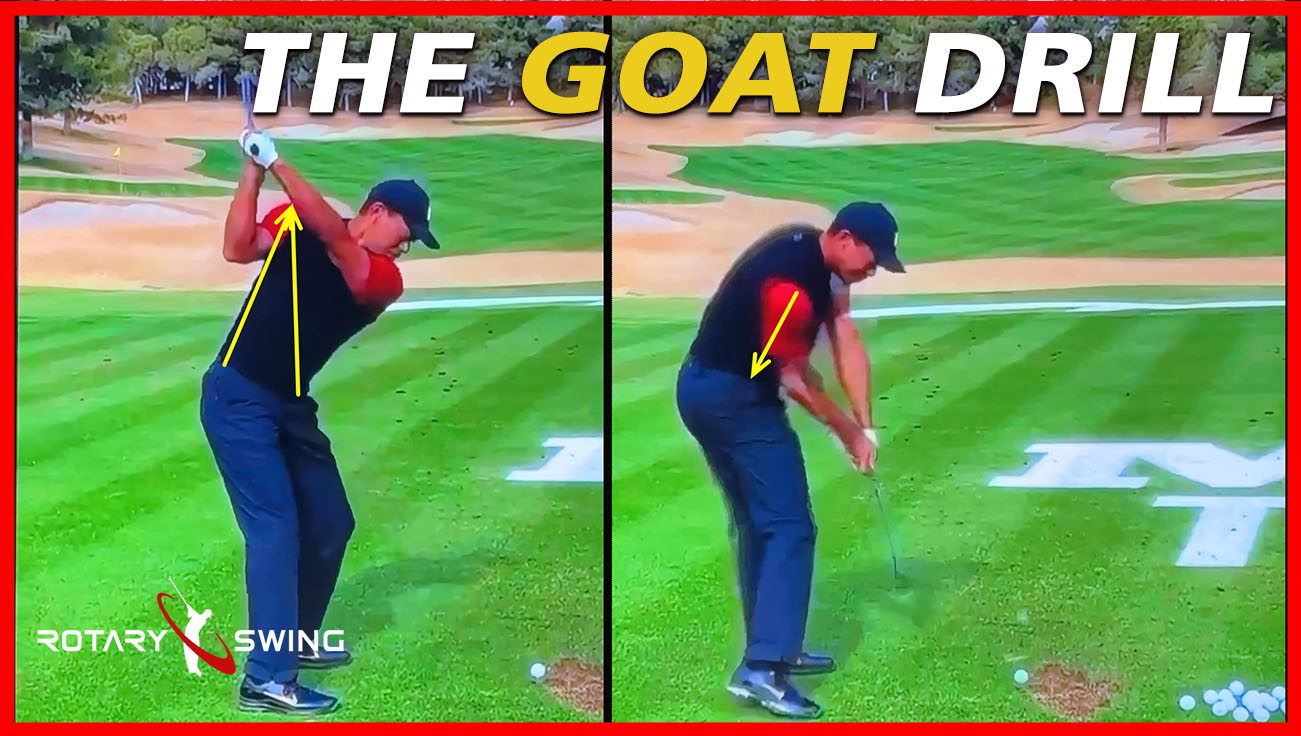
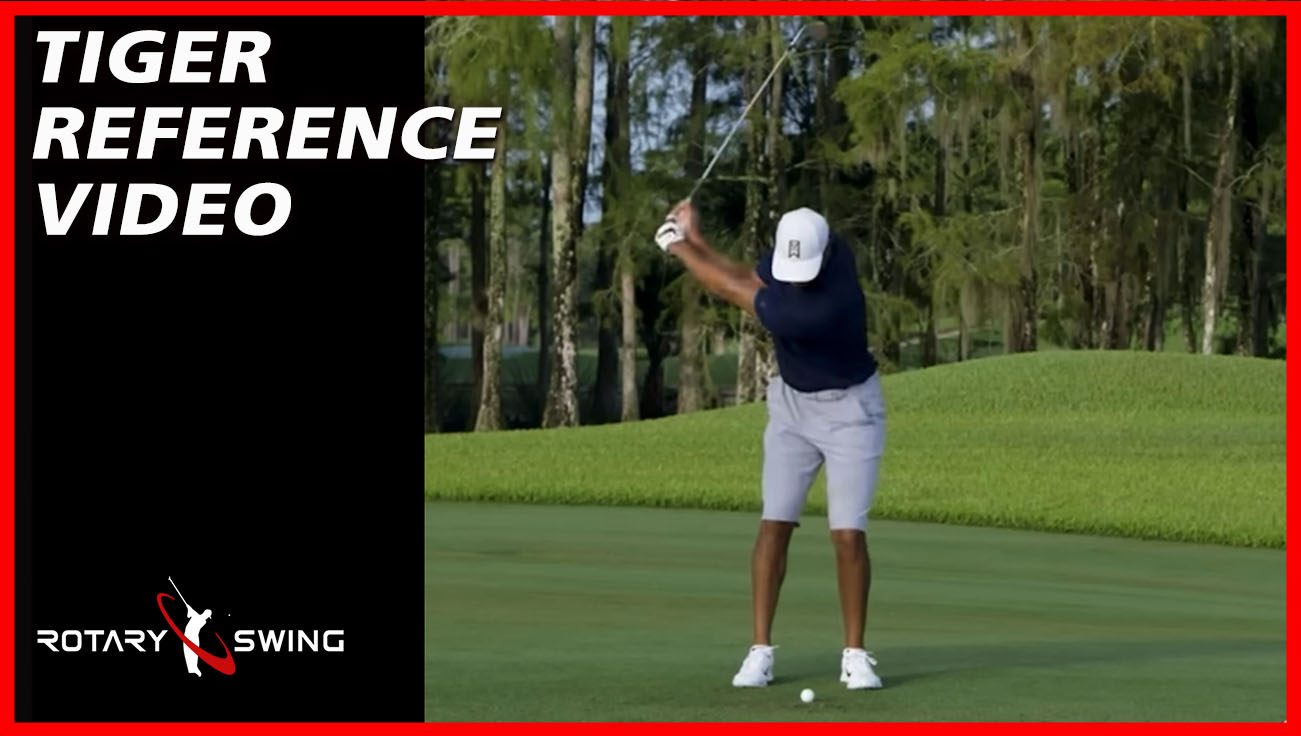
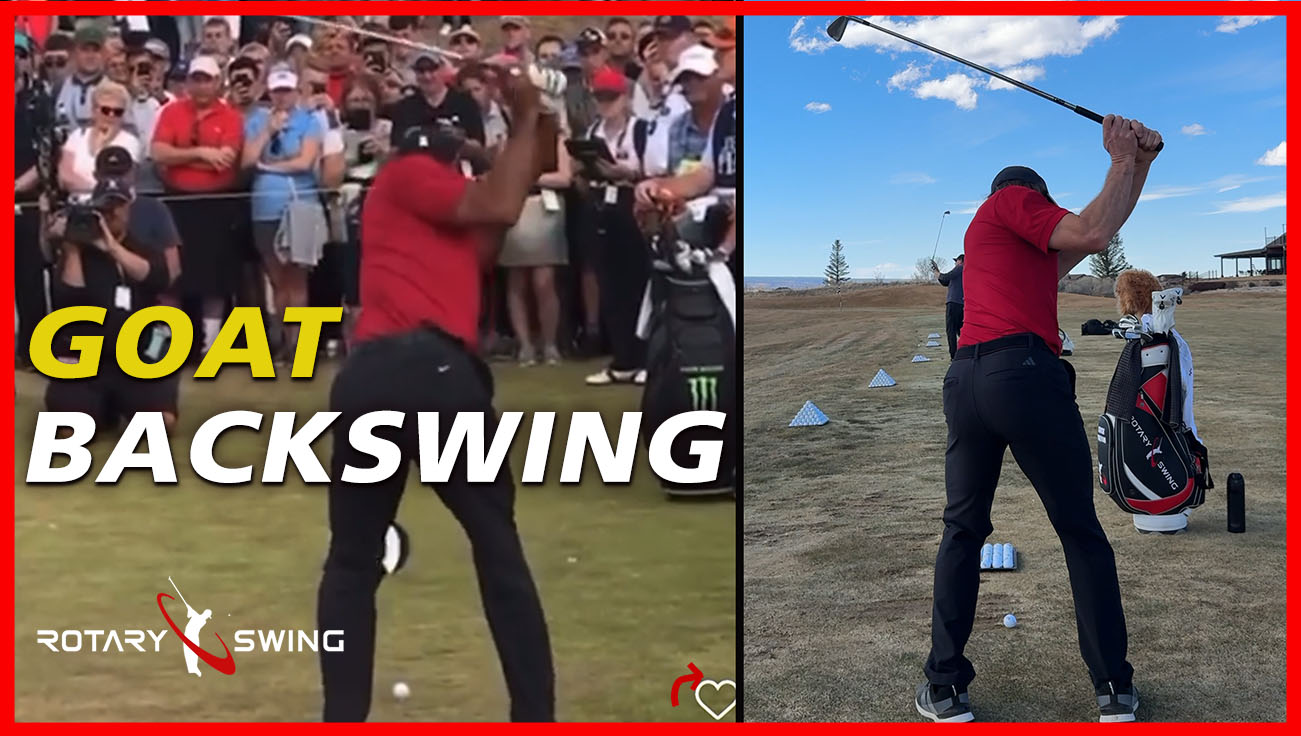
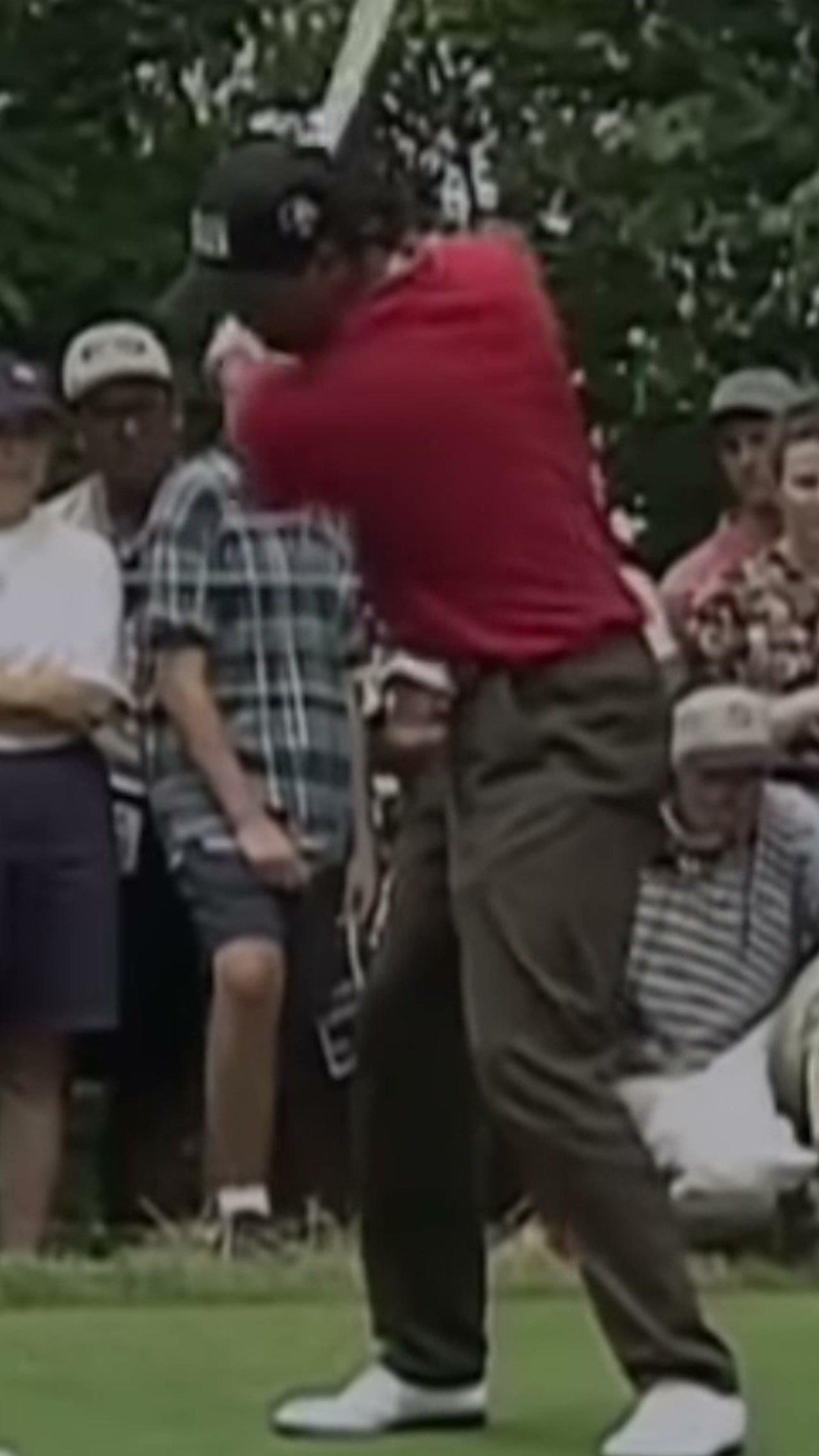
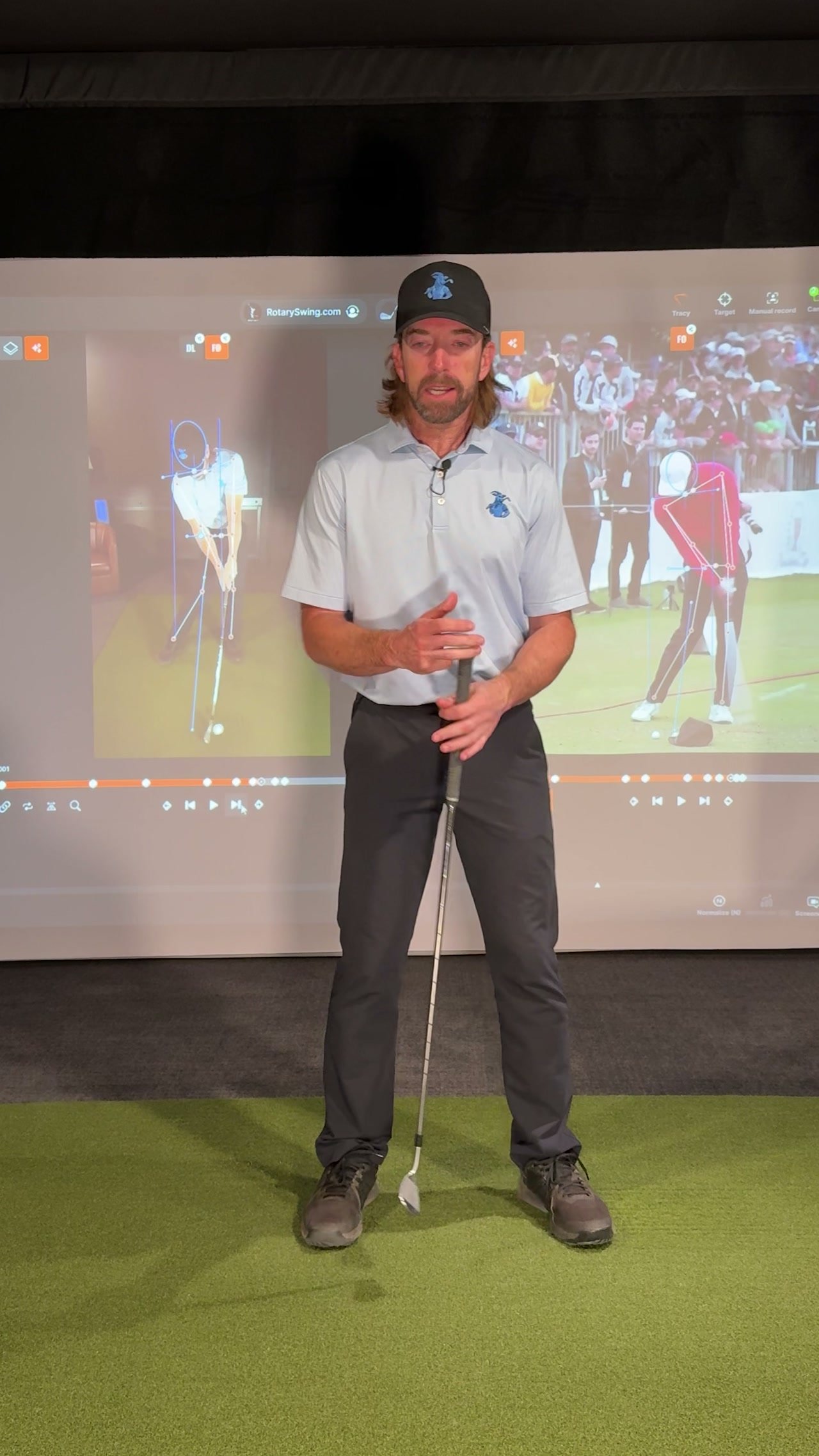
If you haven't experienced immediate success with the throw it's because you're likely out of position going back. The video will show you how to nail the backswing to be exactly like Tiger's 2000 backswing because it was the simplest of all time.
If you want to learn Tiger's early 2000 golf swing, you have to have a proper backswing.
What's simple, what's cool about this is it's shockingly simple.
And to feel it, to really understand it, all you really need is two clubs or two shafts, two alignment sticks, something like that to stick on the ground.
And then you're going to be able to grasp this, understand it really quickly, really easily.
Now I'm going to show you at first with the club, and then I'm going to break this down.
So we're going to put the club away for a second, and we're going to show you how to feel it with each arm.
So you really understand what arm's doing which, because to me, that made a huge difference in getting my swing to match Tigers.
Do I feel more right arm?
Do I feel more left arm?
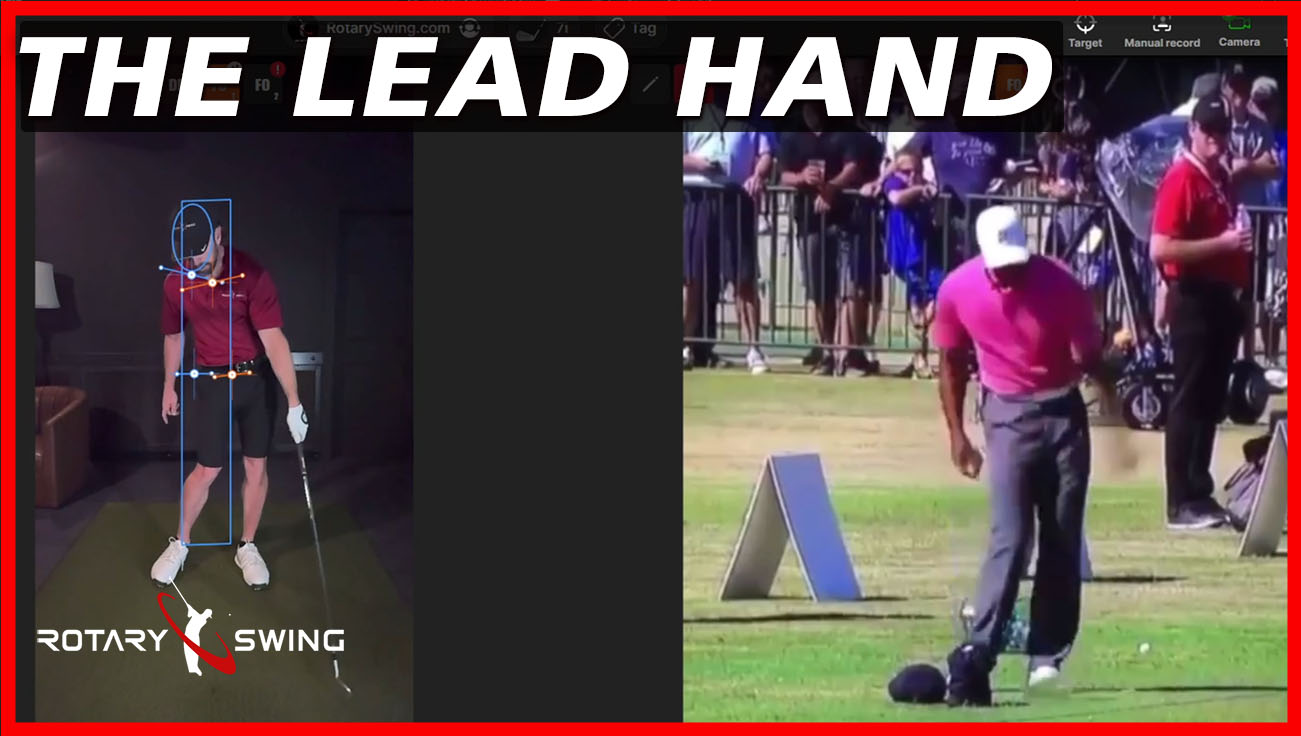
Do I feel more left hand?
When do I feel that?
Why do I feel that?
I'm going to go over all of that in the video.
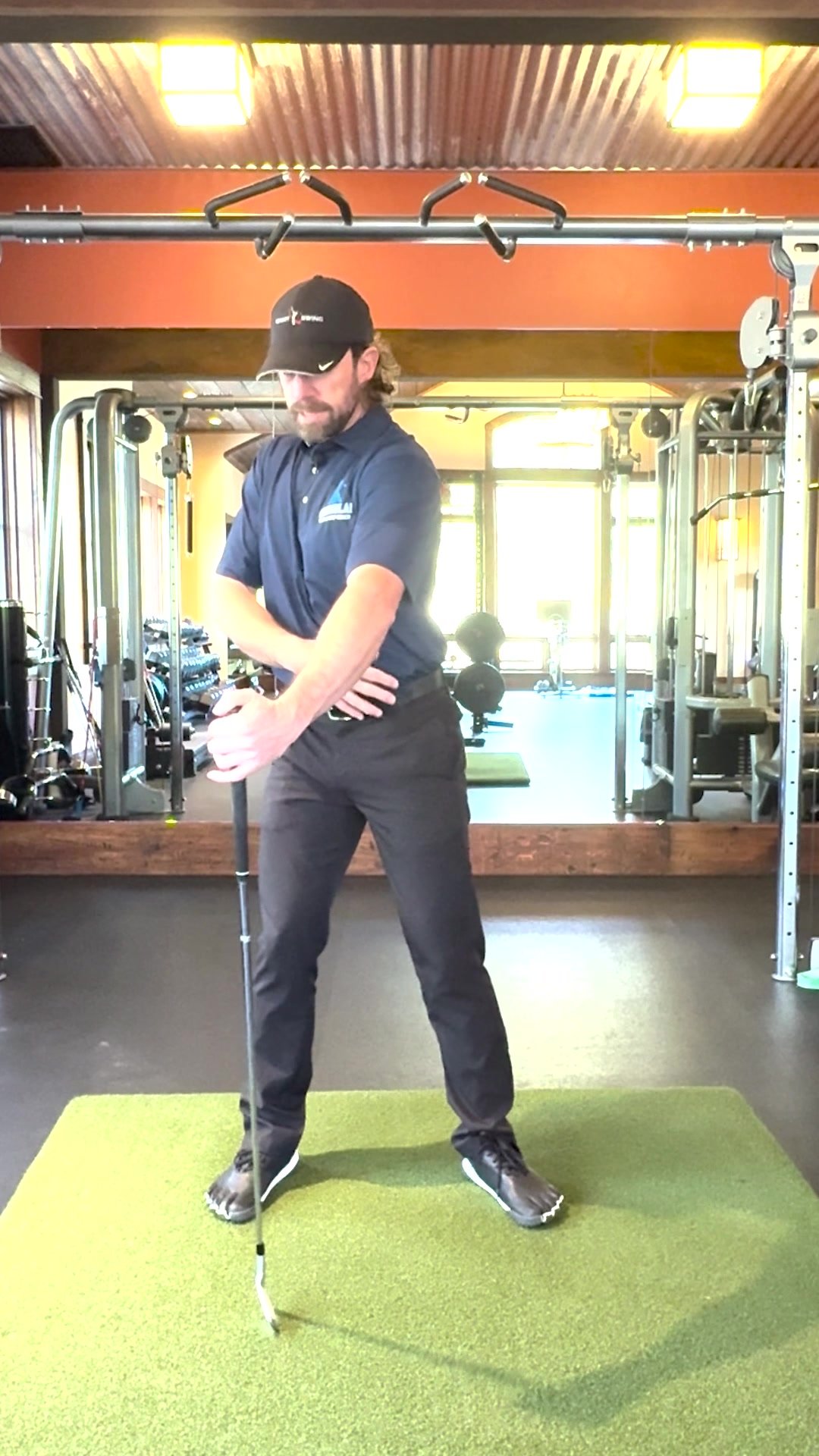
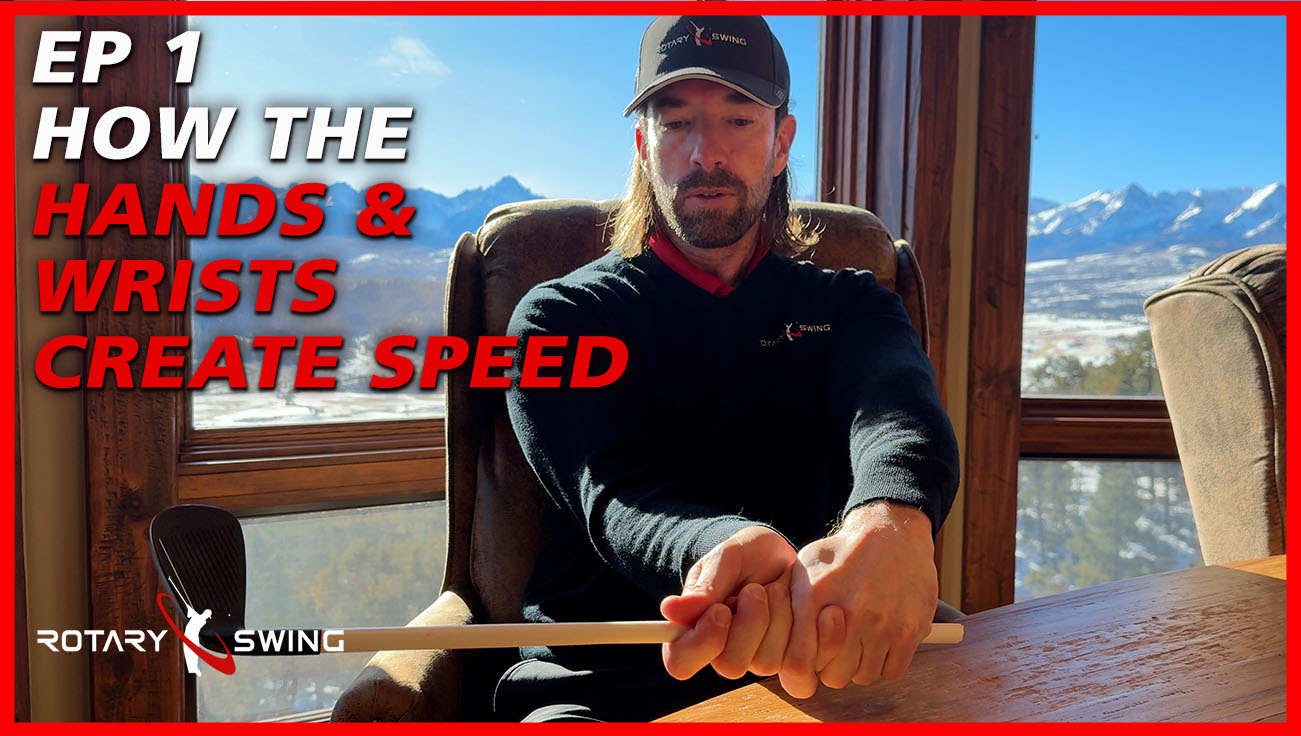
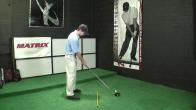
So with the club at first, what I want you to do is set up a two shafts or alignment sticks, whatever you have, one directly down the target line in line with the ball, and one directly down the target line in line with your hands.
Now don't worry about getting this perfected.
It doesn't have to be exactly square or any of that stuff.
None of that stuff really matters.
This is more to understand the big picture of what you're supposed to feel.
Now as you go back in the swing, what I see all the time is the club immediately going inside of this shaft, going back like this, and the face starting to fan open.
The higher the handicap, the more common this is.
And what it leads to is that the club face gets open very early.
Now what does that mean?
The toe of the club, or this leading edge is not at 12 o 'clock, but open.
Like from my perspective, if I was reading clock, that would be one o'clock, two o'clock.
We want that club to be either towed up or slightly towed in.
And in Tiger's case, in early 2000s, he was slightly towed in maybe at about 11 o'clock.
But what I see all the time with amateur golfers who struggle is that they start rolling this left wrist, lead wrist open and keeping it cupped.
And that gets the club open.
And then they're up here and the club can get laid off.
You can get across the line.
But what's happening is this wrist is very, very cupped at this point.
And so when you go to throw, you're just throwing an open club face.
And so of course you're going to scoop, flip, and chicken wing on the way through.
So to get the feeling of this, what you actually want is that club face looking at the ball, what your perspective is.
It's both traveling down that shaft from your eyes perspective.
Okay.
And my hands are traveling down the shaft from my eyes perspective or close to it.
So now as I go back and that club face is looking at the ball, you know, here, it's not looking at the ball.
It's looking at the sky now.
So now as it's looking at the ball, my club face has very little rotation happening.
If I do this, I've just take, I've added a ton that I've got to try and take out in the downswing.
It's just hard to time that.
But if I go straight back where that club bed looks like it's traveling straight in a straight line, straight back.
And my hands look like they're traveling in a straight line, straight back over the shaft.
It's kind of like parallel train tracks here.
They're both moving straight back.
And I'm doing that with that club.
Until it kind of reaches the end of the shaft a few feet back, and my hands are outside of my thigh here.
So from face on, it's just this.
Once they're here, I'm going to explain how all this stuff is going to go back from there in just a moment.
But this is the basic idea.
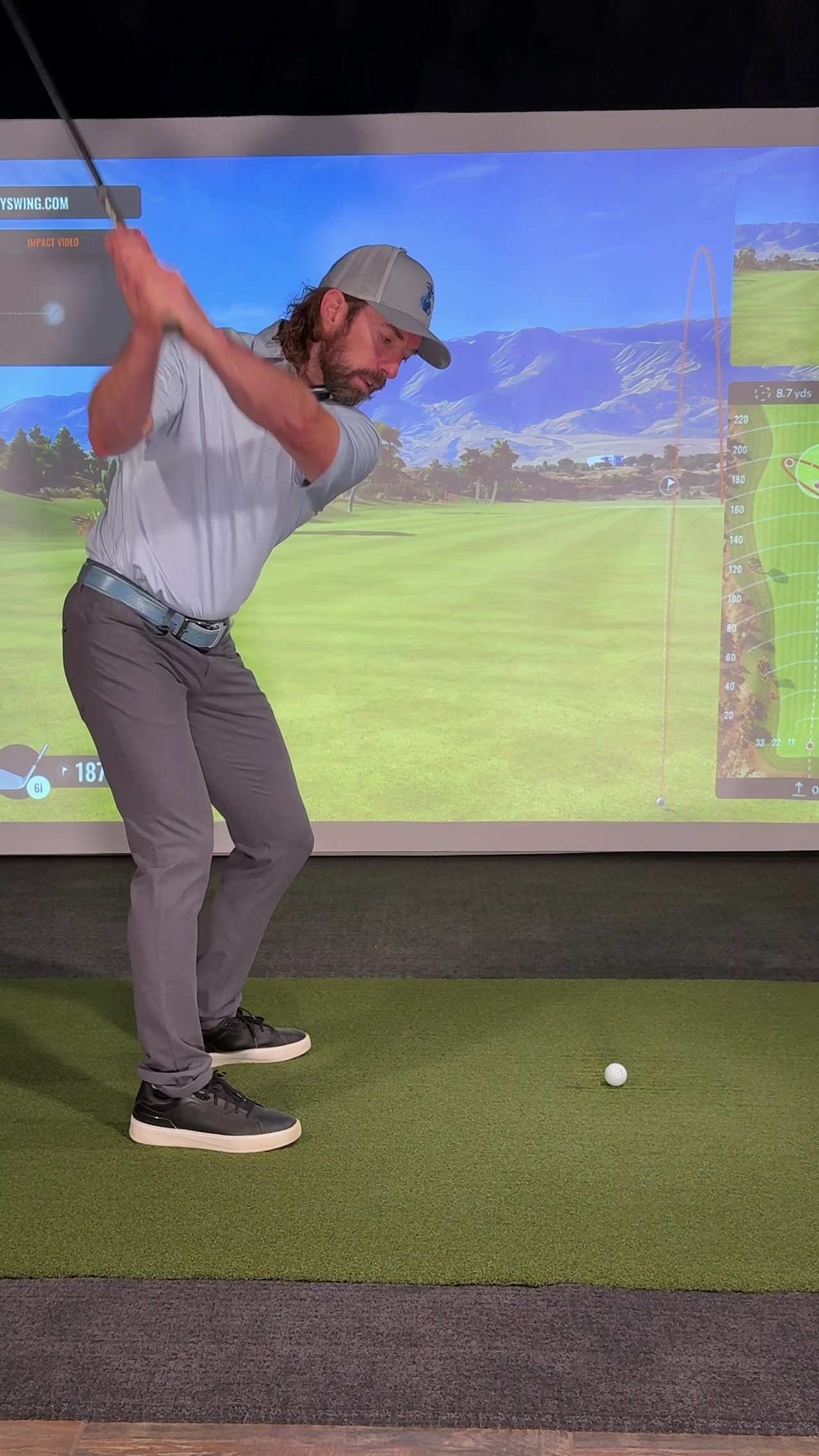
Once you set this off in motion, These parallel train tracks, with your hands going straight back and the club head going straight back, then it's very, very easy to get to the top of the backswing.
Because from there, if I've got the club face looking at the ball for a long time, as I go back until I'm parallel to the ground from here, that motion just continues and I'm in the right position at the top.
Now let's break this down for a second and understand what this is really going to feel like.
And how do you really internalize this and understand how to do it?
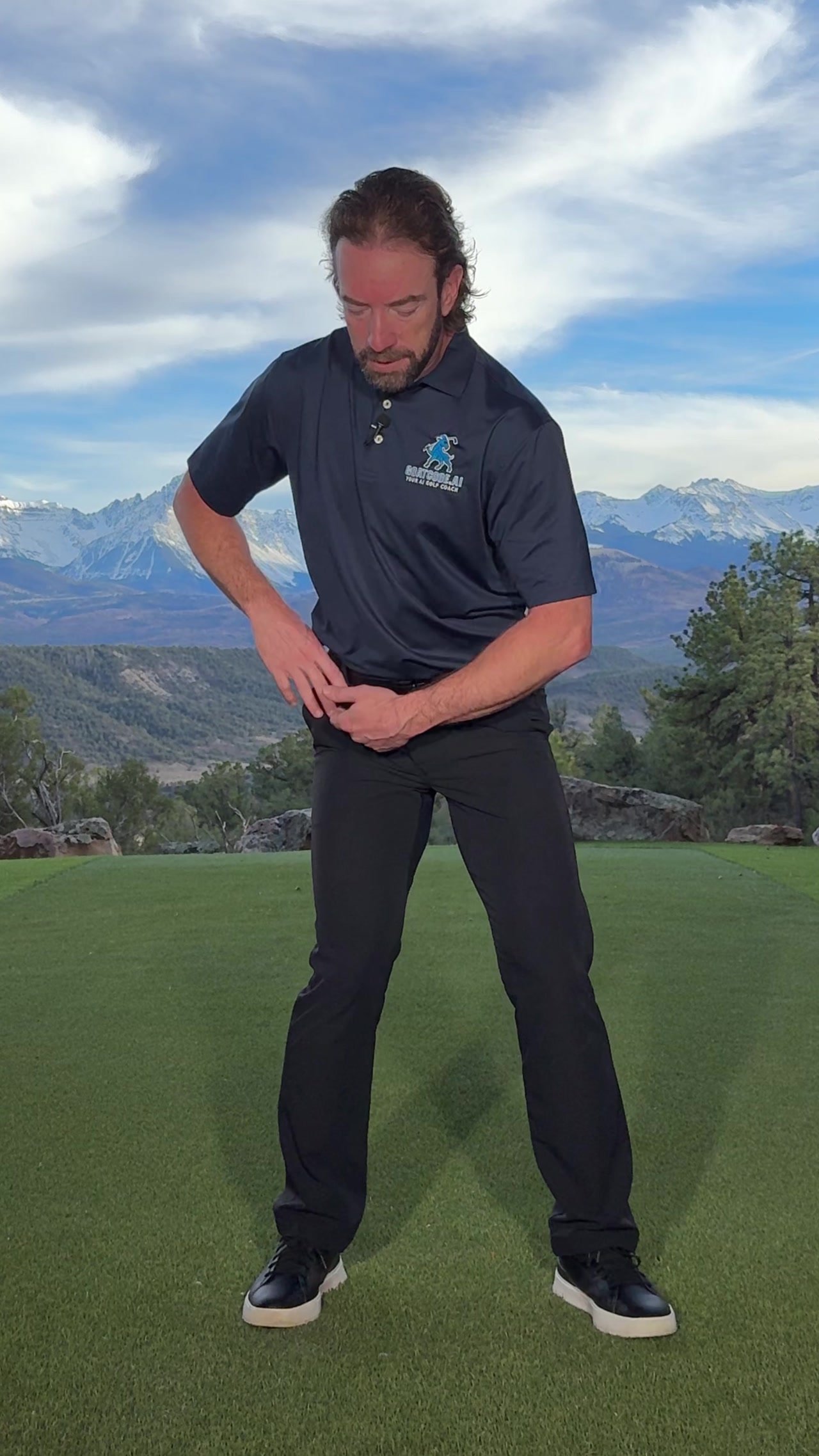
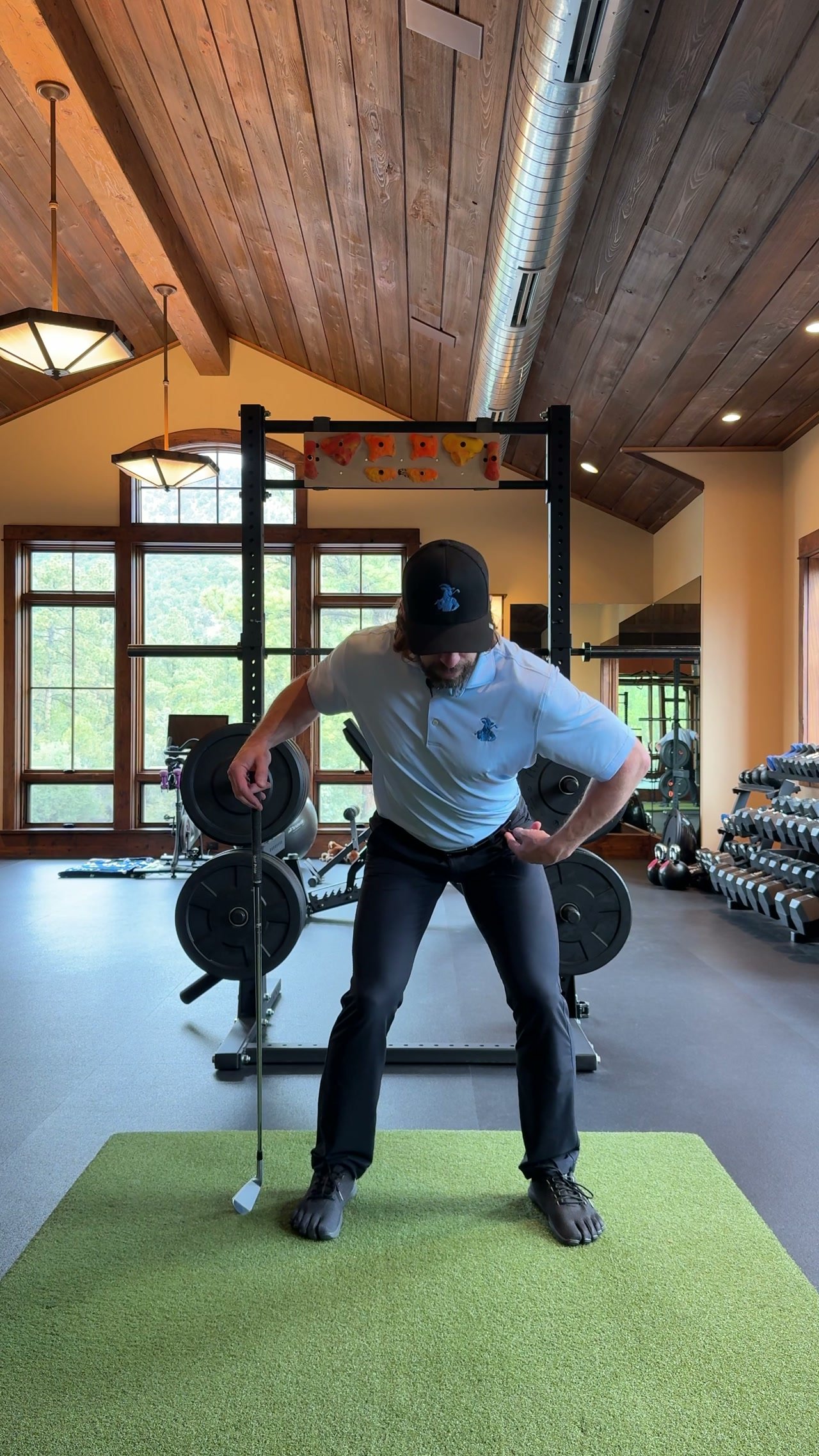
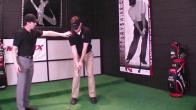
Start with your lead arm only.
Now, This is important because the way that I was able to match up these patterns closely was feeling.
A certain percentage of left arm versus right arm, or lead arm versus trail arm in the backswing.
You can do it either way.
You can have a lot of trail arm.
You can have a lot of lead arm.
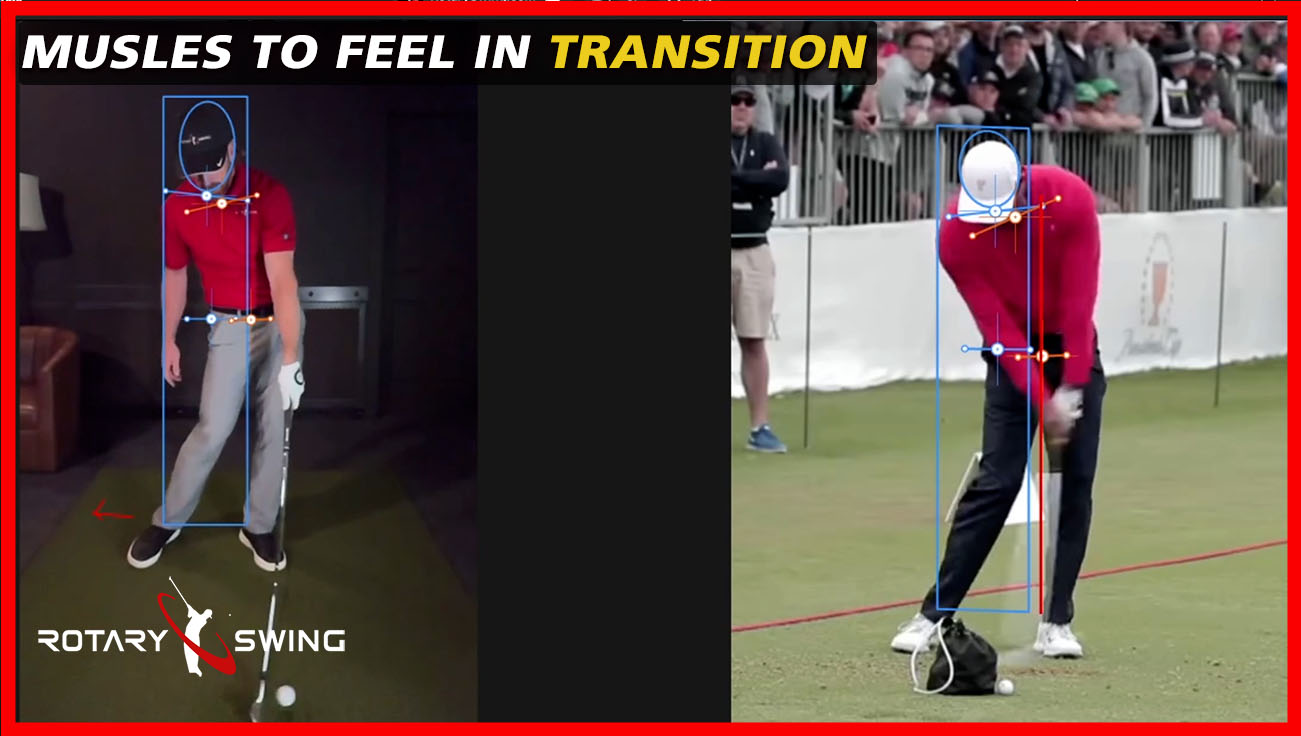
But what happened inevitably for me, and of course will happen for most, is that the more right arm I felt, The more that this bicep started to engage in the backswing and my shoulder started trying to engage to lift the club up, I would get narrow and collapsed.
So I would have this type of backswing where I wouldn't really fully turn because as soon as this starts to bend, then all of a sudden I feel loaded up.
I have nowhere else to go.
And if I just turned, it's just going to create a really weird swing.
Of course, you guys have seen my old videos where I've talked about the right arm is the governor of width.
And so by keeping this straight as long as possible, this allows the club to stay out in front of me and create a really wide backswing, which is what we're looking for.
So what I feel is the vast majority of what I'm feeling in the backswing is lead arm, lead shoulder.
The more trail arm I feel, the more I activate that too early in the swing, the more collapsed I get, and the more narrow my golf swing becomes.
So what I feel at first is I'm going to focus exclusively on the left arm, lead arm.
And as I go back, I'm going to take that arm and see how I would take it down that shaft line as long as I could.
Now, I'm not going to try and exaggerate it and really extend it, but what I'm trying to feel is what would naturally make that motion happen.
And of course, as you saw from the other takeaway videos and the goat theory stuff that I was studying, You'll know that I talk about how that lead shoulder always goes down in the grates to start the swing.
So as I do this, That helps that arm travel more down that shaft line until it gets at least a foot outside my hands or so.
If I don't do that and I start to turn this way, my hands immediately go to the inside.
So once I do that, now I'm going to have that club with a lot of momentum going to the inside.
My wrist is going to tend to cup, and then I'm going to end up in a position to where that club is deep and buried inside.
And it's going to be open at the top, most likely, because I'm going to cut my wrist.
So instead, if I take that left shoulder, lead shoulder, and I start to use that to help push that hand down that line, then I get that tunnel that I'm looking for, for my hands to travel on this path for the first few, you know, couple feet of hand travel in the swing.
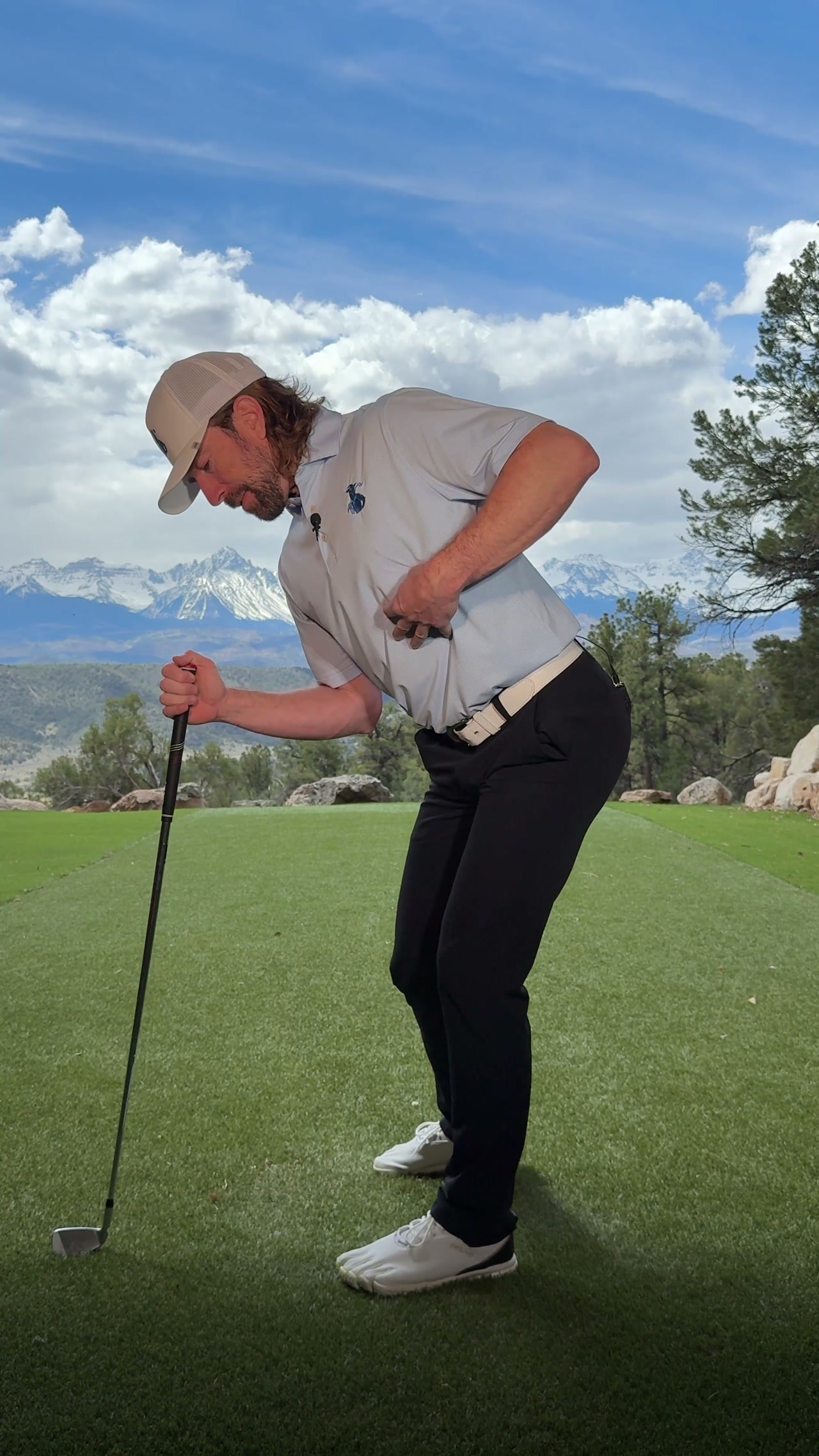
And as I do this with the lead arm, What I want to notice is that this elbow pit goes from pointing slightly away from me at an angle to feeling like it's pointing straight up at the sky.
At the end of the takeaway.
And what that gives me is the feeling of not my arms internally rotating and dumping that club inside, because that's what's going to happen.
As soon as I start letting this happen, and this internally rotates that way, the club's going to get inside.
But if I keep this feeling like it's pointing up at the sky, then it's easy for me to keep the club at outside my hands.
And now from here, I only have to go what feels like up.
So let me talk a little bit more about this.
So now, as I'm taking that hand straight back, what I want you to start to feel is what would give you the added benefit, What would make it easier to keep that hand traveling back that way in terms of how you move your body?
Because a lot of times what we see is the hips turning like this in the swing.
And the hips do, quote unquote, turn in the golf swing.
But I don't think that you need to feel or should feel that you turn them per se, unless you have a swing that's very rotational in nature.
And as I talked about in the intro video, you know, the way that you produce power is everything in the swing, but there's not necessarily one way to do it.
You can have a lot of rotational speed and the less trail arm throw that you're going to have in there, the more rotational speed you're going to need to make up for that loss of power.
So a lot of times golfers turn their hips a lot.
That allows their hands to go way inside really early, creates a lot of momentum for the club head.
And then we're in that position where the club gets open and our wrist gets cupped and the club is buried.
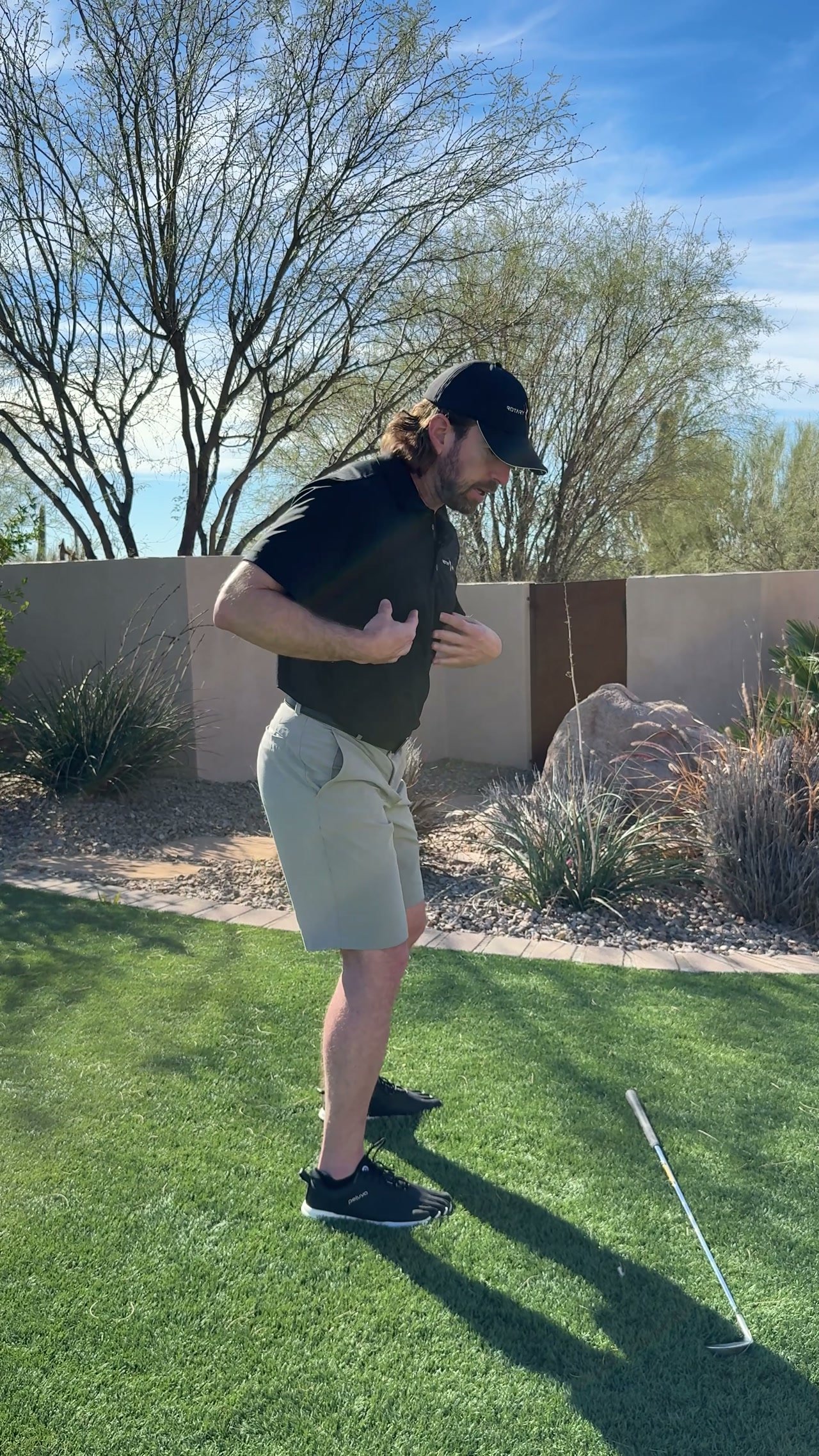
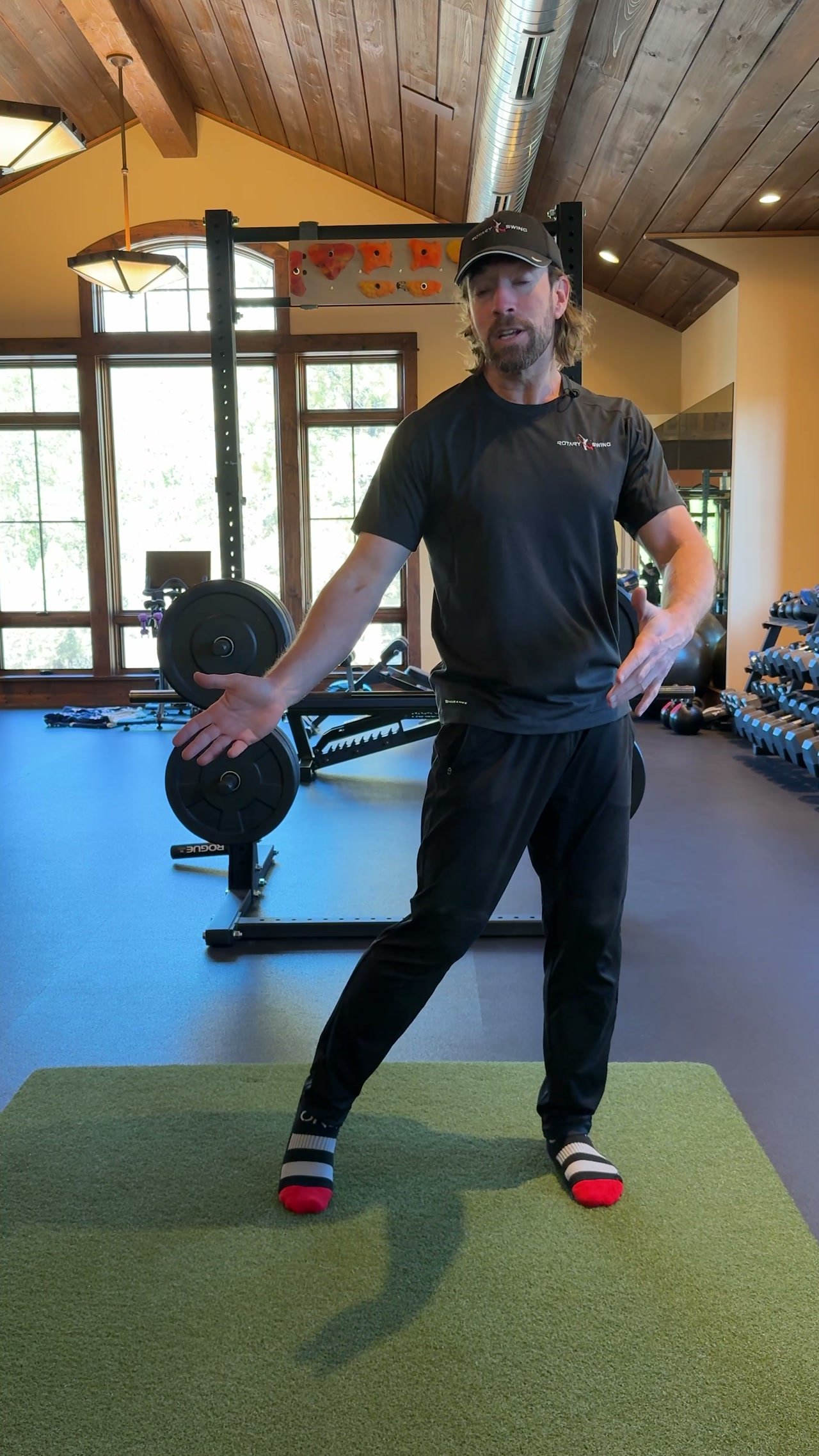
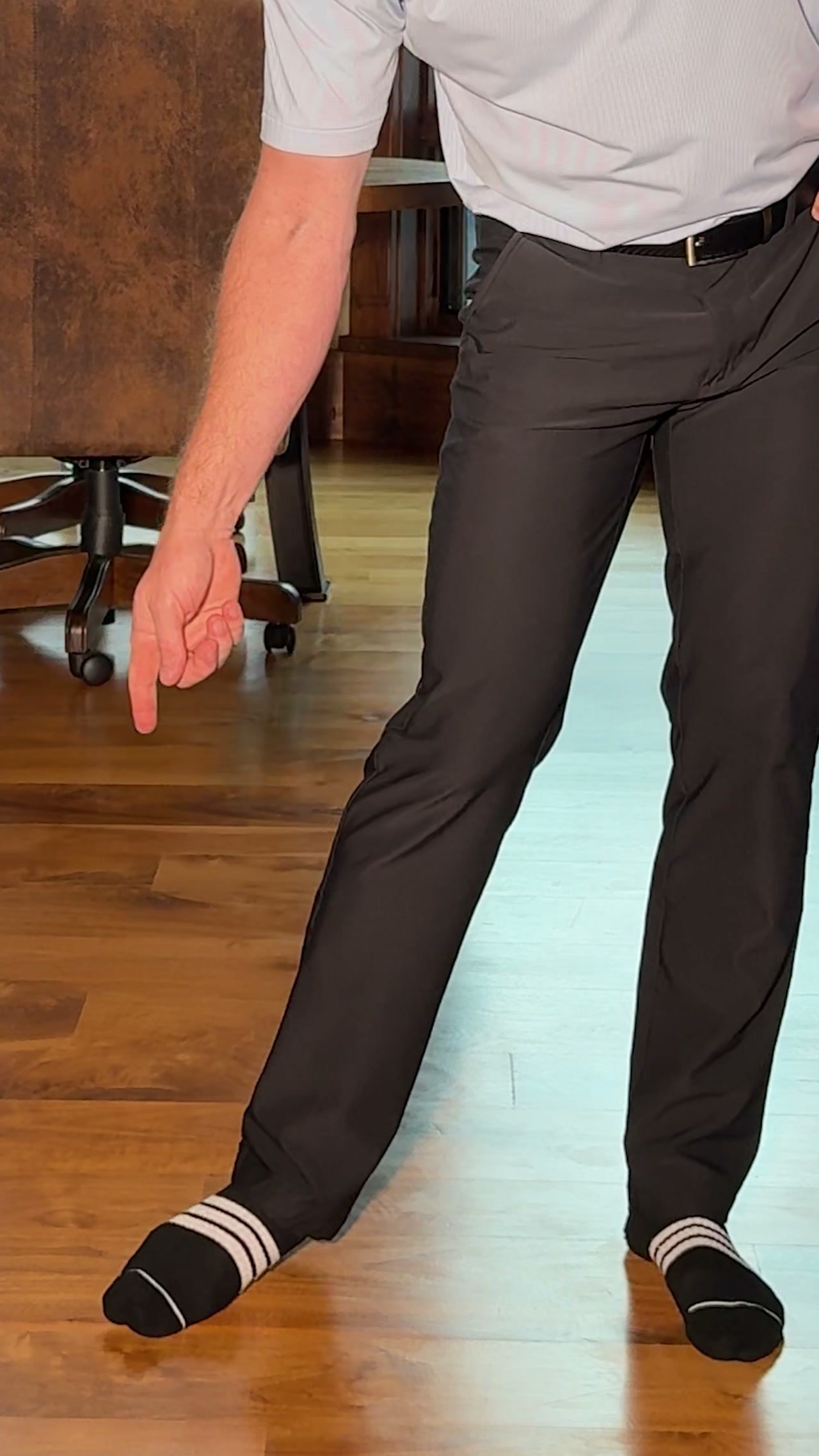
So instead, If I was trying to make my hand travel down this line as long as possible without really exaggerating it, what I would want is lateral move, right?
If I move laterally, it makes it easier for that hand to travel just a little bit longer down that line.
And by lateral, it's only about that much, you know, maybe an inch.
Give yourself an inch of movement because once you start to turn as you go back, so even if you feel an inch of movement this way, obviously you don't want to get out to the outside of your foot, but as you kind of move and get planted onto that foot an inch, and then you add rotation.
And because this happens so fast in the swing, it may not even look like you moved much at all, which is what I was talking about in the dead drill videos, when you're talking about shifting and turning, and it looks like you're always on that right hip line.
Well, the same is true with what we're talking about here.
If I focus on just a little lateral move, not only does that give me momentum to help swing my arms so it can stay more relaxed, but it buys me a little bit more time for that hand path to travel more straight down that line.
Again, I'm not trying to exaggerate it.
I'm trying to make it really nice and relaxed.
And how would I feel?
That is by a little lateral shift and my arm and shoulder working together to travel that hand down that path.
Now, from here, once I get here, the feeling that I've created is important.
This is what you're going to work on in order to get into the right position at the top.
And it's shockingly simple to get it perfect.
Okay.
So just pay attention to this feeling from here, As I've created this momentum of a little lateral movement and my hand and shoulder working together.
Once I'm here, it feels like my hand is just kind of doing this, but it's moving with my shoulder and my lateral shift.
So now all I need to do is continue that feeling all the way to the top.
And it will feel, at least in my case, it feels very vertical, but it's not as you'll see.
So what I feel is my hands traveling down a straight line.
My hips are shifting down a straight line.
My shoulder is going down kind of a straight line.
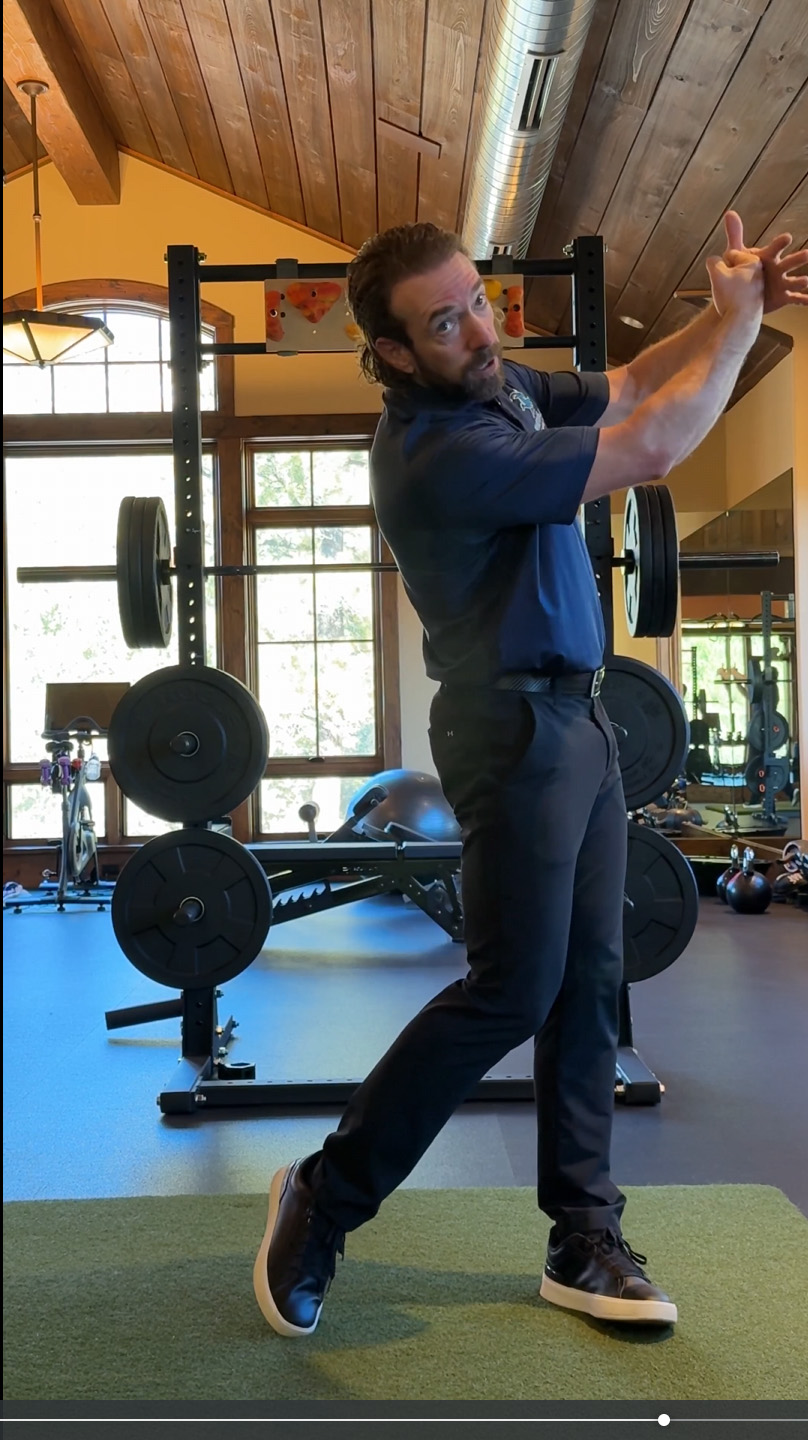
And as it does this, that if I just feel like that hand keeps going up, well, look where my hand is.
If I put my right hand in place, I'm in a great backswing.
All I did was continue the feeling of this hand going straight.
But because I'm turning, because I'm using my shoulder to help move that arm, as I'm turning that feet, that rotation gives the arm an angle to swing up on.
Because obviously it's not going to make sense to do this.
I could only take my arm straight up vertically, keeping it on there if I didn't turn.
But as I allow my shoulder to turn, because my shoulder is helping move that hand down the line.
And now once I'm there and I just continue that feeling while I continue to turn, my hand goes up exactly where I wanted it to.
And I didn't have to do anything with it.
All I continued was the feeling of a straight line path with my hands.
And then all I have to do there is take my wrist and flatten it out at the top.
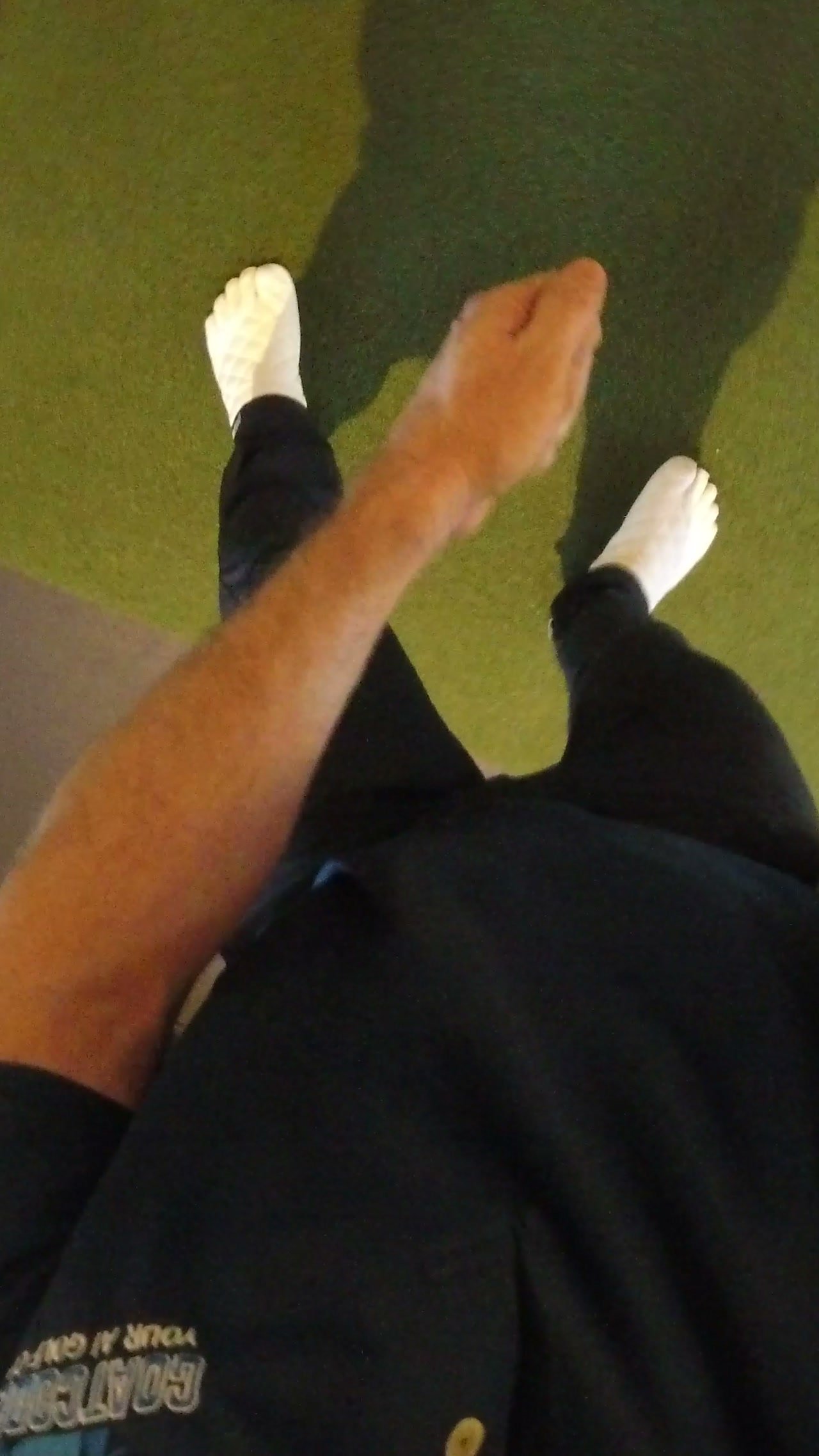
Now, what I want to do is show you exactly what this is going to look like from your perspective.
When you're looking at your hands and the club and the arms as they go back and do this movement.
So now from this perspective, this will give you an idea of what you're looking down at and what's really happening in the swing.
So I've got my hands basically on top of the blue shaft and the club head in line with the black shaft.
And as I go back, I'm just, A, I'm going to move laterally.
So I'm shifting pressure to the right to my trail leg.
And that's helping my hand continue down that line.
You can see if I just turn, club wants to go inside really quickly.
But if I go a little bit lateral and keep that hand moving down that shaft, and you can see the club head tracing that shaft, and I just continue this to the top, how little movement there really is.
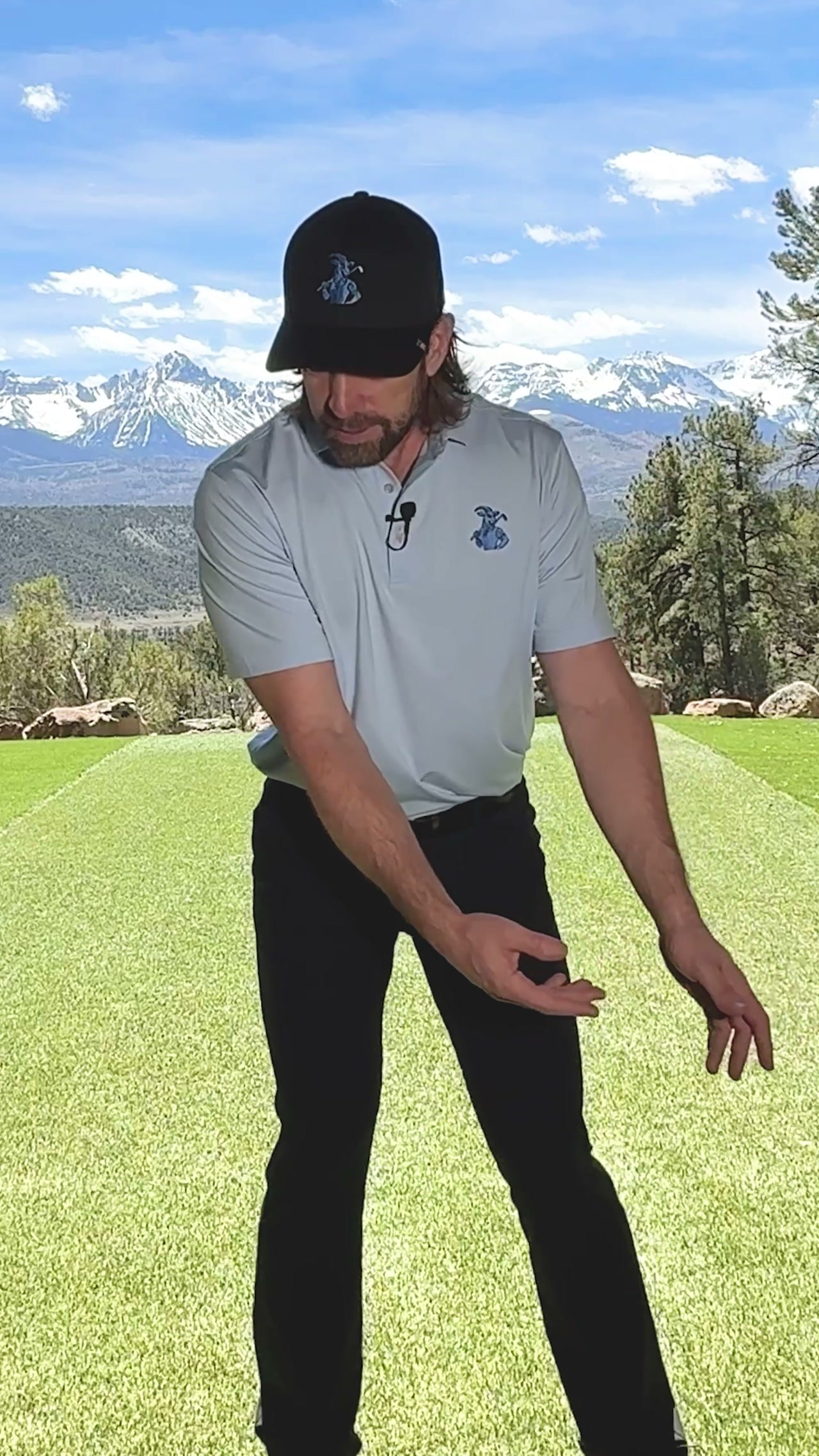
Watch my wrist movement.
The entire movement to the top of the swing is that.
That's it.
From setup, where I am here to the top of the swing is literally nothing more than that with the wrist.
Let's see that.
So I'm going to go back to the top, flatten out that wrist, and I'm just going to bring it down exactly how it was.
So now you can see how much my wrist has or has not moved here.
And if I undo it, that's all I did.
So if we take the club out of the equation, what you're going to be looking at is your wrist just does this.
You see how little movement there is?
If you start doing a lot of internal rotation of your arm, taking your hand and twisting it a lot, there's really very little movement.
Again, If you're trying to feel that things are going straight back and just flattening that wrist at the top, my wrist from the top of my swing to address is just that movement.
That's how little Tiger was moving back then with his hand.
So of course, to square the face from there, it's already square at the top.
And then as he comes down, that wrist just bows a tiny, tiny bit.
And as he comes down to impact, everything's done.
And that's really important to understand because a lot of golfers take the club and they do this right away.
And so that club face is now looking up at the sky, instead of kind of imagining that.
It's looking at the ball the whole time.
And the hands are tracing that straight line path and then continuing that feeling all the way to the top.
From here, club face is already square.
I have so little to do to try and square that face coming down at impact.
So again, the feeling straight back on that shaft with the hand, straight back with the club head, continue that feeling to the top and you're done.
So as you just saw from my perspective, which will help you see from your perspective, what you're actually seeing your hands do, the wrists literally go from here to here.
That's it.
That's the entire backswing.
It's that you're going from cupped to flat, not, you don't have to bow it, just flat and a tiny amount of rotation.
And that's it.
And all it is, is continuing this feeling of my hands going down that line.
And of course, as I continue to turn, my arm feeling stays exactly the same.
I feel like it's going straight back, but because I'm turning, it kind of goes up and ends up right over my right shoulder, just like you see in tiger swing.
This is all he's doing to get there.
It's lateral this way, lateral with the hands, lateral with the club, and it's predominantly lead arm feel because you want your right arm, your trail arm to be soft so that you can get some speed out of it.
If you're trying to pick the club up aggressively with your arm, get really narrow and kind of compact with your swing.
And so then you're going to have to do all kinds of stuff coming down.
But if you're just going back wide, straight back, continue that feeling up to the top.
Now my hands are wide at the top, way away from my hand, head.
My wrists are wide.
As I just showed you, the wrist hardly does anything.
And then from there, as I would just begin to toss it, that's where all the speed is.
So if you're doing anything more than that in your backswing, you're doing way too much.
It's truly, truly simple.
What tiger did.
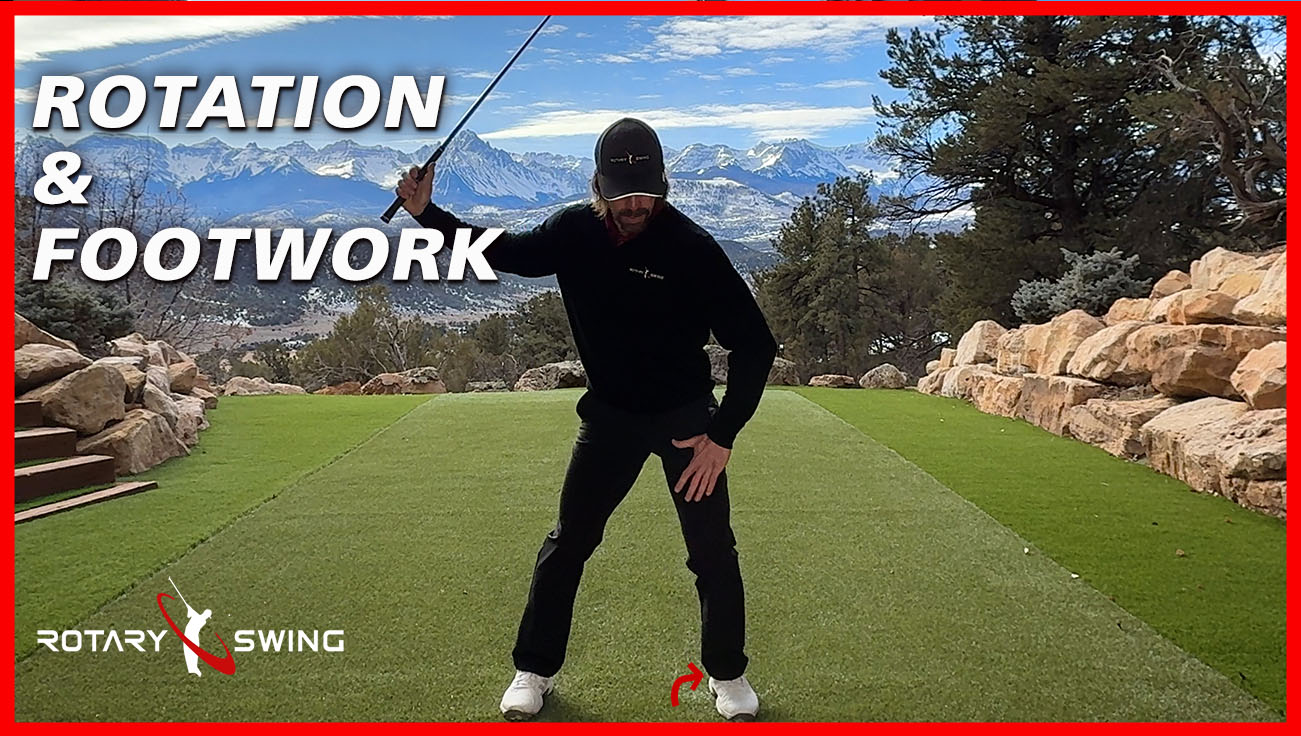
When you look at what his hips were doing in the backswing, you don't see any rotation where your knees kind of going like this, I guess his hips are turning, but his hips are turning as he's, but what he's doing is moving laterally to keep the hands moving that way, the club head to moving that way.
And then of course, as the shoulder goes down, his hips turn, But there's a difference between turning your hips and your hips turning as a result of your body turning and the arms swinging up.
I feel much more relaxed in my body because I'm not trying to generate a lot of rotational speed.
I'm trying to move everything.
What more or less feels like to me in a straight line, because that's what I saw in tiger's early swings is how simple he was.
And when he talks about it in that old 2000 clip of him and Butch on the golf channel, he really describes it in a really simple way.
He talks about his hands, his arms staying on top, keeping the club on up front.
And then as he turned it, rounding off this lead arm.
Let me play that clip for you real quick.
So you have a reminder, try to get the club up a little earlier, keep the club head in front of my hands a little longer, going back higher, right arm.
Then from there, round off the left arm, make it a little flatter at the top, left wrist, left arm up a little higher.
Then from there, get the club down in front of me from here, there I can arc it off.
So all he was really saying there is, as his arms are staying out in front and this trail arm staying on top.
This is an awkward position for your trail arm to be in because it can't bend this way and do anything in your swing.
So it's really a passive position for the trail arm.
It's keeping width, but it's not really in a position where it's going to do much to help swing the club back.
So for me, I feel like it's 60, 40 or 70, 30, maybe lead side.
My trail arm is really not doing that much to help.
Now, again, I can feel that trail shoulder blade glide because I'm used to keeping this lead arm straight and still arrive at the same position.
So either one will work.
But what I recommend for most people is to feel this lead arm, this lead hand going straight down that line.
And as you continue to feel that arm going up, it ends up right over your trail shoulder with a flat left wrist and you're ready to rock and roll.
You don't have to have all of these crazy thoughts going through your head.
It's truly straight, flat throw.
And that's why Tiger, in my opinion, one of the reasons he was so great back then because his swing was so simple.
And really today it hasn't changed radically.
His core movements are much, much the same.
The way he powers the swing is the same.
And in fact, some things I love about his swing today that are even better than he was doing in 2000.
But I think if you learn this 2000 pattern, because it's so simple, it's so basic.
I mean, he couldn't move any less and have a proper golf swing that if you just focus on this action, keeping the club face feeling like it's looking at the ball.
It doesn't mean hood it.
So it's looking at the ground.
Just imagine, like you can see the club face is still kind of looking at the ball here.
It's kind of looking away.
So I'm kind of imagining the sweet spot of this club, which I have lined up with the ball right now.
As it goes back, the sweet spot still in line with the ball, still looking at the ball, still looking at the ball, still looking at the ball.
And then as I continue to go up, it's going to start to look away a little bit, but it's still peeking at it.
It can still see it.
Now it's blind.
It can't see that golf ball at all.
For those of you who fan the face, open really bad and get a cupped wrist at the top and get really long and loose at the top.
That's a great visual for you to feel as you're taking your hands straight back, your hips going straight back, the club head going straight back and continuing that feeling up to the top.
You're in the right position at the top and you're going to see it's so much less work.
It's so efficient.
And it's exactly what I believe how Tiger got there back in 2000.
What's simple, what's cool about this is it's shockingly simple.
And to feel it, to really understand it, all you really need is two clubs or two shafts, two alignment sticks, something like that to stick on the ground.
And then you're going to be able to grasp this, understand it really quickly, really easily.
Now I'm going to show you at first with the club, and then I'm going to break this down.
So we're going to put the club away for a second, and we're going to show you how to feel it with each arm.
So you really understand what arm's doing which, because to me, that made a huge difference in getting my swing to match Tigers.
Do I feel more right arm?
Do I feel more left arm?
Do I feel more left hand?
When do I feel that?
Why do I feel that?
I'm going to go over all of that in the video.
So with the club at first, what I want you to do is set up a two shafts or alignment sticks, whatever you have, one directly down the target line in line with the ball, and one directly down the target line in line with your hands.
Now don't worry about getting this perfected.
It doesn't have to be exactly square or any of that stuff.
None of that stuff really matters.
This is more to understand the big picture of what you're supposed to feel.
Now as you go back in the swing, what I see all the time is the club immediately going inside of this shaft, going back like this, and the face starting to fan open.
The higher the handicap, the more common this is.
And what it leads to is that the club face gets open very early.
Now what does that mean?
The toe of the club, or this leading edge is not at 12 o 'clock, but open.
Like from my perspective, if I was reading clock, that would be one o'clock, two o'clock.
We want that club to be either towed up or slightly towed in.
And in Tiger's case, in early 2000s, he was slightly towed in maybe at about 11 o'clock.
But what I see all the time with amateur golfers who struggle is that they start rolling this left wrist, lead wrist open and keeping it cupped.
And that gets the club open.
And then they're up here and the club can get laid off.
You can get across the line.
But what's happening is this wrist is very, very cupped at this point.
And so when you go to throw, you're just throwing an open club face.
And so of course you're going to scoop, flip, and chicken wing on the way through.
So to get the feeling of this, what you actually want is that club face looking at the ball, what your perspective is.
It's both traveling down that shaft from your eyes perspective.
Okay.
And my hands are traveling down the shaft from my eyes perspective or close to it.
So now as I go back and that club face is looking at the ball, you know, here, it's not looking at the ball.
It's looking at the sky now.
So now as it's looking at the ball, my club face has very little rotation happening.
If I do this, I've just take, I've added a ton that I've got to try and take out in the downswing.
It's just hard to time that.
But if I go straight back where that club bed looks like it's traveling straight in a straight line, straight back.
And my hands look like they're traveling in a straight line, straight back over the shaft.
It's kind of like parallel train tracks here.
They're both moving straight back.
And I'm doing that with that club.
Until it kind of reaches the end of the shaft a few feet back, and my hands are outside of my thigh here.
So from face on, it's just this.
Once they're here, I'm going to explain how all this stuff is going to go back from there in just a moment.
But this is the basic idea.
Once you set this off in motion, These parallel train tracks, with your hands going straight back and the club head going straight back, then it's very, very easy to get to the top of the backswing.
Because from there, if I've got the club face looking at the ball for a long time, as I go back until I'm parallel to the ground from here, that motion just continues and I'm in the right position at the top.
Now let's break this down for a second and understand what this is really going to feel like.
And how do you really internalize this and understand how to do it?
Start with your lead arm only.
Now, This is important because the way that I was able to match up these patterns closely was feeling.
A certain percentage of left arm versus right arm, or lead arm versus trail arm in the backswing.
You can do it either way.
You can have a lot of trail arm.
You can have a lot of lead arm.
But what happened inevitably for me, and of course will happen for most, is that the more right arm I felt, The more that this bicep started to engage in the backswing and my shoulder started trying to engage to lift the club up, I would get narrow and collapsed.
So I would have this type of backswing where I wouldn't really fully turn because as soon as this starts to bend, then all of a sudden I feel loaded up.
I have nowhere else to go.
And if I just turned, it's just going to create a really weird swing.
Of course, you guys have seen my old videos where I've talked about the right arm is the governor of width.
And so by keeping this straight as long as possible, this allows the club to stay out in front of me and create a really wide backswing, which is what we're looking for.
So what I feel is the vast majority of what I'm feeling in the backswing is lead arm, lead shoulder.
The more trail arm I feel, the more I activate that too early in the swing, the more collapsed I get, and the more narrow my golf swing becomes.
So what I feel at first is I'm going to focus exclusively on the left arm, lead arm.
And as I go back, I'm going to take that arm and see how I would take it down that shaft line as long as I could.
Now, I'm not going to try and exaggerate it and really extend it, but what I'm trying to feel is what would naturally make that motion happen.
And of course, as you saw from the other takeaway videos and the goat theory stuff that I was studying, You'll know that I talk about how that lead shoulder always goes down in the grates to start the swing.
So as I do this, That helps that arm travel more down that shaft line until it gets at least a foot outside my hands or so.
If I don't do that and I start to turn this way, my hands immediately go to the inside.
So once I do that, now I'm going to have that club with a lot of momentum going to the inside.
My wrist is going to tend to cup, and then I'm going to end up in a position to where that club is deep and buried inside.
And it's going to be open at the top, most likely, because I'm going to cut my wrist.
So instead, if I take that left shoulder, lead shoulder, and I start to use that to help push that hand down that line, then I get that tunnel that I'm looking for, for my hands to travel on this path for the first few, you know, couple feet of hand travel in the swing.
And as I do this with the lead arm, What I want to notice is that this elbow pit goes from pointing slightly away from me at an angle to feeling like it's pointing straight up at the sky.
At the end of the takeaway.
And what that gives me is the feeling of not my arms internally rotating and dumping that club inside, because that's what's going to happen.
As soon as I start letting this happen, and this internally rotates that way, the club's going to get inside.
But if I keep this feeling like it's pointing up at the sky, then it's easy for me to keep the club at outside my hands.
And now from here, I only have to go what feels like up.
So let me talk a little bit more about this.
So now, as I'm taking that hand straight back, what I want you to start to feel is what would give you the added benefit, What would make it easier to keep that hand traveling back that way in terms of how you move your body?
Because a lot of times what we see is the hips turning like this in the swing.
And the hips do, quote unquote, turn in the golf swing.
But I don't think that you need to feel or should feel that you turn them per se, unless you have a swing that's very rotational in nature.
And as I talked about in the intro video, you know, the way that you produce power is everything in the swing, but there's not necessarily one way to do it.
You can have a lot of rotational speed and the less trail arm throw that you're going to have in there, the more rotational speed you're going to need to make up for that loss of power.
So a lot of times golfers turn their hips a lot.
That allows their hands to go way inside really early, creates a lot of momentum for the club head.
And then we're in that position where the club gets open and our wrist gets cupped and the club is buried.
So instead, If I was trying to make my hand travel down this line as long as possible without really exaggerating it, what I would want is lateral move, right?
If I move laterally, it makes it easier for that hand to travel just a little bit longer down that line.
And by lateral, it's only about that much, you know, maybe an inch.
Give yourself an inch of movement because once you start to turn as you go back, so even if you feel an inch of movement this way, obviously you don't want to get out to the outside of your foot, but as you kind of move and get planted onto that foot an inch, and then you add rotation.
And because this happens so fast in the swing, it may not even look like you moved much at all, which is what I was talking about in the dead drill videos, when you're talking about shifting and turning, and it looks like you're always on that right hip line.
Well, the same is true with what we're talking about here.
If I focus on just a little lateral move, not only does that give me momentum to help swing my arms so it can stay more relaxed, but it buys me a little bit more time for that hand path to travel more straight down that line.
Again, I'm not trying to exaggerate it.
I'm trying to make it really nice and relaxed.
And how would I feel?
That is by a little lateral shift and my arm and shoulder working together to travel that hand down that path.
Now, from here, once I get here, the feeling that I've created is important.
This is what you're going to work on in order to get into the right position at the top.
And it's shockingly simple to get it perfect.
Okay.
So just pay attention to this feeling from here, As I've created this momentum of a little lateral movement and my hand and shoulder working together.
Once I'm here, it feels like my hand is just kind of doing this, but it's moving with my shoulder and my lateral shift.
So now all I need to do is continue that feeling all the way to the top.
And it will feel, at least in my case, it feels very vertical, but it's not as you'll see.
So what I feel is my hands traveling down a straight line.
My hips are shifting down a straight line.
My shoulder is going down kind of a straight line.
And as it does this, that if I just feel like that hand keeps going up, well, look where my hand is.
If I put my right hand in place, I'm in a great backswing.
All I did was continue the feeling of this hand going straight.
But because I'm turning, because I'm using my shoulder to help move that arm, as I'm turning that feet, that rotation gives the arm an angle to swing up on.
Because obviously it's not going to make sense to do this.
I could only take my arm straight up vertically, keeping it on there if I didn't turn.
But as I allow my shoulder to turn, because my shoulder is helping move that hand down the line.
And now once I'm there and I just continue that feeling while I continue to turn, my hand goes up exactly where I wanted it to.
And I didn't have to do anything with it.
All I continued was the feeling of a straight line path with my hands.
And then all I have to do there is take my wrist and flatten it out at the top.
Now, what I want to do is show you exactly what this is going to look like from your perspective.
When you're looking at your hands and the club and the arms as they go back and do this movement.
So now from this perspective, this will give you an idea of what you're looking down at and what's really happening in the swing.
So I've got my hands basically on top of the blue shaft and the club head in line with the black shaft.
And as I go back, I'm just, A, I'm going to move laterally.
So I'm shifting pressure to the right to my trail leg.
And that's helping my hand continue down that line.
You can see if I just turn, club wants to go inside really quickly.
But if I go a little bit lateral and keep that hand moving down that shaft, and you can see the club head tracing that shaft, and I just continue this to the top, how little movement there really is.
Watch my wrist movement.
The entire movement to the top of the swing is that.
That's it.
From setup, where I am here to the top of the swing is literally nothing more than that with the wrist.
Let's see that.
So I'm going to go back to the top, flatten out that wrist, and I'm just going to bring it down exactly how it was.
So now you can see how much my wrist has or has not moved here.
And if I undo it, that's all I did.
So if we take the club out of the equation, what you're going to be looking at is your wrist just does this.
You see how little movement there is?
If you start doing a lot of internal rotation of your arm, taking your hand and twisting it a lot, there's really very little movement.
Again, If you're trying to feel that things are going straight back and just flattening that wrist at the top, my wrist from the top of my swing to address is just that movement.
That's how little Tiger was moving back then with his hand.
So of course, to square the face from there, it's already square at the top.
And then as he comes down, that wrist just bows a tiny, tiny bit.
And as he comes down to impact, everything's done.
And that's really important to understand because a lot of golfers take the club and they do this right away.
And so that club face is now looking up at the sky, instead of kind of imagining that.
It's looking at the ball the whole time.
And the hands are tracing that straight line path and then continuing that feeling all the way to the top.
From here, club face is already square.
I have so little to do to try and square that face coming down at impact.
So again, the feeling straight back on that shaft with the hand, straight back with the club head, continue that feeling to the top and you're done.
So as you just saw from my perspective, which will help you see from your perspective, what you're actually seeing your hands do, the wrists literally go from here to here.
That's it.
That's the entire backswing.
It's that you're going from cupped to flat, not, you don't have to bow it, just flat and a tiny amount of rotation.
And that's it.
And all it is, is continuing this feeling of my hands going down that line.
And of course, as I continue to turn, my arm feeling stays exactly the same.
I feel like it's going straight back, but because I'm turning, it kind of goes up and ends up right over my right shoulder, just like you see in tiger swing.
This is all he's doing to get there.
It's lateral this way, lateral with the hands, lateral with the club, and it's predominantly lead arm feel because you want your right arm, your trail arm to be soft so that you can get some speed out of it.
If you're trying to pick the club up aggressively with your arm, get really narrow and kind of compact with your swing.
And so then you're going to have to do all kinds of stuff coming down.
But if you're just going back wide, straight back, continue that feeling up to the top.
Now my hands are wide at the top, way away from my hand, head.
My wrists are wide.
As I just showed you, the wrist hardly does anything.
And then from there, as I would just begin to toss it, that's where all the speed is.
So if you're doing anything more than that in your backswing, you're doing way too much.
It's truly, truly simple.
What tiger did.
When you look at what his hips were doing in the backswing, you don't see any rotation where your knees kind of going like this, I guess his hips are turning, but his hips are turning as he's, but what he's doing is moving laterally to keep the hands moving that way, the club head to moving that way.
And then of course, as the shoulder goes down, his hips turn, But there's a difference between turning your hips and your hips turning as a result of your body turning and the arms swinging up.
I feel much more relaxed in my body because I'm not trying to generate a lot of rotational speed.
I'm trying to move everything.
What more or less feels like to me in a straight line, because that's what I saw in tiger's early swings is how simple he was.
And when he talks about it in that old 2000 clip of him and Butch on the golf channel, he really describes it in a really simple way.
He talks about his hands, his arms staying on top, keeping the club on up front.
And then as he turned it, rounding off this lead arm.
Let me play that clip for you real quick.
So you have a reminder, try to get the club up a little earlier, keep the club head in front of my hands a little longer, going back higher, right arm.
Then from there, round off the left arm, make it a little flatter at the top, left wrist, left arm up a little higher.
Then from there, get the club down in front of me from here, there I can arc it off.
So all he was really saying there is, as his arms are staying out in front and this trail arm staying on top.
This is an awkward position for your trail arm to be in because it can't bend this way and do anything in your swing.
So it's really a passive position for the trail arm.
It's keeping width, but it's not really in a position where it's going to do much to help swing the club back.
So for me, I feel like it's 60, 40 or 70, 30, maybe lead side.
My trail arm is really not doing that much to help.
Now, again, I can feel that trail shoulder blade glide because I'm used to keeping this lead arm straight and still arrive at the same position.
So either one will work.
But what I recommend for most people is to feel this lead arm, this lead hand going straight down that line.
And as you continue to feel that arm going up, it ends up right over your trail shoulder with a flat left wrist and you're ready to rock and roll.
You don't have to have all of these crazy thoughts going through your head.
It's truly straight, flat throw.
And that's why Tiger, in my opinion, one of the reasons he was so great back then because his swing was so simple.
And really today it hasn't changed radically.
His core movements are much, much the same.
The way he powers the swing is the same.
And in fact, some things I love about his swing today that are even better than he was doing in 2000.
But I think if you learn this 2000 pattern, because it's so simple, it's so basic.
I mean, he couldn't move any less and have a proper golf swing that if you just focus on this action, keeping the club face feeling like it's looking at the ball.
It doesn't mean hood it.
So it's looking at the ground.
Just imagine, like you can see the club face is still kind of looking at the ball here.
It's kind of looking away.
So I'm kind of imagining the sweet spot of this club, which I have lined up with the ball right now.
As it goes back, the sweet spot still in line with the ball, still looking at the ball, still looking at the ball, still looking at the ball.
And then as I continue to go up, it's going to start to look away a little bit, but it's still peeking at it.
It can still see it.
Now it's blind.
It can't see that golf ball at all.
For those of you who fan the face, open really bad and get a cupped wrist at the top and get really long and loose at the top.
That's a great visual for you to feel as you're taking your hands straight back, your hips going straight back, the club head going straight back and continuing that feeling up to the top.
You're in the right position at the top and you're going to see it's so much less work.
It's so efficient.
And it's exactly what I believe how Tiger got there back in 2000.
Si vous voulez apprendre le swing de golf de Tiger du début des années 2000, vous devez avoir un backswing approprié.
Ce qui est simple, ce qui est cool à ce sujet, c'est que c'est incroyablement simple.
Et pour le ressentir, pour vraiment le comprendre, tout ce dont vous avez vraiment besoin, c'est de deux clubs ou de deux manches, de deux bâtons d'alignement, quelque chose comme ça à coller au sol.
Et puis vous allez pouvoir saisir cela, le comprendre très rapidement, très facilement.
Maintenant, je vais d'abord vous montrer avec le club, puis je vais le décomposer.
Nous allons donc ranger le club pendant une seconde et nous allons vous montrer comment le sentir avec chaque bras.
Vous comprenez donc vraiment ce que fait le bras, car pour moi, cela a fait une énorme différence pour que mon swing corresponde à celui des Tigres.
Est-ce que je sens plus le bras droit ?
Est-ce que je sens plus le bras gauche ?
Est-ce que je ressens plus la main gauche ?
Quand est-ce que je ressens cela ?
Pourquoi est-ce que je ressens ça ?
Je vais passer en revue tout cela dans la vidéo.
Donc, avec le club au début, ce que je veux que vous fassiez, c'est installer deux manches ou bâtons d'alignement, quoi que vous ayez, un directement sur la ligne cible en ligne avec la balle, et un directement sur la ligne cible en ligne avec vos mains.
Maintenant, ne vous inquiétez pas de perfectionner cela.
Il n’est pas nécessaire que ce soit exactement carré ou quoi que ce soit de ce genre.
Rien de tout cela n’a vraiment d’importance.
Il s’agit plutôt de comprendre la situation dans son ensemble, ce que vous êtes censé ressentir.
Maintenant, lorsque vous revenez dans le swing, ce que je vois tout le temps, c'est le club qui entre immédiatement dans ce manche, qui revient comme ça, et la face qui commence à s'ouvrir en éventail.
Plus le handicap est élevé, plus cela est courant.
Et cela conduit à ce que la face du club s'ouvre très tôt.
Et maintenant, qu'est-ce que cela signifie ?
La pointe du club, ou ce bord d'attaque, n'est pas à 12 heures, mais ouvert.
De mon point de vue, si je lisais l'heure, ce serait une heure, deux heures.
Nous voulons que ce club soit remorqué vers le haut ou légèrement vers l'intérieur.
Et dans le cas de Tiger, au début des années 2000, il a été légèrement remorqué vers 11 heures.
Mais ce que je vois tout le temps chez les golfeurs amateurs qui ont des difficultés, c'est qu'ils commencent à faire rouler ce poignet gauche, le poignet avant ouvert et le gardant en coupe.
Et cela ouvre le club.
Et puis ils sont là et le club peut être licencié.
Vous pouvez franchir la ligne.
Mais ce qui se passe, c'est que ce poignet est très, très creux à ce stade.
Et donc, lorsque vous lancez, vous lancez simplement une face de club ouverte.
Et bien sûr, vous allez ramasser, retourner et couper une aile de poulet en chemin.
Donc, pour avoir cette sensation, ce que vous voulez en fait, c'est que la face du club regarde la balle, quelle est votre perspective.
C'est à la fois un voyage dans ce puits depuis votre point de vue.
D'accord.
Et mes mains parcourent le long du manche du point de vue de mes yeux ou à proximité.
Alors maintenant, quand je reviens en arrière et que la face du club regarde la balle, vous savez, ici, elle ne regarde pas la balle.
Il regarde le ciel maintenant.
Donc maintenant, alors que je regarde la balle, la face de mon club subit très peu de rotation.
Si je fais cela, je viens de prendre, j'ai ajouté une tonne que je dois essayer de retirer dans la période de baisse.
C'est juste difficile de chronométrer ça.
Mais si je retourne tout droit là où ce lit club semble se déplacer tout droit en ligne droite, tout droit.
Et mes mains semblent se déplacer en ligne droite, directement sur le manche.
C'est un peu comme des voies ferrées parallèles ici.
Ils reviennent tous les deux directement en arrière.
Et je fais ça avec ce club.
Jusqu'à ce qu'il atteigne le bout du puits à quelques mètres en arrière, et mes mains sont à l'extérieur de ma cuisse ici.
Donc, de face, c'est juste ça.
Une fois qu'ils seront là, je vais vous expliquer dans un instant comment tout cela va se dérouler à partir de là.
Mais c’est l’idée de base.
Une fois que vous avez mis cela en mouvement, ces voies ferrées parallèles, avec vos mains allant droit vers l'arrière et la tête du club allant droit vers l'arrière, alors il est très, très facile d'atteindre le sommet du backswing.
Parce qu'à partir de là, si j'ai la face du club regardant la balle pendant une longue période, alors que je reviens jusqu'à ce que je sois parallèle au sol à partir d'ici, ce mouvement continue et je suis dans la bonne position au sommet.
Maintenant, décomposons cela une seconde et comprenons ce que cela va vraiment ressentir.
Et comment pouvez-vous réellement intérioriser cela et comprendre comment le faire ?
Commencez uniquement avec votre bras principal.
Maintenant, c'est important parce que la façon dont j'ai pu faire correspondre étroitement ces modèles était le ressenti.
Un certain pourcentage de bras gauche par rapport au bras droit, ou de bras avant par rapport au bras arrière dans le backswing.
Vous pouvez le faire dans les deux sens.
Vous pouvez avoir beaucoup de bras de traînée.
Vous pouvez avoir beaucoup de bras de tête.
Mais ce qui est arrivé inévitablement pour moi, et qui bien sûr arrivera pour la plupart, c'est que plus je sentais mon bras droit, plus ce biceps commençait à s'engager dans le backswing et mon épaule commençait à essayer de s'engager pour soulever le club, plus je devenais étroit et je m'effondrais.
J'aurais donc ce type de backswing où je ne tournerais pas vraiment complètement parce que dès que cela commence à se plier, alors tout d'un coup je me sens chargé.
Je n'ai nulle part où aller.
Et si je me tournais simplement, cela créerait un swing vraiment étrange.
Bien sûr, vous avez vu mes anciennes vidéos dans lesquelles j'ai parlé du fait que le bras droit est le régulateur de la largeur.
Et donc en gardant cela droit aussi longtemps que possible, cela permet au club de rester devant moi et de créer un backswing très large, ce que nous recherchons.
Donc ce que je ressens, c'est que la grande majorité de ce que je ressens dans le backswing, c'est le bras avant et l'épaule avant.
Plus je sens le bras traînant, plus je l'active trop tôt dans le swing, plus je m'effondre et plus mon swing de golf devient étroit.
Donc, ce que je ressens au début, c'est que je vais me concentrer exclusivement sur le bras gauche, le bras principal.
Et en revenant, je vais prendre ce bras et voir comment je le ferais descendre le long de cette ligne d'arbre aussi longtemps que possible.
Maintenant, je ne vais pas essayer d'exagérer et de vraiment l'étendre, mais ce que j'essaie de ressentir, c'est ce qui ferait naturellement que ce mouvement se produise.
Et bien sûr, comme vous l'avez vu dans les autres vidéos à emporter et dans la théorie de la chèvre que j'étudiais, vous saurez que je parle de la façon dont cette épaule de tête descend toujours dans les grilles pour démarrer le swing.
Donc, pendant que je fais cela, cela aide ce bras à se déplacer davantage le long de cette ligne d'arbre jusqu'à ce qu'il se trouve au moins à un pied de mes mains ou à peu près.
Si je ne fais pas ça et que je commence à tourner de cette façon, mes mains vont immédiatement vers l'intérieur.
Donc, une fois que j'aurai fait cela, je vais avoir ce club avec beaucoup d'élan vers l'intérieur.
Mon poignet va avoir tendance à se creuser, et je vais alors me retrouver dans une position où ce club est profond et enfoui à l'intérieur.
Et ce sera probablement ouvert en haut, parce que je vais me couper le poignet.
Donc, au lieu de cela, si je prends cette épaule gauche, l'épaule principale, et que je commence à l'utiliser pour aider à pousser cette main le long de cette ligne, alors j'obtiens ce tunnel que je recherche, pour que mes mains parcourent ce chemin pendant les premiers, vous savez, quelques mètres de déplacement de la main dans le swing.
Et pendant que je fais cela avec le bras principal, ce que je veux remarquer, c'est que ce creux du coude passe d'une position légèrement éloignée de moi à un angle à une sensation de pointage direct vers le ciel.
À la fin du plat à emporter.
Et ce que cela me donne, c'est la sensation que mes bras ne tournent pas intérieurement et que je ne jette pas ce club à l'intérieur, parce que c'est ce qui va se passer.
Dès que je commence à laisser cela se produire, et que cela tourne intérieurement de cette façon, le club va entrer à l'intérieur.
Mais si je garde cette sensation comme si elle pointait vers le ciel, alors il m'est facile de garder le club à l'extérieur de mes mains.
Et maintenant, à partir d'ici, je n'ai plus qu'à monter ce qui semble être le cas.
Alors laissez-moi vous en parler un peu plus.
Alors maintenant, alors que je ramène cette main vers l'arrière, ce que je veux que vous commenciez à ressentir, c'est ce qui vous donnerait un avantage supplémentaire, ce qui rendrait plus facile de garder cette main dans cette direction en termes de mouvement de votre corps ?
Parce que souvent, ce que nous voyons, ce sont les hanches qui tournent comme ça pendant le swing.
Et les hanches, entre guillemets, tournent dans le swing de golf.
Mais je ne pense pas que vous ayez besoin de sentir ou que vous devriez sentir que vous les tournez en soi, à moins que vous n'ayez un swing de nature très rotationnelle.
Et comme je l'ai dit dans la vidéo d'introduction, vous savez, la façon dont vous produisez de la puissance est primordiale dans le swing, mais il n'y a pas nécessairement une seule façon de le faire.
Vous pouvez avoir une vitesse de rotation élevée et moins vous aurez de débattement du bras de suspension, plus vous aurez besoin de vitesse de rotation pour compenser cette perte de puissance.
Souvent, les golfeurs tournent beaucoup leurs hanches.
Cela permet à leurs mains d'aller très loin à l'intérieur très tôt, créant beaucoup d'élan pour la tête du club.
Et puis nous sommes dans cette position où le club s'ouvre et notre poignet est en coupe et le club est enterré.
Donc, au lieu de cela, si j'essayais de faire en sorte que ma main parcoure cette ligne aussi longtemps que possible sans vraiment l'exagérer, ce que je voudrais, c'est un mouvement latéral, n'est-ce pas ?
Si je me déplace latéralement, cela permet à cette main de parcourir un peu plus longtemps cette ligne.
Et latéralement, c'est seulement à peu près ça, vous savez, peut-être un pouce.
Donnez-vous un pouce de mouvement car une fois que vous commencez à tourner en arrière, donc même si vous ressentez un pouce de mouvement de cette façon, évidemment vous ne voulez pas sortir vers l'extérieur de votre pied, mais au fur et à mesure que vous bougez et que vous vous plantez sur ce pied d'un pouce, puis vous ajoutez une rotation.
Et parce que cela se produit si vite dans le swing, il se peut même que vous n'ayez pas l'impression d'avoir beaucoup bougé, ce dont je parlais dans les vidéos d'exercices morts, lorsque vous parlez de changement de vitesse et de rotation, et il semble que vous soyez toujours sur cette ligne de hanche droite.
Eh bien, c’est la même chose avec ce dont nous parlons ici.
Si je me concentre sur un petit mouvement latéral, non seulement cela me donne l'élan nécessaire pour aider à balancer mes bras afin qu'ils puissent rester plus détendus, mais cela me donne un peu plus de temps pour que ce chemin de main se déplace plus directement sur cette ligne.
Encore une fois, je n’essaie pas d’exagérer.
J'essaie de rendre cela vraiment agréable et détendu.
Et comment je me sentirais ?
C'est par un petit déplacement latéral et mon bras et mon épaule travaillant ensemble pour déplacer cette main sur ce chemin.
Maintenant, à partir de là, une fois que j'arrive ici, le sentiment que j'ai créé est important.
C'est sur cela que vous allez travailler pour arriver à la bonne position au sommet.
Et c'est étonnamment simple d'obtenir un résultat parfait.
D'accord.
Alors faites juste attention à cette sensation à partir d'ici, alors que j'ai créé cet élan d'un petit mouvement latéral et que ma main et mon épaule travaillent ensemble.
Une fois que je suis ici, j'ai l'impression que ma main fait juste ça, mais elle bouge avec mon épaule et mon déplacement latéral.
Alors maintenant, tout ce que j’ai à faire, c’est de continuer à ressentir ce sentiment jusqu’au sommet.
Et cela semblera, du moins dans mon cas, très vertical, mais ce n'est pas comme vous le verrez.
Donc ce que je ressens, c'est que mes mains se déplacent sur une ligne droite.
Mes hanches se déplacent vers le bas en ligne droite.
Mon épaule descend en quelque sorte en ligne droite.
Et pendant que ça se passe comme ça, si j'ai l'impression que ma main continue de se lever, eh bien, regardez où est ma main.
Si je mets ma main droite en place, je suis dans un super backswing.
Tout ce que j'ai fait, c'est continuer à ressentir cette main qui allait tout droit.
Mais parce que je tourne, parce que j'utilise mon épaule pour aider à déplacer ce bras, pendant que je tourne ces pieds, cette rotation donne au bras un angle sur lequel se balancer vers le haut.
Parce que de toute évidence, cela n’aura aucun sens de faire cela.
Je ne pouvais que lever mon bras verticalement, en le gardant là si je ne me tournais pas.
Mais lorsque je laisse mon épaule tourner, parce que mon épaule aide à déplacer cette main le long de la ligne.
Et maintenant, une fois que j'y suis et que je continue à ressentir cette sensation pendant que je continue à tourner, ma main monte exactement là où je le voulais.
Et je n'ai rien eu à faire avec ça.
Tout ce que j'ai continué, c'était la sensation d'un chemin en ligne droite avec mes mains.
Et puis tout ce que j'ai à faire c'est de prendre mon poignet et de l'aplatir en haut.
Maintenant, ce que je veux faire, c'est vous montrer exactement à quoi cela va ressembler de votre point de vue.
Lorsque vous regardez vos mains, le club et les bras alors qu'ils reculent et font ce mouvement.
Donc maintenant, de ce point de vue, cela vous donnera une idée de ce que vous regardez et de ce qui se passe réellement dans le swing.
J'ai donc mes mains essentiellement sur le dessus du manche bleu et la tête du club alignée avec le manche noir.
Et en revenant, je vais juste, A, je vais me déplacer latéralement.
Je déplace donc la pression vers la droite, sur ma jambe arrière.
Et cela aide ma main à continuer sur cette voie.
Vous pouvez voir que si je me retourne, le club veut entrer très rapidement.
Mais si je vais un peu latéralement et que je continue à déplacer cette main le long de ce manche, et que vous pouvez voir la tête du club suivre ce manche, et que je continue jusqu'au sommet, à quel point il y a vraiment peu de mouvement.
Regardez le mouvement de mon poignet.
L'ensemble du mouvement jusqu'au sommet du swing est celui-là.
C'est ça.
Depuis la configuration, où je suis ici jusqu'au sommet du swing, il n'y a littéralement rien de plus que cela avec le poignet.
Voyons voir ça.
Je vais donc revenir en haut, aplatir ce poignet et le ramener exactement comme il était.
Vous pouvez donc maintenant voir à quel point mon poignet a bougé ou non ici.
Et si je le défais, c'est tout ce que j'ai fait.
Donc, si nous retirons le club de l'équation, ce que vous allez voir, c'est que votre poignet fait simplement cela.
Vous voyez comme il y a peu de mouvement ?
Si vous commencez à faire beaucoup de rotation interne de votre bras, en prenant votre main et en la tournant beaucoup, il y a vraiment très peu de mouvement.
Encore une fois, si vous essayez de sentir que les choses reviennent directement en arrière et d'aplatir simplement ce poignet en haut, mon poignet du haut de mon swing à l'adresse n'est que ce mouvement.
C'est ainsi que le petit Tigre bougeait alors avec sa main.
Alors bien sûr, pour équarrir le visage à partir de là, il est déjà carré en haut.
Et puis, quand il redescend, son poignet se courbe un tout petit peu.
Et quand il arrive à l'impact, tout est fait.
Et c'est vraiment important à comprendre parce que beaucoup de golfeurs prennent le club et le font tout de suite.
Et donc la face du club regarde maintenant vers le ciel, au lieu d'imaginer cela.
Il regarde la balle tout le temps.
Et les mains tracent ce chemin en ligne droite et continuent ensuite cette sensation jusqu'au sommet.
À partir de là, la face du club est déjà carrée.
J'ai si peu à faire pour essayer de mettre ce visage au carré à l'impact.
Donc encore une fois, la sensation est revenue directement sur ce manche avec la main, directement avec la tête du club, continuez cette sensation jusqu'au sommet et vous avez terminé.
Donc, comme vous venez de le voir de mon point de vue, ce qui vous aidera à voir de votre point de vue, ce que vous voyez réellement faire vos mains, les poignets vont littéralement d'ici à ici.
C'est ça.
C'est tout le backswing.
C'est que vous passez d'une forme en coupe à une forme plate, non, vous n'avez pas besoin de l'incliner, juste une forme plate et une petite rotation.
Et c'est tout.
Et tout ce que cela représente, c'est la continuation de cette sensation de mes mains descendant cette ligne.
Et bien sûr, alors que je continue à tourner, la sensation dans mon bras reste exactement la même.
J'ai l'impression que ça va tout droit, mais comme je tourne, ça monte et finit juste au-dessus de mon épaule droite, comme on le voit dans le swing du tigre.
C'est tout ce qu'il fait pour y arriver.
C'est latéral de cette façon, latéral avec les mains, latéral avec le club, et c'est principalement la sensation du bras principal parce que vous voulez que votre bras droit, votre bras arrière soit doux pour que vous puissiez en tirer de la vitesse.
Si vous essayez de soulever le club de manière agressive avec votre bras, soyez très étroit et plutôt compact avec votre swing.
Et donc vous allez devoir faire toutes sortes de choses en descendant.
Mais si vous revenez simplement en arrière, en ligne droite, continuez cette sensation jusqu'au sommet.
Maintenant, mes mains sont écartées en haut, loin de ma main, de ma tête.
Mes poignets sont larges.
Comme je viens de vous le montrer, le poignet ne fait presque rien.
Et puis à partir de là, alors que je commençais à le lancer, c'est là que se trouve toute la vitesse.
Donc, si vous faites plus que cela dans votre backswing, vous en faites beaucoup trop.
C'est vraiment, vraiment simple.
Ce que le tigre a fait.
Quand vous regardez ce que ses hanches faisaient dans le backswing, vous ne voyez aucune rotation où vos genoux vont comme ça, je suppose que ses hanches tournent, mais ses hanches tournent comme lui, mais ce qu'il fait, c'est se déplacer latéralement pour garder les mains en mouvement de cette façon, la tête du club pour se déplacer de cette façon.
Et puis bien sûr, lorsque l'épaule descend, ses hanches tournent, mais il y a une différence entre tourner vos hanches et vos hanches qui tournent en raison de la rotation de votre corps et des bras qui se balancent vers le haut.
Je me sens beaucoup plus détendu dans mon corps parce que je n'essaie pas de générer beaucoup de vitesse de rotation.
J'essaie de tout déplacer.
Ce qui me semble plus ou moins être une ligne droite, car c'est ce que j'ai vu dans les premiers swings de Tiger, c'est à quel point il était simple.
Et quand il en parle dans ce vieux clip de 2000 de lui et Butch sur la chaîne de golf, il le décrit vraiment d'une manière très simple.
Il parle de ses mains, de ses bras qui restent au-dessus, de garder le club devant.
Et puis, en le tournant, il arrondit ce bras de plomb.
Laisse-moi te jouer ce clip très rapidement.
Donc vous avez un rappel, essayez de lever le club un peu plus tôt, gardez la tête du club devant mes mains un peu plus longtemps, en remontant plus haut, bras droit.
Ensuite, à partir de là, arrondissez le bras gauche, faites-le un peu plus plat en haut, poignet gauche, bras gauche un peu plus haut.
Ensuite, à partir de là, placez le club devant moi, là je peux l'arc.
Donc tout ce qu'il disait vraiment, c'est que ses bras restent devant et ce bras arrière reste au-dessus.
C'est une position inconfortable pour votre bras arrière, car il ne peut pas se plier de cette façon et faire quoi que ce soit dans votre swing.
C'est donc vraiment une position passive pour le bras arrière.
Il conserve de la largeur, mais il n'est pas vraiment dans une position où il va beaucoup aider à faire pivoter le club vers l'arrière.
Donc pour moi, j'ai l'impression que c'est 60, 40 ou 70, 30, peut-être côté lead.
Mon bras de traction ne fait pas grand-chose pour m'aider.
Maintenant, à nouveau, je peux sentir cette omoplate arrière glisser parce que j'ai l'habitude de garder ce bras principal droit et d'arriver toujours à la même position.
Donc l’un ou l’autre fonctionnera.
Mais ce que je recommande à la plupart des gens, c'est de sentir ce bras principal, cette main principale qui descend directement cette ligne.
Et tandis que vous continuez à sentir ce bras monter, il finit juste au-dessus de votre épaule arrière avec un poignet gauche plat et vous êtes prêt à basculer et à rouler.
Vous n’êtes pas obligé d’avoir toutes ces pensées folles qui vous traversent la tête.
C'est un lancer vraiment droit et plat.
Et c'est pourquoi Tiger, à mon avis, l'une des raisons pour lesquelles il était si génial à l'époque, c'est parce que son swing était si simple.
Et vraiment aujourd'hui, ça n'a pas radicalement changé.
Ses mouvements de base sont très, très similaires.
La façon dont il propulse le swing est la même.
Et en fait, il y a certaines choses que j'aime dans son swing aujourd'hui, qui sont encore meilleures que celles qu'il faisait en 2000.
Mais je pense que si vous apprenez ce modèle 2000, parce qu'il est si simple, il est si basique.
Je veux dire, il ne pouvait pas bouger moins et avoir un swing de golf correct si vous vous concentriez simplement sur cette action, en gardant la face du club comme si elle regardait la balle.
Cela ne veut pas dire qu'il faut le cacher.
Donc, il regarde le sol.
Imaginez, comme vous pouvez le voir, la face du club regarde toujours la balle ici.
C'est un peu comme détourner le regard.
Alors, j'imagine en quelque sorte le point idéal de ce club, que j'ai aligné avec la balle en ce moment.
En revenant, le sweet spot est toujours aligné avec la balle, toujours en regardant la balle, toujours en regardant la balle, toujours en regardant la balle.
Et puis, à mesure que je continue à monter, il va commencer à détourner un peu le regard, mais il continue à le regarder.
On peut encore le voir.
Maintenant c'est aveugle.
Il ne peut pas du tout voir cette balle de golf.
Pour ceux d'entre vous qui ventilent le visage, ouvrez vraiment mal et obtenez un poignet en coupe en haut et devenez très long et lâche en haut.
C'est une excellente image que vous pouvez ressentir lorsque vous ramenez vos mains vers l'arrière, vos hanches vers l'arrière, la tête du club vers l'arrière et continuez cette sensation jusqu'au sommet.
Vous êtes à la bonne position au sommet et vous allez voir que c'est beaucoup moins de travail.
C'est tellement efficace.
Et c'est exactement ce que je crois être la raison pour laquelle Tiger est arrivé là en 2000.
Ce qui est simple, ce qui est cool à ce sujet, c'est que c'est incroyablement simple.
Et pour le ressentir, pour vraiment le comprendre, tout ce dont vous avez vraiment besoin, c'est de deux clubs ou de deux manches, de deux bâtons d'alignement, quelque chose comme ça à coller au sol.
Et puis vous allez pouvoir saisir cela, le comprendre très rapidement, très facilement.
Maintenant, je vais d'abord vous montrer avec le club, puis je vais le décomposer.
Nous allons donc ranger le club pendant une seconde et nous allons vous montrer comment le sentir avec chaque bras.
Vous comprenez donc vraiment ce que fait le bras, car pour moi, cela a fait une énorme différence pour que mon swing corresponde à celui des Tigres.
Est-ce que je sens plus le bras droit ?
Est-ce que je sens plus le bras gauche ?
Est-ce que je ressens plus la main gauche ?
Quand est-ce que je ressens cela ?
Pourquoi est-ce que je ressens ça ?
Je vais passer en revue tout cela dans la vidéo.
Donc, avec le club au début, ce que je veux que vous fassiez, c'est installer deux manches ou bâtons d'alignement, quoi que vous ayez, un directement sur la ligne cible en ligne avec la balle, et un directement sur la ligne cible en ligne avec vos mains.
Maintenant, ne vous inquiétez pas de perfectionner cela.
Il n’est pas nécessaire que ce soit exactement carré ou quoi que ce soit de ce genre.
Rien de tout cela n’a vraiment d’importance.
Il s’agit plutôt de comprendre la situation dans son ensemble, ce que vous êtes censé ressentir.
Maintenant, lorsque vous revenez dans le swing, ce que je vois tout le temps, c'est le club qui entre immédiatement dans ce manche, qui revient comme ça, et la face qui commence à s'ouvrir en éventail.
Plus le handicap est élevé, plus cela est courant.
Et cela conduit à ce que la face du club s'ouvre très tôt.
Et maintenant, qu'est-ce que cela signifie ?
La pointe du club, ou ce bord d'attaque, n'est pas à 12 heures, mais ouvert.
De mon point de vue, si je lisais l'heure, ce serait une heure, deux heures.
Nous voulons que ce club soit remorqué vers le haut ou légèrement vers l'intérieur.
Et dans le cas de Tiger, au début des années 2000, il a été légèrement remorqué vers 11 heures.
Mais ce que je vois tout le temps chez les golfeurs amateurs qui ont des difficultés, c'est qu'ils commencent à faire rouler ce poignet gauche, le poignet avant ouvert et le gardant en coupe.
Et cela ouvre le club.
Et puis ils sont là et le club peut être licencié.
Vous pouvez franchir la ligne.
Mais ce qui se passe, c'est que ce poignet est très, très creux à ce stade.
Et donc, lorsque vous lancez, vous lancez simplement une face de club ouverte.
Et bien sûr, vous allez ramasser, retourner et couper une aile de poulet en chemin.
Donc, pour avoir cette sensation, ce que vous voulez en fait, c'est que la face du club regarde la balle, quelle est votre perspective.
C'est à la fois un voyage dans ce puits depuis votre point de vue.
D'accord.
Et mes mains parcourent le long du manche du point de vue de mes yeux ou à proximité.
Alors maintenant, quand je reviens en arrière et que la face du club regarde la balle, vous savez, ici, elle ne regarde pas la balle.
Il regarde le ciel maintenant.
Donc maintenant, alors que je regarde la balle, la face de mon club subit très peu de rotation.
Si je fais cela, je viens de prendre, j'ai ajouté une tonne que je dois essayer de retirer dans la période de baisse.
C'est juste difficile de chronométrer ça.
Mais si je retourne tout droit là où ce lit club semble se déplacer tout droit en ligne droite, tout droit.
Et mes mains semblent se déplacer en ligne droite, directement sur le manche.
C'est un peu comme des voies ferrées parallèles ici.
Ils reviennent tous les deux directement en arrière.
Et je fais ça avec ce club.
Jusqu'à ce qu'il atteigne le bout du puits à quelques mètres en arrière, et mes mains sont à l'extérieur de ma cuisse ici.
Donc, de face, c'est juste ça.
Une fois qu'ils seront là, je vais vous expliquer dans un instant comment tout cela va se dérouler à partir de là.
Mais c’est l’idée de base.
Une fois que vous avez mis cela en mouvement, ces voies ferrées parallèles, avec vos mains allant droit vers l'arrière et la tête du club allant droit vers l'arrière, alors il est très, très facile d'atteindre le sommet du backswing.
Parce qu'à partir de là, si j'ai la face du club regardant la balle pendant une longue période, alors que je reviens jusqu'à ce que je sois parallèle au sol à partir d'ici, ce mouvement continue et je suis dans la bonne position au sommet.
Maintenant, décomposons cela une seconde et comprenons ce que cela va vraiment ressentir.
Et comment pouvez-vous réellement intérioriser cela et comprendre comment le faire ?
Commencez uniquement avec votre bras principal.
Maintenant, c'est important parce que la façon dont j'ai pu faire correspondre étroitement ces modèles était le ressenti.
Un certain pourcentage de bras gauche par rapport au bras droit, ou de bras avant par rapport au bras arrière dans le backswing.
Vous pouvez le faire dans les deux sens.
Vous pouvez avoir beaucoup de bras de traînée.
Vous pouvez avoir beaucoup de bras de tête.
Mais ce qui est arrivé inévitablement pour moi, et qui bien sûr arrivera pour la plupart, c'est que plus je sentais mon bras droit, plus ce biceps commençait à s'engager dans le backswing et mon épaule commençait à essayer de s'engager pour soulever le club, plus je devenais étroit et je m'effondrais.
J'aurais donc ce type de backswing où je ne tournerais pas vraiment complètement parce que dès que cela commence à se plier, alors tout d'un coup je me sens chargé.
Je n'ai nulle part où aller.
Et si je me tournais simplement, cela créerait un swing vraiment étrange.
Bien sûr, vous avez vu mes anciennes vidéos dans lesquelles j'ai parlé du fait que le bras droit est le régulateur de la largeur.
Et donc en gardant cela droit aussi longtemps que possible, cela permet au club de rester devant moi et de créer un backswing très large, ce que nous recherchons.
Donc ce que je ressens, c'est que la grande majorité de ce que je ressens dans le backswing, c'est le bras avant et l'épaule avant.
Plus je sens le bras traînant, plus je l'active trop tôt dans le swing, plus je m'effondre et plus mon swing de golf devient étroit.
Donc, ce que je ressens au début, c'est que je vais me concentrer exclusivement sur le bras gauche, le bras principal.
Et en revenant, je vais prendre ce bras et voir comment je le ferais descendre le long de cette ligne d'arbre aussi longtemps que possible.
Maintenant, je ne vais pas essayer d'exagérer et de vraiment l'étendre, mais ce que j'essaie de ressentir, c'est ce qui ferait naturellement que ce mouvement se produise.
Et bien sûr, comme vous l'avez vu dans les autres vidéos à emporter et dans la théorie de la chèvre que j'étudiais, vous saurez que je parle de la façon dont cette épaule de tête descend toujours dans les grilles pour démarrer le swing.
Donc, pendant que je fais cela, cela aide ce bras à se déplacer davantage le long de cette ligne d'arbre jusqu'à ce qu'il se trouve au moins à un pied de mes mains ou à peu près.
Si je ne fais pas ça et que je commence à tourner de cette façon, mes mains vont immédiatement vers l'intérieur.
Donc, une fois que j'aurai fait cela, je vais avoir ce club avec beaucoup d'élan vers l'intérieur.
Mon poignet va avoir tendance à se creuser, et je vais alors me retrouver dans une position où ce club est profond et enfoui à l'intérieur.
Et ce sera probablement ouvert en haut, parce que je vais me couper le poignet.
Donc, au lieu de cela, si je prends cette épaule gauche, l'épaule principale, et que je commence à l'utiliser pour aider à pousser cette main le long de cette ligne, alors j'obtiens ce tunnel que je recherche, pour que mes mains parcourent ce chemin pendant les premiers, vous savez, quelques mètres de déplacement de la main dans le swing.
Et pendant que je fais cela avec le bras principal, ce que je veux remarquer, c'est que ce creux du coude passe d'une position légèrement éloignée de moi à un angle à une sensation de pointage direct vers le ciel.
À la fin du plat à emporter.
Et ce que cela me donne, c'est la sensation que mes bras ne tournent pas intérieurement et que je ne jette pas ce club à l'intérieur, parce que c'est ce qui va se passer.
Dès que je commence à laisser cela se produire, et que cela tourne intérieurement de cette façon, le club va entrer à l'intérieur.
Mais si je garde cette sensation comme si elle pointait vers le ciel, alors il m'est facile de garder le club à l'extérieur de mes mains.
Et maintenant, à partir d'ici, je n'ai plus qu'à monter ce qui semble être le cas.
Alors laissez-moi vous en parler un peu plus.
Alors maintenant, alors que je ramène cette main vers l'arrière, ce que je veux que vous commenciez à ressentir, c'est ce qui vous donnerait un avantage supplémentaire, ce qui rendrait plus facile de garder cette main dans cette direction en termes de mouvement de votre corps ?
Parce que souvent, ce que nous voyons, ce sont les hanches qui tournent comme ça pendant le swing.
Et les hanches, entre guillemets, tournent dans le swing de golf.
Mais je ne pense pas que vous ayez besoin de sentir ou que vous devriez sentir que vous les tournez en soi, à moins que vous n'ayez un swing de nature très rotationnelle.
Et comme je l'ai dit dans la vidéo d'introduction, vous savez, la façon dont vous produisez de la puissance est primordiale dans le swing, mais il n'y a pas nécessairement une seule façon de le faire.
Vous pouvez avoir une vitesse de rotation élevée et moins vous aurez de débattement du bras de suspension, plus vous aurez besoin de vitesse de rotation pour compenser cette perte de puissance.
Souvent, les golfeurs tournent beaucoup leurs hanches.
Cela permet à leurs mains d'aller très loin à l'intérieur très tôt, créant beaucoup d'élan pour la tête du club.
Et puis nous sommes dans cette position où le club s'ouvre et notre poignet est en coupe et le club est enterré.
Donc, au lieu de cela, si j'essayais de faire en sorte que ma main parcoure cette ligne aussi longtemps que possible sans vraiment l'exagérer, ce que je voudrais, c'est un mouvement latéral, n'est-ce pas ?
Si je me déplace latéralement, cela permet à cette main de parcourir un peu plus longtemps cette ligne.
Et latéralement, c'est seulement à peu près ça, vous savez, peut-être un pouce.
Donnez-vous un pouce de mouvement car une fois que vous commencez à tourner en arrière, donc même si vous ressentez un pouce de mouvement de cette façon, évidemment vous ne voulez pas sortir vers l'extérieur de votre pied, mais au fur et à mesure que vous bougez et que vous vous plantez sur ce pied d'un pouce, puis vous ajoutez une rotation.
Et parce que cela se produit si vite dans le swing, il se peut même que vous n'ayez pas l'impression d'avoir beaucoup bougé, ce dont je parlais dans les vidéos d'exercices morts, lorsque vous parlez de changement de vitesse et de rotation, et il semble que vous soyez toujours sur cette ligne de hanche droite.
Eh bien, c’est la même chose avec ce dont nous parlons ici.
Si je me concentre sur un petit mouvement latéral, non seulement cela me donne l'élan nécessaire pour aider à balancer mes bras afin qu'ils puissent rester plus détendus, mais cela me donne un peu plus de temps pour que ce chemin de main se déplace plus directement sur cette ligne.
Encore une fois, je n’essaie pas d’exagérer.
J'essaie de rendre cela vraiment agréable et détendu.
Et comment je me sentirais ?
C'est par un petit déplacement latéral et mon bras et mon épaule travaillant ensemble pour déplacer cette main sur ce chemin.
Maintenant, à partir de là, une fois que j'arrive ici, le sentiment que j'ai créé est important.
C'est sur cela que vous allez travailler pour arriver à la bonne position au sommet.
Et c'est étonnamment simple d'obtenir un résultat parfait.
D'accord.
Alors faites juste attention à cette sensation à partir d'ici, alors que j'ai créé cet élan d'un petit mouvement latéral et que ma main et mon épaule travaillent ensemble.
Une fois que je suis ici, j'ai l'impression que ma main fait juste ça, mais elle bouge avec mon épaule et mon déplacement latéral.
Alors maintenant, tout ce que j’ai à faire, c’est de continuer à ressentir ce sentiment jusqu’au sommet.
Et cela semblera, du moins dans mon cas, très vertical, mais ce n'est pas comme vous le verrez.
Donc ce que je ressens, c'est que mes mains se déplacent sur une ligne droite.
Mes hanches se déplacent vers le bas en ligne droite.
Mon épaule descend en quelque sorte en ligne droite.
Et pendant que ça se passe comme ça, si j'ai l'impression que ma main continue de se lever, eh bien, regardez où est ma main.
Si je mets ma main droite en place, je suis dans un super backswing.
Tout ce que j'ai fait, c'est continuer à ressentir cette main qui allait tout droit.
Mais parce que je tourne, parce que j'utilise mon épaule pour aider à déplacer ce bras, pendant que je tourne ces pieds, cette rotation donne au bras un angle sur lequel se balancer vers le haut.
Parce que de toute évidence, cela n’aura aucun sens de faire cela.
Je ne pouvais que lever mon bras verticalement, en le gardant là si je ne me tournais pas.
Mais lorsque je laisse mon épaule tourner, parce que mon épaule aide à déplacer cette main le long de la ligne.
Et maintenant, une fois que j'y suis et que je continue à ressentir cette sensation pendant que je continue à tourner, ma main monte exactement là où je le voulais.
Et je n'ai rien eu à faire avec ça.
Tout ce que j'ai continué, c'était la sensation d'un chemin en ligne droite avec mes mains.
Et puis tout ce que j'ai à faire c'est de prendre mon poignet et de l'aplatir en haut.
Maintenant, ce que je veux faire, c'est vous montrer exactement à quoi cela va ressembler de votre point de vue.
Lorsque vous regardez vos mains, le club et les bras alors qu'ils reculent et font ce mouvement.
Donc maintenant, de ce point de vue, cela vous donnera une idée de ce que vous regardez et de ce qui se passe réellement dans le swing.
J'ai donc mes mains essentiellement sur le dessus du manche bleu et la tête du club alignée avec le manche noir.
Et en revenant, je vais juste, A, je vais me déplacer latéralement.
Je déplace donc la pression vers la droite, sur ma jambe arrière.
Et cela aide ma main à continuer sur cette voie.
Vous pouvez voir que si je me retourne, le club veut entrer très rapidement.
Mais si je vais un peu latéralement et que je continue à déplacer cette main le long de ce manche, et que vous pouvez voir la tête du club suivre ce manche, et que je continue jusqu'au sommet, à quel point il y a vraiment peu de mouvement.
Regardez le mouvement de mon poignet.
L'ensemble du mouvement jusqu'au sommet du swing est celui-là.
C'est ça.
Depuis la configuration, où je suis ici jusqu'au sommet du swing, il n'y a littéralement rien de plus que cela avec le poignet.
Voyons voir ça.
Je vais donc revenir en haut, aplatir ce poignet et le ramener exactement comme il était.
Vous pouvez donc maintenant voir à quel point mon poignet a bougé ou non ici.
Et si je le défais, c'est tout ce que j'ai fait.
Donc, si nous retirons le club de l'équation, ce que vous allez voir, c'est que votre poignet fait simplement cela.
Vous voyez comme il y a peu de mouvement ?
Si vous commencez à faire beaucoup de rotation interne de votre bras, en prenant votre main et en la tournant beaucoup, il y a vraiment très peu de mouvement.
Encore une fois, si vous essayez de sentir que les choses reviennent directement en arrière et d'aplatir simplement ce poignet en haut, mon poignet du haut de mon swing à l'adresse n'est que ce mouvement.
C'est ainsi que le petit Tigre bougeait alors avec sa main.
Alors bien sûr, pour équarrir le visage à partir de là, il est déjà carré en haut.
Et puis, quand il redescend, son poignet se courbe un tout petit peu.
Et quand il arrive à l'impact, tout est fait.
Et c'est vraiment important à comprendre parce que beaucoup de golfeurs prennent le club et le font tout de suite.
Et donc la face du club regarde maintenant vers le ciel, au lieu d'imaginer cela.
Il regarde la balle tout le temps.
Et les mains tracent ce chemin en ligne droite et continuent ensuite cette sensation jusqu'au sommet.
À partir de là, la face du club est déjà carrée.
J'ai si peu à faire pour essayer de mettre ce visage au carré à l'impact.
Donc encore une fois, la sensation est revenue directement sur ce manche avec la main, directement avec la tête du club, continuez cette sensation jusqu'au sommet et vous avez terminé.
Donc, comme vous venez de le voir de mon point de vue, ce qui vous aidera à voir de votre point de vue, ce que vous voyez réellement faire vos mains, les poignets vont littéralement d'ici à ici.
C'est ça.
C'est tout le backswing.
C'est que vous passez d'une forme en coupe à une forme plate, non, vous n'avez pas besoin de l'incliner, juste une forme plate et une petite rotation.
Et c'est tout.
Et tout ce que cela représente, c'est la continuation de cette sensation de mes mains descendant cette ligne.
Et bien sûr, alors que je continue à tourner, la sensation dans mon bras reste exactement la même.
J'ai l'impression que ça va tout droit, mais comme je tourne, ça monte et finit juste au-dessus de mon épaule droite, comme on le voit dans le swing du tigre.
C'est tout ce qu'il fait pour y arriver.
C'est latéral de cette façon, latéral avec les mains, latéral avec le club, et c'est principalement la sensation du bras principal parce que vous voulez que votre bras droit, votre bras arrière soit doux pour que vous puissiez en tirer de la vitesse.
Si vous essayez de soulever le club de manière agressive avec votre bras, soyez très étroit et plutôt compact avec votre swing.
Et donc vous allez devoir faire toutes sortes de choses en descendant.
Mais si vous revenez simplement en arrière, en ligne droite, continuez cette sensation jusqu'au sommet.
Maintenant, mes mains sont écartées en haut, loin de ma main, de ma tête.
Mes poignets sont larges.
Comme je viens de vous le montrer, le poignet ne fait presque rien.
Et puis à partir de là, alors que je commençais à le lancer, c'est là que se trouve toute la vitesse.
Donc, si vous faites plus que cela dans votre backswing, vous en faites beaucoup trop.
C'est vraiment, vraiment simple.
Ce que le tigre a fait.
Quand vous regardez ce que ses hanches faisaient dans le backswing, vous ne voyez aucune rotation où vos genoux vont comme ça, je suppose que ses hanches tournent, mais ses hanches tournent comme lui, mais ce qu'il fait, c'est se déplacer latéralement pour garder les mains en mouvement de cette façon, la tête du club pour se déplacer de cette façon.
Et puis bien sûr, lorsque l'épaule descend, ses hanches tournent, mais il y a une différence entre tourner vos hanches et vos hanches qui tournent en raison de la rotation de votre corps et des bras qui se balancent vers le haut.
Je me sens beaucoup plus détendu dans mon corps parce que je n'essaie pas de générer beaucoup de vitesse de rotation.
J'essaie de tout déplacer.
Ce qui me semble plus ou moins être une ligne droite, car c'est ce que j'ai vu dans les premiers swings de Tiger, c'est à quel point il était simple.
Et quand il en parle dans ce vieux clip de 2000 de lui et Butch sur la chaîne de golf, il le décrit vraiment d'une manière très simple.
Il parle de ses mains, de ses bras qui restent au-dessus, de garder le club devant.
Et puis, en le tournant, il arrondit ce bras de plomb.
Laisse-moi te jouer ce clip très rapidement.
Donc vous avez un rappel, essayez de lever le club un peu plus tôt, gardez la tête du club devant mes mains un peu plus longtemps, en remontant plus haut, bras droit.
Ensuite, à partir de là, arrondissez le bras gauche, faites-le un peu plus plat en haut, poignet gauche, bras gauche un peu plus haut.
Ensuite, à partir de là, placez le club devant moi, là je peux l'arc.
Donc tout ce qu'il disait vraiment, c'est que ses bras restent devant et ce bras arrière reste au-dessus.
C'est une position inconfortable pour votre bras arrière, car il ne peut pas se plier de cette façon et faire quoi que ce soit dans votre swing.
C'est donc vraiment une position passive pour le bras arrière.
Il conserve de la largeur, mais il n'est pas vraiment dans une position où il va beaucoup aider à faire pivoter le club vers l'arrière.
Donc pour moi, j'ai l'impression que c'est 60, 40 ou 70, 30, peut-être côté lead.
Mon bras de traction ne fait pas grand-chose pour m'aider.
Maintenant, à nouveau, je peux sentir cette omoplate arrière glisser parce que j'ai l'habitude de garder ce bras principal droit et d'arriver toujours à la même position.
Donc l’un ou l’autre fonctionnera.
Mais ce que je recommande à la plupart des gens, c'est de sentir ce bras principal, cette main principale qui descend directement cette ligne.
Et tandis que vous continuez à sentir ce bras monter, il finit juste au-dessus de votre épaule arrière avec un poignet gauche plat et vous êtes prêt à basculer et à rouler.
Vous n’êtes pas obligé d’avoir toutes ces pensées folles qui vous traversent la tête.
C'est un lancer vraiment droit et plat.
Et c'est pourquoi Tiger, à mon avis, l'une des raisons pour lesquelles il était si génial à l'époque, c'est parce que son swing était si simple.
Et vraiment aujourd'hui, ça n'a pas radicalement changé.
Ses mouvements de base sont très, très similaires.
La façon dont il propulse le swing est la même.
Et en fait, il y a certaines choses que j'aime dans son swing aujourd'hui, qui sont encore meilleures que celles qu'il faisait en 2000.
Mais je pense que si vous apprenez ce modèle 2000, parce qu'il est si simple, il est si basique.
Je veux dire, il ne pouvait pas bouger moins et avoir un swing de golf correct si vous vous concentriez simplement sur cette action, en gardant la face du club comme si elle regardait la balle.
Cela ne veut pas dire qu'il faut le cacher.
Donc, il regarde le sol.
Imaginez, comme vous pouvez le voir, la face du club regarde toujours la balle ici.
C'est un peu comme détourner le regard.
Alors, j'imagine en quelque sorte le point idéal de ce club, que j'ai aligné avec la balle en ce moment.
En revenant, le sweet spot est toujours aligné avec la balle, toujours en regardant la balle, toujours en regardant la balle, toujours en regardant la balle.
Et puis, à mesure que je continue à monter, il va commencer à détourner un peu le regard, mais il continue à le regarder.
On peut encore le voir.
Maintenant c'est aveugle.
Il ne peut pas du tout voir cette balle de golf.
Pour ceux d'entre vous qui ventilent le visage, ouvrez vraiment mal et obtenez un poignet en coupe en haut et devenez très long et lâche en haut.
C'est une excellente image que vous pouvez ressentir lorsque vous ramenez vos mains vers l'arrière, vos hanches vers l'arrière, la tête du club vers l'arrière et continuez cette sensation jusqu'au sommet.
Vous êtes à la bonne position au sommet et vous allez voir que c'est beaucoup moins de travail.
C'est tellement efficace.
Et c'est exactement ce que je crois être la raison pour laquelle Tiger est arrivé là en 2000.
Si quieres aprender el swing de golf de Tiger de principios del 2000, tienes que tener un backswing adecuado.
Lo bueno de esto es que es sorprendentemente simple.
Y para sentirlo, para entenderlo realmente, lo único que necesitas son dos palos o dos palos, dos palos de alineación, algo así para pegar en el suelo.
Y entonces podrás comprenderlo, entenderlo muy rápidamente, muy fácilmente.
Ahora voy a mostrarte primero con el palo, y luego voy a desglosarlo.
Entonces, vamos a dejar el palo de lado por un segundo y les mostraremos cómo sentirlo con cada brazo.
Así que realmente entiendes lo que hace mi brazo, porque para mí eso hizo una gran diferencia para que mi swing iguale al de los Tigres.
¿Siento más el brazo derecho?
¿Siento más el brazo izquierdo?
¿Me siento más izquierda?
¿Cuando siento eso?
¿Porque siento eso?
Voy a repasar todo eso en el vídeo.
Entonces, con el palo, primero lo que quiero que hagas es colocar dos varillas o palos de alineación, lo que tengas, uno directamente en la línea del objetivo en línea con la pelota, y otro directamente en la línea del objetivo en línea con tus manos.
Ahora no te preocupes por perfeccionarlo.
No tiene que ser exactamente cuadrado ni nada de eso.
Nada de eso importa realmente.
Esto es más bien para entender el panorama general de lo que se supone que debes sentir.
Ahora, a medida que retrocede en el swing, lo que veo todo el tiempo es el palo yendo inmediatamente hacia el interior de este eje, yendo hacia atrás de esta manera, y la cara comenzando a abrirse.
Cuanto mayor sea el handicap, más común será esto.
Y lo que esto produce es que la cara del palo se abre muy pronto.
Ahora bien, ¿qué significa eso?
La punta del palo, o sea este borde de ataque, no está a las 12 en punto, sino abierto.
Desde mi perspectiva, si estuviera leyendo el reloj, sería la una, las dos.
Queremos que ese club sea remolcado hacia arriba o ligeramente hacia adentro.
Y en el caso de Tiger, a principios de la década de 2000, fue remolcado ligeramente alrededor de las 11 en punto.
Pero lo que veo todo el tiempo en los golfistas aficionados que tienen dificultades es que empiezan a girar la muñeca izquierda, con la muñeca delantera abierta y manteniéndola ahuecada.
Y eso hace que el club se abra.
Y luego están aquí arriba y el club puede ser despedido.
Puedes cruzar la línea.
Pero lo que ocurre es que en este punto la muñeca está muy, muy ahuecada.
Y entonces, cuando vas a lanzar, simplemente estás lanzando con la cara del palo abierta.
Y entonces, por supuesto, vas a sacar, dar vuelta y hacer alitas de pollo a lo largo del camino.
Entonces, para tener una idea de esto, lo que realmente quieres es que la cara del palo mire hacia la pelota, cuál es tu perspectiva.
Es como si estuvieras viajando por ese eje desde la perspectiva de tus ojos.
Bueno.
Y mis manos están viajando por el eje desde la perspectiva de mis ojos o cerca de él.
Así que ahora, cuando miro hacia atrás y la cara del palo está mirando hacia la pelota, ya sabes, aquí no está mirando hacia la pelota.
Ahora está mirando al cielo.
Ahora, mientras miro la pelota, la cara del palo tiene muy poca rotación.
Si hago esto, simplemente habré tomado, habré agregado una tonelada que tengo que tratar de sacar en la fase descendente.
Simplemente es difícil cronometrar eso.
Pero si voy directamente hacia atrás, hacia donde va esa cama, parece que va en línea recta, directamente hacia atrás.
Y mis manos parecen estar viajando en línea recta, directamente hacia atrás sobre el eje.
Es como si aquí hubiera vías de tren paralelas.
Ambos se mueven directamente hacia atrás.
Y eso es lo que estoy haciendo con ese club.
Hasta que llega al final del eje unos cuantos pies atrás, y mis manos están afuera de mi muslo aquí.
Así que desde el principio es sólo esto.
Una vez que estén aquí, les voy a explicar cómo todo esto va a regresar desde allí en un momento.
Pero ésta es la idea básica.
Una vez que pones esto en movimiento, estas vías de tren paralelas, con las manos yendo hacia atrás y la cabeza del palo yendo hacia atrás, entonces es muy, muy fácil llegar a la parte superior del backswing.
Porque desde allí, si tengo la cara del palo mirando la bola durante mucho tiempo, a medida que retrocedo hasta estar paralelo al suelo desde aquí, ese movimiento simplemente continúa y estoy en la posición correcta en la parte superior.
Ahora, analicemos esto por un segundo y entendamos cómo se sentirá realmente.
¿Y cómo interiorizar realmente esto y entender cómo hacerlo?
Comience únicamente con el brazo principal.
Ahora bien, esto es importante porque la manera en que pude hacer coincidir estos patrones estrechamente fue a través del sentimiento.
Un cierto porcentaje de brazo izquierdo versus brazo derecho, o brazo adelantado versus brazo retrasado en el backswing.
Puedes hacerlo de cualquier manera.
Puedes tener muchos brazos de arrastre.
Puedes tener mucho brazo adelantado.
Pero lo que inevitablemente me pasó a mí, y por supuesto le pasará a la mayoría, es que cuanto más sentía el brazo derecho, cuanto más comenzaba a involucrarse este bíceps en el backswing y mi hombro comenzaba a tratar de involucrarse para levantar el palo, me estrechaba y colapsaba.
Entonces, tenía este tipo de backswing en el que realmente no giraba completamente porque tan pronto como comenzaba a doblarse, de repente me sentía cargado.
No tengo ningún otro lugar a donde ir.
Y si simplemente me giro, se creará un movimiento muy extraño.
Por supuesto, ustedes han visto mis viejos videos donde hablé sobre que el brazo derecho es el gobernador del ancho.
Y al mantener esto recto el mayor tiempo posible, esto permite que el palo permanezca frente a mí y cree un backswing realmente amplio, que es lo que estamos buscando.
Entonces, lo que siento es que la gran mayoría de lo que siento en el backswing es brazo adelantado, hombro adelantado.
Cuanto más siento el brazo de arrastre, más lo activo demasiado pronto en el swing, más colapsado me vuelvo y más estrecho se vuelve mi swing de golf.
Entonces lo que siento al principio es que me voy a centrar exclusivamente en el brazo izquierdo, el brazo principal.
Y a medida que voy hacia atrás, tomaré ese brazo y veré cómo lo llevaría por esa línea de eje lo más lejos que pueda.
Ahora, no voy a intentar exagerarlo ni extenderlo demasiado, pero lo que estoy tratando de sentir es lo que haría que ese movimiento ocurriera naturalmente.
Y, por supuesto, como viste en otros videos para llevar y en la teoría de la cabra que estaba estudiando, sabrás que hablo sobre cómo ese hombro delantero siempre baja a las rejillas para iniciar el swing.
Entonces, mientras hago esto, eso ayuda a que el brazo se desplace más a lo largo de esa línea del eje hasta que queda al menos un pie fuera de mis manos aproximadamente.
Si no hago eso y empiezo a girar hacia ese lado, mis manos inmediatamente van hacia dentro.
Entonces, una vez que haga eso, ahora voy a tener ese palo con mucho impulso hacia el interior.
Mi muñeca tenderá a ahuecarse y luego terminaré en una posición en la que el palo quedará profundo y enterrado en el interior.
Y lo más probable es que quede abierto por arriba porque me voy a cortar la muñeca.
Entonces, en lugar de eso, si tomo ese hombro izquierdo, el hombro principal, y comienzo a usarlo para ayudar a empujar esa mano hacia abajo en esa línea, entonces obtengo ese túnel que estoy buscando, para que mis manos viajen en este camino durante los primeros, ya sabes, un par de pies de recorrido de la mano en el swing.
Y mientras hago esto con el brazo principal, lo que quiero notar es que esta fosa del codo pasa de apuntar ligeramente lejos de mí en un ángulo a sentirse como si estuviera apuntando directamente hacia el cielo.
Al final de la comida para llevar.
Y lo que eso me da es la sensación de no tener los brazos girando internamente y arrojando el palo hacia adentro, porque eso es lo que va a pasar.
Tan pronto como comience a permitir que esto suceda, y esto gire internamente de esa manera, el club entrará.
Pero si mantengo esta sensación como si apuntara hacia el cielo, entonces me resultará fácil mantener el palo fuera de mis manos.
Y ahora desde aquí solo me queda ir lo que parece hacia arriba.
Así que déjame hablar un poco más sobre esto.
Entonces ahora, mientras llevo esa mano hacia atrás, lo que quiero que comiences a sentir es qué te daría el beneficio adicional, ¿qué haría más fácil mantener esa mano viajando hacia atrás de esa manera en términos de cómo mueves tu cuerpo?
Porque muchas veces lo que vemos son las caderas girando así en el swing.
Y las caderas, entre comillas, giran durante el swing de golf.
Pero no creo que debas sentir o sientas que los giras per se, a menos que tengas un swing que sea de naturaleza muy rotacional.
Y como comenté en el video de introducción, ya sabes, la forma en que produces potencia lo es todo en el swing, pero no hay necesariamente una única forma de hacerlo.
Puedes tener mucha velocidad de rotación y cuanto menor sea el recorrido del brazo de arrastre, más velocidad de rotación necesitarás para compensar esa pérdida de potencia.
Muchas veces los golfistas giran mucho las caderas.
Eso permite que sus manos vayan hacia adentro muy temprano y crea mucho impulso para la cabeza del palo.
Y luego estamos en esa posición donde el palo se abre y nuestra muñeca queda ahuecada y el palo queda enterrado.
Entonces, en lugar de eso, si estuviera tratando de hacer que mi mano viajara por esta línea lo más lejos posible sin exagerar, lo que querría es un movimiento lateral, ¿verdad?
Si me muevo lateralmente, es más fácil para esa mano recorrer un poco más de esa línea.
Y por lateral, sólo se trata de eso, ya sabes, tal vez una pulgada.
Date una pulgada de movimiento porque una vez que comienzas a girar a medida que retrocedes, incluso si sientes una pulgada de movimiento de esta manera, obviamente no quieres salir hacia el exterior de tu pie, pero a medida que te mueves y te plantas sobre ese pie una pulgada, y luego agregas rotación.
Y debido a que esto sucede tan rápido en el swing, puede que ni siquiera parezca que te moviste mucho, que es de lo que estaba hablando en los videos de ejercicios muertos, cuando hablas de cambiar y girar, y parece que siempre estás en esa línea de cadera derecha.
Bueno, lo mismo ocurre con lo que estamos hablando aquí.
Si me concentro en un pequeño movimiento lateral, no solo me da impulso para ayudar a balancear mis brazos para que puedan permanecer más relajados, sino que me gana un poco más de tiempo para que la trayectoria de la mano viaje más recta por esa línea.
De nuevo, no estoy intentando exagerarlo.
Estoy intentando hacerlo realmente agradable y relajado.
¿Y cómo me sentiría?
Esto se logra mediante un pequeño desplazamiento lateral, con mi brazo y mi hombro trabajando juntos para hacer que esa mano recorra ese camino.
Ahora, desde aquí, una vez que llego aquí, el sentimiento que he creado es importante.
Esto es en lo que vas a trabajar para poder llegar a la posición correcta en la cima.
Y es sorprendentemente sencillo conseguirlo perfecto.
Bueno.
Así que simplemente presta atención a esta sensación desde aquí, mientras he creado este impulso de un pequeño movimiento lateral y mi mano y hombro trabajando juntos.
Una vez que estoy aquí, siento como si mi mano estuviera haciendo esto, pero se mueve con mi hombro y mi desplazamiento lateral.
Así que ahora todo lo que necesito hacer es continuar con ese sentimiento hasta la cima.
Y se sentirá, al menos en mi caso, se siente muy vertical, pero no es como veréis.
Entonces lo que siento son mis manos viajando en línea recta.
Mis caderas se mueven hacia abajo en línea recta.
Mi hombro está descendiendo en una especie de línea recta.
Y mientras hace esto, si siento que esa mano sigue subiendo, bueno, mira dónde está mi mano.
Si coloco mi mano derecha en ese lugar, estoy en un gran backswing.
Todo lo que hice fue continuar con la sensación de esta mano yendo hacia adelante.
Pero debido a que estoy girando, debido a que estoy usando mi hombro para ayudar a mover ese brazo, mientras giro ese pie, esa rotación le da al brazo un ángulo para balancearse hacia arriba.
Porque obviamente no tendrá sentido hacer esto.
Solo podía levantar mi brazo en posición vertical, manteniéndolo allí si no giraba.
Pero a medida que permito que mi hombro gire, porque mi hombro está ayudando a mover esa mano hacia abajo en la línea.
Y ahora, una vez que estoy allí y continúo con esa sensación mientras sigo girando, mi mano sube exactamente a donde quería.
Y no tuve que hacer nada con ello.
Lo único que me quedó fue la sensación de un camino en línea recta con mis manos.
Y luego todo lo que tengo que hacer es tomar mi muñeca y aplanarla en la parte superior.
Ahora, lo que quiero hacer es mostrarles exactamente cómo se verá esto desde su perspectiva.
Cuando miras tus manos, el palo y los brazos mientras se mueven hacia atrás y hacen este movimiento.
Ahora, desde esta perspectiva, esto te dará una idea de lo que estás viendo y de lo que realmente está sucediendo en el swing.
Así que tengo mis manos básicamente sobre el eje azul y la cabeza del palo en línea con el eje negro.
Y a medida que voy hacia atrás, simplemente, A, me voy a mover lateralmente.
Entonces estoy trasladando la presión hacia la derecha, hacia mi pierna trasera.
Y eso está ayudando a que mi mano continúe por esa línea.
Puedes ver que si me giro, el club quiere entrar muy rápido.
Pero si voy un poco lateralmente y mantengo esa mano moviéndose hacia abajo por el eje, y puedes ver la cabeza del palo siguiendo ese eje, y simplemente continúo esto hasta arriba, realmente hay muy poco movimiento.
Observa el movimiento de mi muñeca.
Todo el movimiento hasta la cima del swing es eso.
Eso es todo.
Desde la configuración, donde estoy aquí, hasta la parte superior del swing, literalmente no es nada más que eso con la muñeca.
Veamos eso.
Entonces volveré a la parte superior, aplanaré esa muñeca y la bajaré exactamente como estaba.
Así que ahora puedes ver cuánto se ha movido o no mi muñeca aquí.
Y si lo deshago, eso es todo lo que hice.
Entonces, si sacamos el palo de la ecuación, lo que veremos es que es tu muñeca la que hace esto.
¿Ves qué poco movimiento hay?
Si empiezas a hacer muchas rotaciones internas del brazo, tomando la mano y girándola mucho, en realidad hay muy poco movimiento.
Nuevamente, si estás tratando de sentir que las cosas van directamente hacia atrás y simplemente aplanando esa muñeca en la parte superior, mi muñeca desde la parte superior de mi swing hasta la dirección es solo ese movimiento.
Así se movía entonces el pequeño Tigre con la mano.
Así que, por supuesto, para cuadrar la cara desde allí, ya es cuadrada en la parte superior.
Y luego, cuando baja, esa muñeca se dobla un poquito, poquito.
Y cuando llega el momento del impacto, todo está hecho.
Y eso es muy importante de entender porque muchos golfistas toman el palo y lo hacen de inmediato.
Y entonces esa cara del palo ahora mira hacia el cielo, en lugar de imaginarlo.
Está mirando la pelota todo el tiempo.
Y las manos van trazando ese camino en línea recta y luego continúan esa sensación hasta llegar a la cima.
Desde aquí la cara del palo ya está cuadrada.
Tengo muy poco que hacer para intentar cuadrar esa cara al impactar.
Entonces, nuevamente, la sensación es hacia atrás en el eje con la mano, hacia atrás con la cabeza del palo, continúa esa sensación hasta arriba y listo.
Entonces, como acabas de ver desde mi perspectiva, lo cual te ayudará a ver desde tu perspectiva lo que en realidad estás viendo que hacen tus manos, las muñecas literalmente van de aquí a aquí.
Eso es todo.
Ese es todo el backswing.
Se trata de pasar de ahuecado a plano, no, no tienes que arquearlo, solo plano y una pequeña cantidad de rotación.
Y eso es todo.
Y todo es, continuar con esta sensación de mis manos bajando por esa línea.
Y por supuesto, a medida que sigo girando, la sensación de mi brazo sigue siendo exactamente la misma.
Siento como si fuera directo hacia atrás, pero como estoy girando, sube y termina justo sobre mi hombro derecho, tal como se ve en el tiger swing.
Esto es todo lo que está haciendo para llegar allí.
De esta manera es lateral, lateral con las manos, lateral con el palo y la sensación es predominantemente del brazo adelantado porque quieres que tu brazo derecho, tu brazo trasero, sea suave para poder obtener algo de velocidad.
Si intentas levantar el palo agresivamente con el brazo, haz un swing muy estrecho y algo compacto.
Y entonces vas a tener que hacer todo tipo de cosas al bajar.
Pero si simplemente vas hacia atrás, ancho y recto, continúa con esa sensación hasta llegar a la cima.
Ahora mis manos están anchas en la parte superior, muy alejadas de mi mano, de mi cabeza.
Mis muñecas son anchas.
Como acabo de mostrarte, la muñeca prácticamente no hace nada.
Y luego, desde allí, cuando empiezo a lanzarlo, ahí es donde está toda la velocidad.
Así que si estás haciendo algo más que eso en tu backswing, estás haciendo demasiado.
Es realmente, realmente sencillo.
¿Qué hizo el tigre?
Cuando miras lo que hacían sus caderas en el backswing, no ves ninguna rotación donde las rodillas vayan así, supongo que sus caderas están girando, pero sus caderas están girando mientras él, pero lo que está haciendo es moverse lateralmente para mantener las manos moviéndose de esa manera, la cabeza del palo moviéndose de esa manera.
Y luego, por supuesto, cuando el hombro baja, sus caderas giran, pero hay una diferencia entre girar las caderas y que sus caderas giren como resultado de que su cuerpo gira y sus brazos se balancean hacia arriba.
Me siento mucho más relajado en mi cuerpo porque no estoy tratando de generar mucha velocidad de rotación.
Estoy intentando mover todo.
Lo que más o menos me parece en línea recta, porque eso es lo que vi en los primeros swings de Tiger, es lo simple que era.
Y cuando habla de ello en ese viejo clip del año 2000 de él y Butch en el canal de golf, realmente lo describe de una manera muy sencilla.
Habla de sus manos, de sus brazos manteniéndose en la cima, manteniendo el palo en el frente.
Y luego, mientras lo giraba, redondeó este brazo delantero.
Déjame reproducirte ese clip rápidamente.
Entonces, tienes un recordatorio: intenta levantar el palo un poco antes, mantén la cabeza del palo delante de tus manos un poco más de tiempo, yendo hacia atrás más alto, con el brazo derecho.
Luego, desde allí, redondea el brazo izquierdo, hazlo un poco más plano en la parte superior, la muñeca izquierda, el brazo izquierdo un poco más arriba.
Luego, desde allí, pon el palo frente a mí y desde aquí puedo lanzarlo con un arco.
Entonces, lo único que realmente estaba diciendo es que sus brazos se quedan al frente y este brazo trasero se queda arriba.
Esta es una posición incómoda para el brazo de seguimiento porque no puede doblarse de esta manera y hacer nada en el swing.
Así que es realmente una posición pasiva para el brazo de arrastre.
Mantiene el ancho, pero realmente no está en una posición en la que vaya a hacer mucho para ayudar a mover el palo hacia atrás.
Así que para mí, siento que es 60, 40 o 70, 30, tal vez el lado principal.
Mi brazo de arrastre realmente no me ayuda mucho.
Ahora, nuevamente, puedo sentir ese deslizamiento del omóplato porque estoy acostumbrado a mantener este brazo principal recto y aún así llegar a la misma posición.
Así que cualquiera de los dos funcionará.
Pero lo que recomiendo para la mayoría de las personas es sentir este brazo líder, esta mano líder bajando directamente por esa línea.
Y mientras continúas sintiendo que ese brazo sube, termina justo sobre tu hombro con una muñeca izquierda plana y estás listo para rockear y rodar.
No tienes que tener todos estos pensamientos locos pasando por tu cabeza.
Es un lanzamiento verdaderamente recto y plano.
Y es por eso que Tiger, en mi opinión, una de las razones por las que era tan grande en aquel entonces, era porque su swing era muy simple.
Y realmente hoy en día no ha cambiado radicalmente.
Sus movimientos básicos son muy, muy parecidos.
La forma en que potencia el swing es la misma.
Y, de hecho, hay algunas cosas que me encantan de su swing actual que son incluso mejores que las que hacía en el año 2000.
Pero creo que si aprendes este patrón 2000, porque es tan simple, es tan básico.
Quiero decir, no podía moverse menos y tener un swing de golf apropiado, si simplemente te concentras en esta acción, manteniendo la cara del palo con la sensación de que está mirando a la pelota.
No significa ponerle capucha.
Así que estamos mirando al suelo.
Imagínese, como puede ver, la cara del palo todavía está mirando hacia la pelota aquí.
Es como mirar hacia otro lado.
Así que estoy imaginando el punto óptimo de este palo, que he alineado con la pelota en este momento.
A medida que regresa, el punto dulce todavía en línea con la pelota, todavía mirando la pelota, todavía mirando la pelota, todavía mirando la pelota.
Y luego, a medida que sigo subiendo, comenzará a mirar hacia otro lado un poco, pero todavía lo está mirando.
Todavía lo puedo ver
Ahora está ciego.
No puede ver esa pelota de golf en absoluto.
Para aquellos de ustedes que abanican la cara, abren muy mal y obtienen una muñeca ahuecada en la parte superior y se vuelven muy largas y sueltas en la parte superior.
Es una gran imagen para que sientas cómo llevas las manos hacia atrás, las caderas hacia atrás, la cabeza del palo hacia atrás y continúas con esa sensación hasta la parte superior.
Estás en la posición correcta en la cima y verás que es mucho menos trabajo.
Es muy eficiente.
Y es exactamente lo que creo que fue cómo Tiger llegó allí en el año 2000.
Lo bueno de esto es que es sorprendentemente simple.
Y para sentirlo, para entenderlo realmente, lo único que necesitas son dos palos o dos palos, dos palos de alineación, algo así para pegar en el suelo.
Y entonces podrás comprenderlo, entenderlo muy rápidamente, muy fácilmente.
Ahora voy a mostrarte primero con el palo, y luego voy a desglosarlo.
Entonces, vamos a dejar el palo de lado por un segundo y les mostraremos cómo sentirlo con cada brazo.
Así que realmente entiendes lo que hace mi brazo, porque para mí eso hizo una gran diferencia para que mi swing iguale al de los Tigres.
¿Siento más el brazo derecho?
¿Siento más el brazo izquierdo?
¿Me siento más izquierda?
¿Cuando siento eso?
¿Porque siento eso?
Voy a repasar todo eso en el vídeo.
Entonces, con el palo, primero lo que quiero que hagas es colocar dos varillas o palos de alineación, lo que tengas, uno directamente en la línea del objetivo en línea con la pelota, y otro directamente en la línea del objetivo en línea con tus manos.
Ahora no te preocupes por perfeccionarlo.
No tiene que ser exactamente cuadrado ni nada de eso.
Nada de eso importa realmente.
Esto es más bien para entender el panorama general de lo que se supone que debes sentir.
Ahora, a medida que retrocede en el swing, lo que veo todo el tiempo es el palo yendo inmediatamente hacia el interior de este eje, yendo hacia atrás de esta manera, y la cara comenzando a abrirse.
Cuanto mayor sea el handicap, más común será esto.
Y lo que esto produce es que la cara del palo se abre muy pronto.
Ahora bien, ¿qué significa eso?
La punta del palo, o sea este borde de ataque, no está a las 12 en punto, sino abierto.
Desde mi perspectiva, si estuviera leyendo el reloj, sería la una, las dos.
Queremos que ese club sea remolcado hacia arriba o ligeramente hacia adentro.
Y en el caso de Tiger, a principios de la década de 2000, fue remolcado ligeramente alrededor de las 11 en punto.
Pero lo que veo todo el tiempo en los golfistas aficionados que tienen dificultades es que empiezan a girar la muñeca izquierda, con la muñeca delantera abierta y manteniéndola ahuecada.
Y eso hace que el club se abra.
Y luego están aquí arriba y el club puede ser despedido.
Puedes cruzar la línea.
Pero lo que ocurre es que en este punto la muñeca está muy, muy ahuecada.
Y entonces, cuando vas a lanzar, simplemente estás lanzando con la cara del palo abierta.
Y entonces, por supuesto, vas a sacar, dar vuelta y hacer alitas de pollo a lo largo del camino.
Entonces, para tener una idea de esto, lo que realmente quieres es que la cara del palo mire hacia la pelota, cuál es tu perspectiva.
Es como si estuvieras viajando por ese eje desde la perspectiva de tus ojos.
Bueno.
Y mis manos están viajando por el eje desde la perspectiva de mis ojos o cerca de él.
Así que ahora, cuando miro hacia atrás y la cara del palo está mirando hacia la pelota, ya sabes, aquí no está mirando hacia la pelota.
Ahora está mirando al cielo.
Ahora, mientras miro la pelota, la cara del palo tiene muy poca rotación.
Si hago esto, simplemente habré tomado, habré agregado una tonelada que tengo que tratar de sacar en la fase descendente.
Simplemente es difícil cronometrar eso.
Pero si voy directamente hacia atrás, hacia donde va esa cama, parece que va en línea recta, directamente hacia atrás.
Y mis manos parecen estar viajando en línea recta, directamente hacia atrás sobre el eje.
Es como si aquí hubiera vías de tren paralelas.
Ambos se mueven directamente hacia atrás.
Y eso es lo que estoy haciendo con ese club.
Hasta que llega al final del eje unos cuantos pies atrás, y mis manos están afuera de mi muslo aquí.
Así que desde el principio es sólo esto.
Una vez que estén aquí, les voy a explicar cómo todo esto va a regresar desde allí en un momento.
Pero ésta es la idea básica.
Una vez que pones esto en movimiento, estas vías de tren paralelas, con las manos yendo hacia atrás y la cabeza del palo yendo hacia atrás, entonces es muy, muy fácil llegar a la parte superior del backswing.
Porque desde allí, si tengo la cara del palo mirando la bola durante mucho tiempo, a medida que retrocedo hasta estar paralelo al suelo desde aquí, ese movimiento simplemente continúa y estoy en la posición correcta en la parte superior.
Ahora, analicemos esto por un segundo y entendamos cómo se sentirá realmente.
¿Y cómo interiorizar realmente esto y entender cómo hacerlo?
Comience únicamente con el brazo principal.
Ahora bien, esto es importante porque la manera en que pude hacer coincidir estos patrones estrechamente fue a través del sentimiento.
Un cierto porcentaje de brazo izquierdo versus brazo derecho, o brazo adelantado versus brazo retrasado en el backswing.
Puedes hacerlo de cualquier manera.
Puedes tener muchos brazos de arrastre.
Puedes tener mucho brazo adelantado.
Pero lo que inevitablemente me pasó a mí, y por supuesto le pasará a la mayoría, es que cuanto más sentía el brazo derecho, cuanto más comenzaba a involucrarse este bíceps en el backswing y mi hombro comenzaba a tratar de involucrarse para levantar el palo, me estrechaba y colapsaba.
Entonces, tenía este tipo de backswing en el que realmente no giraba completamente porque tan pronto como comenzaba a doblarse, de repente me sentía cargado.
No tengo ningún otro lugar a donde ir.
Y si simplemente me giro, se creará un movimiento muy extraño.
Por supuesto, ustedes han visto mis viejos videos donde hablé sobre que el brazo derecho es el gobernador del ancho.
Y al mantener esto recto el mayor tiempo posible, esto permite que el palo permanezca frente a mí y cree un backswing realmente amplio, que es lo que estamos buscando.
Entonces, lo que siento es que la gran mayoría de lo que siento en el backswing es brazo adelantado, hombro adelantado.
Cuanto más siento el brazo de arrastre, más lo activo demasiado pronto en el swing, más colapsado me vuelvo y más estrecho se vuelve mi swing de golf.
Entonces lo que siento al principio es que me voy a centrar exclusivamente en el brazo izquierdo, el brazo principal.
Y a medida que voy hacia atrás, tomaré ese brazo y veré cómo lo llevaría por esa línea de eje lo más lejos que pueda.
Ahora, no voy a intentar exagerarlo ni extenderlo demasiado, pero lo que estoy tratando de sentir es lo que haría que ese movimiento ocurriera naturalmente.
Y, por supuesto, como viste en otros videos para llevar y en la teoría de la cabra que estaba estudiando, sabrás que hablo sobre cómo ese hombro delantero siempre baja a las rejillas para iniciar el swing.
Entonces, mientras hago esto, eso ayuda a que el brazo se desplace más a lo largo de esa línea del eje hasta que queda al menos un pie fuera de mis manos aproximadamente.
Si no hago eso y empiezo a girar hacia ese lado, mis manos inmediatamente van hacia dentro.
Entonces, una vez que haga eso, ahora voy a tener ese palo con mucho impulso hacia el interior.
Mi muñeca tenderá a ahuecarse y luego terminaré en una posición en la que el palo quedará profundo y enterrado en el interior.
Y lo más probable es que quede abierto por arriba porque me voy a cortar la muñeca.
Entonces, en lugar de eso, si tomo ese hombro izquierdo, el hombro principal, y comienzo a usarlo para ayudar a empujar esa mano hacia abajo en esa línea, entonces obtengo ese túnel que estoy buscando, para que mis manos viajen en este camino durante los primeros, ya sabes, un par de pies de recorrido de la mano en el swing.
Y mientras hago esto con el brazo principal, lo que quiero notar es que esta fosa del codo pasa de apuntar ligeramente lejos de mí en un ángulo a sentirse como si estuviera apuntando directamente hacia el cielo.
Al final de la comida para llevar.
Y lo que eso me da es la sensación de no tener los brazos girando internamente y arrojando el palo hacia adentro, porque eso es lo que va a pasar.
Tan pronto como comience a permitir que esto suceda, y esto gire internamente de esa manera, el club entrará.
Pero si mantengo esta sensación como si apuntara hacia el cielo, entonces me resultará fácil mantener el palo fuera de mis manos.
Y ahora desde aquí solo me queda ir lo que parece hacia arriba.
Así que déjame hablar un poco más sobre esto.
Entonces ahora, mientras llevo esa mano hacia atrás, lo que quiero que comiences a sentir es qué te daría el beneficio adicional, ¿qué haría más fácil mantener esa mano viajando hacia atrás de esa manera en términos de cómo mueves tu cuerpo?
Porque muchas veces lo que vemos son las caderas girando así en el swing.
Y las caderas, entre comillas, giran durante el swing de golf.
Pero no creo que debas sentir o sientas que los giras per se, a menos que tengas un swing que sea de naturaleza muy rotacional.
Y como comenté en el video de introducción, ya sabes, la forma en que produces potencia lo es todo en el swing, pero no hay necesariamente una única forma de hacerlo.
Puedes tener mucha velocidad de rotación y cuanto menor sea el recorrido del brazo de arrastre, más velocidad de rotación necesitarás para compensar esa pérdida de potencia.
Muchas veces los golfistas giran mucho las caderas.
Eso permite que sus manos vayan hacia adentro muy temprano y crea mucho impulso para la cabeza del palo.
Y luego estamos en esa posición donde el palo se abre y nuestra muñeca queda ahuecada y el palo queda enterrado.
Entonces, en lugar de eso, si estuviera tratando de hacer que mi mano viajara por esta línea lo más lejos posible sin exagerar, lo que querría es un movimiento lateral, ¿verdad?
Si me muevo lateralmente, es más fácil para esa mano recorrer un poco más de esa línea.
Y por lateral, sólo se trata de eso, ya sabes, tal vez una pulgada.
Date una pulgada de movimiento porque una vez que comienzas a girar a medida que retrocedes, incluso si sientes una pulgada de movimiento de esta manera, obviamente no quieres salir hacia el exterior de tu pie, pero a medida que te mueves y te plantas sobre ese pie una pulgada, y luego agregas rotación.
Y debido a que esto sucede tan rápido en el swing, puede que ni siquiera parezca que te moviste mucho, que es de lo que estaba hablando en los videos de ejercicios muertos, cuando hablas de cambiar y girar, y parece que siempre estás en esa línea de cadera derecha.
Bueno, lo mismo ocurre con lo que estamos hablando aquí.
Si me concentro en un pequeño movimiento lateral, no solo me da impulso para ayudar a balancear mis brazos para que puedan permanecer más relajados, sino que me gana un poco más de tiempo para que la trayectoria de la mano viaje más recta por esa línea.
De nuevo, no estoy intentando exagerarlo.
Estoy intentando hacerlo realmente agradable y relajado.
¿Y cómo me sentiría?
Esto se logra mediante un pequeño desplazamiento lateral, con mi brazo y mi hombro trabajando juntos para hacer que esa mano recorra ese camino.
Ahora, desde aquí, una vez que llego aquí, el sentimiento que he creado es importante.
Esto es en lo que vas a trabajar para poder llegar a la posición correcta en la cima.
Y es sorprendentemente sencillo conseguirlo perfecto.
Bueno.
Así que simplemente presta atención a esta sensación desde aquí, mientras he creado este impulso de un pequeño movimiento lateral y mi mano y hombro trabajando juntos.
Una vez que estoy aquí, siento como si mi mano estuviera haciendo esto, pero se mueve con mi hombro y mi desplazamiento lateral.
Así que ahora todo lo que necesito hacer es continuar con ese sentimiento hasta la cima.
Y se sentirá, al menos en mi caso, se siente muy vertical, pero no es como veréis.
Entonces lo que siento son mis manos viajando en línea recta.
Mis caderas se mueven hacia abajo en línea recta.
Mi hombro está descendiendo en una especie de línea recta.
Y mientras hace esto, si siento que esa mano sigue subiendo, bueno, mira dónde está mi mano.
Si coloco mi mano derecha en ese lugar, estoy en un gran backswing.
Todo lo que hice fue continuar con la sensación de esta mano yendo hacia adelante.
Pero debido a que estoy girando, debido a que estoy usando mi hombro para ayudar a mover ese brazo, mientras giro ese pie, esa rotación le da al brazo un ángulo para balancearse hacia arriba.
Porque obviamente no tendrá sentido hacer esto.
Solo podía levantar mi brazo en posición vertical, manteniéndolo allí si no giraba.
Pero a medida que permito que mi hombro gire, porque mi hombro está ayudando a mover esa mano hacia abajo en la línea.
Y ahora, una vez que estoy allí y continúo con esa sensación mientras sigo girando, mi mano sube exactamente a donde quería.
Y no tuve que hacer nada con ello.
Lo único que me quedó fue la sensación de un camino en línea recta con mis manos.
Y luego todo lo que tengo que hacer es tomar mi muñeca y aplanarla en la parte superior.
Ahora, lo que quiero hacer es mostrarles exactamente cómo se verá esto desde su perspectiva.
Cuando miras tus manos, el palo y los brazos mientras se mueven hacia atrás y hacen este movimiento.
Ahora, desde esta perspectiva, esto te dará una idea de lo que estás viendo y de lo que realmente está sucediendo en el swing.
Así que tengo mis manos básicamente sobre el eje azul y la cabeza del palo en línea con el eje negro.
Y a medida que voy hacia atrás, simplemente, A, me voy a mover lateralmente.
Entonces estoy trasladando la presión hacia la derecha, hacia mi pierna trasera.
Y eso está ayudando a que mi mano continúe por esa línea.
Puedes ver que si me giro, el club quiere entrar muy rápido.
Pero si voy un poco lateralmente y mantengo esa mano moviéndose hacia abajo por el eje, y puedes ver la cabeza del palo siguiendo ese eje, y simplemente continúo esto hasta arriba, realmente hay muy poco movimiento.
Observa el movimiento de mi muñeca.
Todo el movimiento hasta la cima del swing es eso.
Eso es todo.
Desde la configuración, donde estoy aquí, hasta la parte superior del swing, literalmente no es nada más que eso con la muñeca.
Veamos eso.
Entonces volveré a la parte superior, aplanaré esa muñeca y la bajaré exactamente como estaba.
Así que ahora puedes ver cuánto se ha movido o no mi muñeca aquí.
Y si lo deshago, eso es todo lo que hice.
Entonces, si sacamos el palo de la ecuación, lo que veremos es que es tu muñeca la que hace esto.
¿Ves qué poco movimiento hay?
Si empiezas a hacer muchas rotaciones internas del brazo, tomando la mano y girándola mucho, en realidad hay muy poco movimiento.
Nuevamente, si estás tratando de sentir que las cosas van directamente hacia atrás y simplemente aplanando esa muñeca en la parte superior, mi muñeca desde la parte superior de mi swing hasta la dirección es solo ese movimiento.
Así se movía entonces el pequeño Tigre con la mano.
Así que, por supuesto, para cuadrar la cara desde allí, ya es cuadrada en la parte superior.
Y luego, cuando baja, esa muñeca se dobla un poquito, poquito.
Y cuando llega el momento del impacto, todo está hecho.
Y eso es muy importante de entender porque muchos golfistas toman el palo y lo hacen de inmediato.
Y entonces esa cara del palo ahora mira hacia el cielo, en lugar de imaginarlo.
Está mirando la pelota todo el tiempo.
Y las manos van trazando ese camino en línea recta y luego continúan esa sensación hasta llegar a la cima.
Desde aquí la cara del palo ya está cuadrada.
Tengo muy poco que hacer para intentar cuadrar esa cara al impactar.
Entonces, nuevamente, la sensación es hacia atrás en el eje con la mano, hacia atrás con la cabeza del palo, continúa esa sensación hasta arriba y listo.
Entonces, como acabas de ver desde mi perspectiva, lo cual te ayudará a ver desde tu perspectiva lo que en realidad estás viendo que hacen tus manos, las muñecas literalmente van de aquí a aquí.
Eso es todo.
Ese es todo el backswing.
Se trata de pasar de ahuecado a plano, no, no tienes que arquearlo, solo plano y una pequeña cantidad de rotación.
Y eso es todo.
Y todo es, continuar con esta sensación de mis manos bajando por esa línea.
Y por supuesto, a medida que sigo girando, la sensación de mi brazo sigue siendo exactamente la misma.
Siento como si fuera directo hacia atrás, pero como estoy girando, sube y termina justo sobre mi hombro derecho, tal como se ve en el tiger swing.
Esto es todo lo que está haciendo para llegar allí.
De esta manera es lateral, lateral con las manos, lateral con el palo y la sensación es predominantemente del brazo adelantado porque quieres que tu brazo derecho, tu brazo trasero, sea suave para poder obtener algo de velocidad.
Si intentas levantar el palo agresivamente con el brazo, haz un swing muy estrecho y algo compacto.
Y entonces vas a tener que hacer todo tipo de cosas al bajar.
Pero si simplemente vas hacia atrás, ancho y recto, continúa con esa sensación hasta llegar a la cima.
Ahora mis manos están anchas en la parte superior, muy alejadas de mi mano, de mi cabeza.
Mis muñecas son anchas.
Como acabo de mostrarte, la muñeca prácticamente no hace nada.
Y luego, desde allí, cuando empiezo a lanzarlo, ahí es donde está toda la velocidad.
Así que si estás haciendo algo más que eso en tu backswing, estás haciendo demasiado.
Es realmente, realmente sencillo.
¿Qué hizo el tigre?
Cuando miras lo que hacían sus caderas en el backswing, no ves ninguna rotación donde las rodillas vayan así, supongo que sus caderas están girando, pero sus caderas están girando mientras él, pero lo que está haciendo es moverse lateralmente para mantener las manos moviéndose de esa manera, la cabeza del palo moviéndose de esa manera.
Y luego, por supuesto, cuando el hombro baja, sus caderas giran, pero hay una diferencia entre girar las caderas y que sus caderas giren como resultado de que su cuerpo gira y sus brazos se balancean hacia arriba.
Me siento mucho más relajado en mi cuerpo porque no estoy tratando de generar mucha velocidad de rotación.
Estoy intentando mover todo.
Lo que más o menos me parece en línea recta, porque eso es lo que vi en los primeros swings de Tiger, es lo simple que era.
Y cuando habla de ello en ese viejo clip del año 2000 de él y Butch en el canal de golf, realmente lo describe de una manera muy sencilla.
Habla de sus manos, de sus brazos manteniéndose en la cima, manteniendo el palo en el frente.
Y luego, mientras lo giraba, redondeó este brazo delantero.
Déjame reproducirte ese clip rápidamente.
Entonces, tienes un recordatorio: intenta levantar el palo un poco antes, mantén la cabeza del palo delante de tus manos un poco más de tiempo, yendo hacia atrás más alto, con el brazo derecho.
Luego, desde allí, redondea el brazo izquierdo, hazlo un poco más plano en la parte superior, la muñeca izquierda, el brazo izquierdo un poco más arriba.
Luego, desde allí, pon el palo frente a mí y desde aquí puedo lanzarlo con un arco.
Entonces, lo único que realmente estaba diciendo es que sus brazos se quedan al frente y este brazo trasero se queda arriba.
Esta es una posición incómoda para el brazo de seguimiento porque no puede doblarse de esta manera y hacer nada en el swing.
Así que es realmente una posición pasiva para el brazo de arrastre.
Mantiene el ancho, pero realmente no está en una posición en la que vaya a hacer mucho para ayudar a mover el palo hacia atrás.
Así que para mí, siento que es 60, 40 o 70, 30, tal vez el lado principal.
Mi brazo de arrastre realmente no me ayuda mucho.
Ahora, nuevamente, puedo sentir ese deslizamiento del omóplato porque estoy acostumbrado a mantener este brazo principal recto y aún así llegar a la misma posición.
Así que cualquiera de los dos funcionará.
Pero lo que recomiendo para la mayoría de las personas es sentir este brazo líder, esta mano líder bajando directamente por esa línea.
Y mientras continúas sintiendo que ese brazo sube, termina justo sobre tu hombro con una muñeca izquierda plana y estás listo para rockear y rodar.
No tienes que tener todos estos pensamientos locos pasando por tu cabeza.
Es un lanzamiento verdaderamente recto y plano.
Y es por eso que Tiger, en mi opinión, una de las razones por las que era tan grande en aquel entonces, era porque su swing era muy simple.
Y realmente hoy en día no ha cambiado radicalmente.
Sus movimientos básicos son muy, muy parecidos.
La forma en que potencia el swing es la misma.
Y, de hecho, hay algunas cosas que me encantan de su swing actual que son incluso mejores que las que hacía en el año 2000.
Pero creo que si aprendes este patrón 2000, porque es tan simple, es tan básico.
Quiero decir, no podía moverse menos y tener un swing de golf apropiado, si simplemente te concentras en esta acción, manteniendo la cara del palo con la sensación de que está mirando a la pelota.
No significa ponerle capucha.
Así que estamos mirando al suelo.
Imagínese, como puede ver, la cara del palo todavía está mirando hacia la pelota aquí.
Es como mirar hacia otro lado.
Así que estoy imaginando el punto óptimo de este palo, que he alineado con la pelota en este momento.
A medida que regresa, el punto dulce todavía en línea con la pelota, todavía mirando la pelota, todavía mirando la pelota, todavía mirando la pelota.
Y luego, a medida que sigo subiendo, comenzará a mirar hacia otro lado un poco, pero todavía lo está mirando.
Todavía lo puedo ver
Ahora está ciego.
No puede ver esa pelota de golf en absoluto.
Para aquellos de ustedes que abanican la cara, abren muy mal y obtienen una muñeca ahuecada en la parte superior y se vuelven muy largas y sueltas en la parte superior.
Es una gran imagen para que sientas cómo llevas las manos hacia atrás, las caderas hacia atrás, la cabeza del palo hacia atrás y continúas con esa sensación hasta la parte superior.
Estás en la posición correcta en la cima y verás que es mucho menos trabajo.
Es muy eficiente.
Y es exactamente lo que creo que fue cómo Tiger llegó allí en el año 2000.
Wenn Sie Tigers Golfschwung aus den frühen 2000er Jahren erlernen möchten, müssen Sie einen richtigen Rückschwung haben.
Das Einfache und Coole daran ist, dass es schockierend einfach ist.
Und um es zu fühlen, um es wirklich zu verstehen, brauchen Sie eigentlich nur zwei Schläger oder zwei Schäfte, zwei Ausrichtungsstäbe oder etwas in der Art, das Sie in den Boden stecken.
Und dann werden Sie in der Lage sein, dies wirklich schnell und einfach zu begreifen und zu verstehen.
Jetzt werde ich es Ihnen zuerst mit dem Schläger zeigen und dann werde ich es aufschlüsseln.
Also legen wir den Schläger für eine Sekunde weg und zeigen Ihnen, wie Sie es mit jedem Arm spüren.
Sie verstehen also wirklich, was der Arm tut, denn für mich war das ein großer Unterschied, um meinen Schwung an den der Tigers anzupassen.
Spüre ich mehr von meinem rechten Arm?
Spüre ich mehr von meinem linken Arm?
Fühle ich mich eher linkshändig?
Wann spüre ich das?
Warum fühle ich das?
Ich werde das alles im Video durchgehen.
Was ich also zunächst mit dem Schläger machen möchte, ist, dass Sie zwei Schäfte oder Ausrichtungsstäbe aufstellen, was auch immer Sie haben, einen direkt entlang der Ziellinie in einer Linie mit dem Ball und einen direkt entlang der Ziellinie in einer Linie mit Ihren Händen.
Machen Sie sich jetzt keine Sorgen darüber, dies perfekt zu machen.
Es muss nicht exakt quadratisch oder so etwas sein.
Nichts davon ist wirklich wichtig.
Dies dient eher dazu, das Gesamtbild dessen zu verstehen, was Sie fühlen sollen.
Wenn Sie jetzt wieder in den Schwung gehen, sehe ich die ganze Zeit, dass der Schläger sofort in den Schaft eindringt, so zurückgeht und die Schlagfläche beginnt, sich aufzufächern.
Dies kommt umso häufiger vor, je höher das Handicap ist.
Und das führt dazu, dass die Schlagfläche sehr früh geöffnet wird.
Was bedeutet das nun?
Die Spitze des Schlägers bzw. diese Vorderkante liegt nicht auf 12 Uhr, sondern ist offen.
Aus meiner Sicht wäre es beispielsweise, wenn ich die Uhr ablesen würde, eins oder zwei Uhr.
Wir möchten, dass der Schläger entweder hochgeschleppt oder leicht herangezogen wird.
Und im Fall von Tiger wurde er Anfang der 2000er Jahre vielleicht gegen 11 Uhr leicht hineingezogen.
Aber was ich bei Amateurgolfern, die damit zu kämpfen haben, ständig sehe, ist, dass sie anfangen, ihr linkes Handgelenk zu rollen, das Führungshandgelenk zu öffnen und es gewölbt zu halten.
Und das öffnet den Club.
Und dann sind sie hier oben und der Club kann entlassen werden.
Sie können die Ziellinie überqueren.
Aber was passiert, ist, dass dieses Handgelenk an dieser Stelle sehr, sehr gewölbt ist.
Und wenn Sie also werfen, werfen Sie einfach mit einer offenen Schlägerfläche.
Und natürlich werden Sie auf dem Weg dorthin schöpfen, wenden und Chicken Wings formen.
Um ein Gefühl dafür zu bekommen, müssen Sie eigentlich wissen, wie die Schlagfläche des Schlägers auf den Ball blickt und welche Perspektive Sie einnehmen.
Aus der Perspektive Ihrer Augen reisen beide durch diesen Schacht.
Okay.
Und meine Hände wandern aus der Perspektive meiner Augen oder in der Nähe davon den Schaft hinunter.
Wenn ich jetzt zurückgehe und die Schlagfläche auf den Ball zeigt, wissen Sie, dass sie hier nicht auf den Ball zeigt.
Es schaut jetzt in den Himmel.
Wenn ich jetzt auf den Ball schaue, ist die Rotation der Schlagfläche meines Schlägers sehr gering.
Wenn ich das mache, habe ich einfach eine Menge hinzugefügt, die ich versuchen muss, im Abschwung wieder herauszunehmen.
Es ist nur schwer, den richtigen Zeitpunkt dafür zu finden.
Aber wenn ich direkt zurückgehe, sieht es so aus, als würde das Keulenbett in einer geraden Linie geradeaus zurücklaufen.
Und es sieht aus, als würden meine Hände in einer geraden Linie über den Schaft nach hinten wandern.
Es ist hier so, als ob die Gleise parallel verlaufen würden.
Sie bewegen sich beide direkt zurück.
Und das mache ich mit diesem Club.
Bis es ungefähr das Ende des Schafts ein paar Meter weiter hinten erreicht und meine Hände hier außerhalb meines Oberschenkels sind.
Von vornherein ist es also einfach das.
Sobald sie hier sind, werde ich Ihnen gleich erklären, wie es mit all dem Zeug weitergeht.
Aber das ist die Grundidee.
Wenn Sie diese parallelen Bahnen erst einmal in Bewegung gesetzt haben, mit Ihren Händen und dem Schlägerkopf gerade nach hinten, dann ist es sehr, sehr einfach, den höchsten Punkt des Rückschwungs zu erreichen.
Denn von dort aus gilt: Wenn ich die Schlagfläche lange Zeit auf den Ball gerichtet halte, während ich zurückgehe, bis ich von hier aus parallel zum Boden bin, setzt sich diese Bewegung einfach fort und ich bin oben in der richtigen Position.
Lassen Sie uns das jetzt kurz aufschlüsseln und verstehen, wie sich das wirklich anfühlen wird.
Und wie verinnerlicht man das wirklich und versteht, wie es geht?
Beginnen Sie nur mit Ihrem Führungsarm.
Dies ist wichtig, da ich diese Muster durch Gefühle genau zuordnen konnte.
Ein bestimmter Prozentsatz des linken Arms im Vergleich zum rechten Arm oder des vorderen Arms im Vergleich zum hinteren Arm beim Rückschwung.
Sie können es auf beide Arten tun.
Sie können einen großen Schlepparm haben.
Sie können einen starken Führungsarm haben.
Was jedoch bei mir unvermeidlich geschah und natürlich den meisten passieren wird, ist, dass ich immer enger wurde und zusammenbrach, je mehr ich meinen rechten Arm spürte, je mehr dieser Bizeps beim Rückschwung involviert war und je mehr meine Schulter versuchte, den Schläger hochzuheben.
Ich hatte also diese Art von Rückschwung, bei dem ich mich nicht wirklich vollständig drehte, denn sobald sich der Schläger zu biegen beginnt, fühle ich mich plötzlich überlastet.
Ich kann nirgendwo anders hingehen.
Und wenn ich mich einfach umdrehe, entsteht ein wirklich seltsamer Schwung.
Natürlich habt ihr meine alten Videos gesehen, in denen ich darüber gesprochen habe, dass der rechte Arm für die Breite verantwortlich ist.
Und indem ich dies so lange wie möglich gerade halte, kann der Schläger vor mir bleiben und einen wirklich weiten Rückschwung erzeugen, was wir ja anstreben.
Was ich also beim Rückschwung spüre, ist überwiegend Führungsarm und Führungsschulter.
Je stärker ich den nachlaufenden Arm spüre, desto eher aktiviere ich ihn zu früh im Schwung, desto stärker sacke ich zusammen und desto enger wird mein Golfschwung.
Ich habe also zunächst das Gefühl, dass ich mich ausschließlich auf den linken Arm, den Führungsarm, konzentrieren werde.
Und wenn ich zurückgehe, werde ich diesen Arm nehmen und sehen, wie ich ihn so weit wie möglich entlang der Schaftlinie bewegen kann.
Ich werde jetzt nicht versuchen, es zu übertreiben oder wirklich auszudehnen, aber ich versuche zu spüren, was diese Bewegung auf natürliche Weise auslösen würde.
Und wie Sie aus den anderen Takeaway-Videos und dem Material zur Ziegentheorie, das ich studiert habe, wissen, spreche ich natürlich darüber, wie die vordere Schulter immer in die Gitter sinkt, um den Schwung einzuleiten.
Wenn ich das mache, kann der Arm weiter entlang der Schaftlinie wandern, bis er mindestens etwa einen Fuß außerhalb meiner Hände ist.
Wenn ich das nicht tue und anfange, mich in diese Richtung zu drehen, gehen meine Hände sofort nach innen.
Wenn mir das gelingt, werde ich den Schläger mit viel Schwung nach innen schlagen.
Mein Handgelenk neigt dazu, sich zu wölben, und dann lande ich in einer Position, in der der Schläger tief im Inneren steckt.
Und höchstwahrscheinlich wird es oben offen sein, weil ich mir sonst die Pulsadern aufschneiden würde.
Wenn ich also stattdessen die linke Schulter, die vordere Schulter, nehme und beginne, sie zu verwenden, um die Hand entlang dieser Linie zu drücken, dann bekomme ich den Tunnel, nach dem ich suche, damit meine Hände die ersten paar, wissen Sie, paar Fuß der Handbewegung beim Schwung auf diesem Weg wandern.
Und während ich dies mit dem Führungsarm mache, möchte ich darauf achten, dass die Ellenbogenbeuge zunächst leicht schräg von mir weg zeigt und sich dann anfühlt, als würde sie gerade nach oben in den Himmel zeigen.
Am Ende des Imbisses.
Und das gibt mir das Gefühl, dass meine Arme sich nicht nach innen drehen und den Schläger nach innen werfen, denn das wird passieren.
Sobald ich das zulasse und es intern in diese Richtung rotiert, wird der Schläger nach innen gelangen.
Aber wenn ich das Gefühl behalte, dass es in den Himmel zeigt, fällt es mir leicht, den Schläger außerhalb meiner Hände zu halten.
Und von hier aus muss ich jetzt nur noch gefühlt nach oben gehen.
Lassen Sie mich etwas mehr darüber erzählen.
Während ich die Hand jetzt gerade nach hinten führe, möchte ich, dass Sie spüren, was Ihnen den zusätzlichen Vorteil verschafft. Was würde es Ihnen im Hinblick auf die Bewegung Ihres Körpers leichter machen, die Hand in dieser Richtung nach hinten zu bewegen?
Denn wir sehen oft, dass sich die Hüften beim Schwung so drehen.
Und die Hüften drehen sich, in Anführungszeichen, beim Golfschwung.
Ich glaube jedoch nicht, dass Sie das Gefühl haben müssen oder sollten, dass Sie sie per se drehen, es sei denn, Sie haben einen Schwung, der von Natur aus sehr rotierend ist.
Und wie ich im Einführungsvideo erklärt habe, ist die Art und Weise, wie Sie Kraft erzeugen, beim Schwung ausschlaggebend, aber es gibt nicht unbedingt nur eine Möglichkeit, dies zu tun.
Sie können über eine hohe Rotationsgeschwindigkeit verfügen, und je geringer der Ausschlag des Längslenkers ist, desto mehr Rotationsgeschwindigkeit benötigen Sie, um diesen Leistungsverlust auszugleichen.
Daher drehen Golfer ihre Hüften häufig stark.
Dadurch können ihre Hände sehr früh weit nach innen gehen, was dem Schlägerkopf viel Schwung verleiht.
Und dann sind wir in der Position, in der der Schläger geöffnet wird, unser Handgelenk gewölbt ist und der Schläger vergraben ist.
Wenn ich also stattdessen versuchen würde, meine Hand so lange wie möglich diese Linie entlang wandern zu lassen, ohne es wirklich zu übertreiben, würde ich eine seitliche Bewegung wollen, richtig?
Wenn ich mich seitwärts bewege, kann die Hand leichter ein kleines Stück weiter die Linie entlang wandern.
Und mit seitlich ist nur ungefähr so viel gemeint, wissen Sie, vielleicht ein Zoll.
Geben Sie sich einen Zentimeter Bewegungsfreiheit, denn wenn Sie beim Zurückgehen mit der Drehung beginnen, möchten Sie natürlich nicht, dass der Fuß nach außen tritt, auch wenn Sie auf diese Weise einen Zentimeter Bewegung spüren. Wenn Sie sich bewegen und einen Zentimeter auf dem Fuß aufsetzen, fügen Sie eine Drehung hinzu.
Und weil dies beim Schwung so schnell geschieht, sieht es möglicherweise nicht einmal so aus, als ob Sie sich überhaupt viel bewegt hätten, was ich ja in den Dead-Drill-Videos meinte, als Sie über Verschiebungen und Drehungen sprachen und es so aussieht, als ob Sie sich immer auf der rechten Hüftlinie befinden.
Nun, das Gleiche gilt für das, worüber wir hier sprechen.
Wenn ich mich auf eine kleine seitliche Bewegung konzentriere, bekomme ich nicht nur Schwung, um meine Arme entspannter schwingen zu können, sondern ich verschaffe mir auch etwas mehr Zeit, damit die Handbewegung geradliniger verläuft.
Noch einmal, ich versuche nicht, es zu übertreiben.
Ich versuche, es wirklich schön und entspannt zu machen.
Und wie würde ich mich fühlen?
Dies geschieht durch eine kleine seitliche Verschiebung und die Zusammenarbeit meines Arms und meiner Schulter, um die Hand diesen Weg entlang zu bewegen.
Wenn ich jetzt hier ankomme, ist das Gefühl, das ich geschaffen habe, wichtig.
Daran werden Sie arbeiten, um die richtige Position an der Spitze zu erreichen.
Und es ist erschreckend einfach, es perfekt hinzubekommen.
Okay.
Achten Sie also einfach von hier aus auf dieses Gefühl, während ich diesen Impuls einer kleinen seitlichen Bewegung erzeugt habe und meine Hand und Schulter zusammenarbeiten.
Sobald ich hier bin, fühlt es sich an, als würde meine Hand einfach das tun, aber sie bewegt sich mit meiner Schulter und meiner seitlichen Verschiebung.
Jetzt muss ich dieses Gefühl nur noch bis ganz nach oben beibehalten.
Und es wird sich, zumindest in meinem Fall, sehr vertikal anfühlen, aber wie Sie sehen werden, ist es nicht so.
Ich spüre also, wie meine Hände eine gerade Linie entlang wandern.
Meine Hüften bewegen sich auf einer geraden Linie.
Meine Schulter verläuft in einer geraden Linie nach unten.
Und wenn das passiert, habe ich das Gefühl, dass die Hand immer weiter nach oben geht. Also, schau, wo meine Hand ist.
Wenn ich meine rechte Hand in Position bringe, habe ich einen großartigen Rückschwung.
Ich habe lediglich das Gefühl beibehalten, dass sich diese Hand geradeaus bewegt.
Aber weil ich mich drehe und meine Schulter zum Bewegen des Arms verwende, während ich die Füße drehe, erhält der Arm durch die Drehung einen Winkel, in dem er nach oben schwingen kann.
Denn offensichtlich macht es keinen Sinn, dies zu tun.
Ich konnte meinen Arm nur senkrecht nach oben heben und ihn dort lassen, wenn ich mich nicht drehte.
Aber ich lasse zu, dass sich meine Schulter dreht, weil meine Schulter dabei hilft, die Hand entlang der Linie zu bewegen.
Und wenn ich jetzt dort bin und dieses Gefühl einfach beibehalte, während ich mich weiter drehe, geht meine Hand genau dorthin, wo ich sie haben wollte.
Und ich musste nichts damit machen.
Ich hatte weiterhin nur das Gefühl, mit meinen Händen einen geraden Weg zu ertasten.
Und dann muss ich nur noch mein Handgelenk nehmen und es oben flach drücken.
Jetzt möchte ich Ihnen genau zeigen, wie das aus Ihrer Perspektive aussehen wird.
Wenn Sie auf Ihre Hände, den Schläger und die Arme schauen, während sie nach hinten gehen und diese Bewegung ausführen.
Aus dieser Perspektive erhalten Sie eine Vorstellung davon, worauf Sie herabblicken und was beim Schwung wirklich passiert.
Meine Hände liegen also im Wesentlichen auf dem blauen Schaft und der Schlägerkopf befindet sich auf einer Linie mit dem schwarzen Schaft.
Und wenn ich zurückgehe, mache ich einfach eine seitliche Bewegung.
Also verlagere ich den Druck nach rechts auf mein hinteres Bein.
Und das hilft meiner Hand, diese Linie weiterzugehen.
Sie können sehen, dass Club ganz schnell hinein will, wenn ich mich einfach umdrehe.
Aber wenn ich etwas seitlich gehe und die Hand weiter den Schaft entlang bewege (Sie können sehen, wie der Schlägerkopf dem Schaft folgt, und ich dies einfach bis zur Spitze fortsetze), wird deutlich, wie wenig Bewegung tatsächlich vorhanden ist.
Beobachten Sie die Bewegung meines Handgelenks.
Das ist die gesamte Bewegung bis zum höchsten Punkt der Schaukel.
Das ist es.
Vom Setup, wo ich hier bin, bis zum höchsten Punkt des Schwungs ist buchstäblich nichts weiter nötig als das mit dem Handgelenk.
Schauen wir uns das an.
Also gehe ich wieder nach oben, glätte das Handgelenk und bringe es wieder genau in die ursprüngliche Position.
So, jetzt können Sie hier sehen, wie viel sich mein Handgelenk bewegt hat oder nicht.
Und wenn ich es rückgängig mache, ist das alles, was ich getan habe.
Wenn wir also den Schläger aus der Gleichung herausnehmen, werden Sie sehen, dass Ihr Handgelenk genau das tut.
Sehen Sie, wie wenig Bewegung es gibt?
Wenn Sie beginnen, Ihren Arm stark nach innen zu rotieren, Ihre Hand nehmen und sie stark drehen, ist die Bewegung eigentlich sehr gering.
Wenn Sie erneut versuchen zu spüren, dass die Dinge gerade nach hinten gehen und das Handgelenk oben einfach flach wird, ist mein Handgelenk vom höchsten Punkt meines Schwungs bis zur Ansprache genau diese Bewegung.
So bewegte sich der kleine Tiger damals mit seiner Hand.
Um das Gesicht von dort aus zu quadrieren, ist es oben bereits quadratisch.
Und als er dann herunterkommt, beugt sich das Handgelenk ganz leicht.
Und als er zum Aufprall herunterkommt, ist alles erledigt.
Und das ist wirklich wichtig zu verstehen, denn viele Golfer nehmen den Schläger und machen das sofort.
Und so blickt die Schlagfläche jetzt zum Himmel, anstatt sich das vorzustellen.
Es schaut die ganze Zeit auf den Ball.
Und die Hände folgen diesem geradlinigen Pfad und setzen dieses Gefühl dann bis ganz nach oben fort.
Ab hier ist die Schlagfläche bereits rechtwinklig.
Ich kann so wenig tun, um zu versuchen, das Gesicht beim Aufprall gerade zu halten.
Also noch einmal: Das Gefühl mit der Hand gerade nach hinten auf den Schaft, gerade nach hinten mit dem Schlägerkopf, dieses Gefühl bis zur Spitze fortsetzen und fertig.
Wie Sie gerade aus meiner Perspektive gesehen haben, was Ihnen auch dabei helfen wird, aus Ihrer Perspektive zu sehen, was Ihre Hände tatsächlich tun, ist, dass die Handgelenke buchstäblich von hier nach hier verlaufen.
Das ist es.
Das ist der gesamte Rückschwung.
Es geht darum, dass Sie von der gewölbten zur flachen Form wechseln. Sie müssen es nicht biegen, nur flach und ein wenig drehen.
Und das ist es.
Und es bleibt lediglich das Gefühl, als würden meine Hände diese Linie entlang wandern.
Und natürlich bleibt das Gefühl in meinem Arm genau dasselbe, wenn ich mich weiter drehe.
Ich habe das Gefühl, es geht direkt zurück, aber weil ich mich drehe, geht es irgendwie nach oben und landet direkt über meiner rechten Schulter, genau wie beim Tiger Swing.
Das ist alles, was er tut, um dorthin zu gelangen.
Es ist seitlich auf diese Weise, seitlich mit den Händen, seitlich mit dem Schläger, und es ist vorwiegend ein Gefühl mit dem Führungsarm, weil Sie möchten, dass Ihr rechter Arm, Ihr hinterer Arm weich ist, damit Sie etwas Geschwindigkeit herausholen können.
Wenn Sie versuchen, den Schläger aggressiv mit dem Arm hochzuheben, sollten Sie Ihren Schwung sehr eng und kompakt ausführen.
Und dann müssen Sie beim Herunterkommen allerlei Dinge tun.
Aber wenn Sie einfach weit und gerade nach hinten gehen, behalten Sie dieses Gefühl bis ganz nach oben bei.
Jetzt sind meine Hände oben weit auseinander, weit weg von meiner Hand, meinem Kopf.
Meine Handgelenke sind breit.
Wie ich Ihnen gerade gezeigt habe, wird mit dem Handgelenk kaum etwas gemacht.
Und dann, wenn ich gerade anfange, es zu werfen, kommt die ganze Geschwindigkeit darauf.
Wenn Sie also bei Ihrem Rückschwung mehr tun, dann tun Sie viel zu viel.
Es ist wirklich, wirklich einfach.
Was der Tiger getan hat.
Wenn Sie sich ansehen, was seine Hüften beim Rückschwung machen, sehen Sie keine Rotation, bei der Ihre Knie sich so bewegen. Ich schätze, seine Hüften drehen sich, aber seine Hüften drehen sich, während er es tut, aber was er macht, ist, sich seitlich zu bewegen, um die Hände in diese Richtung zu bewegen, den Schlägerkopf in diese Richtung zu bewegen.
Und wenn dann die Schulter nach unten geht, drehen sich natürlich seine Hüften. Aber es besteht ein Unterschied zwischen dem Drehen der Hüften und dem Drehen der Hüften als Folge der Drehung des Körpers und des Hochschwingens der Arme.
Ich fühle mich körperlich viel entspannter, weil ich nicht versuche, eine große Rotationsgeschwindigkeit zu erzeugen.
Ich versuche, alles zu bewegen.
Was sich für mich mehr oder weniger wie eine gerade Linie anfühlt, weil ich das bei Tigers frühen Schwüngen gesehen habe, ist, wie einfach er war.
Und wenn er in diesem alten Clip aus dem Jahr 2000 von ihm und Butch auf dem Golfkanal darüber spricht, beschreibt er es wirklich auf eine ganz einfache Weise.
Er spricht davon, dass seine Hände und Arme oben bleiben und den Schläger vorne halten.
Und dann, als er es drehte, rundete er diesen Führungsarm ab.
Lassen Sie mich Ihnen den Clip ganz schnell vorspielen.
Als Erinnerung: Versuchen Sie, den Schläger etwas früher hochzuheben, den Schlägerkopf etwas länger vor meinen Händen zu halten und mit dem rechten Arm höher nach hinten zu gehen.
Von dort aus runden Sie dann den linken Arm ab, machen ihn oben etwas flacher, linkes Handgelenk, linker Arm etwas höher.
Von dort aus nehme ich den Schläger vor mir herunter, von dort aus kann ich ihn in einem Bogen abfeuern.
Er wollte damit eigentlich nur sagen, dass seine Arme vorne bleiben und der hintere Arm oben bleibt.
Dies ist eine unangenehme Position für Ihren hinteren Arm, da er sich auf diese Weise nicht beugen und Ihren Schwung nicht beeinflussen kann.
Es handelt sich also wirklich um eine passive Position für den hinteren Arm.
Es behält seine Breite bei, befindet sich jedoch nicht wirklich in einer Position, in der es viel dazu beitragen würde, den Schläger zurückzuschwingen.
Für mich sind es also 60, 40 oder 70, 30, vielleicht auf der Bleiseite.
Mein hinterer Arm hilft wirklich nicht viel.
Jetzt kann ich wieder spüren, wie das hintere Schulterblatt gleitet, weil ich es gewohnt bin, den vorderen Arm gerade zu halten und trotzdem in die gleiche Position zu gelangen.
Beides funktioniert also.
Den meisten Leuten empfehle ich jedoch, zu spüren, wie dieser Führungsarm, diese Führungshand gerade diese Linie entlanggeht.
Und während Sie spüren, wie der Arm weiter nach oben geht, landet er mit flachem linken Handgelenk direkt über Ihrer hinteren Schulter und Sie sind bereit für die nächste Runde.
Ihnen müssen nicht all diese verrückten Gedanken durch den Kopf gehen.
Es ist ein wirklich gerader, flacher Wurf.
Und das ist meiner Meinung nach einer der Gründe, warum Tiger damals so großartig war, weil sein Schwung so einfach war.
Und tatsächlich hat sich daran bis heute nichts radikal geändert.
Seine Grundbewegungen sind weitgehend gleich.
Die Art und Weise, wie er den Schwung ausführt, ist die gleiche.
Und tatsächlich gibt es einige Dinge, die ich an seinem Schwung heute liebe, die sogar noch besser sind als im Jahr 2000.
Aber ich denke, wenn Sie dieses Muster aus dem Jahr 2000 lernen, ist es so einfach, so grundlegend.
Ich meine, er konnte sich nicht weniger bewegen und trotzdem einen ordentlichen Golfschwung haben, wenn man sich nur auf diese Aktion konzentriert und das Gefühl hat, dass die Schlagfläche auf den Ball schaut.
Es bedeutet nicht, dass es verboten ist.
Der Blick geht also auf den Boden.
Stellen Sie sich vor, Sie können sehen, dass die Schlagfläche hier immer noch auf den Ball gerichtet ist.
Es ist eine Art Wegschauen.
Ich stelle mir also sozusagen den Sweet Spot dieses Schlägers vor, den ich gerade mit dem Ball ausgerichtet habe.
Beim Zurückgehen ist der Sweet Spot immer noch auf einer Linie mit dem Ball, der Blick ist immer noch auf den Ball gerichtet, der Blick ist immer noch auf den Ball gerichtet, der Blick ist immer noch auf den Ball gerichtet.
Und wenn ich dann weiter nach oben gehe, wird es anfangen, ein wenig wegzuschauen, aber es späht immer noch darauf.
Es kann es immer noch sehen.
Jetzt ist es blind.
Es kann den Golfball überhaupt nicht sehen.
Für diejenigen unter Ihnen, die das Gesicht auffächern: Öffnen Sie es wirklich stark, bekommen Sie oben ein gewölbtes Handgelenk und lassen Sie es oben wirklich lang und locker werden.
Das ist ein großartiges visuelles Gefühl für Sie, wenn Sie Ihre Hände gerade nach hinten nehmen, Ihre Hüften gerade nach hinten gehen, den Schlägerkopf gerade nach hinten gehen und dieses Gefühl bis zur Spitze fortsetzen.
Sie sind in der richtigen Position an der Spitze und Sie werden sehen, dass es viel weniger Arbeit ist.
Es ist so effizient.
Und ich glaube, dass Tiger im Jahr 2000 genau auf diese Weise dorthin gelangt ist.
Das Einfache und Coole daran ist, dass es schockierend einfach ist.
Und um es zu fühlen, um es wirklich zu verstehen, brauchen Sie eigentlich nur zwei Schläger oder zwei Schäfte, zwei Ausrichtungsstäbe oder etwas in der Art, das Sie in den Boden stecken.
Und dann werden Sie in der Lage sein, dies wirklich schnell und einfach zu begreifen und zu verstehen.
Jetzt werde ich es Ihnen zuerst mit dem Schläger zeigen und dann werde ich es aufschlüsseln.
Also legen wir den Schläger für eine Sekunde weg und zeigen Ihnen, wie Sie es mit jedem Arm spüren.
Sie verstehen also wirklich, was der Arm tut, denn für mich war das ein großer Unterschied, um meinen Schwung an den der Tigers anzupassen.
Spüre ich mehr von meinem rechten Arm?
Spüre ich mehr von meinem linken Arm?
Fühle ich mich eher linkshändig?
Wann spüre ich das?
Warum fühle ich das?
Ich werde das alles im Video durchgehen.
Was ich also zunächst mit dem Schläger machen möchte, ist, dass Sie zwei Schäfte oder Ausrichtungsstäbe aufstellen, was auch immer Sie haben, einen direkt entlang der Ziellinie in einer Linie mit dem Ball und einen direkt entlang der Ziellinie in einer Linie mit Ihren Händen.
Machen Sie sich jetzt keine Sorgen darüber, dies perfekt zu machen.
Es muss nicht exakt quadratisch oder so etwas sein.
Nichts davon ist wirklich wichtig.
Dies dient eher dazu, das Gesamtbild dessen zu verstehen, was Sie fühlen sollen.
Wenn Sie jetzt wieder in den Schwung gehen, sehe ich die ganze Zeit, dass der Schläger sofort in den Schaft eindringt, so zurückgeht und die Schlagfläche beginnt, sich aufzufächern.
Dies kommt umso häufiger vor, je höher das Handicap ist.
Und das führt dazu, dass die Schlagfläche sehr früh geöffnet wird.
Was bedeutet das nun?
Die Spitze des Schlägers bzw. diese Vorderkante liegt nicht auf 12 Uhr, sondern ist offen.
Aus meiner Sicht wäre es beispielsweise, wenn ich die Uhr ablesen würde, eins oder zwei Uhr.
Wir möchten, dass der Schläger entweder hochgeschleppt oder leicht herangezogen wird.
Und im Fall von Tiger wurde er Anfang der 2000er Jahre vielleicht gegen 11 Uhr leicht hineingezogen.
Aber was ich bei Amateurgolfern, die damit zu kämpfen haben, ständig sehe, ist, dass sie anfangen, ihr linkes Handgelenk zu rollen, das Führungshandgelenk zu öffnen und es gewölbt zu halten.
Und das öffnet den Club.
Und dann sind sie hier oben und der Club kann entlassen werden.
Sie können die Ziellinie überqueren.
Aber was passiert, ist, dass dieses Handgelenk an dieser Stelle sehr, sehr gewölbt ist.
Und wenn Sie also werfen, werfen Sie einfach mit einer offenen Schlägerfläche.
Und natürlich werden Sie auf dem Weg dorthin schöpfen, wenden und Chicken Wings formen.
Um ein Gefühl dafür zu bekommen, müssen Sie eigentlich wissen, wie die Schlagfläche des Schlägers auf den Ball blickt und welche Perspektive Sie einnehmen.
Aus der Perspektive Ihrer Augen reisen beide durch diesen Schacht.
Okay.
Und meine Hände wandern aus der Perspektive meiner Augen oder in der Nähe davon den Schaft hinunter.
Wenn ich jetzt zurückgehe und die Schlagfläche auf den Ball zeigt, wissen Sie, dass sie hier nicht auf den Ball zeigt.
Es schaut jetzt in den Himmel.
Wenn ich jetzt auf den Ball schaue, ist die Rotation der Schlagfläche meines Schlägers sehr gering.
Wenn ich das mache, habe ich einfach eine Menge hinzugefügt, die ich versuchen muss, im Abschwung wieder herauszunehmen.
Es ist nur schwer, den richtigen Zeitpunkt dafür zu finden.
Aber wenn ich direkt zurückgehe, sieht es so aus, als würde das Keulenbett in einer geraden Linie geradeaus zurücklaufen.
Und es sieht aus, als würden meine Hände in einer geraden Linie über den Schaft nach hinten wandern.
Es ist hier so, als ob die Gleise parallel verlaufen würden.
Sie bewegen sich beide direkt zurück.
Und das mache ich mit diesem Club.
Bis es ungefähr das Ende des Schafts ein paar Meter weiter hinten erreicht und meine Hände hier außerhalb meines Oberschenkels sind.
Von vornherein ist es also einfach das.
Sobald sie hier sind, werde ich Ihnen gleich erklären, wie es mit all dem Zeug weitergeht.
Aber das ist die Grundidee.
Wenn Sie diese parallelen Bahnen erst einmal in Bewegung gesetzt haben, mit Ihren Händen und dem Schlägerkopf gerade nach hinten, dann ist es sehr, sehr einfach, den höchsten Punkt des Rückschwungs zu erreichen.
Denn von dort aus gilt: Wenn ich die Schlagfläche lange Zeit auf den Ball gerichtet halte, während ich zurückgehe, bis ich von hier aus parallel zum Boden bin, setzt sich diese Bewegung einfach fort und ich bin oben in der richtigen Position.
Lassen Sie uns das jetzt kurz aufschlüsseln und verstehen, wie sich das wirklich anfühlen wird.
Und wie verinnerlicht man das wirklich und versteht, wie es geht?
Beginnen Sie nur mit Ihrem Führungsarm.
Dies ist wichtig, da ich diese Muster durch Gefühle genau zuordnen konnte.
Ein bestimmter Prozentsatz des linken Arms im Vergleich zum rechten Arm oder des vorderen Arms im Vergleich zum hinteren Arm beim Rückschwung.
Sie können es auf beide Arten tun.
Sie können einen großen Schlepparm haben.
Sie können einen starken Führungsarm haben.
Was jedoch bei mir unvermeidlich geschah und natürlich den meisten passieren wird, ist, dass ich immer enger wurde und zusammenbrach, je mehr ich meinen rechten Arm spürte, je mehr dieser Bizeps beim Rückschwung involviert war und je mehr meine Schulter versuchte, den Schläger hochzuheben.
Ich hatte also diese Art von Rückschwung, bei dem ich mich nicht wirklich vollständig drehte, denn sobald sich der Schläger zu biegen beginnt, fühle ich mich plötzlich überlastet.
Ich kann nirgendwo anders hingehen.
Und wenn ich mich einfach umdrehe, entsteht ein wirklich seltsamer Schwung.
Natürlich habt ihr meine alten Videos gesehen, in denen ich darüber gesprochen habe, dass der rechte Arm für die Breite verantwortlich ist.
Und indem ich dies so lange wie möglich gerade halte, kann der Schläger vor mir bleiben und einen wirklich weiten Rückschwung erzeugen, was wir ja anstreben.
Was ich also beim Rückschwung spüre, ist überwiegend Führungsarm und Führungsschulter.
Je stärker ich den nachlaufenden Arm spüre, desto eher aktiviere ich ihn zu früh im Schwung, desto stärker sacke ich zusammen und desto enger wird mein Golfschwung.
Ich habe also zunächst das Gefühl, dass ich mich ausschließlich auf den linken Arm, den Führungsarm, konzentrieren werde.
Und wenn ich zurückgehe, werde ich diesen Arm nehmen und sehen, wie ich ihn so weit wie möglich entlang der Schaftlinie bewegen kann.
Ich werde jetzt nicht versuchen, es zu übertreiben oder wirklich auszudehnen, aber ich versuche zu spüren, was diese Bewegung auf natürliche Weise auslösen würde.
Und wie Sie aus den anderen Takeaway-Videos und dem Material zur Ziegentheorie, das ich studiert habe, wissen, spreche ich natürlich darüber, wie die vordere Schulter immer in die Gitter sinkt, um den Schwung einzuleiten.
Wenn ich das mache, kann der Arm weiter entlang der Schaftlinie wandern, bis er mindestens etwa einen Fuß außerhalb meiner Hände ist.
Wenn ich das nicht tue und anfange, mich in diese Richtung zu drehen, gehen meine Hände sofort nach innen.
Wenn mir das gelingt, werde ich den Schläger mit viel Schwung nach innen schlagen.
Mein Handgelenk neigt dazu, sich zu wölben, und dann lande ich in einer Position, in der der Schläger tief im Inneren steckt.
Und höchstwahrscheinlich wird es oben offen sein, weil ich mir sonst die Pulsadern aufschneiden würde.
Wenn ich also stattdessen die linke Schulter, die vordere Schulter, nehme und beginne, sie zu verwenden, um die Hand entlang dieser Linie zu drücken, dann bekomme ich den Tunnel, nach dem ich suche, damit meine Hände die ersten paar, wissen Sie, paar Fuß der Handbewegung beim Schwung auf diesem Weg wandern.
Und während ich dies mit dem Führungsarm mache, möchte ich darauf achten, dass die Ellenbogenbeuge zunächst leicht schräg von mir weg zeigt und sich dann anfühlt, als würde sie gerade nach oben in den Himmel zeigen.
Am Ende des Imbisses.
Und das gibt mir das Gefühl, dass meine Arme sich nicht nach innen drehen und den Schläger nach innen werfen, denn das wird passieren.
Sobald ich das zulasse und es intern in diese Richtung rotiert, wird der Schläger nach innen gelangen.
Aber wenn ich das Gefühl behalte, dass es in den Himmel zeigt, fällt es mir leicht, den Schläger außerhalb meiner Hände zu halten.
Und von hier aus muss ich jetzt nur noch gefühlt nach oben gehen.
Lassen Sie mich etwas mehr darüber erzählen.
Während ich die Hand jetzt gerade nach hinten führe, möchte ich, dass Sie spüren, was Ihnen den zusätzlichen Vorteil verschafft. Was würde es Ihnen im Hinblick auf die Bewegung Ihres Körpers leichter machen, die Hand in dieser Richtung nach hinten zu bewegen?
Denn wir sehen oft, dass sich die Hüften beim Schwung so drehen.
Und die Hüften drehen sich, in Anführungszeichen, beim Golfschwung.
Ich glaube jedoch nicht, dass Sie das Gefühl haben müssen oder sollten, dass Sie sie per se drehen, es sei denn, Sie haben einen Schwung, der von Natur aus sehr rotierend ist.
Und wie ich im Einführungsvideo erklärt habe, ist die Art und Weise, wie Sie Kraft erzeugen, beim Schwung ausschlaggebend, aber es gibt nicht unbedingt nur eine Möglichkeit, dies zu tun.
Sie können über eine hohe Rotationsgeschwindigkeit verfügen, und je geringer der Ausschlag des Längslenkers ist, desto mehr Rotationsgeschwindigkeit benötigen Sie, um diesen Leistungsverlust auszugleichen.
Daher drehen Golfer ihre Hüften häufig stark.
Dadurch können ihre Hände sehr früh weit nach innen gehen, was dem Schlägerkopf viel Schwung verleiht.
Und dann sind wir in der Position, in der der Schläger geöffnet wird, unser Handgelenk gewölbt ist und der Schläger vergraben ist.
Wenn ich also stattdessen versuchen würde, meine Hand so lange wie möglich diese Linie entlang wandern zu lassen, ohne es wirklich zu übertreiben, würde ich eine seitliche Bewegung wollen, richtig?
Wenn ich mich seitwärts bewege, kann die Hand leichter ein kleines Stück weiter die Linie entlang wandern.
Und mit seitlich ist nur ungefähr so viel gemeint, wissen Sie, vielleicht ein Zoll.
Geben Sie sich einen Zentimeter Bewegungsfreiheit, denn wenn Sie beim Zurückgehen mit der Drehung beginnen, möchten Sie natürlich nicht, dass der Fuß nach außen tritt, auch wenn Sie auf diese Weise einen Zentimeter Bewegung spüren. Wenn Sie sich bewegen und einen Zentimeter auf dem Fuß aufsetzen, fügen Sie eine Drehung hinzu.
Und weil dies beim Schwung so schnell geschieht, sieht es möglicherweise nicht einmal so aus, als ob Sie sich überhaupt viel bewegt hätten, was ich ja in den Dead-Drill-Videos meinte, als Sie über Verschiebungen und Drehungen sprachen und es so aussieht, als ob Sie sich immer auf der rechten Hüftlinie befinden.
Nun, das Gleiche gilt für das, worüber wir hier sprechen.
Wenn ich mich auf eine kleine seitliche Bewegung konzentriere, bekomme ich nicht nur Schwung, um meine Arme entspannter schwingen zu können, sondern ich verschaffe mir auch etwas mehr Zeit, damit die Handbewegung geradliniger verläuft.
Noch einmal, ich versuche nicht, es zu übertreiben.
Ich versuche, es wirklich schön und entspannt zu machen.
Und wie würde ich mich fühlen?
Dies geschieht durch eine kleine seitliche Verschiebung und die Zusammenarbeit meines Arms und meiner Schulter, um die Hand diesen Weg entlang zu bewegen.
Wenn ich jetzt hier ankomme, ist das Gefühl, das ich geschaffen habe, wichtig.
Daran werden Sie arbeiten, um die richtige Position an der Spitze zu erreichen.
Und es ist erschreckend einfach, es perfekt hinzubekommen.
Okay.
Achten Sie also einfach von hier aus auf dieses Gefühl, während ich diesen Impuls einer kleinen seitlichen Bewegung erzeugt habe und meine Hand und Schulter zusammenarbeiten.
Sobald ich hier bin, fühlt es sich an, als würde meine Hand einfach das tun, aber sie bewegt sich mit meiner Schulter und meiner seitlichen Verschiebung.
Jetzt muss ich dieses Gefühl nur noch bis ganz nach oben beibehalten.
Und es wird sich, zumindest in meinem Fall, sehr vertikal anfühlen, aber wie Sie sehen werden, ist es nicht so.
Ich spüre also, wie meine Hände eine gerade Linie entlang wandern.
Meine Hüften bewegen sich auf einer geraden Linie.
Meine Schulter verläuft in einer geraden Linie nach unten.
Und wenn das passiert, habe ich das Gefühl, dass die Hand immer weiter nach oben geht. Also, schau, wo meine Hand ist.
Wenn ich meine rechte Hand in Position bringe, habe ich einen großartigen Rückschwung.
Ich habe lediglich das Gefühl beibehalten, dass sich diese Hand geradeaus bewegt.
Aber weil ich mich drehe und meine Schulter zum Bewegen des Arms verwende, während ich die Füße drehe, erhält der Arm durch die Drehung einen Winkel, in dem er nach oben schwingen kann.
Denn offensichtlich macht es keinen Sinn, dies zu tun.
Ich konnte meinen Arm nur senkrecht nach oben heben und ihn dort lassen, wenn ich mich nicht drehte.
Aber ich lasse zu, dass sich meine Schulter dreht, weil meine Schulter dabei hilft, die Hand entlang der Linie zu bewegen.
Und wenn ich jetzt dort bin und dieses Gefühl einfach beibehalte, während ich mich weiter drehe, geht meine Hand genau dorthin, wo ich sie haben wollte.
Und ich musste nichts damit machen.
Ich hatte weiterhin nur das Gefühl, mit meinen Händen einen geraden Weg zu ertasten.
Und dann muss ich nur noch mein Handgelenk nehmen und es oben flach drücken.
Jetzt möchte ich Ihnen genau zeigen, wie das aus Ihrer Perspektive aussehen wird.
Wenn Sie auf Ihre Hände, den Schläger und die Arme schauen, während sie nach hinten gehen und diese Bewegung ausführen.
Aus dieser Perspektive erhalten Sie eine Vorstellung davon, worauf Sie herabblicken und was beim Schwung wirklich passiert.
Meine Hände liegen also im Wesentlichen auf dem blauen Schaft und der Schlägerkopf befindet sich auf einer Linie mit dem schwarzen Schaft.
Und wenn ich zurückgehe, mache ich einfach eine seitliche Bewegung.
Also verlagere ich den Druck nach rechts auf mein hinteres Bein.
Und das hilft meiner Hand, diese Linie weiterzugehen.
Sie können sehen, dass Club ganz schnell hinein will, wenn ich mich einfach umdrehe.
Aber wenn ich etwas seitlich gehe und die Hand weiter den Schaft entlang bewege (Sie können sehen, wie der Schlägerkopf dem Schaft folgt, und ich dies einfach bis zur Spitze fortsetze), wird deutlich, wie wenig Bewegung tatsächlich vorhanden ist.
Beobachten Sie die Bewegung meines Handgelenks.
Das ist die gesamte Bewegung bis zum höchsten Punkt der Schaukel.
Das ist es.
Vom Setup, wo ich hier bin, bis zum höchsten Punkt des Schwungs ist buchstäblich nichts weiter nötig als das mit dem Handgelenk.
Schauen wir uns das an.
Also gehe ich wieder nach oben, glätte das Handgelenk und bringe es wieder genau in die ursprüngliche Position.
So, jetzt können Sie hier sehen, wie viel sich mein Handgelenk bewegt hat oder nicht.
Und wenn ich es rückgängig mache, ist das alles, was ich getan habe.
Wenn wir also den Schläger aus der Gleichung herausnehmen, werden Sie sehen, dass Ihr Handgelenk genau das tut.
Sehen Sie, wie wenig Bewegung es gibt?
Wenn Sie beginnen, Ihren Arm stark nach innen zu rotieren, Ihre Hand nehmen und sie stark drehen, ist die Bewegung eigentlich sehr gering.
Wenn Sie erneut versuchen zu spüren, dass die Dinge gerade nach hinten gehen und das Handgelenk oben einfach flach wird, ist mein Handgelenk vom höchsten Punkt meines Schwungs bis zur Ansprache genau diese Bewegung.
So bewegte sich der kleine Tiger damals mit seiner Hand.
Um das Gesicht von dort aus zu quadrieren, ist es oben bereits quadratisch.
Und als er dann herunterkommt, beugt sich das Handgelenk ganz leicht.
Und als er zum Aufprall herunterkommt, ist alles erledigt.
Und das ist wirklich wichtig zu verstehen, denn viele Golfer nehmen den Schläger und machen das sofort.
Und so blickt die Schlagfläche jetzt zum Himmel, anstatt sich das vorzustellen.
Es schaut die ganze Zeit auf den Ball.
Und die Hände folgen diesem geradlinigen Pfad und setzen dieses Gefühl dann bis ganz nach oben fort.
Ab hier ist die Schlagfläche bereits rechtwinklig.
Ich kann so wenig tun, um zu versuchen, das Gesicht beim Aufprall gerade zu halten.
Also noch einmal: Das Gefühl mit der Hand gerade nach hinten auf den Schaft, gerade nach hinten mit dem Schlägerkopf, dieses Gefühl bis zur Spitze fortsetzen und fertig.
Wie Sie gerade aus meiner Perspektive gesehen haben, was Ihnen auch dabei helfen wird, aus Ihrer Perspektive zu sehen, was Ihre Hände tatsächlich tun, ist, dass die Handgelenke buchstäblich von hier nach hier verlaufen.
Das ist es.
Das ist der gesamte Rückschwung.
Es geht darum, dass Sie von der gewölbten zur flachen Form wechseln. Sie müssen es nicht biegen, nur flach und ein wenig drehen.
Und das ist es.
Und es bleibt lediglich das Gefühl, als würden meine Hände diese Linie entlang wandern.
Und natürlich bleibt das Gefühl in meinem Arm genau dasselbe, wenn ich mich weiter drehe.
Ich habe das Gefühl, es geht direkt zurück, aber weil ich mich drehe, geht es irgendwie nach oben und landet direkt über meiner rechten Schulter, genau wie beim Tiger Swing.
Das ist alles, was er tut, um dorthin zu gelangen.
Es ist seitlich auf diese Weise, seitlich mit den Händen, seitlich mit dem Schläger, und es ist vorwiegend ein Gefühl mit dem Führungsarm, weil Sie möchten, dass Ihr rechter Arm, Ihr hinterer Arm weich ist, damit Sie etwas Geschwindigkeit herausholen können.
Wenn Sie versuchen, den Schläger aggressiv mit dem Arm hochzuheben, sollten Sie Ihren Schwung sehr eng und kompakt ausführen.
Und dann müssen Sie beim Herunterkommen allerlei Dinge tun.
Aber wenn Sie einfach weit und gerade nach hinten gehen, behalten Sie dieses Gefühl bis ganz nach oben bei.
Jetzt sind meine Hände oben weit auseinander, weit weg von meiner Hand, meinem Kopf.
Meine Handgelenke sind breit.
Wie ich Ihnen gerade gezeigt habe, wird mit dem Handgelenk kaum etwas gemacht.
Und dann, wenn ich gerade anfange, es zu werfen, kommt die ganze Geschwindigkeit darauf.
Wenn Sie also bei Ihrem Rückschwung mehr tun, dann tun Sie viel zu viel.
Es ist wirklich, wirklich einfach.
Was der Tiger getan hat.
Wenn Sie sich ansehen, was seine Hüften beim Rückschwung machen, sehen Sie keine Rotation, bei der Ihre Knie sich so bewegen. Ich schätze, seine Hüften drehen sich, aber seine Hüften drehen sich, während er es tut, aber was er macht, ist, sich seitlich zu bewegen, um die Hände in diese Richtung zu bewegen, den Schlägerkopf in diese Richtung zu bewegen.
Und wenn dann die Schulter nach unten geht, drehen sich natürlich seine Hüften. Aber es besteht ein Unterschied zwischen dem Drehen der Hüften und dem Drehen der Hüften als Folge der Drehung des Körpers und des Hochschwingens der Arme.
Ich fühle mich körperlich viel entspannter, weil ich nicht versuche, eine große Rotationsgeschwindigkeit zu erzeugen.
Ich versuche, alles zu bewegen.
Was sich für mich mehr oder weniger wie eine gerade Linie anfühlt, weil ich das bei Tigers frühen Schwüngen gesehen habe, ist, wie einfach er war.
Und wenn er in diesem alten Clip aus dem Jahr 2000 von ihm und Butch auf dem Golfkanal darüber spricht, beschreibt er es wirklich auf eine ganz einfache Weise.
Er spricht davon, dass seine Hände und Arme oben bleiben und den Schläger vorne halten.
Und dann, als er es drehte, rundete er diesen Führungsarm ab.
Lassen Sie mich Ihnen den Clip ganz schnell vorspielen.
Als Erinnerung: Versuchen Sie, den Schläger etwas früher hochzuheben, den Schlägerkopf etwas länger vor meinen Händen zu halten und mit dem rechten Arm höher nach hinten zu gehen.
Von dort aus runden Sie dann den linken Arm ab, machen ihn oben etwas flacher, linkes Handgelenk, linker Arm etwas höher.
Von dort aus nehme ich den Schläger vor mir herunter, von dort aus kann ich ihn in einem Bogen abfeuern.
Er wollte damit eigentlich nur sagen, dass seine Arme vorne bleiben und der hintere Arm oben bleibt.
Dies ist eine unangenehme Position für Ihren hinteren Arm, da er sich auf diese Weise nicht beugen und Ihren Schwung nicht beeinflussen kann.
Es handelt sich also wirklich um eine passive Position für den hinteren Arm.
Es behält seine Breite bei, befindet sich jedoch nicht wirklich in einer Position, in der es viel dazu beitragen würde, den Schläger zurückzuschwingen.
Für mich sind es also 60, 40 oder 70, 30, vielleicht auf der Bleiseite.
Mein hinterer Arm hilft wirklich nicht viel.
Jetzt kann ich wieder spüren, wie das hintere Schulterblatt gleitet, weil ich es gewohnt bin, den vorderen Arm gerade zu halten und trotzdem in die gleiche Position zu gelangen.
Beides funktioniert also.
Den meisten Leuten empfehle ich jedoch, zu spüren, wie dieser Führungsarm, diese Führungshand gerade diese Linie entlanggeht.
Und während Sie spüren, wie der Arm weiter nach oben geht, landet er mit flachem linken Handgelenk direkt über Ihrer hinteren Schulter und Sie sind bereit für die nächste Runde.
Ihnen müssen nicht all diese verrückten Gedanken durch den Kopf gehen.
Es ist ein wirklich gerader, flacher Wurf.
Und das ist meiner Meinung nach einer der Gründe, warum Tiger damals so großartig war, weil sein Schwung so einfach war.
Und tatsächlich hat sich daran bis heute nichts radikal geändert.
Seine Grundbewegungen sind weitgehend gleich.
Die Art und Weise, wie er den Schwung ausführt, ist die gleiche.
Und tatsächlich gibt es einige Dinge, die ich an seinem Schwung heute liebe, die sogar noch besser sind als im Jahr 2000.
Aber ich denke, wenn Sie dieses Muster aus dem Jahr 2000 lernen, ist es so einfach, so grundlegend.
Ich meine, er konnte sich nicht weniger bewegen und trotzdem einen ordentlichen Golfschwung haben, wenn man sich nur auf diese Aktion konzentriert und das Gefühl hat, dass die Schlagfläche auf den Ball schaut.
Es bedeutet nicht, dass es verboten ist.
Der Blick geht also auf den Boden.
Stellen Sie sich vor, Sie können sehen, dass die Schlagfläche hier immer noch auf den Ball gerichtet ist.
Es ist eine Art Wegschauen.
Ich stelle mir also sozusagen den Sweet Spot dieses Schlägers vor, den ich gerade mit dem Ball ausgerichtet habe.
Beim Zurückgehen ist der Sweet Spot immer noch auf einer Linie mit dem Ball, der Blick ist immer noch auf den Ball gerichtet, der Blick ist immer noch auf den Ball gerichtet, der Blick ist immer noch auf den Ball gerichtet.
Und wenn ich dann weiter nach oben gehe, wird es anfangen, ein wenig wegzuschauen, aber es späht immer noch darauf.
Es kann es immer noch sehen.
Jetzt ist es blind.
Es kann den Golfball überhaupt nicht sehen.
Für diejenigen unter Ihnen, die das Gesicht auffächern: Öffnen Sie es wirklich stark, bekommen Sie oben ein gewölbtes Handgelenk und lassen Sie es oben wirklich lang und locker werden.
Das ist ein großartiges visuelles Gefühl für Sie, wenn Sie Ihre Hände gerade nach hinten nehmen, Ihre Hüften gerade nach hinten gehen, den Schlägerkopf gerade nach hinten gehen und dieses Gefühl bis zur Spitze fortsetzen.
Sie sind in der richtigen Position an der Spitze und Sie werden sehen, dass es viel weniger Arbeit ist.
Es ist so effizient.
Und ich glaube, dass Tiger im Jahr 2000 genau auf diese Weise dorthin gelangt ist.



michael
Craig (Certified RST Instructor)
GOATY
GOATY
Tyler
Chuck
William (Jeff)
Chuck
Will
Chuck
Will
Chuck
Chuck
Frank
Diane
Chuck
Mike
Chuck
Will
Chuck
Will
Chuck
Roger
Chuck
edward
Rory
Chuck
RJ
Chuck
RJ
Chuck
Steve
Jeff
Chuck
Remington
Chuck
Remington
Chuck
Stuart
Chuck
David
Chuck
John
Chuck
Michael
Chuck
Peter
Chuck
Sean
Chuck
Todd
Chuck
Du Vaughn
Chuck
Michael
Chuck
Joe
Joe
Chuck
Joe
C J
Chuck
Paul
Chuck
Steve
Chuck
Steve
Chuck
Chuck
Scott
Chuck