




















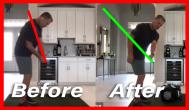
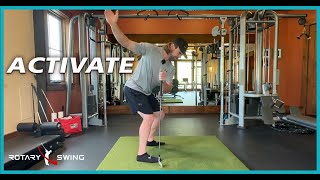
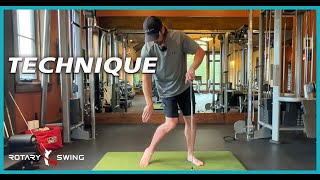












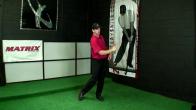
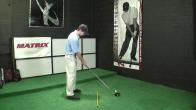



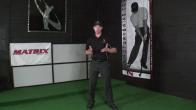















Throw the Clubhead Drill
Sorry, you need to be a member to access this video. You Are Just Seconds Away!

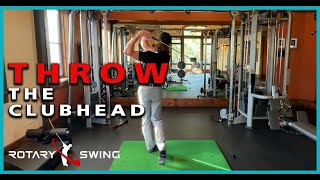
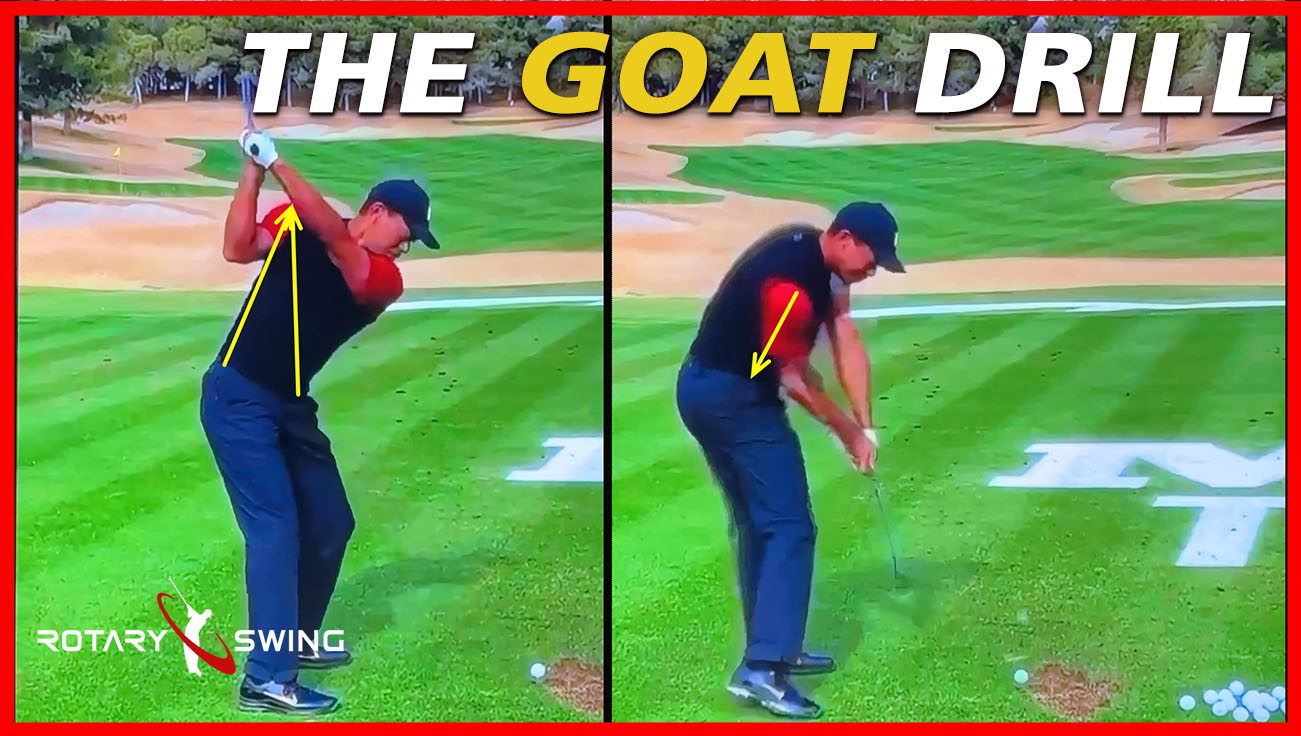
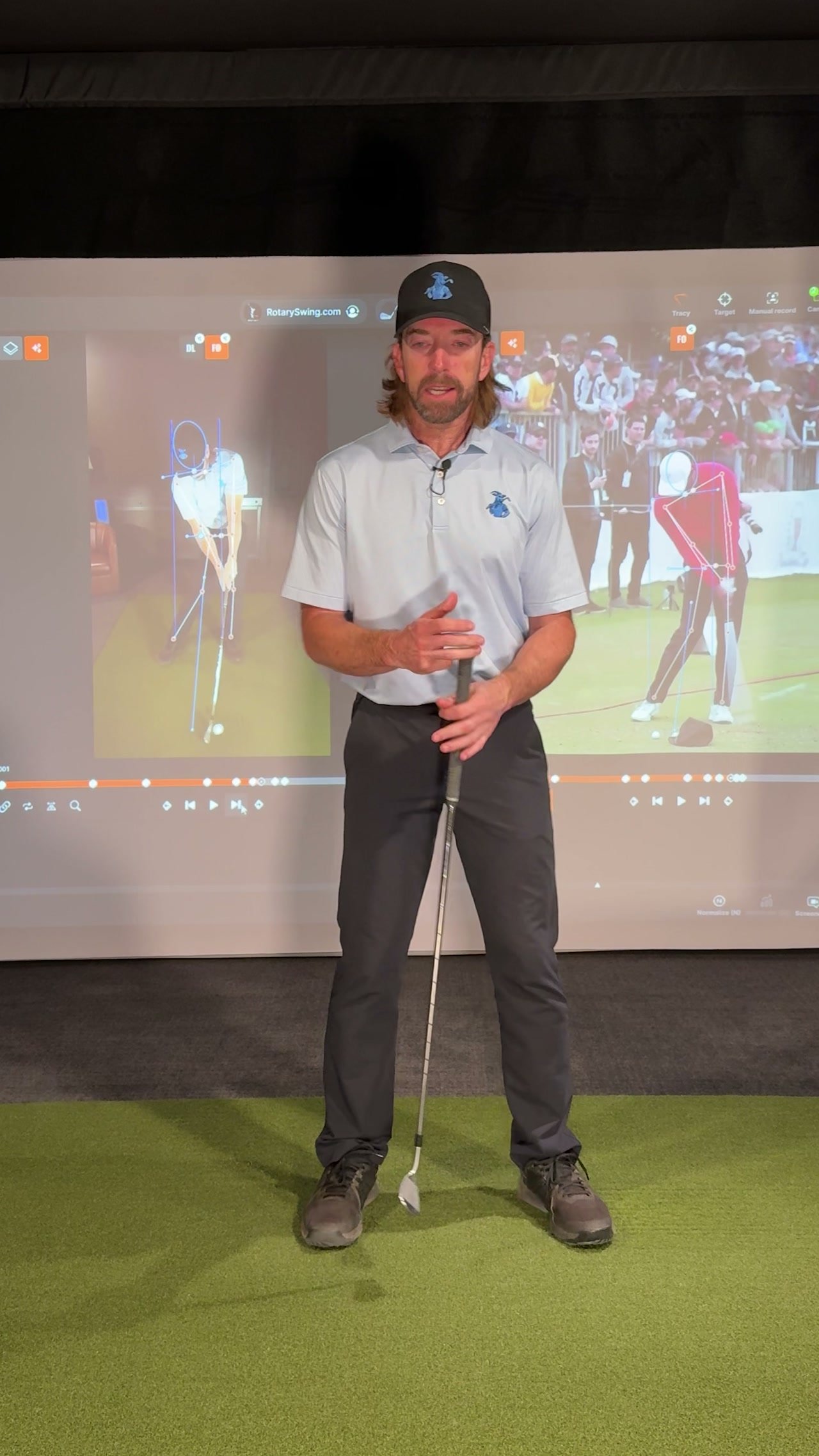
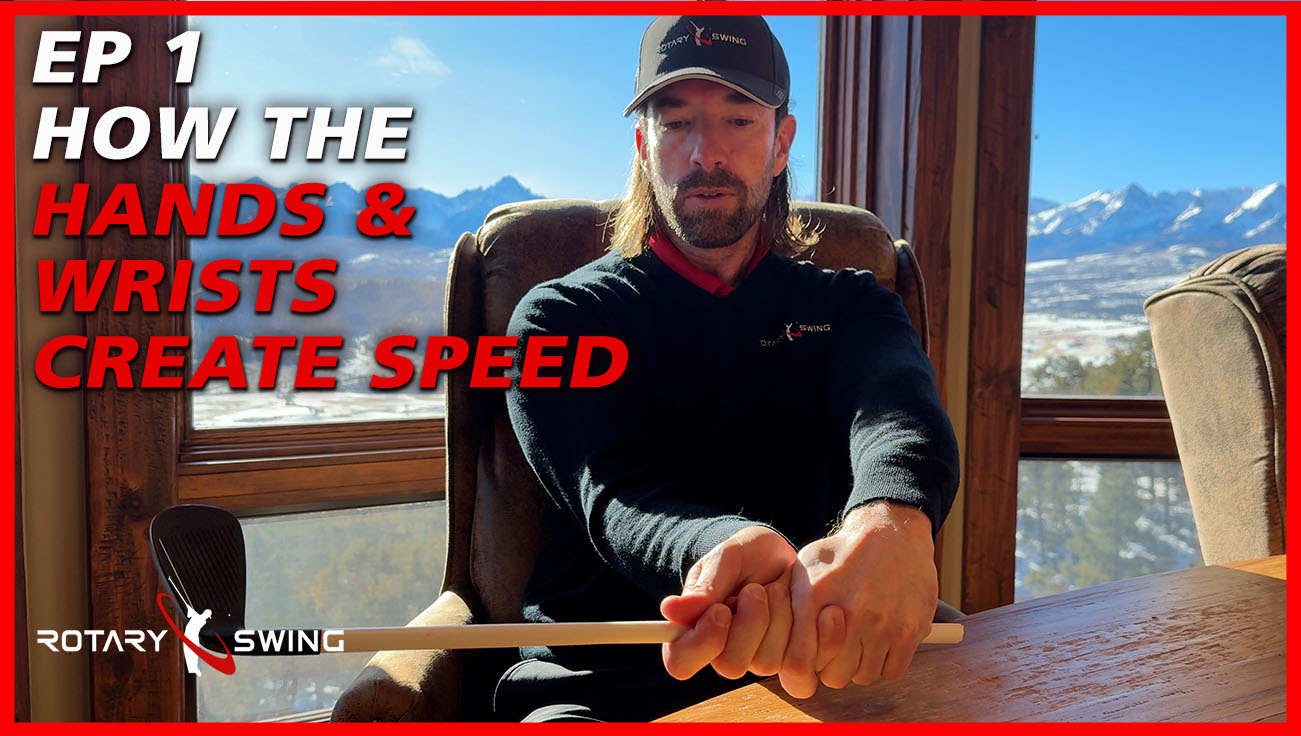
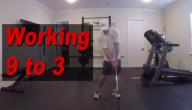
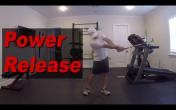
The culmination of the GOAT Code - use this simple drill to swing the club like Jack and Tiger and fix all your swing flaws while adding real, measurable swing speed!
Today's video is going to sum up the entire boat code in one video.
That's really what today's video is all about.
Throughout my study over three decades of obsessing about the golf swing, I've come to the conclusion that there are basically three basic ways to swing the golf ball and release the golf ball.
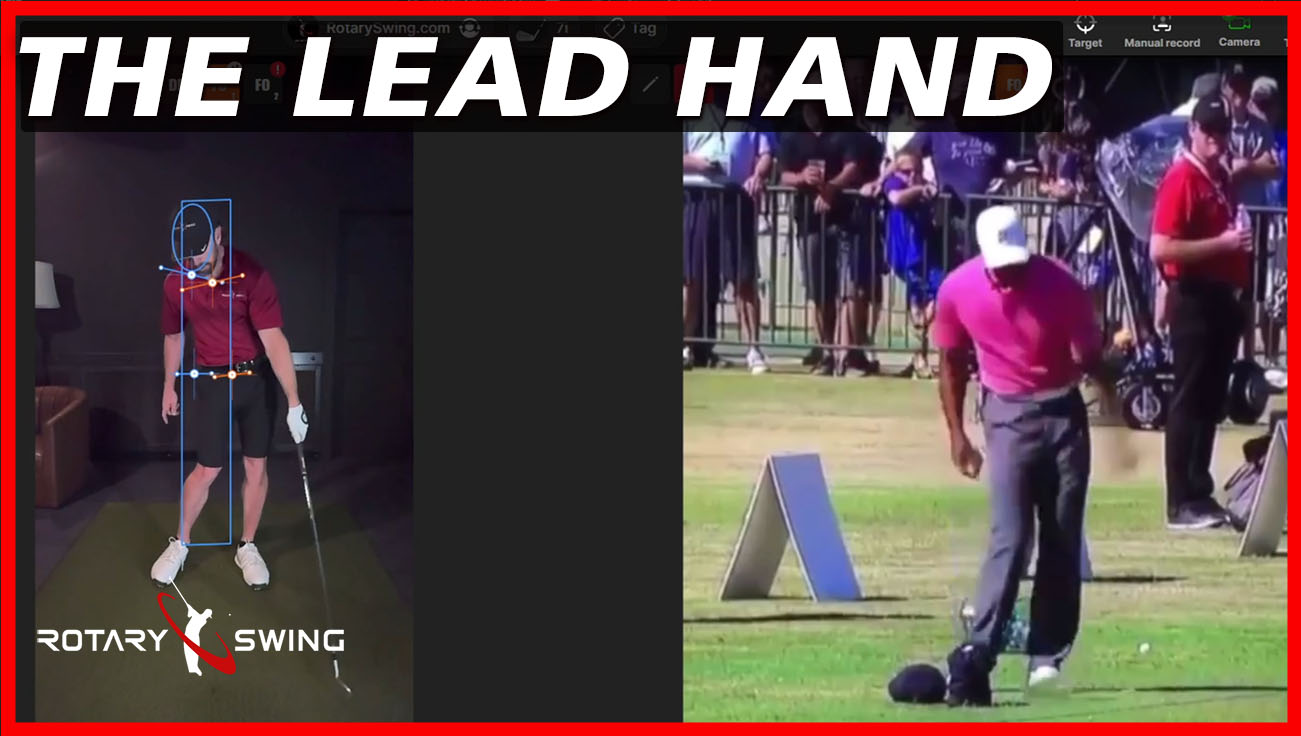
There's the classical, traditional way of lead side dominant, let that left hand rip through, use the body to help create some rotational speed, your left wrist stays soft, your arms stay soft, you had a little bit of a right arm and hand in there.
That's a basic way to swing the golf club.
It's very, very common.
Many, many of the greats play it that way.
There's also the hitting pattern.
If you're familiar with the golf machine or Homer Kelly's word, he defined the two basic swings, a swing pattern like I just described, and a hitting pattern where you use a lot more right arm, right hand, right side, what have you.
That tends to look a little bit more in the body.
It's open a little bit more through.
You see a little bit more aggressive driving through that arm.
That's also a way that many greats play.
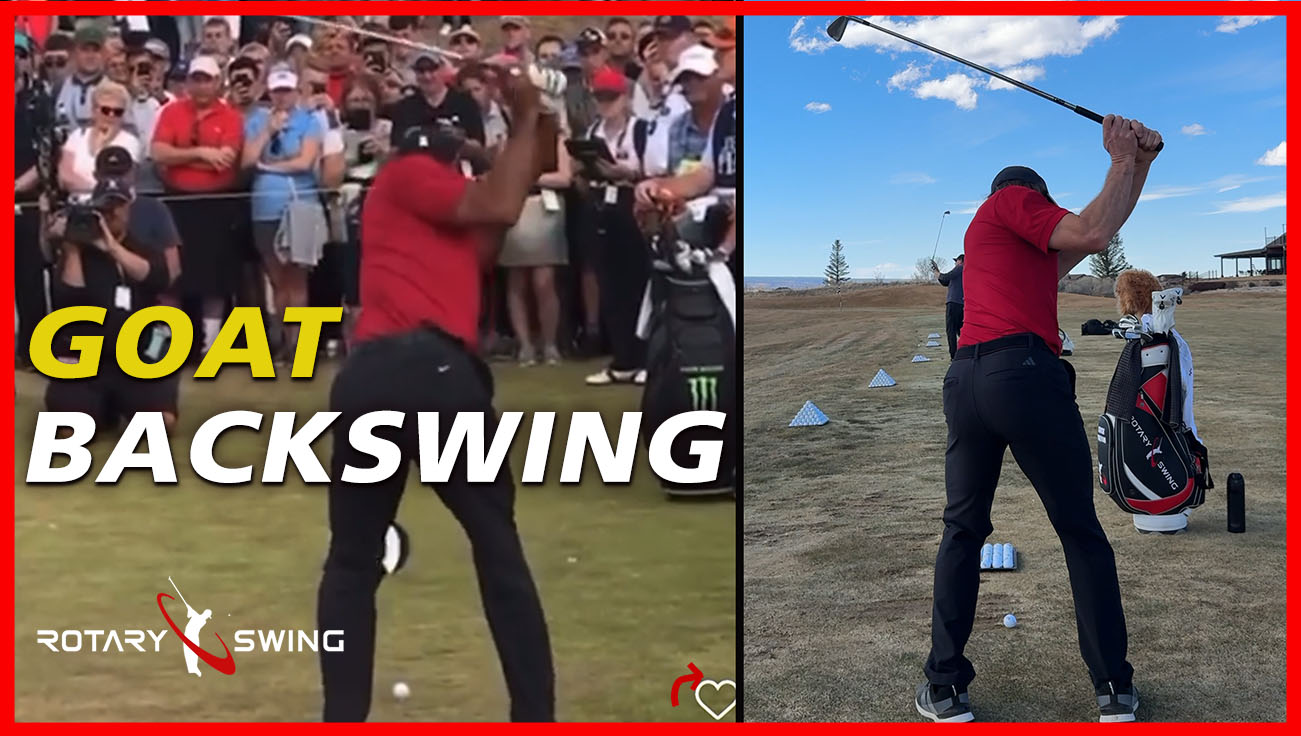
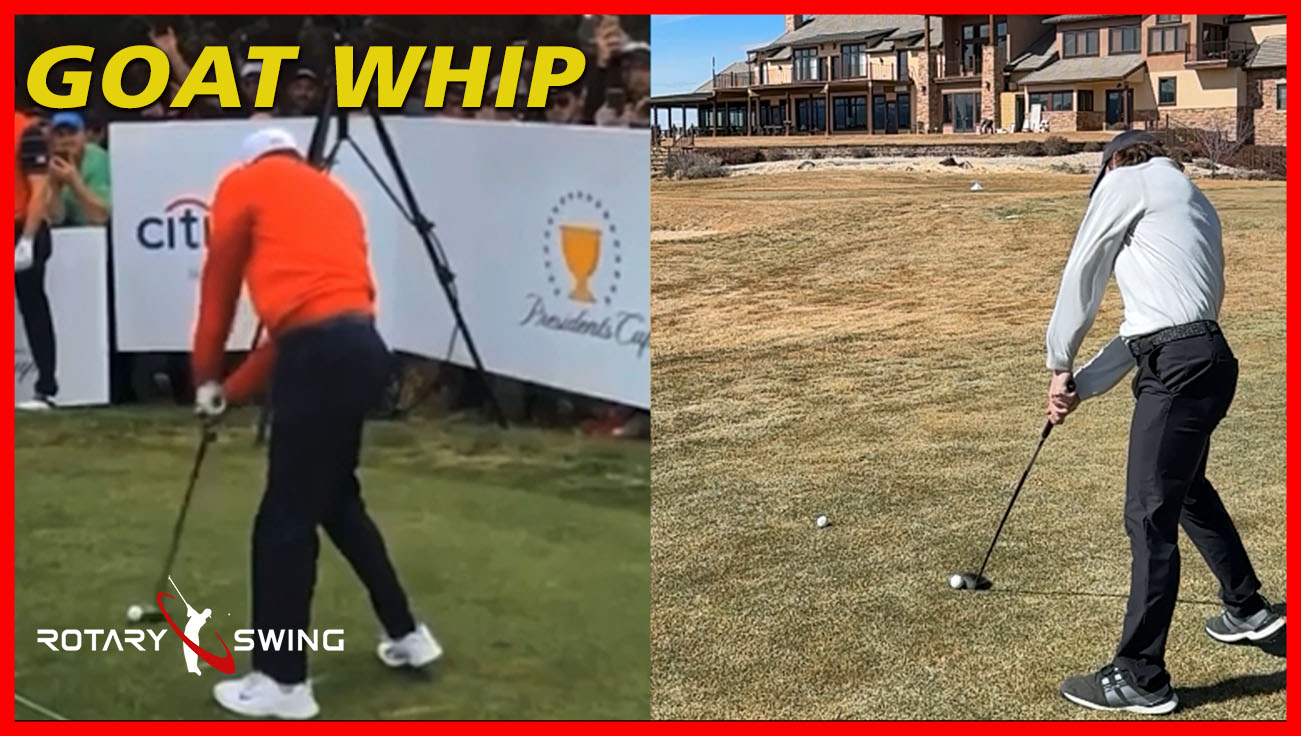
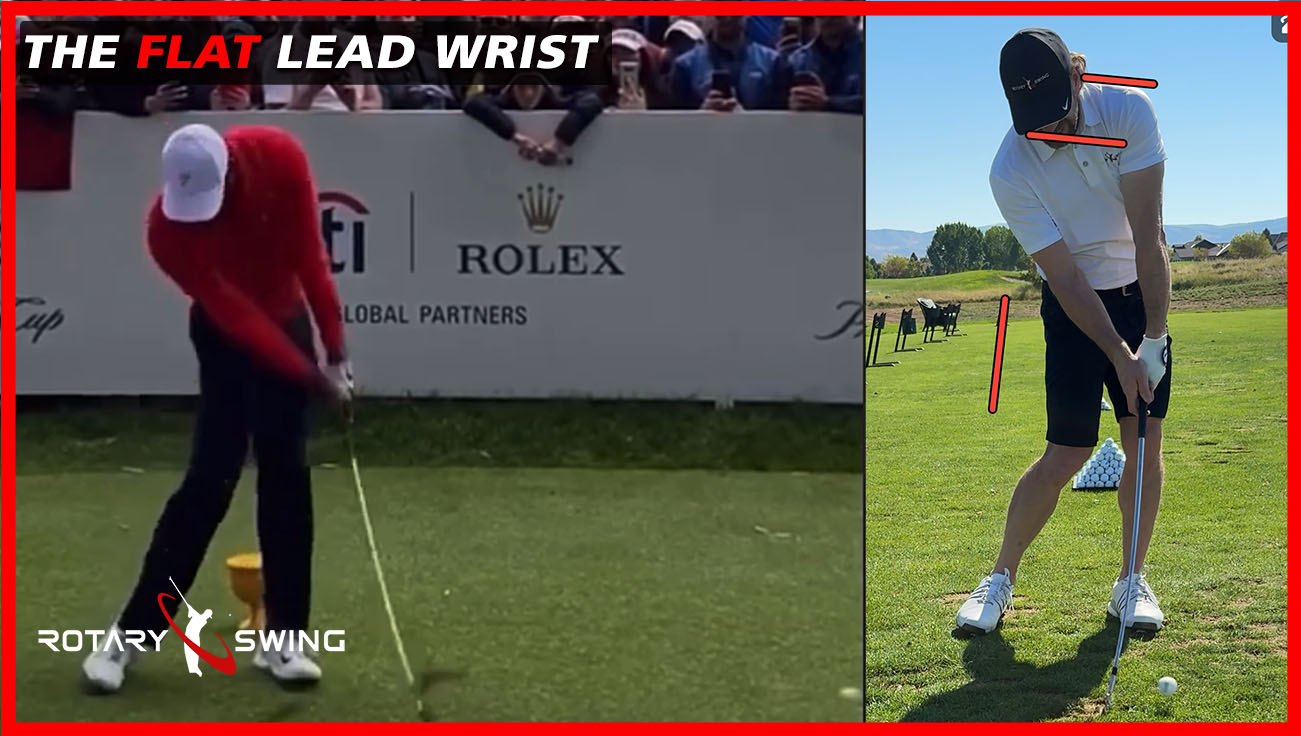
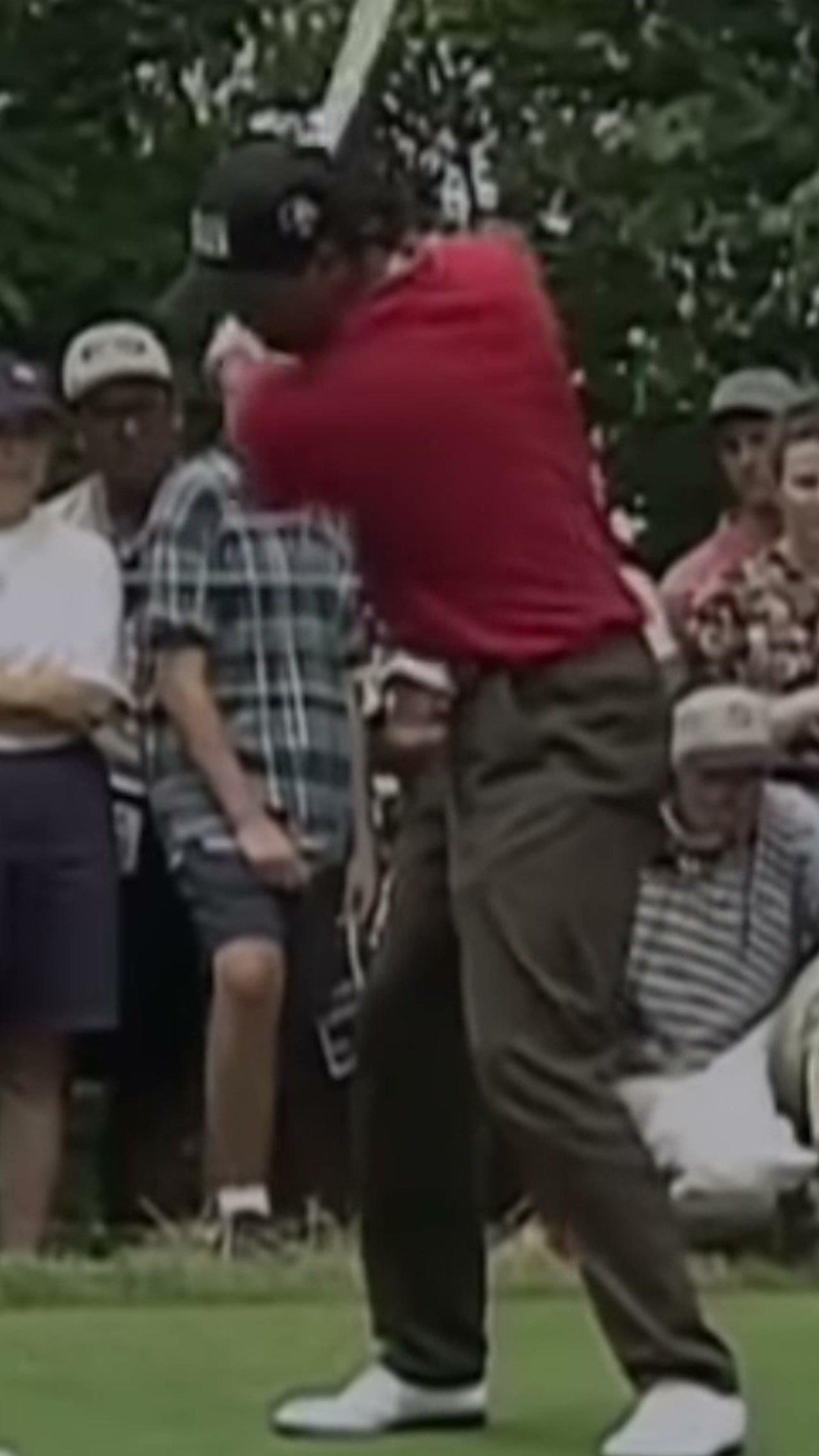
However, through the go-code, I believe there is a third way to swing the golf club that is probably the least talked about, least understood, but I think is actually perhaps the most common in at least many of the greatest of all time, in particular, Tiger and Jack.
I believe they both swung this third way, and that is it's neither necessarily a swing or a hit.
It is a throwing of this.
Throwing the club head is what I would define as the third most basic way to swing the golf club, and it is exactly what I believe Tiger and Jack have done throughout their whole careers.
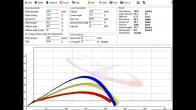
Now, I'm going to show you exactly what I believe that movement feels like, how I used it to play in tournaments myself, and if you follow this very basic, simple pattern, I'm going to show you this swing pattern with the half motion data, and this drill, and the feels that I'm going to give you throughout this drill, are going to be good enough for you to play scratch or better golf.
That you have the data, and you know exactly what my hands are doing, I'm going to show you exactly what it feels like, and I'm going to show you exactly how to practice it.
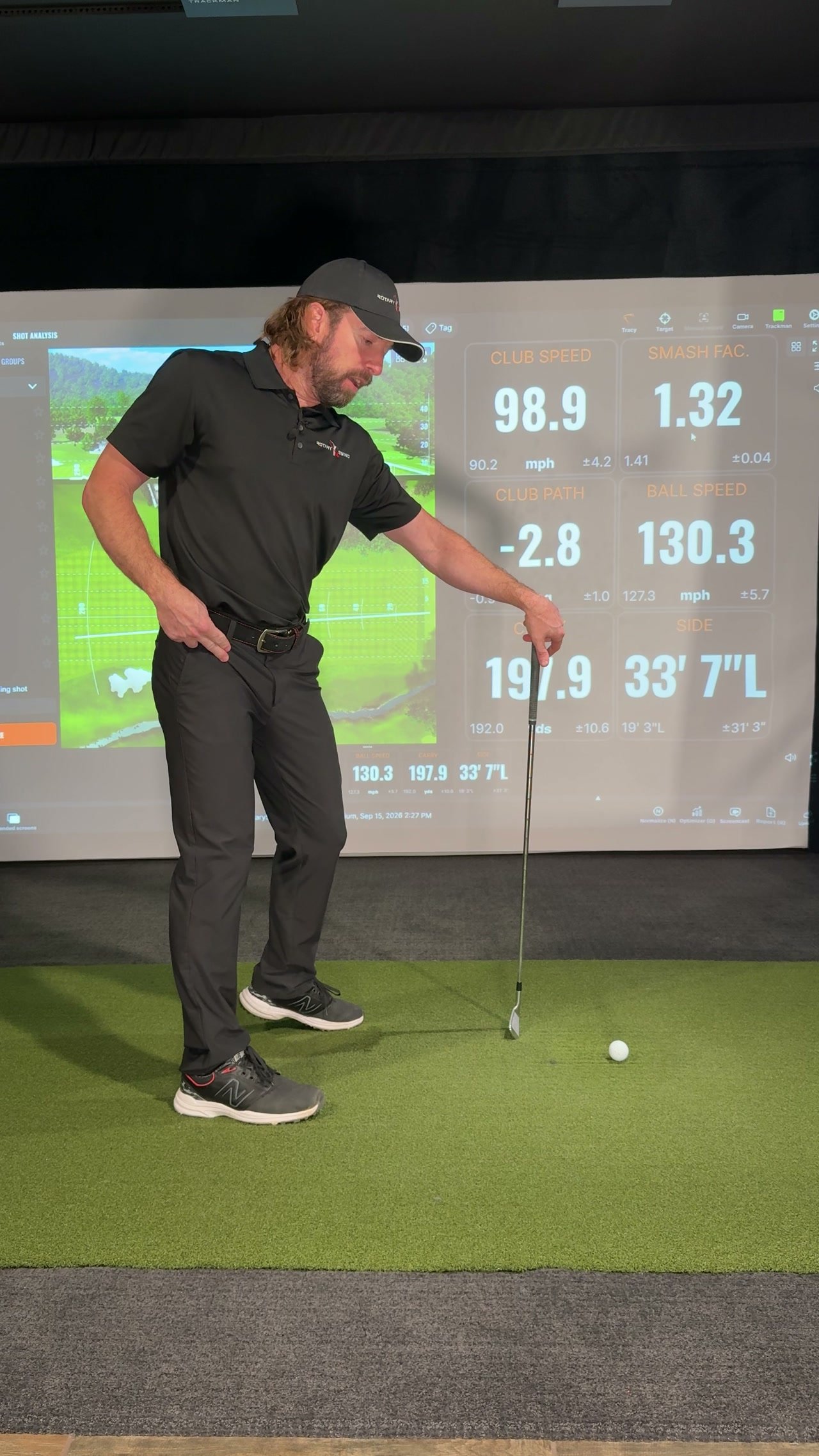
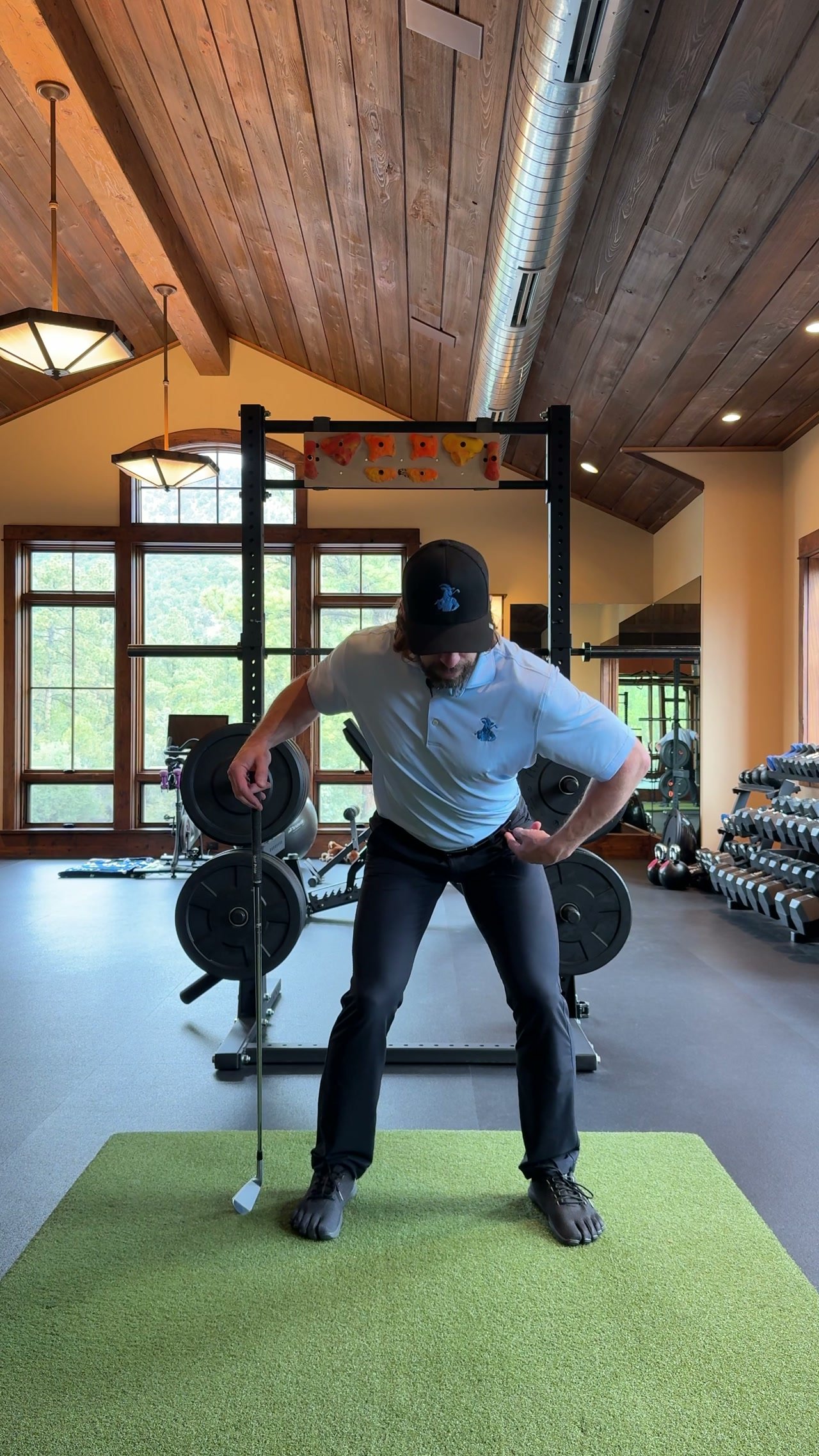
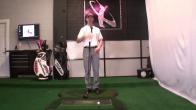
So, the first thing you're going to need is some sort of hitting surface, whether it's a carpet, a towel, something that you can strike the ground.
No nerve swings here.
I want you to literally be able to swing and hear how the club interacts with the turf.
So, I have a hitting mat here in my gym, And I think this is the best way to kind of give you a feel of how that club should interact with the turf and how it changes.
That I'm going to show you in a minute with your body, with your hands, with your arms, change and how this club interacts with the turf, Because that's going to be your primary feedback device when you're practicing, when you're not hitting balls.
So, the whole key to this is understanding really what we're trying to do.
If you're swinging, that's one pattern.
If you're hitting, that's one pattern.
If you're throwing, that's another pattern.
And, of course, you'll see golfers who mix all of these in one way or the other to find a way that works for them.
I believe it's simplest if you understand how each of these have their own unique components that you need to feel.
And so, What I'm going to describe primarily is the throwing of the club head, because I believe it's the easiest for most golfers to learn.
Because it truly involves just your right hand.
And I'm going to explain more about that in a moment.
Because most golfers play golf as a right-handed golfer, and they're right -handed and learning this lead-side pattern.
I love such a beautiful, effortless field.
It's just a challenge for most golfers.
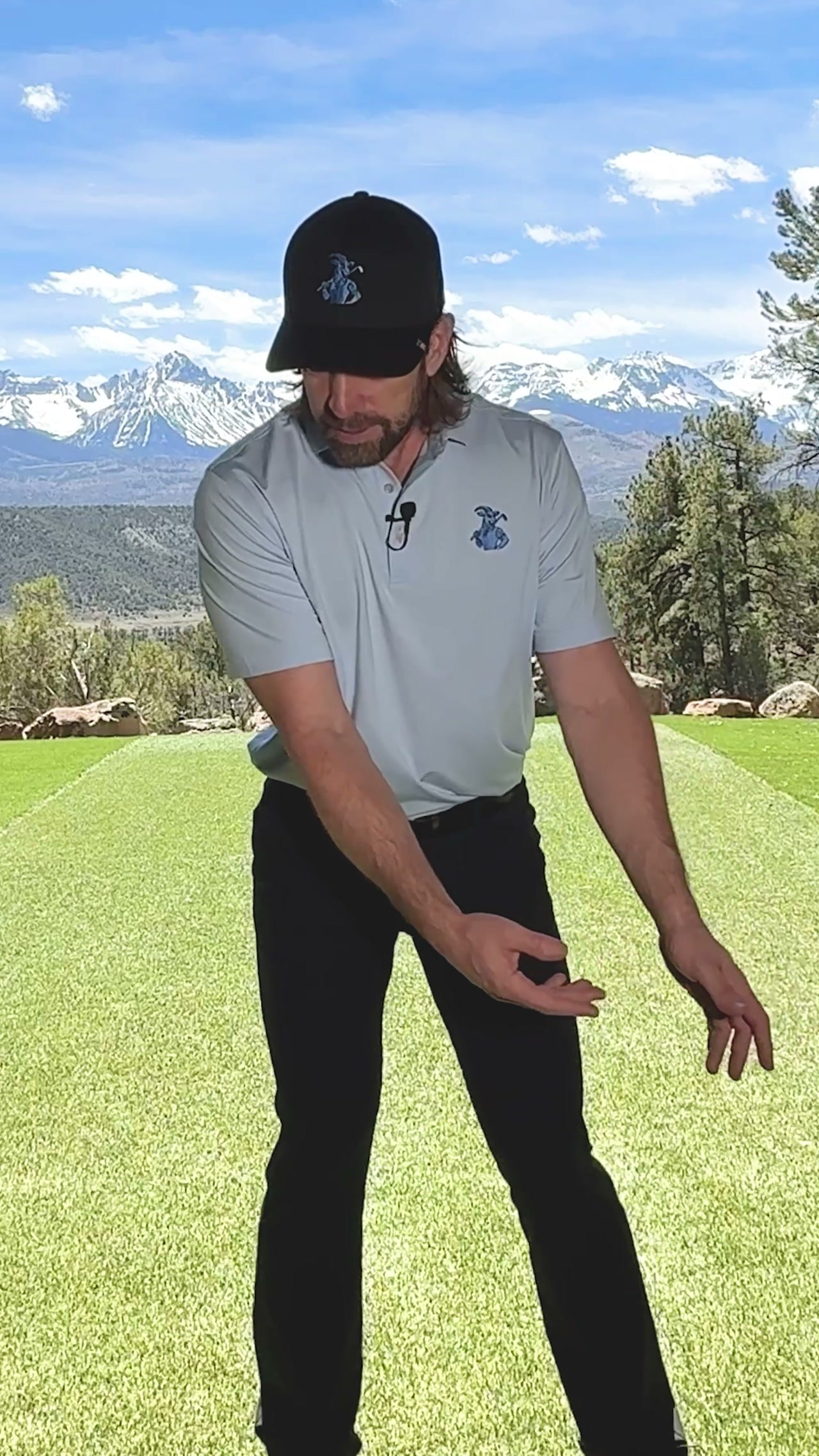
This, if you can throw with just your right hand, and really what we're going to get down to is these three fingers.
This is going to define your golf swing from this point forward, if you want to have that feeling of Tiger and Jack throwing that club head at the ball.
So, The first thing that we're going to do is I want you to stand up with stagnant snakes.
Because what I think is the most important missing thing for most golfers is having a real visual of your golf swing.
Like, when I did the RST five-step system, I really made it really simple that you just go to the top and you shift a little rotation and let that left hand release.
And that's the entire visual of the golf swing.
For a lead-side traditional golf swing, that's exactly how simple it should be.
For a throwing motion, Really, All you're trying to understand is you're throwing the sweet spot at the ball with these three fingers.
That's it.
And everything else that you're going to do is working in response to that.
And what's ironic is that when you start doing this correctly, as I'm about to show you, all of the things that you try to do in your swing, like get your hips deeper, maintain your posture, they all happen automatically.
They are truly a result of how you throw the club.
And that's what's really interesting to me is that all of these things that everybody tries to copy in Tiger swing, he's not trying to do this.
He didn't try to learn how to do a Tiger squat.
He didn't try to learn the shit.
He didn't try to learn how to get shatting.
He did it instinctively because it was all just a basic throwing pattern.
And so the first thing we're going to do is understand how to get that feeling of what your body should do as you're throwing the club.
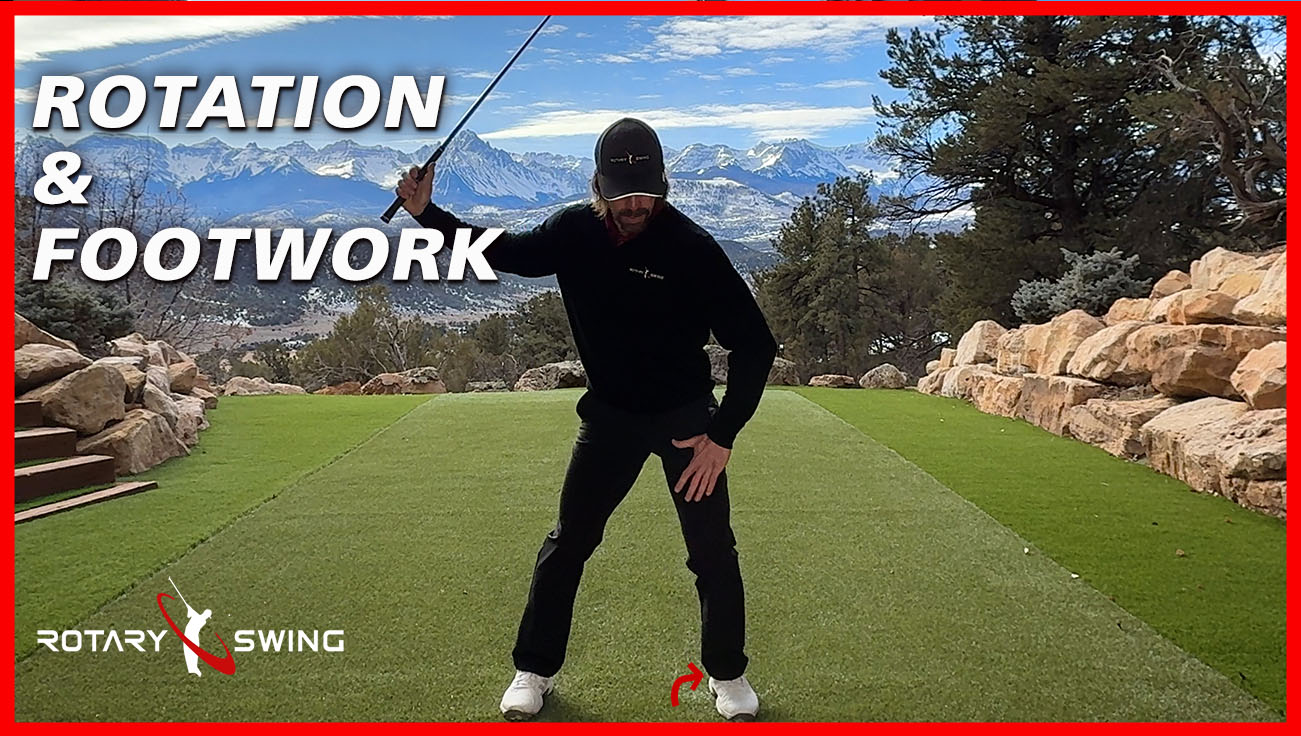
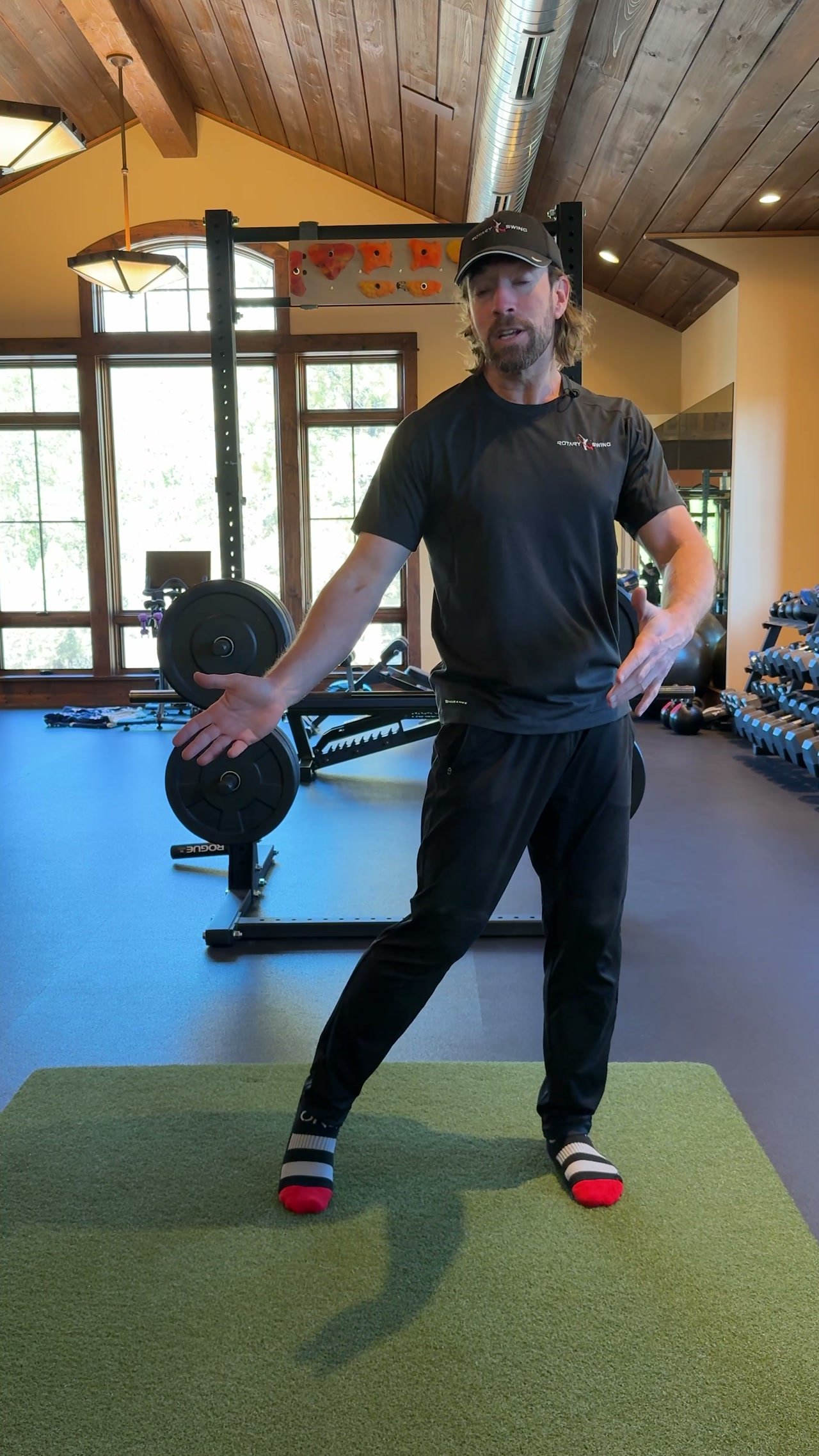
And the easiest way to do that is a staggering stance.
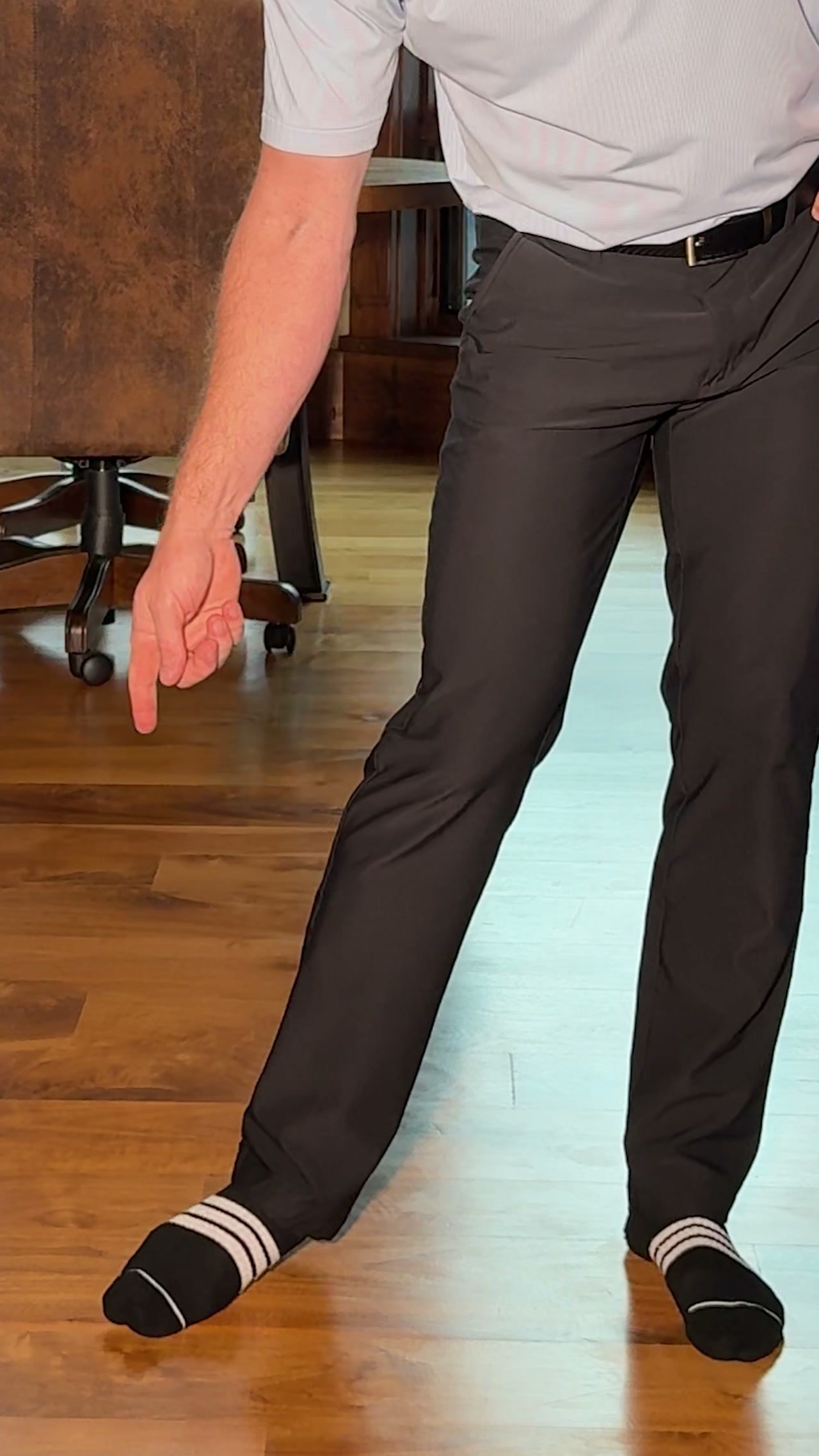
You'll notice I'm wearing socks.
I'm going to explain why later to deal with what it is.
But one, I'm going to do a little practices inside, so I'm not going to shoot at the house.
That's fine.
But I'm going to explain how I want your feet to work in a moment.
So that's why I'm wearing socks.
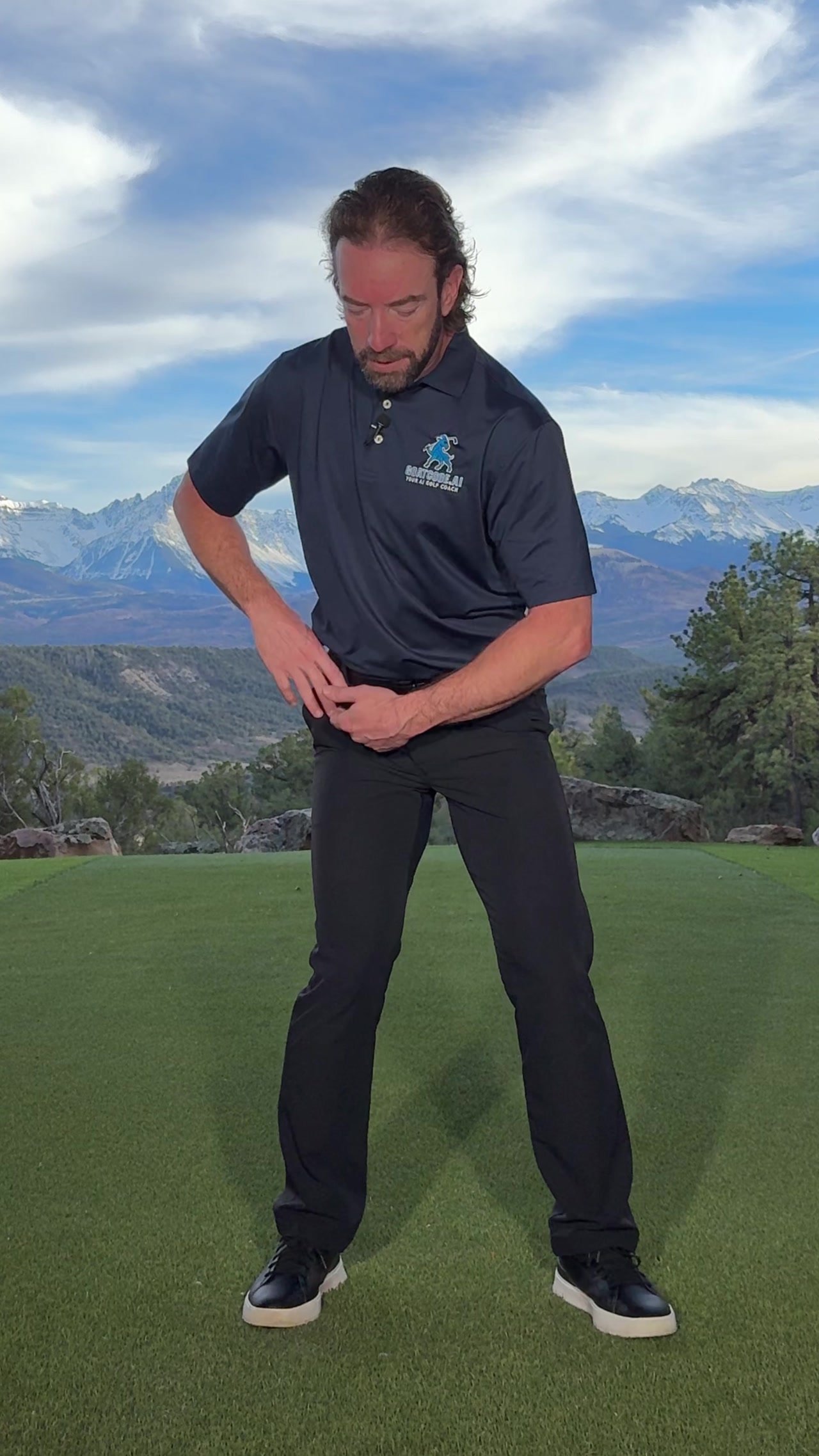
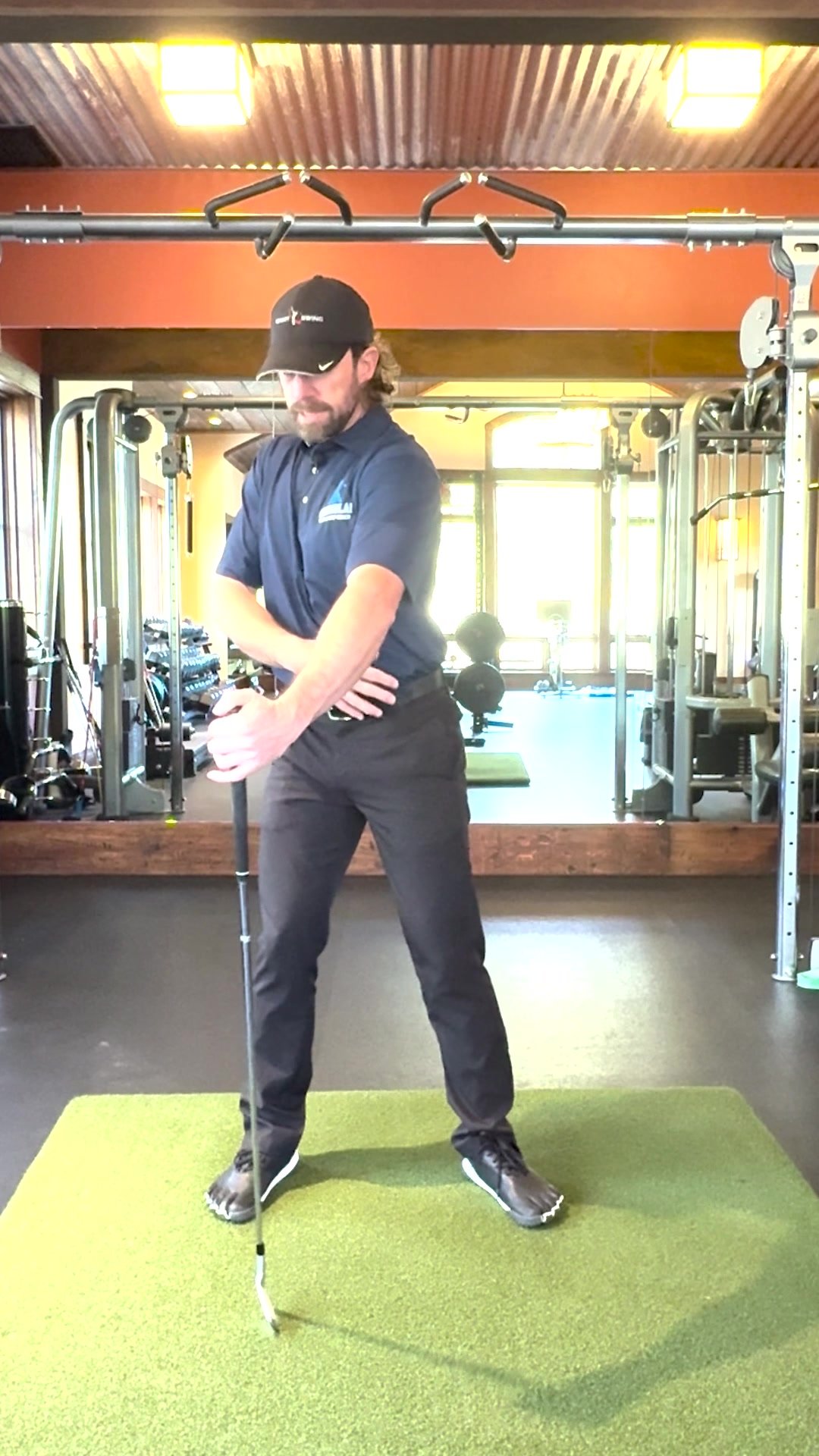
So, The first thing you're going to do in understanding how to create this throwing pattern in your golf swing is take a staggering stance.
A closed stance, You can drop your foot where your toe is about halfway toward the middle of your foot, or even a little bit further back.
And the reason this is important is because what you need to understand is that in a throwing motion, what your body is really trying to do is release.
If you're trying to rotate through, you can't release.
Watch what happens to as I turn and pivot on this hip, my wrist doesn't want to release.
But when this leg braces, my hand has to work.
And that's the feeling that you're looking for.
So with the staggered stance, it's very different than trying to get hard onto the inside and pivot very quickly.
You can do that as well, but it will tend to slow the release down, which you really want is an aggressive throwing motion with these three fingers.
So start out with a staggered stance, closed stance.
And this is going to help not just with the bracing motion, but what do you do going back?
The golf swing really shouldn't be as complicated as we've made it.
And I think, again, it's complicated because there are multiple different ways to do it, multiple different release patterns that really have things that mix about as well as oil and water.
Some things don't work well together.
So when you get this feeling, you then have to understand, okay, I understand that I'm going to brace into this leg to push back.
And I literally feel as if I'm pushing the ground away from me in this way.
with my lead foot when I'm throwing because that's going to get my wrist to release more quickly.
As soon as I turn, I drag the club through.
So what I want is this being stable, pushing the ground away from me almost as I'm trying to push the ground toward the ball.
And that's going to get my snap.
But what this staggered stance is also going to do is help you understand how to move your body in the maximum.
And what I mean by that is that as you're going back, a lot of times people don't know exactly what they're supposed to do.
and all sorts of things.
And for certain swing patterns, that works really well.
But with the throwing motion, it doesn't.
What I want you to feel is a diagonal movement.
And that's why this staggered stance is important.
Because what I'm really trying to do is get back into this trail leg, which helps me make it easier to turn.
The more I hang on the left side, it'll limit my shoulder rotation.
You can see just by making this one little move, makes it way easier for me to get a better turn.
But then as I go, as I'm doing this, I'm trying to feel that I'm moving this way, diagonally back, and then diagonally forward, bracing this leg.
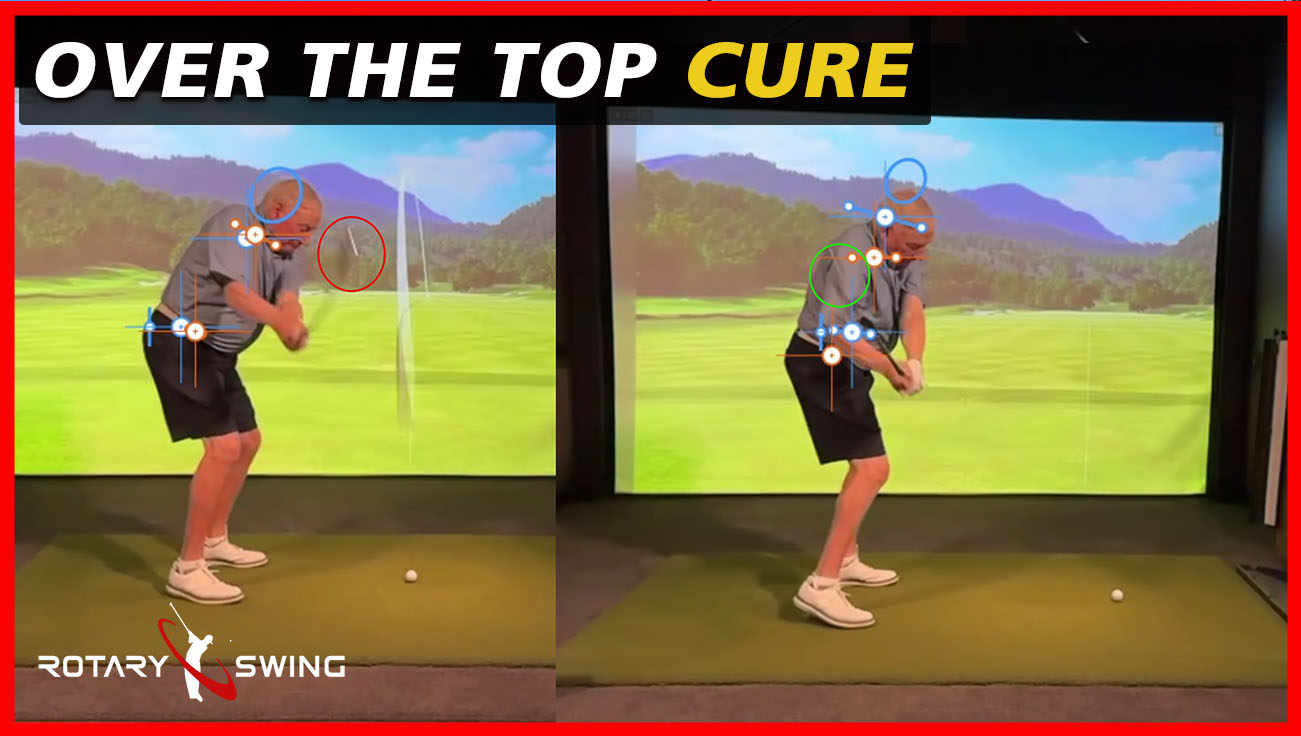
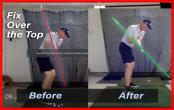
For those of you that swing over the top and you've never, ever been able to fix this, this drill is going to be a godsend, Because you're going to finally understand what the heck your body and your arms are supposed to do together.
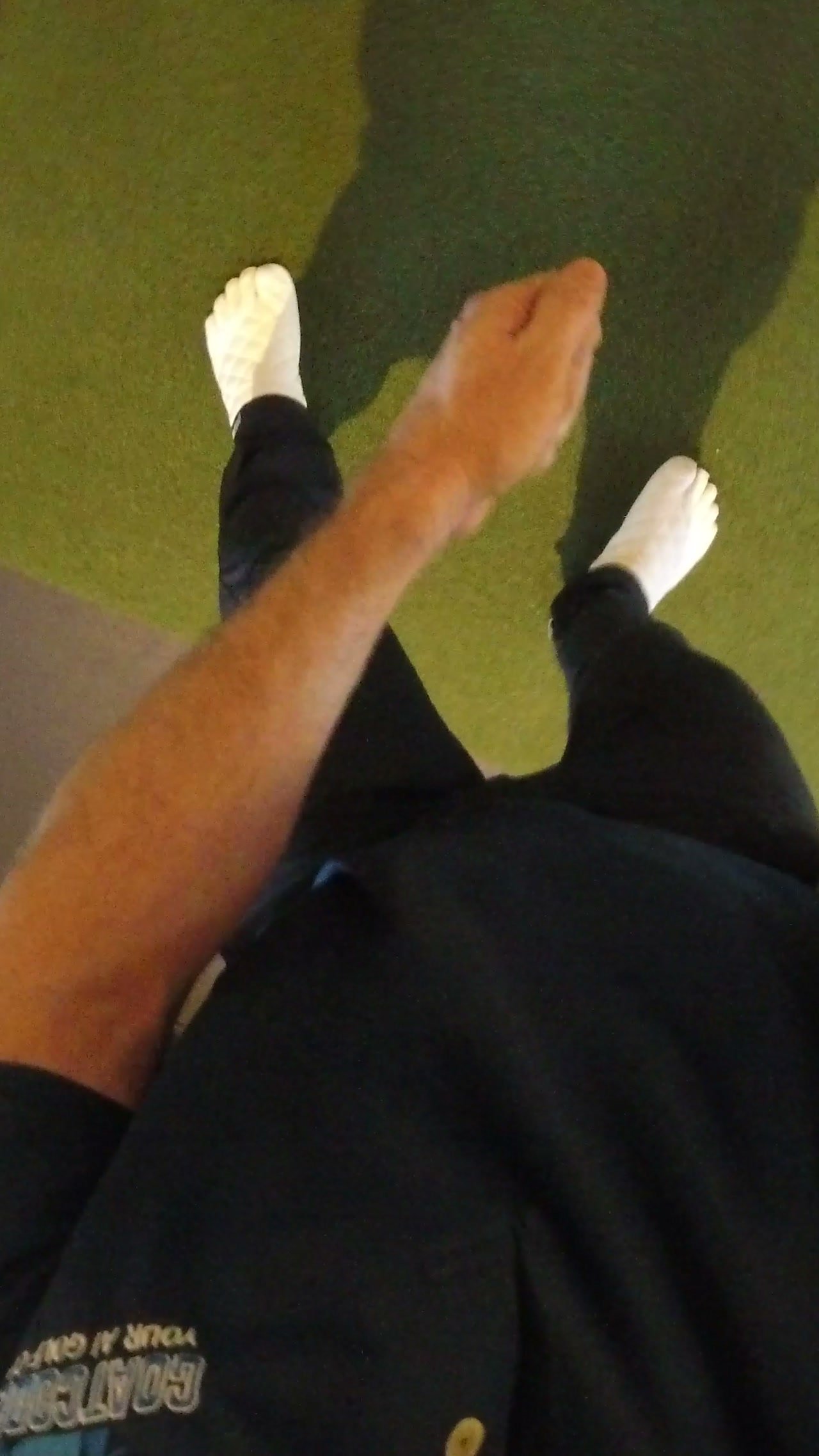
So, with this staggered stance, as I go back, with just trying to get ready to throw, and we're going to talk about the hands in just a minute, but with the body movement, I just go back this way, and then I throw from here.
How would I ever swing over the top?
You can see that my path, I've got three dots here for the T-holes in here.
I'm going to use that as my path marker.
If I was to swing over the top, it was really hard with the staggered stance.
Really hard.
How would I get from here to there?
Pretty tricky.
The only way that we're really going to do that is either A, start to rotate.
Rotation and a throwing pattern don't work well together.
Rotation and a lead side pattern or a pushing through the trail shoulder hit, it works great.
In a throwing motion, your body needs to stabilize.
It needs to provide support.
If you're rotating and trying to throw at the same time, those two are oil and water.
You're going to find this.
The more powerfully you throw with your right hand, the less you need to rotate.
Remember, I always said in the golf swing, you've got rotation, you've got leverage, and you've got width.
It's an algorithm of how you choose to combine all of those things to produce power.
If I have a really powerful right hand throw, I don't need a lot of rotation.
And that's what I want you to feel here.
So this staggered stance, again, helps you feel like I don't need to do this anymore because watch what happens to my hand.
Where's it going?
I'm going to be straight over the top.
So what I want to feel is here, I shift it into the right, and as I shift back to the left, I'm bracing here, and I'm just throwing with my right hand into these three fingers.
No way I'm coming over the top.
The reason people start coming over the top if it's not rotation, is that they're using their right arm and shoulder incorrectly.
I want you to think of this throwing motion as these three fingers.
This is it.
This is the golf swing.
All of your feel is coming in these three fingers as the club sits in the cradle of these joints.
So when you start to get this feeling, back, stagger, understand that the speed is what you're looking for is coming from these three fingers.
You can try and use your arm or your shoulder, but you're going to tend to come down straight.
That's why I want you to have a map that you can hit so you can start feeling this.
So I'm going to have, I'm going to do one here with both hands on.
I have my second stance.
I'm going to use both hands, and this time, on this one, I'm going to swing down a little bit aggressively trying to push with my arm shoulder.
And I've got a secondary mic set up here right next to the ground, so you can get a little bit better auditory feedback.
So you know what you're starting to listen to when you're practicing this at home.
You hear kind of a heavy hit there.
I kind of threw my right arm and right shoulder at the ball.
Still could be a fine shot, but you can hear compared to when I shouted out.
So this time, instead of trying to push with my right arm and hand, I'm going to go back here and just throw the club with my wrist.
Just my three fingers and my wrist.
I'm not going to feel any arm shoulder Do you hear how different the strike was?
I just barely clipped the grass, barely touching it at all.
And you can hear that club ripping through and my body ain't doing anything.
My body is just That's.
What's so cool about this throwing pattern to me is that it's truly just my fingers.
It's just my fingers and my wrist.
The whole golf swing is just my fingers and my wrist.
If I add anything I'm going to come down steep again Not only is it slower and it doesn't feel good, my club's coming in really steep.
Take the right arm shoulder out with my fingers.
Super shallow.
I can just barely skim the very tip tops of the grass, which is what you want to feel with this pattern.
So now, that gives you a feeling of if you just throw it from here, there ain't no way you're coming over the top start rotating, start pushing with your shoulder, start firing your tricep, your fingers, your fingers and your wrist.
That's it.
You can see, even though it doesn't seem like it's very powerful, listen to the speed that I can get my fingers.
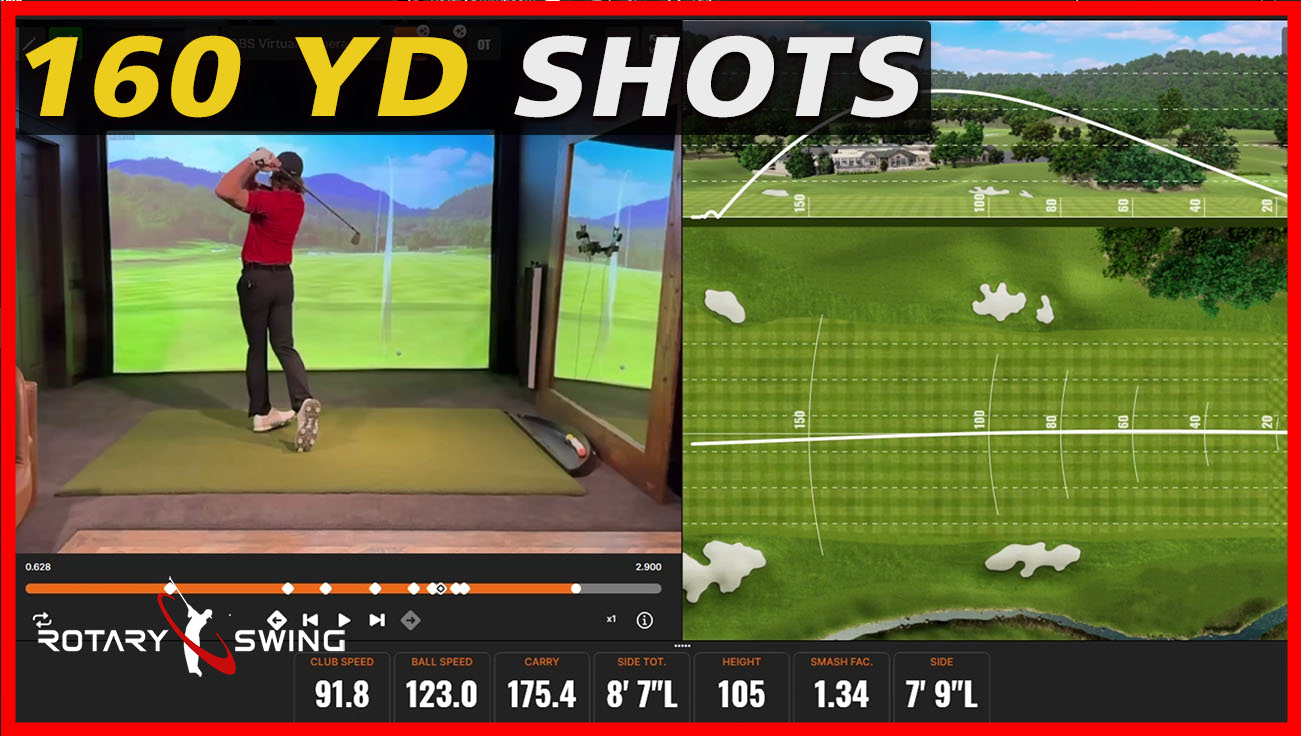
That's ripped with a six iron.
That's a 210-yard six iron all day with no effort three fingers.
So now let's get more into how these hands and arms work in the swing.
So we're going to stay in out of this in just a moment.
But now, how do we get these hands to work correctly?
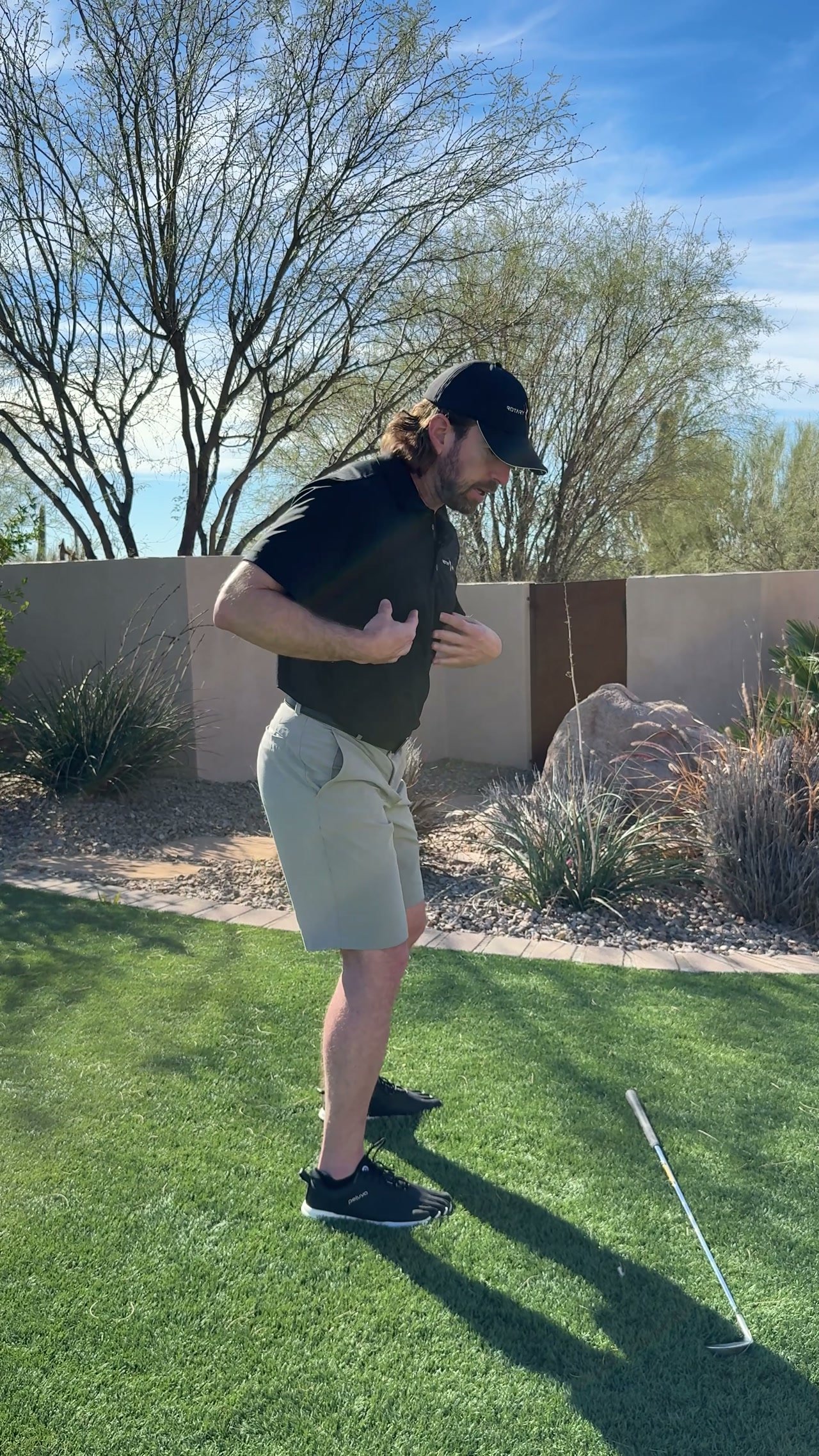
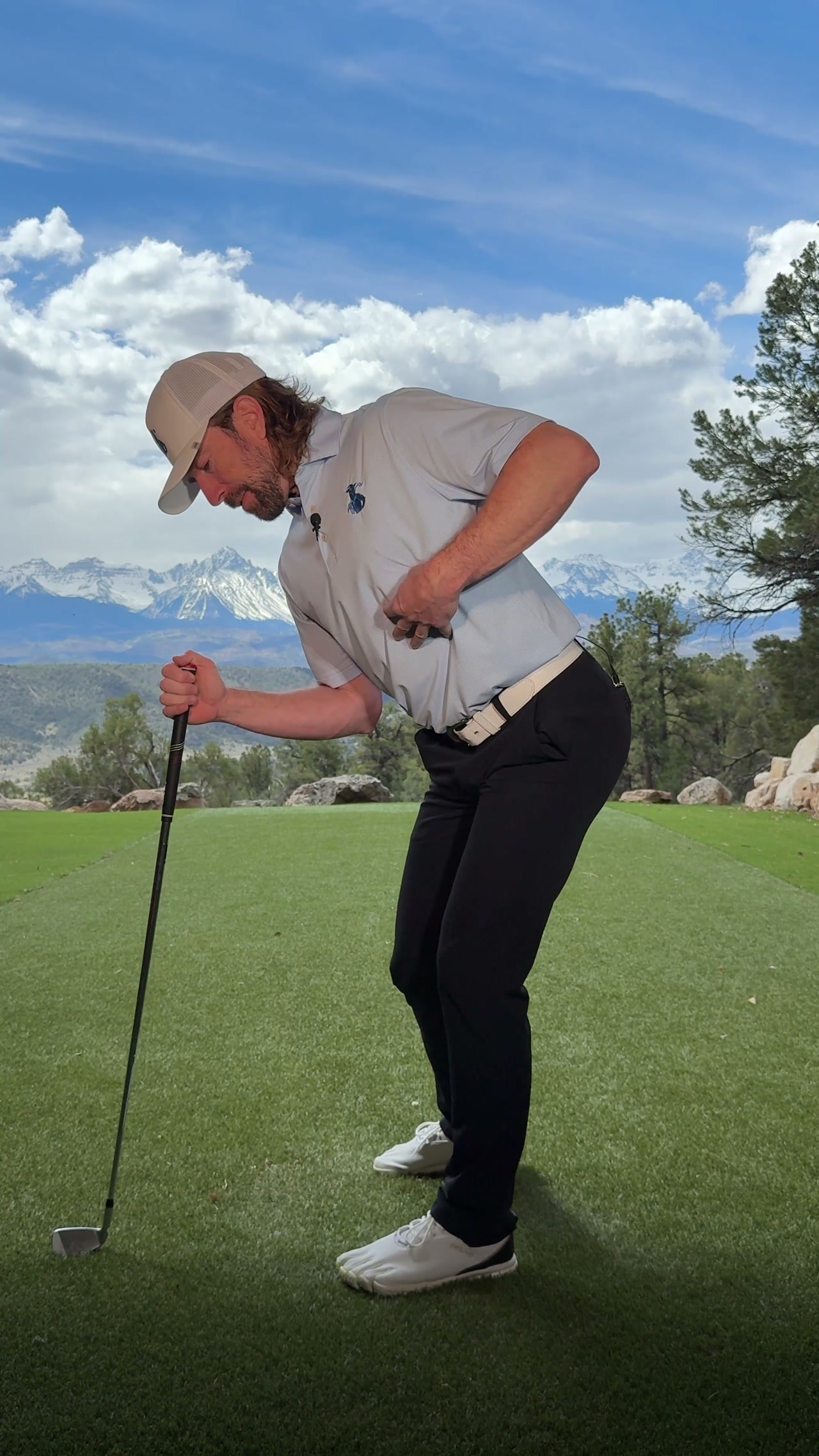
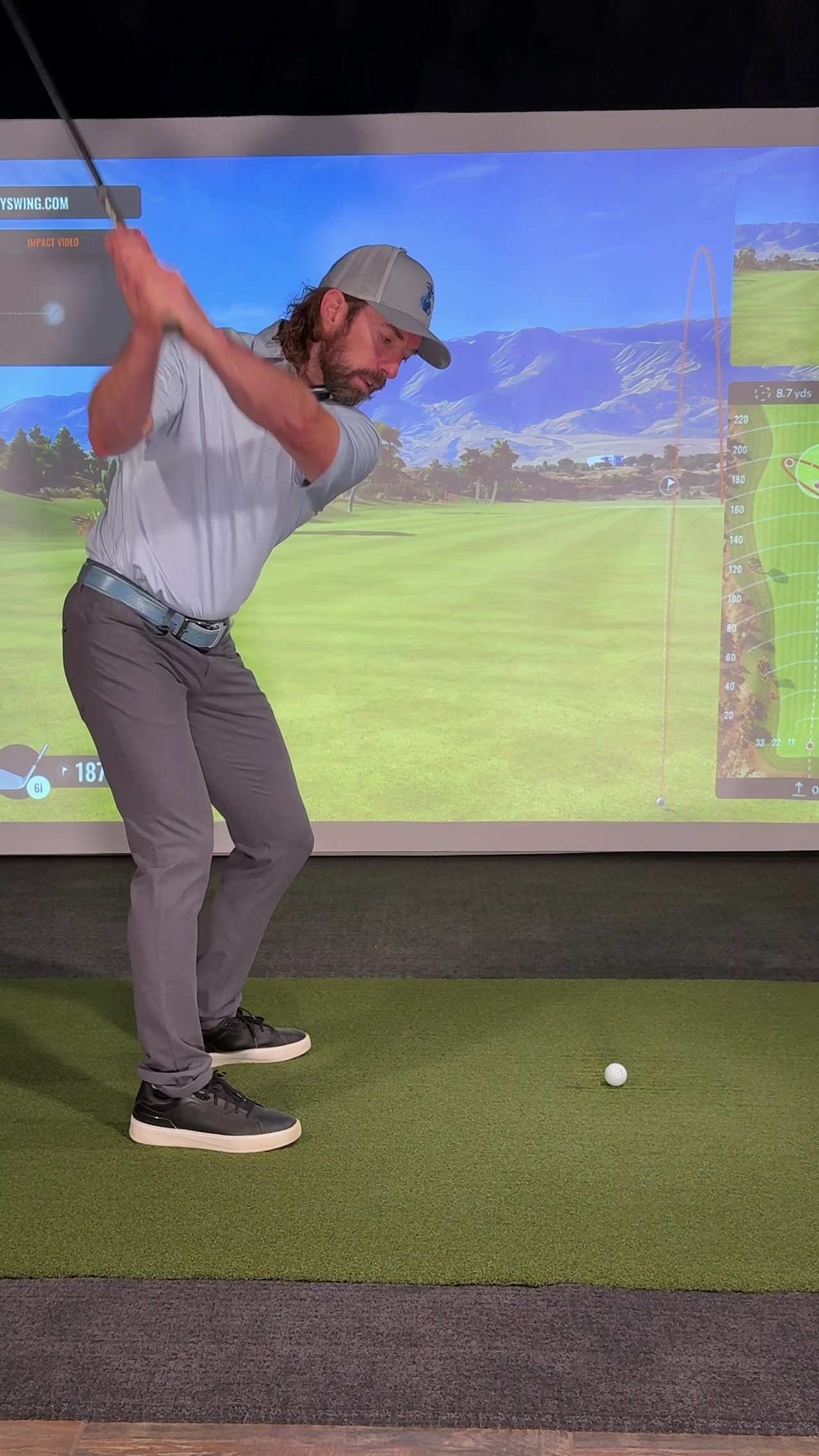
The first thing that you've got to feel is that as you're going back at the top of your swing, and I'm going to stand over here so you can see it with this perspective, when I'm looking back at my fingers, I want that club to sit in the cradle and on this pressure point, just like I talked I also want the club to sit in the cradle of my fingers like this.
If you're gripping it like this, guess what you're going to do?
A, you can't release your fingers So guess what you're going to do?
You're going to push that club with your arm and shoulder, and that's going to slow you down, cause you to come down to speed, hit fat shots, Get the club sitting in your fingers, because again, you're just trying finger and wrist, finger and wrist.
That's all you're trying to feel.
That's where all of your sensitivity is going to come from.
I really feel the club sitting primarily in my middle finger, right here between the first and second joint, and then these two pressure points on my other two fingers.
Now as I go back, all I'm trying to do is feel that sitting that way at the top.
So again from here, I'm just feeling like this with my club face.
That's what I can throw.
Throw it with just my fingers.
Now, part of the trick to this is that as I'm going back in order to feel this, one of the things that's really different for me probably for many of you, from all the time, is that a lot of times developers are going to push the club back over your left arm.
And so when they do this, this takes this right hand out to be able to throw.
And it tends to inside, and then you start picking the club up.
Your hand's not in the position to throw here.
So it's really important as you're is to do a lot of right-hand.
You get a feel for that right hand kind of being in control throughout the swing.
mean you just take the club back with your right hand.
That'll lead to other types of problems.
So what you want to feel is that the arms, hands, And shoulders are all working together to help bring the club back in a relaxed way.
So that your hand is in a position to be able to throw.
Try and just take it back stiff with your right arm.
You're going to throw it that way or with your shoulders.
If you push it back with your left arm, you'll see this whole talk about a lot in online lessons because it happens all the time.
If you imagine forearm, as you start the club back, it should stay on that pain of glass and go to the inside.
But a lot of times you get active with this left arm.
shoulder will be elevated too soon with our arms that pain of glass.
So I feel like everything's going back together.
But the only thing that really matters is getting the sensitivity and the feeling for you being able to throw with your fingers in the right hand as you go back.
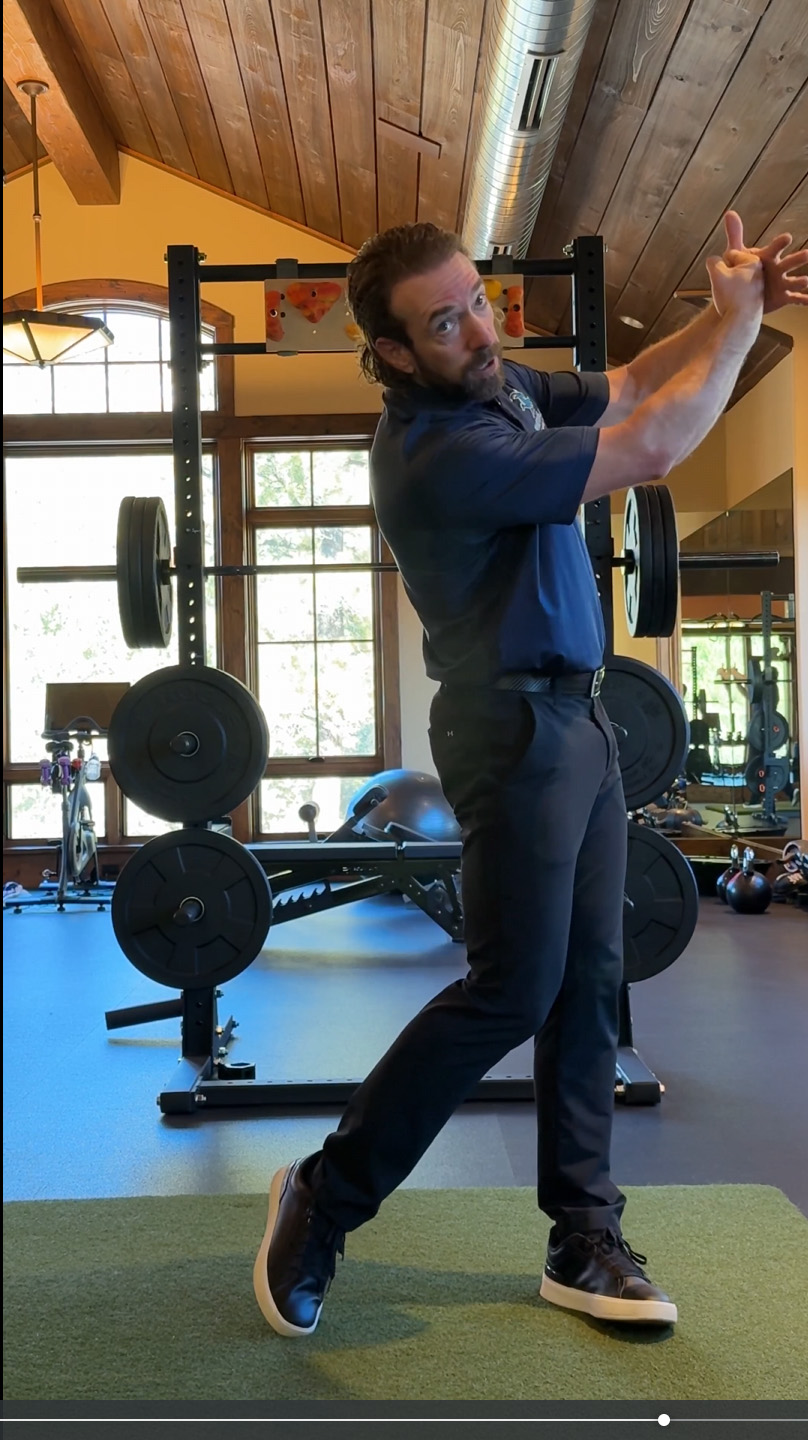
Now, One of the you're going to feel that might be a little bit different is that in order to give you a proper throw, I personally have to feel what I would call a flying right elbow.
Now it's not a flying right elbow like jacks or like But for me personally, I'm always a little bit more tucked in with this arm, keeping it more in check rather than letting it fly away.
Because as I was coming down and pulling down drops my arm into GVP immediately.
But now, in a throwing pattern, it's a little bit different.
That arm's going to work down a little bit more what I would call actively, whereas pulling pattern, I want that arm to stay a little bit more passive and just add a little bit of speed at the bottom.
When I'm going to throw, the a flying right elbow is because this is a really powerful position to throw from.
If I was going to throw this club at it as well as fast as I can, I wouldn't do it from here.
Then I'm going to want to use my shoulder turn to help speed it up because I don't feel like leverage.
right back like this and Freddie like this, there's a ton of power.
I'm not advocating get your arm as far away from your body as you can.
I think Tiger has the perfect blend and the perfect balance of this.
He gets up to the top and it's just instead of being tucked in here like this, where you want to use your shoulders, He lets it come away just a little bit, so that it's in a position where the elbow is a little bit outside the wrist.
And the reason I mention this, if you're used to having this elbow directly under the hand like this, it's actually easier to get the club, turn these three fingers than my elbow is out.
When I go in, notice how it changes the ankle of my wrist.
And since that's really all we care about is the wrist and these three fingers, Getting that elbow a little bit out and a little bit more underneath this way, instead of tucked directly under.
It gets you in a position where it's very easy to throw with your hand.
So again, if I wanted to shallow out, if I'm throwing this right hand, I'm never ever going to come over the top flying, I'm going to exaggerate this for a moment, a flying right elbow, as soon as I go to just using my fingers and my hand and my wrist to throw, instead of turning or pushing, I'm always going to swing down perfectly on the plane, even with that flying right elbow.
Again, what I call For me, it feels like I'm like this, but I'm really like this because I'm used to being like this, right?
So that's how So one of my points to this is as you're going back, as you're taking the club back, You want it to sit and fall right on top of that first joint and feel like your middle finger's holding onto it with some control.
The elbow comes away from you a now you can throw.
So now you've got the basic body movement, you've got the basic arm It truly is this simple.
Now let's start shifting our feet back up to the normal position.
I want to start helping you feel how to really generate crazy speed with just your hand and just your fingers, and getting your body to work correctly.
Those of you who bought the Axiom Power Program are going to be familiar with this.
I'm not going to go into the same depth I did in that video, But it'll get you the same basic idea that from here, when I'm throwing, there's two basic ways how people are going to move their body through.
This one, lots of rotation around this if I'm having socks.
So now if I just pivot on this knee side and just have a lot of rotation, you'll see my foot and everything this way.
That's great if you want to swing like Dustin Johnson to have a lot of body rotation.
I don't want to do that anymore.
My body's too beat up.
I want to have a really simple and I want to feel my swing that I can unleash this right hand as hard as I can, as hard as I want.
I don't want to feel like I have to hold it back.
So now when you're doing that and you want to add speed to this right hand, what you're actually going to feel is.
What I talked about in the which is counterfear.
Now watch my feet here.
Where did my foot?
It went this way.
So now what you start to understand is, instead of getting hard on the lead side and pivoting and turning the body through, I'm actually throwing back here and the most powerful, fastest way for me to throw back here is for my foot to go this way, not to go this way.
You can imagine if I was throwing slam on the brakes post up and throw to rotate through.
You want that torque so that your arm, for this risk to react against.
So when you're practicing on a mat in socks like I am, you want that foot to go back as you throw this way.
So this if you're practicing in socks on the mat.
This will help you start to get the feeling of generating torque.
And so that you have the power to throw with that right hand.
So long story short, the whole golf swing in a nutshell.
And Jack and a lot of these great players are doing, who are throwing the club at the ball, that's it.
Now I'm going to show you a couple more little things about how to dip it bottoms out.
So many of you are going to start struggling with this because you're not going to realize how much you use your right arm instead of your right wrist.
And so you're going to start pushing the club down to the ground and that's going to change the dynamics of the swing dramatically.
So I'm going to give you a couple simple feels to help you understand this.
First one, when I did the video on the four pressure shifts, that video should really be one of the first things you start to understand.
Not to do it perfectly, but you do need to understand that as you're going back and through.
Weight shifts should be a dynamic, very quick and something you don't have time to think about, but you need to understand how to feel it so that the club.
So if you find that you're just no matter what, you're throwing your right arm, your right arm to move.
You've got to wake up your feet, you've got to let pressure shift very, very quickly.
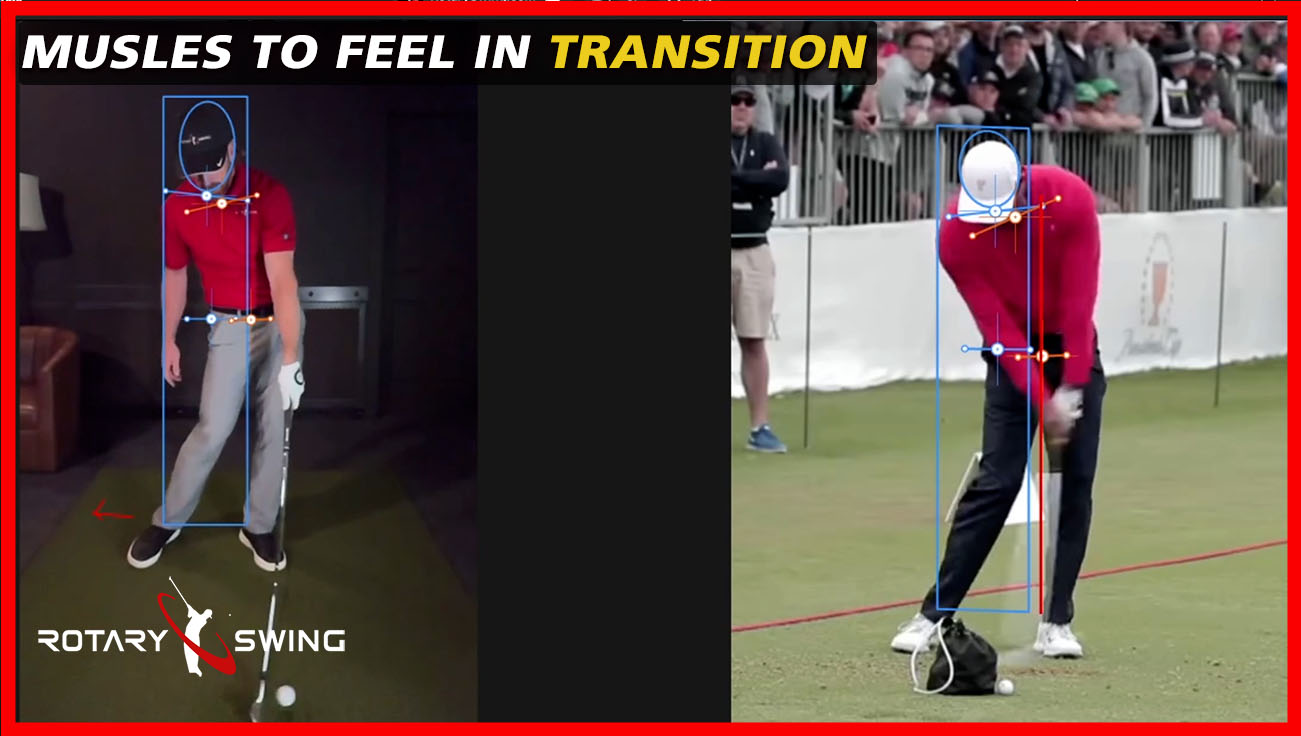
So watch what happens here I'll move this over here so you have a little bit of I'm going to just kind of stay static with my body with my lower body I'm not really going to shift my pressure very much and listen to the strike pretty heavy hit I came down pretty sharp because my body is just in the way my arms my shoulders have to go this way because my hips are blocking me out so now as I go down for my arm to go so it's going to go that way it's going to drive the club into the turf now this next one I'm going to do my four pressure shifts I'm going to go left right automatically make me want to go left secondary tilt and watch what happens to the strike so it's going to be a little bit more dynamic swing barely touch the grass just by shifting pressure just by getting my body to wake up and move don't be afraid to move when we're doing that staggered drill as I was talking about earlier I want you to move back into it to get loaded into it to make room because as your foot is dropped back for your arm really easy but now once we get into a normal stance that you've got to make room for the arm by shifting your pressure back to the lead side to get out of the way and that's how you should think about what your body's doing in a throwing pattern is that your hips are just trying you're just going to out of the way they're just a problem they're providing more stability than anything and you're just trying to get them out of the way to make room for this elbow to come out here to be able to throw so in a nutshell if I was to sum up the go code in one video what I believe Tiger and Jack are doing that's it I hope it helps you if you look at my half motion data that I posted recently it's from this exact and just going to the top on my fingers throwing it easy peasy and you'll shoot in a $60 time well maybe a little bit more to it but that's the big picture
That's really what today's video is all about.
Throughout my study over three decades of obsessing about the golf swing, I've come to the conclusion that there are basically three basic ways to swing the golf ball and release the golf ball.
There's the classical, traditional way of lead side dominant, let that left hand rip through, use the body to help create some rotational speed, your left wrist stays soft, your arms stay soft, you had a little bit of a right arm and hand in there.
That's a basic way to swing the golf club.
It's very, very common.
Many, many of the greats play it that way.
There's also the hitting pattern.
If you're familiar with the golf machine or Homer Kelly's word, he defined the two basic swings, a swing pattern like I just described, and a hitting pattern where you use a lot more right arm, right hand, right side, what have you.
That tends to look a little bit more in the body.
It's open a little bit more through.
You see a little bit more aggressive driving through that arm.
That's also a way that many greats play.
However, through the go-code, I believe there is a third way to swing the golf club that is probably the least talked about, least understood, but I think is actually perhaps the most common in at least many of the greatest of all time, in particular, Tiger and Jack.
I believe they both swung this third way, and that is it's neither necessarily a swing or a hit.
It is a throwing of this.
Throwing the club head is what I would define as the third most basic way to swing the golf club, and it is exactly what I believe Tiger and Jack have done throughout their whole careers.
Now, I'm going to show you exactly what I believe that movement feels like, how I used it to play in tournaments myself, and if you follow this very basic, simple pattern, I'm going to show you this swing pattern with the half motion data, and this drill, and the feels that I'm going to give you throughout this drill, are going to be good enough for you to play scratch or better golf.
That you have the data, and you know exactly what my hands are doing, I'm going to show you exactly what it feels like, and I'm going to show you exactly how to practice it.
So, the first thing you're going to need is some sort of hitting surface, whether it's a carpet, a towel, something that you can strike the ground.
No nerve swings here.
I want you to literally be able to swing and hear how the club interacts with the turf.
So, I have a hitting mat here in my gym, And I think this is the best way to kind of give you a feel of how that club should interact with the turf and how it changes.
That I'm going to show you in a minute with your body, with your hands, with your arms, change and how this club interacts with the turf, Because that's going to be your primary feedback device when you're practicing, when you're not hitting balls.
So, the whole key to this is understanding really what we're trying to do.
If you're swinging, that's one pattern.
If you're hitting, that's one pattern.
If you're throwing, that's another pattern.
And, of course, you'll see golfers who mix all of these in one way or the other to find a way that works for them.
I believe it's simplest if you understand how each of these have their own unique components that you need to feel.
And so, What I'm going to describe primarily is the throwing of the club head, because I believe it's the easiest for most golfers to learn.
Because it truly involves just your right hand.
And I'm going to explain more about that in a moment.
Because most golfers play golf as a right-handed golfer, and they're right -handed and learning this lead-side pattern.
I love such a beautiful, effortless field.
It's just a challenge for most golfers.
This, if you can throw with just your right hand, and really what we're going to get down to is these three fingers.
This is going to define your golf swing from this point forward, if you want to have that feeling of Tiger and Jack throwing that club head at the ball.
So, The first thing that we're going to do is I want you to stand up with stagnant snakes.
Because what I think is the most important missing thing for most golfers is having a real visual of your golf swing.
Like, when I did the RST five-step system, I really made it really simple that you just go to the top and you shift a little rotation and let that left hand release.
And that's the entire visual of the golf swing.
For a lead-side traditional golf swing, that's exactly how simple it should be.
For a throwing motion, Really, All you're trying to understand is you're throwing the sweet spot at the ball with these three fingers.
That's it.
And everything else that you're going to do is working in response to that.
And what's ironic is that when you start doing this correctly, as I'm about to show you, all of the things that you try to do in your swing, like get your hips deeper, maintain your posture, they all happen automatically.
They are truly a result of how you throw the club.
And that's what's really interesting to me is that all of these things that everybody tries to copy in Tiger swing, he's not trying to do this.
He didn't try to learn how to do a Tiger squat.
He didn't try to learn the shit.
He didn't try to learn how to get shatting.
He did it instinctively because it was all just a basic throwing pattern.
And so the first thing we're going to do is understand how to get that feeling of what your body should do as you're throwing the club.
And the easiest way to do that is a staggering stance.
You'll notice I'm wearing socks.
I'm going to explain why later to deal with what it is.
But one, I'm going to do a little practices inside, so I'm not going to shoot at the house.
That's fine.
But I'm going to explain how I want your feet to work in a moment.
So that's why I'm wearing socks.
So, The first thing you're going to do in understanding how to create this throwing pattern in your golf swing is take a staggering stance.
A closed stance, You can drop your foot where your toe is about halfway toward the middle of your foot, or even a little bit further back.
And the reason this is important is because what you need to understand is that in a throwing motion, what your body is really trying to do is release.
If you're trying to rotate through, you can't release.
Watch what happens to as I turn and pivot on this hip, my wrist doesn't want to release.
But when this leg braces, my hand has to work.
And that's the feeling that you're looking for.
So with the staggered stance, it's very different than trying to get hard onto the inside and pivot very quickly.
You can do that as well, but it will tend to slow the release down, which you really want is an aggressive throwing motion with these three fingers.
So start out with a staggered stance, closed stance.
And this is going to help not just with the bracing motion, but what do you do going back?
The golf swing really shouldn't be as complicated as we've made it.
And I think, again, it's complicated because there are multiple different ways to do it, multiple different release patterns that really have things that mix about as well as oil and water.
Some things don't work well together.
So when you get this feeling, you then have to understand, okay, I understand that I'm going to brace into this leg to push back.
And I literally feel as if I'm pushing the ground away from me in this way.
with my lead foot when I'm throwing because that's going to get my wrist to release more quickly.
As soon as I turn, I drag the club through.
So what I want is this being stable, pushing the ground away from me almost as I'm trying to push the ground toward the ball.
And that's going to get my snap.
But what this staggered stance is also going to do is help you understand how to move your body in the maximum.
And what I mean by that is that as you're going back, a lot of times people don't know exactly what they're supposed to do.
and all sorts of things.
And for certain swing patterns, that works really well.
But with the throwing motion, it doesn't.
What I want you to feel is a diagonal movement.
And that's why this staggered stance is important.
Because what I'm really trying to do is get back into this trail leg, which helps me make it easier to turn.
The more I hang on the left side, it'll limit my shoulder rotation.
You can see just by making this one little move, makes it way easier for me to get a better turn.
But then as I go, as I'm doing this, I'm trying to feel that I'm moving this way, diagonally back, and then diagonally forward, bracing this leg.
For those of you that swing over the top and you've never, ever been able to fix this, this drill is going to be a godsend, Because you're going to finally understand what the heck your body and your arms are supposed to do together.
So, with this staggered stance, as I go back, with just trying to get ready to throw, and we're going to talk about the hands in just a minute, but with the body movement, I just go back this way, and then I throw from here.
How would I ever swing over the top?
You can see that my path, I've got three dots here for the T-holes in here.
I'm going to use that as my path marker.
If I was to swing over the top, it was really hard with the staggered stance.
Really hard.
How would I get from here to there?
Pretty tricky.
The only way that we're really going to do that is either A, start to rotate.
Rotation and a throwing pattern don't work well together.
Rotation and a lead side pattern or a pushing through the trail shoulder hit, it works great.
In a throwing motion, your body needs to stabilize.
It needs to provide support.
If you're rotating and trying to throw at the same time, those two are oil and water.
You're going to find this.
The more powerfully you throw with your right hand, the less you need to rotate.
Remember, I always said in the golf swing, you've got rotation, you've got leverage, and you've got width.
It's an algorithm of how you choose to combine all of those things to produce power.
If I have a really powerful right hand throw, I don't need a lot of rotation.
And that's what I want you to feel here.
So this staggered stance, again, helps you feel like I don't need to do this anymore because watch what happens to my hand.
Where's it going?
I'm going to be straight over the top.
So what I want to feel is here, I shift it into the right, and as I shift back to the left, I'm bracing here, and I'm just throwing with my right hand into these three fingers.
No way I'm coming over the top.
The reason people start coming over the top if it's not rotation, is that they're using their right arm and shoulder incorrectly.
I want you to think of this throwing motion as these three fingers.
This is it.
This is the golf swing.
All of your feel is coming in these three fingers as the club sits in the cradle of these joints.
So when you start to get this feeling, back, stagger, understand that the speed is what you're looking for is coming from these three fingers.
You can try and use your arm or your shoulder, but you're going to tend to come down straight.
That's why I want you to have a map that you can hit so you can start feeling this.
So I'm going to have, I'm going to do one here with both hands on.
I have my second stance.
I'm going to use both hands, and this time, on this one, I'm going to swing down a little bit aggressively trying to push with my arm shoulder.
And I've got a secondary mic set up here right next to the ground, so you can get a little bit better auditory feedback.
So you know what you're starting to listen to when you're practicing this at home.
You hear kind of a heavy hit there.
I kind of threw my right arm and right shoulder at the ball.
Still could be a fine shot, but you can hear compared to when I shouted out.
So this time, instead of trying to push with my right arm and hand, I'm going to go back here and just throw the club with my wrist.
Just my three fingers and my wrist.
I'm not going to feel any arm shoulder Do you hear how different the strike was?
I just barely clipped the grass, barely touching it at all.
And you can hear that club ripping through and my body ain't doing anything.
My body is just That's.
What's so cool about this throwing pattern to me is that it's truly just my fingers.
It's just my fingers and my wrist.
The whole golf swing is just my fingers and my wrist.
If I add anything I'm going to come down steep again Not only is it slower and it doesn't feel good, my club's coming in really steep.
Take the right arm shoulder out with my fingers.
Super shallow.
I can just barely skim the very tip tops of the grass, which is what you want to feel with this pattern.
So now, that gives you a feeling of if you just throw it from here, there ain't no way you're coming over the top start rotating, start pushing with your shoulder, start firing your tricep, your fingers, your fingers and your wrist.
That's it.
You can see, even though it doesn't seem like it's very powerful, listen to the speed that I can get my fingers.
That's ripped with a six iron.
That's a 210-yard six iron all day with no effort three fingers.
So now let's get more into how these hands and arms work in the swing.
So we're going to stay in out of this in just a moment.
But now, how do we get these hands to work correctly?
The first thing that you've got to feel is that as you're going back at the top of your swing, and I'm going to stand over here so you can see it with this perspective, when I'm looking back at my fingers, I want that club to sit in the cradle and on this pressure point, just like I talked I also want the club to sit in the cradle of my fingers like this.
If you're gripping it like this, guess what you're going to do?
A, you can't release your fingers So guess what you're going to do?
You're going to push that club with your arm and shoulder, and that's going to slow you down, cause you to come down to speed, hit fat shots, Get the club sitting in your fingers, because again, you're just trying finger and wrist, finger and wrist.
That's all you're trying to feel.
That's where all of your sensitivity is going to come from.
I really feel the club sitting primarily in my middle finger, right here between the first and second joint, and then these two pressure points on my other two fingers.
Now as I go back, all I'm trying to do is feel that sitting that way at the top.
So again from here, I'm just feeling like this with my club face.
That's what I can throw.
Throw it with just my fingers.
Now, part of the trick to this is that as I'm going back in order to feel this, one of the things that's really different for me probably for many of you, from all the time, is that a lot of times developers are going to push the club back over your left arm.
And so when they do this, this takes this right hand out to be able to throw.
And it tends to inside, and then you start picking the club up.
Your hand's not in the position to throw here.
So it's really important as you're is to do a lot of right-hand.
You get a feel for that right hand kind of being in control throughout the swing.
mean you just take the club back with your right hand.
That'll lead to other types of problems.
So what you want to feel is that the arms, hands, And shoulders are all working together to help bring the club back in a relaxed way.
So that your hand is in a position to be able to throw.
Try and just take it back stiff with your right arm.
You're going to throw it that way or with your shoulders.
If you push it back with your left arm, you'll see this whole talk about a lot in online lessons because it happens all the time.
If you imagine forearm, as you start the club back, it should stay on that pain of glass and go to the inside.
But a lot of times you get active with this left arm.
shoulder will be elevated too soon with our arms that pain of glass.
So I feel like everything's going back together.
But the only thing that really matters is getting the sensitivity and the feeling for you being able to throw with your fingers in the right hand as you go back.
Now, One of the you're going to feel that might be a little bit different is that in order to give you a proper throw, I personally have to feel what I would call a flying right elbow.
Now it's not a flying right elbow like jacks or like But for me personally, I'm always a little bit more tucked in with this arm, keeping it more in check rather than letting it fly away.
Because as I was coming down and pulling down drops my arm into GVP immediately.
But now, in a throwing pattern, it's a little bit different.
That arm's going to work down a little bit more what I would call actively, whereas pulling pattern, I want that arm to stay a little bit more passive and just add a little bit of speed at the bottom.
When I'm going to throw, the a flying right elbow is because this is a really powerful position to throw from.
If I was going to throw this club at it as well as fast as I can, I wouldn't do it from here.
Then I'm going to want to use my shoulder turn to help speed it up because I don't feel like leverage.
right back like this and Freddie like this, there's a ton of power.
I'm not advocating get your arm as far away from your body as you can.
I think Tiger has the perfect blend and the perfect balance of this.
He gets up to the top and it's just instead of being tucked in here like this, where you want to use your shoulders, He lets it come away just a little bit, so that it's in a position where the elbow is a little bit outside the wrist.
And the reason I mention this, if you're used to having this elbow directly under the hand like this, it's actually easier to get the club, turn these three fingers than my elbow is out.
When I go in, notice how it changes the ankle of my wrist.
And since that's really all we care about is the wrist and these three fingers, Getting that elbow a little bit out and a little bit more underneath this way, instead of tucked directly under.
It gets you in a position where it's very easy to throw with your hand.
So again, if I wanted to shallow out, if I'm throwing this right hand, I'm never ever going to come over the top flying, I'm going to exaggerate this for a moment, a flying right elbow, as soon as I go to just using my fingers and my hand and my wrist to throw, instead of turning or pushing, I'm always going to swing down perfectly on the plane, even with that flying right elbow.
Again, what I call For me, it feels like I'm like this, but I'm really like this because I'm used to being like this, right?
So that's how So one of my points to this is as you're going back, as you're taking the club back, You want it to sit and fall right on top of that first joint and feel like your middle finger's holding onto it with some control.
The elbow comes away from you a now you can throw.
So now you've got the basic body movement, you've got the basic arm It truly is this simple.
Now let's start shifting our feet back up to the normal position.
I want to start helping you feel how to really generate crazy speed with just your hand and just your fingers, and getting your body to work correctly.
Those of you who bought the Axiom Power Program are going to be familiar with this.
I'm not going to go into the same depth I did in that video, But it'll get you the same basic idea that from here, when I'm throwing, there's two basic ways how people are going to move their body through.
This one, lots of rotation around this if I'm having socks.
So now if I just pivot on this knee side and just have a lot of rotation, you'll see my foot and everything this way.
That's great if you want to swing like Dustin Johnson to have a lot of body rotation.
I don't want to do that anymore.
My body's too beat up.
I want to have a really simple and I want to feel my swing that I can unleash this right hand as hard as I can, as hard as I want.
I don't want to feel like I have to hold it back.
So now when you're doing that and you want to add speed to this right hand, what you're actually going to feel is.
What I talked about in the which is counterfear.
Now watch my feet here.
Where did my foot?
It went this way.
So now what you start to understand is, instead of getting hard on the lead side and pivoting and turning the body through, I'm actually throwing back here and the most powerful, fastest way for me to throw back here is for my foot to go this way, not to go this way.
You can imagine if I was throwing slam on the brakes post up and throw to rotate through.
You want that torque so that your arm, for this risk to react against.
So when you're practicing on a mat in socks like I am, you want that foot to go back as you throw this way.
So this if you're practicing in socks on the mat.
This will help you start to get the feeling of generating torque.
And so that you have the power to throw with that right hand.
So long story short, the whole golf swing in a nutshell.
And Jack and a lot of these great players are doing, who are throwing the club at the ball, that's it.
Now I'm going to show you a couple more little things about how to dip it bottoms out.
So many of you are going to start struggling with this because you're not going to realize how much you use your right arm instead of your right wrist.
And so you're going to start pushing the club down to the ground and that's going to change the dynamics of the swing dramatically.
So I'm going to give you a couple simple feels to help you understand this.
First one, when I did the video on the four pressure shifts, that video should really be one of the first things you start to understand.
Not to do it perfectly, but you do need to understand that as you're going back and through.
Weight shifts should be a dynamic, very quick and something you don't have time to think about, but you need to understand how to feel it so that the club.
So if you find that you're just no matter what, you're throwing your right arm, your right arm to move.
You've got to wake up your feet, you've got to let pressure shift very, very quickly.
So watch what happens here I'll move this over here so you have a little bit of I'm going to just kind of stay static with my body with my lower body I'm not really going to shift my pressure very much and listen to the strike pretty heavy hit I came down pretty sharp because my body is just in the way my arms my shoulders have to go this way because my hips are blocking me out so now as I go down for my arm to go so it's going to go that way it's going to drive the club into the turf now this next one I'm going to do my four pressure shifts I'm going to go left right automatically make me want to go left secondary tilt and watch what happens to the strike so it's going to be a little bit more dynamic swing barely touch the grass just by shifting pressure just by getting my body to wake up and move don't be afraid to move when we're doing that staggered drill as I was talking about earlier I want you to move back into it to get loaded into it to make room because as your foot is dropped back for your arm really easy but now once we get into a normal stance that you've got to make room for the arm by shifting your pressure back to the lead side to get out of the way and that's how you should think about what your body's doing in a throwing pattern is that your hips are just trying you're just going to out of the way they're just a problem they're providing more stability than anything and you're just trying to get them out of the way to make room for this elbow to come out here to be able to throw so in a nutshell if I was to sum up the go code in one video what I believe Tiger and Jack are doing that's it I hope it helps you if you look at my half motion data that I posted recently it's from this exact and just going to the top on my fingers throwing it easy peasy and you'll shoot in a $60 time well maybe a little bit more to it but that's the big picture
La vidéo d'aujourd'hui va résumer l'intégralité du code du bateau en une seule vidéo.
C’est vraiment de cela qu’il s’agit dans la vidéo d’aujourd’hui.
Au cours de mes trois décennies d'études obsédées par le swing de golf, je suis arrivé à la conclusion qu'il existe essentiellement trois manières de base de balancer la balle de golf et de la relâcher.
Il y a la manière classique et traditionnelle de dominer le côté principal, laissez cette main gauche déchirer, utilisez le corps pour aider à créer une certaine vitesse de rotation, votre poignet gauche reste souple, vos bras restent souples, vous avez un peu de bras droit et de main là-dedans.
C'est une façon simple de manier le club de golf.
C'est très, très courant.
Beaucoup, beaucoup de grands joueurs jouent de cette façon.
Il y a aussi le modèle de frappe.
Si vous connaissez la machine de golf ou le mot d'Homer Kelly, il a défini les deux swings de base, un modèle de swing comme je viens de le décrire, et un modèle de frappe où vous utilisez beaucoup plus le bras droit, la main droite, le côté droit, etc.
Cela a tendance à paraître un peu plus dans le corps.
C'est un peu plus ouvert.
Vous voyez une conduite un peu plus agressive à travers ce bras.
C'est aussi une façon de jouer de nombreux grands noms.
Cependant, grâce au code Go, je crois qu'il existe une troisième façon de manier le club de golf, dont on parle probablement le moins, dont on comprend le moins bien, mais qui, je pense, est en fait peut-être la plus courante chez au moins un grand nombre des plus grands de tous les temps, en particulier Tiger et Jack.
Je crois qu'ils ont tous les deux adopté cette troisième voie, à savoir que ce n'est ni nécessairement un swing ni un coup.
C'est un lancer de ceci.
Lancer la tête du club est ce que je définirais comme la troisième manière la plus basique de balancer le club de golf, et c'est exactement ce que je crois que Tiger et Jack ont fait tout au long de leur carrière.
Maintenant, je vais vous montrer exactement ce que je crois que ce mouvement ressent, comment je l'ai utilisé pour jouer dans des tournois moi-même, et si vous suivez ce modèle très basique et simple, je vais vous montrer ce modèle de swing avec les données de demi-mouvement, et cet exercice, et les sensations que je vais vous donner tout au long de cet exercice, seront suffisamment bonnes pour que vous puissiez jouer au golf à partir de zéro ou mieux.
Puisque vous avez les données et que vous savez exactement ce que font mes mains, je vais vous montrer exactement ce que cela fait et je vais vous montrer exactement comment le pratiquer.
Donc, la première chose dont vous aurez besoin est une sorte de surface de frappe, que ce soit un tapis, une serviette, quelque chose sur lequel vous pouvez frapper le sol.
Ici, pas de sautes d'humeur.
Je veux que vous puissiez littéralement balancer et entendre comment le club interagit avec le gazon.
J'ai donc un tapis de frappe ici dans ma salle de sport, et je pense que c'est la meilleure façon de vous donner une idée de la façon dont ce club devrait interagir avec le gazon et de la façon dont il change.
Je vais vous montrer dans une minute comment, avec votre corps, avec vos mains, avec vos bras, changez et comment ce club interagit avec le gazon, car ce sera votre principal dispositif de rétroaction lorsque vous vous entraînez, lorsque vous ne frappez pas de balles.
Donc, la clé de tout cela est de comprendre réellement ce que nous essayons de faire.
Si vous vous balancez, c'est un modèle.
Si vous frappez, c'est un modèle.
Si vous lancez, c'est un autre modèle.
Et, bien sûr, vous verrez des golfeurs qui mélangent tout cela d'une manière ou d'une autre pour trouver une méthode qui leur convient.
Je crois que c'est plus simple si vous comprenez que chacun d'entre eux a ses propres composants uniques que vous devez ressentir.
Et donc, ce que je vais décrire principalement, c'est le lancer de la tête du club, car je pense que c'est le plus facile à apprendre pour la plupart des golfeurs.
Parce que cela implique vraiment uniquement votre main droite.
Et je vais vous en dire plus à ce sujet dans un instant.
Parce que la plupart des golfeurs jouent au golf en tant que droitiers, et ils sont droitiers et apprennent ce modèle côté plomb.
J'adore un champ aussi beau et sans effort.
C'est juste un défi pour la plupart des golfeurs.
Ceci, si vous pouvez le lancer avec seulement votre main droite, et en réalité, ce à quoi nous allons nous concentrer, ce sont ces trois doigts.
Cela va définir votre swing de golf à partir de maintenant, si vous voulez avoir la sensation de Tiger et Jack lançant cette tête de club sur la balle.
Alors, la première chose que nous allons faire, c'est que je veux que vous vous leviez avec des serpents stagnants.
Parce que ce qui me semble le plus important pour la plupart des golfeurs, c'est d'avoir une véritable image de leur swing de golf.
Par exemple, lorsque j'ai créé le système RST en cinq étapes, je l'ai vraiment simplifié : il suffit d'aller en haut, de changer un peu de rotation et de laisser la main gauche se relâcher.
Et c'est là tout le visuel du swing de golf.
Pour un swing de golf traditionnel côté avance, c'est exactement à quel point cela devrait être simple.
Pour un mouvement de lancer, vraiment, tout ce que vous essayez de comprendre, c'est que vous lancez le point idéal sur la balle avec ces trois doigts.
C'est ça.
Et tout ce que vous allez faire fonctionnera en réponse à cela.
Et ce qui est ironique, c'est que lorsque vous commencez à faire cela correctement, comme je suis sur le point de vous le montrer, toutes les choses que vous essayez de faire dans votre swing, comme enfoncer vos hanches plus profondément, maintenir votre posture, tout cela se produit automatiquement.
Ils sont vraiment le résultat de la façon dont vous lancez le club.
Et c'est ce qui est vraiment intéressant pour moi, c'est que toutes ces choses que tout le monde essaie de copier dans Tiger Swing, il n'essaie pas de faire ça.
Il n'a pas essayé d'apprendre à faire un squat du tigre.
Il n'a pas essayé d'apprendre la merde.
Il n'a pas essayé d'apprendre à chier.
Il l'a fait instinctivement parce que c'était juste un modèle de lancer de base.
Et donc la première chose que nous allons faire est de comprendre comment obtenir cette sensation de ce que votre corps devrait faire lorsque vous lancez le club.
Et la façon la plus simple d’y parvenir est d’adopter une position chancelante.
Vous remarquerez que je porte des chaussettes.
Je vais expliquer pourquoi plus tard pour faire face à ce que c'est.
Mais d'abord, je vais faire quelques exercices à l'intérieur, donc je ne vais pas tirer à la maison.
C'est très bien.
Mais je vais vous expliquer comment je veux que vos pieds fonctionnent dans un instant.
C'est pour ça que je porte des chaussettes.
Donc, la première chose que vous allez faire pour comprendre comment créer ce modèle de lancer dans votre swing de golf est de prendre une position chancelante.
Une position fermée, vous pouvez laisser tomber votre pied là où votre orteil est à peu près à mi-chemin vers le milieu de votre pied, ou même un peu plus en arrière.
Et la raison pour laquelle c'est important, c'est que ce que vous devez comprendre, c'est que dans un mouvement de lancer, ce que votre corps essaie vraiment de faire, c'est de relâcher.
Si vous essayez de faire une rotation, vous ne pouvez pas relâcher.
Regardez ce qui arrive lorsque je tourne et pivote sur cette hanche, mon poignet ne veut pas se relâcher.
Mais quand cette jambe s'appuie, ma main doit travailler.
Et c'est le sentiment que vous recherchez.
Donc, avec la position décalée, c'est très différent d'essayer de se mettre à l'intérieur et de pivoter très rapidement.
Vous pouvez également le faire, mais cela aura tendance à ralentir la libération, ce que vous voulez vraiment, c'est un mouvement de lancer agressif avec ces trois doigts.
Commencez donc par une position décalée, une position fermée.
Et cela va aider non seulement avec le mouvement de renforcement, mais que faites-vous en arrière ?
Le swing de golf ne devrait pas être aussi compliqué que nous l’avons imaginé.
Et je pense, encore une fois, que c'est compliqué parce qu'il existe de multiples façons différentes de le faire, de multiples modèles de libération différents qui contiennent vraiment des éléments qui se mélangent aussi bien que l'huile et l'eau.
Certaines choses ne fonctionnent pas bien ensemble.
Alors, quand vous ressentez cette sensation, vous devez alors comprendre, ok, je comprends que je vais m'appuyer sur cette jambe pour repousser.
Et j'ai littéralement l'impression de repousser le sol loin de moi de cette façon.
avec mon pied avant lorsque je lance, car cela va permettre à mon poignet de se relâcher plus rapidement.
Dès que je me retourne, je traîne le club à travers.
Donc ce que je veux, c'est que ce soit stable, que le sol soit éloigné de moi presque comme si j'essayais de pousser le sol vers la balle.
Et c'est ça qui va me faire prendre mon cliché.
Mais ce que cette position décalée va également faire, c'est vous aider à comprendre comment bouger votre corps au maximum.
Et ce que je veux dire par là, c'est qu'en revenant en arrière, bien souvent, les gens ne savent pas exactement ce qu'ils sont censés faire.
et toutes sortes de choses.
Et pour certains modèles de swing, cela fonctionne vraiment bien.
Mais avec le mouvement de lancer, ce n'est pas le cas.
Ce que je veux que vous ressentiez, c'est un mouvement diagonal.
Et c’est pourquoi cette position décalée est importante.
Parce que ce que j'essaie vraiment de faire, c'est de revenir dans cette étape du sentier, ce qui m'aide à rendre les virages plus faciles.
Plus je m'accroche au côté gauche, plus cela limite la rotation de mes épaules.
Vous pouvez voir qu'en faisant simplement ce petit mouvement, il m'est beaucoup plus facile d'obtenir un meilleur virage.
Mais alors, pendant que je fais cela, j'essaie de sentir que je bouge de cette façon, en diagonale vers l'arrière, puis en diagonale vers l'avant, en soutenant cette jambe.
Pour ceux d'entre vous qui se balancent au-dessus du sommet et que vous n'avez jamais réussi à résoudre ce problème, cet exercice va être une aubaine, car vous allez enfin comprendre ce que votre corps et vos bras sont censés faire ensemble.
Donc, avec cette position décalée, alors que je reviens en arrière, en essayant simplement de me préparer à lancer, et nous allons parler des mains dans une minute, mais avec le mouvement du corps, je reviens simplement de cette façon, puis je lance à partir d'ici.
Comment pourrais-je passer par-dessus ?
Vous pouvez voir mon chemin, j'ai trois points ici pour les trous en T ici.
Je vais l'utiliser comme marqueur de chemin.
Si je devais me balancer par-dessus, c'était vraiment difficile avec la position décalée.
Vraiment dur.
Comment pourrais-je aller d'ici à là ?
Plutôt délicat.
La seule façon de vraiment y parvenir est soit A, soit de commencer à tourner.
La rotation et le modèle de lancer ne fonctionnent pas bien ensemble.
Rotation et motif côté plomb ou poussée à travers l'épaule du sentier, cela fonctionne très bien.
Lors d’un mouvement de lancer, votre corps doit se stabiliser.
Il faut apporter du soutien.
Si vous faites une rotation et essayez de lancer en même temps, ces deux éléments sont de l'huile et de l'eau.
Tu vas trouver ça.
Plus vous lancez fort avec votre main droite, moins vous avez besoin de tourner.
Rappelez-vous, j'ai toujours dit que dans le swing de golf, vous avez la rotation, vous avez l'effet de levier et vous avez la largeur.
C'est un algorithme qui vous permet de choisir comment combiner tous ces éléments pour produire de l'énergie.
Si j'ai un lancer droit vraiment puissant, je n'ai pas besoin de beaucoup de rotation.
Et c'est ce que je veux que vous ressentiez ici.
Donc, cette position décalée, encore une fois, vous aide à sentir que je n'ai plus besoin de faire ça parce que regardez ce qui arrive à ma main.
Où va-t-il ?
Je vais être franc.
Donc ce que je veux ressentir est ici, je le déplace vers la droite, et lorsque je reviens vers la gauche, je m'appuie ici, et je lance simplement avec ma main droite dans ces trois doigts.
Il n'y a aucune chance que j'exagère.
La raison pour laquelle les gens commencent à dépasser s'il ne s'agit pas de rotation, c'est qu'ils utilisent leur bras droit et leur épaule de manière incorrecte.
Je veux que vous pensiez à ce mouvement de lancer comme à ces trois doigts.
C'est ça.
C'est le swing de golf.
Toutes vos sensations proviennent de ces trois doigts, car le club repose dans le berceau de ces articulations.
Alors, quand vous commencez à ressentir cette sensation, ce recul, ce vacillement, comprenez que la vitesse que vous recherchez vient de ces trois doigts.
Vous pouvez essayer d'utiliser votre bras ou votre épaule, mais vous aurez tendance à redescendre droit.
C'est pourquoi je veux que vous ayez une carte sur laquelle vous pouvez vous appuyer pour commencer à ressentir cela.
Alors je vais devoir en faire un ici avec les deux mains.
J'ai ma deuxième position.
Je vais utiliser mes deux mains, et cette fois-ci, je vais me balancer un peu vers le bas de manière agressive en essayant de pousser avec mon bras et mon épaule.
Et j'ai un micro secondaire installé ici, juste à côté du sol, pour que vous puissiez obtenir un meilleur retour auditif.
Vous savez donc ce que vous commencez à écouter lorsque vous pratiquez cela à la maison.
On entend une sorte de coup violent à cet endroit.
J'ai en quelque sorte lancé mon bras droit et mon épaule droite vers la balle.
Cela pourrait toujours être une belle photo, mais on peut l'entendre par rapport au moment où j'ai crié.
Donc cette fois, au lieu d'essayer de pousser avec mon bras droit et ma main, je vais revenir ici et simplement lancer le club avec mon poignet.
Juste mes trois doigts et mon poignet.
Je ne vais pas sentir d'épaule de bras. Vous entendez à quel point la frappe était différente ?
J'ai à peine coupé l'herbe, je l'ai à peine touchée.
Et vous pouvez entendre ce club se déchirer et mon corps ne fait rien.
Mon corps est juste ça.
Ce qui est si cool à propos de ce modèle de lancer pour moi, c'est que ce ne sont vraiment que mes doigts.
Ce ne sont que mes doigts et mon poignet.
Tout le swing de golf se fait uniquement avec mes doigts et mon poignet.
Si j'ajoute quelque chose, je vais redescendre raide. Non seulement c'est plus lent et ce n'est pas agréable, mais mon club arrive vraiment raide.
Retirez l'épaule du bras droit avec mes doigts.
Super peu profond.
Je peux à peine effleurer les pointes de l'herbe, ce qui est ce que vous voulez ressentir avec ce motif.
Alors maintenant, cela vous donne une idée que si vous le lancez simplement d'ici, il n'y a aucun moyen que vous arriviez au sommet, commencez à tourner, commencez à pousser avec votre épaule, commencez à tirer votre triceps, vos doigts, vos doigts et votre poignet.
C'est ça.
Vous pouvez voir, même si cela ne semble pas très puissant, écoutez la vitesse à laquelle je peux bouger mes doigts.
C'est déchiré avec un fer six.
C'est un fer six de 210 mètres toute la journée sans effort sur trois doigts.
Voyons maintenant plus en détail comment ces mains et ces bras fonctionnent dans le swing.
Nous allons donc rester en dehors de tout cela dans un instant.
Mais maintenant, comment faire fonctionner correctement ces mains ?
La première chose que vous devez ressentir est que lorsque vous revenez au sommet de votre swing, et je vais me tenir ici pour que vous puissiez le voir avec cette perspective, lorsque je regarde mes doigts, je veux que ce club soit assis dans le berceau et sur ce point de pression, comme je l'ai dit, je veux aussi que le club soit assis dans le berceau de mes doigts comme ça.
Si vous le saisissez comme ça, devinez ce que vous allez faire ?
A, tu ne peux pas relâcher tes doigts. Alors devine ce que tu vas faire ?
Vous allez pousser ce club avec votre bras et votre épaule, et cela va vous ralentir, vous faire perdre de la vitesse, frapper des coups gras, mettre le club entre vos doigts, car encore une fois, vous essayez juste le doigt et le poignet, le doigt et le poignet.
C'est tout ce que tu essaies de ressentir.
C'est de là que viendra toute votre sensibilité.
Je sens vraiment le club assis principalement dans mon majeur, juste ici entre la première et la deuxième articulation, puis ces deux points de pression sur mes deux autres doigts.
Maintenant que je reviens en arrière, tout ce que j'essaie de faire, c'est de ressentir que je suis assis de cette façon au sommet.
Donc, encore une fois, à partir de là, je me sens comme ça avec ma face de club.
C'est ce que je peux lancer.
Je le lance juste avec mes doigts.
Maintenant, une partie de l'astuce est que lorsque je reviens en arrière pour ressentir cela, l'une des choses qui est vraiment différente pour moi, probablement pour beaucoup d'entre vous, de tout le temps, c'est que souvent les développeurs vont repousser le club sur votre bras gauche.
Et donc quand ils font ça, ça leur prend la main droite pour pouvoir lancer.
Et ça tend vers l'intérieur, et puis vous commencez à ramasser le club.
Votre main n'est pas en position de lancer ici.
C'est donc vraiment important car vous devez faire beaucoup de mouvements de la main droite.
Vous avez l'impression que la main droite est en quelque sorte aux commandes tout au long du swing.
Cela signifie que vous ramenez simplement le club avec votre main droite.
Cela entraînera d’autres types de problèmes.
Donc, ce que vous voulez ressentir, c'est que les bras, les mains et les épaules travaillent tous ensemble pour aider à ramener le club de manière détendue.
Pour que votre main soit en position de pouvoir lancer.
Essayez de le reprendre fermement avec votre bras droit.
Vous allez le lancer de cette façon ou avec vos épaules.
Si vous le repoussez avec votre bras gauche, vous verrez tout cela souvent évoqué dans les cours en ligne, car cela arrive tout le temps.
Si vous imaginez l'avant-bras, lorsque vous démarrez le club en arrière, il doit rester sur cette douleur de verre et aller vers l'intérieur.
Mais souvent, vous êtes actif avec ce bras gauche.
l'épaule sera trop tôt élevée avec nos bras cette douleur de verre.
Alors j'ai l'impression que tout se remet en place.
Mais la seule chose qui compte vraiment, c'est d'obtenir la sensibilité et la sensation qui vous permettent de lancer avec vos doigts de la main droite lorsque vous revenez en arrière.
Maintenant, l'une des choses que vous allez ressentir et qui pourrait être un peu différente est que pour vous donner un lancer approprié, je dois personnellement sentir ce que j'appellerais un coude droit volant.
Ce n'est pas un coude droit volant comme les jacks ou autre. Mais pour moi personnellement, je suis toujours un peu plus replié avec ce bras, le gardant plus sous contrôle plutôt que de le laisser s'envoler.
Parce que lorsque je descendais et que je tirais vers le bas, mon bras tombait immédiatement dans GVP.
Mais maintenant, en termes de lancer, c'est un peu différent.
Ce bras va travailler un peu plus ce que j'appellerais activement, alors que pour le modèle de traction, je veux que ce bras reste un peu plus passif et ajoute juste un peu de vitesse en bas.
Quand je vais lancer, je lance un coude droit volant parce que c'est une position vraiment puissante pour lancer.
Si je devais lancer ce club aussi vite que possible, je ne le ferais pas à partir d'ici.
Ensuite, je vais vouloir utiliser mon tour d'épaule pour aider à accélérer le mouvement, car je n'ai pas envie d'avoir un effet de levier.
de retour comme ça et Freddie comme ça, il y a une tonne de puissance.
Je ne vous conseille pas d’éloigner votre bras le plus possible de votre corps.
Je pense que Tiger a le mélange parfait et l'équilibre parfait de tout cela.
Il monte jusqu'en haut et au lieu d'être rentré ici comme ça, là où vous voulez utiliser vos épaules, il le laisse s'éloigner un peu, de sorte qu'il soit dans une position où le coude est un peu à l'extérieur du poignet.
Et la raison pour laquelle je mentionne cela, si vous avez l'habitude d'avoir ce coude directement sous la main comme ça, il est en fait plus facile d'obtenir le club, de tourner ces trois doigts que mon coude est sorti.
Quand j'y vais, remarquez comment cela change la cheville de mon poignet.
Et puisque c'est vraiment tout ce qui nous intéresse, c'est le poignet et ces trois doigts, en plaçant ce coude un peu plus en dehors et un peu plus en dessous de cette façon, au lieu de le rentrer directement en dessous.
Cela vous met dans une position où il est très facile de lancer avec votre main.
Donc encore une fois, si je voulais faire un plan superficiel, si je lance cette main droite, je ne vais jamais arriver au sommet en volant, je vais exagérer cela pendant un moment, un coude droit volant, dès que je vais juste utiliser mes doigts, ma main et mon poignet pour lancer, au lieu de tourner ou de pousser, je vais toujours balancer parfaitement vers le bas sur le plan, même avec ce coude droit volant.
Encore une fois, ce que j'appelle Pour moi, j'ai l'impression d'être comme ça, mais je suis vraiment comme ça parce que j'ai l'habitude d'être comme ça, n'est-ce pas ?
Voilà donc comment. L'un de mes arguments est que lorsque vous revenez en arrière, lorsque vous ramenez le club, vous voulez qu'il repose et tombe juste au-dessus de cette première articulation et que vous ayez l'impression que votre majeur le tient avec un certain contrôle.
Le coude s'éloigne de vous et vous pouvez maintenant lancer.
Alors maintenant, vous avez le mouvement de base du corps, vous avez le bras de base. C'est vraiment aussi simple que ça.
Commençons maintenant à ramener nos pieds vers la position normale.
Je veux commencer à vous aider à ressentir comment générer une vitesse vraiment folle avec juste votre main et juste vos doigts, et faire fonctionner votre corps correctement.
Ceux d’entre vous qui ont acheté le programme Axiom Power seront familiers avec cela.
Je ne vais pas entrer dans les mêmes détails que dans cette vidéo, mais cela vous donnera la même idée de base qu'à partir de là, lorsque je lance, il y a deux manières de base dont les gens vont bouger leur corps.
Celui-ci, beaucoup de rotation autour de celui-ci si je porte des chaussettes.
Donc maintenant, si je pivote simplement sur ce côté du genou et que j'ai beaucoup de rotation, vous verrez mon pied et tout de cette façon.
C'est génial si vous voulez vous balancer comme Dustin Johnson pour avoir beaucoup de rotation du corps.
Je ne veux plus faire ça.
Mon corps est trop abîmé.
Je veux avoir un swing vraiment simple et je veux sentir que je peux libérer cette main droite aussi fort que je peux, aussi fort que je le veux.
Je ne veux pas avoir l’impression de devoir me retenir.
Alors maintenant, lorsque vous faites cela et que vous voulez ajouter de la vitesse à cette main droite, ce que vous allez réellement ressentir est.
Ce dont j'ai parlé dans ce qui suit est la contre-peur.
Maintenant, regardez mes pieds ici.
Où est passé mon pied ?
C'est ce qui s'est passé.
Alors maintenant, ce que vous commencez à comprendre, c'est qu'au lieu de me mettre à fond sur le côté avant et de pivoter et de faire tourner le corps, je lance en fait vers l'arrière ici et la manière la plus puissante et la plus rapide pour moi de lancer vers l'arrière ici est que mon pied aille dans ce sens, pas dans ce sens-là.
Vous pouvez imaginer si j'appuyais sur les freins, que je les relevais et que je les lançais pour les faire tourner.
Vous voulez ce couple pour que votre bras, pour ce risque, réagisse contre.
Donc, lorsque vous vous entraînez sur un tapis en chaussettes comme moi, vous voulez que ce pied revienne en arrière lorsque vous lancez de cette façon.
Donc, ceci si vous vous entraînez en chaussettes sur le tapis.
Cela vous aidera à commencer à ressentir la sensation de génération de couple.
Et pour que vous ayez le pouvoir de lancer avec cette main droite.
Pour faire court, voici le swing de golf complet en quelques mots.
Et Jack et beaucoup de ces grands joueurs le font, qui lancent le club sur la balle, c'est tout.
Maintenant, je vais vous montrer quelques petites choses supplémentaires sur la façon de le faire descendre jusqu'au fond.
Beaucoup d'entre vous vont commencer à avoir des difficultés avec cela parce que vous ne réaliserez pas à quel point vous utilisez votre bras droit au lieu de votre poignet droit.
Et donc vous allez commencer à pousser le club vers le sol et cela va changer radicalement la dynamique du swing.
Je vais donc vous donner quelques sensations simples pour vous aider à comprendre cela.
Tout d’abord, lorsque j’ai fait la vidéo sur les quatre changements de pression, cette vidéo devrait vraiment être l’une des premières choses que vous commencerez à comprendre.
Ce n'est pas pour le faire parfaitement, mais vous devez comprendre cela au fur et à mesure que vous revenez en arrière.
Les transferts de poids doivent être dynamiques, très rapides et quelque chose auquel vous n'avez pas le temps de penser, mais vous devez comprendre comment le ressentir pour que le club.
Donc si vous trouvez que vous êtes juste quoi qu'il arrive, vous lancez votre bras droit, votre bras droit pour bouger.
Il faut réveiller ses pieds, il faut laisser la pression changer très, très rapidement.
Alors regardez ce qui se passe ici, je vais déplacer cela ici pour que vous ayez un peu de Je vais juste rester statique avec mon corps avec mon bas du corps Je ne vais pas vraiment changer ma pression beaucoup et écouter la frappe assez lourde Je suis descendu assez brusquement parce que mon corps est juste dans le chemin de mes bras Mes épaules doivent aller dans ce sens parce que mes hanches me bloquent Donc maintenant, alors que je descends pour que mon bras aille donc il va aller dans ce sens il va conduire le club dans le gazon Maintenant, celui-ci je vais faire mes quatre changements de pression Je vais aller à gauche à droite automatiquement me donne envie d'aller à gauche Inclinaison secondaire et regardez ce qui arrive à la frappe donc ce sera un swing un peu plus dynamique Touchez à peine l'herbe juste en changeant la pression juste en faisant en sorte que mon corps se réveille et bouge N'ayez pas peur de bouger quand nous faisons cet exercice décalé comme je le disais plus tôt Je veux que vous vous y replaciez pour vous y charger pour faire de la place parce que lorsque votre pied est abaissé pour votre bras c'est vraiment facile mais maintenant, une fois que nous entrons dans une position normale, vous devez faire de la place pour le bras en déplaçant votre pression vers le côté avant pour vous écarter et c'est ainsi que vous devriez penser à ce que fait votre corps dans un modèle de lancer, c'est que vos hanches essaient juste que vous alliez juste vous écarter, elles sont juste un problème, elles fournissent plus de stabilité que tout et vous essayez juste de les écarter pour faire de la place pour que ce coude sorte ici pour pouvoir lancer donc en un mot si je devais résumer le code de départ dans une vidéo ce que je crois que Tiger et Jack font c'est ça J'espère que cela vous aidera si vous regardez mes données de demi-mouvement que j'ai publiées récemment, c'est à partir de là exactement et juste en allant vers le haut sur mes doigts en le lançant facilement et vous tirerez dans un temps de 60 $ enfin peut-être un peu plus, mais c'est la vue d'ensemble
C’est vraiment de cela qu’il s’agit dans la vidéo d’aujourd’hui.
Au cours de mes trois décennies d'études obsédées par le swing de golf, je suis arrivé à la conclusion qu'il existe essentiellement trois manières de base de balancer la balle de golf et de la relâcher.
Il y a la manière classique et traditionnelle de dominer le côté principal, laissez cette main gauche déchirer, utilisez le corps pour aider à créer une certaine vitesse de rotation, votre poignet gauche reste souple, vos bras restent souples, vous avez un peu de bras droit et de main là-dedans.
C'est une façon simple de manier le club de golf.
C'est très, très courant.
Beaucoup, beaucoup de grands joueurs jouent de cette façon.
Il y a aussi le modèle de frappe.
Si vous connaissez la machine de golf ou le mot d'Homer Kelly, il a défini les deux swings de base, un modèle de swing comme je viens de le décrire, et un modèle de frappe où vous utilisez beaucoup plus le bras droit, la main droite, le côté droit, etc.
Cela a tendance à paraître un peu plus dans le corps.
C'est un peu plus ouvert.
Vous voyez une conduite un peu plus agressive à travers ce bras.
C'est aussi une façon de jouer de nombreux grands noms.
Cependant, grâce au code Go, je crois qu'il existe une troisième façon de manier le club de golf, dont on parle probablement le moins, dont on comprend le moins bien, mais qui, je pense, est en fait peut-être la plus courante chez au moins un grand nombre des plus grands de tous les temps, en particulier Tiger et Jack.
Je crois qu'ils ont tous les deux adopté cette troisième voie, à savoir que ce n'est ni nécessairement un swing ni un coup.
C'est un lancer de ceci.
Lancer la tête du club est ce que je définirais comme la troisième manière la plus basique de balancer le club de golf, et c'est exactement ce que je crois que Tiger et Jack ont fait tout au long de leur carrière.
Maintenant, je vais vous montrer exactement ce que je crois que ce mouvement ressent, comment je l'ai utilisé pour jouer dans des tournois moi-même, et si vous suivez ce modèle très basique et simple, je vais vous montrer ce modèle de swing avec les données de demi-mouvement, et cet exercice, et les sensations que je vais vous donner tout au long de cet exercice, seront suffisamment bonnes pour que vous puissiez jouer au golf à partir de zéro ou mieux.
Puisque vous avez les données et que vous savez exactement ce que font mes mains, je vais vous montrer exactement ce que cela fait et je vais vous montrer exactement comment le pratiquer.
Donc, la première chose dont vous aurez besoin est une sorte de surface de frappe, que ce soit un tapis, une serviette, quelque chose sur lequel vous pouvez frapper le sol.
Ici, pas de sautes d'humeur.
Je veux que vous puissiez littéralement balancer et entendre comment le club interagit avec le gazon.
J'ai donc un tapis de frappe ici dans ma salle de sport, et je pense que c'est la meilleure façon de vous donner une idée de la façon dont ce club devrait interagir avec le gazon et de la façon dont il change.
Je vais vous montrer dans une minute comment, avec votre corps, avec vos mains, avec vos bras, changez et comment ce club interagit avec le gazon, car ce sera votre principal dispositif de rétroaction lorsque vous vous entraînez, lorsque vous ne frappez pas de balles.
Donc, la clé de tout cela est de comprendre réellement ce que nous essayons de faire.
Si vous vous balancez, c'est un modèle.
Si vous frappez, c'est un modèle.
Si vous lancez, c'est un autre modèle.
Et, bien sûr, vous verrez des golfeurs qui mélangent tout cela d'une manière ou d'une autre pour trouver une méthode qui leur convient.
Je crois que c'est plus simple si vous comprenez que chacun d'entre eux a ses propres composants uniques que vous devez ressentir.
Et donc, ce que je vais décrire principalement, c'est le lancer de la tête du club, car je pense que c'est le plus facile à apprendre pour la plupart des golfeurs.
Parce que cela implique vraiment uniquement votre main droite.
Et je vais vous en dire plus à ce sujet dans un instant.
Parce que la plupart des golfeurs jouent au golf en tant que droitiers, et ils sont droitiers et apprennent ce modèle côté plomb.
J'adore un champ aussi beau et sans effort.
C'est juste un défi pour la plupart des golfeurs.
Ceci, si vous pouvez le lancer avec seulement votre main droite, et en réalité, ce à quoi nous allons nous concentrer, ce sont ces trois doigts.
Cela va définir votre swing de golf à partir de maintenant, si vous voulez avoir la sensation de Tiger et Jack lançant cette tête de club sur la balle.
Alors, la première chose que nous allons faire, c'est que je veux que vous vous leviez avec des serpents stagnants.
Parce que ce qui me semble le plus important pour la plupart des golfeurs, c'est d'avoir une véritable image de leur swing de golf.
Par exemple, lorsque j'ai créé le système RST en cinq étapes, je l'ai vraiment simplifié : il suffit d'aller en haut, de changer un peu de rotation et de laisser la main gauche se relâcher.
Et c'est là tout le visuel du swing de golf.
Pour un swing de golf traditionnel côté avance, c'est exactement à quel point cela devrait être simple.
Pour un mouvement de lancer, vraiment, tout ce que vous essayez de comprendre, c'est que vous lancez le point idéal sur la balle avec ces trois doigts.
C'est ça.
Et tout ce que vous allez faire fonctionnera en réponse à cela.
Et ce qui est ironique, c'est que lorsque vous commencez à faire cela correctement, comme je suis sur le point de vous le montrer, toutes les choses que vous essayez de faire dans votre swing, comme enfoncer vos hanches plus profondément, maintenir votre posture, tout cela se produit automatiquement.
Ils sont vraiment le résultat de la façon dont vous lancez le club.
Et c'est ce qui est vraiment intéressant pour moi, c'est que toutes ces choses que tout le monde essaie de copier dans Tiger Swing, il n'essaie pas de faire ça.
Il n'a pas essayé d'apprendre à faire un squat du tigre.
Il n'a pas essayé d'apprendre la merde.
Il n'a pas essayé d'apprendre à chier.
Il l'a fait instinctivement parce que c'était juste un modèle de lancer de base.
Et donc la première chose que nous allons faire est de comprendre comment obtenir cette sensation de ce que votre corps devrait faire lorsque vous lancez le club.
Et la façon la plus simple d’y parvenir est d’adopter une position chancelante.
Vous remarquerez que je porte des chaussettes.
Je vais expliquer pourquoi plus tard pour faire face à ce que c'est.
Mais d'abord, je vais faire quelques exercices à l'intérieur, donc je ne vais pas tirer à la maison.
C'est très bien.
Mais je vais vous expliquer comment je veux que vos pieds fonctionnent dans un instant.
C'est pour ça que je porte des chaussettes.
Donc, la première chose que vous allez faire pour comprendre comment créer ce modèle de lancer dans votre swing de golf est de prendre une position chancelante.
Une position fermée, vous pouvez laisser tomber votre pied là où votre orteil est à peu près à mi-chemin vers le milieu de votre pied, ou même un peu plus en arrière.
Et la raison pour laquelle c'est important, c'est que ce que vous devez comprendre, c'est que dans un mouvement de lancer, ce que votre corps essaie vraiment de faire, c'est de relâcher.
Si vous essayez de faire une rotation, vous ne pouvez pas relâcher.
Regardez ce qui arrive lorsque je tourne et pivote sur cette hanche, mon poignet ne veut pas se relâcher.
Mais quand cette jambe s'appuie, ma main doit travailler.
Et c'est le sentiment que vous recherchez.
Donc, avec la position décalée, c'est très différent d'essayer de se mettre à l'intérieur et de pivoter très rapidement.
Vous pouvez également le faire, mais cela aura tendance à ralentir la libération, ce que vous voulez vraiment, c'est un mouvement de lancer agressif avec ces trois doigts.
Commencez donc par une position décalée, une position fermée.
Et cela va aider non seulement avec le mouvement de renforcement, mais que faites-vous en arrière ?
Le swing de golf ne devrait pas être aussi compliqué que nous l’avons imaginé.
Et je pense, encore une fois, que c'est compliqué parce qu'il existe de multiples façons différentes de le faire, de multiples modèles de libération différents qui contiennent vraiment des éléments qui se mélangent aussi bien que l'huile et l'eau.
Certaines choses ne fonctionnent pas bien ensemble.
Alors, quand vous ressentez cette sensation, vous devez alors comprendre, ok, je comprends que je vais m'appuyer sur cette jambe pour repousser.
Et j'ai littéralement l'impression de repousser le sol loin de moi de cette façon.
avec mon pied avant lorsque je lance, car cela va permettre à mon poignet de se relâcher plus rapidement.
Dès que je me retourne, je traîne le club à travers.
Donc ce que je veux, c'est que ce soit stable, que le sol soit éloigné de moi presque comme si j'essayais de pousser le sol vers la balle.
Et c'est ça qui va me faire prendre mon cliché.
Mais ce que cette position décalée va également faire, c'est vous aider à comprendre comment bouger votre corps au maximum.
Et ce que je veux dire par là, c'est qu'en revenant en arrière, bien souvent, les gens ne savent pas exactement ce qu'ils sont censés faire.
et toutes sortes de choses.
Et pour certains modèles de swing, cela fonctionne vraiment bien.
Mais avec le mouvement de lancer, ce n'est pas le cas.
Ce que je veux que vous ressentiez, c'est un mouvement diagonal.
Et c’est pourquoi cette position décalée est importante.
Parce que ce que j'essaie vraiment de faire, c'est de revenir dans cette étape du sentier, ce qui m'aide à rendre les virages plus faciles.
Plus je m'accroche au côté gauche, plus cela limite la rotation de mes épaules.
Vous pouvez voir qu'en faisant simplement ce petit mouvement, il m'est beaucoup plus facile d'obtenir un meilleur virage.
Mais alors, pendant que je fais cela, j'essaie de sentir que je bouge de cette façon, en diagonale vers l'arrière, puis en diagonale vers l'avant, en soutenant cette jambe.
Pour ceux d'entre vous qui se balancent au-dessus du sommet et que vous n'avez jamais réussi à résoudre ce problème, cet exercice va être une aubaine, car vous allez enfin comprendre ce que votre corps et vos bras sont censés faire ensemble.
Donc, avec cette position décalée, alors que je reviens en arrière, en essayant simplement de me préparer à lancer, et nous allons parler des mains dans une minute, mais avec le mouvement du corps, je reviens simplement de cette façon, puis je lance à partir d'ici.
Comment pourrais-je passer par-dessus ?
Vous pouvez voir mon chemin, j'ai trois points ici pour les trous en T ici.
Je vais l'utiliser comme marqueur de chemin.
Si je devais me balancer par-dessus, c'était vraiment difficile avec la position décalée.
Vraiment dur.
Comment pourrais-je aller d'ici à là ?
Plutôt délicat.
La seule façon de vraiment y parvenir est soit A, soit de commencer à tourner.
La rotation et le modèle de lancer ne fonctionnent pas bien ensemble.
Rotation et motif côté plomb ou poussée à travers l'épaule du sentier, cela fonctionne très bien.
Lors d’un mouvement de lancer, votre corps doit se stabiliser.
Il faut apporter du soutien.
Si vous faites une rotation et essayez de lancer en même temps, ces deux éléments sont de l'huile et de l'eau.
Tu vas trouver ça.
Plus vous lancez fort avec votre main droite, moins vous avez besoin de tourner.
Rappelez-vous, j'ai toujours dit que dans le swing de golf, vous avez la rotation, vous avez l'effet de levier et vous avez la largeur.
C'est un algorithme qui vous permet de choisir comment combiner tous ces éléments pour produire de l'énergie.
Si j'ai un lancer droit vraiment puissant, je n'ai pas besoin de beaucoup de rotation.
Et c'est ce que je veux que vous ressentiez ici.
Donc, cette position décalée, encore une fois, vous aide à sentir que je n'ai plus besoin de faire ça parce que regardez ce qui arrive à ma main.
Où va-t-il ?
Je vais être franc.
Donc ce que je veux ressentir est ici, je le déplace vers la droite, et lorsque je reviens vers la gauche, je m'appuie ici, et je lance simplement avec ma main droite dans ces trois doigts.
Il n'y a aucune chance que j'exagère.
La raison pour laquelle les gens commencent à dépasser s'il ne s'agit pas de rotation, c'est qu'ils utilisent leur bras droit et leur épaule de manière incorrecte.
Je veux que vous pensiez à ce mouvement de lancer comme à ces trois doigts.
C'est ça.
C'est le swing de golf.
Toutes vos sensations proviennent de ces trois doigts, car le club repose dans le berceau de ces articulations.
Alors, quand vous commencez à ressentir cette sensation, ce recul, ce vacillement, comprenez que la vitesse que vous recherchez vient de ces trois doigts.
Vous pouvez essayer d'utiliser votre bras ou votre épaule, mais vous aurez tendance à redescendre droit.
C'est pourquoi je veux que vous ayez une carte sur laquelle vous pouvez vous appuyer pour commencer à ressentir cela.
Alors je vais devoir en faire un ici avec les deux mains.
J'ai ma deuxième position.
Je vais utiliser mes deux mains, et cette fois-ci, je vais me balancer un peu vers le bas de manière agressive en essayant de pousser avec mon bras et mon épaule.
Et j'ai un micro secondaire installé ici, juste à côté du sol, pour que vous puissiez obtenir un meilleur retour auditif.
Vous savez donc ce que vous commencez à écouter lorsque vous pratiquez cela à la maison.
On entend une sorte de coup violent à cet endroit.
J'ai en quelque sorte lancé mon bras droit et mon épaule droite vers la balle.
Cela pourrait toujours être une belle photo, mais on peut l'entendre par rapport au moment où j'ai crié.
Donc cette fois, au lieu d'essayer de pousser avec mon bras droit et ma main, je vais revenir ici et simplement lancer le club avec mon poignet.
Juste mes trois doigts et mon poignet.
Je ne vais pas sentir d'épaule de bras. Vous entendez à quel point la frappe était différente ?
J'ai à peine coupé l'herbe, je l'ai à peine touchée.
Et vous pouvez entendre ce club se déchirer et mon corps ne fait rien.
Mon corps est juste ça.
Ce qui est si cool à propos de ce modèle de lancer pour moi, c'est que ce ne sont vraiment que mes doigts.
Ce ne sont que mes doigts et mon poignet.
Tout le swing de golf se fait uniquement avec mes doigts et mon poignet.
Si j'ajoute quelque chose, je vais redescendre raide. Non seulement c'est plus lent et ce n'est pas agréable, mais mon club arrive vraiment raide.
Retirez l'épaule du bras droit avec mes doigts.
Super peu profond.
Je peux à peine effleurer les pointes de l'herbe, ce qui est ce que vous voulez ressentir avec ce motif.
Alors maintenant, cela vous donne une idée que si vous le lancez simplement d'ici, il n'y a aucun moyen que vous arriviez au sommet, commencez à tourner, commencez à pousser avec votre épaule, commencez à tirer votre triceps, vos doigts, vos doigts et votre poignet.
C'est ça.
Vous pouvez voir, même si cela ne semble pas très puissant, écoutez la vitesse à laquelle je peux bouger mes doigts.
C'est déchiré avec un fer six.
C'est un fer six de 210 mètres toute la journée sans effort sur trois doigts.
Voyons maintenant plus en détail comment ces mains et ces bras fonctionnent dans le swing.
Nous allons donc rester en dehors de tout cela dans un instant.
Mais maintenant, comment faire fonctionner correctement ces mains ?
La première chose que vous devez ressentir est que lorsque vous revenez au sommet de votre swing, et je vais me tenir ici pour que vous puissiez le voir avec cette perspective, lorsque je regarde mes doigts, je veux que ce club soit assis dans le berceau et sur ce point de pression, comme je l'ai dit, je veux aussi que le club soit assis dans le berceau de mes doigts comme ça.
Si vous le saisissez comme ça, devinez ce que vous allez faire ?
A, tu ne peux pas relâcher tes doigts. Alors devine ce que tu vas faire ?
Vous allez pousser ce club avec votre bras et votre épaule, et cela va vous ralentir, vous faire perdre de la vitesse, frapper des coups gras, mettre le club entre vos doigts, car encore une fois, vous essayez juste le doigt et le poignet, le doigt et le poignet.
C'est tout ce que tu essaies de ressentir.
C'est de là que viendra toute votre sensibilité.
Je sens vraiment le club assis principalement dans mon majeur, juste ici entre la première et la deuxième articulation, puis ces deux points de pression sur mes deux autres doigts.
Maintenant que je reviens en arrière, tout ce que j'essaie de faire, c'est de ressentir que je suis assis de cette façon au sommet.
Donc, encore une fois, à partir de là, je me sens comme ça avec ma face de club.
C'est ce que je peux lancer.
Je le lance juste avec mes doigts.
Maintenant, une partie de l'astuce est que lorsque je reviens en arrière pour ressentir cela, l'une des choses qui est vraiment différente pour moi, probablement pour beaucoup d'entre vous, de tout le temps, c'est que souvent les développeurs vont repousser le club sur votre bras gauche.
Et donc quand ils font ça, ça leur prend la main droite pour pouvoir lancer.
Et ça tend vers l'intérieur, et puis vous commencez à ramasser le club.
Votre main n'est pas en position de lancer ici.
C'est donc vraiment important car vous devez faire beaucoup de mouvements de la main droite.
Vous avez l'impression que la main droite est en quelque sorte aux commandes tout au long du swing.
Cela signifie que vous ramenez simplement le club avec votre main droite.
Cela entraînera d’autres types de problèmes.
Donc, ce que vous voulez ressentir, c'est que les bras, les mains et les épaules travaillent tous ensemble pour aider à ramener le club de manière détendue.
Pour que votre main soit en position de pouvoir lancer.
Essayez de le reprendre fermement avec votre bras droit.
Vous allez le lancer de cette façon ou avec vos épaules.
Si vous le repoussez avec votre bras gauche, vous verrez tout cela souvent évoqué dans les cours en ligne, car cela arrive tout le temps.
Si vous imaginez l'avant-bras, lorsque vous démarrez le club en arrière, il doit rester sur cette douleur de verre et aller vers l'intérieur.
Mais souvent, vous êtes actif avec ce bras gauche.
l'épaule sera trop tôt élevée avec nos bras cette douleur de verre.
Alors j'ai l'impression que tout se remet en place.
Mais la seule chose qui compte vraiment, c'est d'obtenir la sensibilité et la sensation qui vous permettent de lancer avec vos doigts de la main droite lorsque vous revenez en arrière.
Maintenant, l'une des choses que vous allez ressentir et qui pourrait être un peu différente est que pour vous donner un lancer approprié, je dois personnellement sentir ce que j'appellerais un coude droit volant.
Ce n'est pas un coude droit volant comme les jacks ou autre. Mais pour moi personnellement, je suis toujours un peu plus replié avec ce bras, le gardant plus sous contrôle plutôt que de le laisser s'envoler.
Parce que lorsque je descendais et que je tirais vers le bas, mon bras tombait immédiatement dans GVP.
Mais maintenant, en termes de lancer, c'est un peu différent.
Ce bras va travailler un peu plus ce que j'appellerais activement, alors que pour le modèle de traction, je veux que ce bras reste un peu plus passif et ajoute juste un peu de vitesse en bas.
Quand je vais lancer, je lance un coude droit volant parce que c'est une position vraiment puissante pour lancer.
Si je devais lancer ce club aussi vite que possible, je ne le ferais pas à partir d'ici.
Ensuite, je vais vouloir utiliser mon tour d'épaule pour aider à accélérer le mouvement, car je n'ai pas envie d'avoir un effet de levier.
de retour comme ça et Freddie comme ça, il y a une tonne de puissance.
Je ne vous conseille pas d’éloigner votre bras le plus possible de votre corps.
Je pense que Tiger a le mélange parfait et l'équilibre parfait de tout cela.
Il monte jusqu'en haut et au lieu d'être rentré ici comme ça, là où vous voulez utiliser vos épaules, il le laisse s'éloigner un peu, de sorte qu'il soit dans une position où le coude est un peu à l'extérieur du poignet.
Et la raison pour laquelle je mentionne cela, si vous avez l'habitude d'avoir ce coude directement sous la main comme ça, il est en fait plus facile d'obtenir le club, de tourner ces trois doigts que mon coude est sorti.
Quand j'y vais, remarquez comment cela change la cheville de mon poignet.
Et puisque c'est vraiment tout ce qui nous intéresse, c'est le poignet et ces trois doigts, en plaçant ce coude un peu plus en dehors et un peu plus en dessous de cette façon, au lieu de le rentrer directement en dessous.
Cela vous met dans une position où il est très facile de lancer avec votre main.
Donc encore une fois, si je voulais faire un plan superficiel, si je lance cette main droite, je ne vais jamais arriver au sommet en volant, je vais exagérer cela pendant un moment, un coude droit volant, dès que je vais juste utiliser mes doigts, ma main et mon poignet pour lancer, au lieu de tourner ou de pousser, je vais toujours balancer parfaitement vers le bas sur le plan, même avec ce coude droit volant.
Encore une fois, ce que j'appelle Pour moi, j'ai l'impression d'être comme ça, mais je suis vraiment comme ça parce que j'ai l'habitude d'être comme ça, n'est-ce pas ?
Voilà donc comment. L'un de mes arguments est que lorsque vous revenez en arrière, lorsque vous ramenez le club, vous voulez qu'il repose et tombe juste au-dessus de cette première articulation et que vous ayez l'impression que votre majeur le tient avec un certain contrôle.
Le coude s'éloigne de vous et vous pouvez maintenant lancer.
Alors maintenant, vous avez le mouvement de base du corps, vous avez le bras de base. C'est vraiment aussi simple que ça.
Commençons maintenant à ramener nos pieds vers la position normale.
Je veux commencer à vous aider à ressentir comment générer une vitesse vraiment folle avec juste votre main et juste vos doigts, et faire fonctionner votre corps correctement.
Ceux d’entre vous qui ont acheté le programme Axiom Power seront familiers avec cela.
Je ne vais pas entrer dans les mêmes détails que dans cette vidéo, mais cela vous donnera la même idée de base qu'à partir de là, lorsque je lance, il y a deux manières de base dont les gens vont bouger leur corps.
Celui-ci, beaucoup de rotation autour de celui-ci si je porte des chaussettes.
Donc maintenant, si je pivote simplement sur ce côté du genou et que j'ai beaucoup de rotation, vous verrez mon pied et tout de cette façon.
C'est génial si vous voulez vous balancer comme Dustin Johnson pour avoir beaucoup de rotation du corps.
Je ne veux plus faire ça.
Mon corps est trop abîmé.
Je veux avoir un swing vraiment simple et je veux sentir que je peux libérer cette main droite aussi fort que je peux, aussi fort que je le veux.
Je ne veux pas avoir l’impression de devoir me retenir.
Alors maintenant, lorsque vous faites cela et que vous voulez ajouter de la vitesse à cette main droite, ce que vous allez réellement ressentir est.
Ce dont j'ai parlé dans ce qui suit est la contre-peur.
Maintenant, regardez mes pieds ici.
Où est passé mon pied ?
C'est ce qui s'est passé.
Alors maintenant, ce que vous commencez à comprendre, c'est qu'au lieu de me mettre à fond sur le côté avant et de pivoter et de faire tourner le corps, je lance en fait vers l'arrière ici et la manière la plus puissante et la plus rapide pour moi de lancer vers l'arrière ici est que mon pied aille dans ce sens, pas dans ce sens-là.
Vous pouvez imaginer si j'appuyais sur les freins, que je les relevais et que je les lançais pour les faire tourner.
Vous voulez ce couple pour que votre bras, pour ce risque, réagisse contre.
Donc, lorsque vous vous entraînez sur un tapis en chaussettes comme moi, vous voulez que ce pied revienne en arrière lorsque vous lancez de cette façon.
Donc, ceci si vous vous entraînez en chaussettes sur le tapis.
Cela vous aidera à commencer à ressentir la sensation de génération de couple.
Et pour que vous ayez le pouvoir de lancer avec cette main droite.
Pour faire court, voici le swing de golf complet en quelques mots.
Et Jack et beaucoup de ces grands joueurs le font, qui lancent le club sur la balle, c'est tout.
Maintenant, je vais vous montrer quelques petites choses supplémentaires sur la façon de le faire descendre jusqu'au fond.
Beaucoup d'entre vous vont commencer à avoir des difficultés avec cela parce que vous ne réaliserez pas à quel point vous utilisez votre bras droit au lieu de votre poignet droit.
Et donc vous allez commencer à pousser le club vers le sol et cela va changer radicalement la dynamique du swing.
Je vais donc vous donner quelques sensations simples pour vous aider à comprendre cela.
Tout d’abord, lorsque j’ai fait la vidéo sur les quatre changements de pression, cette vidéo devrait vraiment être l’une des premières choses que vous commencerez à comprendre.
Ce n'est pas pour le faire parfaitement, mais vous devez comprendre cela au fur et à mesure que vous revenez en arrière.
Les transferts de poids doivent être dynamiques, très rapides et quelque chose auquel vous n'avez pas le temps de penser, mais vous devez comprendre comment le ressentir pour que le club.
Donc si vous trouvez que vous êtes juste quoi qu'il arrive, vous lancez votre bras droit, votre bras droit pour bouger.
Il faut réveiller ses pieds, il faut laisser la pression changer très, très rapidement.
Alors regardez ce qui se passe ici, je vais déplacer cela ici pour que vous ayez un peu de Je vais juste rester statique avec mon corps avec mon bas du corps Je ne vais pas vraiment changer ma pression beaucoup et écouter la frappe assez lourde Je suis descendu assez brusquement parce que mon corps est juste dans le chemin de mes bras Mes épaules doivent aller dans ce sens parce que mes hanches me bloquent Donc maintenant, alors que je descends pour que mon bras aille donc il va aller dans ce sens il va conduire le club dans le gazon Maintenant, celui-ci je vais faire mes quatre changements de pression Je vais aller à gauche à droite automatiquement me donne envie d'aller à gauche Inclinaison secondaire et regardez ce qui arrive à la frappe donc ce sera un swing un peu plus dynamique Touchez à peine l'herbe juste en changeant la pression juste en faisant en sorte que mon corps se réveille et bouge N'ayez pas peur de bouger quand nous faisons cet exercice décalé comme je le disais plus tôt Je veux que vous vous y replaciez pour vous y charger pour faire de la place parce que lorsque votre pied est abaissé pour votre bras c'est vraiment facile mais maintenant, une fois que nous entrons dans une position normale, vous devez faire de la place pour le bras en déplaçant votre pression vers le côté avant pour vous écarter et c'est ainsi que vous devriez penser à ce que fait votre corps dans un modèle de lancer, c'est que vos hanches essaient juste que vous alliez juste vous écarter, elles sont juste un problème, elles fournissent plus de stabilité que tout et vous essayez juste de les écarter pour faire de la place pour que ce coude sorte ici pour pouvoir lancer donc en un mot si je devais résumer le code de départ dans une vidéo ce que je crois que Tiger et Jack font c'est ça J'espère que cela vous aidera si vous regardez mes données de demi-mouvement que j'ai publiées récemment, c'est à partir de là exactement et juste en allant vers le haut sur mes doigts en le lançant facilement et vous tirerez dans un temps de 60 $ enfin peut-être un peu plus, mais c'est la vue d'ensemble
El vídeo de hoy resumirá todo el código del barco en un solo vídeo.
De eso se trata realmente el vídeo de hoy.
A lo largo de mis más de tres décadas de estudio sobre el swing de golf, he llegado a la conclusión de que básicamente hay tres formas básicas de hacer el swing de golf y soltar la pelota.
Está la forma clásica y tradicional del lado principal dominante, deja que la mano izquierda avance, usa el cuerpo para ayudar a crear algo de velocidad de rotación, tu muñeca izquierda se mantiene suave, tus brazos se mantienen suaves, tienes un poco de brazo y mano derechos allí.
Ésta es una forma básica de hacer swing con el palo de golf.
Es muy, muy común.
Muchos, muchos de los grandes lo hacen de esa manera.
También está el patrón de golpeo.
Si estás familiarizado con la máquina de golf o la palabra de Homer Kelly, él definió los dos swings básicos, un patrón de swing como el que acabo de describir y un patrón de golpeo en el que se utiliza mucho más el brazo derecho, la mano derecha, el lado derecho, lo que sea.
Eso tiende a verse un poco más en el cuerpo.
Está un poco más abierto.
Se puede ver una conducción un poco más agresiva a través de ese brazo.
Esa es también la forma en que juegan muchos grandes.
Sin embargo, a través del go-code, creo que hay una tercera forma de hacer el swing de golf, que es probablemente la menos comentada, la menos entendida, pero creo que en realidad es quizás la más común en al menos muchos de los más grandes jugadores de todos los tiempos, en particular, Tiger y Jack.
Creo que ambos hicieron un tercer swing, y no fue necesariamente un swing ni un hit.
Es un lanzamiento de esto.
Lanzar la cabeza del palo es lo que yo definiría como la tercera forma más básica de hacer el swing de golf, y es exactamente lo que creo que Tiger y Jack han hecho a lo largo de toda su carrera.
Ahora, te voy a mostrar exactamente cómo creo que se siente ese movimiento, cómo lo usé para jugar en torneos yo mismo, y si sigues este patrón muy básico y simple, te voy a mostrar este patrón de swing con los datos de medio movimiento, y este ejercicio, y las sensaciones que te voy a dar a lo largo de este ejercicio, van a ser lo suficientemente buenas para que puedas jugar un golf scratch o mejor.
Que tienes los datos y sabes exactamente lo que hacen mis manos, te voy a mostrar exactamente cómo se siente y te voy a mostrar exactamente cómo practicarlo.
Entonces, lo primero que vas a necesitar es algún tipo de superficie para golpear, ya sea una alfombra, una toalla o algo con lo que puedas golpear el suelo.
Aquí no hay cambios de nervios.
Quiero que literalmente puedas hacer el swing y escuchar cómo el palo interactúa con el césped.
Entonces, tengo una colchoneta de bateo aquí en mi gimnasio y creo que esta es la mejor manera de darles una idea de cómo ese palo debería interactuar con el césped y cómo cambia.
Eso te lo voy a mostrar en un minuto con tu cuerpo, con tus manos, con tus brazos, el cambio y cómo este palo interactúa con el césped, porque ese va a ser tu principal dispositivo de retroalimentación cuando estés practicando, cuando no estés golpeando pelotas.
Así que la clave para lograr esto es entender realmente lo que estamos intentando hacer.
Si estás balanceándote, ese es un patrón.
Si estás golpeando, ese es un patrón.
Si estás lanzando, ese es otro patrón.
Y, por supuesto, verás golfistas que mezclan todo esto de una forma u otra para encontrar algo que les funcione.
Creo que es más sencillo si entiendes cómo cada uno de ellos tiene sus propios componentes únicos que necesitas sentir.
Y entonces, lo que voy a describir principalmente es el lanzamiento de la cabeza del palo, porque creo que es lo más fácil de aprender para la mayoría de los golfistas.
Porque realmente involucra sólo tu mano derecha.
Y voy a explicar más sobre eso en un momento.
Porque la mayoría de los golfistas juegan al golf como diestros, y son diestros y están aprendiendo este patrón del lado adelantado.
Me encanta un campo tan bello y sin esfuerzo.
Es simplemente un desafío para la mayoría de los golfistas.
Esto, si puedes lanzar sólo con tu mano derecha, y realmente lo que vamos a hacer es utilizar estos tres dedos.
Esto va a definir tu swing de golf de ahora en adelante, si quieres tener esa sensación de Tiger y Jack lanzando la cabeza del palo hacia la pelota.
Entonces, lo primero que vamos a hacer es poneros de pie con las serpientes estancadas.
Porque lo que creo que más les falta a la mayoría de los golfistas es tener una visión real de su swing de golf.
Por ejemplo, cuando hice el sistema de cinco pasos RST, lo hice muy simple: simplemente vas a la parte superior, cambias un poco la rotación y dejas que la mano izquierda se suelte.
Y esa es la imagen completa del swing de golf.
Para un swing de golf tradicional con la bola adelantada, así de simple debería ser.
Para un movimiento de lanzamiento, en realidad, lo único que estás tratando de entender es que estás lanzando el punto justo a la pelota con estos tres dedos.
Eso es todo.
Y todo lo demás que vas a hacer funcionará en respuesta a eso.
Y lo irónico es que cuando empiezas a hacer esto correctamente, como estoy a punto de mostrarte, todas las cosas que intentas hacer en tu swing, como profundizar las caderas, mantener la postura, todo sucede automáticamente.
Son realmente el resultado de cómo lanzas el palo.
Y eso es lo que realmente me resulta interesante, es que todas esas cosas que todo el mundo intenta copiar en el swing de Tiger, él no está intentando hacer esto.
No intentó aprender a hacer la sentadilla de tigre.
Él no intentó aprender esa mierda.
Él no intentó aprender cómo cagar.
Lo hizo instintivamente porque era simplemente un patrón básico de lanzamiento.
Y lo primero que vamos a hacer es entender cómo obtener esa sensación de lo que tu cuerpo debe hacer mientras estás lanzando el palo.
Y la forma más fácil de hacerlo es adoptando una postura tambaleante.
Notarás que llevo calcetines.
Más adelante voy a explicar por qué para tratar de qué se trata.
Pero uno, voy a hacer un poco de prácticas dentro, así que no voy a disparar en la casa.
Está bien.
Pero en un momento te explicaré cómo quiero que trabajen tus pies.
Por eso es que llevo calcetines.
Entonces, lo primero que debes hacer para comprender cómo crear este patrón de lanzamiento en tu swing de golf es adoptar una postura tambaleante.
Una postura cerrada, puedes dejar caer el pie hasta que tu dedo del pie esté aproximadamente a la mitad del medio del pie, o incluso un poco más atrás.
Y la razón por la que esto es importante es porque lo que necesitas entender es que en un movimiento de lanzamiento, lo que tu cuerpo realmente está tratando de hacer es soltar.
Si intentas girar, no puedes soltarlo.
Mira lo que pasa cuando giro y pivoteo sobre esta cadera, mi muñeca no quiere soltarse.
Pero cuando esta pierna se aprieta, mi mano tiene que trabajar.
Y esa es la sensación que estás buscando.
Entonces, con la postura escalonada, es muy diferente a intentar ir con fuerza hacia el interior y pivotar muy rápidamente.
También puedes hacer eso, pero tenderá a ralentizar el lanzamiento, lo que realmente deseas es un movimiento de lanzamiento agresivo con estos tres dedos.
Así que empieza con una postura escalonada, una postura cerrada.
Y esto va a ayudar no solo con el movimiento de refuerzo, sino también ¿qué haces al retroceder?
El swing de golf realmente no debería ser tan complicado como lo hemos hecho.
Y creo que, de nuevo, es complicado porque hay muchas formas diferentes de hacerlo, muchos patrones de liberación diferentes que realmente tienen cosas que se mezclan tan bien como el aceite y el agua.
Algunas cosas no funcionan bien juntas.
Entonces cuando tienes esa sensación, tienes que entender: "bien, entiendo que voy a apoyar esta pierna para empujar hacia atrás".
Y literalmente siento como si estuviera empujando el suelo lejos de mí de esta manera.
con mi pie delantero cuando estoy lanzando porque eso hará que mi muñeca se suelte más rápidamente.
Tan pronto como me doy la vuelta, arrastro el palo.
Entonces lo que quiero es que esto sea estable, empujando el suelo lejos de mí casi como estoy tratando de empujar el suelo hacia la pelota.
Y eso va a conseguir mi snap.
Pero lo que esta postura escalonada también va a hacer es ayudarte a entender cómo mover tu cuerpo al máximo.
Y lo que quiero decir con esto es que, a medida que uno retrocede, muchas veces la gente no sabe exactamente qué se supone que debe hacer.
y todo tipo de cosas.
Y para ciertos patrones de swing, eso funciona realmente bien.
Pero con el movimiento de lanzamiento, no lo hace.
Lo que quiero que sientas es un movimiento diagonal.
Y es por eso que esta postura escalonada es importante.
Porque lo que realmente estoy intentando hacer es volver a este tramo del sendero, lo que me ayuda a girar con más facilidad.
Cuanto más me incline hacia el lado izquierdo, más limitaré la rotación de mi hombro.
Puedes ver que con sólo hacer este pequeño movimiento, me resulta mucho más fácil conseguir un mejor giro.
Pero luego, mientras voy, mientras hago esto, trato de sentir que me estoy moviendo de esta manera, en diagonal hacia atrás y luego en diagonal hacia adelante, apuntalando esta pierna.
Para aquellos de ustedes que se balancean demasiado y nunca han podido arreglar esto, este ejercicio va a ser una bendición, porque finalmente van a entender qué diablos se supone que deben hacer su cuerpo y sus brazos juntos.
Entonces, con esta postura escalonada, mientras retrocedo, simplemente tratando de prepararme para lanzar, y vamos a hablar de las manos en un minuto, pero con el movimiento del cuerpo, simplemente retrocedo de esta manera y luego lanzo desde aquí.
¿Cómo podría llegar a la cima?
Puedes ver que en mi camino tengo tres puntos aquí para los agujeros en forma de T.
Voy a usar eso como mi marcador de ruta.
Si tuviera que pasar por encima, sería realmente difícil debido a la postura escalonada.
Muy difícil.
¿Cómo podría llegar desde aquí hasta allá?
Bastante complicado.
La única forma en que realmente vamos a lograr eso es A, comenzar a rotar.
La rotación y un patrón de lanzamiento no funcionan bien juntos.
La rotación y un patrón lateral de avance o un empujón a través del golpe de hombro del sendero funcionan muy bien.
En un movimiento de lanzamiento, tu cuerpo necesita estabilizarse.
Es necesario brindar apoyo.
Si estás girando y tratando de lanzar al mismo tiempo, esos dos son aceite y agua.
Encontrarás esto.
Cuanto más potente sea el lanzamiento con la mano derecha, menos necesitarás girar.
Recuerde, siempre dije que en el swing de golf tienes rotación, tienes apalancamiento y tienes amplitud.
Es un algoritmo que determina cómo combinar todas esas cosas para producir energía.
Si tengo un lanzamiento con la mano derecha realmente potente, no necesito mucha rotación.
Y eso es lo que quiero que sientas aquí.
Entonces, esta postura escalonada, nuevamente, te ayuda a sentir que ya no necesito hacer esto porque observa lo que le sucede a mi mano.
¿Hacia dónde va?
Voy a ir directamente al grano.
Entonces lo que quiero sentir está aquí, lo muevo hacia la derecha, y mientras vuelvo a la izquierda, me apoyo aquí y simplemente lanzo con mi mano derecha hacia estos tres dedos.
De ninguna manera voy a pasarme de la raya.
La razón por la que las personas comienzan a sobrepasar la línea de rotación es que están usando su brazo derecho y su hombro incorrectamente.
Quiero que pienses en este movimiento de lanzamiento como si fueran estos tres dedos.
Esto es todo.
Este es el swing de golf.
Toda la sensibilidad se concentra en estos tres dedos mientras el palo se sitúa en la cuna de estas articulaciones.
Entonces, cuando comiences a tener esta sensación, retrocede, tambaléate, entiende que la velocidad que estás buscando proviene de estos tres dedos.
Puedes intentar usar tu brazo o tu hombro, pero tenderás a caer derecho.
Por eso quiero que tengas un mapa al que puedas llegar para que puedas empezar a sentir esto.
Entonces voy a tener, voy a hacer uno aquí con ambas manos.
Tengo mi segunda postura.
Voy a usar ambas manos, y esta vez, en este caso, voy a balancearme hacia abajo un poco agresivamente tratando de empujar con el hombro del brazo.
Y tengo un micrófono secundario instalado aquí justo al lado del suelo, para que puedas obtener una mejor respuesta auditiva.
Así que ya sabes qué estás empezando a escuchar cuando practicas esto en casa.
Se oye una especie de golpe fuerte allí.
En cierta manera lancé mi brazo derecho y mi hombro derecho hacia la pelota.
Aún podría ser un buen disparo, pero se puede escuchar en comparación a cuando grité.
Entonces esta vez, en lugar de intentar empujar con mi brazo y mano derechos, volveré aquí y simplemente lanzaré el palo con mi muñeca.
Sólo mis tres dedos y mi muñeca.
No voy a sentir ningún hombro del brazo ¿Oyes lo diferente que fue el golpe?
Apenas corté el césped, casi no lo toqué.
Y puedes escuchar ese club abriéndose paso y mi cuerpo no está haciendo nada.
Mi cuerpo es sólo Eso.
Lo bueno de este patrón de lanzamiento para mí es que realmente son solo mis dedos.
Son sólo mis dedos y mi muñeca.
Todo el swing de golf se realiza únicamente con mis dedos y mi muñeca.
Si añado algo voy a volver a bajar muy empinado No solo es más lento y no se siente bien, mi palo baja muy empinado.
Saco el hombro del brazo derecho con mis dedos.
Súper superficial.
Apenas puedo rozar las puntas del césped, que es lo que quiero sentir con este patrón.
Entonces ahora, eso te da una sensación de que si simplemente lo lanzas desde aquí, no hay forma de que llegues a la parte superior, comiences a girar, comiences a empujar con tu hombro, comiences a activar tu tríceps, tus dedos, tus dedos y tu muñeca.
Eso es todo.
Puedes ver, aunque no parezca muy potente, escucha la velocidad a la que puedo llegar con mis dedos.
Eso se hizo con un hierro seis.
Ese es un hierro seis de 210 yardas todo el día sin esfuerzo con tres dedos.
Ahora veamos más en profundidad cómo funcionan estas manos y brazos en el swing.
Así que nos quedaremos fuera de esto por un momento.
Pero ahora ¿cómo conseguimos que estas manos funcionen correctamente?
Lo primero que tienes que sentir es que mientras estás volviendo a la parte superior de tu swing, y me voy a parar aquí para que puedas verlo con esta perspectiva, cuando miro hacia atrás a mis dedos, quiero que el palo se asiente en la cuna y en este punto de presión, tal como hablé, también quiero que el palo se asiente en la cuna de mis dedos así.
Si lo agarras de esta manera, ¿adivina qué vas a hacer?
A, no puedes soltar tus dedos ¿Así que adivina qué vas a hacer?
Vas a empujar ese palo con tu brazo y hombro, y eso te hará disminuir la velocidad, hará que pierdas velocidad, que hagas tiros gordos, que el palo se apoye en tus dedos, porque nuevamente, solo estás intentando con dedo y muñeca, dedo y muñeca.
Eso es todo lo que estás tratando de sentir.
De ahí es de donde vendrá toda tu sensibilidad.
Realmente siento el palo ubicado principalmente en mi dedo medio, justo aquí entre la primera y la segunda articulación, y luego estos dos puntos de presión en mis otros dos dedos.
Ahora, cuando vuelvo, lo único que intento hacer es sentir que estoy sentado de esa manera en la cima.
Así que nuevamente desde aquí, me siento así con la cara del palo.
Esto es lo que puedo lanzar.
Lanzarlo sólo con mis dedos.
Ahora, parte del truco para esto es que, a medida que voy hacia atrás para sentir esto, una de las cosas que es realmente diferente para mí, probablemente para muchos de ustedes, de todo el tiempo, es que muchas veces los desarrolladores van a empujar el palo hacia atrás sobre su brazo izquierdo.
Y entonces cuando hacen esto, se necesita sacar la mano derecha para poder lanzar.
Y tiende a ir hacia adentro, y luego empiezas a levantar el palo.
Tu mano no está en posición para lanzar aquí.
Por eso es muy importante que hagas muchos ejercicios con la mano derecha.
Se percibe como la mano derecha tiene el control durante todo el swing.
significa que simplemente retiras el palo con tu mano derecha.
Eso conducirá a otros tipos de problemas.
Entonces, lo que quieres sentir es que los brazos, las manos y los hombros están trabajando juntos para ayudar a llevar el palo hacia atrás de una manera relajada.
Para que tu mano esté en posición de poder lanzar.
Intenta simplemente llevártelo hacia atrás con rigidez con tu brazo derecho.
Lo vas a lanzar hacia ese lado o con los hombros.
Si lo empujas hacia atrás con tu brazo izquierdo, verás que se habla mucho de esto en las lecciones en línea porque sucede todo el tiempo.
Si imaginas el antebrazo, a medida que comienzas a mover el palo hacia atrás, debe permanecer en ese dolor de vidrio y dirigirse hacia el interior.
Pero muchas veces te activas con este brazo izquierdo.
el hombro se elevará demasiado pronto con nuestros brazos ese dolor de cristal.
Así que siento que todo está volviendo a la normalidad.
Pero lo único que realmente importa es conseguir la sensibilidad y la sensación de poder lanzar con los dedos de la mano derecha mientras retrocedes.
Ahora, una de las cosas que vas a sentir que puede ser un poco diferente es que para darte un lanzamiento apropiado, personalmente tengo que sentir lo que yo llamaría un codo derecho volador.
Ahora bien, no es un codo derecho volador como el de Jacks o algo así, pero en lo personal, siempre estoy un poco más metido con este brazo, manteniéndolo más bajo control en lugar de dejarlo volar.
Porque mientras bajaba y tiraba hacia abajo, mi brazo cayó inmediatamente en GVP.
Pero ahora, en un patrón de lanzamiento, es un poco diferente.
Ese brazo va a trabajar hacia abajo un poco más, lo que yo llamaría activamente, mientras que en el patrón de tracción, quiero que el brazo se mantenga un poco más pasivo y simplemente agregue un poco de velocidad en la parte inferior.
Cuando voy a lanzar, el codo derecho volador se debe a que es una posición realmente poderosa para lanzar.
Si tuviera que lanzarle este palo lo más rápido que pudiera, no lo haría desde aquí.
Entonces querré usar mi giro de hombro para ayudar a acelerarlo porque no tengo ganas de hacer palanca.
De vuelta así y Freddie así, hay un montón de poder.
No estoy recomendando que alejes el brazo lo más que puedas del cuerpo.
Creo que Tiger tiene la combinación perfecta y el equilibrio perfecto de todo esto.
Él sube hasta la cima y en lugar de estar metido aquí así, donde quieres usar tus hombros, lo deja alejarse un poquito, de modo que está en una posición en la que el codo está un poco afuera de la muñeca.
Y la razón por la que menciono esto es que, si estás acostumbrado a tener este codo directamente debajo de la mano de esta manera, en realidad es más fácil sacar el palo y girar estos tres dedos con el codo hacia afuera.
Cuando entro, noto como cambia el tobillo de mi muñeca.
Y dado que eso es realmente todo lo que nos importa, la muñeca y estos tres dedos, sacamos el codo un poquito y lo colocamos un poquito más debajo de esta manera, en lugar de meterlo directamente debajo.
Te coloca en una posición en la que es muy fácil lanzar con la mano.
Entonces, de nuevo, si quisiera hacer un lanzamiento superficial, si estoy lanzando esta mano derecha, nunca voy a llegar al vuelo, voy a exagerar esto por un momento, un codo derecho volador, tan pronto como voy a usar solo mis dedos, mi mano y mi muñeca para lanzar, en lugar de girar o empujar, siempre voy a balancearme perfectamente hacia abajo en el plano, incluso con ese codo derecho volador.
De nuevo, lo que yo llamo Para mí, se siente como si fuera así, pero realmente soy así porque estoy acostumbrado a ser así, ¿verdad?
Así es como. Uno de mis puntos sobre esto es que mientras retrocedes, mientras llevas el palo hacia atrás, quieres que se asiente y caiga justo encima de esa primera articulación y sientas como si tu dedo medio lo estuviera sujetando con cierto control.
El codo se aleja de ti y ahora puedes lanzar.
Así que ahora tienes el movimiento corporal básico, tienes el brazo básico. Realmente es así de simple.
Ahora comencemos a mover nuestros pies nuevamente a la posición normal.
Quiero empezar a ayudarte a sentir cómo generar realmente una velocidad loca con sólo tu mano y sólo tus dedos, y lograr que tu cuerpo funcione correctamente.
Aquellos de ustedes que compraron el Programa Axiom Power estarán familiarizados con esto.
No voy a entrar en la misma profundidad que en ese video, pero te dará la misma idea básica de que desde aquí, cuando estoy lanzando, hay dos formas básicas en las que las personas van a mover su cuerpo.
Este, mucha rotación alrededor de esto si tengo calcetines.
Ahora, si simplemente giro hacia el lado de esta rodilla y tengo mucha rotación, verás mi pie y todo de esta manera.
Eso es genial si quieres hacer un swing como el de Dustin Johnson y tener mucha rotación del cuerpo.
Ya no quiero hacer eso.
Mi cuerpo está demasiado golpeado.
Quiero tener algo realmente simple y quiero sentir mi swing para poder soltar esta mano derecha tan fuerte como pueda, tan fuerte como quiera.
No quiero sentir que tengo que contenerlo.
Entonces ahora, cuando estás haciendo eso y quieres agregarle velocidad a esta mano derecha, lo que realmente vas a sentir es.
De lo que hablé en el que se trata es del contra-miedo.
Ahora mira mis pies aquí.
¿Donde está mi pie?
Fue por este camino.
Entonces ahora lo que empiezas a entender es que, en lugar de ponerme duro en el lado delantero y pivotear y hacer girar el cuerpo, en realidad estoy lanzando hacia atrás aquí y la manera más poderosa y rápida para mí de lanzar hacia atrás aquí es que mi pie vaya por este lado, no por este otro.
Puedes imaginar si estuviera frenando de golpe, levantando el poste y lanzando para girar.
Quieres ese torque para que tu brazo, ante este riesgo, reaccione.
Entonces, cuando estás practicando sobre un tatami con calcetines, como es mi caso, quieres que el pie vaya hacia atrás mientras lanzas en esta dirección.
Así que esto es lo que debes hacer si estás practicando con calcetines sobre el tapete.
Esto le ayudará a comenzar a tener la sensación de generar torque.
Y para que tengas el poder de lanzar con esa mano derecha.
En pocas palabras, todo el swing de golf en pocas palabras.
Y Jack y muchos de estos grandes jugadores están haciendo eso, lanzando el palo a la pelota, eso es todo.
Ahora voy a mostrarles un par de cositas más sobre cómo sumergirlo hasta el fondo.
Muchos de ustedes comenzarán a tener dificultades con esto porque no se darán cuenta de cuánto usan su brazo derecho en lugar de su muñeca derecha.
Y entonces vas a comenzar a empujar el palo hacia el suelo y eso va a cambiar la dinámica del swing drásticamente.
Entonces, voy a darles un par de sensaciones simples para ayudarlos a entender esto.
Primero, cuando hice el video sobre los cuatro cambios de presión, ese video realmente debería ser una de las primeras cosas que comiences a entender.
No es necesario hacerlo a la perfección, pero es necesario comprenderlo a medida que se avanza hacia adelante.
Los cambios de peso deben ser dinámicos, muy rápidos y algo en lo que no tengas tiempo de pensar, sino que necesitas entender cómo sentirlo para que el palo.
Así que si descubres que, pase lo que pase, estás usando tu brazo derecho para moverte.
Tienes que despertar tus pies, tienes que dejar que la presión cambie muy, muy rápidamente.
Así que mira lo que pasa aquí, moveré esto aquí para que tengas un poco de. Voy a quedarme estático con mi cuerpo, con la parte inferior del cuerpo, no voy a cambiar mucho la presión y escucha el golpe, golpe bastante fuerte, bajé bastante brusco porque mi cuerpo está en el camino, mis brazos, mis hombros tienen que ir de esta manera porque mis caderas me están bloqueando, así que ahora, mientras bajo para que mi brazo vaya, irá de esa manera, conducirá el palo hacia el césped. Ahora, en el siguiente, voy a hacer mis cuatro cambios de presión, voy a ir de izquierda a derecha, automáticamente me hace querer ir a la izquierda, inclinación secundaria y mira lo que pasa con el golpe, así que va a ser un swing un poco más dinámico, apenas tocas el césped, solo cambiando la presión, solo haciendo que mi cuerpo se despierte y se mueva, no tengas miedo de moverte cuando estemos haciendo ese ejercicio escalonado, como estaba hablando antes, quiero que te muevas hacia atrás para cargarte en él para hacer espacio porque a medida que tu pie se deja caer hacia atrás para tu brazo, es muy fácil, pero ahora Una vez que entramos en una postura normal, tienes que hacer espacio para el brazo desplazando la presión hacia el lado delantero para salir del camino. Y así es como debes pensar en lo que hace tu cuerpo en un patrón de lanzamiento: tus caderas solo intentan. vas a salir del camino. Son solo un problema, proporcionan más estabilidad que cualquier otra cosa. Y solo estás tratando de sacarlas del camino para hacer espacio para que este codo salga aquí para poder lanzar. En resumen, si tuviera que resumir el código de Go en un video, lo que creo que Tiger y Jack están haciendo es eso. Espero que te ayude. Si miras mis datos de medio movimiento que publiqué recientemente, son de esto exacto y solo voy a la parte superior de mis dedos, lanzándolo fácil y dispararás en un tiempo de $60. Bueno, tal vez un poco más, pero ese es el panorama general.
De eso se trata realmente el vídeo de hoy.
A lo largo de mis más de tres décadas de estudio sobre el swing de golf, he llegado a la conclusión de que básicamente hay tres formas básicas de hacer el swing de golf y soltar la pelota.
Está la forma clásica y tradicional del lado principal dominante, deja que la mano izquierda avance, usa el cuerpo para ayudar a crear algo de velocidad de rotación, tu muñeca izquierda se mantiene suave, tus brazos se mantienen suaves, tienes un poco de brazo y mano derechos allí.
Ésta es una forma básica de hacer swing con el palo de golf.
Es muy, muy común.
Muchos, muchos de los grandes lo hacen de esa manera.
También está el patrón de golpeo.
Si estás familiarizado con la máquina de golf o la palabra de Homer Kelly, él definió los dos swings básicos, un patrón de swing como el que acabo de describir y un patrón de golpeo en el que se utiliza mucho más el brazo derecho, la mano derecha, el lado derecho, lo que sea.
Eso tiende a verse un poco más en el cuerpo.
Está un poco más abierto.
Se puede ver una conducción un poco más agresiva a través de ese brazo.
Esa es también la forma en que juegan muchos grandes.
Sin embargo, a través del go-code, creo que hay una tercera forma de hacer el swing de golf, que es probablemente la menos comentada, la menos entendida, pero creo que en realidad es quizás la más común en al menos muchos de los más grandes jugadores de todos los tiempos, en particular, Tiger y Jack.
Creo que ambos hicieron un tercer swing, y no fue necesariamente un swing ni un hit.
Es un lanzamiento de esto.
Lanzar la cabeza del palo es lo que yo definiría como la tercera forma más básica de hacer el swing de golf, y es exactamente lo que creo que Tiger y Jack han hecho a lo largo de toda su carrera.
Ahora, te voy a mostrar exactamente cómo creo que se siente ese movimiento, cómo lo usé para jugar en torneos yo mismo, y si sigues este patrón muy básico y simple, te voy a mostrar este patrón de swing con los datos de medio movimiento, y este ejercicio, y las sensaciones que te voy a dar a lo largo de este ejercicio, van a ser lo suficientemente buenas para que puedas jugar un golf scratch o mejor.
Que tienes los datos y sabes exactamente lo que hacen mis manos, te voy a mostrar exactamente cómo se siente y te voy a mostrar exactamente cómo practicarlo.
Entonces, lo primero que vas a necesitar es algún tipo de superficie para golpear, ya sea una alfombra, una toalla o algo con lo que puedas golpear el suelo.
Aquí no hay cambios de nervios.
Quiero que literalmente puedas hacer el swing y escuchar cómo el palo interactúa con el césped.
Entonces, tengo una colchoneta de bateo aquí en mi gimnasio y creo que esta es la mejor manera de darles una idea de cómo ese palo debería interactuar con el césped y cómo cambia.
Eso te lo voy a mostrar en un minuto con tu cuerpo, con tus manos, con tus brazos, el cambio y cómo este palo interactúa con el césped, porque ese va a ser tu principal dispositivo de retroalimentación cuando estés practicando, cuando no estés golpeando pelotas.
Así que la clave para lograr esto es entender realmente lo que estamos intentando hacer.
Si estás balanceándote, ese es un patrón.
Si estás golpeando, ese es un patrón.
Si estás lanzando, ese es otro patrón.
Y, por supuesto, verás golfistas que mezclan todo esto de una forma u otra para encontrar algo que les funcione.
Creo que es más sencillo si entiendes cómo cada uno de ellos tiene sus propios componentes únicos que necesitas sentir.
Y entonces, lo que voy a describir principalmente es el lanzamiento de la cabeza del palo, porque creo que es lo más fácil de aprender para la mayoría de los golfistas.
Porque realmente involucra sólo tu mano derecha.
Y voy a explicar más sobre eso en un momento.
Porque la mayoría de los golfistas juegan al golf como diestros, y son diestros y están aprendiendo este patrón del lado adelantado.
Me encanta un campo tan bello y sin esfuerzo.
Es simplemente un desafío para la mayoría de los golfistas.
Esto, si puedes lanzar sólo con tu mano derecha, y realmente lo que vamos a hacer es utilizar estos tres dedos.
Esto va a definir tu swing de golf de ahora en adelante, si quieres tener esa sensación de Tiger y Jack lanzando la cabeza del palo hacia la pelota.
Entonces, lo primero que vamos a hacer es poneros de pie con las serpientes estancadas.
Porque lo que creo que más les falta a la mayoría de los golfistas es tener una visión real de su swing de golf.
Por ejemplo, cuando hice el sistema de cinco pasos RST, lo hice muy simple: simplemente vas a la parte superior, cambias un poco la rotación y dejas que la mano izquierda se suelte.
Y esa es la imagen completa del swing de golf.
Para un swing de golf tradicional con la bola adelantada, así de simple debería ser.
Para un movimiento de lanzamiento, en realidad, lo único que estás tratando de entender es que estás lanzando el punto justo a la pelota con estos tres dedos.
Eso es todo.
Y todo lo demás que vas a hacer funcionará en respuesta a eso.
Y lo irónico es que cuando empiezas a hacer esto correctamente, como estoy a punto de mostrarte, todas las cosas que intentas hacer en tu swing, como profundizar las caderas, mantener la postura, todo sucede automáticamente.
Son realmente el resultado de cómo lanzas el palo.
Y eso es lo que realmente me resulta interesante, es que todas esas cosas que todo el mundo intenta copiar en el swing de Tiger, él no está intentando hacer esto.
No intentó aprender a hacer la sentadilla de tigre.
Él no intentó aprender esa mierda.
Él no intentó aprender cómo cagar.
Lo hizo instintivamente porque era simplemente un patrón básico de lanzamiento.
Y lo primero que vamos a hacer es entender cómo obtener esa sensación de lo que tu cuerpo debe hacer mientras estás lanzando el palo.
Y la forma más fácil de hacerlo es adoptando una postura tambaleante.
Notarás que llevo calcetines.
Más adelante voy a explicar por qué para tratar de qué se trata.
Pero uno, voy a hacer un poco de prácticas dentro, así que no voy a disparar en la casa.
Está bien.
Pero en un momento te explicaré cómo quiero que trabajen tus pies.
Por eso es que llevo calcetines.
Entonces, lo primero que debes hacer para comprender cómo crear este patrón de lanzamiento en tu swing de golf es adoptar una postura tambaleante.
Una postura cerrada, puedes dejar caer el pie hasta que tu dedo del pie esté aproximadamente a la mitad del medio del pie, o incluso un poco más atrás.
Y la razón por la que esto es importante es porque lo que necesitas entender es que en un movimiento de lanzamiento, lo que tu cuerpo realmente está tratando de hacer es soltar.
Si intentas girar, no puedes soltarlo.
Mira lo que pasa cuando giro y pivoteo sobre esta cadera, mi muñeca no quiere soltarse.
Pero cuando esta pierna se aprieta, mi mano tiene que trabajar.
Y esa es la sensación que estás buscando.
Entonces, con la postura escalonada, es muy diferente a intentar ir con fuerza hacia el interior y pivotar muy rápidamente.
También puedes hacer eso, pero tenderá a ralentizar el lanzamiento, lo que realmente deseas es un movimiento de lanzamiento agresivo con estos tres dedos.
Así que empieza con una postura escalonada, una postura cerrada.
Y esto va a ayudar no solo con el movimiento de refuerzo, sino también ¿qué haces al retroceder?
El swing de golf realmente no debería ser tan complicado como lo hemos hecho.
Y creo que, de nuevo, es complicado porque hay muchas formas diferentes de hacerlo, muchos patrones de liberación diferentes que realmente tienen cosas que se mezclan tan bien como el aceite y el agua.
Algunas cosas no funcionan bien juntas.
Entonces cuando tienes esa sensación, tienes que entender: "bien, entiendo que voy a apoyar esta pierna para empujar hacia atrás".
Y literalmente siento como si estuviera empujando el suelo lejos de mí de esta manera.
con mi pie delantero cuando estoy lanzando porque eso hará que mi muñeca se suelte más rápidamente.
Tan pronto como me doy la vuelta, arrastro el palo.
Entonces lo que quiero es que esto sea estable, empujando el suelo lejos de mí casi como estoy tratando de empujar el suelo hacia la pelota.
Y eso va a conseguir mi snap.
Pero lo que esta postura escalonada también va a hacer es ayudarte a entender cómo mover tu cuerpo al máximo.
Y lo que quiero decir con esto es que, a medida que uno retrocede, muchas veces la gente no sabe exactamente qué se supone que debe hacer.
y todo tipo de cosas.
Y para ciertos patrones de swing, eso funciona realmente bien.
Pero con el movimiento de lanzamiento, no lo hace.
Lo que quiero que sientas es un movimiento diagonal.
Y es por eso que esta postura escalonada es importante.
Porque lo que realmente estoy intentando hacer es volver a este tramo del sendero, lo que me ayuda a girar con más facilidad.
Cuanto más me incline hacia el lado izquierdo, más limitaré la rotación de mi hombro.
Puedes ver que con sólo hacer este pequeño movimiento, me resulta mucho más fácil conseguir un mejor giro.
Pero luego, mientras voy, mientras hago esto, trato de sentir que me estoy moviendo de esta manera, en diagonal hacia atrás y luego en diagonal hacia adelante, apuntalando esta pierna.
Para aquellos de ustedes que se balancean demasiado y nunca han podido arreglar esto, este ejercicio va a ser una bendición, porque finalmente van a entender qué diablos se supone que deben hacer su cuerpo y sus brazos juntos.
Entonces, con esta postura escalonada, mientras retrocedo, simplemente tratando de prepararme para lanzar, y vamos a hablar de las manos en un minuto, pero con el movimiento del cuerpo, simplemente retrocedo de esta manera y luego lanzo desde aquí.
¿Cómo podría llegar a la cima?
Puedes ver que en mi camino tengo tres puntos aquí para los agujeros en forma de T.
Voy a usar eso como mi marcador de ruta.
Si tuviera que pasar por encima, sería realmente difícil debido a la postura escalonada.
Muy difícil.
¿Cómo podría llegar desde aquí hasta allá?
Bastante complicado.
La única forma en que realmente vamos a lograr eso es A, comenzar a rotar.
La rotación y un patrón de lanzamiento no funcionan bien juntos.
La rotación y un patrón lateral de avance o un empujón a través del golpe de hombro del sendero funcionan muy bien.
En un movimiento de lanzamiento, tu cuerpo necesita estabilizarse.
Es necesario brindar apoyo.
Si estás girando y tratando de lanzar al mismo tiempo, esos dos son aceite y agua.
Encontrarás esto.
Cuanto más potente sea el lanzamiento con la mano derecha, menos necesitarás girar.
Recuerde, siempre dije que en el swing de golf tienes rotación, tienes apalancamiento y tienes amplitud.
Es un algoritmo que determina cómo combinar todas esas cosas para producir energía.
Si tengo un lanzamiento con la mano derecha realmente potente, no necesito mucha rotación.
Y eso es lo que quiero que sientas aquí.
Entonces, esta postura escalonada, nuevamente, te ayuda a sentir que ya no necesito hacer esto porque observa lo que le sucede a mi mano.
¿Hacia dónde va?
Voy a ir directamente al grano.
Entonces lo que quiero sentir está aquí, lo muevo hacia la derecha, y mientras vuelvo a la izquierda, me apoyo aquí y simplemente lanzo con mi mano derecha hacia estos tres dedos.
De ninguna manera voy a pasarme de la raya.
La razón por la que las personas comienzan a sobrepasar la línea de rotación es que están usando su brazo derecho y su hombro incorrectamente.
Quiero que pienses en este movimiento de lanzamiento como si fueran estos tres dedos.
Esto es todo.
Este es el swing de golf.
Toda la sensibilidad se concentra en estos tres dedos mientras el palo se sitúa en la cuna de estas articulaciones.
Entonces, cuando comiences a tener esta sensación, retrocede, tambaléate, entiende que la velocidad que estás buscando proviene de estos tres dedos.
Puedes intentar usar tu brazo o tu hombro, pero tenderás a caer derecho.
Por eso quiero que tengas un mapa al que puedas llegar para que puedas empezar a sentir esto.
Entonces voy a tener, voy a hacer uno aquí con ambas manos.
Tengo mi segunda postura.
Voy a usar ambas manos, y esta vez, en este caso, voy a balancearme hacia abajo un poco agresivamente tratando de empujar con el hombro del brazo.
Y tengo un micrófono secundario instalado aquí justo al lado del suelo, para que puedas obtener una mejor respuesta auditiva.
Así que ya sabes qué estás empezando a escuchar cuando practicas esto en casa.
Se oye una especie de golpe fuerte allí.
En cierta manera lancé mi brazo derecho y mi hombro derecho hacia la pelota.
Aún podría ser un buen disparo, pero se puede escuchar en comparación a cuando grité.
Entonces esta vez, en lugar de intentar empujar con mi brazo y mano derechos, volveré aquí y simplemente lanzaré el palo con mi muñeca.
Sólo mis tres dedos y mi muñeca.
No voy a sentir ningún hombro del brazo ¿Oyes lo diferente que fue el golpe?
Apenas corté el césped, casi no lo toqué.
Y puedes escuchar ese club abriéndose paso y mi cuerpo no está haciendo nada.
Mi cuerpo es sólo Eso.
Lo bueno de este patrón de lanzamiento para mí es que realmente son solo mis dedos.
Son sólo mis dedos y mi muñeca.
Todo el swing de golf se realiza únicamente con mis dedos y mi muñeca.
Si añado algo voy a volver a bajar muy empinado No solo es más lento y no se siente bien, mi palo baja muy empinado.
Saco el hombro del brazo derecho con mis dedos.
Súper superficial.
Apenas puedo rozar las puntas del césped, que es lo que quiero sentir con este patrón.
Entonces ahora, eso te da una sensación de que si simplemente lo lanzas desde aquí, no hay forma de que llegues a la parte superior, comiences a girar, comiences a empujar con tu hombro, comiences a activar tu tríceps, tus dedos, tus dedos y tu muñeca.
Eso es todo.
Puedes ver, aunque no parezca muy potente, escucha la velocidad a la que puedo llegar con mis dedos.
Eso se hizo con un hierro seis.
Ese es un hierro seis de 210 yardas todo el día sin esfuerzo con tres dedos.
Ahora veamos más en profundidad cómo funcionan estas manos y brazos en el swing.
Así que nos quedaremos fuera de esto por un momento.
Pero ahora ¿cómo conseguimos que estas manos funcionen correctamente?
Lo primero que tienes que sentir es que mientras estás volviendo a la parte superior de tu swing, y me voy a parar aquí para que puedas verlo con esta perspectiva, cuando miro hacia atrás a mis dedos, quiero que el palo se asiente en la cuna y en este punto de presión, tal como hablé, también quiero que el palo se asiente en la cuna de mis dedos así.
Si lo agarras de esta manera, ¿adivina qué vas a hacer?
A, no puedes soltar tus dedos ¿Así que adivina qué vas a hacer?
Vas a empujar ese palo con tu brazo y hombro, y eso te hará disminuir la velocidad, hará que pierdas velocidad, que hagas tiros gordos, que el palo se apoye en tus dedos, porque nuevamente, solo estás intentando con dedo y muñeca, dedo y muñeca.
Eso es todo lo que estás tratando de sentir.
De ahí es de donde vendrá toda tu sensibilidad.
Realmente siento el palo ubicado principalmente en mi dedo medio, justo aquí entre la primera y la segunda articulación, y luego estos dos puntos de presión en mis otros dos dedos.
Ahora, cuando vuelvo, lo único que intento hacer es sentir que estoy sentado de esa manera en la cima.
Así que nuevamente desde aquí, me siento así con la cara del palo.
Esto es lo que puedo lanzar.
Lanzarlo sólo con mis dedos.
Ahora, parte del truco para esto es que, a medida que voy hacia atrás para sentir esto, una de las cosas que es realmente diferente para mí, probablemente para muchos de ustedes, de todo el tiempo, es que muchas veces los desarrolladores van a empujar el palo hacia atrás sobre su brazo izquierdo.
Y entonces cuando hacen esto, se necesita sacar la mano derecha para poder lanzar.
Y tiende a ir hacia adentro, y luego empiezas a levantar el palo.
Tu mano no está en posición para lanzar aquí.
Por eso es muy importante que hagas muchos ejercicios con la mano derecha.
Se percibe como la mano derecha tiene el control durante todo el swing.
significa que simplemente retiras el palo con tu mano derecha.
Eso conducirá a otros tipos de problemas.
Entonces, lo que quieres sentir es que los brazos, las manos y los hombros están trabajando juntos para ayudar a llevar el palo hacia atrás de una manera relajada.
Para que tu mano esté en posición de poder lanzar.
Intenta simplemente llevártelo hacia atrás con rigidez con tu brazo derecho.
Lo vas a lanzar hacia ese lado o con los hombros.
Si lo empujas hacia atrás con tu brazo izquierdo, verás que se habla mucho de esto en las lecciones en línea porque sucede todo el tiempo.
Si imaginas el antebrazo, a medida que comienzas a mover el palo hacia atrás, debe permanecer en ese dolor de vidrio y dirigirse hacia el interior.
Pero muchas veces te activas con este brazo izquierdo.
el hombro se elevará demasiado pronto con nuestros brazos ese dolor de cristal.
Así que siento que todo está volviendo a la normalidad.
Pero lo único que realmente importa es conseguir la sensibilidad y la sensación de poder lanzar con los dedos de la mano derecha mientras retrocedes.
Ahora, una de las cosas que vas a sentir que puede ser un poco diferente es que para darte un lanzamiento apropiado, personalmente tengo que sentir lo que yo llamaría un codo derecho volador.
Ahora bien, no es un codo derecho volador como el de Jacks o algo así, pero en lo personal, siempre estoy un poco más metido con este brazo, manteniéndolo más bajo control en lugar de dejarlo volar.
Porque mientras bajaba y tiraba hacia abajo, mi brazo cayó inmediatamente en GVP.
Pero ahora, en un patrón de lanzamiento, es un poco diferente.
Ese brazo va a trabajar hacia abajo un poco más, lo que yo llamaría activamente, mientras que en el patrón de tracción, quiero que el brazo se mantenga un poco más pasivo y simplemente agregue un poco de velocidad en la parte inferior.
Cuando voy a lanzar, el codo derecho volador se debe a que es una posición realmente poderosa para lanzar.
Si tuviera que lanzarle este palo lo más rápido que pudiera, no lo haría desde aquí.
Entonces querré usar mi giro de hombro para ayudar a acelerarlo porque no tengo ganas de hacer palanca.
De vuelta así y Freddie así, hay un montón de poder.
No estoy recomendando que alejes el brazo lo más que puedas del cuerpo.
Creo que Tiger tiene la combinación perfecta y el equilibrio perfecto de todo esto.
Él sube hasta la cima y en lugar de estar metido aquí así, donde quieres usar tus hombros, lo deja alejarse un poquito, de modo que está en una posición en la que el codo está un poco afuera de la muñeca.
Y la razón por la que menciono esto es que, si estás acostumbrado a tener este codo directamente debajo de la mano de esta manera, en realidad es más fácil sacar el palo y girar estos tres dedos con el codo hacia afuera.
Cuando entro, noto como cambia el tobillo de mi muñeca.
Y dado que eso es realmente todo lo que nos importa, la muñeca y estos tres dedos, sacamos el codo un poquito y lo colocamos un poquito más debajo de esta manera, en lugar de meterlo directamente debajo.
Te coloca en una posición en la que es muy fácil lanzar con la mano.
Entonces, de nuevo, si quisiera hacer un lanzamiento superficial, si estoy lanzando esta mano derecha, nunca voy a llegar al vuelo, voy a exagerar esto por un momento, un codo derecho volador, tan pronto como voy a usar solo mis dedos, mi mano y mi muñeca para lanzar, en lugar de girar o empujar, siempre voy a balancearme perfectamente hacia abajo en el plano, incluso con ese codo derecho volador.
De nuevo, lo que yo llamo Para mí, se siente como si fuera así, pero realmente soy así porque estoy acostumbrado a ser así, ¿verdad?
Así es como. Uno de mis puntos sobre esto es que mientras retrocedes, mientras llevas el palo hacia atrás, quieres que se asiente y caiga justo encima de esa primera articulación y sientas como si tu dedo medio lo estuviera sujetando con cierto control.
El codo se aleja de ti y ahora puedes lanzar.
Así que ahora tienes el movimiento corporal básico, tienes el brazo básico. Realmente es así de simple.
Ahora comencemos a mover nuestros pies nuevamente a la posición normal.
Quiero empezar a ayudarte a sentir cómo generar realmente una velocidad loca con sólo tu mano y sólo tus dedos, y lograr que tu cuerpo funcione correctamente.
Aquellos de ustedes que compraron el Programa Axiom Power estarán familiarizados con esto.
No voy a entrar en la misma profundidad que en ese video, pero te dará la misma idea básica de que desde aquí, cuando estoy lanzando, hay dos formas básicas en las que las personas van a mover su cuerpo.
Este, mucha rotación alrededor de esto si tengo calcetines.
Ahora, si simplemente giro hacia el lado de esta rodilla y tengo mucha rotación, verás mi pie y todo de esta manera.
Eso es genial si quieres hacer un swing como el de Dustin Johnson y tener mucha rotación del cuerpo.
Ya no quiero hacer eso.
Mi cuerpo está demasiado golpeado.
Quiero tener algo realmente simple y quiero sentir mi swing para poder soltar esta mano derecha tan fuerte como pueda, tan fuerte como quiera.
No quiero sentir que tengo que contenerlo.
Entonces ahora, cuando estás haciendo eso y quieres agregarle velocidad a esta mano derecha, lo que realmente vas a sentir es.
De lo que hablé en el que se trata es del contra-miedo.
Ahora mira mis pies aquí.
¿Donde está mi pie?
Fue por este camino.
Entonces ahora lo que empiezas a entender es que, en lugar de ponerme duro en el lado delantero y pivotear y hacer girar el cuerpo, en realidad estoy lanzando hacia atrás aquí y la manera más poderosa y rápida para mí de lanzar hacia atrás aquí es que mi pie vaya por este lado, no por este otro.
Puedes imaginar si estuviera frenando de golpe, levantando el poste y lanzando para girar.
Quieres ese torque para que tu brazo, ante este riesgo, reaccione.
Entonces, cuando estás practicando sobre un tatami con calcetines, como es mi caso, quieres que el pie vaya hacia atrás mientras lanzas en esta dirección.
Así que esto es lo que debes hacer si estás practicando con calcetines sobre el tapete.
Esto le ayudará a comenzar a tener la sensación de generar torque.
Y para que tengas el poder de lanzar con esa mano derecha.
En pocas palabras, todo el swing de golf en pocas palabras.
Y Jack y muchos de estos grandes jugadores están haciendo eso, lanzando el palo a la pelota, eso es todo.
Ahora voy a mostrarles un par de cositas más sobre cómo sumergirlo hasta el fondo.
Muchos de ustedes comenzarán a tener dificultades con esto porque no se darán cuenta de cuánto usan su brazo derecho en lugar de su muñeca derecha.
Y entonces vas a comenzar a empujar el palo hacia el suelo y eso va a cambiar la dinámica del swing drásticamente.
Entonces, voy a darles un par de sensaciones simples para ayudarlos a entender esto.
Primero, cuando hice el video sobre los cuatro cambios de presión, ese video realmente debería ser una de las primeras cosas que comiences a entender.
No es necesario hacerlo a la perfección, pero es necesario comprenderlo a medida que se avanza hacia adelante.
Los cambios de peso deben ser dinámicos, muy rápidos y algo en lo que no tengas tiempo de pensar, sino que necesitas entender cómo sentirlo para que el palo.
Así que si descubres que, pase lo que pase, estás usando tu brazo derecho para moverte.
Tienes que despertar tus pies, tienes que dejar que la presión cambie muy, muy rápidamente.
Así que mira lo que pasa aquí, moveré esto aquí para que tengas un poco de. Voy a quedarme estático con mi cuerpo, con la parte inferior del cuerpo, no voy a cambiar mucho la presión y escucha el golpe, golpe bastante fuerte, bajé bastante brusco porque mi cuerpo está en el camino, mis brazos, mis hombros tienen que ir de esta manera porque mis caderas me están bloqueando, así que ahora, mientras bajo para que mi brazo vaya, irá de esa manera, conducirá el palo hacia el césped. Ahora, en el siguiente, voy a hacer mis cuatro cambios de presión, voy a ir de izquierda a derecha, automáticamente me hace querer ir a la izquierda, inclinación secundaria y mira lo que pasa con el golpe, así que va a ser un swing un poco más dinámico, apenas tocas el césped, solo cambiando la presión, solo haciendo que mi cuerpo se despierte y se mueva, no tengas miedo de moverte cuando estemos haciendo ese ejercicio escalonado, como estaba hablando antes, quiero que te muevas hacia atrás para cargarte en él para hacer espacio porque a medida que tu pie se deja caer hacia atrás para tu brazo, es muy fácil, pero ahora Una vez que entramos en una postura normal, tienes que hacer espacio para el brazo desplazando la presión hacia el lado delantero para salir del camino. Y así es como debes pensar en lo que hace tu cuerpo en un patrón de lanzamiento: tus caderas solo intentan. vas a salir del camino. Son solo un problema, proporcionan más estabilidad que cualquier otra cosa. Y solo estás tratando de sacarlas del camino para hacer espacio para que este codo salga aquí para poder lanzar. En resumen, si tuviera que resumir el código de Go en un video, lo que creo que Tiger y Jack están haciendo es eso. Espero que te ayude. Si miras mis datos de medio movimiento que publiqué recientemente, son de esto exacto y solo voy a la parte superior de mis dedos, lanzándolo fácil y dispararás en un tiempo de $60. Bueno, tal vez un poco más, pero ese es el panorama general.
Das heutige Video fasst den gesamten Bootscode in einem Video zusammen.
Darum geht es im heutigen Video.
Im Laufe meiner über drei Jahrzehnte andauernden Beschäftigung mit dem Golfschwung bin ich zu dem Schluss gekommen, dass es grundsätzlich drei Möglichkeiten gibt, den Golfball zu schwingen und loszulassen.
Es gibt die klassische, traditionelle Art der dominanten Führungsseite: Lassen Sie die linke Hand durchstarten, verwenden Sie den Körper, um eine gewisse Rotationsgeschwindigkeit zu erzeugen, Ihr linkes Handgelenk bleibt locker, Ihre Arme bleiben locker, Sie haben ein bisschen rechten Arm und Hand dabei.
Dies ist die grundlegende Art, den Golfschläger zu schwingen.
Das kommt sehr, sehr häufig vor.
Viele, viele der Großen spielen es so.
Es gibt auch das Schlagmuster.
Wenn Sie mit der Golfmaschine oder dem Begriff von Homer Kelly vertraut sind, wissen Sie, dass er die beiden Grundschwünge definiert hat: ein Schwungmuster, wie ich es gerade beschrieben habe, und ein Schlagmuster, bei dem Sie viel mehr den rechten Arm, die rechte Hand, die rechte Seite usw. verwenden.
Das sieht tendenziell etwas mehr im Körper aus.
Es ist etwas weiter geöffnet.
Sie sehen, dass in diesem Arm etwas aggressiver gefahren wird.
Das ist auch die Art und Weise, wie viele Größen spielen.
Ich glaube jedoch, dass es durch den Go-Code eine dritte Art gibt, den Golfschläger zu schwingen, über die wahrscheinlich am wenigsten gesprochen und die am wenigsten verstanden wird, die aber meiner Meinung nach zumindest bei vielen der größten Golfer aller Zeiten, insbesondere bei Tiger und Jack, am weitesten verbreitet ist.
Ich glaube, dass beide in diese dritte Richtung ausgeschlagen haben, und zwar, dass es weder unbedingt ein Schwung noch ein Schlag ist.
Es ist ein Wurf davon.
Das Werfen des Schlägerkopfes ist meiner Meinung nach die drittgrundlegendste Art, den Golfschläger zu schwingen, und ich glaube, dass Tiger und Jack während ihrer gesamten Karriere genau das getan haben.
Jetzt werde ich Ihnen genau zeigen, wie sich diese Bewegung meiner Meinung nach anfühlt und wie ich sie selbst bei Turnieren eingesetzt habe. Wenn Sie diesem ganz einfachen Muster folgen, werde ich Ihnen dieses Schwungmuster mit den Halbbewegungsdaten und diese Übung zeigen. Und die Gefühle, die ich Ihnen während dieser Übung vermittle, werden gut genug sein, damit Sie Scratch-Golf oder besser spielen können.
Damit Sie die Daten haben und genau wissen, was meine Hände tun, werde ich Ihnen genau zeigen, wie es sich anfühlt, und ich werde Ihnen genau zeigen, wie Sie es üben.
Sie benötigen als Erstes eine Art Schlagfläche, sei es ein Teppich, ein Handtuch oder etwas, mit dem Sie auf den Boden schlagen können.
Hier gibt es keine Nervenzusammenbrüche.
Ich möchte, dass Sie buchstäblich schwingen und hören können, wie der Schläger mit dem Rasen interagiert.
Ich habe hier in meinem Fitnessstudio eine Schlagmatte und ich glaube, das ist die beste Möglichkeit, Ihnen ein Gefühl dafür zu geben, wie der Schläger mit dem Rasen interagieren sollte und wie er sich verändert.
Das werde ich Ihnen gleich mit Ihrem Körper, Ihren Händen und Ihren Armen zeigen, wie sich dieser Schläger verändert und wie er mit dem Rasen interagiert. Denn das wird Ihr wichtigstes Feedback-Gerät sein, wenn Sie üben und keine Bälle schlagen.
Der Schlüssel hierzu liegt darin, wirklich zu verstehen, was wir versuchen zu tun.
Wenn Sie schwingen, ist das ein Muster.
Wenn Sie treffen, ist das ein Muster.
Wenn Sie werfen, ist das ein anderes Muster.
Und natürlich gibt es Golfer, die all dies auf die eine oder andere Weise kombinieren, um eine Methode zu finden, die für sie funktioniert.
Ich glaube, es ist am einfachsten, wenn Sie verstehen, dass jeder von ihnen seine eigenen einzigartigen Komponenten hat, die Sie spüren müssen.
Deshalb werde ich hauptsächlich das Werfen des Schlägerkopfes beschreiben, da ich glaube, dass dies für die meisten Golfer am einfachsten zu erlernen ist.
Denn es geht wirklich nur um Ihre rechte Hand.
Und ich werde gleich mehr dazu erklären.
Weil die meisten Golfer als Rechtshänder Golf spielen und dieses Muster auf der Führungsseite lernen.
Ich liebe solch ein schönes, müheloses Feld.
Für die meisten Golfer ist es einfach eine Herausforderung.
Dies gilt, wenn Sie nur mit der rechten Hand werfen können. Und wir werden uns wirklich auf diese drei Finger konzentrieren.
Dies wird von nun an Ihren Golfschwung bestimmen, wenn Sie das Gefühl haben möchten, als würden Tiger und Jack den Schlägerkopf auf den Ball werfen.
Also, als Erstes möchte ich, dass Sie mit stagnierenden Schlangen aufstehen.
Denn meiner Meinung nach ist das Wichtigste, was den meisten Golfern fehlt, eine echte visuelle Vorstellung ihres Golfschwungs.
Als ich beispielsweise das RST-Fünf-Schritt-System entwickelte, machte ich es wirklich ganz einfach: Man geht einfach nach oben, macht eine kleine Drehung und lässt die linke Hand los.
Und das ist die gesamte Optik des Golfschwungs.
Bei einem traditionellen Golfschwung auf der Führungsseite sollte es genau so einfach sein.
Bei einer Wurfbewegung geht es Ihnen eigentlich nur darum, mit diesen drei Fingern den Sweet Spot auf den Ball zu werfen.
Das ist es.
Und alles andere, was Sie tun werden, ist eine Reaktion darauf.
Und die Ironie dabei ist: Wenn Sie anfangen, es richtig zu machen, wie ich Ihnen gleich zeigen werde, geschieht alles, was Sie bei Ihrem Schwung versuchen, z. B. Ihre Hüften tiefer zu bringen oder Ihre Haltung beizubehalten, automatisch.
Sie sind tatsächlich ein Ergebnis der Art und Weise, wie Sie den Schläger werfen.
Und das ist für mich wirklich interessant: Er versucht nicht, all die Dinge zu kopieren, die jeder beim Tiger Swing zu kopieren versucht.
Er hat nicht versucht, die Ausführung einer Tigerkniebeuge zu erlernen.
Er hat nicht versucht, den Scheiß zu lernen.
Er hat nicht versucht, zu lernen, wie man scheißt.
Er tat es instinktiv, weil es sich lediglich um ein grundlegendes Wurfmuster handelte.
Als Erstes werden wir herausfinden, wie Sie ein Gefühl dafür bekommen, was Ihr Körper tun soll, wenn Sie den Schläger werfen.
Und das gelingt am einfachsten durch eine taumelnde Haltung.
Sie werden bemerken, dass ich Socken trage.
Ich werde später erklären, warum, um darauf einzugehen, was es ist.
Aber erstens werde ich drinnen ein paar Übungen machen, also werde ich nicht auf das Haus schießen.
Das ist in Ordnung.
Aber ich werde gleich erklären, wie ich möchte, dass Ihre Füße arbeiten.
Deshalb trage ich Socken.
Um zu verstehen, wie Sie dieses Wurfmuster in Ihren Golfschwung integrieren, müssen Sie zunächst eine taumelnde Haltung einnehmen.
Eine geschlossene Haltung. Sie können Ihren Fuß so fallen lassen, dass Ihre Zehen etwa auf halber Höhe zur Mitte Ihres Fußes sind oder sogar noch etwas weiter hinten.
Und der Grund, warum das wichtig ist, liegt darin, dass Sie verstehen müssen, dass Ihr Körper bei einer Wurfbewegung eigentlich versucht, loszulassen.
Wenn Sie versuchen, durchzudrehen, können Sie nicht loslassen.
Beobachten Sie, was passiert, wenn ich mich auf der Hüfte drehe und schwenke, mein Handgelenk will sich nicht lösen.
Aber wenn dieses Bein spannt, muss meine Hand arbeiten.
Und das ist das Gefühl, das Sie suchen.
Die versetzte Haltung ist also etwas ganz anderes, als wenn man versucht, stark nach innen zu gehen und sich sehr schnell zu drehen.
Sie können das auch tun, aber dadurch wird das Loslassen tendenziell verlangsamt, und Sie möchten eigentlich eine aggressive Wurfbewegung mit diesen drei Fingern.
Beginnen Sie also mit einer versetzten Haltung, einer geschlossenen Haltung.
Und das hilft nicht nur bei der Stützbewegung, sondern auch, was tun Sie auf dem Rückweg?
Der Golfschwung sollte wirklich nicht so kompliziert sein, wie wir ihn gemacht haben.
Und ich denke, es ist auch hier kompliziert, weil es viele verschiedene Möglichkeiten gibt, es zu tun, viele verschiedene Freisetzungsmuster, bei denen sich Dinge ungefähr so gut vermischen wie Öl und Wasser.
Manche Dinge passen nicht gut zusammen.
Wenn Sie also dieses Gefühl bekommen, müssen Sie verstehen: „Okay, ich verstehe, dass ich dieses Bein anspannen werde, um zurückzudrücken.“
Und ich habe buchstäblich das Gefühl, als würde ich auf diese Weise den Boden von mir wegdrücken.
mit meinem vorderen Fuß, wenn ich werfe, weil sich mein Handgelenk dadurch schneller löst.
Sobald ich mich umdrehe, ziehe ich den Schläger durch.
Ich möchte also, dass es stabil ist und den Boden von mir wegdrückt, fast so, als würde ich versuchen, den Boden in Richtung des Balls zu drücken.
Und das wird mein Schnappschuss.
Diese versetzte Haltung hilft Ihnen aber auch dabei, zu verstehen, wie Sie Ihren Körper maximal bewegen können.
Und was ich damit meine ist, dass die Leute beim Zurückgehen oft nicht genau wissen, was sie tun sollen.
und alle möglichen Dinge.
Und bei bestimmten Schwungmustern funktioniert das wirklich gut.
Bei der Wurfbewegung ist dies jedoch nicht der Fall.
Ich möchte, dass Sie eine diagonale Bewegung spüren.
Und deshalb ist diese gestaffelte Haltung wichtig.
Denn was ich wirklich versuche, ist, wieder in diesen Trail-Abschnitt zu kommen, der mir das Wenden erleichtert.
Je mehr ich auf der linken Seite hänge, desto eingeschränkter ist die Rotation meiner Schulter.
Sie sehen, dass es mir allein durch diese kleine Bewegung viel leichter fällt, eine bessere Wendung hinzubekommen.
Aber während ich das mache, versuche ich zu spüren, dass ich mich in diese Richtung bewege, diagonal nach hinten und dann diagonal nach vorne, und dabei dieses Bein abstütze.
Für diejenigen unter Ihnen, die über die Spitze schwingen und dies nie, nie hinbekommen haben, wird diese Übung ein Geschenk des Himmels sein, weil Sie endlich verstehen werden, was zum Teufel Ihr Körper und Ihre Arme zusammen tun sollen.
Wenn ich also mit dieser versetzten Haltung zurückgehe, versuche ich, mich zum Wurf vorzubereiten (wir werden gleich über die Hände sprechen), aber was die Körperbewegung angeht, gehe ich einfach in diese Richtung zurück und werfe dann von hier aus.
Wie sollte ich jemals über die Spitze schwingen?
Sie können meinen Pfad sehen. Hier habe ich drei Punkte für die T-Löcher.
Ich werde das als meine Wegmarkierung verwenden.
Wenn ich über die Spitze schwingen wollte, war das mit der versetzten Haltung wirklich schwierig.
Wirklich schwer.
Wie komme ich von hier nach dort?
Ziemlich knifflig.
Die einzige Möglichkeit, dies wirklich zu erreichen, besteht darin, entweder A mit der Rotation zu beginnen.
Rotation und Wurfmuster vertragen sich nicht gut.
Rotation und ein Muster auf der Führungsseite oder ein Durchdrücken des Schulterschlags am Hinterrad funktionieren großartig.
Bei einer Wurfbewegung muss Ihr Körper stabilisiert werden.
Es muss Unterstützung bieten.
Wenn Sie sich drehen und gleichzeitig versuchen zu werfen, sind diese beiden Dinge wie Wasser und Feuer.
Du wirst das finden.
Je kraftvoller Sie mit der rechten Hand werfen, desto weniger müssen Sie sich drehen.
Denken Sie daran, ich habe immer gesagt, dass es beim Golfschwung auf Rotation, Hebelwirkung und Weite ankommt.
Es handelt sich um einen Algorithmus, der bestimmt, wie Sie all diese Dinge kombinieren, um Strom zu erzeugen.
Wenn ich mit der rechten Hand wirklich kraftvoll werfe, brauche ich nicht viel Rotation.
Und genau das möchte ich Ihnen hier vermitteln.
Diese versetzte Haltung vermittelt Ihnen also erneut das Gefühl, dass Sie das nicht mehr tun müssen, weil Sie sehen, was mit Ihrer Hand passiert.
Wohin geht es?
Ich werde völlig übertreiben.
Was ich also fühlen möchte, ist Folgendes: Ich verschiebe es nach rechts, und während ich es wieder nach links verschiebe, stütze ich mich hier ab und werfe einfach mit meiner rechten Hand in diese drei Finger.
Auf keinen Fall werde ich über die Stränge schlagen.
Der Grund, warum die Leute anfangen, über die Spitze zu kommen, wenn es keine Rotation ist, liegt darin, dass sie ihren rechten Arm und ihre rechte Schulter falsch verwenden.
Ich möchte, dass Sie sich diese Wurfbewegung als diese drei Finger vorstellen.
Das ist es.
Das ist der Golfschwung.
Ihr gesamtes Gefühl kommt von diesen drei Fingern, da der Schläger in der Wiege dieser Gelenke liegt.
Wenn Sie also dieses Gefühl bekommen, zurück zu gehen und zu taumeln, dann verstehen Sie, dass die Geschwindigkeit, die Sie erreichen wollen, von diesen drei Fingern kommt.
Sie können versuchen, Ihren Arm oder Ihre Schulter zu verwenden, aber Sie werden dazu neigen, gerade herunterzukommen.
Aus diesem Grund möchte ich Ihnen eine Karte zur Verfügung stellen, die Sie ansteuern können, damit Sie ein Gefühl dafür bekommen.
Also, ich werde hier eine mit beiden Händen machen.
Ich habe meine zweite Haltung.
Ich werde beide Hände verwenden und diesmal etwas aggressiv nach unten schwingen und versuchen, mit meiner Armschulter zu drücken.
Und ich habe hier direkt neben dem Boden ein zweites Mikrofon aufgestellt, damit Sie ein etwas besseres akustisches Feedback bekommen.
Sie wissen also, was Sie hören, wenn Sie dies zu Hause üben.
Man hört dort eine Art heftigen Schlag.
Ich habe meinen rechten Arm und meine rechte Schulter nach dem Ball geworfen.
Könnte immer noch ein guter Schuss sein, aber man kann es im Vergleich zu dem Moment, als ich geschrien habe, hören.
Anstatt dieses Mal zu versuchen, mit meinem rechten Arm und meiner rechten Hand zu drücken, gehe ich hierher zurück und werfe den Schläger einfach mit meinem Handgelenk.
Nur meine drei Finger und mein Handgelenk.
Ich werde keine Arm-Schulter spüren. Hören Sie, wie anders der Schlag war?
Ich habe das Gras nur ganz leicht geschnitten und es kaum berührt.
Und Sie können hören, wie der Knüppel durchschlägt, und mein Körper tut nichts.
Mein Körper ist einfach das.
Das Coole an diesem Wurfmuster ist für mich, dass es wirklich nur meine Finger sind.
Es sind nur meine Finger und mein Handgelenk.
Der gesamte Golfschwung erfolgt nur über meine Finger und mein Handgelenk.
Wenn ich etwas hinzufüge, werde ich wieder steiler runterkommen. Es ist nicht nur langsamer und fühlt sich nicht gut an, mein Schläger kommt auch wirklich steil runter.
Mit meinen Fingern die Schulter des rechten Arms nach außen strecken.
Super flach.
Ich kann gerade so die Spitzen des Grases streifen, und genau das möchte man bei diesem Muster spüren.
Das gibt Ihnen jetzt ein Gefühl dafür, dass Sie auf keinen Fall über die Spitze hinauskommen, wenn Sie es einfach von hier werfen. Beginnen Sie mit der Rotation, beginnen Sie mit der Schulter zu drücken, beginnen Sie mit der Aktivierung Ihres Trizeps, Ihrer Finger, Ihrer Finger und Ihres Handgelenks.
Das ist es.
Sie können sehen, dass es zwar nicht sehr kraftvoll zu sein scheint, aber hören Sie, wie schnell ich meine Finger bewegen kann.
Das ist mit einem Eisen 6 gerissen.
Das ist ein 210-Yard-Eisen sechs den ganzen Tag lang ohne Anstrengung mit drei Fingern.
Lassen Sie uns nun näher darauf eingehen, wie diese Hände und Arme beim Schwung arbeiten.
Wir werden uns also gleich da raushalten.
Aber wie bringen wir diese Hände nun dazu, richtig zu funktionieren?
Das Erste, was Sie spüren müssen, ist, dass, wenn Sie zum höchsten Punkt Ihres Schwungs zurückkehren, und ich stehe hier, damit Sie es aus dieser Perspektive sehen können, wenn ich auf meine Finger zurückblicke, ich möchte, dass der Schläger in der Wiege und auf diesem Druckpunkt sitzt, genau wie ich gesagt habe, ich möchte auch, dass der Schläger so in der Wiege meiner Finger sitzt.
Wenn Sie es so festhalten, raten Sie mal, was Sie tun werden?
A, Sie können Ihre Finger nicht loslassen. Raten Sie also, was Sie tun werden?
Sie werden den Schläger mit Ihrem Arm und Ihrer Schulter nach vorne drücken, und das wird Sie verlangsamen, Ihre Geschwindigkeit verringern und Sie dazu bringen, kräftige Schläge zu machen. Behalten Sie den Schläger in Ihren Fingern, denn Sie belasten nur Finger und Handgelenk, Finger und Handgelenk.
Das ist alles, was Sie fühlen möchten.
Daher kommt Ihre ganze Sensibilität.
Ich spüre den Schläger vor allem in meinem Mittelfinger, genau hier zwischen dem ersten und zweiten Gelenk, und dann diese beiden Druckpunkte an meinen anderen beiden Fingern.
Wenn ich jetzt zurückgehe, versuche ich nur, das Gefühl zu spüren, als würde ich oben sitzen.
Also nochmal, von hier aus fühle ich mich mit der Schlagfläche meines Schlägers einfach so.
Das ist, was ich werfen kann.
Ich werfe es nur mit meinen Fingern.
Ein Teil des Tricks dabei besteht darin, dass ich, während ich zurückgehe, um dies zu spüren, eines der Dinge sehe, das für mich und wahrscheinlich auch für viele von Ihnen wirklich anders ist als sonst: Die Entwickler drücken den Schläger oft über Ihren linken Arm zurück.
Und wenn sie das tun, brauchen sie die rechte Hand, um werfen zu können.
Und es tendiert nach innen, und dann fangen Sie an, den Schläger aufzuheben.
Ihre Hand ist hier nicht in der Position, zu werfen.
Daher ist es wirklich wichtig, dass Sie viel mit der rechten Hand machen.
Sie bekommen ein Gefühl dafür, dass Ihre rechte Hand während des gesamten Schwungs die Kontrolle behält.
bedeutet, dass Sie den Schläger einfach mit der rechten Hand zurücknehmen.
Das wird zu anderen Arten von Problemen führen.
Sie möchten also spüren, dass Arme, Hände und Schultern zusammenarbeiten, um den Schläger entspannt zurückzubringen.
Damit ist Ihre Hand in der Lage, zu werfen.
Versuchen Sie, es mit Ihrem rechten Arm steif zurückzuziehen.
Sie werden es in diese Richtung oder mit Ihren Schultern werfen.
Wenn Sie es mit Ihrem linken Arm nach hinten drücken, werden Sie in Online-Lektionen häufig davon hören, weil es ständig passiert.
Stellen Sie sich Ihren Unterarm vor, während Sie den Schläger nach hinten heben. Er sollte auf der Glasoberfläche bleiben und nach innen gehen.
Aber oft wird man mit diesem linken Arm aktiv.
Die Schulter wird zu früh mit unseren Armen angehoben, dieser Schmerz des Glases.
Ich habe das Gefühl, dass alles wieder zusammenkommt.
Aber das Einzige, was wirklich zählt, ist, die nötige Sensibilität und das Gefühl zu entwickeln, mit den Fingern der rechten Hand werfen zu können, während Sie zurückgehen.
Sie werden vielleicht ein Gefühl haben, das ein wenig anders ist. Um einen richtigen Wurf zu erzielen, muss ich persönlich das Gefühl haben, was ich als fliegenden rechten Ellbogenstoß bezeichnen würde.
Jetzt ist es kein fliegender rechter Ellbogen wie bei Jacks oder so. Aber ich persönlich habe diesen Arm immer etwas mehr angezogen und halte ihn mehr unter Kontrolle, anstatt ihn wegfliegen zu lassen.
Denn als ich herunterkam und nach unten zog, fiel mein Arm sofort in den GVP.
Aber jetzt, im Wurfmuster, ist es ein bisschen anders.
Dieser Arm wird etwas mehr nach unten arbeiten, was ich als aktiv bezeichnen würde, während ich beim Zugmuster möchte, dass der Arm etwas passiver bleibt und unten nur ein wenig Geschwindigkeit hinzufügt.
Wenn ich werfe, mache ich einen fliegenden rechten Ellbogenstoß, weil das eine wirklich kraftvolle Wurfposition ist.
Wenn ich mit diesem Schläger so schnell wie möglich darauf losgehen wollte, würde ich es nicht von hier aus tun.
Dann werde ich meine Schulterdrehung nutzen wollen, um es zu beschleunigen, weil ich keine Lust auf Hebelwirkung habe.
Rechtsaußen so und Freddie so, da steckt eine Menge Power drin.
Ich befürworte nicht, dass Sie Ihren Arm so weit wie möglich von Ihrem Körper weg halten.
Ich denke, Tiger hat die perfekte Mischung und die perfekte Balance davon.
Er kommt nach oben und anstatt die Schultern hier so einzuziehen, wo man sie benutzen möchte, lässt er sie ein kleines Stückchen weg, sodass der Ellbogen ein kleines Stück außerhalb des Handgelenks ist.
Und der Grund, warum ich das erwähne: Wenn Sie es gewohnt sind, den Ellbogen so direkt unter der Hand zu haben, ist es tatsächlich einfacher, den Schläger zu bekommen und diese drei Finger zu drehen, als wenn mein Ellbogen nach außen zeigt.
Wenn ich hineingehe, merke ich, wie sich mein Handgelenk verändert.
Und da es uns eigentlich nur um das Handgelenk und diese drei Finger geht, bringen wir den Ellbogen auf diese Weise ein wenig nach außen und etwas weiter nach unten, anstatt ihn direkt darunter zu klemmen.
Dadurch gelangen Sie in eine Position, in der Sie ganz einfach mit der Hand werfen können.
Also nochmal, wenn ich flacher werfen möchte, wenn ich mit der rechten Hand werfe, werde ich nie fliegend über die Spitze kommen, ich werde das für einen Moment übertreiben, ein fliegender rechter Ellbogen, sobald ich dazu übergehe, nur meine Finger und meine Hand und mein Handgelenk zum Werfen zu verwenden, anstatt mich zu drehen oder zu drücken, werde ich immer perfekt auf der Ebene nach unten schwingen, sogar mit diesem fliegenden rechten Ellbogen.
Noch einmal, was ich nenne: Für mich fühlt es sich an, als wäre ich so, aber ich bin wirklich so, weil ich es gewohnt bin, so zu sein, nicht wahr?
So geht das. Einer meiner Punkte hierzu ist, dass Sie möchten, dass der Schläger beim Zurückgehen, beim Zurücknehmen genau auf dem ersten Gelenk aufliegt und fällt und dass es sich anfühlt, als ob Ihr Mittelfinger ihn einigermaßen kontrolliert festhält.
Der Ellbogen kommt von Ihnen weg und jetzt können Sie werfen.
Sie beherrschen jetzt die grundlegenden Körperbewegungen und die grundlegenden Armbewegungen. Es ist wirklich so einfach.
Beginnen wir nun damit, unsere Füße wieder in die normale Position zu bringen.
Ich möchte Ihnen dabei helfen, ein Gefühl dafür zu bekommen, wie Sie allein mit Ihrer Hand und Ihren Fingern eine wirklich wahnsinnige Geschwindigkeit erzeugen und Ihren Körper dazu bringen, richtig zu arbeiten.
Diejenigen unter Ihnen, die das Axiom Power-Programm gekauft haben, werden damit vertraut sein.
Ich werde nicht so sehr ins Detail gehen wie in diesem Video, aber es wird Ihnen die gleiche Grundidee vermitteln, nämlich dass es von hier aus, wenn ich werfe, zwei grundlegende Möglichkeiten gibt, wie die Leute ihren Körper bewegen.
Dieses hier, viel Abwechslung darum herum, wenn ich Socken trage.
Wenn ich mich jetzt einfach auf dieser Knieseite drehe und viel drehe, sehen Sie meinen Fuß und alles auf diese Weise.
Das ist großartig, wenn Sie wie Dustin Johnson schwingen möchten, um viel Körperrotation zu haben.
Ich möchte das nicht mehr tun.
Mein Körper ist zu mitgenommen.
Ich möchte es ganz einfach haben und meinen Schwung spüren, damit ich die rechte Hand so stark loslassen kann, wie ich kann, so stark ich will.
Ich möchte nicht das Gefühl haben, dass ich es zurückhalten muss.
Wenn Sie das jetzt tun und Ihrer rechten Hand mehr Geschwindigkeit verleihen möchten, werden Sie Folgendes spüren:
Worüber ich gesprochen habe, ist Gegenangst.
Passen Sie jetzt auf meine Füße auf.
Wo ist mein Fuß hin?
Es lief folgendermaßen ab.
Jetzt beginnen Sie zu verstehen, dass ich, anstatt auf der Führungsseite hart zuzuschlagen und den Körper zu drehen und zu wenden, eigentlich hierher zurückwerfe. Und die kraftvollste und schnellste Art für mich, hierher zurückzuwerfen, besteht darin, dass mein Fuß in diese Richtung geht und nicht in diese.
Sie können sich vorstellen, dass ich mit hochgezogener Stange auf die Bremse trete und durchdrehe.
Sie möchten dieses Drehmoment, damit Ihr Arm dieser Gefahr entgegenwirken kann.
Wenn Sie also wie ich in Socken auf einer Matte üben, möchten Sie, dass der Fuß nach hinten geht, wenn Sie in diese Richtung werfen.
Dies gilt, wenn Sie in Socken auf der Matte üben.
Auf diese Weise bekommen Sie ein Gefühl für die Drehmomenterzeugung.
Und damit Sie die Kraft haben, mit der rechten Hand zu werfen.
Kurz gesagt, der gesamte Golfschwung auf den Punkt gebracht.
Und das machen Jack und viele dieser großartigen Spieler, die den Schläger auf den Ball werfen, das ist alles.
Jetzt zeige ich Ihnen noch ein paar Kleinigkeiten zum Austauchen.
Viele von Ihnen werden damit Probleme bekommen, weil Ihnen nicht bewusst ist, wie viel Sie Ihren rechten Arm statt Ihres rechten Handgelenks benutzen.
Sie beginnen also, den Schläger auf den Boden zu drücken, was die Dynamik des Schwungs dramatisch verändern wird.
Ich werde Ihnen ein paar einfache Gefühle vermitteln, die Ihnen dabei helfen sollen, dies zu verstehen.
Erstens: Als ich das Video zu den vier Druckverschiebungen gemacht habe, sollte dieses Video wirklich zu den ersten Dingen gehören, die Sie zu verstehen beginnen.
Es geht nicht darum, es perfekt zu machen, aber Sie müssen das verstehen, wenn Sie zurück und durch gehen.
Gewichtsverlagerungen sollten dynamisch und sehr schnell erfolgen und Sie dürfen keine Zeit haben, darüber nachzudenken. Sie müssen jedoch verstehen, wie Sie sie spüren, damit der Schläger richtig sitzt.
Wenn Sie also feststellen, dass Sie, egal was passiert, Ihren rechten Arm ausstrecken, Ihren rechten Arm bewegen müssen.
Sie müssen Ihre Füße wecken und den Druck sehr, sehr schnell verlagern.
Also, sehen Sie, was hier passiert. Ich werde das hier rüber bewegen, damit Sie ein bisschen davon haben. Ich werde einfach mit meinem Körper, mit meinem Unterkörper, statisch bleiben. Ich werde meinen Druck nicht wirklich stark verlagern und auf den Schlag achten. Ein ziemlich heftiger Schlag. Ich bin ziemlich scharf runtergekommen, weil mein Körper einfach im Weg ist. Meine Arme und Schultern müssen in diese Richtung gehen, weil meine Hüften mich blockieren. Wenn ich jetzt runtergehe, damit mein Arm geht, wird er in diese Richtung gehen und den Schläger in den Rasen treiben. Als Nächstes mache ich meine vier Druckverlagerungen. Ich gehe automatisch nach links und rechts, was mich automatisch nach links kippen lässt. Und sehen Sie, was mit dem Schlag passiert. Es wird ein etwas dynamischerer Schwung. Ich berühre kaum den Rasen, nur durch die Druckverlagerung, nur indem ich meinen Körper aufwache und bewege. Haben Sie keine Angst, sich zu bewegen, wenn wir diese versetzte Übung machen, von der ich vorhin gesprochen habe. Ich möchte, dass Sie wieder hineingehen, um Platz zu machen, weil Ihr Fuß für Ihren Arm nach hinten fällt. Das ist wirklich einfach, aber jetzt, wenn wir Gehen Sie in eine normale Haltung, in der Sie Platz für den Arm schaffen müssen, indem Sie Ihren Druck zurück auf die vordere Seite verlagern, um aus dem Weg zu gehen. So sollten Sie darüber nachdenken, was Ihr Körper bei einem Wurfmuster tut: Ihre Hüften versuchen einfach, aus dem Weg zu gehen. Sie sind einfach ein Problem, sie bieten mehr Stabilität als alles andere und Sie versuchen nur, sie aus dem Weg zu schaffen, um Platz für diesen Ellbogen zu schaffen, der hier herauskommt, um werfen zu können. Kurz gesagt, wenn ich den Go-Code in einem Video zusammenfassen sollte, was Tiger und Jack meiner Meinung nach tun, ist es das. Ich hoffe, es hilft Ihnen, wenn Sie sich meine Halbbewegungsdaten ansehen, die ich kürzlich gepostet habe. Sie stammen genau von diesem und ich gehe einfach mit den Fingern nach oben und werfe es kinderleicht. Sie werden in einer Zeit von 60 $ schießen. Nun, vielleicht ein bisschen mehr, aber das ist das große Ganze
Darum geht es im heutigen Video.
Im Laufe meiner über drei Jahrzehnte andauernden Beschäftigung mit dem Golfschwung bin ich zu dem Schluss gekommen, dass es grundsätzlich drei Möglichkeiten gibt, den Golfball zu schwingen und loszulassen.
Es gibt die klassische, traditionelle Art der dominanten Führungsseite: Lassen Sie die linke Hand durchstarten, verwenden Sie den Körper, um eine gewisse Rotationsgeschwindigkeit zu erzeugen, Ihr linkes Handgelenk bleibt locker, Ihre Arme bleiben locker, Sie haben ein bisschen rechten Arm und Hand dabei.
Dies ist die grundlegende Art, den Golfschläger zu schwingen.
Das kommt sehr, sehr häufig vor.
Viele, viele der Großen spielen es so.
Es gibt auch das Schlagmuster.
Wenn Sie mit der Golfmaschine oder dem Begriff von Homer Kelly vertraut sind, wissen Sie, dass er die beiden Grundschwünge definiert hat: ein Schwungmuster, wie ich es gerade beschrieben habe, und ein Schlagmuster, bei dem Sie viel mehr den rechten Arm, die rechte Hand, die rechte Seite usw. verwenden.
Das sieht tendenziell etwas mehr im Körper aus.
Es ist etwas weiter geöffnet.
Sie sehen, dass in diesem Arm etwas aggressiver gefahren wird.
Das ist auch die Art und Weise, wie viele Größen spielen.
Ich glaube jedoch, dass es durch den Go-Code eine dritte Art gibt, den Golfschläger zu schwingen, über die wahrscheinlich am wenigsten gesprochen und die am wenigsten verstanden wird, die aber meiner Meinung nach zumindest bei vielen der größten Golfer aller Zeiten, insbesondere bei Tiger und Jack, am weitesten verbreitet ist.
Ich glaube, dass beide in diese dritte Richtung ausgeschlagen haben, und zwar, dass es weder unbedingt ein Schwung noch ein Schlag ist.
Es ist ein Wurf davon.
Das Werfen des Schlägerkopfes ist meiner Meinung nach die drittgrundlegendste Art, den Golfschläger zu schwingen, und ich glaube, dass Tiger und Jack während ihrer gesamten Karriere genau das getan haben.
Jetzt werde ich Ihnen genau zeigen, wie sich diese Bewegung meiner Meinung nach anfühlt und wie ich sie selbst bei Turnieren eingesetzt habe. Wenn Sie diesem ganz einfachen Muster folgen, werde ich Ihnen dieses Schwungmuster mit den Halbbewegungsdaten und diese Übung zeigen. Und die Gefühle, die ich Ihnen während dieser Übung vermittle, werden gut genug sein, damit Sie Scratch-Golf oder besser spielen können.
Damit Sie die Daten haben und genau wissen, was meine Hände tun, werde ich Ihnen genau zeigen, wie es sich anfühlt, und ich werde Ihnen genau zeigen, wie Sie es üben.
Sie benötigen als Erstes eine Art Schlagfläche, sei es ein Teppich, ein Handtuch oder etwas, mit dem Sie auf den Boden schlagen können.
Hier gibt es keine Nervenzusammenbrüche.
Ich möchte, dass Sie buchstäblich schwingen und hören können, wie der Schläger mit dem Rasen interagiert.
Ich habe hier in meinem Fitnessstudio eine Schlagmatte und ich glaube, das ist die beste Möglichkeit, Ihnen ein Gefühl dafür zu geben, wie der Schläger mit dem Rasen interagieren sollte und wie er sich verändert.
Das werde ich Ihnen gleich mit Ihrem Körper, Ihren Händen und Ihren Armen zeigen, wie sich dieser Schläger verändert und wie er mit dem Rasen interagiert. Denn das wird Ihr wichtigstes Feedback-Gerät sein, wenn Sie üben und keine Bälle schlagen.
Der Schlüssel hierzu liegt darin, wirklich zu verstehen, was wir versuchen zu tun.
Wenn Sie schwingen, ist das ein Muster.
Wenn Sie treffen, ist das ein Muster.
Wenn Sie werfen, ist das ein anderes Muster.
Und natürlich gibt es Golfer, die all dies auf die eine oder andere Weise kombinieren, um eine Methode zu finden, die für sie funktioniert.
Ich glaube, es ist am einfachsten, wenn Sie verstehen, dass jeder von ihnen seine eigenen einzigartigen Komponenten hat, die Sie spüren müssen.
Deshalb werde ich hauptsächlich das Werfen des Schlägerkopfes beschreiben, da ich glaube, dass dies für die meisten Golfer am einfachsten zu erlernen ist.
Denn es geht wirklich nur um Ihre rechte Hand.
Und ich werde gleich mehr dazu erklären.
Weil die meisten Golfer als Rechtshänder Golf spielen und dieses Muster auf der Führungsseite lernen.
Ich liebe solch ein schönes, müheloses Feld.
Für die meisten Golfer ist es einfach eine Herausforderung.
Dies gilt, wenn Sie nur mit der rechten Hand werfen können. Und wir werden uns wirklich auf diese drei Finger konzentrieren.
Dies wird von nun an Ihren Golfschwung bestimmen, wenn Sie das Gefühl haben möchten, als würden Tiger und Jack den Schlägerkopf auf den Ball werfen.
Also, als Erstes möchte ich, dass Sie mit stagnierenden Schlangen aufstehen.
Denn meiner Meinung nach ist das Wichtigste, was den meisten Golfern fehlt, eine echte visuelle Vorstellung ihres Golfschwungs.
Als ich beispielsweise das RST-Fünf-Schritt-System entwickelte, machte ich es wirklich ganz einfach: Man geht einfach nach oben, macht eine kleine Drehung und lässt die linke Hand los.
Und das ist die gesamte Optik des Golfschwungs.
Bei einem traditionellen Golfschwung auf der Führungsseite sollte es genau so einfach sein.
Bei einer Wurfbewegung geht es Ihnen eigentlich nur darum, mit diesen drei Fingern den Sweet Spot auf den Ball zu werfen.
Das ist es.
Und alles andere, was Sie tun werden, ist eine Reaktion darauf.
Und die Ironie dabei ist: Wenn Sie anfangen, es richtig zu machen, wie ich Ihnen gleich zeigen werde, geschieht alles, was Sie bei Ihrem Schwung versuchen, z. B. Ihre Hüften tiefer zu bringen oder Ihre Haltung beizubehalten, automatisch.
Sie sind tatsächlich ein Ergebnis der Art und Weise, wie Sie den Schläger werfen.
Und das ist für mich wirklich interessant: Er versucht nicht, all die Dinge zu kopieren, die jeder beim Tiger Swing zu kopieren versucht.
Er hat nicht versucht, die Ausführung einer Tigerkniebeuge zu erlernen.
Er hat nicht versucht, den Scheiß zu lernen.
Er hat nicht versucht, zu lernen, wie man scheißt.
Er tat es instinktiv, weil es sich lediglich um ein grundlegendes Wurfmuster handelte.
Als Erstes werden wir herausfinden, wie Sie ein Gefühl dafür bekommen, was Ihr Körper tun soll, wenn Sie den Schläger werfen.
Und das gelingt am einfachsten durch eine taumelnde Haltung.
Sie werden bemerken, dass ich Socken trage.
Ich werde später erklären, warum, um darauf einzugehen, was es ist.
Aber erstens werde ich drinnen ein paar Übungen machen, also werde ich nicht auf das Haus schießen.
Das ist in Ordnung.
Aber ich werde gleich erklären, wie ich möchte, dass Ihre Füße arbeiten.
Deshalb trage ich Socken.
Um zu verstehen, wie Sie dieses Wurfmuster in Ihren Golfschwung integrieren, müssen Sie zunächst eine taumelnde Haltung einnehmen.
Eine geschlossene Haltung. Sie können Ihren Fuß so fallen lassen, dass Ihre Zehen etwa auf halber Höhe zur Mitte Ihres Fußes sind oder sogar noch etwas weiter hinten.
Und der Grund, warum das wichtig ist, liegt darin, dass Sie verstehen müssen, dass Ihr Körper bei einer Wurfbewegung eigentlich versucht, loszulassen.
Wenn Sie versuchen, durchzudrehen, können Sie nicht loslassen.
Beobachten Sie, was passiert, wenn ich mich auf der Hüfte drehe und schwenke, mein Handgelenk will sich nicht lösen.
Aber wenn dieses Bein spannt, muss meine Hand arbeiten.
Und das ist das Gefühl, das Sie suchen.
Die versetzte Haltung ist also etwas ganz anderes, als wenn man versucht, stark nach innen zu gehen und sich sehr schnell zu drehen.
Sie können das auch tun, aber dadurch wird das Loslassen tendenziell verlangsamt, und Sie möchten eigentlich eine aggressive Wurfbewegung mit diesen drei Fingern.
Beginnen Sie also mit einer versetzten Haltung, einer geschlossenen Haltung.
Und das hilft nicht nur bei der Stützbewegung, sondern auch, was tun Sie auf dem Rückweg?
Der Golfschwung sollte wirklich nicht so kompliziert sein, wie wir ihn gemacht haben.
Und ich denke, es ist auch hier kompliziert, weil es viele verschiedene Möglichkeiten gibt, es zu tun, viele verschiedene Freisetzungsmuster, bei denen sich Dinge ungefähr so gut vermischen wie Öl und Wasser.
Manche Dinge passen nicht gut zusammen.
Wenn Sie also dieses Gefühl bekommen, müssen Sie verstehen: „Okay, ich verstehe, dass ich dieses Bein anspannen werde, um zurückzudrücken.“
Und ich habe buchstäblich das Gefühl, als würde ich auf diese Weise den Boden von mir wegdrücken.
mit meinem vorderen Fuß, wenn ich werfe, weil sich mein Handgelenk dadurch schneller löst.
Sobald ich mich umdrehe, ziehe ich den Schläger durch.
Ich möchte also, dass es stabil ist und den Boden von mir wegdrückt, fast so, als würde ich versuchen, den Boden in Richtung des Balls zu drücken.
Und das wird mein Schnappschuss.
Diese versetzte Haltung hilft Ihnen aber auch dabei, zu verstehen, wie Sie Ihren Körper maximal bewegen können.
Und was ich damit meine ist, dass die Leute beim Zurückgehen oft nicht genau wissen, was sie tun sollen.
und alle möglichen Dinge.
Und bei bestimmten Schwungmustern funktioniert das wirklich gut.
Bei der Wurfbewegung ist dies jedoch nicht der Fall.
Ich möchte, dass Sie eine diagonale Bewegung spüren.
Und deshalb ist diese gestaffelte Haltung wichtig.
Denn was ich wirklich versuche, ist, wieder in diesen Trail-Abschnitt zu kommen, der mir das Wenden erleichtert.
Je mehr ich auf der linken Seite hänge, desto eingeschränkter ist die Rotation meiner Schulter.
Sie sehen, dass es mir allein durch diese kleine Bewegung viel leichter fällt, eine bessere Wendung hinzubekommen.
Aber während ich das mache, versuche ich zu spüren, dass ich mich in diese Richtung bewege, diagonal nach hinten und dann diagonal nach vorne, und dabei dieses Bein abstütze.
Für diejenigen unter Ihnen, die über die Spitze schwingen und dies nie, nie hinbekommen haben, wird diese Übung ein Geschenk des Himmels sein, weil Sie endlich verstehen werden, was zum Teufel Ihr Körper und Ihre Arme zusammen tun sollen.
Wenn ich also mit dieser versetzten Haltung zurückgehe, versuche ich, mich zum Wurf vorzubereiten (wir werden gleich über die Hände sprechen), aber was die Körperbewegung angeht, gehe ich einfach in diese Richtung zurück und werfe dann von hier aus.
Wie sollte ich jemals über die Spitze schwingen?
Sie können meinen Pfad sehen. Hier habe ich drei Punkte für die T-Löcher.
Ich werde das als meine Wegmarkierung verwenden.
Wenn ich über die Spitze schwingen wollte, war das mit der versetzten Haltung wirklich schwierig.
Wirklich schwer.
Wie komme ich von hier nach dort?
Ziemlich knifflig.
Die einzige Möglichkeit, dies wirklich zu erreichen, besteht darin, entweder A mit der Rotation zu beginnen.
Rotation und Wurfmuster vertragen sich nicht gut.
Rotation und ein Muster auf der Führungsseite oder ein Durchdrücken des Schulterschlags am Hinterrad funktionieren großartig.
Bei einer Wurfbewegung muss Ihr Körper stabilisiert werden.
Es muss Unterstützung bieten.
Wenn Sie sich drehen und gleichzeitig versuchen zu werfen, sind diese beiden Dinge wie Wasser und Feuer.
Du wirst das finden.
Je kraftvoller Sie mit der rechten Hand werfen, desto weniger müssen Sie sich drehen.
Denken Sie daran, ich habe immer gesagt, dass es beim Golfschwung auf Rotation, Hebelwirkung und Weite ankommt.
Es handelt sich um einen Algorithmus, der bestimmt, wie Sie all diese Dinge kombinieren, um Strom zu erzeugen.
Wenn ich mit der rechten Hand wirklich kraftvoll werfe, brauche ich nicht viel Rotation.
Und genau das möchte ich Ihnen hier vermitteln.
Diese versetzte Haltung vermittelt Ihnen also erneut das Gefühl, dass Sie das nicht mehr tun müssen, weil Sie sehen, was mit Ihrer Hand passiert.
Wohin geht es?
Ich werde völlig übertreiben.
Was ich also fühlen möchte, ist Folgendes: Ich verschiebe es nach rechts, und während ich es wieder nach links verschiebe, stütze ich mich hier ab und werfe einfach mit meiner rechten Hand in diese drei Finger.
Auf keinen Fall werde ich über die Stränge schlagen.
Der Grund, warum die Leute anfangen, über die Spitze zu kommen, wenn es keine Rotation ist, liegt darin, dass sie ihren rechten Arm und ihre rechte Schulter falsch verwenden.
Ich möchte, dass Sie sich diese Wurfbewegung als diese drei Finger vorstellen.
Das ist es.
Das ist der Golfschwung.
Ihr gesamtes Gefühl kommt von diesen drei Fingern, da der Schläger in der Wiege dieser Gelenke liegt.
Wenn Sie also dieses Gefühl bekommen, zurück zu gehen und zu taumeln, dann verstehen Sie, dass die Geschwindigkeit, die Sie erreichen wollen, von diesen drei Fingern kommt.
Sie können versuchen, Ihren Arm oder Ihre Schulter zu verwenden, aber Sie werden dazu neigen, gerade herunterzukommen.
Aus diesem Grund möchte ich Ihnen eine Karte zur Verfügung stellen, die Sie ansteuern können, damit Sie ein Gefühl dafür bekommen.
Also, ich werde hier eine mit beiden Händen machen.
Ich habe meine zweite Haltung.
Ich werde beide Hände verwenden und diesmal etwas aggressiv nach unten schwingen und versuchen, mit meiner Armschulter zu drücken.
Und ich habe hier direkt neben dem Boden ein zweites Mikrofon aufgestellt, damit Sie ein etwas besseres akustisches Feedback bekommen.
Sie wissen also, was Sie hören, wenn Sie dies zu Hause üben.
Man hört dort eine Art heftigen Schlag.
Ich habe meinen rechten Arm und meine rechte Schulter nach dem Ball geworfen.
Könnte immer noch ein guter Schuss sein, aber man kann es im Vergleich zu dem Moment, als ich geschrien habe, hören.
Anstatt dieses Mal zu versuchen, mit meinem rechten Arm und meiner rechten Hand zu drücken, gehe ich hierher zurück und werfe den Schläger einfach mit meinem Handgelenk.
Nur meine drei Finger und mein Handgelenk.
Ich werde keine Arm-Schulter spüren. Hören Sie, wie anders der Schlag war?
Ich habe das Gras nur ganz leicht geschnitten und es kaum berührt.
Und Sie können hören, wie der Knüppel durchschlägt, und mein Körper tut nichts.
Mein Körper ist einfach das.
Das Coole an diesem Wurfmuster ist für mich, dass es wirklich nur meine Finger sind.
Es sind nur meine Finger und mein Handgelenk.
Der gesamte Golfschwung erfolgt nur über meine Finger und mein Handgelenk.
Wenn ich etwas hinzufüge, werde ich wieder steiler runterkommen. Es ist nicht nur langsamer und fühlt sich nicht gut an, mein Schläger kommt auch wirklich steil runter.
Mit meinen Fingern die Schulter des rechten Arms nach außen strecken.
Super flach.
Ich kann gerade so die Spitzen des Grases streifen, und genau das möchte man bei diesem Muster spüren.
Das gibt Ihnen jetzt ein Gefühl dafür, dass Sie auf keinen Fall über die Spitze hinauskommen, wenn Sie es einfach von hier werfen. Beginnen Sie mit der Rotation, beginnen Sie mit der Schulter zu drücken, beginnen Sie mit der Aktivierung Ihres Trizeps, Ihrer Finger, Ihrer Finger und Ihres Handgelenks.
Das ist es.
Sie können sehen, dass es zwar nicht sehr kraftvoll zu sein scheint, aber hören Sie, wie schnell ich meine Finger bewegen kann.
Das ist mit einem Eisen 6 gerissen.
Das ist ein 210-Yard-Eisen sechs den ganzen Tag lang ohne Anstrengung mit drei Fingern.
Lassen Sie uns nun näher darauf eingehen, wie diese Hände und Arme beim Schwung arbeiten.
Wir werden uns also gleich da raushalten.
Aber wie bringen wir diese Hände nun dazu, richtig zu funktionieren?
Das Erste, was Sie spüren müssen, ist, dass, wenn Sie zum höchsten Punkt Ihres Schwungs zurückkehren, und ich stehe hier, damit Sie es aus dieser Perspektive sehen können, wenn ich auf meine Finger zurückblicke, ich möchte, dass der Schläger in der Wiege und auf diesem Druckpunkt sitzt, genau wie ich gesagt habe, ich möchte auch, dass der Schläger so in der Wiege meiner Finger sitzt.
Wenn Sie es so festhalten, raten Sie mal, was Sie tun werden?
A, Sie können Ihre Finger nicht loslassen. Raten Sie also, was Sie tun werden?
Sie werden den Schläger mit Ihrem Arm und Ihrer Schulter nach vorne drücken, und das wird Sie verlangsamen, Ihre Geschwindigkeit verringern und Sie dazu bringen, kräftige Schläge zu machen. Behalten Sie den Schläger in Ihren Fingern, denn Sie belasten nur Finger und Handgelenk, Finger und Handgelenk.
Das ist alles, was Sie fühlen möchten.
Daher kommt Ihre ganze Sensibilität.
Ich spüre den Schläger vor allem in meinem Mittelfinger, genau hier zwischen dem ersten und zweiten Gelenk, und dann diese beiden Druckpunkte an meinen anderen beiden Fingern.
Wenn ich jetzt zurückgehe, versuche ich nur, das Gefühl zu spüren, als würde ich oben sitzen.
Also nochmal, von hier aus fühle ich mich mit der Schlagfläche meines Schlägers einfach so.
Das ist, was ich werfen kann.
Ich werfe es nur mit meinen Fingern.
Ein Teil des Tricks dabei besteht darin, dass ich, während ich zurückgehe, um dies zu spüren, eines der Dinge sehe, das für mich und wahrscheinlich auch für viele von Ihnen wirklich anders ist als sonst: Die Entwickler drücken den Schläger oft über Ihren linken Arm zurück.
Und wenn sie das tun, brauchen sie die rechte Hand, um werfen zu können.
Und es tendiert nach innen, und dann fangen Sie an, den Schläger aufzuheben.
Ihre Hand ist hier nicht in der Position, zu werfen.
Daher ist es wirklich wichtig, dass Sie viel mit der rechten Hand machen.
Sie bekommen ein Gefühl dafür, dass Ihre rechte Hand während des gesamten Schwungs die Kontrolle behält.
bedeutet, dass Sie den Schläger einfach mit der rechten Hand zurücknehmen.
Das wird zu anderen Arten von Problemen führen.
Sie möchten also spüren, dass Arme, Hände und Schultern zusammenarbeiten, um den Schläger entspannt zurückzubringen.
Damit ist Ihre Hand in der Lage, zu werfen.
Versuchen Sie, es mit Ihrem rechten Arm steif zurückzuziehen.
Sie werden es in diese Richtung oder mit Ihren Schultern werfen.
Wenn Sie es mit Ihrem linken Arm nach hinten drücken, werden Sie in Online-Lektionen häufig davon hören, weil es ständig passiert.
Stellen Sie sich Ihren Unterarm vor, während Sie den Schläger nach hinten heben. Er sollte auf der Glasoberfläche bleiben und nach innen gehen.
Aber oft wird man mit diesem linken Arm aktiv.
Die Schulter wird zu früh mit unseren Armen angehoben, dieser Schmerz des Glases.
Ich habe das Gefühl, dass alles wieder zusammenkommt.
Aber das Einzige, was wirklich zählt, ist, die nötige Sensibilität und das Gefühl zu entwickeln, mit den Fingern der rechten Hand werfen zu können, während Sie zurückgehen.
Sie werden vielleicht ein Gefühl haben, das ein wenig anders ist. Um einen richtigen Wurf zu erzielen, muss ich persönlich das Gefühl haben, was ich als fliegenden rechten Ellbogenstoß bezeichnen würde.
Jetzt ist es kein fliegender rechter Ellbogen wie bei Jacks oder so. Aber ich persönlich habe diesen Arm immer etwas mehr angezogen und halte ihn mehr unter Kontrolle, anstatt ihn wegfliegen zu lassen.
Denn als ich herunterkam und nach unten zog, fiel mein Arm sofort in den GVP.
Aber jetzt, im Wurfmuster, ist es ein bisschen anders.
Dieser Arm wird etwas mehr nach unten arbeiten, was ich als aktiv bezeichnen würde, während ich beim Zugmuster möchte, dass der Arm etwas passiver bleibt und unten nur ein wenig Geschwindigkeit hinzufügt.
Wenn ich werfe, mache ich einen fliegenden rechten Ellbogenstoß, weil das eine wirklich kraftvolle Wurfposition ist.
Wenn ich mit diesem Schläger so schnell wie möglich darauf losgehen wollte, würde ich es nicht von hier aus tun.
Dann werde ich meine Schulterdrehung nutzen wollen, um es zu beschleunigen, weil ich keine Lust auf Hebelwirkung habe.
Rechtsaußen so und Freddie so, da steckt eine Menge Power drin.
Ich befürworte nicht, dass Sie Ihren Arm so weit wie möglich von Ihrem Körper weg halten.
Ich denke, Tiger hat die perfekte Mischung und die perfekte Balance davon.
Er kommt nach oben und anstatt die Schultern hier so einzuziehen, wo man sie benutzen möchte, lässt er sie ein kleines Stückchen weg, sodass der Ellbogen ein kleines Stück außerhalb des Handgelenks ist.
Und der Grund, warum ich das erwähne: Wenn Sie es gewohnt sind, den Ellbogen so direkt unter der Hand zu haben, ist es tatsächlich einfacher, den Schläger zu bekommen und diese drei Finger zu drehen, als wenn mein Ellbogen nach außen zeigt.
Wenn ich hineingehe, merke ich, wie sich mein Handgelenk verändert.
Und da es uns eigentlich nur um das Handgelenk und diese drei Finger geht, bringen wir den Ellbogen auf diese Weise ein wenig nach außen und etwas weiter nach unten, anstatt ihn direkt darunter zu klemmen.
Dadurch gelangen Sie in eine Position, in der Sie ganz einfach mit der Hand werfen können.
Also nochmal, wenn ich flacher werfen möchte, wenn ich mit der rechten Hand werfe, werde ich nie fliegend über die Spitze kommen, ich werde das für einen Moment übertreiben, ein fliegender rechter Ellbogen, sobald ich dazu übergehe, nur meine Finger und meine Hand und mein Handgelenk zum Werfen zu verwenden, anstatt mich zu drehen oder zu drücken, werde ich immer perfekt auf der Ebene nach unten schwingen, sogar mit diesem fliegenden rechten Ellbogen.
Noch einmal, was ich nenne: Für mich fühlt es sich an, als wäre ich so, aber ich bin wirklich so, weil ich es gewohnt bin, so zu sein, nicht wahr?
So geht das. Einer meiner Punkte hierzu ist, dass Sie möchten, dass der Schläger beim Zurückgehen, beim Zurücknehmen genau auf dem ersten Gelenk aufliegt und fällt und dass es sich anfühlt, als ob Ihr Mittelfinger ihn einigermaßen kontrolliert festhält.
Der Ellbogen kommt von Ihnen weg und jetzt können Sie werfen.
Sie beherrschen jetzt die grundlegenden Körperbewegungen und die grundlegenden Armbewegungen. Es ist wirklich so einfach.
Beginnen wir nun damit, unsere Füße wieder in die normale Position zu bringen.
Ich möchte Ihnen dabei helfen, ein Gefühl dafür zu bekommen, wie Sie allein mit Ihrer Hand und Ihren Fingern eine wirklich wahnsinnige Geschwindigkeit erzeugen und Ihren Körper dazu bringen, richtig zu arbeiten.
Diejenigen unter Ihnen, die das Axiom Power-Programm gekauft haben, werden damit vertraut sein.
Ich werde nicht so sehr ins Detail gehen wie in diesem Video, aber es wird Ihnen die gleiche Grundidee vermitteln, nämlich dass es von hier aus, wenn ich werfe, zwei grundlegende Möglichkeiten gibt, wie die Leute ihren Körper bewegen.
Dieses hier, viel Abwechslung darum herum, wenn ich Socken trage.
Wenn ich mich jetzt einfach auf dieser Knieseite drehe und viel drehe, sehen Sie meinen Fuß und alles auf diese Weise.
Das ist großartig, wenn Sie wie Dustin Johnson schwingen möchten, um viel Körperrotation zu haben.
Ich möchte das nicht mehr tun.
Mein Körper ist zu mitgenommen.
Ich möchte es ganz einfach haben und meinen Schwung spüren, damit ich die rechte Hand so stark loslassen kann, wie ich kann, so stark ich will.
Ich möchte nicht das Gefühl haben, dass ich es zurückhalten muss.
Wenn Sie das jetzt tun und Ihrer rechten Hand mehr Geschwindigkeit verleihen möchten, werden Sie Folgendes spüren:
Worüber ich gesprochen habe, ist Gegenangst.
Passen Sie jetzt auf meine Füße auf.
Wo ist mein Fuß hin?
Es lief folgendermaßen ab.
Jetzt beginnen Sie zu verstehen, dass ich, anstatt auf der Führungsseite hart zuzuschlagen und den Körper zu drehen und zu wenden, eigentlich hierher zurückwerfe. Und die kraftvollste und schnellste Art für mich, hierher zurückzuwerfen, besteht darin, dass mein Fuß in diese Richtung geht und nicht in diese.
Sie können sich vorstellen, dass ich mit hochgezogener Stange auf die Bremse trete und durchdrehe.
Sie möchten dieses Drehmoment, damit Ihr Arm dieser Gefahr entgegenwirken kann.
Wenn Sie also wie ich in Socken auf einer Matte üben, möchten Sie, dass der Fuß nach hinten geht, wenn Sie in diese Richtung werfen.
Dies gilt, wenn Sie in Socken auf der Matte üben.
Auf diese Weise bekommen Sie ein Gefühl für die Drehmomenterzeugung.
Und damit Sie die Kraft haben, mit der rechten Hand zu werfen.
Kurz gesagt, der gesamte Golfschwung auf den Punkt gebracht.
Und das machen Jack und viele dieser großartigen Spieler, die den Schläger auf den Ball werfen, das ist alles.
Jetzt zeige ich Ihnen noch ein paar Kleinigkeiten zum Austauchen.
Viele von Ihnen werden damit Probleme bekommen, weil Ihnen nicht bewusst ist, wie viel Sie Ihren rechten Arm statt Ihres rechten Handgelenks benutzen.
Sie beginnen also, den Schläger auf den Boden zu drücken, was die Dynamik des Schwungs dramatisch verändern wird.
Ich werde Ihnen ein paar einfache Gefühle vermitteln, die Ihnen dabei helfen sollen, dies zu verstehen.
Erstens: Als ich das Video zu den vier Druckverschiebungen gemacht habe, sollte dieses Video wirklich zu den ersten Dingen gehören, die Sie zu verstehen beginnen.
Es geht nicht darum, es perfekt zu machen, aber Sie müssen das verstehen, wenn Sie zurück und durch gehen.
Gewichtsverlagerungen sollten dynamisch und sehr schnell erfolgen und Sie dürfen keine Zeit haben, darüber nachzudenken. Sie müssen jedoch verstehen, wie Sie sie spüren, damit der Schläger richtig sitzt.
Wenn Sie also feststellen, dass Sie, egal was passiert, Ihren rechten Arm ausstrecken, Ihren rechten Arm bewegen müssen.
Sie müssen Ihre Füße wecken und den Druck sehr, sehr schnell verlagern.
Also, sehen Sie, was hier passiert. Ich werde das hier rüber bewegen, damit Sie ein bisschen davon haben. Ich werde einfach mit meinem Körper, mit meinem Unterkörper, statisch bleiben. Ich werde meinen Druck nicht wirklich stark verlagern und auf den Schlag achten. Ein ziemlich heftiger Schlag. Ich bin ziemlich scharf runtergekommen, weil mein Körper einfach im Weg ist. Meine Arme und Schultern müssen in diese Richtung gehen, weil meine Hüften mich blockieren. Wenn ich jetzt runtergehe, damit mein Arm geht, wird er in diese Richtung gehen und den Schläger in den Rasen treiben. Als Nächstes mache ich meine vier Druckverlagerungen. Ich gehe automatisch nach links und rechts, was mich automatisch nach links kippen lässt. Und sehen Sie, was mit dem Schlag passiert. Es wird ein etwas dynamischerer Schwung. Ich berühre kaum den Rasen, nur durch die Druckverlagerung, nur indem ich meinen Körper aufwache und bewege. Haben Sie keine Angst, sich zu bewegen, wenn wir diese versetzte Übung machen, von der ich vorhin gesprochen habe. Ich möchte, dass Sie wieder hineingehen, um Platz zu machen, weil Ihr Fuß für Ihren Arm nach hinten fällt. Das ist wirklich einfach, aber jetzt, wenn wir Gehen Sie in eine normale Haltung, in der Sie Platz für den Arm schaffen müssen, indem Sie Ihren Druck zurück auf die vordere Seite verlagern, um aus dem Weg zu gehen. So sollten Sie darüber nachdenken, was Ihr Körper bei einem Wurfmuster tut: Ihre Hüften versuchen einfach, aus dem Weg zu gehen. Sie sind einfach ein Problem, sie bieten mehr Stabilität als alles andere und Sie versuchen nur, sie aus dem Weg zu schaffen, um Platz für diesen Ellbogen zu schaffen, der hier herauskommt, um werfen zu können. Kurz gesagt, wenn ich den Go-Code in einem Video zusammenfassen sollte, was Tiger und Jack meiner Meinung nach tun, ist es das. Ich hoffe, es hilft Ihnen, wenn Sie sich meine Halbbewegungsdaten ansehen, die ich kürzlich gepostet habe. Sie stammen genau von diesem und ich gehe einfach mit den Fingern nach oben und werfe es kinderleicht. Sie werden in einer Zeit von 60 $ schießen. Nun, vielleicht ein bisschen mehr, aber das ist das große Ganze



Serge
Craig (Certified RST Instructor)
Serge
THOMAS J
GOATY
THOMAS J
GOATY
Robert
Craig (Certified RST Instructor)
Dany
Craig (Certified RST Instructor)
Tom
Mathias
Chuck
gwan
Craig (Certified RST Instructor)
Ken
Chuck
Jayden
Craig (Certified RST Instructor)
Paul
Chuck
Paul
Chuck
Scott
Chuck
Matthew
Chuck
Robert
Craig (Certified RST Instructor)
Deleted
Chuck
Paul
Craig (Certified RST Instructor)
Craig (Certified RST Instructor)
Randy
Chuck
Michael
Chuck
RJ
Clayton (Certified RST Instructor)
Diane
Chuck
Diane
Mark
Chuck
glenn
Chuck
Austin
David
William (Jeff)
Chuck
charles
Chuck
Trevor
Chuck
Bryan
Bernard
Chuck
Scott
Chuck
Bryan
Chuck
Paul
Chuck
thomas
Chuck
Brock
Bryan
Chuck
Christopher
Chuck
Patrick E
Chuck
Mark
Chuck
Andrew
Chuck
Eric
Chuck
Paul
Chuck
Bernard
Chuck
Bernard
Chris
Chuck
Chris
Frank
Chuck
Kade
Chuck
Kade
Paul
Chuck
Paul
Chuck
Paul
Chuck
Paul
Chuck
Michael
Chuck
Stuart
Chuck
Ben
Will
Will
Chuck
andree
Chuck
Paul
Chuck
Patrick E
Chuck
Ken
Chuck
Frank
Jonathan
Patrick E
Dushi
Chuck
David
Chuck
Will
Steve
Will
Chuck
Ronald
Chuck
Ronald
Chuck
Venkatesh
Chuck
Venkatesh
Will
Venkatesh
Eoin
Chuck
Will
Chuck
Chuck