





































































































































































Q-n-A Webinar 11: Sept 10
Sorry, you need to be a member to access this video.
You Are Just Seconds Away - Become a member here!
Already a member? Log in now


Try a free live lesson with GOATY
GOATY, my AI golf coach, watches your swing through your phone camera and coaches every rep. Free, about 20 minutes, no credit card.
Q-n-A with Craig Morrow, eleventh webinar, September 10th 2025
Good evening, everybody.
Can you see me?
Can you hear me?
Hey, Mark.
How are you doing today?
Can you hear me, Mark?
All right.
So we got that going.
Hey, David.
How are we doing today?
Very well.
Good.
Kim?
Hey, Kim.
How are you being?
Charles?
Good evening, Scott?
Nick?
All right.
Well, if you can hear I'm guessing you can see me.
How are we doing this evening?
All right.
So, welcome to the next webinar session.
I'm not sure which one this is, but I will be your swing guide today, RST instructor Craig Morrow.
It's been an interesting 24 hours for me, to say the least.
So as usual, protocol, I will let everybody kind of scurry in the room, the ones that are trying to catch us live.
I got a couple emails from people that are like, hey, Craig, I'm going to be there.
I'm going to be getting right at home when it starts, so give me just a second.
So I'm going to do that, let everybody kind of pile in.
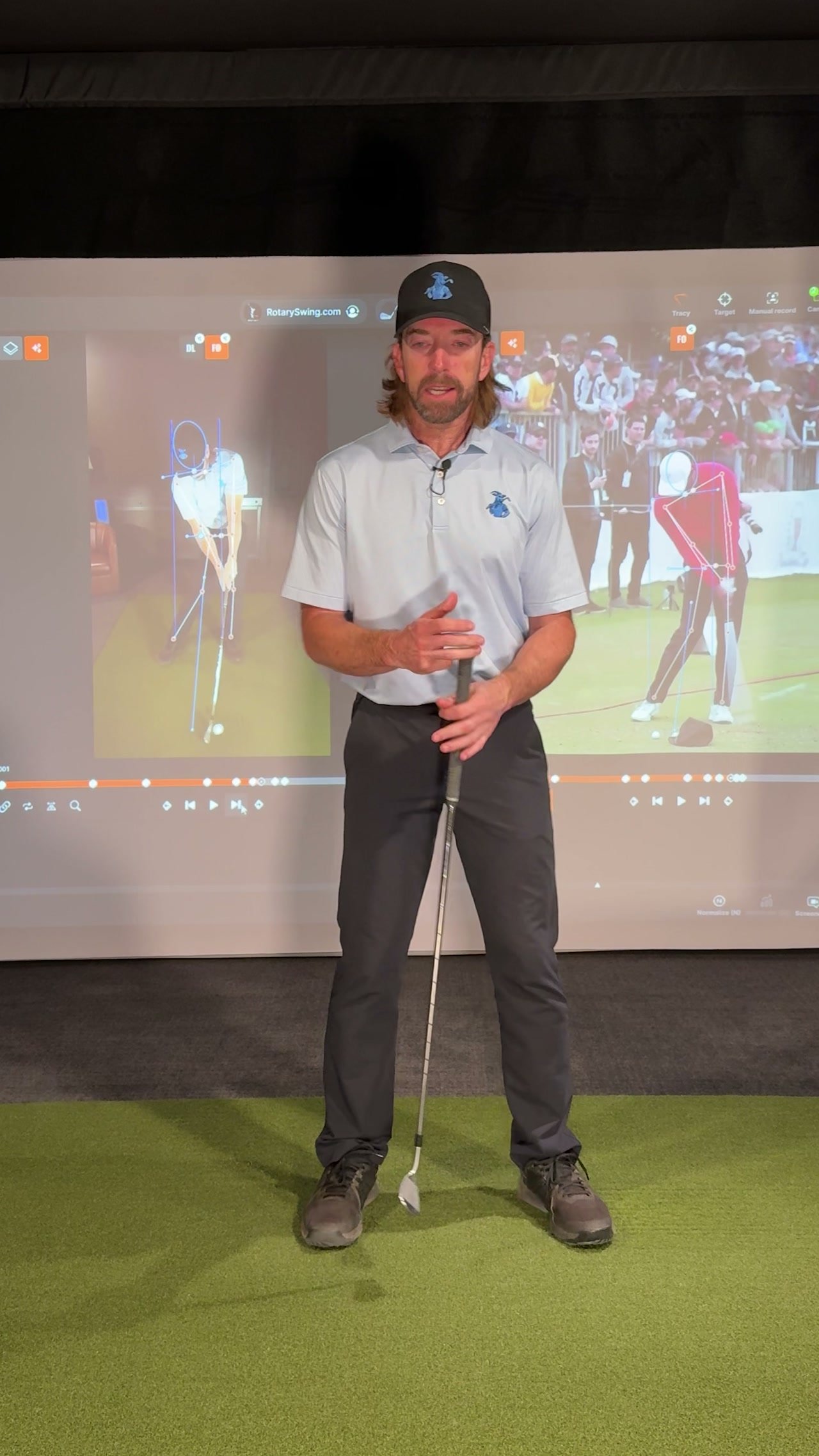
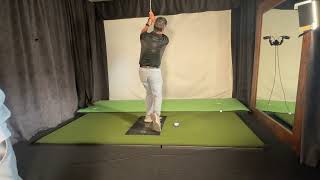
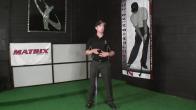
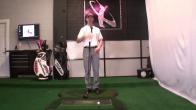
You will notice today, you probably already have, that this is a little bit more zoomed in than it has been, and that's because what you don't see behind this camera right now, is I had a flood.
And so that wall and the floor isn't there.
And you can't see that, but everything has been moved forward.
So that's why I'm a little bit more up close and personal today.
And that's about all I got.
So I hope everybody's doing well.
Everybody got this goat swing down?
You should have it down by now.
Got all the movements down.
Using the core, release, all the fun stuff.
I figured with all these webinars, I mean, you should have this down by now.
You don't need me anymore.
Ticker's still kind of going up.
So what's going on out there in the world?
How's everybody doing with their golf?
Anybody got any questions or anything they want to say before I get this thing going?
Yeah, Let's see, is that a mirror behind you?
Yes, That is a mirror behind me right here, and I've got you can't see it.
But I've got one that same size right here.
So it allows me, if I aim this way, because of, the, you know, the rubber floor right here.
When my desk isn't within Club Link, I can see myself from face on and down the line as I'm doing my motion.
So kind of check both views.
It comes in handy, I'll tell you that.
It's even like right here, I can check and see all my motions.
And I still, still to this day will tell you, this is the number one swinging right here.
I'm sure you got one of those somewhere in your house.
And if you'd use that or, you know, if you have some of blue painter's tape or anything like that, I'm telling you.
Let's see.
Kim, we still need you.
Well, thank you.
I appreciate that.
Would you say the goat swing is really a pull from the left while also throwing from the right?
It's a combination of push and pull.
I mean, the vast majority of the drive, it's still a trail-sided driving swing, but there's still pull on this side.
So it's kind of like, and I think that was actually a question on one of the things I'll get to tonight.
it's the same thing as if I'm moving into my downswing.
Let's just use the legs, for instance.
I'm using both legs, all right?
I'm driving my trail leg into my lead leg, so I'm getting my vertical force from here, but I'm also using my trail side to speed up to clear that hip.
So when you say pull from the left in a goat swing, remember, you're not trying to power it.
With your arm, you're not pulling it with your arm.
Okay, so I'm not trying to yank this and push this.
At the same time, I'm trying to drive my trail side and allows my lead side.
As Chuck was talking about, like a serratus and stuff right here.
My lead hip are pulling that way.
But I don't want you to think that you're pulling the arm, you're never trying to take the arm and yank it down.
I see that all too often, where players are trying to power it with their arm.
They're like, I don't understand why I don't have any juice.
And I'm like, it's because all your speed is coming from your arm.
That's what happened with a lot of people when they were training lead side pattern is instead of after learning how to release the club, they would get here and they would start pulling their arm like this hard.
And they'd be like, well, Craig, I can kind of hit straight, but it's not going anywhere.
I'm like, because you're not using the power source.
I'm using my weight and my hip to help sling this into impact.
Kind of like the throwing of the Frisbee analogy is probably the best.
If you have a Frisbee and you're going to throw a Frisbee, would you throw the Frisbee by yanking your arm like that?
I could get speed out of that.
Might be hard to time the accuracy of the throw.
But my arm, as I'm throwing a Frisbee, I'm allowing it to be moved and propelled by my body, just enough tension in it so I maintain structure and it's being propelled by my body until I let it go.
It's not the arm that's doing it.
That's just something that I see way too often is that players are trying to power it with their arms.
I'll give you about 30 more seconds and we'll get going.
Is it being propelled by the hips or the torso?
Both.
The hips, you have to think about, you know, all these things are working.
The hips are really what's driving, but the torso is working right here.
You don't want to try to power it with the torso solely.
And what I'm saying is don't try to rotate your torso as hard as you can, all right?
It's really the hips that are driving to kind of make all the.
The magic happened because the hips are moving this way and then back up this way as you have your oblique clearing right here.
Let's see.
No Mountain Dew.
No, Tom, believe me, I need it right now.
But I was in such a rush to kind of get this kind of set up because I got a wall cut out right there.
I got the carpet pulled up.
I got all sorts of things.
Torso equals abdomen.
Yeah, I mean, your core, I mean, think about it this way, Paul.
And then I'm going to get started with the questions.
Think about it this way.
You know, when you work on your short game and all that, your core and all that's directing the motion, you know, the body's kind of the engine of the swing.
But as I'm starting to move through here, I'm not just trying to rotate my torso as fast as I can.
I can drop, I can get my hips.
And my posture, it's my hips that are really kind of driving that motion right there.
This is still engaged.
It's still working.
But I can pull like that, and my hips don't drive.
Now, I can use my legs and my torso to clear, and I can really get some space right there.
Alexander, why is compression difficult with goat grip?
Seems to promote thinning or flipping.
If you're thinning or flipping it with goat grip, then what you're doing is as you're coming down, you're trying to power it with that hand.
I guarantee you don't have enough rotation to maintain the supination because as you start to come down, that rotation and the supination motion will help you maintain the proper radial deviation to get the strike on it.
If you're thin and flipping, you're either trying to power it with your arm or you're trying to power it with your shoulders and you're catching up with your arm.
So with that being said, let's get going.
Let's get going.
Let's see.
Where do I leave off?
You said, uh-oh, you used to be trail side before rotary swing.
Yes, I was trail side before rotary.
What differences are there in what you were taught then and how rotary swing teaches trail side now out of curiosity?
Well, there was a lot.
But I'll kind of hit the high points on it.
The big thing that I think people start to kind of misconstrued with the trail side swing.
And how I was taught, and why my shoulder is completely shot.
And vice versa is as you come down, I was taught the trail side pattern of taking my trail side, my shoulder, my chest, my upper half, my hips.
And driving it down into the ground, essentially basically driving down and then holding off on the club through the shot.
You've probably seen a lot on YouTube, or just in instruction in general, where they tell you to get down here and have that big swing left.
That's essentially what I was doing is.
I had a big swing left and I was holding off on it for dear life, because that's I was taught.
That release, letting the club rotate was bad.
That's going to yield, hook, that's going to yield, You know, all the worst things that you could possibly imagine.
And so when I was taught trailside, I was taught to drive my body as hard as I can and my right shoulder down and through the shot and don't let the face rotate.
Now, other than completely shredding my shoulder, I was powerful.
I'll give it that.
I was powerful, but my accuracy was absolutely dreadful with the driver.
You know, I'd hit one great, awesome next one.
I feel I can make the same motion four counties over to the right.
So, Until I understood the principle of how the club is supposed to release, or just not even understanding the physics of the release.
I couldn't take care of my accuracy problem.
That's the difference of the way that the trail side of how we teach it.
Okay, when we think of a trail side pattern or goat pattern We're still going with the nature of the golf club.
We're still, we're not fighting the physics of it.
Like when you think of the supination and deviation, all that working down, we're still allowing the club to release.
Like you still want your forearms and hands.
You're still going to have a release through because all that energy has to go somewhere.
And you don't have to get down here and have that 90 degree open hip feel motioning down into here.
The big difference is as we're doing it, we're following the principles that, well, you don't have to have your hips 90 degrees open.
You're not trying to hold it off.
You're not trying to swing left.
You still want the club to be able to snap.
It's not the perfect visual, but in some reviews, I always show people like Freddie Couples because you see how in the simplicity in his swing where, you know, he's just kind of going up.
Coming down, but you see how there's a snap down there and a lot of golf instruction tells you that there is no snap.
That you don't want to let the club rotate.
Which couldn't be any further from the truth.
Uh, so the biggest difference of what I did is in the 90s, it was say, don't, don't, don't do anything with that face, don't, don't let it rotate.
Rotation's bad well once you start letting it rotate.
And you combine it with the fact that you don't have to have your hips 90 degrees open to the target.
Because that's not how a proper vertical post is done.
Kind of makes golf a little bit easier.
Hurts your shoulder less too.
All right.
Question number two.
On the Fast Eddie video Chuck did where he talks about the feeling like he throws the head backwards towards the camera.
It looks like he uses his arm to do that and not just his wrist.
Is that supposed to be done with just the wrist?
Well, the big thing with that throwing motion, and if you're on here tonight, I'm assuming the one where Chuck's working on his long drive, and he's like, hey, when I get up here to the top, I feel like I'm throwing that club straight at the television behind me as I'm driving this way.
He's not throwing it with his arm, all right?
you don't power the swing with your arms, period, flat out, no debate, okay?
The throwing pattern, does the arm and all that get involved?
Absolutely, okay?
But let's think about this.
When I'm throwing, what's kind of the first couple things that happens?
Well, I start to step forward as I'm rearing back, which kind of creates a lot of tension.
And as I start to go this way, what happens as I'm moving laterally?
Well, my arm, starts to come with me with my lateral and rotational motion.
This kind of goes back to what Jack said.
As long as you're moving laterally towards the target, you can feel throwing it as hard as you can.
As soon as you stop doing that, if I didn't move laterally and I just started throwing, yeah, I would probably get into a cast and I'd start hitting it behind it.
But as long as I'm moving this way, that's why I think the throw is the best.
As long as I'm moving this way, I can feel I'm throwing it as hard as I can.
And it's still gonna be with me.
Because, Think about if I'm gonna have hard driving, fast tips and a lot of speed.
I don't want to have, I want to, I want to use that and take advantage of the width.
All right, I don't want to narrow things down and have this really sharp angle, I somehow have to time as I get rid of it.
I want to take advantage of this wide arc.
And the wider that I can kind of keep that right there, the harder I can still kind of drive right here Now, I think one of the biggest misconceptions is that players took that from Chuck's video.
Where did my club go?
Took that from Chuck's video, and they're like, oh, I can just cast.
And yes, Kurt, Ballard said that too.
Oh, Chuck's just telling me just to cast it at the top.
No, Chuck is still.
If you think about the thumb button on the side of the club, the club is still supinating.
The throwing motion is being started or is being controlled, worked by that thumb button, feeling that little boop.
It's right here, feeling that little boop, boop.
And so he feels like he's throwing it that way, but you don't see me steepening the pitch of the shaft or just straight casting.
It's still a supination.
Throw motion because, look at, look at the plane of my shaft.
Right now, it's not going like this.
That would be a cast.
I'm still.
I'm doing the thumb button.
So that when I get down here, as long as I keep moving this way, I can swing as hard as I want.
Now, this has nothing to do with anything.
But I just realized as I went through, I'm a lot closer to this than I usually am.
So, um, That kind of just got me.
But the throwing motion is still this button with the supination.
Okay.
So it's not a cast.
It's a throw.
You still want, as we talked about a few webinars ago, it's still this kind of go to action release where it's supinating, deviating, pronating.
It's just up here.
If you're going to go and you're going to move laterally and you're going to drive your hips and arms and hands hard, you got to get that puppy going.
Because if we think about the dynamics of the golf swing, where are you going to max out in hand speed?
Like when you look at it, is the hand speed down here?
Is it right here?
Well, and the best players in the world, you're going to see they're maxing out their hand speed between here and here.
Because you've got to get it going so that you can decel it down here to transfer that speed to the club head.
If I'm still picking up speed down here, like if I'm trying to accelerate my arm, I'm trying to accelerate my wrist.
As I'm down here through the hitting area, I'm never gonna be able to take advantage of all that speed.
All right, so hopefully that answers the question.
When you want to add more speed or step into one in a trail side pattern.
And are not so much the squish the bug release When you want to add speed and not so much to squish the bug release, how do you add speed without not getting into GDP or passing through it, as you would say?
You're going to pass through GDP, period.
If you're not passing through GDP, you need to come see me or somebody.
Because you have to move through GDP.
There's no point in trying to have a ton of speed, and by the time you get to here, your arm's out to your side and you have no angle.
So you're going to have to move through GDP, period.
But is it literally feeling like you throw harder with your wrist after you get into GDP?
That throw and that snap, the feeling of that happens much, much sooner.
But if you're not a squish the bug, which all the squish the bug is saying is that you're adding more from this side, which you kind of have to do in a trail side pattern.
I mean, it's kind of a little bit of the gas pedal.
But if you're wanting to get a little bit more snap, you know, kind of without.
adding that little bit of that component, which is going to be kind of tough without adding a little bit of the right side right there.
What I would focus on is that you technically feel like you're going to throw it harder from the top, the button move, but I'd really work hard on how you're using your lead leg.
I think it was the club head whip effect video.
Where Chuck talks about all he does from here is he thinks about this and then snapping his left leg.
If you do that, you won't have to add so much from this.
Just know that you're limiting yourself.
You can get more speed that way, you get that cleaner post.
Get it feeling like you're throwing harder from the top, and you get that vertical motion correct.
Like you're whipping that behind you, you're going to get more speed.
The problem is, I like to be efficient, all right, And if I want a little bit more speed, then just adding a little bit more trail side drive right here into my lead leg, I don't have to be like Justin Thomas, but I can get a little bit more initially like this and still have counter torquing.
My foot's going to be here instead of here.
Just that little bit of just.
That's going to give you.
more potential speed.
But if you don't want to squish the bug and push a lot off that foot, then I would focus on feeling like you're throwing harder from your wrist, but make sure you're moving laterally, but really work on that feeling of how this left leg, left hip kind of snapped back because you're going to need an efficient brace to be able to do something with all that wrist action coming down.
All right.
Hey, Craig.
Howdy.
I'm working on trading the lead arm and trail hands separately and then using both to blend the feels.
Love it.
Do you have any tips or progressions for all three?
Lead arm is pretty rough, so I'm starting very small, but even with small swings impacts a mystery.
Okay.
Well, lead arm, I would say the most common thing that I see is a little bit of what I alluded to earlier, is that I like players working on both sides.
It's kind of like if you're a right -hander and you swing left-handed, just to kind of work the other set of muscles.
But as you're going through it, and I know who this individual is now, it pops in my head, that's working on left arm and right arm and then adding both.
I love that because you learn what real muscles are kind of powering the swing.
So let's take left arm, for example.
The biggest problem that I see.
When players are working on like the newer video, how the goats train their lead arm or they're working on little small left arm shots, it goes back to the pulling of the arm.
When I'm winding this back or I'm doing even the step drill where you're here and then coming down.
I saw one today, not calling out the person, but I saw one today that was sitting here doing the lead arm version.
And as the player would start to come down.
Their chest and everything would rotate through the shot like this, which would delay the release of the club.
The most common thing that I see is that players, when they're doing the lead arm version, are trying to hit the ball too far.
That's not the point.
You only have one hand on the club.
I don't care how far you hit it.
What I care about is the efficiency of it, is that this arm is feeling relatively dead to you.
Okay.
And you're feeling how moving your pressures and moving your hip is kind of speeding up this pendulum action.
So see, my arm's just swinging like a pendulum right here.
Like I could literally do this for an hour and I get tired because I'm just letting the weight of the club kind of go back and forth.
But then I start feeling how the weight and being dynamic with how I drive my hips allows this to snap better.
So what I see more players often than not, they don't move their body.
They rip the arm down.
They haven't done anything yet.
And now they move their body through, which the club hasn't released.
Now your contact is going to be terrible.
Soften that up.
Trail side.
What I see is because this arm is very trained for most people is that they go up here towards the top.
They actually start to make a good pivot coming down because it mimics a throwing motion.
And then they go like this.
Because they have the feel of the club and they immediately just start squaring it up.
They get here and they're like, the whole point of this is to understand how I'm going to move without having to move this.
So when I'm making little trail arm only swings and I'm starting to pivot, I'm learning how my trail side is driving.
You can see the width right here that I have.
How I move me.
To get me up here into impact, I haven't done this yet, I haven't done anything with trying to square up the club.
I've literally felt it like it was like this the whole time and then pivoted my body around.
Look at my club face, it's dead square.
I haven't rotated at all yet.
That would be the problem that I see when people are doing it.
Trail hand only is that they get here and they're like, Oh, I can do this.
And they go back to powering it with the arm versus getting here.
And I'm moving my body to get me into position, not this.
I see that all the time with people doing trail handling.
Now blending them both, The lead arm taught you how this kind of felt like a pendulum.
And your lead side helped you have that little bit of pull to the question of the guy earlier that you feel a little pull from that side.
This side teaches you how to trail side helps speed everything up and drives you into impact.
Well, now as you add both arms to the equation, what have you just learned?
That the arms don't do anything.
The arms, they're here.
I just did left arm only.
It wasn't supposed to do anything.
I just did right arm only.
It wasn't supposed to do anything.
So now when I start blending the two, I'm trying to feel the same thing, that my weight's going back, my arms and hands really aren't doing anything.
I feel the supination in my trail.
I feel the pronation in my lead right here, and I'm just going through my check markers of getting it back and letting my body, my legs, pivot into impact.
So if we think about the progression, we think about trying to use those as like a stepping stone to get both hands on the club.
Understand why you're doing that.
Okay, understand why I might have somebody do that.
It's because I need them to get the sense that these guys right here are just conduits, all right?
The arm doesn't produce any power.
It can, but that's also, you know, Anthony, one of our other instructors, he probably had a swing review with him.
And Chuck, you know, when we talk about all these things.
We see this all the time.
Players get capped out on speed.
I can't tell you how many lessons, how many everybody.
It's like, Craig, I'm capped out at 90 miles an hour.
I'm capped out at 92 miles an hour.
Or even, you know, Anthony or somebody will say like, hey, this person came in, same thing.
And what do we see over and over and over again?
They're just powering it with their arms.
When I'm like, literally, if we just made these two rods.
Like, connected you to where you couldn't move these, and we forced you to move your body correctly.
And just allow for a little bit of hands.
You'd be like, Oh, how do I get much more speed in that?
And it's it's just, it's human nature.
We, we have these things, especially as we grow older.
But it's also why, you know, in my unlimited group, I got a nine-year-old that hits it 220 yards and he's this big.
His arms are about this big around, but it's because he understands how to, I mean, he does all his footwork the way that, but it's because he moves himself because he knows he can't get it from his arms.
All right.
So as you're going through the progression, if you're going to use solo arms, understand the whole point.
It's to stop trying to use your arms in your golf swing.
The more you use your arms, the more you're going to have to come get a swing review, get a lesson, visit a webinar.
If you get those guys out, you're going to be a much happier camper, I promise you.
That's why we start with the short game.
Because that's the very first thing that you learn is how to swing without shoving your arm all over the place.
And that just keeps building and building and building.
Where you learn how your engine is doing everything.
Not these guys.
I can manufacture any position.
Doesn't mean that I'm going to go very far, but I can manufacture with arms.
All right.
Somebody on the range told me that I, in the backswing, had my right elbow too close to my body, making the backswing restricted with not enough width.
Is this a well-known problem that needs to be fixed, and how?
Is the right arm being restricted in the backswing a well-known problem and not enough width?
100%.
A lot of that started with the glove drill and the towel under the armpits drill.
I was even taught that.
Where players are taught to tuck in their shirt sleeves or take a glove or take a towel, just as I was talking about the arms, and swing like that.
But the problem is.
If this arm isn't allowed to move, you can't create any elevation.
You can get width doing that, but you can't get any elevation.
If you look at gears, for some of you that don't know what gears is, it's basically the track man for your golf swing.
It tells you all the points that you're doing, where the club is, where your body is, and you can kind of compare yourself to pros and all that.
It puts you in a bunch of dots and stuff.
I've done it.
You look really funny.
You look like you're doing CGI for Marvel or something.
But if you look at like the data on there, you'll see that players, their trail arm has elevation and it does start to move up in the backswing.
And so when you restrict yourself like this, that's not what the best players in the world do.
The best player in the world is allow their right arm to move up and down.
And, you know, you look at a lot of them, they kind of get a little bit more like this and they get a little bit more like this.
And that's why when Chuck talked about that scapula motion, like letting the scap come up, as the scap starts to go up, that allows you to get this kind of higher and wider and bigger arc.
And so when you start to get an extension, it helps out with shifting back towards the lead side with it.
So what I would do, if I were you, first, you got to keep your right arm straight.
Well, how do you keep your right arm straight?
You keep your right arm straight by moving your body.
All right.
So if I learn how to shift and rotate, I don't have to bend my arm.
But the simplest thing to do is grab.
I think I lost all my all my stuff in the flood.
Let's hold on a second.
Found it.
All right.
What I would do is just grab a ball.
All right.
Don't know if it'll bounce, but grab a ball.
And imagine you were going to throw something, all right?
Like you're going to be a major league pitcher.
And just rear back.
What did your arm do?
Is it up?
Is it wide?
Is it not glued to your side?
If I was going to rear back and throw, you can feel how you get some separation.
You get some height with this.
Now do the same thing in a golf stance.
Just let it wind back.
That wouldn't feel very powerful, would it?
If you just glued your arm to your side and did that or letting your arm kind of go up, this is an extreme, but you need to start getting trusting of the feel of letting your arm kind of get some depth to it, get some height to it.
Keep this arm straight, move your body, let it swing up, feel the scapula kind of move up a little bit instead of it staying so glued down that your arm can't go anywhere.
Width is very important.
For me, being a lead sider, it is of the utmost importance because that's where I get a lot of my speed from is maintaining my width.
All right.
What is the importance of having a 104 -degree angle in the right-legged setup and at the top and combine this with side bend in the backswing?
How important is what we do in the backswing for our downswing will it be?
Well, the importance of that angle, you know, when we talk about fascial stretching and loading, to make sure I answer the whole question, right leg gets set up and at the top and combine this with side of it.
Because when we talk about the fascial stretch and loading, when you get that 104 degree angle as you go this way, this helps you elongate the muscles.
like Chuck showed you in the webinar, like that kind of, you know, he called it like the Instagram kick out where you kind of get here and kind of swing up to get these muscles engaged right here.
Keeping that angle allows you to get this proper internal femur rotation and to get the hip depth so you can maximize your fascial stretch right here.
And so when you do that and you start to rotate against the leg right there, The scap can come up into extension so that when you start, if you watch what happens, when I start to go this way, having that angle, I'm using this term loosely, helps you kind of preset getting your pressure back this way.
All right.
So when you maintain that angle, it's helping you maximize that stretch.
But you'll see as I start to finish, what direction are my hips going right now?
You'll see a very subtle motion.
So I go here.
You see how my hips start going?
Because it's helping me kind of max out, and then my hips naturally want to start to move back towards the lead side so that I can get my pressure back soon, and I can really start driving down in the downswing.
So the importance of the angle is to maximize our stretch, but to also.
Get us in the correct position to start making that pressure shift back correctly in the downswing and a little bit more automatic.
Players have an insanely hard time with the transition portion.
All right.
They just do it.
And I understand.
I mean, but they have an insanely hard time of going this direction and now going this direction.
They don't realize, like what we taught in Axiom, it's one motion.
That as I go on my backswing, I'm actually starting to shift my pressure back this way and then rotate open to right here.
This is all one kind of motion.
It's not a segmented motion.
If you're struggling with getting your pressure shift back, you're probably doing it incorrectly in the backswing because that kind of presets you doing that correctly without having to think about it.
So that's why that's so important is because it makes the swing one.
If I could, you know, summarize it.
At the simplest point, that angle and keeping that is so important to make you have a one movement golf swing versus things feeling so segmented.
I got to shift over here.
Okay, now, let me get my weight back over here, now, let me do this.
It helps it kind of preset how you move your pressures and how your pelvis rotates back to the lead side.
What can turn an out-to-in swing arc into an in-to-out?
Supination.
We know this, people.
If I'm here and I'm supinating, if I'm right-handed and I'm moving clockwise from my perspective, from your perspective, it's going counterclockwise.
But if I'm going here and I'm going 12 o'clock, 1 o'clock, 2 o'clock, 3 o'clock.
If I'm supinating, moving in the clockwise direction as I'm moving laterally, you probably can't see because you can't see my right foot, but I'm moving laterally as I'm doing that.
The lateral motion combined with the supination allow me, I mean if I wanted to, to throw as hard out to right field as I possibly could.
How can factors such as supination, clockwise swing motion, staggered stance, and other important points such as this play a role?
Well, the supination has to happen, period, if you're going to have a good swing point.
Period.
Lead side, trail side.
I don't care.
Clockwise motion, that's the supination.
That's the exact same thing.
Now, the staggered stance, I sometimes use this with students.
And so for those of you at home, I'm assuming this is what he's meaning, is taking the trail leg and dropping it back like this so you have a little bit more of a close setup to promote more in-to -out.
That's something that I'll do in a lesson sometimes, especially for players that spin really hard.
And I even have a video on YouTube.
I did, like four years ago for Rotary, where I talk about.
If you take this stance, kind of staggered.
And once you get up here, it's really easy to kind of get your turn.
But you can see where I'm facing right now.
I'm facing this direction.
So once I get up there, if I feel like my hips and my sternum and my chest all stay facing that way, It's going to be very easy for my arms to drop underneath plane and swing out to the right, because it kind of kills excessive steepening and pushing from my right side.
And that's a really good way to get the feeling.
If you look at even like the Bomb Your Driver series, like when I really want to step on a driver, I know my biggest kind of fault is that I'll spin too hard and the club head won't be able to catch up.
So I'll kind of stagger my stance just a little bit.
I'm giving you some insider information here on my game.
I'll stagger my stance just a little bit, almost to where it's not noticeable, like to somebody I'm playing with.
But what that's going to do is allow me to feel.
Like, I'm going to stay closed a little bit longer, so I can really drive my legs harder and stay on that plane.
And really promote a little bit more of that out there and swing path so that I can kind of catch the ball a little bit later, hit a little bit higher, hit a little bit further.
But all those are all the factors that you have to have to have in to out.
You don't have to have a staggered stance.
But this motion, I don't care whether you're Tiger, I don't care whether you're Chuck, I don't care who it is.
If you watch every single player, that's what you're going to see.
Might see varying degrees of it, but that's going to be what you see.
All right.
How is the goat footwork to minimize using muscular power in the swing?
Why is this important is what is gained by it.
What do most golfers do in the wrong way and how to fix it?
Well, I'll go backwards on this one.
What do most golfers do with their footwork?
Most golfers push their hip and leg forward towards the golf ball, and then their lead leg and knee, they externally rotate it this way trying to clear their hips.
So what they tend to do is they tend to early extend and go like this.
I'm exaggerating, but this is what they tend to do is they tend to push really hard off this side, getting that foot way up off the ground too soon, causing their right hip to come in.
And then as they try to post, their pressure gets moving so much towards.
The balls of their feet, that their lead knee starts to externally rotate and they can never post up.
It's kind of like the same syndrome as getting like heavy lead leg.
Like, if you put all your weight over here, it's gonna you gotta work to post up.
That's what I see more often than not, pushing from this, this going that way.
So why is this important?
And what is gained by doing proper footwork?
To minimize using muscular power?
Well, you're still using power from your body.
But it's kind of like I was kidding with Chuck on our little messaging board said Think about a figure skater, all right, that's if I'm like this and I'm nice and wide.
I'm spinning, I'm spinning, I'm spinning.
What happens is I start to tighten up, what happens is I start to bring everything center, I start to speed up.
And so when we think of Going towards the top, now we're using our adductors, ADD, not ABD, adductors, the insides right here, not the outsides, the insides.
As I'm going from here and I'm using my adductors, number one, that helps me pull the weight correctly.
It helps me ensure that I'm moving weight in the right direction, especially if I'm using my left leg right here.
Second thing is, Think about, like the figure skater, all right, it's the only thing I can think of to kind of relate to people.
If I'm nice and wide and now I'm squeezing everything inwards, that's going to be how I'm whoo.
It helps my hip and everything go up, but bringing everything in towards center, that's me going this slow, spinning around and then speeding everything up.
And that's because when I do that, that brings everybody in.
That squeezing of that adduction right there helps me get my proper post up and speed up and throw the club harder.
As soon as I push this way and this knee goes this way, one, you're not going to maximize your vertical force.
Two, this typically right here isn't going to either A, Cause you to get under playing and stuck to where you have to flip.
Or you have to start pushing with your right shoulder and right side to try to get the club to catch up if you want any power with it.
So for less effort, the squeezing of this, that's a lot easier than that.
Once a lot more work produces less.
So hopefully that kind of answers that question.
In the golf swing, it's important to understand that rotation should not be viewed as merely spinning the body around a thousand percent.
You know, it's, we got a great name in rotary swing, but it kind of gives people a false impression that they think like the golf swing is like this kind of in the barrel, in the barrel like this, like very horizontal rotational motion, which RS1 was a little like that.
For those of you who've been around a while, you'll know what RS1 was.
Instead, should focus on creating torque.
Can you explain how to understand the statement and show how to do it correctly?
Well, it's a little bit of what I just showed.
So the rotation is just spinning around.
You don't create power by just rotating horizontally like this.
Like that's not going to do it.
What you're trying to do in the golf swing, or at least in your goat motion right here, you've got to remember that when you hinge forward, everything changes.
So as soon as I hinge forward right here, I've now got this shoulder plane that I'm working on.
My hips are now not rotating flat, but right hip's actually going up, back to square, going back this way.
They kind of work like a U.
And then not only do my hips go like that, And my shoulders go like this on.
My spine.
Now goes from here back into extension as I move into side bend, it now goes into flexion as I go here.
So not to lose the point on the creating torque aspect.
What I'm trying to do is I'm trying to wind and stretch if I'm like this.
And I had a Zoom lesson yesterday where the player was doing the same thing, this right here.
I have no muscle tension, like if I get here and I rotate flat and my hips rotate flat, I don't have any tension.
I don't even have a signal to go the other direction.
But as soon as this hip starts to go internally and up, as soon as my shoulder plane works down and I go back into extension, I can feel something.
Right now, all right.
So I'm winding.
I've got some torque here to use, and now as I start to come down, I've got something I can unwind and fire this.
I have no tension, I have no nothing.
I'm gonna have to use all muscular effort to get back towards the strike on that.
So you want to, I don't want to make this complicated, but you don't want to see the golf swing as such a two-dimensional.
Just this, there's a lot of stuff going on.
That's why, even when Chuck talks about the backspin, he's like, you got a little bit of rotation.
As you're moving this way, then you get a little bit of extension, you get into a little bit of side bend.
Like, you know, your, your body's pretty fascinating when you start breaking this hole down.
But the creating of torque is because you're actually kind of moving like this to stretch versus this.
That doesn't really create anything.
That actually requires a whole lot of effort.
All right.
Connecting to our core, our right hand for power, how does this work?
Show us how to do this and what can we gain from So what's the question?
Connecting to our core.
All right, so my right arm's connected to my core.
How does this work?
And show us what we can gain from it.
Well, I think the punching bag or throwing a punch is basically the best way of kind of picturing that or seeing that.
If I was going to throw a punch, I wouldn't go like this.
Like if I wanted to get knocked out by the guy and want to win the fight, yeah, I would throw a punch like this.
But to my core, what I would do is I would take my core.
and my hips and drive my arms.
So I haven't done anything with my right arm yet, but it's connected to me.
It's not out here flailing in the wind.
All right.
It's connected to me right here.
It's connected to my body so that the driving of my hips and my core is what's transferring that.
So that I can punch through the wall or through the person, whatever we want to look at it.
I'm not doing UFC anytime soon.
So connecting to our core right hand for power, if you were to imagine when you get up here, if you're trying to throw a punch, like if this is a punch, I'm making a golf swing right here, and I wanted to throw a punch at the golf ball, how would I do it?
I wouldn't go like that.
This is the vast majority of golfers.
They get here, they wind up, and they throw their arms this way.
Because that's what they feel they got to do to get power.
Now, even just look at my arm right now.
What's happening?
You can see I'm literally coming over the top.
That's what I see on a daily basis.
All right.
Somebody gets here and they just use their arm.
Well, the point is, is now I have my scapula is moving to the correct position.
My arm is connected to my body.
I haven't done any big flaring or anything crazy like that.
So how am I going to hit this hard?
Is I'm going to think about it like a punch.
I'm going to let my core and my hips.
and everything drive my arm into the punch.
I'm not going to go like this.
So that's how this turns into that.
That.
I haven't done anything with my arm yet.
My arm is, I can, it's all this doing it.
So it's that connection right there that you're motoring.
And I think it was in the, I think it was in the last video.
Chuck said think about as the body is creating power, the hands are creating the speed.
So my body is creating the power into this, and then my hands are delivering the speed by letting it release, which that's the one part that I was told not to do, rounding it back to the earlier question about old trail side, which that's why it's so wear and tear on the body.
Okay?
That's why when I.
Did the old one.
I held on to that.
So where do you think all that energy went?
Instead of being delivered to the club.
All that energy was delivered in the crack.
This didn't like that.
Another way to say it is right hand slaps the wall.
Yeah, that's another way of saying it.
For sure.
So when doing the 4.
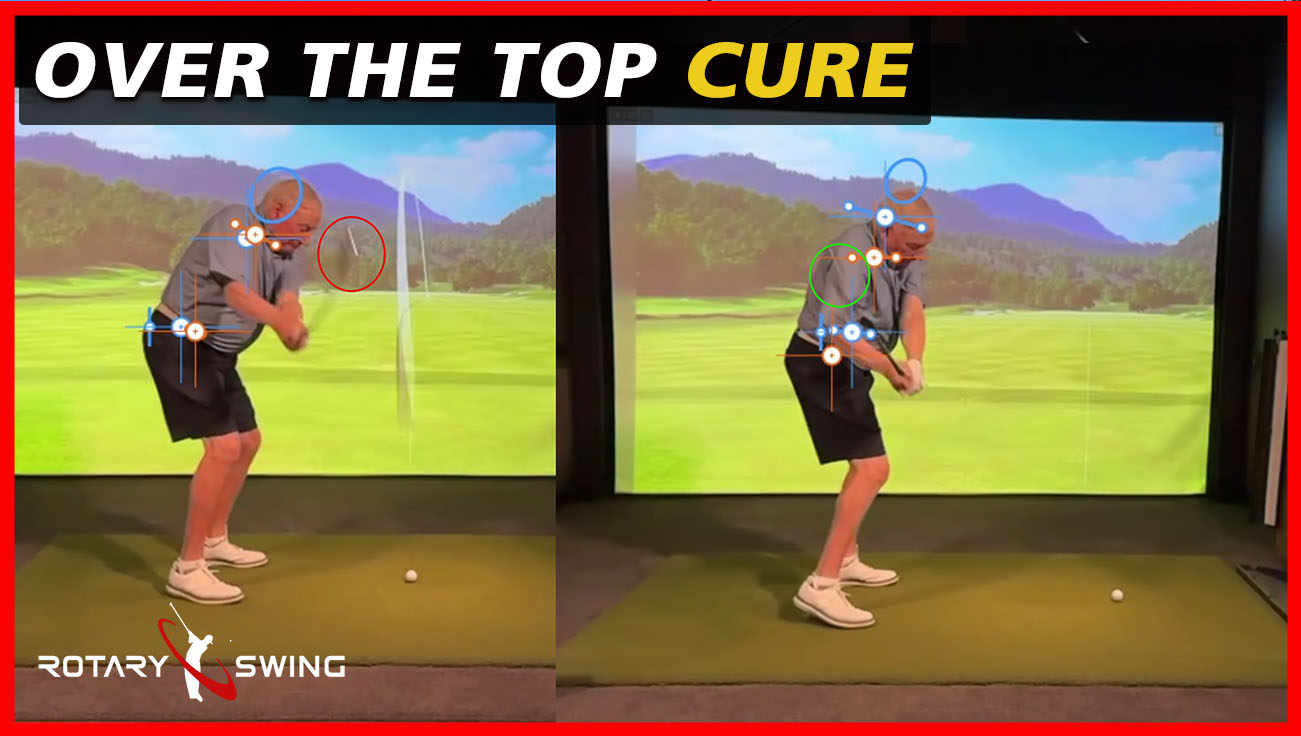
25 instant over the top cure.
Will this affect our ability to tuck the right elbow into our side?
It actually makes it easier, which must be difficult with the straight right arm.
Yeah, but remember, your right arm, when you're straightening it, all right, so Chuck says, I've got to remember, drop, extend, kind of pivot.
The arm's dropping.
It's dropping and extending.
So where's my arm right now relative to my side?
Now, if I got up here and I straightened my arm and then I dropped it, yeah, that's going to be, now I'm going to be a little bit in trouble.
But my arm is going down.
I'm dropping it and extending it.
And now as I'm moving laterally, I'm dropping and extending.
I'm connected right here and have no problem getting into impact in this position.
It would also affect getting into GDP.
It's the easiest way to get into GDP.
It's the easiest way, and I'll show you.
Do we have to choose one or another?
No.
It's the same thing Chuck does in his swing.
Same thing I do in my swing.
Even Tiger, if you, you know, that old, old Golf Talk Live or, you know, most of you have probably seen the clip on YouTube or something or watched it live.
I actually watched it live.
Where he talks about his old ole swing where Butch used to make him get here and stop and then feel.
His arm's getting down because all he wanted to do was, Olay, just push as hard as he could off his right leg, get him trapped under, and have to flip his hands.
Peter Kessler's like, well, so what'd you do?
And he's like, well, the drill that he hated the most is he used to stop at the top, and he would do that.
He'd have to feel his arms essentially dropping and extending before he could fire his body because his body would drive so fast.
Fast that his arms and hands couldn't catch up, kind of what we used to call Tiger stuck.
So the dropping and extending to get into GDP is way easier.
Think of the first part of the Goat drill or the second part of the Goat drill.
So Chuck talks to you about the backswing and getting the backswing position loaded and all that, and what does he say?
As you're moving laterally, arms have to come down, arms have to come down.
So if I'm trying to go from here and I start to pivot and I'm dropping and extending, am I not in?
GDP?
Looks like GDP?
To me, that doesn't mean I'm pulling my arms down or anything like that.
The dropping extend gives me that connection, makes it very easy to get there.
Um, let's see, I'll answer one more, then I'll do a couple questions, I'll mark where I'm at.
Let's see if we've got a short one.
Why should we release after impact?
That seems a bit strange, but probably has a good explanation, which is why would you release before impact?
What's the fastest the club's going to be moving in the golf swing?
It's going to be moving after the bottoming out point.
So after it's been released is going to be when it's the fastest.
But this is the conundrum with the release.
What are my wrist positions at impact?
So when I move into impact and I move up into here, what's my trail wrist in?
Trail wrist is in extension.
What's my lead wrist in?
My lead wrist is in flexion.
As soon as I lose that, other than losing control, everything's already starting to slow down.
I can't add.
When I think of my arms, my arms are conduits.
As soon as this happens, none of the speed that I'm doing with my body is going to be transferred through my hands.
It's already been delivered.
What can be delivered?
So as I move into the impact position, my wrist still has to be an extension if I'm going to transfer the force.
From my legs up through my core, through my shoulders, through my arms to my hands.
Because as soon as I do this, I've now lost that connection.
Anything that I can generate or apply force from from my body is now gone.
That's an old flip move, as soon as I flip, it doesn't matter what I do with my body.
Nothing's going through, but while I'm still an extension right here, that's going to be how I transfer the power now.
Also, it goes into the delofting principle I want to take my six iron and turn it into a four iron.
And so as I start to come down, if I were to release it early, I'm actually going to start adding loft to the club.
I want to de-loft that club into impact and combine it with a little bit of later release.
Because if I take my six iron and turn it into a four iron, and now I can transmit force from my body, I mean, now my six iron is going as far as my four iron.
And so essentially, The release has to be after because you can't transfer any of the speed from here.
You've already lost that connection.
It's kind of like if you're throwing and all of a sudden, as soon as your scapula goes up like this, as soon as your scapula goes this way, I don't have any connection to my spine anymore.
That's why you don't throw a ball this way because my arm's not going to speed.
When I'm connected like this now, I can transfer that force through my arm and hand.
Because my shoulder blades actually now pinned to my spine, which has now created a chain link to my arm and hand.
To deliver speed, same thing with the release, I have to have some angle right here before release.
Not only for the delofting and all that, but because these are the conduits for me to transmit that force.
That would be giving up on it too soon, and that would just basically apply all the speed that I have in my hand to power the ball.
Golf ball wouldn't even care.
All right.
So with that being said, my friends, usually the last couple minutes I like to open up but also say thank you again for joining me on a Wednesday.
I hope you found some of the points in Lightning.
I got a lot more questions, so we will do this again.
Don't worry about it.
So I hope you enjoyed it.
And the last, you know, kind of five, ten minutes, I always like to open up for you newbies in the group to the class.
If you have anything that I talked about, a little more clarification on or just you want to throw in a question or something, happy to do it.
And we'll kind of go from there.
All right.
Sorry, y'all had to be so zoomed in today.
I don't like the camera that much zoomed All right, Tom.
You're welcome, Bob.
Kurt, no problem, Paul.
All right, Mark.
Does your right arm actually extend on the way down?
That is a mystery to me.
Explain more.
What do you mean extend?
Just lose flexion?
Yeah.
I mean, think about it this way.
If my arm was this bent with flexion at the top, I'd never be able to hit a golf ball unless my spine moved down like this.
So the arm drops and extends, all right, so your arm has to start to straighten as you get into impact.
I think a lot of players that really got caught up on lag, they forgot that lag was in the wrist.
And they started trying to do it with their elbow.
Like, Oh, let me jam my elbow into my, that's not lag, in fact, you don't, you don't have lag nor width now.
The LAG is the angle between the forearm and your wrist.
And the club right here.
Okay.
Not this thing.
This has nothing to do with it.
So as I get up here towards the top, I want my trail arm staying straight for the width, but I'm going to add flexion to it as I start to finish here.
So at some point in time, I'm going to have to lose some of that flexion.
So, but just to make it simple, Mark, just think about it like a hammer.
I'm sure you've used a hammer before.
If I got a hammer in my hand and I go back this way, all right, my arm is going to move forward, then I'm going to straighten and then my wrist.
This is the same thing like a golf swing.
You're just getting rid of that lever.
So as this lever goes up here, well, if I want to deploy that lever, I'm going to have to deploy that lever.
I don't want to just keep this lever bent like this all the way into here, or I'm going to have to have a spine angle like this, which some players do.
But that's also why when you watch those extreme side armors that are like, that's the only way to do it is to get, I think I just tore something, but that's the only way to get there.
All right.
So hopefully that helps.
Oh, that was brilliant.
I just came up with that.
So that's how, Chuck and I talk about this all the time.
The vast majority of us figuring out like how to do things is questions from y'all.
And then the hamster every now and then starts to pedal.
And something pops out that makes sense.
All right.
Kim, when do you start to clear the hips and how quickly do you clear the left hip?
Depends.
I mean, if you're a potter or poltergeist, what I call him, he gets into his vertical force almost immediately because he has a ton of leverage.
So if you think about it, if you have a ton of leverage in your swing, the faster you're going to have to get to your vertical force.
Or the clearing, because you're going to have to do something to deliver all that.
All right, if you have a nice little wider arc, you don't have to clear them so much.
But when do you start to clear the hips and how?
I want to be careful with this because it's a feel and real aspect.
Just like, you know, Chuck's feel that he feels he's literally throwing the club into the television behind him.
That's what he feels.
He feels that he's doing that.
My downswing literally feels like this.
It is nowhere even close to that.
So I want to be careful with the feel, but when you think about what happens mechanically, the pressure starts to get back.
My lateral and rotational motion is done by the time my lead arm is parallel to the ground in the downswing.
which means that my vertical force needs to be done by the time that my arm and hand are moving through GDP right here, okay?
So when do you start to clear the hips?
As soon as my pressure gets back right here and my hips get square, which is roughly about lead arm parallel to the ground, I'm getting those puppies out of the way because I need that space right there.
It's a lot of emotions creating the space, and now I'm getting the hips out of the way.
So for me, It literally is just right to here.
Like, as soon as there, I'm already starting to clear that.
But that's the feel for me.
That's what happens mechanically.
That's the feel for me.
And how quickly do you clear the left hip?
It depends on what I'm doing.
Like, if I'm.
You won't be able to see my feet, which really stink.
Well, I don't know.
I've got pretty decent swing play.
We'll test it out.
Half the class is left, so.
If something breaks, I won't be laughed at by everybody.
So if I'm hitting just, I don't know what this is.
This is a pitching wedge.
So if I'm hitting a pitching wedge, like just a nice little stock pitching wedge, I'm going to get up to here, move into here, and move through.
All right?
Up to here, up to here, and move through.
Now to your question is how quickly do you clear the left hip?
Well, if I want to hit my pitching wedge, I'm going to scoot forward just a little bit.
If I want to hit my pitching wedge 150, Then I'm going to get to here, here.
Like my hip's going to clear much faster.
But I don't need it.
It smells like burnt rubber now.
But I don't need to hit my pitching wedge 150 every single time.
All right?
I can.
But I speed it up.
I kind of gas it.
I gas it for kind of how much I need it.
If I don't need to gas it a lot, well, I'm just like a little la la la.
I just got to kind of get it done.
But if I'm going to gas it, I got to get that.
I think that's how I think about it.
Ronald, thanks.
No problem, my friend.
Paul, should you be on your lead ankle at impact?
Yes.
Now, I don't want you on the back of your foot.
Like, I don't want you like this.
But your pressure should be moving towards your heel.
All right, because that's going to be how you get that hip out of the way.
If it's towards your toes like this at impact, you're not going to get your vertical force.
You're probably going to blow out your knee.
So both those are not good.
Charles, repetition is probably somewhat tedious for you, but is most helpful for us.
Thank you for your patience.
Well, thank you, Charles.
I appreciate that.
I mean, that's all golf is, isn't it?
Isn't it just repetition?
I mean, if you guys enjoy this series, I have zero problem doing this.
I enjoy this.
I mean, I actually get to stand up, do some things, chit-chat.
I have zero problem doing this, so I'm glad that you're enjoying this.
But with that being said, that's all golf I mean, for those of you that watch, some of you might have.
If you watch my Journey Back videos after my accident, a lot of the comments that I got from players were, I didn't really realize you practice like that.
No matter how many times they tell people, get your 100 reps in or do this and that, they're like, Craig, you literally sat on the driving range and you went like this, hitting the ball 10 yards for an hour and a half.
In every single shot, you did it like this.
Then you checked your position, said what you did.
And I'm like, yeah, because I want to fix my swing and move on with life.
I don't want to do this again.
It's all about the repetition, getting it down to where I don't have to think about it anymore.
I don't have to think about this at all.
And it's not because I did it for 20 years.
It's because I took a month, I ate my vegetables, able to do it without thinking about it.
So you hearing me over and over again, if this is helpful because it's repetition and it kind of beats it in there, happy to do it, my friend.
But that's what you need to do in your golf swing.
Learn how to be boring.
And the only way to be boring is what?
Just says another thing popping in my head.
How are you going to be boring?
Boring is doing the same thing.
Not the definition of insanity, but boring.
It's doing the same thing over and over again.
Oh, I'm just going to eat.
My plain chicken and my broccoli tonight.
Craig's just going to sit there out on the range and work on his release again tonight, which is why he never has to think about his release ever.
Vijay, thank you.
I appreciate that, my friend.
Tom, is the only time the scapula is connected to the spine is when the arm is in supination?
Yeah, so if you think about.
As you start from here, the scapula is going to move up.
And as you supinate right here, that's going to be that big bony triangle right there goes whammo right into your spine.
Now, in a lead side swing, in a lead side swing, you can keep that spine a little bit more connected going back.
You know, if you look at like Chuck's old swings or even look at like my current swing.
You'll see like, when I get up here, my elbow is really pointed down okay, and my spine already kind of gets con, or my shoulder already gets connected at the top.
Because I'm not really motoring it the same way, lead side and trail side, two different swings, I'm not really motoring it the same way, but in a trail side.
Think about like, throwing this is gonna get, or think about like a Freddy couples or something like it's gonna get wet or daily like way up there.
And as I supinate, That's going to be where I get that connection to now, get that drive.
And that's why the longer this goes this way, the more I have to wait for that reconnection.
That's why for me, my swing is nice and tidy.
I ain't got to wait.
I can go.
Paul, love these.
Awesome.
Manny, 53 in pretty decent shape.
95 to 100 mile an hour driver's speed, but I hit my irons approximately 30 to 50 yards less distance than my buddies.
Well, we'd have to kind of see what's going on, Manny.
If you're hitting it that much less, what I had to imagine is you're not getting the right kind of spin on it.
So like my six iron to four iron talk earlier, you're probably not getting the proper loft to kind of get.
some of that spin off and you're probably just spinning the ball like crazy and it's not really carrying anywhere.
So you're getting too much height on it right there.
So it's kind of weak.
and that's typically what happens with players with irons is that they're, they're like this.
And so, you know, it used to drive my roommate crazy.
So back way, way back in the day, uh, when I was doing the whole golf thing, um, my roommate, six 30, big dude.
All right.
I'm five, nine and a half roughly.
It used to drive him nuts.
He's like, Craig, I'm twice your size.
And back then I was 160.
Not today.
And he's like, Craig, it drives me nuts that you hit your irons two clubs further than me.
And the reason why I hit my irons so far were for literally only two points.
One, I've got a lot of whip.
So for my height, I got really long arms, now I've got a lot of width in my swing.
The second thing is if you look at my impact position when I start to get down into here.
I've got a lot of lean, so I've got a lot of width, merry-go-round aspect, and I've got a lot of lean which is really deal off in the club.
So, you know, my nine iron is really shooting off like a seven iron, and that's free speed and just.
So, that's a really good way to kind of cheat the distance.
But that's what I would imagine is going on.
They bring it up on par 3s.
I'm hitting an 8-iron 130.
Yeah, you have to be adding loft.
You have to be.
I figured I'm checking chat GPT for ideal spin and launch for each club.
Yeah, I mean, that's.
You can kind of use the adage, like, if you're using a 7-iron, you want to be kind of in the 6, 7,000s, like.
You can kind of go almost with the club almost.
All right.
But let us take a look.
I mean, post it on the community, forum, swing review.
I'll tell you why you're not getting the distance out of it.
Take me about two seconds.
Players always ask me, like, you know, how long does it take you to, like, figure out, like, what's going on?
I'm like, I didn't even pull out a camera.
Chuck kidded around, you know, when Chuck and I, you know, when we look at golf swings now, it's literally like looking at code, like the matrix.
It's just ones and zeros.
It's like, all right, that piece is working there, there, there, there.
All right, that's what we got to Glenn, thanks.
I appreciate it.
All right.
Anything else?
The next one I will answer and then I will sign off.
It is a strange day in the world today.
So I'm going to get out of here.
Mark, you're welcome.
That wasn't a question, though.
So I guess everybody's got it answered.
All right, good.
I can go on to other things.
I can go find a nice single malt to climb myself into.
I don't know if tonight's going to be a Scotch or a bourbon night.
I haven't decided.
I don't know if it's bourbon or scotch night.
It feels like a scotch night.
Wednesday, yeah, it feels like a scotch night.
Stanley, one of each.
I got to work tomorrow.
What are you talking about?
I got to work tomorrow.
I got a Zoom lesson in the morning.
Mark, Redemption Ride.
That's a solid call.
I don't have that on me right now, though.
But that's a good call.
So I'll figure out something.
All right, my friends.
It was my pleasure.
We will do this again, and I will continue on with that questions and get your questions into the community.
All right?
Get them in there.
I'll put them.
Think about it this way.
I'll leave you with this.
The longer my question list gets, the more you get to see of me.
Could be a good and bad thing for you all, but that's the way I view it.
Everybody have a good evening.
I will see you all on the next Wednesday session, which will be coming up soon.
Try a free live lesson with GOATY
GOATY, my AI golf coach, watches your swing through your phone camera and coaches every rep. Free, about 20 minutes, no credit card.



Seth
Craig (Certified RST Instructor)