


































































































































































Q-n-A Webinar 23: October 1
Sorry, you need to be a member to access this video.
You Are Just Seconds Away - Become a member here!
Already a member? Log in now


Try a free live lesson with GOATY
GOATY, my AI golf coach, watches your swing through your phone camera and coaches every rep. Free, about 20 minutes, no credit card.
Q-n-A with Craig Morrow, twenty-third webinar, October 1st 2026
All right.
Anybody hear or see me, possibly?
Dennis, Scott, evening.
All right.
Perfect.
Can you hear me?
That's the more important.
Yes.
All right.
All right.
Hey, Ron, Tim.
I'm disappointed.
Mark's not here tonight.
He's always been the first.
Bill, howdy.
How you be tonight?
All right.
Well, welcome everyone.
Good to be back.
All right, for those of you first timers here, I'm RST instructor Craig Morrow.
I will be your humble swing guide tonight for this live Q&A.
As per usual, I'm going to let the room fill in as I see the ticker is still climbing on my end.
And in the meantime, I'll answer some questions, shoot the breeze, see what's going on in the world.
And we've got, I think, four or five from the community page questions that I'll answer.
And then I'll leave it up to the forum and let you all kind of throw in your two cents.
But like right now, I just saw 15 just jump on the screen.
So since it was kind of a late jump in, I will let people pile in.
Now, with that being said, some of you are probably like, well, Craig, you did the last one.
We typically do this the first Wednesday of every month.
Where have you been?
And you'll notice that I'm wearing a golf club.
So I decided, well, I don't know if I decided, but I did some exploratory surgery on my thumb unintentionally.
I figured if I could see my thumb bone, then maybe I could do some.
you know better swinger views understand how anatomy works a little better so i've been on ir i mean i my thumb's been like this for about six weeks so it's really taped up and stuff right now where i actually have a little bit of motion in it so i'm wearing the glove just so if i start bleeding y'all don't see it so with that being said all right well i'm glad everybody can see me and hear me as everybody gets in what's going on in the world what did i miss anything happen Anybody want to talk about life, world, golf, anything, weather?
I'm game for it while we're waiting.
I mean, everybody had about almost seven weeks to get questions in.
I only got five.
come on.
We can do better than that.
I got more faith in you all than that.
No questions about anything?
Stan, what happened to Craig's thumb?
Well, so for the dogs, I get them big bones like this, and then I usually cut them in half.
I've been doing it for a while, and I was cutting the bone, and it snapped instead of.
sawing.
And good thing my mother taught me good cutting techniques when I was young because I did have my fingers tucked in like this.
If the thumb would have been here, I would have been a true trailside golfer.
So I kind of took a gouge right here, right out of my knuckle on my thumb.
Scott, I've got a question, but do you want me to ask it now?
Well, I'm waiting for people to get in.
It just depends on how in-depth it is, Scott.
So if you got something, I'll go ahead and fire it away if you want to throw it Everybody's very quiet tonight.
Probably upset and sad because the Braves lost an extra, like me.
Upset about it.
Big dog?
I've got two dogs.
So I've got a Chihuahua, 7 1⁄2 pounds, and then I've got a Bernadoodle.
It's about 55, 60 pounds.
Let's see.
How about Jackson Koivin at the President's Cup?
I didn't watch it any, Joe, but, man, I mean, I saw him in college, and I kept telling people, I'm like, this kid's going to be something early on.
He's a stick.
He's an absolute stick.
I mean, I know a lot about him being in the Georgia area, Auburn area.
My dad actually went to Auburn, so I kind of followed him a little bit.
And there was actually a question that I saw.
I'm going to say like five minutes before this started about Jackson Koivin.
So we will talk about Koivin.
Bill Davidson.
Okay.
How about review transition, backswing, stretching faster, getting weight shift going?
That's a pretty loaded question, Bill.
Review transition from backswing, stretching.
We'll talk.
There's a question on that.
So if I don't answer it, we'll come back to that one, Bill.
Because I think that's one of the big things.
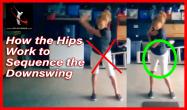
I seem to have issues with getting my lead hip around on time and fully.
Scott, not knowing what your swing looks like, a lot of the time when I see people, they can't get their hip around fully.
It's because they haven't hit the break soon enough.
All right.
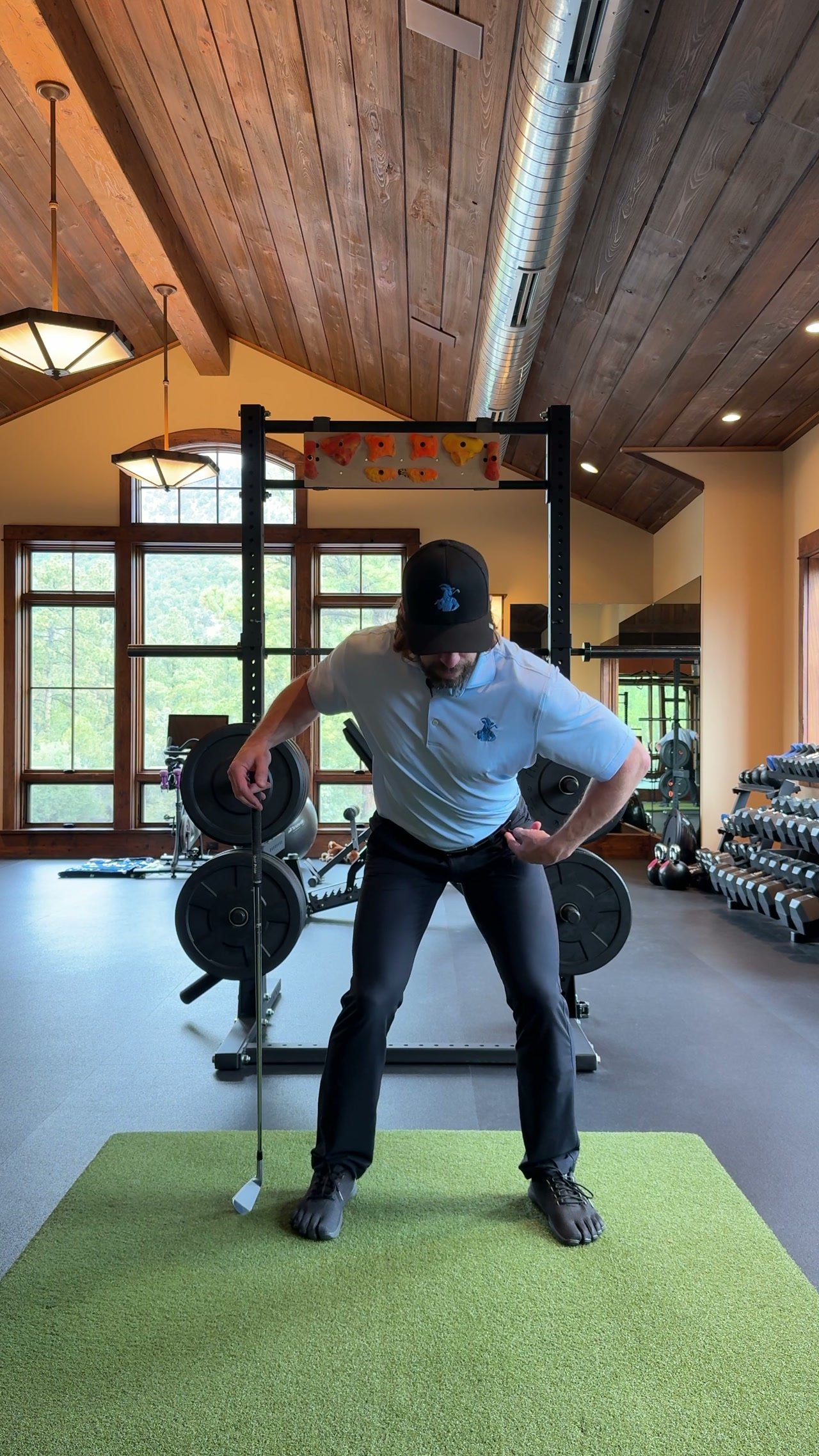
It's typically because they're either still pushing from this side too much and they can't get this leg to post up or when they start to come down.
They're they're gassing everything from the top instead of bracing and hitting into a post, like, they're they're still trying to do something.
After I transition right here, I'm actually trying to get away from that golf ball and that's a lot of the.
Why I see people don't post is because either a their arms and hands or hip are still pushing.
Now, let's think about it if I'm still moving this way.
This leg's never going to post up now if I plan it and I can post up like this all day long.
So it's typically because you're still pushing from something, whether it be arm, hip, foot, and you're not giving yourself the ability to be like, okay, I've already transitioned.
Now it's time for me to hit the afterburners and get that hip going behind me.
So I need to see it, but that's typically the number one issue.
Dennis, a what-a-doodle?
Burn-a-doodle.
So Bernie's Mountain Dog doodle.
So black and white and brown, kind of looks like a s'more.
And one of my students, for anybody that's done swinger views with me, you've seen my dogs.
And so one of my students commonly refers to the two dogs as killer and monster.
So killer the chihuahua, monster the Bernadette.
Jonathan, does the feeling of the lead knee open towards the target when beginning the downswing help getting the hip around?
Absolutely.
So one of the first things that happens is this lead knee has to get externally rotated and stacked so you can get this hip around.
I see this a lot, and I'm going to show you two different ways it's going to kind of break it.
Number one, players get to here and they start pushing with their hip and their knee stays this way and their hip gets out ahead of their knee like this.
And now they can't get their hip around in time because the downswing happens so fast.
The second thing is, is they work on their, okay, I'm good.
And they get into this closed hip slide.
Now they definitely can't do it.
All right.
So it's one, they're either restricting it.
Two, they get too much into a closed hip slide.
Now, as a side note, there is a law of diminishing returns.
I don't want this knee going like this.
That is a death move, not only if you care about your ACL and MCL, but in getting proper posting.
If you get too much external knee rotation, then you change your primary balancing socket from your hip to your knee, and now you're just down here looking like Elvis.
I don't know if he was a good golfer or not, but I'm going to bet that he wasn't the best.
Not common in Australia.
Yeah, it's a great dog, though.
I mean, her heart's bigger than her head.
She's still super smart.
I mean, she's three years old, and she just flops around all day like, I don't know what's going on.
I've seen it not caring it was in the way of your demos.
The Chihuahua or the Bernadoodle?
The Chihuahua just sits back there and is like, yeah, I've heard them talk about this before.
She knows more about the golf swing than I do by this point.
I mean, she's been sitting in the back of my review since RST 5-step.
So, Bernadouille Chihuahua is too small to get in the way.
You would think that that may be not a problem, but it happens more often than you think.
All right, so without further ado, I think we're going to have all the people that we're going to get.
So let's get rocking and rolling.
And I didn't get to print it out because I didn't have time.
So you're going to see me walk up to the computer back and forth.
And Joe, I will talk about that one.
Just hang on on that one.
Let me get these community questions and I'll come back to that.
I want to get the people that submitted in first on this.
Okay, so, hey Craig, for the live Q&A, when asking Gody a chat question about setup, especially preloading, the lead hip, I got this reply.
Before the club moves in place, your lead hip slightly away from the target, roughly an inch towards your trail side.
You're not sliding during the swing, you're simply setting the framework for the lead hip to load down.
Can you please clarify what this means?
compared to the leaning on the fence.
That's more for drilling purposes when you're kind of working on the unifying motion.
All right, because you actually don't want to bump your hip this way, but I'll show you in a second.
If any of this doesn't make any sense, can you describe the correct feeling at setup?
It's not a weight lean or a hip bump, just confused on preset into the lead side.
Thanks for everything you do.
Well, I appreciate that very much.
Good evening, Charles.
So the question on the table is, Goaty told the player, At the hip, it's a feel like this and then kind of get everything going, you know, kind of pre-setting up that way.
Now, that's good for kind of drilling purposes because what we've seen on our end, or I've definitely seen on our end, is we talk about the lateral and the rotational and what we need to do to get the backswing going.
And what I see more often than not is when players try to get their weight because they exaggerated it first, no problem.
This hip starts breaking too much this way.
Now, this is a.
It's not a death move, but it's a very unrecoverable move, okay?
So when you're getting this load into this side, I, Craig, don't want to see a massive lateral motion like this.
Remember, if I'm standing right here like this 50-50, how much do I really need to move to put 80% on my right leg?
All right, 80.
So I don't need this big lateral sway off the ball to kind of get things going.
It's good in training if you struggle with weight and posting up and all these things.
But in the actual swing, when we get set up here, you're going to be a little bit more 60-40 lead side to trail side right here.
And when you start to move laterally, this is kind of the feeling that you need to think about is you're really kind of posting up into this side.
So I don't want to see the hip.
Sway this way if I'm kind of 60, 40 right here in the setup.
And I'm really focusing on getting into that hip right now.
As I'm doing this, I mean, I've already shifted all the weight, I'm going to shift all right.
And it wasn't because I had this big lateral sway, it's because I'm driving everything from this hip right here.
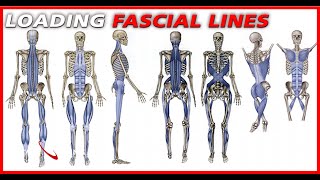
You know, if I'm using the fascial lines and working everything up right here?
And this is why I've always told students it kind of feels like a post-up.
Like, I'm posting up into this leg.
Because I feel like I'm starting to kind of pull leverage from the ground and drive my hip deep right here and I feel loaded and coiled.
But I didn't feel like this big lateral sway.
So when you're doing this to start out with, it may feel like this, but it should look like this.
Like you're not really going anywhere over here.
Like, if you had the old, you know, Hogan umbrella right here, I shouldn't get here and then just shove that umbrella this way.
Don't get too caught up with the setup issue.
Just make sure that when you're right here, most players are going to need to feel a little bit more on their lead side than trail, not too much axis tilt right here.
And then as they start to go back, it's going to feel almost like you're kind of launching from that hip.
And that's going to keep you from breaking laterally too much this way.
Wrong page.
All right.
Hi, Craig.
Howdy.
I was looking carefully at some videos I uploaded for Goaty and human swing reviews.
I appreciate that.
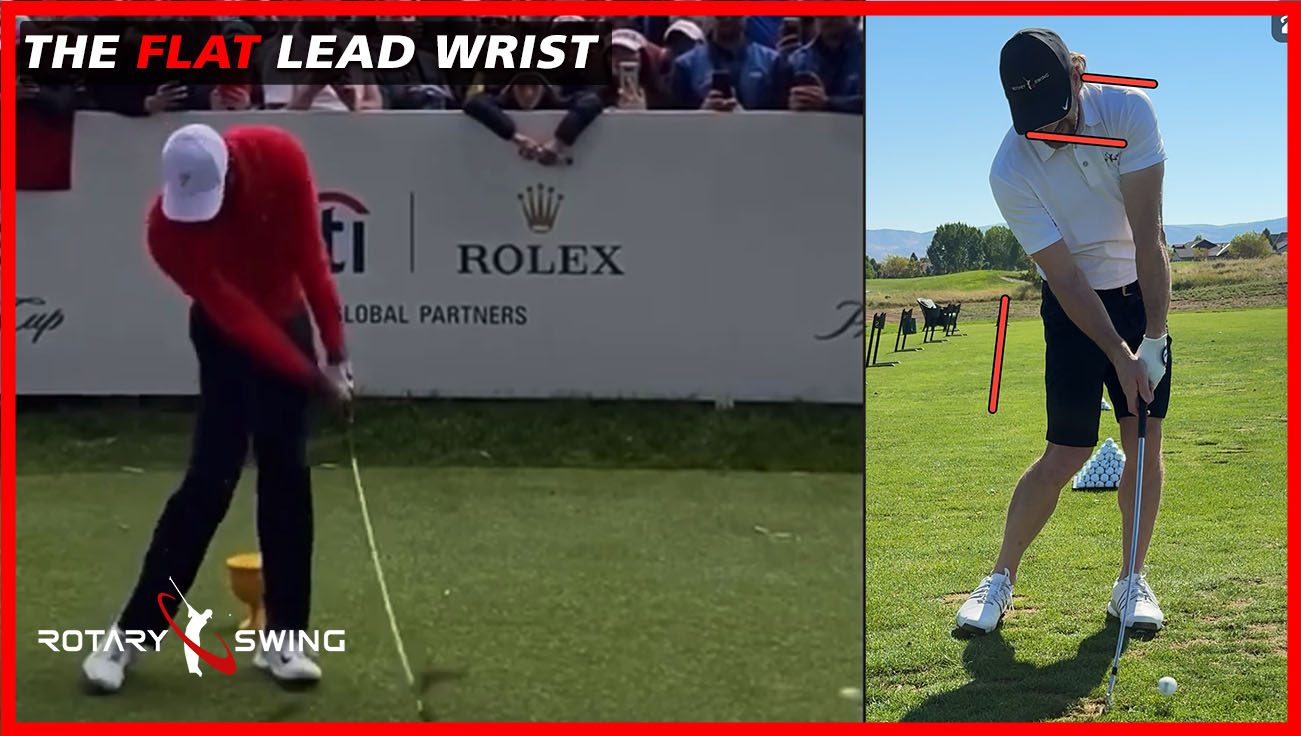
With my attention focused on the pronounced flip at impact.
Impact occurs under my chin, not under my lead shoulder.
Under the lead shoulder would probably still be a tiny bit too far.
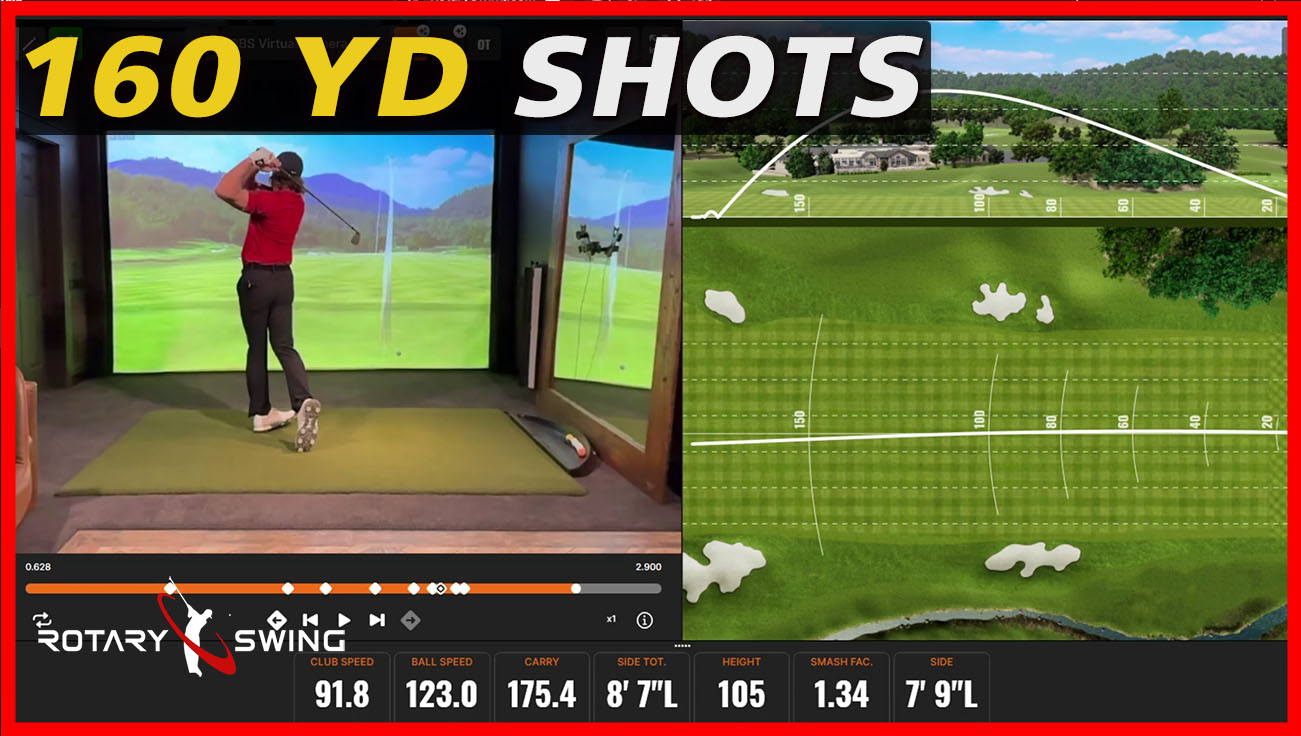
Which probably partially explains why I don't hit the ball very far, 125 with a seven iron.
So I observed that my lead arm folds pretty dramatically at the elbow after impact.
The upper part of the lead arm almost gets glued to my lead side of my body as I turn through.
I'd like to understand what the lead arm should be doing and what it should look like after impact.
Would changing the collapsing lead arm at impact attain some shaft length?
It would definitely help.
Ball compression, appropriate flight distance.
Yeah, I mean, there's no reason for an average age person, average age build that you can't get your 7-iron 165, 170.
I mean, there's no reason that you can't.
So the question on the table, yes, fixing this would help.
Why is it happening?
Lots of different factors that lead into this.
The biggest one is pushing with your trail side and specifically pushing with your trail arm.
So the question on the table is that as the person player gets into impact right here, they're seeing a little bit of a flip right here.
And then the lead arms immediately breaking down after impact like this.
All right.
That's how I read the question is that it's breaking down like this.
And so would having a straighter lead arm help us get a little bit more shaft lane and build an impact?
Absolutely.
Now, why does this happen?
This lead arm only has to get out of the way if the trail arm is pushing, right?
So that's the very first thing I need you to understand.
The only reason this is doing this is because this is overriding the system.
It's that the trail arm is doing too much, forcing this lead arm out of the way.
Now, is the trail arm doing that because you're not pivoting enough?
You're not using enough core and legs?
Could be.
Is it doing that because you're not calling enough in the back swing?
There's a million different reasons that could be causing this.
It could be just power in general because it feels powerful to work your arm.
But the main thing at the end of the day is it's because this arm's overworking.
And so what you should see is that as you start to work into impact right here, you can see that my wrist is going to rotate where I'm in flexion right here, glove logo kind of facing the target right here.
And my elbow is going to still be pointed down the target line right here.
It's not going to be flipped over like this.
It's not going to be like this, but my elbow is going to be down the target line as my forearm rotates into this position.
And then as I continue through, because I've cleared my body, I should have still some straight extension with that lead arm.
I should be able to get to this position with relative ease.
Now, if I get here and I shove my arm, it's going to get out of the way.
So the two things that I would tell you to check first.
make sure you're using your legs and getting your hip out of the way.
Because if you start coming down into impact and your hips aren't working, you're going to have to do something to square up that club.
You're going to have to do something to create power.
And it's typically going to be overworking the trail arm.
So you want to check first, am I getting to this position?
Am I making sure that my weight gets back to the lead side, my hips clear, because my hips.
And this is something that players don't see it.
The hips have to clear to create rooms for the hands.
All right.
So I've got to get my hips out of the way for my hands to get up here.
So I would check to make sure first that your hips are working.
The unified drill would be great for that because you would actually have to go through it.
And then the part where he holds his hand or holds his arm.
Like when you go through here and he's actually like this where he's like, hold it as you're starting to drive.
That would be great for you because then you could feel, okay, my legs could get through and I haven't done anything with my arm and hand yet.
And look at where I I'm already at the golf ball.
I didn't have to swing it.
I didn't have to push So I would kind of take this right here.
I'd put this under your arm and hand and get it to impact without using it.
Force you to move your body into this position.
Once you get that going and you make sure that your legs are going, then just check for this trail arm, Because that's the trail arms overworking.
That's the we just got to figure out.
If it's because the hips aren't working or you're just trying to dominate too much with this.
Because that's the only reason.
It's like, if I stuck my arms in front of me right now.
I show people this with their wrists.
Same thing works with the elbows if I'm right here like this, If my lead wrist bows.
what does my trail wrist It goes into extension.
It cups.
This moves vice versa.
Same thing works with the elbows.
If my trail arm pushes, my elbow's going to bend.
If my lead arm pushes, my elbow's going to bend.
That's why everybody with this structure right here, it just stays.
It doesn't need to go anywhere.
That's why, like, you know, I've shown this drill a million times.
I still do it with students.
This drill right here, the stop overswinging video, is because it teaches you, oh, my arms don't do anything.
They just.
They stay in front of me.
They're never kind of chasing around one over dominating the other.
So hopefully that helps.
Okay.
Where are we?
Are the latest videos and instruction from Godey always the way it should be done?
Define always because I don't box myself in that way.
And for a while, we thought the earth was flat.
There's been many changes the last six months.
It's a bit frustrating.
I can understand that.
I've gotten used to throw from the top and away from the target.
That's out now.
No, it's still there.
I'm going to miss it.
If I throw now later, no, no, no, no, no, no.
Okay.
So this is when players.
Get too much into the finite and not seeing the forest through the trees.
Throwing pattern is still there.
All right.
What's a throwing pattern?
That's still a throwing pattern.
If I'm right here and I'm hitting a ball or throwing a ball, that's still a throwing pattern.
Now, what Chuck is talking about, that you may feel the throw later, it's not the throw.
That's the snap.
It's the same thing if I was throwing.
I'm not going to feel the snap until there.
So I think that you're putting throw and snap together.
Two different things.
Throwing is the movement pattern of feeling the transition, getting the hips.
It's the whole thing.
It's not just taking my wrist and going like this.
That's not the throw.
This is the throw, all right?
That's the throw.
It's the whole enchilada.
Snap, what Chuck's talking about is how when you start to get all these pieces working together, and you've got this fascial system and the line built up right here, what you can add coming down here.
So you might hear a dog bark.
It's the same thing.
If I'm right here, I can create a throw pattern where I go from here and as I come down, hit a little pop, all right?
But I can still go through it and go through here.
And create snap I can add something at the end if I sequence correctly, so don't put throw and snap together.
The last six months, nothing's really changed.
Okay, now, the way things are said, the way things are phrased, we try to find the best way to say it so that it correlates to the user.
It's like telling somebody to go laterally right here.
Well, that worked great for a lot of people.
But then a lot of people started swaying into this mirror and it's like, Okay, wait.
We got to think of a better way to phrase this, because This isn't a one size fits all.
So there's nothing you really need to change over the last six months in the material.
Now, how we talk about coiling and loading and stretching the fascia, that's all been the same.
But it goes back to the flat earth thing, all right?
We are golf nerds.
We are constantly trying to figure out the best way to get it to you guys, the best way to swing.
You know, we had a movement pattern.
I mean, RS1 didn't have any elevation.
It was more around the body.
And then it's like, oh, we started discovering like, no, players actually have this kind of parallel shift plane right here.
So what you're seeing is being able to use AI and technology and all that of stuff that we can't see in the data.
That we're getting is we're trying to perfect the model.
All right.
And so we have to come up with different ways and phrases to get it to you.
But it hasn't changed.
The throwing pattern is still there.
This is still the same thing that we want.
That hasn't changed.
That same thing of building the fascial tension and getting down here in the snap.
I want you to do that.
But I think what's happening is you're putting throw and snap in the same frame and they're not.
Throw is more the all-encompassing movements of throwing from the top.
Snap is going to be what you add at the end when everything's stretched and nothing else can do it.
Just like if you know how to throw a football, not sure what country you're from, so football as in like American, like NFL football, not football.
As you start to get through here and you get into position, everything's building to this, and then it's a.
Like, that's going to be your snap.
Like, this is your.
But this whole thing is still a throw snap.
Maybe the Bears will sign me.
I don't know.
All right.
Okay, this is the one that came in very late.
I would like for you to do a quick analysis of Michael Brennan's swing.
Here's a slow-mo of an iron.
I'd also like for you to do a quick analysis of Jackson Koivin's swing, specifically his hip recoil and move going to wreck his back.
I mean, I'm not teaching it, if that makes any sense.
All right.
We've tried this once before.
One time it worked.
One time it completely failed.
So let's go for it.
All right.
Let's see.
Entire screen.
All right, can you all see my screen right now?
Maybe okay, perfect, all right.
So we're going to go to, uh, that question that was put on the community.
Because I don't have these people's swing, so let's see what happens.
All right, could you talk about Michael Brennan's swing?
Let's see.
It gets a little tight right here.
I think it could have a little bit more coil, but there's a lot of good in that.
Let's see what happens coming down.
Wow, that's a great model for what we do.
Okay, so let me hide that.
All right, I'm going to go back to this tab.
Y'all can still see me, right, just in case?
I don't want to be going through all this, and you're like, Craig, I can't see anything you're doing.
Okay.
This is literally what I was just talking about.
The hips have to create space for the arm.
Hands.
So let's do it this way.
And I'll come back to this.
All right.
So Brennan actually has a very good model of what we need to do into impact right there.
We like looking at swings at different angles because it kind of gives us.
new insights.
What you're going to see right there is Michael's swing really looks like this, right?
If I hold my arm and hand right here at impact right here and I was going to throw a ball underneath it or throw an underhand pitch, this is what he's doing, all right?
Now, if you look at this right here, his core and his whole body is driving out of the way right here.
Everything's getting out of the way and you can see his elbows right here in this position, so his hands have all that getting to there now.
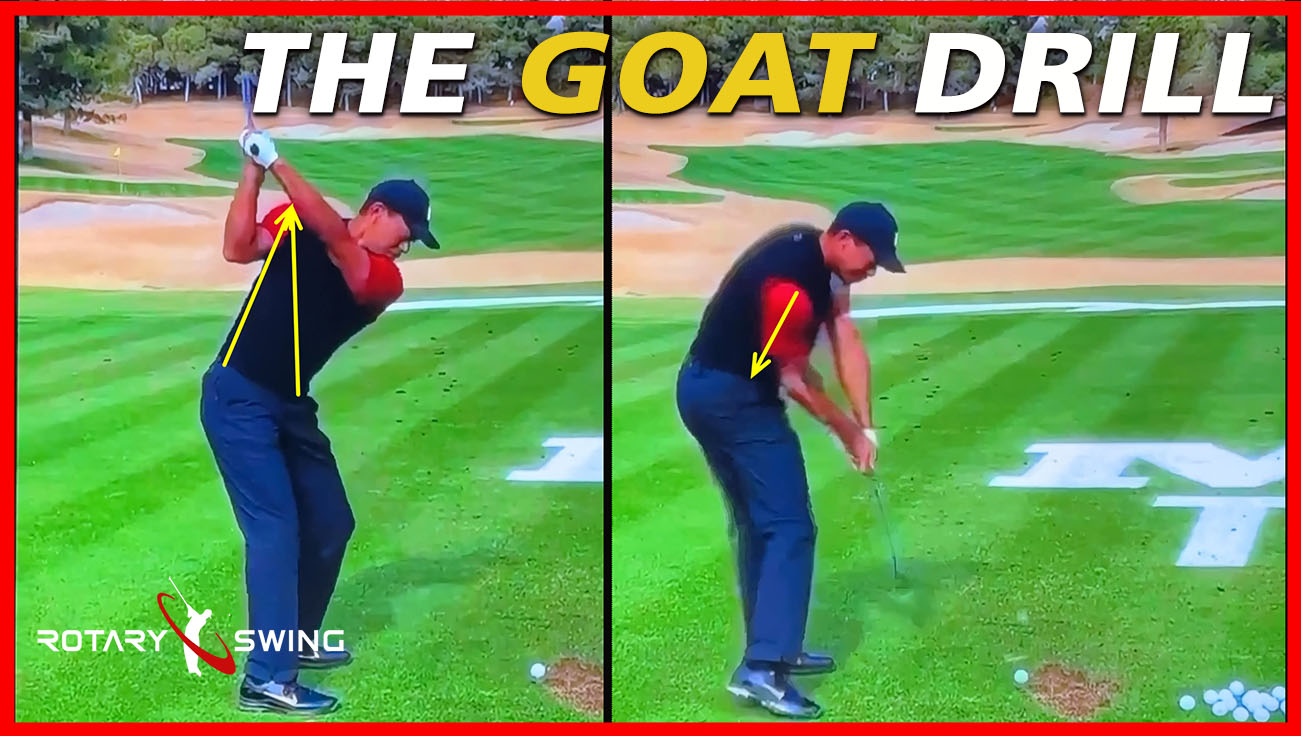
I don't know if you watch the unifying drill or you watch Goat Drill or anything like that.
This is the exact same thing that Chuck's talking about is that when you're right here, what he's doing right there is.
As he's shifting, he's driving his hips back, and he hasn't done anything with his arms yet, So that's why his arms and hands are right here.
The right arm still has flexion in it, still has extension of the wrist.
There's nothing to be done until right here at the last possible moment, you're going to see that snap.
If you look at his swing, what you're going to notice, and you can take a look at this in your own swings at home.
Watch if I can get this to go slow enough.
Watch this position.
You see how when you look at it from this angle, how open it looks like he is?
But if you were to look at him from down the line or face on, like his shoulders are open, but they're not really that open at impact right there because his core and his hip have cleared out of the way right here.
But this is what I want you to see.
Watch what happens right here.
Look at how nothing's moving.
Look at what's happening right here.
The only thing that's happening from here is what?
Snap of the club.
Because there's nothing left to be done.
There's no need to continue driving.
There's no need to use the shoulders.
There's no need to do anything.
This is a big key that Chuck was talking about and that we talk about for speed all the time is that when you're going through this, if you get through impact and there's still stuff you need to do, that's just stuff you haven't added to the golf ball.
Like if you hit the golf ball and then you're like, I still got to shift weight or I still got to get this post up or I still got to do this with the club.
The ball's gone.
It doesn't care.
It's why we used to get fed up with people when they were teaching the follow through and all this stuff.
It's just a byproduct.
So if you'll notice, he gets to hear and what happens?
There's literally nothing going on.
He's hit the break.
He's gassed his hip back.
And there's nothing left to do other than this club to snap, which is the same thing as you're getting here.
And as you get to here, this is the position that he's in.
Now watch what happens when I have my lead arm.
There's nothing left to be done.
It's just let that club snap.
So that's a really good looking swing.
I don't watch golf, so I don't know who these people are.
All right.
Let's go back.
And I'd also like you to do a quick analysis of Koivin's swing, specifically his hip recoil.
Let's see.
All right.
Club stand out in front.
Good turn right here.
Shoulder stand on plank.
It's a little.
All right.
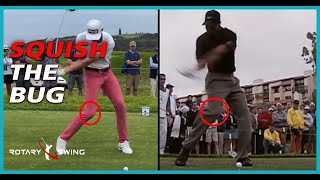
So this is basically.
Squish the bug right there.
Okay.
So what you're going to notice, if you watch his left pocket right here, watch his left pocket right here.
See how he actually loses his left pocket right here?
I'm sure y'all seen his swing a lot.
And then it comes back into the foray.
So this right leg, glute, full extension right here.
literally slamming on the brakes.
All right.
This is that hockey slap shot.
He's slamming on the brakes.
He's dropped anchor right there.
And what he's doing because of how much he's getting the lead leg extended and posted right here is he's actually creating a recoil.
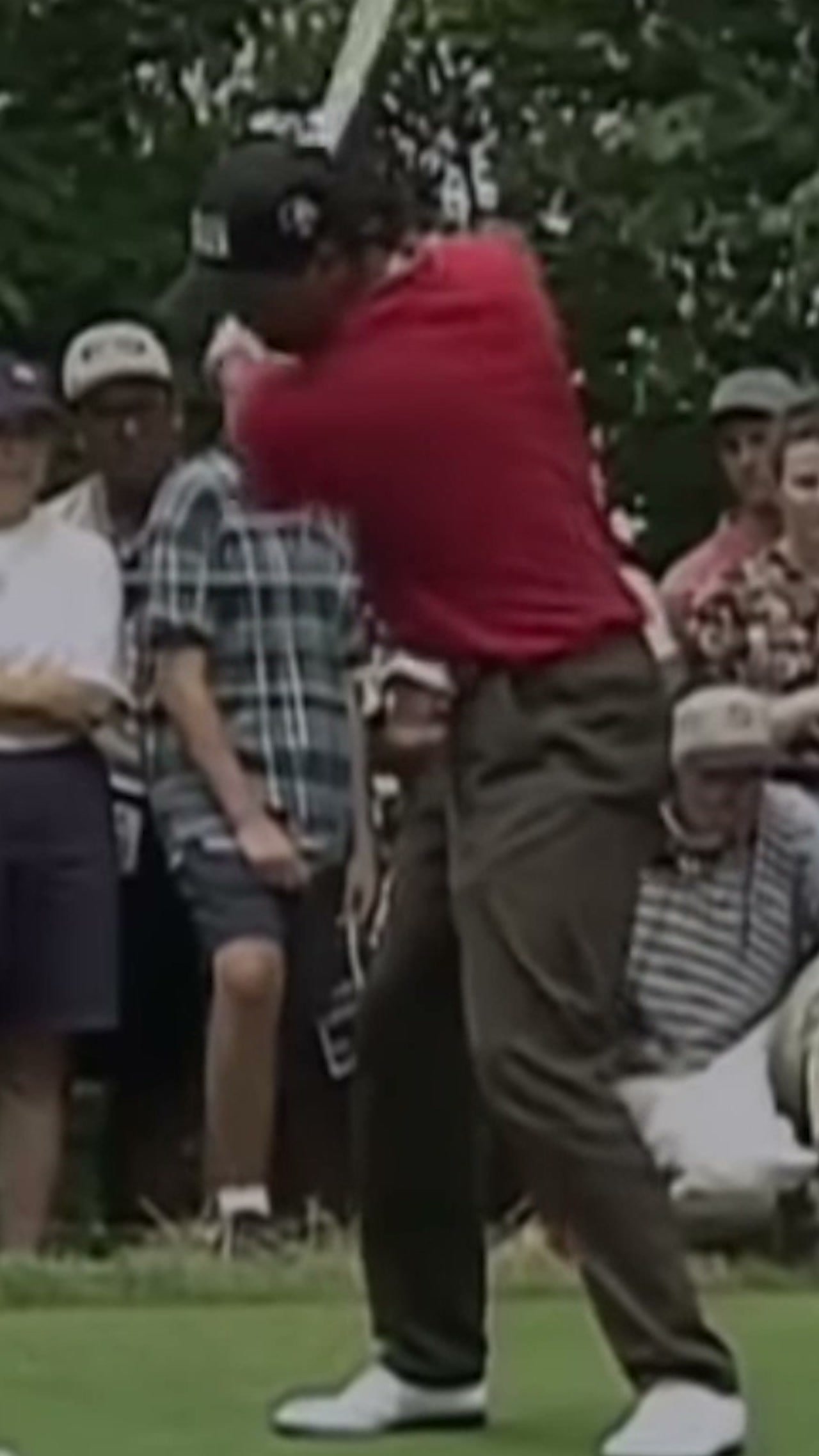
This is an extreme version of Rory.
So when Rory came on the scene, I'm sure some of y'all have seen this.
He doesn't have it anymore because what's his name?
Cowan took it out of a swing.
But Rory used to do the same thing when he was a kid is that he would get over to here and then as he would shift, he would start to clear and then his hips would rebound this way.
All right.
So he would post and then this would rebound this way.
Okay.
Now.
If I'm trying to snap a towel.
Or crack a whip.
Can you get more efficient than that to actually go the other direction in your golf swing?
As this club's going this way, I mean that that's the ultimate of ultimate.
If I could go from here, load, rotate to the top, get my hips cleared, and then actually have my body go this direction.
As the club's going that way, that's the snap of the towel.
So if I wanted to kind of create his, I could extend this post, this switch directions.
Let's see if I can.
That's kind of what he does right there.
And so that's why, if you kind of look at my tush right here when I do that, That's why I might.
You don't see me really.
So what he's doing is he's actually going in the other direction, Okay?
Which is actually creating the snap, the towel effect.
I'm going this way, Nope, now I'm going to tug back, and what's the end of the towel?
Do snaps, that's where you get that pop.
That's when that your buddy in the locker room's like, Oh, you got me good on that one, like, that's how you create ultimate snap.
Now.
It's not something I would teach anybody.
All right, this is kind of homegrown, you know, things on his own.
Back wise, I'm not a rocket surgeon, I know it's rocket surgery.
I'm not a rocket surgeon.
But if I'm going this way, what are the, we've talked about this before, what are the two things the spine hates?
The spine hates compressive force, hates shear force.
All right.
Compressive, not that much.
Shear, going back this other, screaming this way and then going, that's putting a little bit on your lumbar right there.
So I wouldn't teach it to anybody, but it's.
Very efficient for power.
And it's why Rory, who's like this tall, was pound for pound longer than everybody.
Because he, I mean, I wish I.
I could find the clip where he is here.
And you'd literally see his belt buckle go like this at impact, which is why he hit it a mile.
It's a great swing, though, Lee.
excellent analysis.
Thank you, Lee.
So the two things that I would steal from Michael, all right, are the two things I'd steal from those two swings.
Michael right there is the true definition of using that kind of fascial right here, where this is just getting out of the way and the only thing left to do is this to snap.
That's the only thing left that he has done.
If you can get your sequence using the TheraBand or anything where you're getting here and everything's done, And the only thing left to do is.
That should be the only thing that I see through there.
I shouldn't see anything else going on.
If you're seeing yourself still shifting, if you're seeing your head go, if you're seeing your shoulder go, you're seeing your spine go, you're seeing your tush go, you're seeing anything going on between here and here, we need to have a chit-chat.
Send in a swing review.
Now, Koivin, I wouldn't teach anybody to do that recoil.
I love the.
I love this long lean extension of this right here because that's really, it's that dropping the anchor that I really like.
Because when you're getting here and you're, that's like that hockey slap shot.
Like that right there, that's that feeling of this sliding back as that's going that way.
Like you're hitting the hockey slap shot, which gets this to really engage.
That's a great power move to copy.
Don't try the recoil, but I have students do this in person where I have them do these swings.
I have them do this because it forces them to post up on this, but also slam the brakes.
Quit pushing.
You don't need to push anymore.
It's already happened.
So you can kind of get more of that snapping of the towel effect.
All right.
That would be the two things that I'd kind of steal from that.
But I'm going to leave you with one thought on this too.
All right.
This is kind of going against our business model.
I can look at Koivin's swing, and I've had a lot of people say, oh, look at how funky he swings and does this and does that.
And in my head, I'm like, he copies more of us than you do.
I mean, because when players talk about swings and all that that are saying, oh, it's a stupid swing, I'm like, he's a millionaire, so he's doing something right.
You're a 10 handicap.
I'm not being hard on anybody, but remember.
I'm on the front lines every day.
So my point is, we all should swing the same, essentially, if we're going to build this perfect model on all that.
But if you look at the swings the way that we look at the swings, we look at the swings in code.
Why is this swing working?
What's going on right here?
You can get these little nooks and crannies and still have your own swing.
My swing looks a little like Chuck's.
But it's not even close to Chuck's, all right?
Mine looks a little, I mean, my swing right now looks more like McElroy than does Chuck's.
But I'm not trying to do that.
It's still my swing, but I'm putting in those components.
I'm putting in the components of the hip, the stretch, and this.
So just remember, like, you don't have to throw the baby out with the bathwater.
Just start working on the fundamentals of what you need into your own game, and it's okay to have your own swing.
Just put the fundamentals in there.
It doesn't have to look like everybody else's.
All right.
Let's see.
I think that's it.
It seems like Michael Burnett.
Yeah, yeah.
Lee, he is.
He's got a really good swing.
Gets a little bit tight.
His backswing, I mean.
For me and my spine, I'd adjust it a little bit, but that's because I'm old and broken.
They're going to send me out to the pasture here pretty soon, probably one more year.
Let's see.
All right.
So we're going to go to the forum.
So for those of you that posted questions, I really appreciate it because if you want me to keep doing this, I've got to give my boss a reason for me to keep doing this.
So I appreciate you posting up the questions.
Hopefully I answered them.
What I'm going to do now is we're going to go to, for the rest of the session, we're going to do some live Q&A, all right?
And I'm going to go back because somebody had a question.
So Dennis Murphy just posted a question.
I will start with that one after I finish what I know was posted up above.
So if you want anything, post after Dennis right here.
Let's see.
I think there was two.
I did Jonathan's.
Bill, how about review the transition from backswing stretching fascia to getting the weight shift going?
Now, Bill, are you talking about backswing getting the weight shift going forward?
So as in the transition, that's how I'm going to take it.
If it's not, then put up in the comments and I'll do the question again.
So as I'm loading from here and I'm posting and going this way.
And I'm driving this up to stretch my posterior oblique sling from my hand across my back through here to get this.
Think about the transition of weight.
That drill, Chuck doesn't want you, he's wanting you to get the feel, the snap and stretch at first, all right?
For the same reason of why I talked about the right hip earlier, the trail hip going too much this way.
Because nine times out of 10, when I tell somebody to shift weight, they end up all the way over here like this.
That's not how it happens.
Like I'm 80% on this side, 80% on this side.
I didn't really go anywhere, all right?
Lateral and rotational have a lot to do with this.
Pelvis roughly shifts six to eight inches.
But that's a combo move.
It's not just left and right.
The transition happens because you don't have anywhere else to go because you loaded.
So riddle me this.
If I'm loading and rotating into the side and I do this dynamically, all right?
I'm going to get a little out of bounds right here.
And I do this dynamically like this.
Where's my weight starting to go right now?
Like, I'm not just going to shift weight and keep shifting weight or I'm going to fall into here.
The transition needs to be because of consequence, because of my loading.
So if I shift my weight, rotate my hip, rotate my rib cage, by the time my arms and hands are here, I haven't even used my shoulders yet.
But I can't really rotate much back anymore.
So now my shoulders start to get into it.
And now that coil.
starts to get me to go this way.
And that's why I always tell people, if you do this with a weight or a kettle or something, you'll feel it a lot easier.
Now, this is small.
I don't have a kettle, and I can't do it with my thumb anyway.
If I were to swing a big weight over here, would I swing a big weight and just follow it this way?
That'd look kind of silly.
What's my brain going to do?
As I get loaded, I'm going to naturally start going this way.
So just.
move your body, and you'll feel how like, oh, okay, once I get coiled and I keep trying to coil, I'm going to naturally go back to this side, okay?
So it's as a consequence of how you load in the backswing.
Now, if you're just using your arms, Bill, I know Bill, if you're just using your arms to swing back or you're just pushing from the lead shoulder, you're going to have to manually tell yourself to go back.
Think like a pitcher in a rubber.
If I was going to get here, I'm going to get into this rubber over here, all right?
Now I'm going to load and throw.
Because of this coil and I've got nothing else I can do, I've got to start going back this way.
So make it dynamic to where it actually forces your transition to go that way.
If you're having to think about weight shift to make the transition, you're not coiling, all right?
Easiest way I can put it.
When working earth goatee, can you talk about lead hip coil versus trail hip depth?
When I work on trail hip, I get the lead hip needs to coil message.
It depends on.
See, there's a cut.
I got to be a little careful with this because it can.
I can look at that a couple different ways.
Typically what I see, if somebody's getting depth, they start to go like this and they start to get flat.
And they're like, oh, I've got my hip deep, but my hips have rotated flat now.
There's no coil in this.
I still have to have my lead hip work down and a sensation of getting back to this side.
So this is what I mean.
If I'm standing right here.
and I start to coil, my lead hip's going to work down.
I'm not just going to collapse in like crazy.
But as my lead hip works down, remember, the fascia system's working like an X.
So I'm stretching this side, but this side's also stretching too.
So if you're getting the hip depth, but you're not getting the coil, More than likely, what's happening is that you're rotating flat and this isn't working down as this is working up.
So that you can still feel some tension right here to where you can be like.
okay, I can pick up my foot, but it's got to go back down.
I've got to feel both sides working like this so that it'll still work.
If I just solely kind of do it with my right right here and I just kind of let this go limp and flat, my brain doesn't have any reason, doesn't have any recourse to be like, hey, use that side on your downswing.
So what I would do is I would get here and as you post up, just do this exaggerated for a second, Feel how this kind of works down as you go that way.
Now, obviously, I'm not going to be hearing my golf swing, but you're going to feel some tension right here where you're like, oh, that's what I want to use when I come back down.
That's just a little bit of an exaggerated sense.
So more than likely, you're not getting your lead hip to work down enough and maintaining enough tension there.
Dennis, when doing.
A down the line live lesson, I'm continually getting picked up for losing spine angle.
Chuck says it's a loading issue and I have no doubt he's correct.
Can you give a brief explanation of what might be going wrong with the loading that causes me to lose angle?
Well, where is it telling you that you're losing spine angle, Dennis?
In the downswing or the backswing?
Because there's two different reasons.
No problem, Bill.
Hopefully that helped.
Just swing away.
I keep telling everybody, put me out of business.
Put me out of business.
You swing away, you'll put me out of business.
Now, I'll be homeless, and one of y'all are going to have to give me a job, but at least you know how to swing a club.
Joe, you're welcome.
Dennis, it doesn't say.
All right, so let's just talk about spining a loss.
All right.
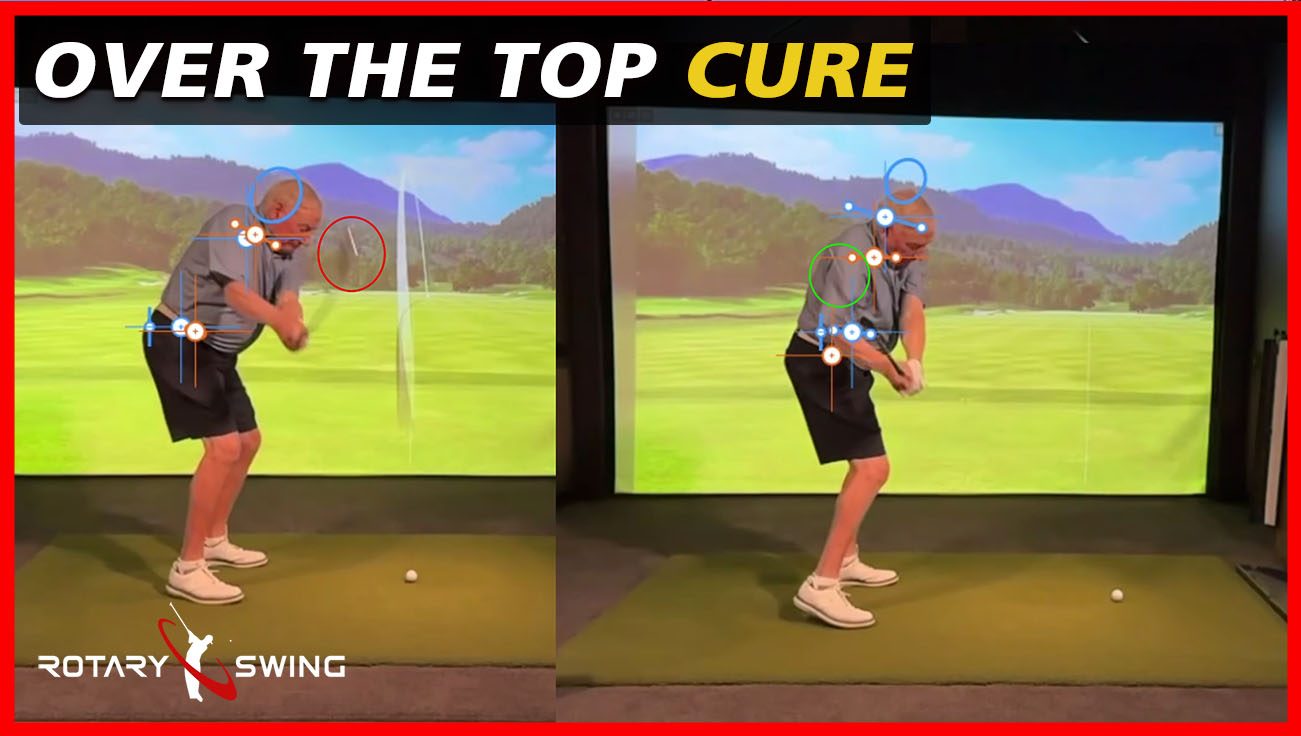
So the prototypical thing that it's looking at when you're losing spine angle is that as you're coming down, your spine's moving up this way, okay?
Number one culprit's early extension, all right, is that when you start to drive your hip and or your knee and or your foot, I'm saying that for a reason because some people don't realize that it's not just, it's hip and or knee and or foot.
For the whole unit is driving towards the ball as you come down now, this is just a a product of anatomy.
If my right hip drives forward, my spine has to come up, it has to okay.
So, more than likely, as you're getting here coiling and you're starting to get into this position and you're trying to get the snap with the right hip.
Is that you're driving it this way?
You're, you're, I'm gonna guess that you're pushing too much off of your foot.
that you're getting here and you're pushing it with your foot to try to drive your hip.
And so look at what happens when I do that.
My belt buckle comes up and under, my tush goes forward, my spine comes up.
It's going to feel more like you're doing it this way, down the target line.
I'm here, and as that stays coiled and I get to here, it's going to feel more.
Like, my hip is driving down towards the target line with my knee, and you can see when I do that, where's my left hip?
Go now?
This isn't foolproof by any means.
Riddle me this.
You can see the top of my mirror right here.
I think all right, I can see it, I can see, you can see it.
Look at where my head is right now.
If my head comes up, where?
Where'd my hip have to go?
All right.
I can straighten my left leg.
My head's not coming up.
I mean, it's barely coming up.
But if I push my right hip, my spine goes this way.
Now, if I get here in my head, you can see it with the, you know, the door frame in the background.
Now, if my head stays here, how could I, I can't keep my head down and drive.
That kind of hurts.
If my head's here, this got to get out of the way.
If this starts to come up, where do you think my tush is going?
Now, like I said, that's not foolproof, but that's something that I see more often than not.
Once you get your head down, your head starts coming up this way.
Where's my tush going?
So what I would focus on is once you get coiled and you get back over to here, and then you get this transition and this heel pops up, make sure you're not pushing with that foot, causing the early extension.
Then once you get back over here, and this foot's up right here, it's more my right hip is snapping into this, snapping into this.
It's not pushing this way.
I'd probably, if I were a betting man, if I was putting calciades on this or something, that would probably be what's doing it, all right?
And it hit me as I was sitting there doing that.
Somebody else had a question about coiling.
How do we differentiate what Koivin is doing posting up an early extension?
They're two different things.
So taking my trail leg right here and lengthening it because I'm extending my glute right here to slam on the brakes, essentially, that is firing my glute to slam on the brakes as my lead hip is posting around.
Early extension.
is taking this right hip and firing it this way.
Now, if you look at Koivin, you're going to see he kind of gets like this, but if you look at both legs, they're straight, and that's because his feet are off the ground, and he's fully, he's taking both butt cheeks, squeezing them to death, fully doing this right here.
That's not early extension because lower is my lead hip going.
My lead hip's going this way, and I think that players get caught on this early extension bug.
I don't have anything in here.
You're going to have to use imaginary.
Let me go this way.
Okay, so this is a terrible camera angle for this.
But if you watch me right here with my shelf right there, all right, if my lead hip is going this way, where'd my trail hip go?
It came away from that line, but my lead hip is deeper right now.
That's not early extension.
Now, when I go this way, and now you see the little tomahawk or the little braised foam thing, that's early extension.
Dennis, it makes sense.
I just tried it.
It feels like you're pushing.
I'd put money on it, Dennis.
That's how confident I am.
I'd put money on it that.
What you're doing is you're you're taking the the snap of the trail hip, and you're turning it into foot push, and that's what's breaking it.
So a couple good things you could do is exactly what I showed you about with Koivin Swing earlier.
You could get here and just make a couple small swings like this, where you let this slide back.
Like this and get the feel.
That lead leg really having to fire and extend, then keep it on the ground, And use that same kind of firing feel in that lead lugging post.
Just turn off the push from the foot.
Manny, can we talk about wrist angles when chipping and pitching?
I just started chipping with a bowed wrist and contact is way better.
So in chipping and pitching, I don't like getting overly bowed by any means.
So when you're chipping right here, as I'm going through here, when I'm going through here, I want to have this lead wrist or this trail wrist and extension right here so that this lead wrist is inflection right here.
But I don't want to be like this.
All right.
If this is me at setup, this is me at impact with my wrist.
It's not about you changing your wrist like crazy.
I had a chipping lesson last Friday with a student of mine, a Zoom lesson, a chipping lesson.
And she was doing the same thing.
She was setting up right here.
And because everybody told her she's got to hit ball first and half shaft lane and all that, she was setting up like this.
And she's like, I don't understand.
I keep chunking it.
I'm like, because you've gone so far to the other extreme, you can't pivot through.
And it's just taking the leading edge and chopping it into the ground.
So what I want you to think about is as I go from here, my trail wrist has some extension right here.
You can see it right here.
Not a whole bunch, but it has some extension right here.
Now, if I take my weight and my core, I still have about the same amount of extension right here.
But that motion with rotation right here and keeping that gets the handle forward.
I haven't had to increase it and keeps the angle of attack very shallow.
So you don't really need a whole bunch.
Now in pitching, you're going to tend, when you take your setup right here, as you start to go back, You're going to tend to let the trail wrist go back on itself more to get the club setting up a little bit more.
But I'm not taking this up here to now dump it all.
I'm taking this and I'm still getting my pivot through.
That's why if you look at like my knees and my lower half, I'm using this to kind of help guide me right here.
I'm keeping this nice and soft through here.
So even if I get a lot of wrist angle right here, it's guiding me through.
So just be careful.
Getting here, setting up with a lot, and then just trying to.
That's not how it's done.
It's not by trying to hold this.
It's actually because when it gets set, it's your body pivot coming through that keeps this very consistent so the bottoming out and leading edge doesn't go doink.
Sean, during a down-the-line lesson, Goaty comments something about my hands, probably my hands going too far inside.
What does the correct hand path look like while maintaining spine angle?
In the backswing or downswing?
Doesn't really do a whole bunch.
All right, so as I'm going from here, let me find something.
This was a club back in the day.
I used to hit that thing a mile.
Anybody remember the old, like the original exotics, three woods that even though they said they were conforming at 15 degrees right there, that thing probably went 280.
All right.
Take this with a grain of salt.
So you can see right here, if I set up right here, you're going to see how I've got this grip end kind of over the shaft right here.
So my hands are just inside.
This shaft right here, all right, as I start to go back and I load and rotate.
You can see how my hands aren't going this way, nor are they going this way.
So my hands are kind of staying on the inside of that shaft.
Is my club staying on the outside of that shaft right now?
All right, so my hands are going to feel very straight back right here, very straight back.
Now.
They're still working in an arc because it's staying inside this, but it's going to feel very straight back right here.
And as I continue to do this, I don't need to add a ton of lift, ton of elevation or anything.
it's going to feel, because of what I'm doing with my core and hips right here, that as I continue to rotate, my hands are just gliding up.
For most players, most, didn't say all, it's literally going to feel like you're just taking your club straight down the target line like this.
And if you combine that, just your hands going straight back like this, now combine it with your body.
Now I'm right where I want to be.
All right.
So your hand path is going to feel very muted.
All right.
It's not going to feel like it's changing a whole bunch at all right there.
All right.
Don't push it out.
And that's and why I'm already right here.
I'll just go ahead.
This is I use this in lessons sometimes.
I got a video on this, you know, on the site where.
If I'm right here, this is a rough estimate.
If I push my hands out, okay, now my club head's too far outside and my hands are too far outside and disconnected.
If both are on this side, now I've shoved my arms across my chest and I haven't really rotated.
I've just pushed my arm across my chest.
If my hands stay on the inside of that stick, my club head's on the outside of that stick right there, I'm going to be roughly right where I need to be, all right?
But it's staying.
It's still working on that arc right there as I go this way.
Does the snap happen with the hands beyond the ball but the club head still behind?
Does the snap happen with the hands beyond the ball but the club head still behind?
Well, it depends on how you're seeing that, Michael.
So let's see if this answers it.
If I'm at the golf ball and my wrist is already flat like this or moving into flexion, I'm now in the losing speed stage.
All right.
Because I've already kind of passed the point of no return.
So what I'm looking for, what we're looking for is that when you get down here is that you still have extension.
You're going to be applying the force right here, right now.
So you can see how I'm applying that, but I'm still going to have extension right here and that's not going to happen.
This breakdown isn't going to happen until right after the strike.
All right, so I'm applying the force right now.
It doesn't happen until right after the strike.
And in fact, I can kind of show it to you if you want.
I think I can.
Who knows?
We're going to try, though.
So let's see.
Who do I want?
Let's just grab Chuck.
All right.
You all can still see me, right?
Just making sure.
We had a problem with this before.
That's the only reason I'm paranoid about it.
So watch Chuck right here.
So going back to Lee's comment about Michael Brennan earlier, watch this right here.
You see how his whole side is cleared out of the way right here to make space for his arms and hands?
So right now is going to be where you see, okay, this is going to be where you start to feel that snap right there.
And then right now, now his wrist starts to break down.
You can see how everything gets flat through there because there's nothing left to be done other than that last little snap right there, snap, snap, snap.
So you still have to make sure that you have some extension right here, or you can't transmit the force.
Because, remember, you're trying to get all this stuff from your body.
Everything's adding up to this.
So this whole thing is going to go all up through this chain, all down through here to add to it.
So if this wrist ends up bowed or inflection right here.
you've already given up on all your speed.
So it's right here, snap, and that's where it kind of goes away.
And you can really see it on, I wish I had a face on.
Do I have one?
Where is he?
He's somewhere around here.
So this guy, you can see it right there.
You see that?
I know it's a little blurry, but you see how kind of back and loaded his wrist is right here?
Now watch this.
They're gone.
They're gone.
They're gone.
And that's why if we, I think I have one that's at an off angle.
Yeah, here we go.
That's the range that we used to teach at in Orlando at the Ritz.
See how it's there?
Gone right after impact right there.
That's why you can see like Mickelson and Vijay, like their trail wrist will be bowed out here, like this couples does the same thing.
So hopefully that helps.
All right, Shane.
Down the line, I'm in a good position at P2 and my hands go through my right bicep on the way up.
However.
the shaft gets a little flat or points just outside the golf ball.
I see a lot of good players that have a steeper shaft at P2.
What could be the cause of the shaft getting flat?
Typically, it's because you're pushing with your lead and you start to get too much internal rotation.
So could it be because I'm externally rotating my right arm address?
No, that's actually a good thing.
So what you want is your trail arm at address right here.
Don't want to break this.
This is a golden oldie.
So your arm at address right here, your elbow pit is going to be.
Now, you don't want to be wrenched in like this.
All right.
So my arm sitting here shaking hands.
I'm going to be in this goat arm position with my elbow pit facing out away from me right here.
Because this is what's creating this kind of unit lock right here.
But if you watch me right here, as I start to go through this, even with that externally rotated position, My shaft setting up right here, all right, so if you're getting too flat, the two main culprits that I usually see is that.
This lead arm's pushing, and so you're actually getting too much internal rotation from your lead arm.
So as it starts to set up, you start to flatten out, so the shoulder plane gets flat, the lead arm internally rotates.
That's what gets this going this way, or you're actually too dead with the wrist all right to where, actually, when you start to go back right here and you're getting into this position instead of letting and supporting.
The weight of the club in this setting up is you're actually staying too dead with it, so straight from face on, where it's actually staying too dead.
If my wrists stay too dead, you see how my right elbow starts to work underneath my lead.
If I stay too dead with the wrist.
Look at what happens, it starts to work too much under.
Now it's too flat.
So I would actually take some trail arms like this and get the feeling of how this sets up like that.
It's not externally rotating.
It's typically internal rotation or too much dead or too dead with the wrist.
And you'll see even Rory works on this a lot where he gets into the takeaway and he kind of presets it like this.
Well, kind of does it a little bit more like that so that when he gets here and he starts to pivot, it's already set on plane.
And that goes back to the discussion of Ledbetter.
Talking about the A swing, or the swing of the future?
Where he's like, you know, go ahead and get rid of the wrist and then go.
He's convinced somebody's going to figure that out.
I can make it work, but I think a lot of people in this room know how I feel about David.
So what drill do you suggest that gets me to impact and helps me slam on the brakes regarding the hips?
No problem, Jane.
Hopefully it'll help.
I've seen a number of videos of pro that appears as though the hips stop for a split second at impact.
Even the video you should have chucked appears as slow, shows he stops the sit at impact.
And that's because they are slow.
What are the hips doing at impact?
Are they still accelerating or are they decelerating?
So we'll go back to the tape for a second.
This is a tape day.
So let's go over here and let's take a look at this guy.
Or not.
I was like, wait a minute.
I was like, I know I clicked that.
I haven't had happy hour yet.
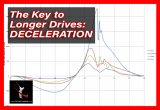
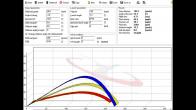
So here is.
Justin's vertical force right here.
Now, what you're going to notice is he starts to go through here and get him going.
Come on, come on, come on, come on, come on, come on, come on, come on, come on, come on.
You'll see right here is where he pulled out his max vertical force right here.
All right.
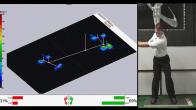
So at this point in time, he's not adding any more leverage pull from the ground, essentially.
If you watch his pressure over here, you're going to see how his pressure is starting to decel right here.
But you see how he kind of climbs this mountain right here?
And it starts going down.
He actually has a little double peak.
But he's peaking out sooner so that now he's got to transmit the speed and what he's done with his hips into speed.
So right now he's peaked out so that he can get this club to snap.
Because if he's still continuing to accelerate.
He's not going to add it to it.
So you're saying the same thing with Chuck So if we look at Chuck over here on this side, you'll see that at this point in time He's no longer doing anything because you've got to turn that energy into something All right, you've got all that you did all that work to build it.
So you got it.
You You might as well use it.
So.
That really goes into what Chuck was doing with the unifying drill.
But that's why I like, when you look at, you know, physical trainers and all that they always have.
You throw all the balls and do all that to kind of get this lead leg working.
One way that I typically tell people is try to keep it simple, all right.
So if I'm trying to get to that point, I, as my students, will know I do a ton of step drills with them.
All right?
So if you want to do this while I'm sitting here doing this, do it, see if you feel it.
So if you take your setup like this all right now, I'm.
And then bring your left foot in.
All right.
Now start to swing back and coil into this side.
All right.
And as soon as you plant, I want you to post.
All right.
So watch what happens.
So I'm starting to go back.
Done.
So as soon as this hits the ground, get it going.
All right.
Don't give yourself a chance to be lazy with this.
And this is kind of what.
happens to players.
I have to go on on soliloquies all the time with students.
To try to get them to see it from my perspective.
Because I want them to see.
Kind of how easy it is once you understand it.
So a lot of players that I have have great swings.
The difference in my swing and their swing It's just getting through my progressions.
It's not because my swing's faster.
I get people that all the time tell me, Craig, I don't understand how it looks like you're doing nothing.
You're swinging so slow and the ball's going a mile.
Because it has nothing to do with me swinging faster.
The club's going faster.
But it's because I'm getting through my progression sooner.
So let me explain.
I just showed you that at this point right here that Justin Rose was done.
He was just peeked out on vertical force from the ground.
All right?
Now, when I get down into this position and I peek out on my vertical force right here to get this, most of my students are still shifting weight.
Or they're still trying to get their hips into position.
Or they're just now starting that journey to pull that leverage from the ground.
And that's what I mean about the progressions of it.
It's not about being faster.
It's the same thing as when I'm making my backswing right here and I'm getting up here towards the top.
As I'm already starting to transition.
players are still shifting their weight this way, and I'm already going the other direction.
And that's just because as I go from here and I'm loading, rotating, getting up here, I'm already prepping my downswing, and other players are still finishing their backswing.
And by the time I'm already posting, they're still trying to shift weight, and their club arms and hands are down here, and they can't get it there.
So what you need to feel is that you get up here, and I'll have players kind of really wind themselves, kind of like a pitcher or something, where they're here, plant, go.
Here, plant, go.
And you can jump, but as soon as you get that pressure, get it.
It's going to feel fast right now when you do this, but the difference is when you start swinging a club, by the time you do that and by the time your brain tells you you like to do that, your arms and hands are going to already be here.
You're already going to be so far ahead of the game.
It's kind of like don't swing faster, add more computing speed.
I don't need you to be just faster.
What I need you to do is I need your brain to be like, okay, well, I'm already right here.
Let's get it going.
We're not waiting for something.
So I'm right here, shift post.
I'm right here, shift post.
Now in the golf swing, when I get to here, I'm going to feel different rates of when that happens.
But I like doing steps because I like to do this first.
I like for players to hit the break first.
Hit the break.
Hit the break.
Hit the brake.
I've already done everything I need to do going this direction.
I don't want to continue to go to this direction anymore.
There's no need for me to go that direction.
In fact, as soon as I hit the brake, I'm going to hit the gas to start going back over here.
Because what I'm trying to do, it goes back to kind of swinging and I'm always wanting to move in the opposite direction of the club.
I'm trying to get here, hit the brake.
And I'm exaggerating.
When I hit the break, I'm trying to get back over here so that I can sling that club this way.
Just like in the backswing, I'm feeling the club go this way as I'm going this way, and I'm trying to feel going this way.
I'm always moving in the opposite direction of the club.
That's how I can get that to really whip and swing for me.
So what I would do is feel the break first.
Feel the break first.
Feel the break first.
And as soon as you break, hit the gas.
Break gas, break gas.
Now it's.
I'd be sliding and jumping a little bit more if this floor wasn't so grippy.
And with these shoes.
Because I can literally feel like I'm tearing something right now, so hopefully that'll help.
Just it's like, when Chuck's doing that unifying, he's like, Hey, just get the feeling of this first.
Break it, break it, break gas, break gas, break gas.
Don't, you don't need to keep going this way anymore, you're already done, All right.
Whew.
That was giving me a workout.
Okay.
Any other questions?
I'll take one more, and then I've got life, swinger views, other people to yell at.
Goaty says the same thing.
The hips should be deep and ready to transition when the club is around parallel to the ground.
Same right?
Exactly.
So hips should be deep and ready to transition when the club is parallel to the ground.
As I'm here, my trail hip's already moving deep as my lead hip's going down.
So you're going to see as I'm going back right here, my hip's already going deep as I'm getting up here towards the top.
As I'm finishing this right here, my hip's staying deep.
I'm already starting to transition as I'm going from here.
And you can see how my hips stay deep in that position.
So that when I'm here, it's.
Turn on the afterburner.
Turn on the afterburner.
Turn on the afterburner.
Okay?
That's why when you look at like force plate data and stuff like that, the best players in the world have double the amount of force being utilized out of their lead leg versus their trail leg.
Okay?
All right.
Well, on that note, I'm going to go yell at some more golfers and my dogs and all those things.
And see how much I'm bleeding under here.
Well, that's a little blood.
I mean, that's all the golf is.
It's blood, sweat, and tears to get this, isn't it?
So, everybody, I truly appreciate it.
As always, thank you from the bottom of my heart for joining me tonight, giving me the opportunity to help you out.
As you know, you can find me on the site at any point in time.
You can find me.
If you need any help, Anthony's for swing reviews, me for swing reviews, live lessons, community, goatee, human lessons, you name it.
What I'm going to try to do is I'll try to sneak one of these in before the Thanksgiving break for people on the state side.
If you have any questions and all that in the meantime, please post them up to the community, and I will get them answered to the best of my ability.
Thank you again for the opportunity to help you out.
I hope that this was a good session.
Sorry for the long wait due to my own error.
I hope you enjoyed it.
I hope you all have a wonderful rest of your week.
If you've got questions, put them up, and I will see you again.
I know I said Thanksgiving, but I meant Halloween and then Thanksgiving.
Thank you, Charles.
Thank you, Peter.
Thank you, Ronald.
Dana, you know I'm a golf instructor, right?
Merci beaucoup, something like that.
I know the merci part, but thank you.
I'm thinking that that's good.
But remember, golf instructors, like I always tell people, DJ can't spell DJ.
Mitchell, thank you, Joe.
I appreciate it.
I hope you all have a wonderful rest of your evening, and we will keep this going, Scott.
Thank you.
Thank you.
And if you all need me or Anthony or Goaty or any, you know where to find us.
We're not tough to find.
If you found me here tonight, you can find me.
Try a free live lesson with GOATY
GOATY, my AI golf coach, watches your swing through your phone camera and coaches every rep. Free, about 20 minutes, no credit card.



Seth
Craig (Certified RST Instructor)