
















































































































































































































































Q-n-A Webinar 21: July 8
Sorry, you need to be a member to access this video.
You Are Just Seconds Away - Become a member here!
Already a member? Log in now


Try a free live lesson with GOATY
GOATY, my AI golf coach, watches your swing through your phone camera and coaches every rep. Free, about 20 minutes, no credit card.
Q-n-A with Craig Morrow, twenty-first webinar, July 8th 2026
Hey, Mark.
I was waiting for you.
Can you hear me?
Maybe someone?
Who knows?
I was having a little bit of microphone issues.
Here you are.
All right.
Perfect.
A minute ago, it was saying that I had no microphone connected.
So I was like, this is going to be interesting.
Thank you, Tom.
I don't know if I would Chuck and Chuck would.
I can chuck a club.
I can do that pretty well.
All right.
Well, thanks to Mark and crew on the list.
We have live video and live audio.
So welcome to webinar 2021.
Not sure.
Thank you for attending today.
I will be your humble swing guide.
RST instructor Craig Morrow.
And as usual for newbies in the group.
I'm going to let the group kind of pile in because I got a little ticker where I can watch and see how many people are joining live.
And so I can see it kind of going up right now.
So I like to make sure that everybody can get it live.
And in the meantime, I'll chit chat with you, see what's going on in life with everybody.
And today's seminar is going to be kind of reminiscent of the last one for the live attendees.
I only got a couple of questions in.
So we're going to kind of roll it the same way we did last time.
We got to start getting some questions in.
Y'all want me up here, but we'll roll it live like we did the last time.
But while we're doing that, I'm going to go to the screen, see what's going on.
And I'm looking at it right now.
I don't know if it's my computer.
Like I was sitting here spinning this club.
Is it choppy on y'all's end or is everything good?
If y'all could let me know before I leave up here.
Because my screen's up and it kind of looks a little.
Let me know if the video feed's okay.
Because I've got three different networks I can connect to.
Nothing?
Looks okay.
Okay.
Thank you, Jeff.
Appreciate it.
I was like, maybe I was right.
All right.
So in the meantime, what's going on with everybody?
How's life?
I have a question to ask, and community would not let me in.
Yeah, Stephen, just ask it right here.
Don't type it in yet.
I'll tell you when to type it in so I don't have to go back up this list.
So just keep it in your brain.
Let me get through the couple that have been posted, and then we'll get rocking and rolling with it.
Still seems really choppy.
It may not be.
It could just be me.
Hey, Michael, how are we doing today?
I'm running really fast.
Is it hot enough for you?
It's at least a little bit of a break of what it was.
Man, I mean, you know, low 90s is better than those triple digits we were hitting.
Uh, Tom, I know I haven't had enough.
Mountain Dew.
I can tell you that I don't know about the computer, not sure what the computer takes, but I know I haven't had enough.
But I can see, see, it's funny.
I don't know if you'll see that, but like, when I was doing that, it was like, as long as it's fine on your end, I don't care.
And I don't need to see myself.
I see myself enough, I hear myself enough.
Let me see if I got any processes running that shouldn't be running.
I have to have Chrome running.
Chrome's saying it's eating a ton, which is understandable.
Do I have multiples?
No.
Let me close that.
Let's try this.
Anti-malware.
Access denied.
Interesting.
Windows Explorer.
Don't need that.
All right.
I don't know.
Hey, Bill.
How are we doing today?
So thank you, everybody, for the highs and hellos.
Still got a couple creeping in here before we get going.
Anything not.
Or, I mean, it can be golf related, but leave the golf for the seminar.
That way everybody can kind of chime in there.
Heat, I don't mind, I don't mind the heat.
Chuck and I differ greatly in that he likes the cold, I like the heat.
Nothing Quiet group Tonight Is it me?
Today?
I showered.
Nothing going on in the world.
I'm telling you all, you you got to get these things, get these big, gigantic mirrors.
Oh, I hit a ball in here yesterday.
I got to find that.
Getting too old to be nowhere like that.
All right.
Well, what do you think about YouTube golf?
Doesn't really do anything for me, to be honest with you.
I know a lot of it.
None of the new guys, but I know a lot of the guys.
I want people to have fun, enjoy the game more, have good competition, but you got about slim and none chances of me actually paying attention to it.
That's the one thing.
For those of you that might be new to this webinar, I'll tell you the truth, how I feel.
I'm like Ron Burgundy with the teleprompter.
I'll read whatever's written, and if you ask me a question, I'm going to tell you the truth.
Can't talk now, filling my pie hole with some ice cream.
What kind, Jeff?
What kind?
It's very important.
Don't get me wrong.
I love me some vanilla ice cream, but don't say like I'm eating plain vanilla or something.
Give me something cool.
Vanilla was.
Okay, so you added something to it.
You added some cherries to it.
I get that.
My niece and her college roommate came to stay with myself and my wife a month and a half ago, and their big kick was pistachio ice cream.
I guess that's what all the cool kids are doing these days.
I don't.
Charles.
Sorry, Craig.
Nothing to be sorry about.
Hi, Chris.
It's all right.
I mean, from swing reviews to everything, I've been called worse, but I've been called Chuck, Christina, Chris, Clay.
I've been down the whole gambit of things, so no worries on that.
All right.
Well, it looks like everything's slowing up, so let's get rocking and rolling.
As I said earlier, I didn't have a whole lot of questions, so for the attendees, I will let you answer or ask them as soon as I get through these.
I've never been called out, Tom.
I can say that there's been two times I've been on a golf course or driving range that weather-wise, I was like, I'm done.
I was working with Al.
This was one of those massive freezes they had in Florida one year.
I mean, when I was going down to Florida, they were shipping all the oranges out because of this massive freeze.
And we got out to the driving range.
I was like, I can't swing.
I can't hold a golf club.
I can't do anything.
I'm so cold.
One of my students actually ran into Al a couple months ago.
Okay.
To the tape.
Hey, Craig.
Howdy.
Goatee tells me for hip depth to plant my lead foot and push the target away.
I'm not understanding how that works.
Can you explain and demonstrate that to me?
Goatee tells me to plant my lead foot and push the target away.
I'm not understanding how that works.
Well, this one's kind of a conundrum without a weight.
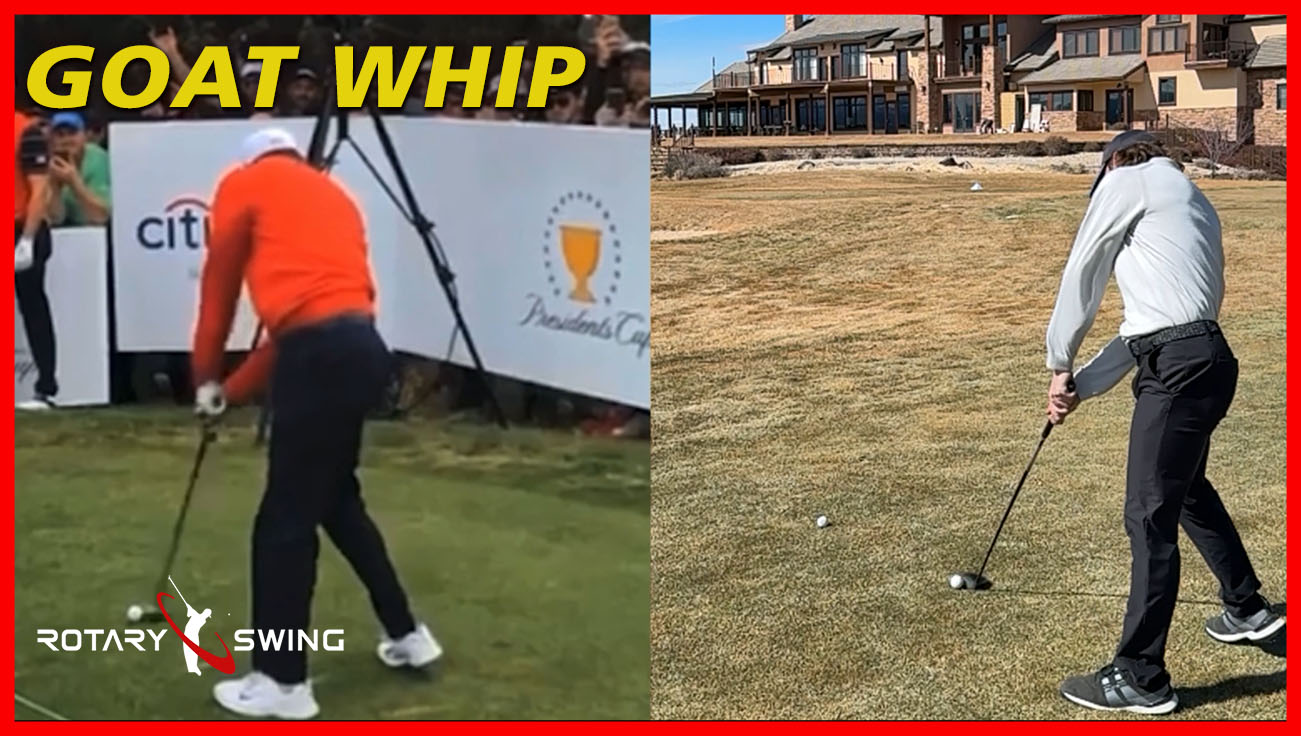
If you think about long driving or anything like that, or you think about like whipping the club, you have to have a break, all right?
There's no need to keep spinning through the shot.
There's no need to try to keep powering it with your right arm or right shoulder or anything like that.
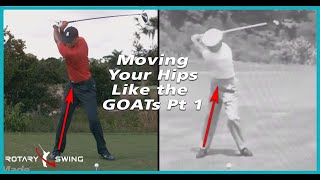
So the moving away from the target, especially like when you see in long drivers, you'll see as they start to work down into here and they start to post, they don't keep going this way.
If anything, as you're starting to post up and drive this lead hip back this way, you're actually going back away from the target, creating maximum width.
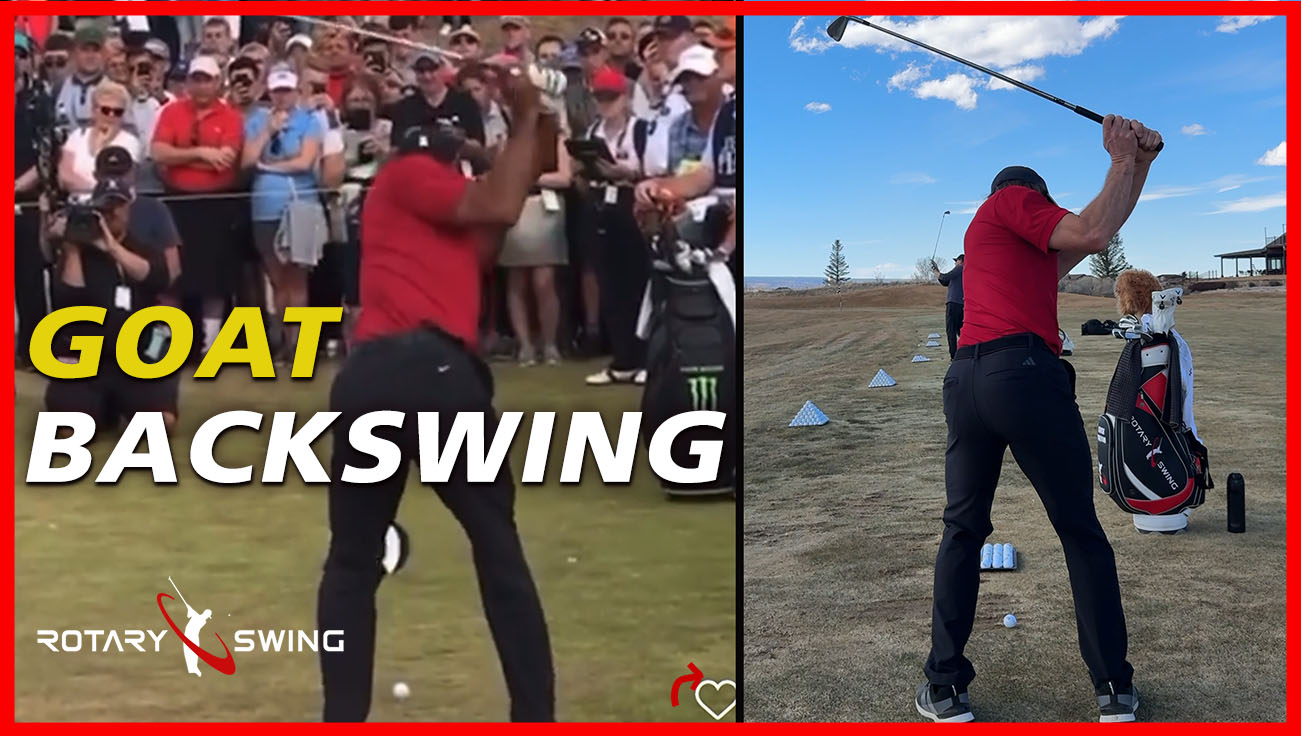
But if you go back to the kettlebell or it might have been in one of the medicine ball videos, when you're swinging a weight or you're, think about it, I'm going this way, early load up to here, down to here, but if I keep pushing, With my trail side and I keep moving laterally, there's no break for the club to whip.
So the feeling is I'm getting here, getting back and almost pushing away from the target.
That's why there was a video that Chuck did on pressure a little while back.
Where players get pressure wrong because they think pressure is mass, or they think pressure is okay.
I'm going to get here and I'm going to have this massive squat into the ground and I'm going to be able to pull all this leverage in time.
That's not really how pressure works in the golf swing.
So as you're going here, I'm always kind of going in the opposite direction of the club.
I'm I'm loading the club, swinging this way, I'm going this way.
Now, as I'm trying to get the club to whip over here, I'm actually pushing back and away from the target.
That's why you'll see when they kind of jump, they're like this, because you don't, you want to stop all that kind of forward momentum.
Because what do we need the club to do?
We need the club to whip.
So as I'm coming down and through, I had a club.
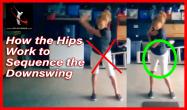
As I'm coming down and through, it's not just the raising of the lead hip.
This is what I see very often.
I don't know whose fault it is, but the hip goes up, but it also goes away.
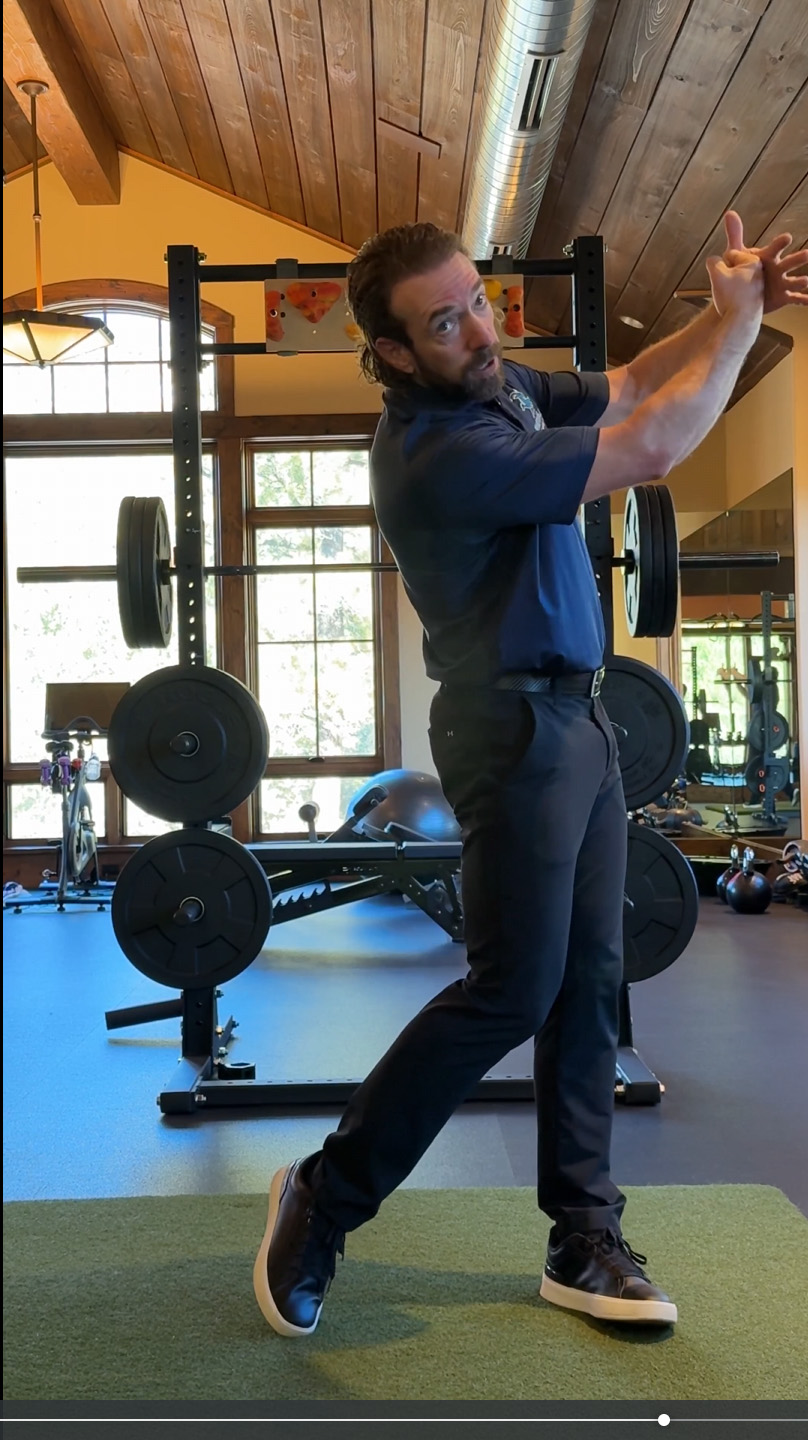
So as I'm doing this and I'm trying to create maximum, As soon as I plant here, what it sounds like Goaty's trying to tell you is instead of pushing off your trail side, getting more this way or standing up this way, you need to feel that as you're planting and you're moving from this toe to heel quickly, that you're pushing away from the target because if this was a big heavy weight, that's what it would look like.
I'm exaggerating this.
It'd be here.
If I wanted this club to get bottomed out, And then also pick up speed, especially when you start getting into parametric acceleration and all that.
It would be here.
Like that would create more speed than me being like that.
So that's what I'm interpreting the machines telling you.
So hopefully that helps.
Second question is dealing with Goaty.
I'm Craig.
I didn't tell you this.
Telling me the lead hip catches in the downswing.
I think you may have gone over this before, but can you demonstrate that as well?
Well, don't overthink this one.
So I think it was either the last one or the one before I was talking about like when you turn.
As if I'm getting my hip deep, which is now going deeper, my hip's getting higher, my core's rotating.
I'm maxing out at some point in time, my rotation and my coil around my trail leg is going to start to make the shift back into the lead side automatic.
When I start running out of room to be able to coil or torque anymore.
And so the lead hip catch is, as I'm coiling and getting here, I can't really go anywhere, so my lead hip, you can see, is starting to catch.
The massive amount of coil that I've done on this side because I've got one or two options.
I can either keep coiling and I can give up on this tension.
And there's a million things I could do, I could push, I could let my knee.
There's a million things I could do, but I can either keep coiling and I can give up on that tension.
And I can start to move away from the golf ball and fall over this way, or I can start to coil.
And now, as I'm maxing out on my tension, I'm starting to let my body.
So naturally, you can see as I'm doing that, my hip's already starting to pivot back towards the target because my hip's rotating this way.
When my lumbar spine's going this way and I'm torquing into my hip, I'm running out of real estate to be able to coil anymore.
So as I do that, my lead hip starts to catch to create that transition back naturally.
Players don't get through their vectors fast enough.
And as we've talked about it before, in the downswing, you've got your lateral, you've got your rotational, and you've got your vertical.
Those are the three main things you've got to get through to have an efficient sequence in the downswing.
I yelled at somebody about this today.
They were getting up towards the top, and they're saying that they're feeling the coiling and all that, but as they got up here, They were just sitting here.
They were waiting and waiting and waiting and waiting and then saying, okay, now it's time for me to start shifting my weight and getting back down to that side.
If you wait that long, A, you're not coiling correctly.
B, you're going to be in trouble because myself, Chuck, we're already way out ahead of you.
There was a video that Chuck put on Instagram, let's say like a week ago, and it's from the down the line.
Oh, it was a post that he said that, hey, down the line's coming soon with Goatee.
But if you watch his swing as he's doing that, which it's easier to see from face on, but this down the line you can really see it in.
So you can see he's really focused on keeping the wrist and the club quiet during this phase.
And you'll see as he gets to here, literally his lead arm's parallel to the ground.
And you'll already, you'll already see his lead hip starting to catch the coil that he has from here to get off this side and come down.
So the lead hip is catching all this torque and coil that you're getting right here to make that transition seamless so that you can get lateral and rotationals now done.
I've already done the I've already done the two out of three that I needed in the downswing door.
Now it's just get my hip out of the way and release this club.
And most players are just way, way, way, way, way too late to the party.
They're going up to here and saying, Okay, well, now I'll start.
But by the time they finish shifting their weight, or by the time they finish getting their rotation, the club's already here.
And for me, I'm, I'm, I'm already done.
I don't have anything left to do, my club is still right here.
So that's all that snap and whip that I can get in right there.
So the lead hip catching is coiling correctly so that as you coil, there's nowhere else for this to go except for the lead hip to catch like this to where now I can get through my sequence.
So hopefully that helps.
Hopefully that makes sense.
Makes sense to me.
All right.
Goatee is finding new ways to explain the swing.
Now he's promoting a fast throw from the top of the backswing.
Can you explain and demonstrate how this is done and how not to do it?
Goatee's finding new ways to explain the swing.
Now he's promoting a fast throw from the top.
Okay.
I might have to come back to the screen because I'll forget the rest of the question.
I think there's a big distinction that I want to make right now on this, all right?
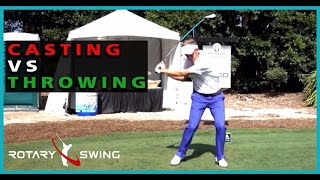
This is a cast.
This is not a throw, okay?
This is a cast.
I'm just throwing out all my angles.
I know I just said throw, but it's a cast, okay?
So, goatee in this instance.
Not knowing your golf swing.
Said question asker.
Goatee is trying to get you to A, get your sequence to organize correctly in the downswing, which is natural for a throwing pattern.
If I throw a ball and I throw and I do something with intent, I think that's the big thing.
When you see Goatee tell you, you need to have more right-hand throw or you need to do more of a throwing pattern.
I'm going to tell you what Godey's really trying to say is that you need more intent, that you have to do things with a purpose.
So if I'm up here at the top and Godey says, hey, you've got to throw harder, he's not telling you, hey, let's get up here and cast more angle.
What he's trying to say is that if you start swinging with some intent, As you're going to do a throwing motion, like if I had this ball and I was going to throw it down at the ground with intent, with some force, I wouldn't get to here and go like this.
Because I know, A, that might be accurate, but that's not very powerful.
My intent, if I was going to throw it, would be like this.
And so what Goaty's trying to say is let your sequence, let your body.
Organize the structure of what needs to happen with the weight and getting the hip out of the way.
By putting some intent on the club, by putting some intent on the swing, by putting some throwing pattern.
Hey, I'm going to throw this very hard.
It's one thing that I it's.
It's why I tell everybody Kettlebell or this guy, all right, they get lessons, come, or people ask me and they're like, what training aid you recommend?
or anything like that kettlebell and this thing.
Now, some people in this room already know this.
You would be completely surprised how I might have somebody that comes to me.
That's casting over the top.
Lack of weight shift the whole gambit.
And I stick an impact bag in front of them and they look like Tiger Woods.
And it wasn't because of the bag.
It's not the bag chains they're sewing.
But as soon as they had something to do with some force and some intent, their natural sequence, their natural ability took over.
Like, oh, okay.
Well, if I got to here and I went like that, I'd hit the outside of the bag and that's not very powerful.
Well, yeah, I kind of want to get over here, I kind of want to wait on it.
I want to leave my arms back until it's time to give this thing a pop.
And so that's what Gody's trying to tell you.
All right is sequence, the way that your body already knows how to organize this structure.
Can you demonstrate how that's and how not to do it and point out the difference?
Well, there's also a thing too.
We have players that ask us, like, what's the gravity drop or anything like that.
Think about hand speed.
Where's max hand speed in the swing?
It's between here and here, all right?
Some players get up here to the top, and their arms never move, and they just end up spinning, and their arms get trapped, and they come down.
Or they get here, and all they do is fire their arms and hands, and their body never moves.
So the intent is probably trying also to get everything moving with some gusto.
I'm here.
God, I got to get things going.
I'm kind of waiting too long for things to develop.
I need to get my weight, get my hip, get my core, get my arm, get my hand.
I need all this to start to blend into one motion being led by the inside, essentially.
But if you don't give your brain that feedback, There's a draw I saw on Instagram a couple weeks ago where, you know, somebody was.
They're turning this way and they're holding a pole and then they're creating their downswing, so imagine I'm holding a pole here.
I know it's going to look a little weird, but.
And so they're like, I want you to feel this like, get into this side, but feel like they're staying there.
Because What you're trying to do is get this to structure.
All right, that's going to whip this down.
So the throwing pattern is trying to probably increase a little bit of your hand speed, get your body to organize the same way that you would structurally while throwing a golf ball to kind of get out of your brain.
Club here, club here, club here, club here, shift weight, do this, do this, do this.
When your body kind of already knows what it needs to do to stay upright.
Kind of do this with some speed, and I'd be willing to bet if anybody has one of these at home.
You can tell me in the next webinar.
Craig, you're full of malarkey, you've had too much mountain dew.
Um, whatever, whatever you want to say.
But I'd be willing to bet for those of you that have one of these at home, pull it out.
And, if you can, swing and hit a golf ball and then set up to this impact bag.
I'm not saying, go kamikaze, but set up to this impact bag and make the same swing and tell me they're the exact same.
Because more than likely you're going to say, man, my swing with that impact bag looks a little bit better than that one with that golf ball, especially for early throwers.
Like that's why I got a student right now where I have him.
Here's impact bag.
I've got him drilling, hitting the impact bag.
And then I've got him drilling, putting a ball with the impact bag just to get used to making contact with the ball and making the same thing.
And then I've got him, excuse me, where now his goal is he's got to recreate the same thing with the impact bags further out of the way.
Because as soon as that target moves from here to here, he wants to start throwing a little bit early.
No, you've got to keep moving through that.
So, Goaty is looking for intent.
I'm not Goaty, but that's out here.
So with that being said, I'm going to go to the screen because that's all I got.
Apparently nobody likes me anymore.
Goaty don't like me.
Y'all don't like me.
Nobody likes me anymore.
I got to have fun with y'all today.
It's been a hell of a week so far.
So if you have any questions, anything, golf, life, you name it, the floor is yours.
So I'm going to start with Steven.
As you demonstrated, I load into the trail hip, the coil shifts me onto the lead foot and leg, and the goatee drill Chuck says to load into the lead side to start.
Please clarify.
So if you're needing to load or if it's saying load into the lead side to start, I've got to be careful with this because there's two ways I can take your question, Stephen.
The trigger to kind of start the swing is you want to start into the lead side to get things going.
So one, I have to know exact notes what it's saying.
But one, moving into your lead side and getting that to go back is the trigger to start the swing to get the fascia lines to stretch.
Think about like a weight.
I move a little forward and then I start to get to go back.
Somebody is like a couple of days ago or yesterday or something I saw on my YouTube thumbnails.
Somebody literally was talking about this, that on gears, you can see the vast majority of tour pros start a little bit this way.
The other thing is it could be saying that you need to organize around your lead side a little bit more, that everything's happening too much in this space and that you really need to kind of feel that your lead side.
Is structuring how you're moving this way and how you're coiling that?
The lead side is actually a little bit too dormant with what you're doing with your coiling?
So it depends on what notes it's giving you.
Because I've seen, I've seen, not this one, but this advice for some players.
And I'm like, wait a minute.
This is saying two completely different things, but it looks like it's saying the same thing.
But that's, that's the two that you got to look at with your story, David, I agree on the impact bag.
All right.
So I'm hitting something, right?
But this is.
I'm telling you, if you don't have one of these, I've got like 90 of them in my garage.
I'm telling you, this is a great tool because it gets you to kind of get out of your head for a second.
And it can be fun because you can just hit the crap out of it instead of throwing your club or snapping it like Bo Jackson.
Manny.
Craig, I'm jumping on this late.
Just finished an hour lesson with my pro.
Okay.
He said that I should be throwing casting early from the top.
I was getting a spinny fade slice ball flights.
Not sure I can trust.
Not sure.
I can.
Not sure I trust I can play a whole round like that with spinny casting.
Because you probably started casting.
There's a difference.
Okay.
Without knowing your swing, Manny, so this is a little tough.
When I'm up here at the top, all right, so just imagine this is my top piece.
I don't want this.
I don't want this amount of angle.
Because A, it makes my swing too levered.
B, it killed my width.
C, now I've got to get this darn thing square.
So I don't want to set up like Sergio with my grip like this.
Insanely strong because I've got to do something to get this clubface to square up because I have an insane amount of lag.
Conversely, I don't want to go up there and cast.
But you're going to see, like even Scotty or anything like that, you may see a little bit of widening here.
So what it sounds like.
is that your pro is trying to get you to maintain your width better coming down so that you can get the club face square.
But what it sounds like is that you actually started casting, which probably then got you a little bit steep, and then you couldn't get the face square.
But there's nothing wrong with once you get up here feeling that throwing pattern.
It may feel like you're casting, and this is why this is on a one-on-one basis.
I can't make this as a blanket statement for everybody.
You may need to feel this even though you're not doing this.
But what he's probably trying to do is getting you to maintain this width of the arc, so it's a lot easier for you to take advantage of the width.
But also square up the club.
Without seeing it, it's kind of tough.
All right, let's see.
Where was I?
Okay.
Second question.
When I release the coil from the trail side, the momentum is not carrying me through to chest face forward.
Face forward at impact or face forward like you're talking about follow through or impact, Stephen?
Follow through.
Okay.
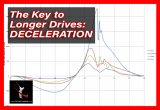
So the follow through, if you're not getting to a follow through, then you're muscling it at some point.
Because the follow through is just the safe deceleration of motion.
That's all it is.
So what I would check to see, which is kind of going to be counterintuitive, you're probably not breaking effectively.
You're like, wait a minute, Craig, I'm trying to finish my golf swing and get my chest facing forward and all this.
And you're telling me I actually need to break more.
Yeah.
Think about like the whip video or anything like that.
What I need you to do.
is I need you to get down here.
Once you get this coil and you get all this done, I need this whipping more so that momentum can carry you through because I don't need you to continue to push and try to drive.
And what it sounds like is that you're getting here and you're doing it with your arms.
And since you already unloaded your coil and you pushed your arms to get to this point, there's no muscle left to get you to a finish.
There's no momentum left to get you to a finish.
So what you need is you've got to get this whipping a little bit more by actually slamming on the brakes a little bit better.
So that when you start to do that, you can start to allow the club to whip you through it.
Going off your notes.
Obviously, it can be two different things.
Graham, can you explain how you throw your trail hand from the top of the backswing?
Sorry if I already covered.
Just did that a second ago.
So the throwing of the trail hand, It's not a cast.
It's still, like even if you think of like J release or anything, the throwing of the trail hand for some players, and like I said, you can't get too much like this player feels this, this player, because everybody's a little bit different.
But the throwing of the trail hand is the same thing as like throwing of a hammer.
It's this.
My elbow is going down in this way.
My arm's starting to extend and my wrist is going away.
You're not trying to get here, throw your wrist and then do your arm.
Think about it like a hammer.
I'm trying to throw just like I would with a hammer because my arms and hands are going to work in this phase over here.
Now as I pivot and look at where I'm at.
So think about more like a hammer throw.
You know, because even if you think like supination, like J Release or anything like that, It's going to supinate as you start to throw.
Because as soon as you start to put intent to this hand, This hand is going to go that way.
The way to the club is going to go that way.
Now, We're down over here.
Now.
We're into impact in this position So think about it as you're starting on coil you're trying to almost kind of hammer throw it All right, and as I hammer throw it and pivot with my body I'm right now at impact Stephen, do you add muscles with the lats on the coil and spring back?
I don't have any muscles.
Do you add muscle from the lats with the coil and spring back?
I don't add anything intentionally.
The lats are already engaged.
If I'm coiling correctly, then my, especially the lower fibers, should be pulling down and they should already be wanting to snap back.
If I'm actively trying to do something with a muscle, I'm probably not going to get it done in time.
I'm not saying you can't.
But the whole purpose of the fascial sling and stretch and all that is I'm not actively trying to make a muscle do something.
I'm trying to recruit so that it does it on its own because that's where the free speed and all that comes from.
So, I mean, if I get up here, I mean, if I go like that, I can feel my lat.
But I can tell you that my swing, Chuck's swing, we don't feel like that.
The lats are working, but the goal is to recruit the muscles in the sequence so they snap back on their own.
I'm no perfect golfer by any means, but I hit it a long way for my size and my strength and my extreme lack of practice.
And I don't look like I'm trying to hit it a long way.
And that's because what I'm trying to do is I'm trying to be that rubber band where I get that tension and coil to get that going.
If I start actively trying to force a muscle like a lat, especially in the backswing, because I did a video, man, this was probably like 12 years ago.
I did a video called shoulder blade wrenching.
Because what I kept seeing is that players took this two-inch glide in the backswing with the shoulder blade, and they were just immediately ripping.
their lat to get to the top and nobody can get to the top of their backswing because it can't move anymore now and it's already locked.
So in answer to your question in a long way, no.
Ira, when I first started to watch Chuck, he talked about right arm, elbow and hand, but the recent videos online are about rolling the left hand release.
Can you explain the difference or sequence of the two?
Well, it's the same.
Yet again, it's one of those things where, you know, You have one video, it's not always for the masses or for that particular player, everybody has a different set of problems.
It still goes back to the same thing.
This is your speed, all right, this provides a little bit of control.
So what we were seeing a lot is that.
As soon as we told you guys and gals that, you know, start throwing with your right hand, well, you took that literally, And so you actually started throwing it, like casting it.
And so the right hand started taking over too much.
So the point of the whip video or the point of what he's trying to get done with the left hand is he's trying to say, hey, you are getting speed in the sequence and all this is coming from your trail side, but you're not trying to push this for power because that's what players just started doing.
They started pushing this for power.
What you're trying to do is to get this.
And when you get down here, feeling like this thing ripping out of your hand and doing it with the left hand right there not only gets this structure correct, but also gets you out of overly working this one.
Because that's just what we start to see is that players take one thing and then they go work on it and then they put it in maximum overdrive.
And now they're on the other end of the spectrum, where their right arm and hand are doing way too much.
Balance them, Padawan.
Balance.
He later says it's a passive move, not active.
Correct.
It's a reaction.
Paul, totally agree with purposeful swing.
When I changed that approach, it all came together for me.
Body naturally knows I had a ball sitting on the ground if you just get your mind out of the way.
Exactly.
It's not going to be like that for everybody, unfortunately, because it all depends on what kind of hitting, throwing, sequenced.
You know, things you've done in your life.
Okay.
It's like, you know, I'll give you a good one.
So I'll give you a little tidbit.
Y'all can use this when you're taking my information and giving lessons to other people.
I had a Larry David incident the other day.
I get this all the time.
Craig, you know, when you get up here to the top of the backswing, I see your foot, I see Chuck's foot, Tiger's foot, Roy's foot.
You get up here, and you can see, like, our foot starts to twist like this, or our heel goes this way, all right, as we start to go that way.
And for this particular player, this player was coming down, and immediately as their shifting weight, their foot was going like this.
And they're like, yeah, but the tour pros or you end up with your foot there.
I'm like, yes, initially, but not in transition.
And so I saw a really good demonstration online.
I said, well, think about it this way.
If you had a top on this bottle right here, and you're going to open this up with your left hand, all right, would you rotate your hand this way?
Grab the cap and now try to twist it.
Not only do you run out of range of motion, there's no torque.
What do you do every time you open up a bottle?
Here's your hand, twist your hand this way, and then you use that torque and leverage to get the thing, to get the cap off or lid or whatever.
Same thing with the foot.
If I get here and my first move is like this, I've now made my knee my primary sea balancing joint, and I've got no torque to be able to use.
Well, think about it like a lid with a bottle.
If I was right here, I would actually want to go this way, which would give me the ability to actually torque more.
So it's funny how, like what you were talking about, when you start doing things with intent and natural and all this, you do a lot of things naturally in everyday life without thinking about it, that if you put those things into your golf swing, it'd be like, oh, this makes sense.
Just like this.
When you do it with your foot in a golf swing or think about that, it doesn't make sense to you.
Hopefully, as soon as I show you this, you're like, oh, well, that makes sense because that gives me the torque and leverage to be able to open this cap.
But if my foot was this way, I can't turn the cap now.
There's no torque and leverage to be able to do it, and I'm out of range of motion.
So a lot of these things you kind of already naturally do just in everyday life.
That you got to plug into your golf swing, and a lot of players already do that.
It's like when, sometimes, when I do speed with players.
I'll put them in a chair and I'll have them start swinging in a chair.
To show them how they naturally would start to counterbalance the chair, which is what they don't do in their golf swing.
Which goes back to the very first question of the day about moving away from the target as the club whips this way.
You would never sit in a chair and follow the chair and go this way, you would actually go the opposite direction so the chair wouldn't fall over.
Food for thought.
I've got this broken brain up here.
Hi, Craig.
Hi, Scott.
How are we doing today?
I need a better understanding than I'm getting from Goody about my biggest swing flaw.
He says I do not fully load in the backswing and therefore turn all the way through the downswing to contact.
I don't know how to feel or load more than I do.
I understand or feel stopping my active turn of the downswing.
My feel key is that when I've turned in the backswing far enough that I recenter and then I just swing and I don't feel anything helpful, give me a hint how to correct.
It's tough without seeing your moves, Scott.
But the way I'm taking those notes is two different ways.
I don't know how to feel or load more than I do, and I do not understand or feel stopping my active turn of the downswing.
My feel key is that when I've turned in the backswing far enough to recenter, which we want, then I just swing and don't feel anything from there.
See, I don't really even feel any swing after that.
This is my feel.
Is that as soon as I get here, I'm done.
Now, my arms and hands and speed would be about right here by now, but I'm done.
So if I'm torquing and I'm getting all this built, this snapback is very snappy, no pun intended.
I never feel like I'm turning through the shot and saying, hey, what's going on over here, guys?
So if you're feeling the need that you're having to turn this way, then A, you're either not loading correctly because you're saying you're feeling an intense amount of load.
I don't.
I mean, I'm tight, but I'm not.
I can still have a conversation with you all right now.
So that'd be the first thing.
The second thing would be, if I'm getting this coil correctly, then when you're uncoiling, you're activating something.
All right?
You're trying to push with this or push with this.
or rip this, or something like that.
Remember, I'm trying to get this to uncork snappy.
Like, I'm done now.
Like, I don't need anything.
Now I want the club to sit here and whip over, all right?
So it's either A, you're getting too much load because you're not coiling correctly, and that's what feels overly tight, or B, you're uncorking of this.
You actually are trying to turn through the downswing.
Now, you say that you don't feel a natural breaking with this.
Impact bag would be a great thing, but you may need to practice that.
You may need to practice a natural braking.
There was the acceleration video that Chuck did where he wanted you to get here, coil, and then so that you could get this snapping back fast but feel like, okay, I'm done.
Now I let this whip through and that's what's carrying me through.
So first I'd check your coil and without seeing it.
But I check your coil.
Because if you feel like you're really, really loaded and it's not doing it, then you're probably either not loading correctly or you're overloading.
Which I've seen.
But b You may need to practice well.
Hey, I'm here.
Just like when Chuck does the whip video and he's like, Hey, get here, let gravity in your arms, get down to here and let this whip and then just combine it with.
So, it might be something you have to practice that way, but not seeing your swing, but that's my thoughts.
Bill.
Goaty says your body peaked early and the brakes came on ahead of the schedule, which is what I was just showing.
Passing where they should be building, and the number that explains why is your coil depth.
It's 24-4 against the 40 we want.
The turn is firing before the stretch is finished loading, so the arms have to rush and catch up.
The club gets thrown from the top instead of released.
In the end, you end up steering instead of letting it rip on its own.
So your body peaked early and the brakes came on ahead of schedule, passing where they should be building.
So either A, you're not coiling, you're not finishing your turn, because your coiled depth is 24.
Against the 40 plus that we want.
So you're not finishing your turn to get into that lead.
Hip catch, which is still allowing you to build and stretch your fascia in the backswing.
And so what it sounds like is that you're, you're short stopping, all right.
You're like, I gotta, I gotta turn a quick two.
No, I need you to think more, like, Hey, I'm, I'm in the outfield and I gotta toss to home plate.
No, I'm not Bo Jackson trying to, you know, throw out, who was it, Harold, but I'm trying to just make a toss.
So I'm trying to get a lot of load to where I get coiled to where I have to go back this way.
But it sounds like you're like, oh, I kind of feel good.
Let's go.
And so what ends up happening is you peek out too soon, which is now forcing your arms to have to really catch up.
Now, this isn't a perfect demonstration.
A good way to kind of think about this, take this with a grain of salt.
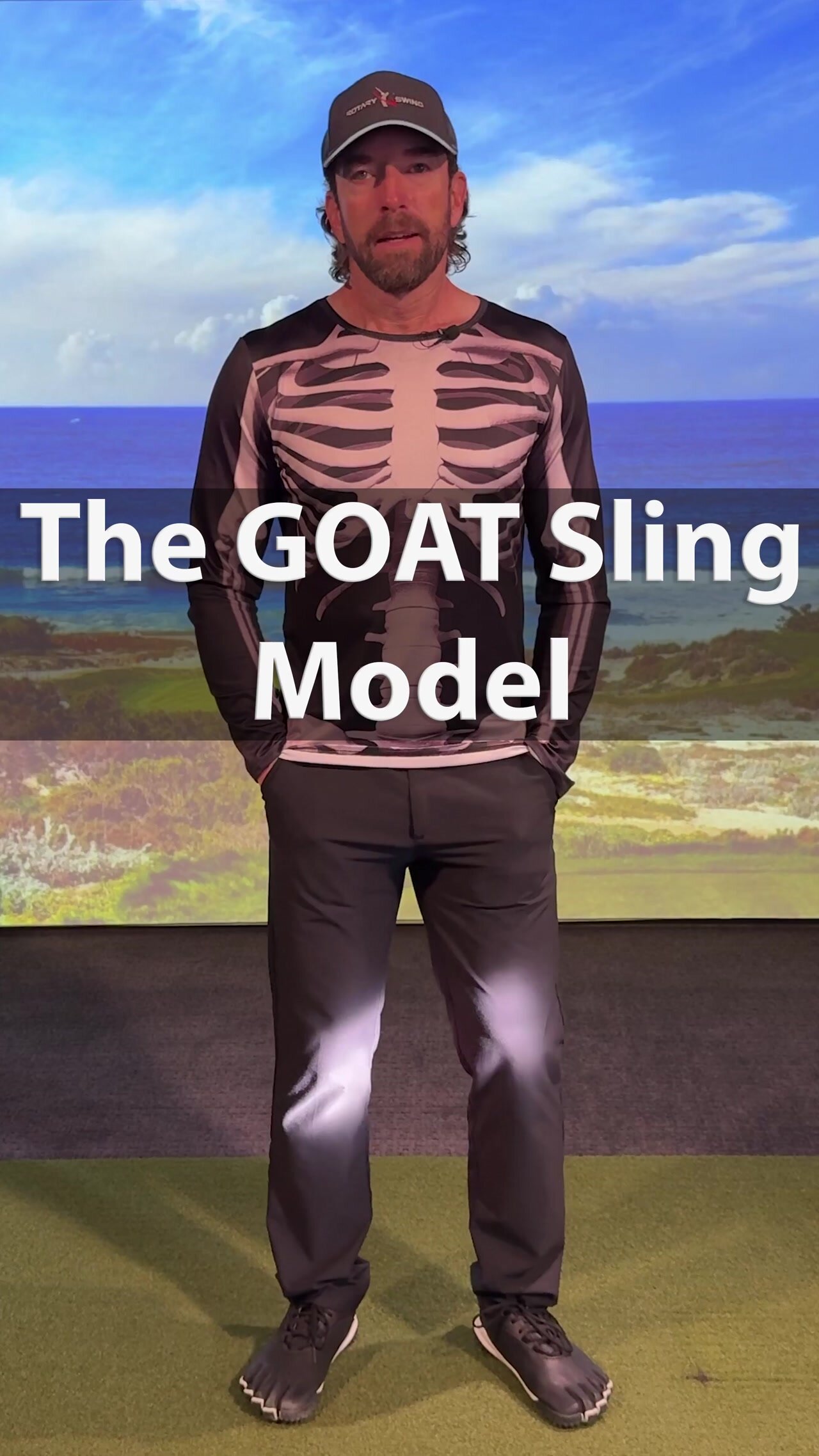
I tell people I'm like goat sling.
So think about sling.
Think about the word sling, the definition sling.
If I'm right here and I'm trying to sling something, I repeat, this is not a perfect analogy for this, but it may get you to see it.
If I'm right here and I'm trying to sling my arm, what it sounds like you're doing is you're like, okay, well, I'm going back over.
I'm going.
And you can see how my arm's having to rush to try to catch back up because I've already started firing too soon.
Versus if I finish my turn and I keep turning and my arm gets to this floaty stage where it's like, okay, there's natural adduction that does happen with the arm.
Well, now I can build and it's got time to build up potential energy and speed to get down here.
But if I start to coil and I go.
Like I've got to start to manually pull this arm to catch up to my body that's already fired and already slammed on the brakes.
But if I'm coiling and it's still building, it's got time to have that natural kind of sling to it.
But if I get, now you can see how my shoulder, I've got to manually catch up with some push.
So if you can kind of wrap your head around that, that the goat sling, which means fascial sling is.
kind of like a sling.
Don't break the sling.
How would you sling it?
You would wait for this to maximize, and then as this would start to go, this would develop, and then it would snap, because it sounds like you're prematurely, I'm getting here, I feel a little tight, time to go.
But because you do that, your arms and hands get left behind, you slam on the brakes, and so now you're required for these guys to play catch-up.
And any time you're going from here, and you're having to speed up your arms and hands, good luck.
You'll never hit GDP.
You'll never hit impact.
And the reason I say that is because I see that all the time.
I would personally rather have a player that gets here and is like, okay, I'm getting here.
I shift my weight.
My arms are coming down.
I release.
I really didn't do a whole bunch of my body.
Okay, I can plug in some fascial structure and get some snap in there.
But if I've got somebody that's starting to wind back, getting to here, And they're like, Okay, I'm gonna murder this, but they're like, Okay, I'm getting here now, this is, this is a trouble zone.
Now I've got I've got a million different things that I can push.
With this flip on my hands, I can hold off for dear life and try to push even harder with my body.
You're breaking the sling.
Paul.
Great point.
Don't know what point I made, but I appreciate it.
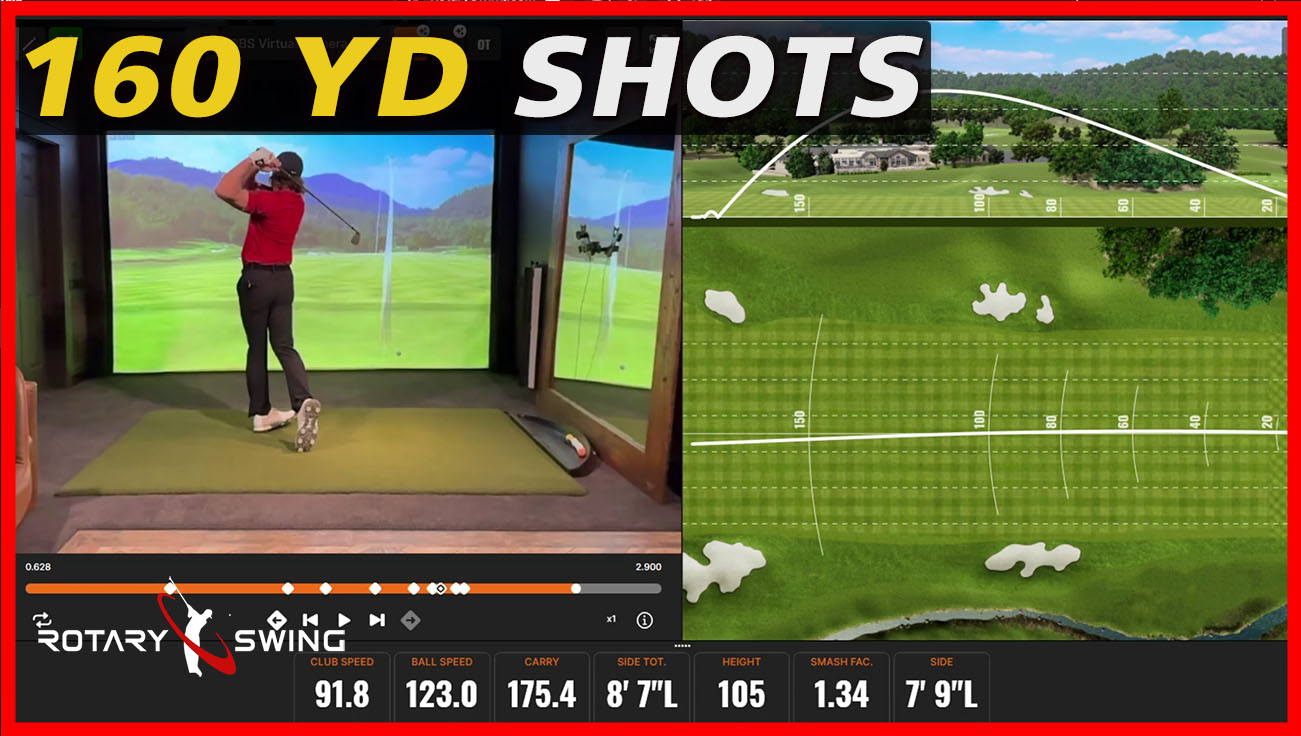
When Chuck is performing the 160, 178 yard, how is he getting the variety of swing distances?
Is he moving back or coiling with different distance back or adding something different in the downswing?
As he's going through, it's just tempo and pace.
You can see his swing length changes a little bit right there, but it's the same thing as.
Well, better not lose it on my first try.
It's the same thing.
I've got this club right here and I'm like, Okay, I want to hit it 130 yards, so I'm going to go to here, get through my sequence, hit it 130 yards, all right.
Or I can do the same thing with the same mechanics, same everything, with just a little bit more intent.
And say, Okay, well, I actually want to get here and hit this 200.
should have hit it 180.
What's a dent in the wall?
So it's a little bit of both.
It's one, okay, I'm just kind of going through my sequences, letting this snap back.
Now I'm going to kind of do something with some intent.
I'm going to get loaded.
I'm going to stress this harder so it snaps back firmer.
And then especially if you're doing the foot trick or anything like that, you can move that pressure even quicker to get more snap.
I've got some drywall mud around here.
I should.
What varies or does it from an iron to the driver or a fairway wood in the goatee technique?
The site has a whole series of videos on driver, but they were done before the goat stuff.
Will that be coming on a revision?
I've talked to Chuck about getting some drivers on there.
As y'all just saw from my swing, we don't want to copy my swing.
The iron and driver are the same.
I mean, to simply kind of put it.
Gerald lost video.
Did y'all lose video or is it just Gerald?
Okay.
Yeah, okay.
sorry, Gerald.
The driver and the iron swing are the same.
It's just a setup differencing.
I mean, your low point changes all this stuff, but iron, two inches outside of neutral roughly, your low points right here.
As soon as I start widening the stance and I have a little bit more tilt, and my hips have this extra room to shift.
Because I got to move laterally more, which is going to create more secondary tilt, I'm just catching the driver at a different time.
So I know we all want to believe and have multiple different movement patterns, but we really don't.
I said this in a webinar before.
I can literally watch somebody putt, And I can typically tell you what they're doing wrong in their five-iron swing, because whatever movement pattern is theirs typically goes throughout the entire bag.
So you can't be like, okay, hey, this is my iron swing, but now I've got this completely different driver swing.
It doesn't work that way.
So it's the setup adjustment that changes where you're going to catch this ball.
And with the fairway wood, what I see more often than not is that the players try to hit the fairway wood like a driver.
To get extra, carry, get extra thing.
And so they start swinging up on it.
When you really want to feel actually a little bit more down on it, or a little bit more kind of zero angle attack, let's see.
Can you talk a little more about the left arm floating?
This is great what you're doing now.
I'm always getting the message to float the left arm, and I'm not sure what that means.
Well, I'm not sure what Goaty's trying to tell you, because I don't even know what he's saying half the time.
Can you talk a little bit more about the left arm floating?
Well, the float of the left arm, I mean, it kind of goes on both sides of the spectrum.
So if I'm right here, and I'm.
Moving me all right, so I'm starting to get my hip depth and I'm getting my core.
All of this, like, watch my arm right here, like all of this, like my arm really hasn't had to do anything yet, all right.
So now that I get this loaded and stretch, that's what swings my left arm to the top.
It doesn't pick up, it doesn't lift.
It's the fact that all this load and stretching, this is what's moving my left arm right here.
And so what ends up happening sequence-wise is that my left arm actually starts to kind of adduct a little bit across my chest, and then it actually adducts a little bit more in transition.
So as I'm going this way and loading and going here, my arm starts to float.
It starts to adduct here.
But because of the lead hip catch and the sequence already starting this way, before I'm finishing that way, that's what creates this, oh, I never had to think about getting my arm in hand right here.
I loaded me, this kind of floated to the top, and my sequence got me all the way down into here.
Where now this is fully stretched, to where now this thing can snap into impact.
But what I see more often than not is that players use their arms going back now, they rotate, so now there's no stretch.
It's just kind of arm pickup and now as they start to go down, they start to push their arm or the arm.
If you think about the kind of chain of events or like a sling, I know it's not what goat sling is, but it's the way that I've tried to relate it to people's thing about a sling.
If I'm here, I haven't really done anything on my arm yet.
My arm is chilled.
I'm letting my arm move in response to what I'm doing.
It kind of has this floaty, non-lifty, and that's where this kind of gravity.
You can't make gravity happen.
If you figure that out, Call me.
We'll go 50-50.
But if I get to here, as I'm starting to go this way, this is still finishing, and as soon as my lead hip catches and I start coming down, it's got nowhere else to go if I'm not trying to do anything with it.
So hopefully that helps it a little, or helps the explanation.
I'm at an airport, Stan.
Which airport?
ATL?
Busiest airport in the world.
Dennis, I've never been great at throwing a ball and feel this fundamental is holding everything back.
Dennis, I played baseball for 10 years.
I was a starting first baseman on our high school team.
First year.
There's a reason I played first base.
It wasn't because I couldn't catch.
It wasn't because I couldn't hit.
So what do you think is the best way to learn the sequence correctly?
Exactly how I just showed it.
All right.
The throwing pattern, regardless of you being, you know, Greg Maddox or me throwing a ball, you're not going to throw a ball.
It's the same kind of movement and pattern.
Now, yes, you know, I had a hard time because I couldn't get where my release pattern should be.
I knew how to move my body, but I couldn't get my release pattern down.
So one, if you're trying to get better at that, The impact bag is great for that because you can just sit here and do trail arm swings.
And you can really work on getting down here and trying to create the pop at the right time.
But it's more about the sequencing of it.
So if you struggle with doing it right arm and saying, hey, I'm not a good thrower of the club with that.
I would do it exactly the way I just did it, especially, I mean, I'm a lead side golfer, so that's pretty easy for me to think about, hey, if I was, you know, like I've said about like smacking my hand or anything like that, like if I was trying with intent, trying to pop something right here, how would I, I wouldn't go like this, nor would I go like this.
If I was trying to get my hand back to impact positioning right here with some authority.
That's how I would train my sequencing.
A good, um, I don't have the kettle around here, they keep saying, you know, good kettle, take me out of business.
If you take a kettle, grip it like this.
Okay, now, don't let your arms do anything wonky and just start to go back and forth.
All right, and start to make it really big.
Without your head going all over the place, and what you'll feel is here, Okay, I've got to support this weight coming down with my body.
And if I wanted to throw it, you'll start to get the sense of timing.
The kettle's really good for that.
And the two-handed medicine bowl.
There's a video on phase three.
Phase three or phase four, Chuck's got a two-handed medicine bowl.
Okay, get one of those.
If you get that and you start feeling how you can maintain GDP with your sequencing like that, that will teach you the same throwing pattern that you don't have when you're.
Trying to throw.
Burbank?
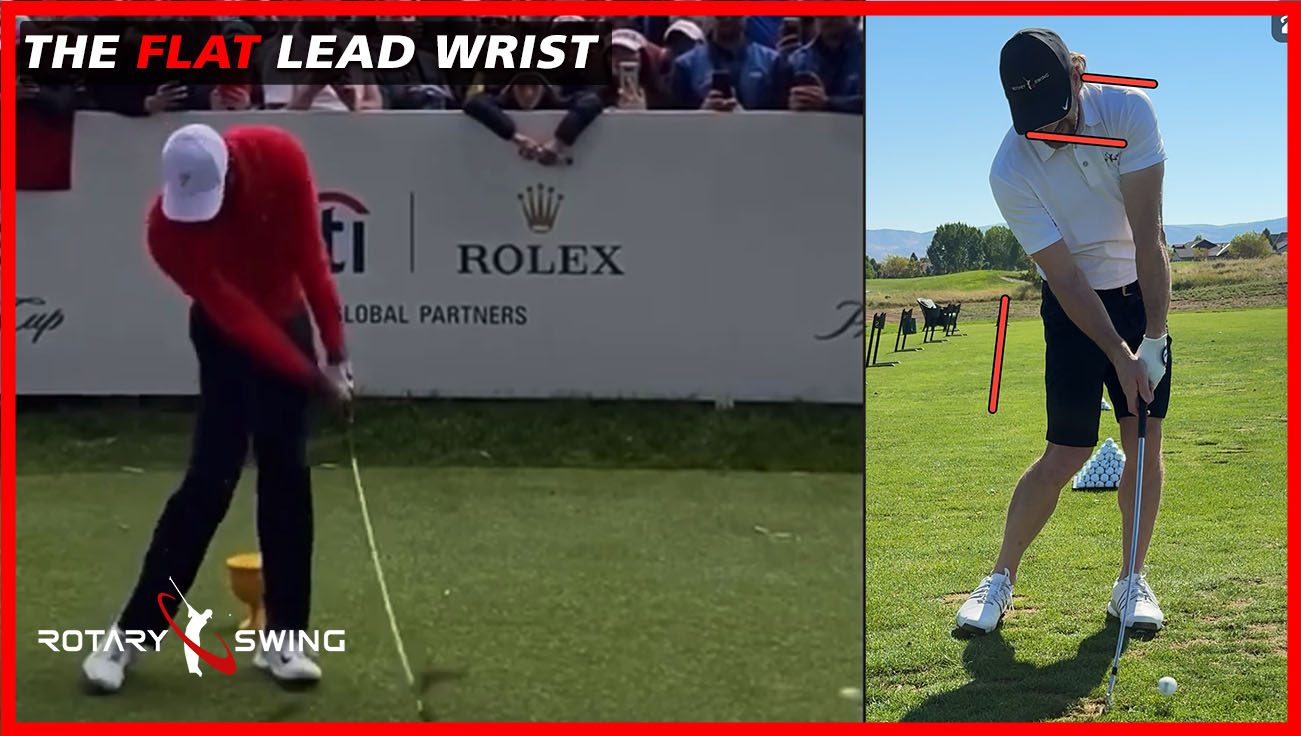
Tom, is cupping the lead wrist the only thing that keeps the club out in front of the hands?
Keeping the trail wrist flat?
I mean, you can't have the yin without the yang.
So if I'm right here, If my trail wrist is staying flat, then my angle, my lead wrist is staying the same.
So you don't.
You don't really need a ton of this, you definitely don't need any of this.
So yes, there is a little bit of elevation and there's a little bit of set right here.
So, but for players, depending on what side dominance they tend to lean towards.
If I start to go back and I keep my trail wrist flat, my lead wrist has to maintain the cupping.
Or, for me, who's a lead side player, I don't.
I mean, I literally don't need this arm.
I'm like, okay, I'm just maintaining that angle as I go this way.
So it's kind of both edges of that coin, both sides of that coin.
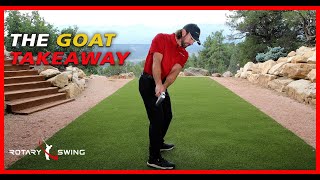
But that's why, if you are, if you've ever watched my video on the Takeaway, Just use this thing.
Take this stick at the edge of your grip right here.
Don't let your club get inside while keeping your hands inside.
And what you'll notice is that as you start to do that, this has to maintain the right wrist has to stay the same because as soon as you give up too much on this.
Now, I don't like this.
I'm not saying this because, look, both are on the inside right now.
I'm still letting.
Natural rotation happen, which you can see if.
I maintain my hands as I'm getting.
That club stays on the outside because my wrist stayed quiet, but my hands are still on the inside without pushing them out this way.
Uh, Steven, you've answered my questions sufficiently.
Now I need to record videos and send to you for a swing review.
Do you feel the effluent swing, as Chuck calls it?
I think I have the sequence incorrect.
I've gotten rid of the chicken wing.
Nice.
Nice.
Looking forward to it.
Looking forward to it.
Send it my way.
All right.
I'm going to take Ira's question, and then I'll take one more after that.
Ira, you said you're a lead side swinger.
I am.
Too many teachers have told me to swing with the left arm.
In a good way or a bad way?
Why have they told you to swing with the left arm?
What's their major problem in the swing?
Are you steep, casty, lack of release?
What's your big issue?
They want me to use the left.
Even with me being a lead side swinger, my trail arm still has a role.
It still provides.
It's a passive conduit of speed.
So, think of the way that I want to phrase this.
You don't power it with your left arm, and you don't power it with your right arm.
regardless whether you're a lead side swinger or you're a trail side swinger.
The arms don't create any of the power.
Now, if you're using the arm as a pendulum because you're slinging your body with your hip and leverage to get it to go this way and have it release, no problem with it.
But that's definitely going to err more towards a lead side swing.
But it kind of depends on the use case.
For me, being left side, I've got a right shoulder that's basically pointless.
And my left hip, I broke.
So kind of between a rock and a hard place on this one.
But for me, as I'm going through this, the big thing is don't try to power it with your arms.
And so for me, left side is very easy for me to feel the shallowing, feel the leverage, feel the whip, as you can see in that whipping video.
But most people that are right-handed, their brain's already structured like, oh, I can create kinematic sequence just like this because they know how to throw, and it's very easy.
Now, if you bring my left arm back on, it's going to look like I know what I'm doing.
Just don't go to where you're using the left arm as in you're using it.
Okay.
Even me being a lead side swinger, I'm not using my arm.
I'm using my sequence and I'm feeling what my left arm and hand's doing.
It's reacting to the motion.
So I don't care if anybody tells you to be a little bit more left side, but don't get to the point where you're trying to actually use the arm.
All right.
So that's kind of tough without knowing your move.
Stan, much easier for me to understand Craig than it is Cody.
Well, thank you.
I don't know.
Cody's winning the battle, but I appreciate it, my friend.
I appreciate it.
Tom, does the lead knee moving toward the ball, does the lead new moving toward the ball get the trail hip deeper or is the trail hip going deep make the lead hip pop out?
Well, that's actually – I mean, that's a good question, Tom.
It kind of goes both ways.
Some players actually need a little bit more lead side engagement, and some don't have enough with their trail side.
So for me, when I'm teaching most people to do the trail side or more goatee or the coiling, I think about it more as reactionary.
If I'm starting a little bit into my lead side right here and I'm trying to load – My lead knee, this is being a little, I'm keeping the structure here because I want to build this line of tension, but my coil, it's reacting to this side, right?
Just like when I get to here, my lead hip is catching because it's reacting to my trail side coil.
My lead hip is posting because I'm driving my trail side.
So some players need a little bit more pivoting around.
The lead hip socket are getting this involved.
Some players need that, but I always think about things in a reactive nature.
All right, if I'm standing right here and my trail hips going deep, going deep, okay, my shoulder plane is now getting super steep because it's getting deeper and deeper and deeper.
That's where this is coming from, right here.
I never had to, I didn't think about that once, But this is a feeling, real thing.
Some players do need a little bit more help from the side or to organize their structure more around their lead leg.
For me, what I see more often, more often than not, It's that this left side needs to stay a little bit more stable as they're coiling, so that they start to create that line of tension as they're coiling.
And that's what creates.
So now I'm now I'm.
No problem, Myra.
All right.
That it?
I think I said that was going to be my last question.
I'll give you one more.
It's 8.
09, but it's got to be a quick one.
A zippity-doo-dah question, a flash question.
Flash room.
Nothing?
I mean, you're at the Burbank Airport.
There's got to be something going on there.
I know y'all don't just want to have me stand up here and swing.
I know I shouldn't be doing that because then what happens is then I get comments from people.
Hey, Craig, I saw this in your swing on the webinar or was doing something the other day.
So why do you do that?
And I can't do that.
That's more what I got to get.
That's what I need in my swing, just a little bit more.
All right.
Well, plane's delayed, so you can work on your swing.
Tom, Mountain Dew regular or diet?
Diet.
All the way.
I need all the aspartame and saccharin.
I need as many bad chemicals as you can give me.
Mark, well done.
I appreciate that.
Stan in Plains of the Lake.
Charles, thanks, Craig.
Have a great evening.
Thank you.
Thank you.
Well, I hope everybody enjoyed.
Hope you learned something.
I learn something every time I do this.
So I hope you all will join me again the next month if I haven't been sucked in by the machine.
And I appreciate you stopping by.
Give me an opportunity to help you out tonight.
Hope this helps you out.
I hope this makes it a little bit easier.
You know where to find me.
You know where to find Anthony.
You know where to find everybody on the site.
If you need any help, our number one goal is to get you just playing golf and enjoy it because I'm tired of those.
Pardon my language.
I'm tired of all those miserable bastards at the driving range I see every day that I just want to tackle and say, no, do this.
I don't know what the hell you're doing, but this is why you're banging your head against the wall.
But I can't say anything because it's not my place to.
I want you to enjoy the game.
David, aren't you in Koch's headquarters?
Are you trying to get me arrested?
I know.
I know.
I brought an enemy across state lines.
You're trying to get me into trouble.
But, I mean, it took, what, like five years before they came out with Melly Yellow Zero?
I didn't have time to wait on a diet version.
So, I mean.
I didn't have time on that.
And still, I mean, you know, it wasn't Mellow Yellow that they were mixing with that moonshine up there in Tennessee, which is right across the border from me.
Now I'm due.
So I had to find something.
But you're trying.
I mean, you're like narking on me right now.
I mean, Chuck gave a lesson to Asa Candler.
I gave a lesson to Asa Candler, if you don't know the name, Coke.
So you're trying to get me in trouble over here.
There better not be any flock cameras around here.
I'm going to be in trouble.
All right.
Well, with that being said, I'm going to go have an adult beverage and hopefully turn off my brain for the evening.
Gerald, we won't mention the smuggling.
Thank you, Gerald.
I appreciate that.
I appreciate that.
All right, so with no other questions, I'm going to say I'm going to bid you all adieu.
Thank you again.
I truly, truly appreciate you giving me a chance.
My job, my livelihood.
Thank you, thank you.
I will see you all again hopefully next month.
If you have any questions and all that, in the meantime, you know where to get us.
And if you have any questions, post them up in the community.
I know it says live session April 1st on whatever post it is, but if I get rid of that post, then I have to do another one, and then it breaks everything because I can't edit it.
So just.
post it under there if you type it i'll read it i hope you all have a wonderful month
Try a free live lesson with GOATY
GOATY, my AI golf coach, watches your swing through your phone camera and coaches every rep. Free, about 20 minutes, no credit card.